How HV Reactive Power Compensation Device Improves Power Factor
2026-05-19 15:57:02
More and more, modern substations have to provide stable power while keeping costs low. No longer is an HV Reactive Power Compensation Device a luxury item; it's necessary infrastructure. When you don't control reactive power in your system, you waste energy, run the risk of voltage dropping during peak loads, and shorten the life of your transformers. These problems are dealt with head-on by full compensation systems, which dynamically balance inductive loads, keep voltage stable within ±2% tolerances, and get rid of utility penalties that eat away at operational budgets. Often, the difference between partial fixes and full solutions determines whether your facility meets its uptime obligations or has to pay a lot of money for costly shutdowns.

Understanding HV Reactive Power Compensation Devices
Every industrial facility manager knows how frustrating it is when power quality problems can't be explained. Motors get too hot for no reason, production lines trip during startup surges, and frustrating penalty charges show up on monthly utility bills. These signs all point to the same cause: reactive power demand that isn't being managed. It's important to have reactive power compensation because inductive devices like transformers, motors, and arc furnaces pull reactive current from the grid all the time.
This current flows wastefully through your infrastructure without being properly compensated, causing heat loss and voltage drops. For B2B purchasing managers who are in charge of factories or data centers, these inefficiencies have a direct effect on their ability to make money. Utility companies have the same problems at transmission scales, where unstable voltage affects tens of thousands of customers at the same time. These problems can be fixed by full HV Reactive Power Compensation Devices that monitor and adjust themselves automatically.
The Fundamentals of Reactive Power and Power Factor
Modern systems are better than old ones that use fixed capacitor banks because they can adapt to changes in the load in real time. When working with sensitive CNC machines, maintaining life-support systems in hospitals, or combining intermittent output from renewable energy sources, this skill becomes very important. This inefficiency manifests as:
- Elevated demand charges from utility providers: Inductive current flows wastefully through infrastructure, causing unnecessary penalty charges that show up on monthly utility bills.
- Increased current flow causes I²R losses in cables and transformers: Without compensation, current flows unmanaged, generating excessive heat loss and wasting energy within the system infrastructure.
- Voltage instability affecting sensitive equipment performance: Unmanaged reactive power demand leads to voltage dropping during peak loads, which can cause production lines to trip during startup surges.
- Reduced transformer and distribution system capacity: Inductive devices pull reactive current constantly, shortening the life of transformers by causing thermal stress and limiting their ability to HV Reactive Power Compensation Device handle real power.
Core Components and Operating Principles
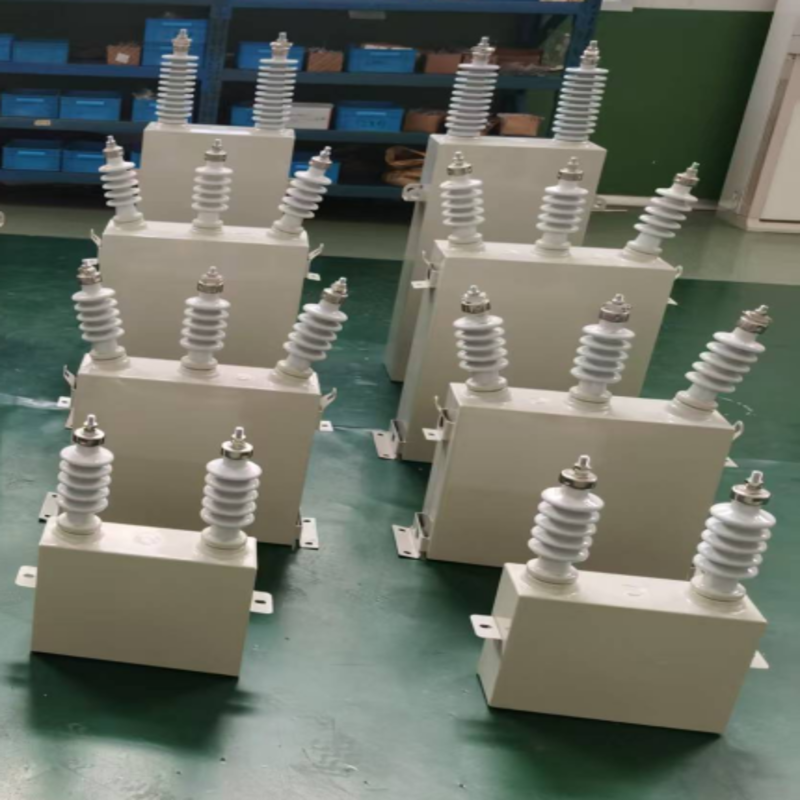
Several important parts work together in modern HV reactive power compensation systems. Capacitor banks serve as the reactive power reservoir, adding leading reactive current to fix lagging power factors. Series reactors create harmonic filters that catch 5th, 7th, and higher-order distortions while limiting the inrush currents that happen when capacitors switch on and off. Intelligent controllers keep an eye on the voltage, current, and power factor of three phases in real time.
When the load changes, modern microprocessor systems respond in 20 milliseconds by turning capacitor steps on or off using vacuum contactors or thyristor modules. This automation stops over-compensation during light loads, which is a common failure mode that leads to HV Reactive Power Compensation Device dangerous overvoltages. Discharge coils quickly get rid of any remaining charge when capacitors disconnect, making maintenance access safe.
Technology Categories: Passive, Active, and Hybrid Solutions
Industry data shows that when facilities use comprehensive compensation, they cut transmission losses by 15 to 30 percent and get rid of power factor penalties that cost an average of $2,000 to $8,000 a month. While passive systems use fixed or switched banks for steady loads, active solutions like Static VAR Generators provide instantaneous adjustment for rapidly changing loads. EPC firms and system integrators are specifying more and more complete systems to meet client compliance requirements and warranty obligations.
Challenges in Power Factor Management and Traditional Solutions
A lot of facilities try to fix problems in pieces, like installing a single fixed capacitor bank or relying on synchronous motors. In reality, these half-measures make things worse. When the load changes, fixed banks can't keep up, causing overcompensation during off-peak hours when capacitive reactance drives voltage up. Problems with harmonic resonance also occur with partial solutions; when harmonic currents suddenly rise to 20 or 30 percent, they overheat capacitors and set off safety systems, sometimes leading to catastrophic failures.
Legacy Approach Limitations
Utility rates are getting stricter about bad power factor by using demand charges and reactive energy billing. Most utility areas in the U.S. charge $4,000 to $6,000 a month in penalties for an average industrial account using 5 MW at a 0.80 power factor. This waste adds up to $480,000 to $720,000 over the life of an asset. Voltage deviation penalties make these costs even higher, with strict schedules usually within ±5% of nominal values. Substations that don't follow these limits could get fined or even be cut off during times of high demand.
Modern Solutions and Performance Advantages
A full HV Reactive Power Compensation Device stabilizes voltage within acceptable ranges and keeps production going. For example, a metallurgical plant replaced old fixed capacitors with a 36 Mvar comprehensive system. The power factor went up from 0.78 to 0.97, saving $73,000 a year in utility penalties. Voltage stability in the arc furnace improved from ±8% to ±2%, cutting down on defective products. Transformer loading went down by 12%, allowing a $850,000 capacity upgrade to be postponed. Harmonic distortion (THDv) also dropped from 8.2% to 3.1%, stopping variable frequency HV Reactive Power Compensation Device drives from falsely tripping.
Choosing the Right HV Reactive Power Compensation Device
Correctly describing the load is the first step in selection. Power quality checks should measure changing demand, taking into account daily and seasonal patterns. Fast-switching thyristor-based systems are needed for load profiles with big changes (±30% in minutes), while vacuum contactor solutions work best for changes that happen more slowly. Equipment ratings and insulation classes are based on the system voltage, and the site's elevation is very important; installations above 1,000 meters need derating factors due to lower air density.
Critical Specification Parameters
When judging an HV Reactive Power Compensation Device, look at the quality HV Reactive Power Compensation Device of parts like capacitor dielectric materials. Polypropylene film units are better at withstanding heat and self-healing than older oil-filled designs, though oil-filled versions still dominate ratings above 50 Mvar. The reactor construction also matters; air-core reactors offer linear inductance but take up space, while iron-core designs are compact but risk saturation during fault currents. For harsh environments, dry-type reactors encased in epoxy are recommended.
Supplier Evaluation and Brand Considerations
Good systems are different from great ones because of the complexity of the controllers. While simple models only switch in set amounts of time, advanced controllers provide real-time monitoring and adaptive logic. Manufacturers like Xi'an Xikai Medium & Low Voltage Electric Co., Ltd. offer solutions that work in tough industrial settings, providing support throughout the entire lifecycle of the equipment. Evaluation should include ISO 9001-certified manufacturing and proven performance in large-scale grid installations.
Procurement Timeline and Budget Planning
Investment in equipment can often be recovered quickly through direct savings. In the metallurgical plant case study, the facility got its $420,000 investment back in 4.2 years. Budget planning must account for the fact that comprehensive compensation reduces transmission losses and prevents thermal stress on transformers, extending asset life. EPC firms should prioritize systems that meet specific grid stability and insulation coordination requirements for voltages of 6kV or higher.
Installation, Operation, and Troubleshooting Best Practices
Foundation design must take into account seismic loads as per IEC 60068-2-6 standards. The HV Reactive Power Compensation Device requires anchor bolts that can withstand lateral acceleration and high mechanical strength. If foundations are weak, the frame warps and bushings get out of alignment, leading to insulation breakdown. During electrical commissioning, close attention must be paid to phasing and grounding to prevent reactive power from flowing between banks instead of being injected into the grid.
Installation Sequence and Safety Compliance
Ground grid resistance must be less than 1 ohm to keep lightning energy and fault currents safe. Before energization, thorough dielectric testing is required using 80% of the rated BIL impulse voltage to check insulation integrity. Power frequency withstand tests, following IEEE 4-2013, help find manufacturing flaws or shipping damage before the device enters service. These steps ensure the system can withstand lightning impulses higher than 170kV and remain stable across temperature extremes.
Performance Monitoring and Predictive Maintenance
The length of time between routine inspections depends on environmental exposure. For outdoor installations in coastal or industrial areas, visual checks should occur every three months to look for dirty insulators, frame corrosion, or oil leaks. Annual thermographic surveys are essential to find hotspots indicating loose connections or internal capacitor breakdown. Precision bridges can be used to measure capacitance, identifying failing parts before they cause a system outage.
Common Issues and Resolution Strategies
Typical issues include insulation tracking due to pollution or moisture. The use of devices with large creepage distances and strong pollution resistance can increase maintenance intervals while keeping reliability. If a system experiences nuisance tripping, protection schemes and grounding should be reassessed for compatibility. Over-compensation must be avoided through intelligent automation to prevent dangerous overvoltages during light load periods.
Maximizing ROI: Energy Savings and Long-Term Advantages
Normal industrial installations get rid of $2,000 to $8,000 in monthly utility fees and cut transmission losses by 15% to 30%. Payback times for an HV Reactive Power Compensation Device typically range from three to five years, HV Reactive Power Compensation Device while the operational benefits last for fifteen years or more. Beyond direct savings, improved power factor makes transformers run cooler and puts switchgear under less mechanical stress during a fault.
Documented Case Study Returns
Real-world data from metallurgical and industrial plants proves that comprehensive compensation is useful from both an operational and financial point of view. The reduction in transformer loading and the stabilization of voltage schedules to within ±5% of nominal values prevent costly shutdowns. These results show that the question isn't whether to implement full systems, but how quickly they can be done to ensure grid stability and budget control.
Environmental Benefits and Regulatory Compliance
Environmental laws are indirectly making reactive power management more important. By properly compensating for transmission losses, generator output needs are reduced, leading to lower carbon emissions per MWh delivered. Comprehensive compensation is a key part of sustainability plans for buildings seeking LEED certification. Documenting these measurable loss reductions improves emissions reporting and shows stakeholders a commitment to the environment.
Future Technology Integration
Standards for voltage and power quality are getting stricter worldwide. For distributed generation above 500 kW, regulations like California’s Rule 21 require advanced functions such as volt-VAR control. As grids add more digital control systems and renewable energy, facilities that invest in full compensation now will be ready for the regulations of tomorrow. Integration with smart grid technologies allows for better coordination between utility requirements and facility demand.

Conclusion
Full HV Reactive Power Compensation Devices have changed from optional extras to essential infrastructure. Inadequate compensation brings high operational risks, including voltage fluctuations, utility fines, and premature equipment failure. Modern solutions are designed to work in harsh conditions and are scalable from 300 kV to 240 MV to meet the needs of different substations. Investing in full compensation is the most effective way to ensure a stable grid and long-term cost efficiency.
FAQ
1. What differentiates high-voltage compensation from low-voltage systems?
When the voltage is 6kV or higher, high-voltage compensation works. To handle higher energy levels and longer creepage distances, the HV Reactive Power Compensation Device needs better insulation coordination and special parts. Low-voltage systems below 1kV are used for facility distribution, but can't fix problems with grid stability at the transmission level.
2. How long does a typical installation require?
Installation timelines vary based on site preparation, but commissioning requires thorough dielectric and power frequency testing. If foundation space and bus capacity are available, retrofitting can be straightforward. Small-sized outdoor frame-type devices generally make installation easier compared to enclosed switchgear options.
3. Can existing facilities retrofit compensation equipment?
Yes, most substations can be retrofitted if there is enough foundation space. Compatibility assessments ensure that new protection schemes work well with existing infrastructure. The compact design of modern outdoor units minimizes the need for major changes to the substation layout.
Partner with Xi'an Xikai for Proven Reactive Power Solutions
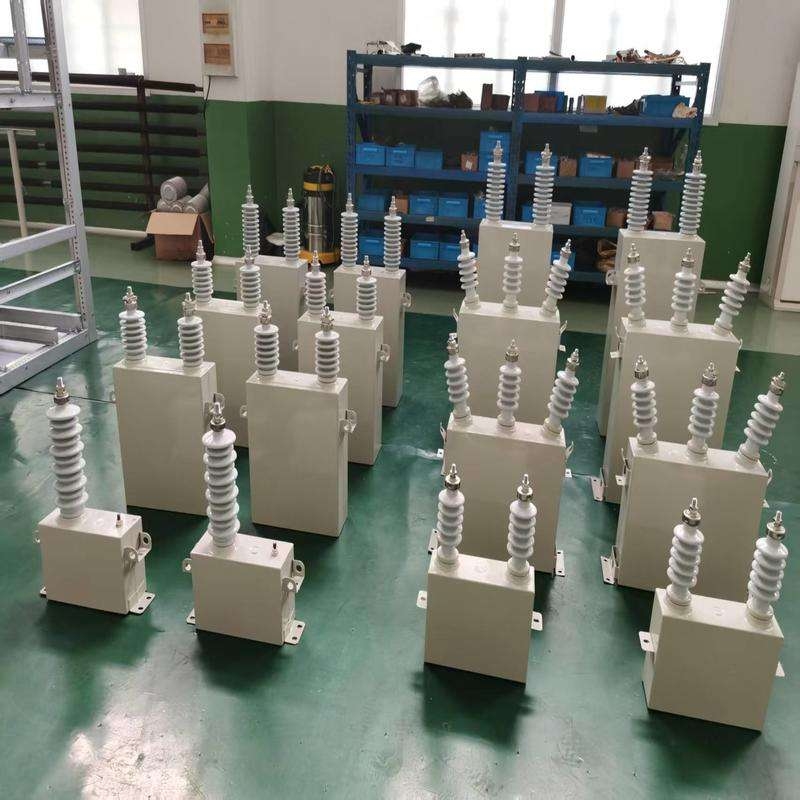
Xi'an Xikai Medium & Low Voltage Electric Co., Ltd. provides the AKW Outdoor Frame-type HV Reactive Power Compensation Device, with capacities ranging from 300 kV to 240 MV across voltage classes from 6kV and up. Our equipment is designed for tough industrial and utility settings and is backed by ISO 9001-certified manufacturing. We offer patented technologies used in State Grid installations and full support for the entire lifecycle of your equipment. Contact our technical team at serina@xaxd-electric.com, amber@xaxd-electric.com, or luna@xaxd-electric.com to discuss your substation requirements and ensure your business's success.

References
1. Dugan, R.C., McGranaghan, M.F., Santoso, S., and Beaty, H.W. (2012). Electrical Power Systems Quality, Third Edition. McGraw-Hill Education.
2. IEEE Standards Association (2014). IEEE Recommended Practice for Monitoring Electric Power Quality. IEEE Std 1159-2009.
3. International Electrotechnical Commission (2011). Shunt Capacitors for A.C. Power Systems Having a Rated Voltage Above 1000V – Part 1: General. IEC 60871-1.
4. Miller, T.J.E. (1982). Reactive Power Control in Electric Systems. John Wiley & Sons, New York.
5. Rashid, M.H. (2017). Power Electronics Handbook: Devices, Circuits, and Applications, Fourth Edition. Butterworth-Heinemann, Oxford.
6. Singh, B., Al-Haddad, K., and Chandra, A. (1999). A Review of Active Filters for Power Quality Improvement. IEEE Transactions on Industrial Electronics, 46(5), 960-971.
_1774321455861.png)