
How Iron Core Reactors Works — In One Simple Flow
2026-10-08 17:40:49
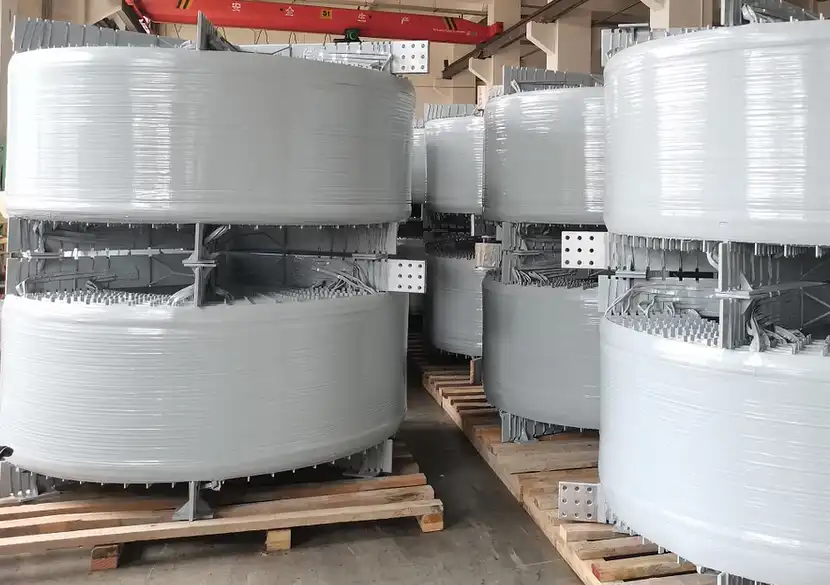
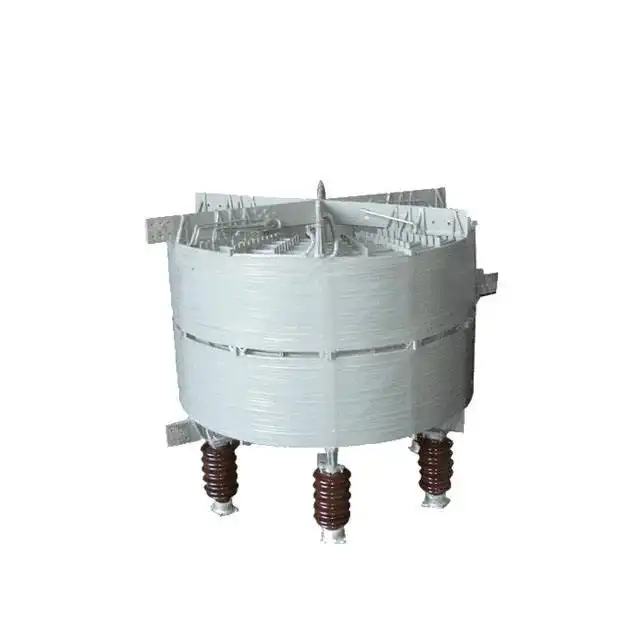
An iron core reactor is an inductive electrical component built around a laminated silicon steel core, often featuring precision-engineered air gaps. When alternating current passes through the winding, it generates a magnetic field in the core. That field resists sudden changes in current, which is exactly what makes an iron core reactor useful for harmonic filtering, reactive power compensation, and voltage regulation. The iron core raises inductance per unit volume compared to an air core design, while the air gaps prevent magnetic saturation—keeping performance consistent even under load spikes.
What Is an Iron Core Reactor and How Does It Work?
The Basic Operating Principle
A concentrated magnetic flux is made when current flows through a coil wound around an iron core. Silicon steel lets a lot of magnetic flux through, so the flux density stays high. The magnetic field saves energy in the reactor. The saved energy pushes back when the current tries to rise or fall quickly. This makes the pattern smooth. In every iron core reactor in use today, this is how it works physically.
Role of the Air Gap
If there wasn't an air break, the iron core would get too hot during peak current, which would make the inductance drop and the harmonic current rise. The inductance value stays stable up to about 1.35 times the rated current thanks to precisely machined air gaps. This is a key specification that engineers check before finalizing the design of a capacitor bank or filter cabinet.
Winding and Insulation Architecture
Iron core reactors from Xi'an Xikai are CKSC Dry-type. They use copper or aluminum foil windings that are covered in epoxy resin (Class F insulation, rated to 155 °C). Vacuum Pressure Impregnation joins the laminations and windings into a single solid mass. This lowers the vibrations caused by magnetostriction and keeps the noise level below 60 dB. The panels can handle 3 kV, 6 kV, 10 kV, 15 kV, 20 kV, and 35 kV of rated voltage, which is enough for most medium-voltage uses.
Key Benefits and Applications of Iron Core Reactors in Industry
Figuring out how an iron core reactor works is only the beginning. The next step is to figure out where it will really be useful.
You should talk about this technology because of these main benefits:
- Energy efficiency: Optimized magnetic linearity cuts iron and copper losses significantly compared to conventional reactor designs, reducing wasted energy in continuous-duty systems like capacitor cabinets and filter panels.
- Fire-safe construction: The CKSC reactor uses epoxy resin casting or air insulation instead of mineral oil, eliminating ignition risk. This makes it compliant with NFPA 70 requirements and suitable for subways, chemical plants, hospitals, and other fire-sensitive indoor locations.
- Long service life: Epoxy encapsulation guards against humidity, dust, and corrosion. Each unit passes insulation resistance tests at ≥1,000 MΩ and 85% industrial-frequency withstand voltage tests before leaving the factory, supporting a design life of 25+ years.
Because of these features, industrial plants, substations, and business buildings all have lower total costs of ownership. For instance, in a CNC machining center, the reactor protects variable-frequency drives and limits the amount of current that comes in at once. It gets rid of switching harmonics from inverter outputs in a solar or wind substation that is connected to the power grid. If you put it in an old hospital, it runs quietly at less than 45 decibels and meets all fire rules.
Iron Core Reactors Versus Alternative Reactor Technologies
There are times when procurement teams want to know whether an iron core reactor or an air core reactor is the better choice. The answer varies on the situation, but a clear comparison helps you understand the pros and cons.
There is no chance of magnetic saturation in air core reactors, and they don't lose any iron. But they are big, send out strong stray magnetic fields that can heat up close cabinet walls, and have a lower ratio of inductance to volume. These flaws are very important for indoor switches and capacitor bank cabinets, which is what panel makers usually do.
Iron core reactors with air gaps have a small footprint (40–50% smaller than air core equivalents at the same inductance), a magnetic field that stays in one place, and an inductance that stays the same over a wide range of currents. Toroidal and iron powder cores are useful for certain tasks at lower voltages, but neither can be easily and cheaply scaled up to the 6 kV–35 kV range that most medium-voltage panel assemblers need.
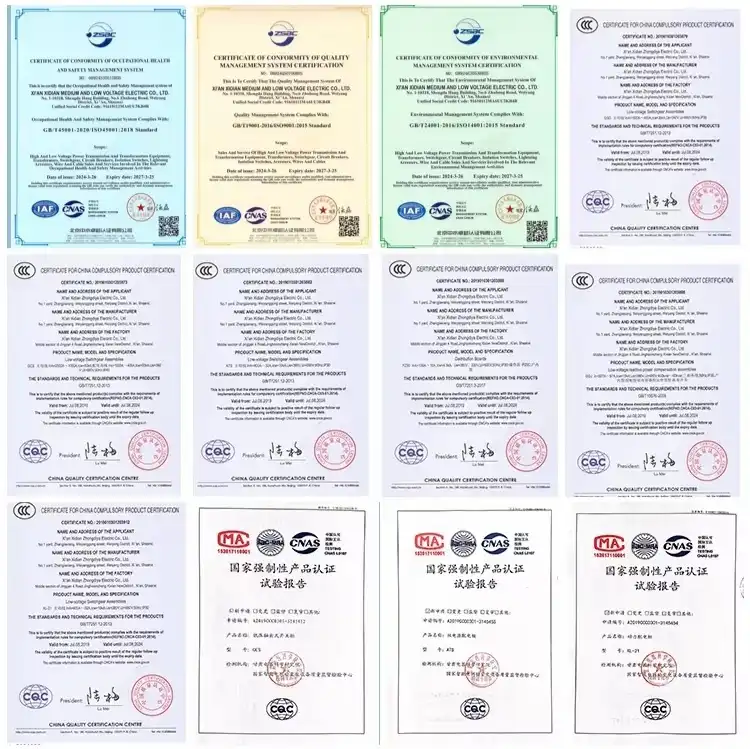
The CKSC Dry-type Iron core reactor is approved by both IEC 60076-6 and ISO 9001. It also meets BIS standards for the South Asian market and EN standards for projects in Europe. Multi-standard compliance takes away a big qualification burden for panel builders who serve a wide range of markets.
Practical Guidance for Procuring Iron Core Reactors
There is more to choosing an iron core reactor provider than just looking at the numbers on a piece of paper. Quality control during the manufacturing process checks to see if a reactor still works as expected after 10 years in a harsh environment.
When evaluating a source, you should ask for written reports from these tests:
- Epstein Frame Test (IEC 60404-2): Confirms the silicon steel grade (M4, M5, or Hi-B) and specific total loss in W/kg.
- Inter-laminar Resistance Test (ASTM A717): Verifies the Franklin insulation coating that prevents lamination short circuits and localized hot spots.
- Burr Height Measurement: Burrs must be under 0.02 mm to prevent shorts after clamping. This is a frequently overlooked but high-impact check.
- Air Gap Dimensional Tolerances: Gap precision must hold inductance tolerance within ±3%, the threshold most capacitor bank and filter cabinet designs require.
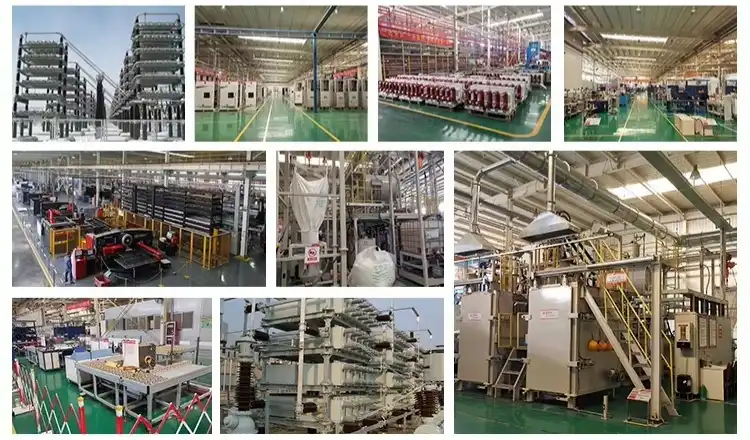
The ISO 9001-certified production line at Xi'an Xikai uses automatic winding tools and vacuum casting to make sure that both small and large amounts are the same. More than 15 years, the business has given medium- and low-voltage electrical gear to State Grid projects, the rail transportation, steel, chemicals, and green energy industries. Custom terminal setups, non-standard voltage rates, and altitude derating up to 4,000 meters are all taken care of in-house, which speeds up the time it takes to fill non-standard orders.
Conclusion
The current is controlled by an iron core generator that stores and releases magnetic energy through a silicon steel core that is coated and has precise air gaps. Every harmonic filter cabinet, reactive power compensation panel, and motor drive safety system that uses this part is based on this simple physical flow: current comes in, magnetic field goes up, and current gets smoothed. The CKSC Dry-type Iron core reactor from Xi'an Xikai has Class F insulation, can handle voltages from 3 kV to 35 kV, and goes through a full set of plant clearance tests before it is sent out. This reactor meets all the needs of panel builders who need accurate inductance within ±3%, controlled temperature rise, and a design that is safe in case of fire.
FAQ
1.Why choose an iron core reactor over an air core reactor for a 10 kV capacitor cabinet?
The iron core version is about 40–50% smaller, and its confined magnetic field keeps stray flux from heating up parts of the cabinet next to it. This is very important for indoor panels where space is limited.
2.What maintenance schedule does an iron core reactor require?
Every year, check the cooling ducts for dust buildup and clean them out. About every two to three years, check the amounts of partial release. When compared to oil-filled options, the epoxy-encased winding construction requires less maintenance.
3.Can the reactor operate at altitudes above 2,000 meters?
Yes, but derating is still true. For high-altitude projects, Xi'an Xikai changes the creepage distances and thermal rates. The company's plateau-type tools can work up to 4,000 meters above sea level.
4.What customization options are available?
You can choose the terminal position, the conductor material (copper or aluminum), the rated voltage (between 3 kV and 35 kV), and the inductance number. Small-batch sales are taken, and there are no minimum quantities that make them impossible to meet.
5.What is the expected service life?
Under normal conditions, the design life is 25 years or more. The main way that insulation fails is through partial discharge or thermal aging, both of which can be found early with regular inspection.
Request a Quote from Xi'an Xikai — Your Iron Core Reactor Supplier
CKSC Dry-type Iron core reactors are made by Xi'an Xikai Medium & Low Voltage Electric Co., Ltd. to meet IEC 60076-6 and ISO 9001 standards. They have ranges from 3 kV to 35 kV and Class F shielding. Get in touch with our team immediately to get expert advice, ask for samples, or get bulk prices. Reach out to us at xaxd-electric.com or via email at serina@xaxd-electric.com, amber@xaxd-electric.com, or luna@xaxd-electric.com.
References
1. IEC 60076-6: Power Transformers — Part 6: Reactors. International Electrotechnical Commission, 2007.
2. IEEE C57.16: Standard Requirements, Terminology, and Test Code for Dry-Type Air-Core Series-Connected Reactors. IEEE, 2011.
3. GB/T 1094.6: Power Transformers — Part 6: Reactors. Standardization Administration of China, 2011.
4. ASTM A717: Standard Test Method for Surface Insulation Resistivity of Single-Strip Specimens. ASTM International, 2018.
5. IEC 60404-2: Methods of Measurement of the Magnetic Properties of Electrical Steel Strip and Sheet by Means of an Epstein Frame. International Electrotechnical Commission, 2008.
6. Chapman, S. J. Electric Machinery Fundamentals, 5th ed. McGraw-Hill, 2012.
