
How to Size a Dry-Type Air Core Series Reactor
2026-10-08 17:40:53
Sizing a dry-type air core series reactor correctly starts with three core parameters: rated voltage, rated current, and required reactance percentage. For the CKGKL model, the rated voltage is 3,464.1V. The reactor connects in series with capacitor banks to suppress harmonic voltage amplification, reduce system waveform distortion, and limit inrush currents during capacitor switching. Engineers must also account for ambient temperature, installation clearance, and short-circuit withstand requirements. Skipping any of these steps risks thermal failure, harmonic resonance, or equipment damage — all costly outcomes in a 110–330kV substation project.
Understanding Dry-Type Air Core Series Reactors
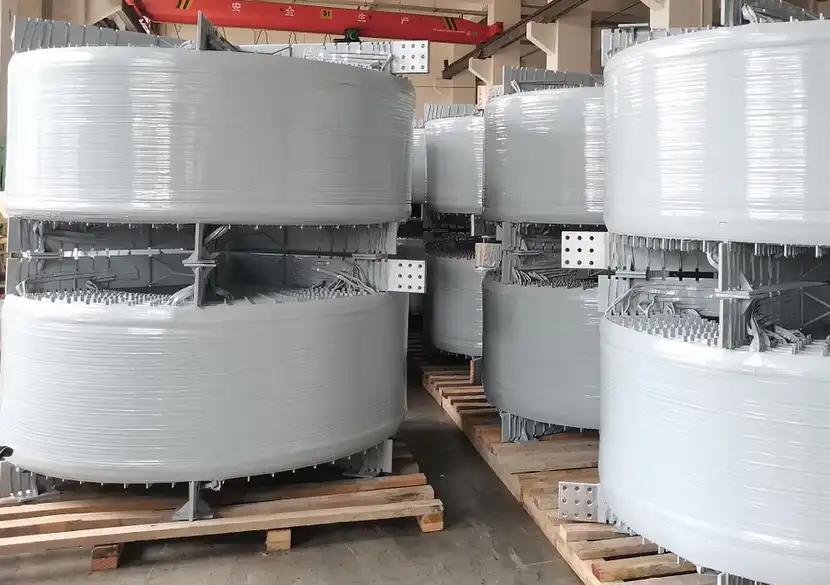
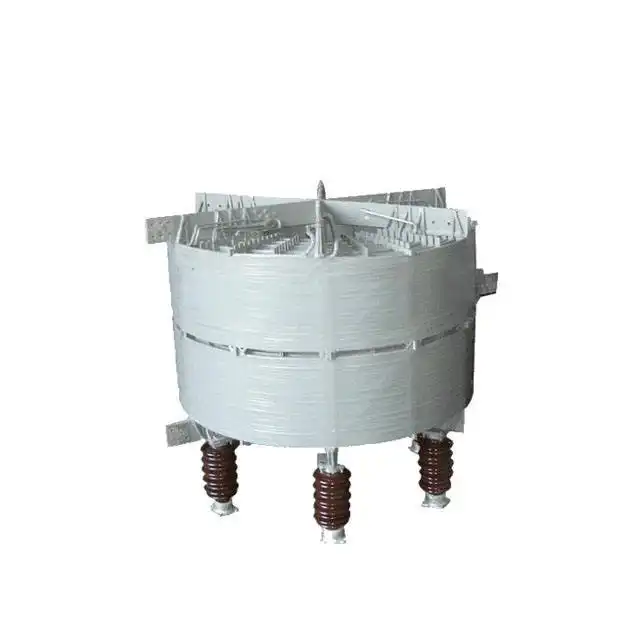
A dry-type air core series reactor is a static-inductive device made up of aluminum wires wrapped around epoxy-impregnated fiberglass. It doesn't have any oil or iron core inside. This design gets rid of magnetic overload, which is a known problem with iron-core options when there is a fault.
How Construction Differs from Oil-Filled Reactors
Reactors that are filled with oil need containment systems, fire suppression, and oil tests on a regular basis. A dry-type air core series reactor, on the other hand, doesn't catch fire and doesn't need much upkeep. The glass-fiber strengthened epoxy coating on units like the CKGKL can handle 30kV impulse voltages and dirty outdoor settings.
Constant Inductance Under Fault Conditions
Inductance stays linear no matter how much current is flowing because there is no ferrous core. This is very important for fault current limiting because the reactor maintains a steady impedance even when short-circuit currents rise, which is something that iron-core designs can't promise.
Typical Applications in Power Networks
They are used in 110kV to 330kV substations for fault current limiting, SVC harmonic filters, and detuning high-voltage capacitor banks. They also show up in factories that use CNC machines and transformer outputs from green energy sources, where harmonic distortion and inrush currents are common issues.
Key Factors in Sizing a Dry-Type Air Core Series Reactor
It costs a lot to get the size wrong. Undersized units get too hot, and large units waste money and take up room that could be used for other things. Here are the main technical factors that affect the choice of size.
Electrical Parameters: Voltage, Current, and Reactance
The CKGKL dry-type air core series reactor can handle 3,464.1V of voltage. For detuning purposes, the reactance percentage (usually between 4.5 and 13%) shows how well the reactor moves the capacitor bank's resonant frequency away from the main harmonic. When the load is at its worst, the rated constant current must cover both the fundamental and harmonic components.
Inductance Linearity and Tolerance
Accuracy of detuning is directly related to inductance variance. The CKGKL reactor has a normal tolerance of ±3% and a special tolerance of ±1%. These are important numbers when the design depends on a certain tuning frequency. Manufacturers with a good reputation follow the performance standards set by IEC 60076-6.
Thermal and Environmental Constraints
The temperature, height, and amount of pollution in the air all have an effect on thermal derating. Standard correction factors from IEC 60076-6 are used at heights above 1,000 m. For placements outside, the reactor needs to have the right IP grade and a UV-resistant coating. The CKGKL can withstand 72 hours of temperature cycling from -40°C to +70°C, showing that it is suitable for transformer projects in harsh climates.
Step-by-Step Guide to Sizing Dry-Type Air Core Series Reactors
There are mistakes in specifications that show up late in the project, often after the buying process has already started. A structured sizing process stops these mistakes from happening.
Step 1: Define the Load Profile and Harmonic Content
Get harmonic spectrum data from the spot, either by measuring it or simulating it. Find the most important harmonic order, which is usually the fifth or seventh in industrial networks. Find the total harmonic distortion (THD) and make sure that the target THD after installation meets IEEE 519 or the national grid code that applies.
Step 2: Select Reactance Percentage and Rated Current
If you have a capacitor bank that is out of tune, pick a reactance percentage that puts the resonant frequency below the lowest annoying harmonic. The LC circuit is tuned to the 3.78th harmonic by a 7% reactor, which is well below the 5th harmonic. The rated current must be at least 10% higher than the rated current of the capacitor bank plus any harmonic current that is expected to flow.
Step 3: Verify Dynamic and Thermal Stability
Make sure the unit you chose meets the standard for short-circuit resist. When the capacitor switches on and off in 110–330kV substations, the peak inrush current can hit 100 times the rated value. This is the level of surge that the CKGKL can handle. Check the temperature-rise test results; the temperature of the hottest spot on the winding must stay below the limit for its insulation class (Class F: 155°C at most).
Step 4: Confirm Installation Clearance for Stray Magnetic Field
The stray field spreads out because air-core reactors don't have any magnetic protection. Based on the reactor's rated current and coil geometry, you need to figure out how far away from metal structures like wire trays or steel fences you should be. In the technical datasheet, most makers include a table with the necessary clearances. If you skip this step, it will cause induced eddy currents in the steelwork around it, which will cause a small area to become too hot.
Maintenance, Safety, and Performance Tips
Dry-type air core series reactors don't need much care over time, but a few checks every so often will protect their long-term performance.
Routine Visual Inspection
Check the surface of the epoxy encapsulation for tracking marks, cracks, or discoloration every 3–5 years, depending on how polluted the area is. Tracking on the surface shows partial discharge activity that damages insulation over time if not fixed.
Insulator Cleaning for Outdoor Units
Support insulators clean up conductive trash near the coast or in factories. To stop flashover, clean them according to the IEC 60815 pollution-class schedules. This is the repair task that is done most often on outdoor dry-type air core series reactors.
Monitoring and Performance Validation
Once the circuit is up and running, check the inductance and wound resistance against the test records from the factory. Measurements of partial discharge (goal: below 10pC) confirm the integrity of the insulation. If the system has harmonic metering, check that the reactor is working as planned by comparing the THD number after installation to the design goal.
Procurement Considerations for Dry-Type Air Core Series Reactors
There's more to choosing a dry-type air core series reactor provider than just looking at price lists. The results of a project are affected by things like technical documents, type test records, and the dependability of delivery.
What to Request from Any Supplier
Ask for the type test report according to IEC 60076-6 or IEEE C57.16, as well as data from the temperature rise test and the partial discharge measurement. For EPC projects on the Southern Grid or the State Grid, make sure the manufacturer has the right grid-access certification. On a project with a 3–6 month decision cycle, a seller who can't provide these papers is a procurement risk.
Customization and Lead Time
The CKGKL dry-type air core series reactor can handle voltages of up to 36kV and comes with different enclosure options for outdoor use, such as IP54 and IP65. You can get custom inductance limits (±1%). Custom configurations have lead times of about 8 weeks from the time the design is approved. This number should be used directly in the EPC schedule.
Quality Control Checkpoints
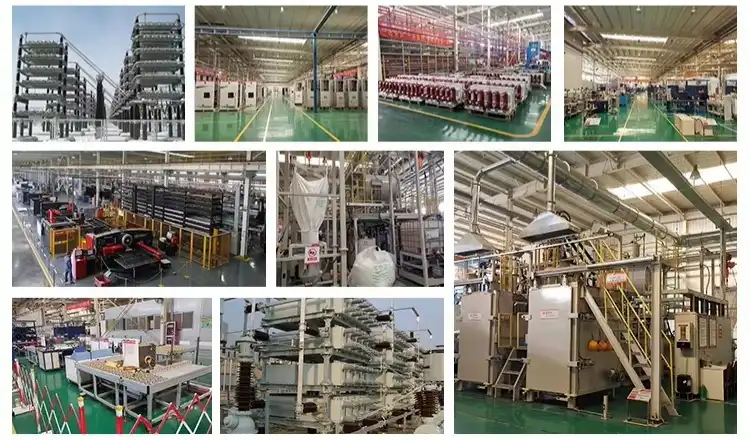
Every CKGKL unit goes through 72 hours of thermal cycles, automatic CNC winding with an accuracy of ±0.5 mm, and raw material checks that are ISO 9001-certified. As a contract clause, procurement teams should ask to be able to take part in the factory acceptance test (FAT), especially for orders of 3–15 units on a single power project.
Conclusion
To correctly size a dry-type air core series reactor, you need to pay close attention to the thermal limits, installation clearance, rated voltage, current, reactance percentage, inductance tolerance, and inductance tolerance. The CKGKL reactor meets all of these needs with tested data that has been confirmed and specs that can be changed. EPC contractors and design institutes working on high-voltage substation projects should pair a sound sizing methodology with a supplier who can provide full technical documentation. This is the easiest way to make sure the installation is reliable and meets all the requirements. Start with the data, make sure the clearances are correct, and ask for the test reports.
FAQ
1.Why does installation clearance matter so much for air-core reactors?
Without a core to contain magnetic flux, the stray field from a dry-type air core series reactor extends significantly into the surrounding space. Steel structures within that field develop induced eddy currents, which cause localized heating. Manufacturers provide a minimum clearance table; treat it as a hard constraint, not a guideline.
2.Can a damaged dry-type air core series reactor be repaired?
No. The solid epoxy-fiberglass structure cannot be rewound after a winding fault. Minor surface damage to the UV coating can be touched up, but an internally faulted unit must be replaced. This makes quality control at the factory stage — not after delivery — the primary protection against defective units.
3.How often should outdoor units be inspected?
Visual inspection every 3–5 years is sufficient for most sites. High-pollution environments (coastal, industrial) warrant more frequent insulator cleaning. The reactor itself is maintenance-free; the support insulators receive the most attention.
4.Aluminum or copper windings — which performs better?
Aluminum is the standard choice for dry-type air core series reactor designs. It delivers a favorable strength-to-weight ratio and reduces mechanical stress on support insulators. Copper offers lower resistance per unit volume but adds weight and cost without a significant performance advantage in this application.
Connect with Xi'an Xikai for Your Next Reactor Project
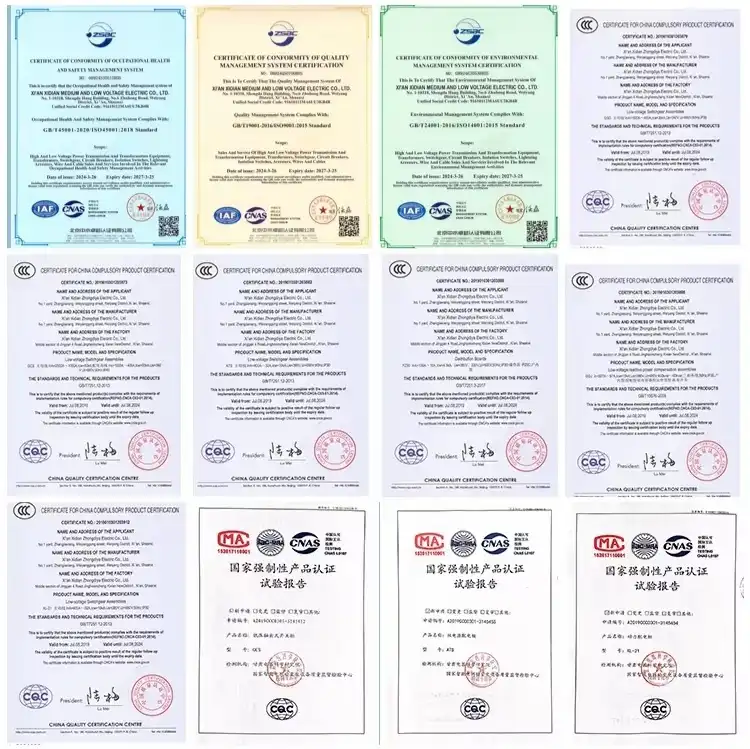
Xi'an Xikai provides the CKGKL dry-type air core series reactor for 110–330kV substation projects. It comes with full type test paperwork, custom inductance limits, and enclosures that can be used outside. We are a reliable manufacturer of dry-type air core series reactors with ISO 9001 and ISO 14001 certifications and 12 or more patents. We help EPC teams from confirming the design to testing the reactors in the factory. You can email our tech team at serina@xaxd-electric.com, amber@xaxd-electric.com, or luna@xaxd-electric.com. You can get a technical datasheet or a quote for your project by going to xaxd-electric.com.
References
1. IEC 60076-6 — Power Transformers – Part 6: Reactors, International Electrotechnical Commission, 2007.
2. IEEE C57.16 — Standard Requirements, Terminology, and Test Code for Dry-Type Air-Core Series-Connected Reactors, IEEE, 2011.
3. IEEE 519 — Recommended Practice and Requirements for Harmonic Control in Electric Power Systems, IEEE, 2014.
4. Mohan, N., Undeland, T. M., & Robbins, W. P. — Power Electronics: Converters, Applications, and Design, John Wiley & Sons, 2003.
5. Arrillaga, J., & Watson, N. R. — Power System Harmonics, John Wiley & Sons, 2nd ed., 2003.
6. Hingorani, N. G., & Gyugyi, L. — Understanding FACTS: Concepts and Technology of Flexible AC Transmission Systems, IEEE Press, 2000.
