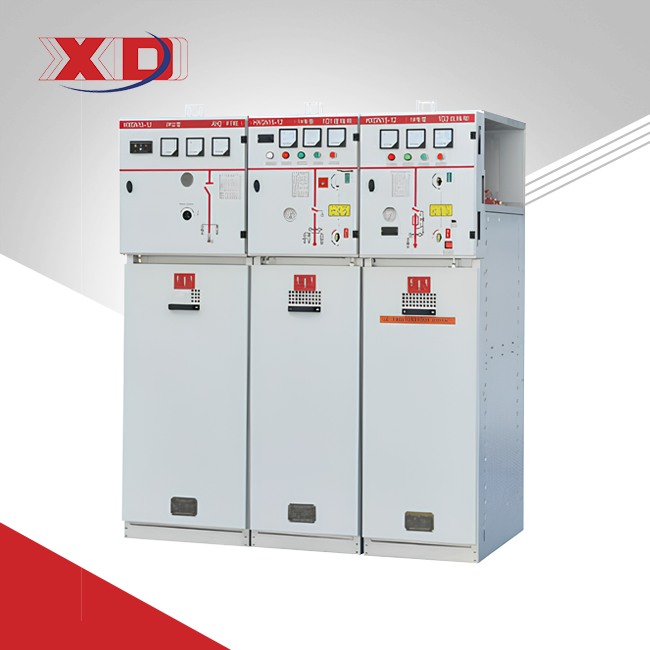
HXGN15-12SF6 Unit-Type AC Metal-Enclosed Ring Main Switchgear
How Lightning Arresters Prevent Power System Damage?
2026-01-22 11:18:39
Lightning arresters reliably ground overvoltage currents before damaging important infrastructure. Safety devices immediately lower resistance to redirect energy from transformers, circuit breakers, and sensitive electronics during lightning strikes or switching surges. Safety voltage clamps prevent insulation breakdown, equipment failure, and costly operating downtime in industrial, utility, and commercial systems.
Understanding Lightning Arresters and Their Role in Power System Protection
Power systems are constantly threatened by aerial and internal transients. Knowing protective devices helps facility operators and procurement teams choose infrastructure.
What Are Lightning Arresters and How Do They Function?
Lightning arresters protect electrical equipment against transient overvoltages. These devices react to surges, unlike passives. In normal operation, high resistance makes the arrester an insulator. The internal metal oxide varistor (MOV) elements instantaneously switch to low resistance when voltage crosses a threshold, giving a direct path to ground. This millisecond response protects sensitive electronics from radiation.
Our principal mechanism uses non-linear voltage-current characteristics. Modern electronics use zinc oxide discs to absorb energy. They maintain voltage by dissipating surge current as heat. Arrester automatically re-insulates after brief event. Quality arresters reset themselves, unlike one-time protection fuses.
Types of Surge Protective Devices in Power Networks
Power system configuration impacts safety. Industry-standard metal oxide arresters outperform silicon carbide. They improve protection coordination and response times with gapless structure. Lightweight, pollution-resistant polymer-housed versions are ideal for demanding outdoor applications.
Large substations and producing facilities are protected by surge-resistant station-class arresters. Distribution-class utility pole devices and pad-mounted transformers serve low-voltage applications. Intermediate-class arresters protect expensive industrial nodes.
Lightning Arresters Versus Surge Protectors: Key Distinctions
These concepts are distinct, although procurement professionals mistake them. Lightning arresters handle switching and direct hits at thousands of amperes. Point-of-use surge protectors defend against low-energy transients. Service entry and distribution point arresters and surge protectors protect power system loads.
Coordinating these devices provides comprehensive defences. Lowered early voltage spikes allow downstream protectors to manage transients. This cascaded technique prevents catastrophic device overload. When choosing, consider fault current, system grounding, and protected equipment voltage.
How Lightning Arresters Prevent Power System Damage
Storms and grid disturbances harm expensive electrical infrastructure.
Common Vulnerabilities in Unprotected Power Systems
Lightning causes one-million-volt surges that penetrate insulation. Primary circuit transformer windings are damaged by transients. Contact welding disables circuit breakers. When electronic drive and PLC semiconductor junctions fail, manufacturing stops. Transformer failure in a manufacturing plant costs $150,000 and causes weeks of downtime, dwarfing preventive device spending.
Switching causes inductive and capacitive energy release and internal overvoltages. Loaded circuits cause 5-10 times typical voltage spikes. High-frequency capacitor bank oscillations stress insulators. Frequent transients damage electronics and increase upkeep. Data centres are vulnerable to voltage-sensitive server power components.
Energy Diversion and Voltage Clamping Mechanisms
The arrester's metal oxide parts activate during overvoltage, generating a lower-impedance conductive route than shielded equipment. This channel is preferred by surge current over transformers or electronics. To prevent electronics damage, the device clamps electricity at 20-30% above standard voltage.
Energy absorption determines arrester efficacy. Quality gadgets use varistor components to dissipate kilojoules and withstand surges. Heat transfer to air in the polymer housing decreases thermal runaway. Triple-sealing prevents internal components from getting wet, which decreases metal oxide performance and causes catastrophic failure.
Grounding system quality impacts safety. Ground connections below 5 ohms discharge current quickly. Bad grounding raises residual voltage, lowering protection. During fast-rising surges, short-lead arresters lower parasitic inductance and voltage.
Real-World Case Studies: Protection in Action
The motor drive of a southeastern US textile company often failed during summer thunderstorms. Tests showed poor surge protection at its 480V distribution panels. Polymer-housed arresters at main switchgear and motor control centres prevented lightning-related failures for two years, saving $340,000 in replacement and fabrication.
Exposed rural distribution line transformers collapsed. Lightning prompted twelve transformer replacements annually in their service zone. Three years of arrester installation on vulnerable streams cut failures by 87%. In the first year, avoided replacement costs and better dependability metrics decreased regulatory penalties, funding preventative efforts.
These examples show that well-designed and placed arresters work. System analysis—identifying vulnerabilities, choosing device ratings, and installing quality—is crucial. Purchase decisions should include entire cost of ownership, not just price.
Lightning Arrester Selection and Installation for Optimal Performance
Device properties must match system specifications and installation methods must be verified for reliable protection.
Critical Installation Parameters and Best Practices
Mounting placement greatly impacts safety. With arresters near protected equipment, lead inductance voltage drops. Transmission substations put devices near transformer bushings. Arresters are three feet from transformers or pole reclosers in distribution applications. Inside switchgear uses arrester chambers with direct bus connections.
Protect grounding links. Current capacity is ensured by fault current-sized copper or aluminium conductors. Select smooth curves over abrupt bends that cause inductive loops. Ground grids with multiple arresters lower system ground resistance and provide redundancy. Protection comes from annual ground resistivity testing.
Environment affects housing. Coastal infrastructure must endure salt fog. Chemical-exposed industrial sectors need contaminant-resistant housing. These severe conditions suit polymer-housed units' hydrophobic surfaces that repel water and pollutants. Their lightweight design simplifies installation on ageing structures with restricted load capability.
Maintenance Protocols and Diagnostic Testing Methods
Modern arresters require inspections but require less maintenance than gap-type devices. Vandalism, animal, and environmental stress are evident. Checking housing cracks, seal integrity, and mounting hardware takes minutes but prevents problems.
Electrical tests assess performance. Energised clamp-on meters measure leakage current to detect metal oxide degradation. Healthy arresters leak less than 1 mA; those above standards need replacement. Power factor testing detects moisture and contaminants before failure.
Take arrester surge counter readings. Common counts imply stress-causing system issues such incorrect grounding or voltage regulation. Device counters show localised vs. system-wide problems. Recordkeeping helps prevent failures with predictive maintenance.
Standards Compliance and Selection Criteria
IEC 60099-4 and IEEE C62.11 describe performance and testing. Choose arresters that meet these standards for quality and safety. Lab conformity comes from standardised voltage-current characterisation, energy absorption, and accelerated ageing.
Choose polymer or porcelain housings by application. Polymers are lighter, cleaner, and fragment, not explode. Some utilities use porcelain housings for UV protection and durability. Since cost differences are narrowing, most new installations employ polymer.
Consider system factors while rating voltage. An arrester's MCOV must exceed the maximum phase-to-ground voltage even during transient overvoltage. Discharge voltage ratings should be high enough to prevent wasteful operation during normal transients while providing enough protective margins—typically 20% below equipment BIL).
Market Overview and Procurement Guide for Lightning Arresters
Procurement experts may balance cost, quality, and delivery by understanding market dynamics.
Leading Manufacturers and Product Innovations
Several well-known manufacturers operate worldwide. Siemens arresters have surge counters, remote diagnostics, and enhanced monitoring. ABB designs ease inventory management across voltage classes with modularity. Schneider Electric offers sustainable energy and data centre protection solutions.
Innovation improves monitoring and predictive diagnosis. IoT sensors in premium models report surge occurrences, leakage current patterns, and environmental variables in real time. These characteristics benefit predictive maintenance utilities despite increasing initial costs by 30-40%. Criticality of protected equipment and repercussions of unexpected failures determine whether enhanced monitoring warrants premium pricing.
Regional manufacturing impacts logistical costs and lead times. Asian manufacturers dominate distribution-class bulk markets, while European manufacturers excel in high-voltage gearbox. For speciality applications, North American vendors emphasise customisation and speed. Understanding these market categories helps procurement teams choose project-specific vendors.
Procurement Strategies and Cost Considerations
Bulk purchasing saves money when standardising arrester types across several installations. Volume commitments allow for 15-25% lower list prices for quantities over 100 pieces. Blanket purchase orders with scheduled releases balance inventory costs and volume discounts.
Supplier credibility checks prevent system-compromising counterfeits. Certified test results from accredited labs verify standards compliance. Checking manufacturer authorisation status avoids buying gray-market products without warranties. Responsible distributors give product traceability to authorised manufacturers.
Include installation, commissioning, and lifecycle maintenance costs in cost analysis. Despite higher starting prices, premium items with longer service life and lower maintenance expenses sometimes have lower overall ownership costs. A 40% more expensive equipment that lasts twice as long and requires half the maintenance inspections is more cost-effective.
Xi'an Xidian: Your Trusted Partner for Lightning Arrester Solutions
Technical expertise, product quality, and support services must be considered when choosing a surge protection partner. Xi'an Xidian Medium & Low Voltage Electric Co., Ltd. manufactures lightning arresters for transmission substations, distribution networks, industrial facilities, and renewable energy installations. Our solutions safeguard against harsh environments with innovative polymer technology and metal oxide varistor elements. We deliver effective solutions with customisation possibilities to fit particular project needs and equipment that works dependably at altitudes up to 4,000 meters. All our goods perform consistently due to our stringent quality control.
Our arrester technology provides surge protection with high-purity zinc oxide components that absorb energy without deterioration for over 25 years. Sealed housing technology avoids moisture penetration, decreasing premature failure and improving mechanical strength. Utility predictive maintenance is possible with our smart grid integration models' IoT sensors for remote monitoring. This cutting-edge technology helps facility managers and utility companies decrease unplanned downtime and boost reliability. Our technical support includes application assistance, installation instruction, and extensive after-sales services to ensure successful deployments and long-term customer relationships.
Conclusion
Modern power systems need lightning arresters to prevent equipment damage and costly operating disruptions. Learning how these devices distort energy and clamp voltage helps with procurement. Effective selection based on system voltage, environment, and protected equipment characteristics provides optimal performance. Quality installation and maintenance provide arrester protection throughout its life. Working with competent manufacturers that provide complete support services maximises protective system investments and ensures long-term reliability.
FAQ – Your Questions Answered
1. How can I identify a failing lightning arrester before complete failure?
Several factors suggest device replacement through degradation. Periodic testing shows degrading metal oxide elements with high leakage current. Cracks, seal damage, or discolouration in housing indicate environmental or interior issues. Surge counters with considerably greater counts than nearby devices indicate system or arrester difficulties. Buzzing or crackling during operation requires prompt inspection. Systematic inspection programs discover these warning indications before catastrophic failures.
2. What testing frequency maintains arrester reliability?
All installations should be visually inspected annually for physical condition and connection integrity, per industry standards. Application criticality and environmental severity determine electrical testing frequency. Transmission substations benefit from annual leakage current and power factor testing. Distribution arresters in mild conditions need 3- to 5-year testing. Critical facilities protecting sensitive equipment need greater diagnostic testing. Test results offer performance baselines for trend analysis and replacement requirements prediction.
3. Can one arrester protect different voltage systems?
Arresters must match system voltage. The maximum continuous operating voltage must surpass the highest sustained voltage in all conditions, including ground faults on ungrounded equipment. Thermal runaway and failure might result from installing 480V devices on 600V systems. In contrast, high voltage ratings lower protective margins, allowing dangerous voltages to reach equipment. System grounding, transformer connection types, and temporary overvoltage potential must be considered for proper use. Use manufacturer application manuals to choose voltage class.
4. Do polymer-housed arresters perform as reliably as porcelain units?
Modern polymer technology outperforms porcelain housings in most areas. Hydrophobic polymer surfaces repel pollutants, making them pollution-resistant. Their lightweight design decreases earthquake loads and simplifies installation. Safer failure mechanisms fracture rather than explode during catastrophic situations. Extreme ultraviolet exposure and applications needing optimum service life benefit from porcelain. Polymer reliability over varied operating circumstances is shown by decades of performance data. Specific application requirements, not performance differences, determine housing material selection.
5. What grounding resistance values ensure effective surge protection?
Grounding system quality is crucial to arrester performance. For most applications, keep ground resistance below five ohms to improve protection. Resistances near one ohm help high-lighting areas. Fall-of-potential testing assures design compliance by measuring resistance. Poor grounding raises surge voltage, reducing safety margins. Parallel ground rods reduce resistance when soil conditions prohibit single-rod performance. Regular ground resistance testing ensures efficacy as soil moisture changes periodically.
Partner with Xi'an Xidian for Advanced Lightning Arrester Solutions
Protecting your critical power infrastructure requires knowledge, superior products, and complete support. Xi'an Xidian's surge protection technology is backed by strict production standards and profound application knowledge in industrial, utility, and commercial sectors. Our engineering staff will analyse your needs and offer arrester setups for reliable equipment protection. We tailor solutions to your operating difficulties for transmission substations, industrial facilities and distribution networks. Talk to our lightning protection experts at serina@xaxd-electric.com, amber@xaxd-electric.com, or luna@xaxd-electric.com today. As a leading lightning arrester manufacturer, we offer reasonable price, fast delivery, and continuous support to maximise power system dependability and uptime.
References
1. IEEE Standards Association. "IEEE Guide for the Application of Metal-Oxide Surge Arresters for Alternating-Current Systems." IEEE Std C62.22-2009.
2. Lat, M.V. and Martinez, J.A. "Lightning Protection of Electrical Systems: Principles and Applications." IET Power and Energy Series, 2020.
3. Hinrichsen, V. "Metal-Oxide Surge Arresters: Fundamentals and Practical Applications." Siemens AG Energy Sector Technical Publication, 2019.
4. International Electrotechnical Commission. "Surge Arresters - Part 4: Metal-Oxide Surge Arresters Without Gaps for A.C. Systems." IEC 60099-4:2014.
5. McDermott, T.E., et al. "Transmission Line Lightning Protection: A Comprehensive Analysis of Arrester Applications." Electric Power Research Institute Technical Report, 2021.
6. Zhang, W. and Liu, Y. "Polymer-Housed Metal Oxide Surge Arresters: Performance Evaluation in Contaminated Environments." IEEE Transactions on Power Delivery, Volume 36, Issue 4, 2021.