
How Metal-Clad Withdrawable Switchgear Improves Safety
2026-10-10 17:00:57
Metal-clad withdrawable switchgear significantly improves safety in medium-voltage power distribution by physically separating high-risk components into isolated compartments. Each section—the circuit breaker chamber, busbar compartment, and cable section—contains faults locally, preventing cascade failures. The withdrawable mechanism lets maintenance crews remove live circuit breakers without de-energizing the entire bus, cutting arc flash exposure. Five-point mechanical interlocking systems block unsafe operational sequences. According to IEEE C37.20.2, this compartmentalized architecture is the defining standard for metal-clad switchgear, and facilities that adopt it report measurably fewer electrical incidents compared to fixed or metal-enclosed alternatives.
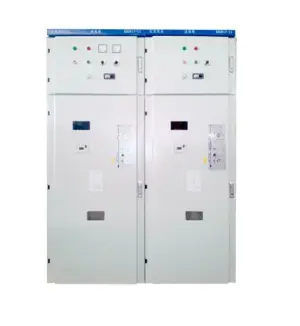
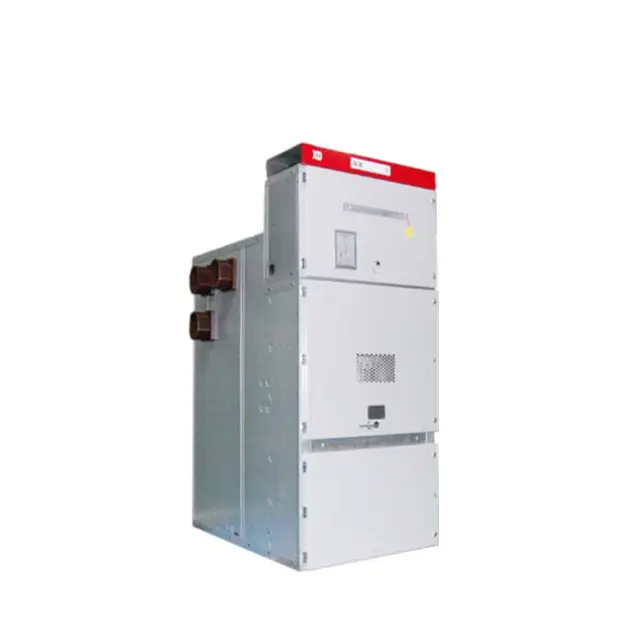
Understanding Metal-Clad Withdrawable Switchgear and Its Safety Benefits
What Makes It "Metal-Clad"
The term doesn't just refer to a building material; it also refers to a specific building standard. Every important part of true metal clad retractable switchgear—the busbars, the primary disconnect contacts, and the circuit breaker itself—is housed in its own grounded metal case. This separation is what makes its safety record possible. Fixed switchgear, on the other hand, has open space between its parts, so a problem in one area can spread easily.
How the Withdrawable Mechanism Works
The carriage that can be pulled out slides on rails that are precisely directed between three positions: Service, Test, and Disconnect. When the switch is in the Test position, the primary circuit is turned off but the secondary control circuits stay on. This lets you test the safety relays without turning on the main bus. By itself, this feature eliminates a large portion of accidental activation events that happen during commissioning and scheduled testing.
Compartmentalization as a Fault Barrier
The IEC 62271-200 standard rates the amounts of internal arc control, and metal-clad designs always get the best scores. Arc energy can't move because there are metal barriers between the busbar section and the cable compartment. In factories where fault currents can reach 31.5 kA or higher, this control saves both people and equipment directly.
Core Safety Challenges in Traditional Switchgear and How Metal-Clad Solutions Address Them
With traditional fixed or metal-enclosed circuits, repair workers are out in the open. To service a circuit breaker that doesn't have a device that can be pulled out, the whole bus has to be turned off, which isn't always possible in industries that use ongoing processes, like steel mills or chemical plants. Arc flashes, touching live parts by mistake, and faults that keep happening are all known risks of older switchgear designs.
Fault Isolation Through Compartment Design
By design, chain failure is addressed by metal-clad withdrawable switchgear. Every compartment is like a wall. If the fault starts in the cable section, it stays there. Data from utility distribution networks in the real world shows that separated switchgear makes it much less likely for a single fault to spread to multiple compartments than open-bus designs.
Safer Maintenance Without Full Shutdown
If a chemical plant is already running, they can't just turn off the power to do maintenance on the breakers. This is easily fixed by the withdrawable unit. While the nearby feeders keep running, the crews rack the breaker to the Disconnect position, put a safety shutter over the bus stabs, and service the breaker while it has no energy. This method is in line with NFPA 70E's arc flash safety rules and lowers the level of PPE needed for many upkeep chores.
Advanced Insulation Materials Reducing Leakage Risk
These days, metal-clad switchgear panels don't use oil or air-blast systems, but instead use epoxy-cast or vacuum-interrupter technology. These materials keep the dielectric integrity at fixed voltages for longer periods of time, which lowers the chance of insulation breakdown that leads to ground problems and electric shocks.
Technical Specifications and Safety Standards Guiding Design and Usage
KYN28-24: A Reference Product for Safety Compliance
The KYN28-24 Removable Metal-Clad Switchgear from Xi'an Xikai has a voltage rating of 24 kV and a current rating of 630 A to 4,000 A. GB3906, IEC 298 and IEC 62271-200 are all met. It has a five-point mechanical interlock system that stops grounding faults, load switching mistakes, and access to live areas before they happen. The unit is made up of four separate sections: the circuit breaker chamber, the busbar section, the wire compartment, and the control screen with an HMI built in. It works with the NV1-24 vacuum circuit breaker.
The main settings for the KYN28-24 that affect its safety performance are listed below:
- Rated voltage: 24 kV, covering most medium-voltage industrial distribution requirements
- Current range: 630 A, 1,250 A, 1,600 A, 2,000 A, 2,500 A, 3,150 A, and 4,000 A
- Operating altitude: Up to 2,000 m standard; plateau-spec variants available for higher elevations
- Ambient temperature range: –10°C to +40°C in service; –25°C during transport and storage
- Seismic tolerance: Rated for seismic scale below 8
- Humidity: Daily average below 95%; monthly average below 90%
With these factors, you can be sure that the equipment works safely in harsh industry settings. When the environment at a site isn't normal, Xi'an Xikai engineers work directly with project teams to come up with new specifications.
Applicable Standards
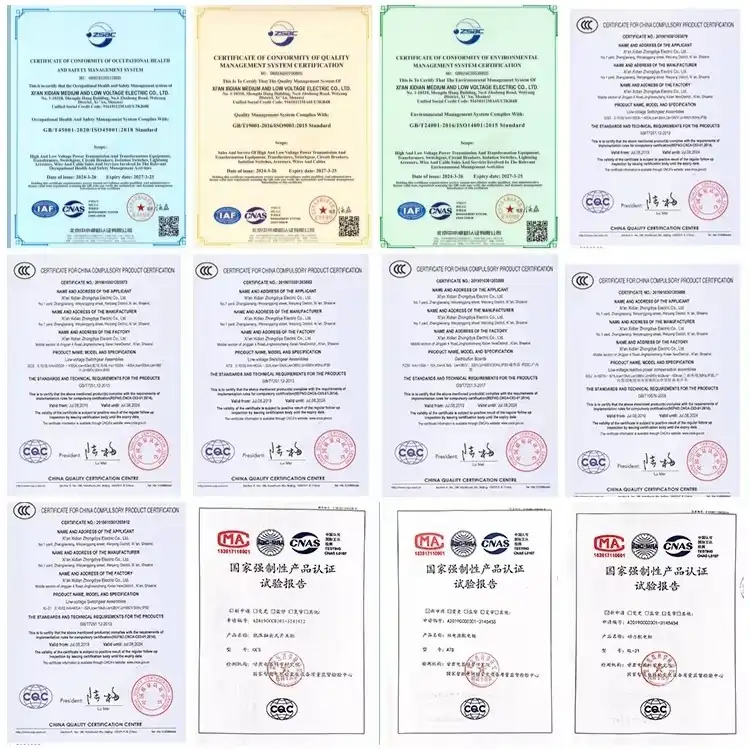
IEC 62271-200 says that the switchgear is metal-enclosed for AC equipment, and IEEE C37.20.2 says that it is metal-clad. Performance under short-circuit, thermal, and partial discharge conditions is certified by national type test reports, which are necessary for grid connection approvals and technical evaluations of EPC projects.
Maintenance and Inspection Protocols
The withdrawable mechanism stays safe as long as it gets preventative repair every two to three years or after 500 rack actions. Too much force when racking, obvious contact wear, and misaligned interlocks are all warning signs. Contact resistance testing according to IEEE C37.09 gives a numerical baseline; readings more than 50% above the baseline mean that maintenance needs to be done right away.
Choosing the Right Metal-Clad Withdrawable Switchgear for Enhanced Safety
Metal-clad switchgear at the 24 kV level is made by a number of well-known companies. European utility projects often choose ABB's ZS1 series and Siemens' NXPLUS C because they have arc-resistant enclosures and digital tracking choices. For repair jobs, Schneider Electric's PIX has a lot of strong modules. Each brand has well-known certifications, but lead times and support in different areas are very different with metal-clad withdrawable switchgear.
Evaluating Supplier Capability for EPC Projects
For EPC companies in charge of projects in Northwest China, Africa, or Central Asia, the ability of the provider goes beyond the product itself. The final factors are:
- Type test reports at the national level, confirming performance rather than relying solely on declared ratings
- Documented operational case studies from comparable environments—mines, power stations, or industrial parks
- Guaranteed delivery schedules with contractual protection against design iteration delays
- In-country support or regional warehousing for spare parts and on-site commissioning assistance
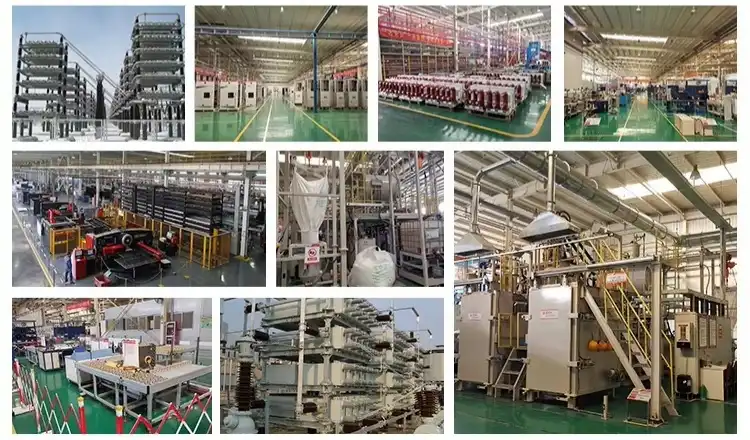
Metal-clad retractable switchgear from Xi'an Xikai has been used in State Grid projects, petrochemical plants, and rail transportation networks. With 18 unique technologies across its product line, the company is certified by ISO 9001, ISO 14001, and ISO 45001, and it holds these certifications.
When Custom Solutions Outperform Standard Models
Most project needs can be met by standard catalog items. But engineered-to-order configurations are better for places higher than 2,000 meters, with a lot of pollution, or that need current ratings that aren't standard. The engineering team at Xi'an Xikai can make unique busbar setups, changed enclosure coatings, and IoT-ready tracking integration to fit the needs of any project.
Best Practices for Installation, Operation, and Maintenance to Maximize Safety
Site Preparation and Installation Guidelines
Before installation, the substation floor must be level within the range shown on the installation drawing, and any openings for cables must be sealed to keep water out. Working with the plant safety team makes sure that the order of the installations follows the rules for electrical work in the area and that the ventilation in the switchroom meets the thermal requirements for the present set-up.
Safe Operating Procedures
Operational safety depends on following set rules exactly as they are written. Before any racking process can start, the breaker has to be confirmed to be open. Lockout/tagout (LOTO) rules must be followed at all times when working on the control wiring or the cable compartment. Full arc flash PPE is still required until the compartment is confirmed to be grounded and no longer energized.
Condition Monitoring and Predictive Maintenance
Monitoring partial discharge and thermal imaging of busbar links find wear and tear before it turns into a fault. Modern safety relays that log data let you look at trends in trip events, contact wear, and operation times. These tools, along with regular physical checks, make the equipment last longer and keep the safety margins that were built into it when it was first made.
Conclusion
Metal-clad withdrawable switchgear Metal clad retractable switchgear is safer because of its compartmentalized design, mechanical interlocking, and ability to service circuit breakers without completely turning off the bus. The KYN28-24 from Xi'an Xikai is a tested 24 kV platform that is fully compliant with IEC 62271-200 and GB3906 and has five-point safety interlocks. It can handle currents of up to 4,000 A. When EPC contractors and industrial project owners look at medium-voltage distribution equipment, the long-term safety and success of the project depend on the type test results being recorded, the equipment's history of being used in the field, and the level of expert support being available.
FAQ
1.Why is metal-clad switchgear safer than fixed switchgear?
Metal-clad switchgear places every major component group inside its own grounded metal enclosure. This compartmentalization stops a fault in one section from reaching adjacent areas. Fixed switchgear lacks these barriers, so a single arc event can propagate across multiple components. The withdrawable mechanism adds another layer by allowing breaker removal without exposing the live bus to personnel.
2.How often should maintenance be performed?
Racking mechanisms and interlock systems require inspection every two to three years or after 500 racking operations. Annual contact resistance testing per NETA standards identifies wear trends early. Protection relay settings should be verified after any system change or fault event to confirm that coordination margins remain intact.
3.Can the KYN28-24 be customized for high-altitude or contaminated sites?
Yes. Standard units operate up to 2,000 meters altitude. For sites above this threshold or in Category II contaminated environments, Xi'an Xikai engineers modify insulation levels, enclosure sealing, and coating specifications. Projects in unusual conditions require direct consultation with the manufacturer before final order placement.
4.What is the difference between the Test and Disconnect positions?
In the Test position, primary contacts are open but secondary control circuits remain energized, allowing protection relay functional testing. In the Disconnect position, all primary and secondary connections are physically separated, providing a safe working state for hands-on maintenance of the circuit breaker or control wiring.
Partner with Xi'an Xikai for Your Next Metal-Clad Switchgear Project
Xi'an Xikai sells metal-clad withdrawable switchgear metal-clad retractable switchgear to industrial project owners and EPC contractors in China and around the world. The team has been making things for more than 25 years, has national type test certifications, and can help with engineering for unique setups. This helps projects go quickly from technical specifications to on-site commissioning. You can email the sales team at serina@xaxd-electric.com, amber@xaxd-electric.com, or luna@xaxd-electric.com to get a technical datasheet, an application review, or a project quote.
References
1. IEEE C37.20.2 — Standard for Metal-Clad Switchgear, IEEE, 2015.
2. IEC 62271-200 — AC Metal-Enclosed Switchgear and Controlgear for Rated Voltages Above 1 kV and Up to and Including 52 kV, International Electrotechnical Commission, 2021.
3. NFPA 70E — Standard for Electrical Safety in the Workplace, National Fire Protection Association, 2021.
4. IEEE C37.09 — Standard Test Procedure for AC High-Voltage Circuit Breakers, IEEE, 2018.
5. Electrical Transmission and Distribution Reference Book, Westinghouse Electric Corporation, 1964 (6th ed., widely cited in medium-voltage switchgear engineering).
6. NETA ATS — Acceptance Testing Specifications for Electrical Power Equipment and Systems, InterNational Electrical Testing Association, 2021.