How to Adjust the Mechanical Characteristics of Vacuum Circuit Breakers?
2026-06-12 15:54:27
To change the way Vacuum Circuit Breakers work mechanically, the spring tension, contact trip distance, and working mechanism alignment must be checked and calibrated on a regular basis. To do this, torque wrenches are used to check the spring compression force, precise gauges are used to measure the contact stroke, and linkage assemblies are adjusted according to OEM specs. Proper mechanical adjustment ensures the best closing and opening speeds, stops premature contact wear, and keeps the ability to interrupt the arc. These are all very important for industrial facility managers who depend on reliable medium-voltage protection to keep equipment safe and reduce downtime.
Understanding Mechanical Characteristics of Vacuum Circuit Breakers
How quickly and accurately the contacts answer during switching activities is determined by how these devices are made mechanically. The operating speed has a direct effect on how well the arc goes out, and the spring force decides how much energy is available for quick contact separation when there is a fault. To make sure the vacuum gap forms correctly, contact travel (the distance between the open and closed states) must be within very small limits. When these factors move out of reasonable ranges, the performance of arc interruption goes down, which causes electrode erosion and potential failure to get worse.
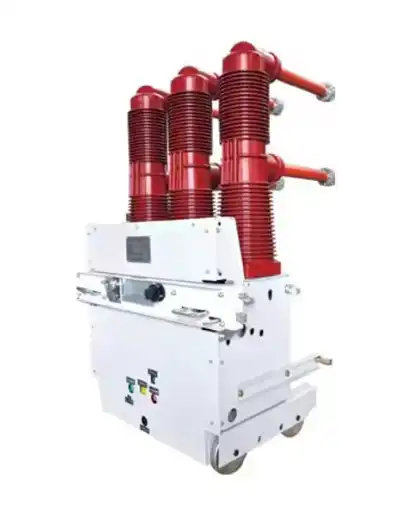
Knowing these basics helps procurement workers figure out what suppliers can do and choose tools that meets the needs of the business. The 40.5kV and 50Hz ZN85 Indoor Vacuum Circuit Breaker is an example of fine engineering, and it can withstand more than 20,000 actions. Its spring-driven system works the same way in temperatures ranging from -15°C to +40°C, which is very important for places like data centers and factories where the weather changes often.
Key Components Affecting Mechanical Behavior
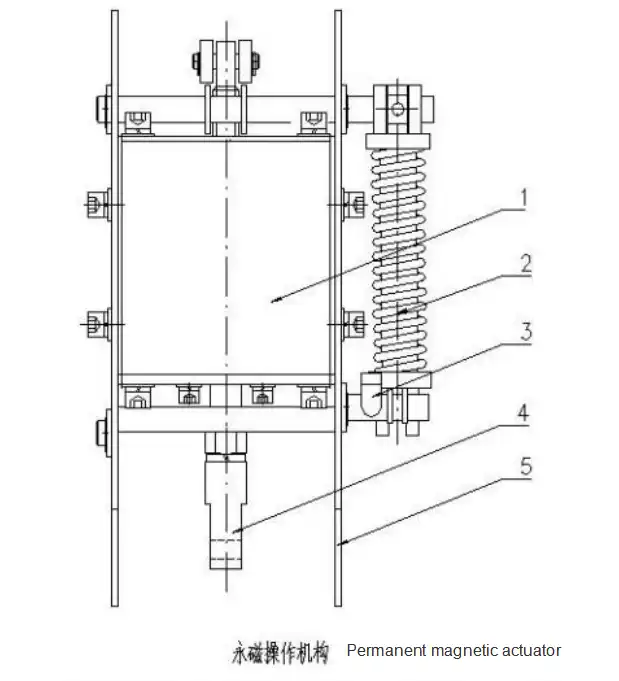
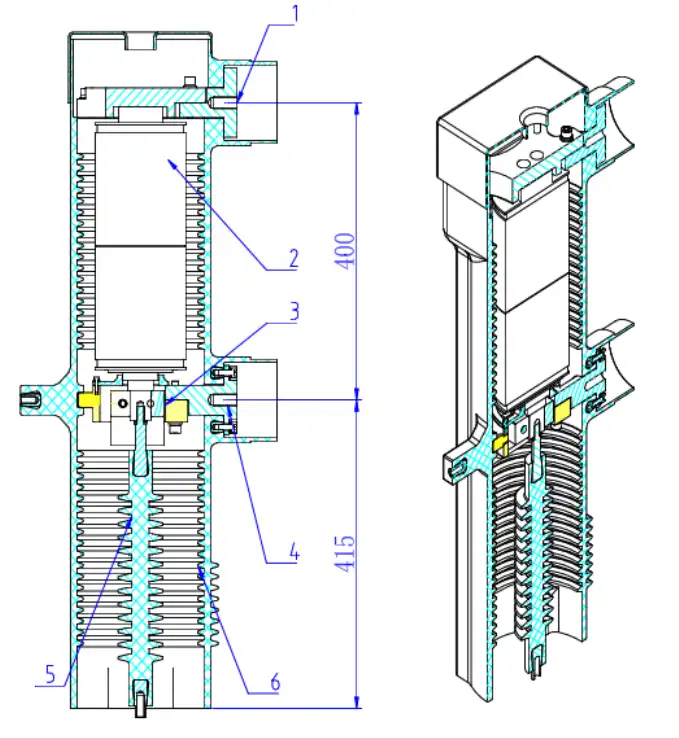
The working part converts stored spring energy into rapid contact motion. Spring systems store potential energy when charged, releasing it instantly to move contacts. Vacuum bottles house arc-interrupting units; coupling systems transmit force from mechanism to contacts. Each component must operate within precise tolerances. Misaligned linkages cause uneven contact pressure, accelerating unilateral wear. Weakened springs slow contact separation, compromising short-circuit breaking. Dirty pivot points introduce friction delaying response times.
Impact on System Reliability
Properly adjusted mechanical characteristics directly affect operational uptime. Manufacturing plants using precision CNC cannot tolerate voltage sags from slow breakers. Hospital electrical systems require immediate fault clearing for life-safety equipment. Utilities need thousands of breakers to trip simultaneously during grid disturbances. The ZN85’s flexible design enables field adjustments while meeting IEC 62271-100 standards. Its handcart design allows breaker removal from KYN61 switchgear for inspection without affecting adjacent circuits.
Diagnosing Problems That Indicate Mechanical Adjustment Needs
Early warning signs prevent failures. Delayed contact action appears as slow closing/opening cycles with mechanical sounds. Grinding, squealing, or clicking indicates misaligned linkages or insufficient lubrication. Breaker not opening within specified time ranges during testing points to spring fatigue or incorrect contact travel. Root causes include natural contact wear after thousands of operations, vibration-induced misalignments, temperature changes, and contamination from poor seals introducing particles that jam moving parts.
Common Failure Modes
Late initiation during faults poses greatest risk. When spring force drops below design limits, contact separation speed slows, prolonging arcing. This accelerates contact erosion and may exceed vacuum bottle temperature limits. Extended arcing threatens nearby equipment by keeping faults active longer. Uneven contact closure causes localized heating from poor conductivity across contact surfaces. Uneven contact resistance triggers nuisance trips in factories. In data centers, uneven contact bounce creates power quality problems for sensitive IT loads.
When to Schedule Adjustments?
Testing at regular times gives objective information about the success of a vacuum circuit breaker. Calibrated timing tools should be used to record closing and opening times of the vacuum circuit breaker every 2,000 operations or once a year for important circuits. Check the numbers you've measured against the nameplate specifications of the vacuum circuit breaker. For opening time, the error ranges are usually ±5% and for closing time, they're usually ±10% for a vacuum circuit breaker. Any departure above or below these limits needs to be looked into right away to maintain vacuum circuit breaker reliability.
Environmental factors make wear happen faster. Facilities with high humidity that are close to the ZN85's daily average limit of 95% should have more inspections. Even though they don't get used very often, coastal systems that are exposed to salty air need to be checked every six months. During the specification creation process, procurement teams must let suppliers know about these environmental stresses to make sure that vendors can provide proper corrosion protection and repair access.
Step-by-Step Guide to Adjusting Mechanical Characteristics
All adjustments are made in line with safety rules. Before you can get to the internal parts, turn off the power to the circuit, put up obvious isolation points, and make sure there is no voltage. For torque specs, clearance measurements, and adjustment steps specific to your breaker type, look at the OEM instructions. Xi'an Xikai has more than 15 patents in vacuum interruption technology, which are backed up by the ZN85's user instructions.
Spring Tension Adjustment
First, use a measured force gauge to measure how much the spring is already compressed. Check the results against the specifications—usually, closing springs need between 800 and 1200N of preload, but this depends on the contact mass and voltage grade. Adjustment nuts on spring systems let you change the force precisely. Tighten little by little while keeping an eye on the force gauge numbers. Take a break between changes to let the spring settle.
Once the desired force is reached, the mechanism should be cycled by hand to make sure it works smoothly and without sticking. Too much spring strain puts too much stress on joints and speeds up wear, while not enough force limits the spring's ability to break. Record all changes with measurements and timestamps so that they can be found during future reviews.
Contact Travel Calibration
Put dial indicators on the moving contact part at certain measurement places. Move the device by hand to the fully open and fully closed places and write down the distance traveled. Depending on the voltage class, standard medium-voltage breakers have contact travel of 10 to 14 mm. The 40.5kV ZN85 stays within exact travel limits by using aerospace-grade metals that don't deform when mechanical stress is applied over and over again.
You can change the movement by changing the eccentric pins or threaded stops inside the linkage mechanism. Changes of 0.5 mm or more need to be measured again and tested to make sure they work. Check that the contacts are lined up concentrically and not shifted laterally, which can lead to uneven current flow and early loss.
Operational Verification Testing
Using the breaker's control wires, do full close-open cycles. Millisecond-resolution timers linked to extra contacts can be used to measure working times. For most medium-voltage uses, the opening time should be between 30 and 50ms, and the closing time should be between 60 and 90ms. You can find electrical problems that mean there is mechanical drag by recording the patterns of coil current.
After a few processes, use thermal imaging to find hot spots that could mean that the contact pressure isn't right or that the parts aren't lined up right. These steps of testing make sure that the mechanical changes brought the device's performance back to a satisfactory level. This lets it go back into service with proof that it met all the requirements.
 |
 |
Comparison of Vacuum Circuit Breaker Mechanical Adjustments vs Other Circuit Breakers
Different delay tools need different ways of being maintained. SF6 gas circuit breakers need to be checked for gas density and may need to be refilled, which makes things more complicated and increases the need to follow environmental rules. Because of atmospheric arcing, air circuit breakers need to have their arc chutes maintained and their contacts wear out more quickly. More and more, vacuum technology is being used in medium-voltage uses because it works better and is easier to use.
Different systems have very different ways of making mechanical adjustments. For safe gas handling and pressure tests, SF6 breakers need special training. Because of rust and carbon buildup from atmospheric arcing, air breakers need to have their contacts replaced often. The costs of operations are directly related to these repair needs, including worker hours, spare parts supplies, and costs for downtime.
Advantages of Vacuum Technology
Vacuum interrupters get rid of the fire and blast risks that come with old systems that use oil. The sealed vacuum environment keeps contaminants out, which means that upkeep needs to be done much less often than with air-insulated options. Larger SF6 breakers need hydraulic pumps or air fans, but the ZN85's spring-operated mechanisms don't need those. This makes the extra system simpler.
Response time benefits are very important when there is a fault. Full contact separation happens in 30–50ms with vacuum breaks, but it takes 60–100ms with comparable SF6 devices. This difference in speed limits the amount of fault energy that can reach downstream equipment. This protects that equipment and lowers the risk of arc flash for people working on circuits that are connected to it.
Application-Specific Selection
The mechanical durability of vacuum technology is helpful in industrial plants that do a lot of moving. The ZN85 can handle more than 20,000 mechanical operations without needing a big repair. This is three to five times as many operations as an air circuit breaker in the same situation. Data centers that need to be quiet like the <45dB sound signature compared to the noticeable arc noise from designs that don't shield the air.
When it comes to distribution lines, utility substations use vacuum circuit breakers because they are reliable and don't need to be serviced often, which lowers running costs. EPC companies choose vacuum technology to make commissioning easier and offer longer guarantee periods backed by proven mechanical reliability to their clients.
Maintenance Tips to Preserve Mechanical Performance
Preventive upkeep is a much better way to extend the life of tools than reactive repair methods. Set up inspection plans based on working tasks. For example, important circuits should be checked every three months, while standby equipment should be checked once a year. Visual checks find problems that are easy to see, like lubricant leaks, loose bolts, or rust on areas that are uncovered.
How you lubricate things has a big effect on how reliable they are. Every 2,000 actions, lubricate the pivot points, sliding surfaces, and spring contacts with the lubricants recommended by the maker. Do not use too much oil because it attracts dust and makes gritty chemicals that speed up wear. The ZN85's modular design makes it easy to get to lubrication places without taking the whole thing apart, which cuts down on upkeep work hours.
Genuine Parts and Authorized Service
Using OEM parts protects your guarantee and makes sure that your new parts will work with your old ones. Aftermarket springs might have different ways of deflecting force, which can change the speed at which the machine works in unpredictable ways. It's not known how much erosion and arc interruption non-genuine contact materials cause, which could make the safety gaps built into original designs less reliable.
Authorized service providers have training and special tools that general electricity workers don't have access to. Calibration must be able to be tracked back to national standards for timing test sets, contact motion gauges, and spring compression fixings. Xi'an Xikai's world support network gets replacement parts to important ports within 72 hours, so there is little downtime when they need to be sent out.
Troubleshooting vs. Professional Repair
Simple problems can be fixed by people who are on-site, like checking the control voltage, the mechanical interlocks, or the trip signs. If you have a problem like timing that doesn't work right even after adjusting the springs or worries about the stability of the vacuum bottle, you need to get help from a professional. If you try to do advanced fixes without the right training, you could hurt yourself or break equipment, which would make the repair costs go up by a lot.
Set up clear procedures for when to call plant service teams for further assistance. Any trip events that can't be explained, mechanical binding during manual operation, or any sign of internal arcing should be looked at by a professional right away. These rules make sure that workers are safe and stop small problems from getting worse and stopping production for long periods of time.

Conclusion
Proper mechanical adjustment of medium-voltage vacuum circuit breakers requires systematic procedures, specialized tools, and comprehensive understanding of component interactions. Regular vacuum circuit breaker inspections detect wear before operational efficiency degrades. Adhering to OEM specifications maintains critical safety margins for industrial environments. Vacuum circuit breaker technology delivers longer operational life, reduced maintenance, and superior arc extinction—providing tangible value through lower total cost of ownership. Procurement professionals prioritizing vacuum circuit breaker mechanical reliability protect their facilities from costly downtime while ensuring compliance with modern power distribution safety regulations.
FAQ
1. How often should mechanical characteristics be inspected?
How often you inspect depends on your working job and the conditions of the area. Critical circuits that support ongoing production processes need to be checked every three months, while backup equipment can safely work with only yearly checks. Facilities that work in places with a lot of humidity (near 95% relative humidity) should do inspections more often because rusting can happen more quickly. Measure touch journey and working times every 2,000 operations, no matter what time of year it is.
2. What risks accompany unsupervised mechanical adjustments?
Adjustments that aren't done right can hurt both safety and efficiency. Too much spring strain puts too much stress on bearings and connections, which leads to early mechanical failure. If the contacts don't move far enough, the breaking capacity drops below the recommended short-circuit current values. When contacts aren't lined up right, they cause localized heating that breaks down interrupter assemblies. Making changes without permission can cancel maker warranties and may be against the rules of the electrical code. Always hire trained techs who have the right tools for calibration.
3. Can mechanical issues cause complete breaker failure?
When technical problems are ignored, they get worse and eventually fail completely. When there is a fault, contacts get stuck together because the springs are too weak to separate them. This causes long arcing that breaks the vacuum bottles. When operation starts, misaligned linkages bind, which stops the breaker from opening when safety sensors tell operations to stop. When contact wear goes beyond the limits of service, it creates too much resistance, which in turn causes heat that hurts other parts nearby. These failure modes can't happen if you do regular upkeep.
Partner With Xi'an Xikai for Reliable Vacuum Circuit Breaker Solutions
Xi'an Xikai Medium & Low Voltage Electric Co., Ltd. is a top company that makes Vacuum Circuit Breakers and provides well-thought-out solutions for tough industrial uses. Our ZN85 Indoor Vacuum Circuit Breaker has a proven track record of mechanical dependability and can be set up in a variety of ways to meet your unique operating needs. Our quality promises are backed by ISO 9001, ISO 14001, and ISO 45001 standards. We offer full support from the initial design through decades of service life. You can email our technical team at serina@xaxd-electric.com, amber@xaxd-electric.com, or luna@xaxd-electric.com to talk about your medium-voltage protection needs and get quotes that are specific to your surroundings and business needs.
References
1. IEEE Standards Association. (2018). IEEE Guide for the Application of Vacuum Circuit Breakers for Capacitor Switching. IEEE Std C37.012-2018.
2. Garzon, R. D. (2002). High Voltage Circuit Breakers: Design and Applications. Second Edition, Marcel Dekker.
3. International Electrotechnical Commission. (2017). High-voltage switchgear and controlgear – Part 100: Alternating current circuit-breakers. IEC 62271-100:2017.
4. Slade, P. G. (2008). The Vacuum Interrupter: Theory, Design, and Application. CRC Press, Taylor & Francis Group.
5. Dufournet, D., & Montillet, G. (2014). "Vacuum Circuit Breaker: A Review of the Technologies for MV Switchgear," CIGRE Session Papers, Paris.
6. Electrical Apparatus Service Association. (2020). Maintenance and Testing of Medium Voltage Circuit Breakers: Best Practices Manual. EASA Technical Services.