Outdoor SF6 Circuit Breaker Working Principle Explained
2026-06-11 15:57:00
Outdoor SF6 Circuit Breakers are an important part of distributing High-Voltage power. They use Sulfur Hexafluoride Gas as both an insulator and an arc-interrupter. Using SF6 Gas's excellent dielectric qualities, these strong devices handle electrical faults by quickly putting out sparks that form when a circuit is interrupted. Ionized arc plasma is compressed and cooled by gas-blast pressure devices. This restores electrical isolation within milliseconds to protect grid infrastructure and linked equipment from damage.
 |
 |
Introduction
Power reliability is crucial for companies, data centers, hospitals, and energy networks. Outdoor SF6 Circuit Breakers are the first line of defence against lightning, faulty equipment, and unbalanced loads. They safeguard infrastructure investments costing millions. This comprehensive reference helps procurement specialists, construction engineers, and EPC organisations identify high-voltage exterior circuit breakers.
Selecting the right delay technology affects operations' efficiency, cost, and safety. SF6 Gas Technology dominates transmission-level usage above 72.5kV due to its superior arc-quenching efficiency and smallest footprint compared to air-blast choices. Decision-makers may pick equipment that satisfies performance demands and is cost-effective during its lifespan by knowing the functioning principles, comparative benefits, and purchase considerations outlined here. The material comes from decades of working in substations, industrial switchyards, and green energy facilities with many environmental issues.
Understanding Outdoor SF6 Circuit Breakers
Core Technology and Gas Properties
SF6 Gas is ideal for small-area high-voltage protection because its dielectric strength is 2.5 times that of air at atmospheric pressure. This electronegative gas rapidly absorbs electrons during arc production. This accelerates deionisation, which restores shielding within 3–5 milliseconds of contact breaking. Sulphur Hexafluoride's chemical structure removes heat, making it stable from -30°C to +40°C.
Pressure transducers monitor gas density in current Outdoor SF6 Circuit Breakers, which employ sealed-pressure systems to maintain 0.5–0.7 MPa. Wetness may impair dielectric performance, but its sealed construction prevents it, unlike oil-filled versions that need fluid monitoring. Gas leakage rates of less than 0.5% per year imply the system won't require maintenance for decades, and rigorous sealing standards answer utility concerns about greenhouse gas emissions.
Operational Cycle Mechanics
Disconnection starts when protection switches detect fault currents exceeding limits. In 20–50 milliseconds, trip signals engage hydraulic springs or pneumatic motors. Primary and arcing connections are separated. When contacts split, a spark occurs between the fixed and movable ends. Contact materials melt over 20,000 Kelvin.
The LW24 Dead-Tank SF6 Circuit Breaker uses self-optimized gas-blast technology and advanced design philosophy. Arc energy heats the surrounding SF6 Gas, causing pressure differences that speed up gas flows throughout the arc column. Puffer-type devices push cold gas via nozzle assemblies to stop arcs. The contact zones cool and ionised plasma breaks apart. The flexible three-chamber design lets each pole operate independently, making it ideal for transmission network single-phase reclosing.
Grid systems may use 40.5kV to 252kV voltages, while large power transmission channels may use 3150A to 4000A current. The maintenance-optimized CT20 Spring Drive System uses 30% less energy than hydraulic mechanisms, lowering auxiliary power. Remote substations with solar-powered control systems need this.
Application Environments
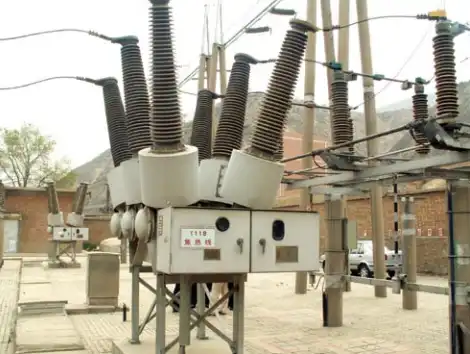
Outdoor SF6 Circuit Breakers guard transformer banks, bus sections, and feeding lines in substations, which are the main deployment zone. The Dead-Tank setup puts interrupter units at ground potential inside grounded metal enclosures. This makes servicing easier than with Live-Tank designs, which need bases that are insulated. Coatings that don't rust and UV-stabilized plastic housings make sure that these products will last for 25 years in seaside, industrial, and desert environments.
Pharmaceutical factories, electronics factories, and continuous-cast steel mills are all examples of industrial facilities that need interruption devices that can handle uneven fault currents with DC components. When they stop inductive loads, SF6 Circuit Breakers work great because they clear faults without creating the voltage jumps that vacuum interrupters do. More and more, renewable energy systems choose these Circuit Breakers for collector substations that combine the outputs of wind turbines. In these substations, fast reclosing processes keep the grid stable during short-term disturbances.
Comparison of Outdoor SF6 Circuit Breakers with Other Technologies
SF6 Versus Vacuum Technology
Vacuum circuit breakers are the most prevalent medium-voltage device below 40.5kV since they're cheaper to construct and emit no greenhouse gases. Improved nozzle geometries allow SF6 designs to block 80kA currents. Another unique aspect of SF6 systems is microsecond transient recovery voltages of 2.0 per unit. Important for high-frequency oscillation applications like moving capacitor banks and charging connections.
Actual trade-offs occur during maintenance. Change hoover bottle contacts every 10,000 operations, or 15 years. This needs special removal equipment and clean assembly locations. Self-lubricating contacts and sealed gas systems prolong SF6 Circuit Breaker maintenance to 20 years. Environmental regulations require leak detection and gas recovery during decommissioning.
Considering transformer real estate costs, lifecycle cost analysis shows Outdoor SF6 Circuit Breaker technology is best for gearbox levels. 145kV SF6 Circuit Breakers are 40% smaller than air-blasters. This cuts civil works, grounding grids, and security fence costs by $150,000 to $300,000 per bay in urban substations where land prices raise project expenditures.
Outdoor Versus Indoor SF6 Configurations
Industrial operations where operators collaborate to protect workers should employ indoor metal-clad switchgear with interlocked access panels and arc-resistant design. Outdoor Circuit Breakers save money but are not mobile. Eliminating building structures, HVAC, and fire protection infrastructure cuts installation costs 25–35%. Ice storms and excessive humidity need silicone rubber insulators, stainless steel fasteners, and warming cabinets for exterior sealing.
Xi'an Xikai's plateau-rated equipment retains full interruption capability to 4,000 meters, where decreasing air pressure makes external insulation coordination margins problematic. Mining and hydroelectric developments in mountains benefit from this expertise. Foreign companies serving sea-level markets seldom succeed.
Market Landscape and Manufacturer Positioning
Global manufacturers like ABB, Siemens, and Schneider Electric charge extra due to their huge service networks and decades of installed base data. While their traditional product lines make delivering extra components straightforward, they may not offer adequate customisation options for unique applications. Vertical integration—making interrupters, operating mechanisms, and control systems in-house—enables Xi'an Xikai to make application-specific changes. They develop harmonically tolerable steel mill rectifier loads, earthquake-resistant California substations, and offshore platform corrosion packages.
Technology history counts when assessing a novice. Japanese design was applied in Outdoor SF6 Circuit Breaker Mitsubishi Electric R&D product layouts by Xi'an Xikai in the 1990s. Participating in China's 863 tech programs helped. According to utility fleet data, the average failure interval is over 40 years, proving field reliability. So procurement teams trust Outdoor SF6 Circuit Breaker Asian firms as much as Western items.
Operation, Maintenance, and Troubleshooting of Outdoor SF6 Circuit Breakers
Normal Operation and Gas Monitoring
When contacts are closed, fixed contacts, moving contact fingers, and puffer cylinders carry current from terminal bushings to other terminals. Low resistance and 50°C temperature at rated current are maintained using 8–12kN contact pressure springs. Before turning on the system, thermographic scans check temperature distribution and discover manufacturing faults or faulty installation.
Temperature-compensated pressure gauges or electronic sensors provide gas density tracking; SCADA systems receive real-time data. Warning sounds and lockouts prohibit process termination below 80% at 90% nominal density. Prevents partial arc interruption. Annual gas quality testing measures moisture (150 ppm), breakdown products (SOF2, SO2F2), and particle pollution. Limits over IEC 60480 need action.
The LW24's self-optimised blast pressure system optimises energy use during interruptions based on fault size. Low-current interruptions utilise the least gas, whereas high-current faults demand puffer action. Avoiding contact ablation during switching procedures extends their longevity. It takes 30% longer between overhauls than fixed-blast.
Preventive Maintenance Protocols
Compliance and restrictions are balanced in inspection plans. Moving parts are examined every three months for oil leaks, enclosure seam corrosion, and animals entering control cabinets—snakes and mice might surprise. Contact wear is assessed by resistance testing during yearly internal inspections. Replacement is recommended for contact resistance beyond 150% of factory values.
Major five-year overhauls remove interrupters, replace nozzles, and refresh gas. The modular three-chamber layout of Outdoor SF6 Circuit Breakers like the LW24 allows single-pole repair without turning off surrounding phases. This reduces downtime from 48 to 16 hours, benefiting industrial clients who lose $50,000 daily.
Contact erosion helps diagnose. Uneven wear indicates misalignment and can be adjusted, while excessive pitting indicates high voltage and requires checking the upstream surge arrester.
Common Fault Scenarios and Remediation
40% of service calls are for flange joint gas leaks that may be fixed by replacing O-rings and checking torque. Leaks above 2% annually need examination. Weld cracks, casting holes, and earthquake damage may need replacement. Portable SF6 leak monitors use infrared spectroscopy to locate leaks without dismantling.
Slow closure rates or incomplete stroke travel imply OS problems. Regular testing timing analysis may reveal these issues. CT20 Spring Drive Systems include oil-free bearings and contact sets. Field repairs are easier than hydraulic system repairs, which need filter carts and approved fluids. Rust or rubbish may ruin mechanical interlocks that keep Circuit Breakers open during repair. Cleaning and adjusting them per manufacturer's directions fixes this.
Control circuit difficulties include faulty trip coils, oxidised auxiliary connections, and relay software that cause 25% of annoying trips. Two to four hours of systematic circuit diagram and multimeter testing may find issues. But extra relay modules cut repair time to under 30 minutes. Remote tracking improves predictive maintenance. Vibration patterns and audio emissions let engineers detect component failure weeks ahead.
Procurement Insights for Outdoor SF6 Circuit Breakers
Specification Matching and Technical Evaluation
Maximum operating voltage determines system voltage class. 650kV BIL is needed to determine insulator creepage lengths and internal gaps in a 145kV system with a maximum voltage of 170kV outside. Breaking capacity must exceed maximum fault current by 25%. Substation with 40kPredicted fault current needs a 50kA or 63kA Outdoor SF6 Circuit Breaker.
Duty cycle affects thermal and mechanical durability. Since they are only switched on and off 50 times a year, utility gearbox Circuit Breakers can last 2,000 operations. High-frequency industrial use requires better contact materials, puffer seals, and 10,000 operations. Insufficient endurance data promotes wear and causes early rebuilds that lose cost savings.
Environmental factors affect material and accessory choices. Salt fog-resistant silicone rubber insulators, marine-grade coatings, and stainless steel tools are needed for installations within 5 km of the sea. Buildings in seismic zones must pass IEEE 693. These tests verify buildings can survive strong earthquakes. License collection by Xi'an Xikai helps Gulf Coast refineries and California utilities.
Supplier Assessment and Partnership Criteria
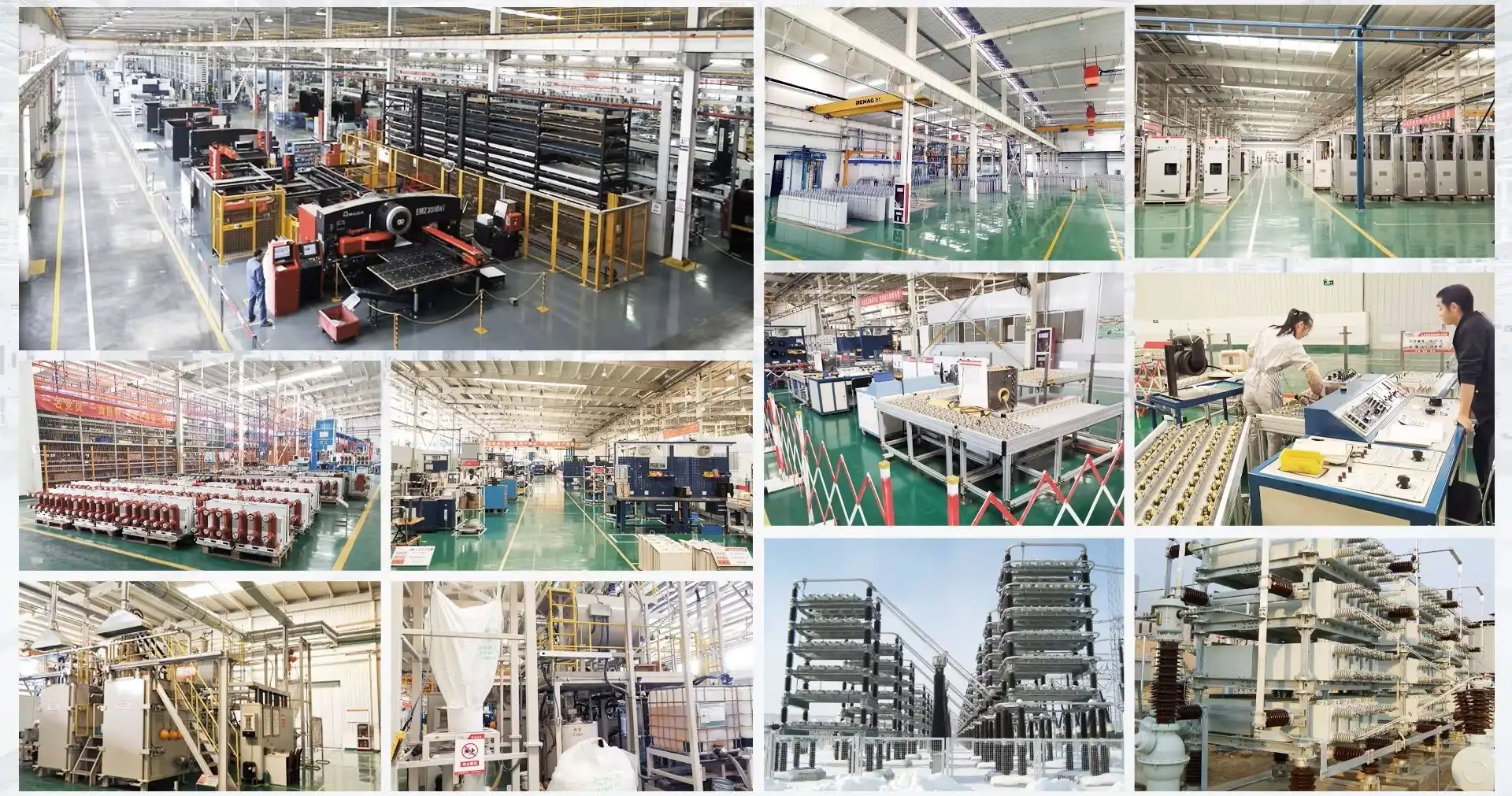
The buyer approval process should evaluate the manufacturer's ability to pay and produce. Facilities that produce 500 or more Circuit Breaker devices per year use economies of scale to keep prices down and stock adequate for timely delivery. ISO 9001 certifies quality management systems, but supply chain controls and test tool calibration audits build confidence.
Long-term ownership costs are greatly affected by after-sales support. Regional service centers with product-specific field specialists allow suppliers to respond 24/7 to emergencies. This supports utilities facing regulator penalties for prolonged power disruptions. Equipment spare parts from 25 years ago require backward compatibility and component storage. This reduces electronics and unique mechanism obsolescence.
Most 18–24-month warranties cover manufacturing defects. Covering interrupters and operational mechanisms may further limit risk. Performance guarantees for maximum contact resistance, lowest interruption capabilities, and gas loss rates create responsibility criteria that third-party testing may enforce in disputes.
Pricing Dynamics and Value Engineering
Voltage class raises market pricing. A 40.5kV Circuit Breaker costs $15,000–$25,000 and a 252kV one $180,000–$250,000, depending on materials and manufacturing complexity. A volume guarantee discounts jobs with more than ten Circuit Breaker slots by 12–18%. Substation standardisation is recommended. Customising coatings, operating voltages, and tracking systems costs 8–15%. Using these funds to solve site flaws usually pays off.
US and overseas vendors have different lead times. Xi'an Xikai, an Asian business, claims routine installations take 16–20 weeks while innovative ideas that require engineer clearance take 28 weeks. European suppliers require 24–32 weeks owing to short production cycles and comprehensive facility inspections. It's worth paying 20–30% extra for faster shipping when project delays cause liquidated damages or seasonal weather windows complicate building schedules.
Total ownership cost covers setup, installation, and product maintenance. Installing Circuit Breakers that need special mobility equipment or large civil supports costs $8,000–$15,000. Flexible single-pole replacement designs save $25,000 to $40,000 in equipment maintenance during its lifetime.
Environmental, Safety, and Future Trends in Outdoor SF6 Circuit Breakers
Safety Systems and Operational Protections
SF6 Gas and its breakdown products may suffocate tiny spaces; therefore, gas handling safety requirements apply. Pressure release mechanisms in Outdoor SF6 Circuit Breakers allow gases to ascend following catastrophic failures. This prevents lateral blast zone injuries. Ground switches visible via viewing windows prevent the system from being energised before repair, while interlocked access panels keep live components out of reach in Outdoor SF6 Circuit Breaker installations.
Arc failure control is essential in metal enclosures. Grounding interrupter housing with LW24 Dead-Tank. This prevents step potentials by safely distributing fault currents to substation grounding grids. Arc-resistant equipment (IEEE C37.20.7) may have internal arcs. Industrial switchyards where people work nearby must emit Type 2B gases away from users.
Environmental tracking detects gas leaks before they release gas. Optical gas imaging cameras can notice SF6 Gas plumes that humans can't, making leaks easier to identify during routine inspections. Switchgear room fixed-point monitors activate 500 ppm ventilation. This cleans the air and informs repairmen.
Regulatory Landscape and Compliance
Many agencies are monitoring SF6 Gas since it has 23,500 times CO2's 100-year global warming potential. EU F-gas laws require leak rate data and end-of-life gas recovery. Annual reporting and strict reduction goals are part of the California SF6 emission reduction program. Equipment cards that monitor gas supply and designs with less than 0.1 percent yearly leakage are required by utilities.
Compliance measures reduce emissions and maintain grid dependability. Hermetically sealed switches eliminate gas handling. Previous systems that needed regular top-ups had 80% more rogue emissions. Decommissioning gas recovery equipment recovers 95–98% SF6. This saves hundreds of tonnes of SF6 Gas released yearly. New or used SF6 Gas that meets pure standards is permitted, as purchase specifications usually need recovered gases.
Fluoronitrile combinations (C4F7N) insulate like SF6 Gas but have 95% less global warming potential. Although expensive and unproven, these gases' circuit breakers were available in 2020. Vacuum technology improves. 145kV vacuum interrupters may replace SF6 Gas in medium-voltage gearboxes by 2030.
Digital Integration and Smart Grid Capabilities
IEDs in modern Outdoor SF6 Circuit Breakers replace time-based check schedules with condition-based maintenance. Sensors detect degradation by comparing working durations, coil currents, and contact travel curves to standards. Maintenance is scheduled for planned breakdowns instead of crises because predictive algorithms can foresee part failures six to twelve months ahead.
Power plant circuit breakers interface with automation systems (IEC 61850, DNP3) for safety and adaptive closure. Synchronousphasor readings provide real-time power flow optimisation. It provides dynamic network topologies for erratic renewable generation. These features are essential for systems that use 30% or more wind and solar power; therefore, one-way power flow security approaches no longer work.
Automated systems pose cybersecurity threats. To avoid malicious control commands, Networked Circuit Breakers need secure connections, user authentication, and software checks. Procurement requirements increasingly mention NERC CIP, IEC 62351, and vendor security development lifecycles. Cyberattack vectors include physical protection devices that might damage grid networks.
Conclusion
When choosing Outdoor SF6 Circuit Breakers, you have to weigh the costs of buying them now against the costs of running them for decades and meeting reliable standards. The technology has a track record of working well across transmission voltages, and its environmental performance and digital powers are always getting better. This keeps it the leader in High-Voltage uses. When procurement teams look at choices like the LW24 Dead-Tank design, they can benefit from modular construction that makes upkeep easier, self-optimized interruption that lowers energy use, and thorough testing that proves performance in harsh conditions. Successful projects match technical requirements with the environmental challenges of the site, check the skills of suppliers through background checks and facility audits, and set up contracts that encourage long-term partnerships instead of short-term transactions. As power lines change to include more green energy and smart tracking, the Outdoor SF6 Circuit Breaker is still an important piece of infrastructure that keeps things running smoothly and meets new sustainability standards.
FAQ
1. What is the typical operational lifespan of SF6 circuit breakers?
Good Outdoor SF6 Circuit Breakers can last 25 to 30 years if they are used within their rated limits and kept according to the manufacturer's instructions. Limits on switching cycles are set by mechanical longevity rates (2,000 to 10,000 operations), and calendar life is set by the integrity of the gas system. UV exposure, changing temperatures, and pollution are all environmental factors that speed up aging. In harsh seaside or industrial settings, without protection steps, life expectancy could drop to 20 years.
2. What safety precautions are essential during maintenance?
When SF6 Gas levels rise above 1,000 ppm, people who work with gases must wear respirators because they could asphyxiate in a small area. When taking apart an interrupter, gloves and eye protection are needed because of the sulfur chemicals and other breakdown products that come from arcing. Electrical lockout/tagout methods keep things from getting turned on by mistake, and grounding sticks get rid of any leftover capacitance before people touch them. When going into Circuit Breaker tanks to do internal checks, you have to follow confined space rules.
3. Can existing switchgear accommodate SF6 breaker retrofits?
When mounting sizes, control voltages, and communication methods are the same between old and new equipment, retrofits work. Most of the time, Dead-Tank Outdoor SF6 Circuit Breakers are used instead of oil-filled ones that take up similar space. However, if the weights are very different, the base may need to be strengthened. To keep safety schemes from having to be changed, it's important to make sure that control system compatibility—including auxiliary contact setups and trip/close coil voltages—is carefully thought out. Talking to equipment makers early on in the planning process helps find problems before they become official purchases.
Partner with Xi'an Xikai for Reliable Circuit Breaker Solutions
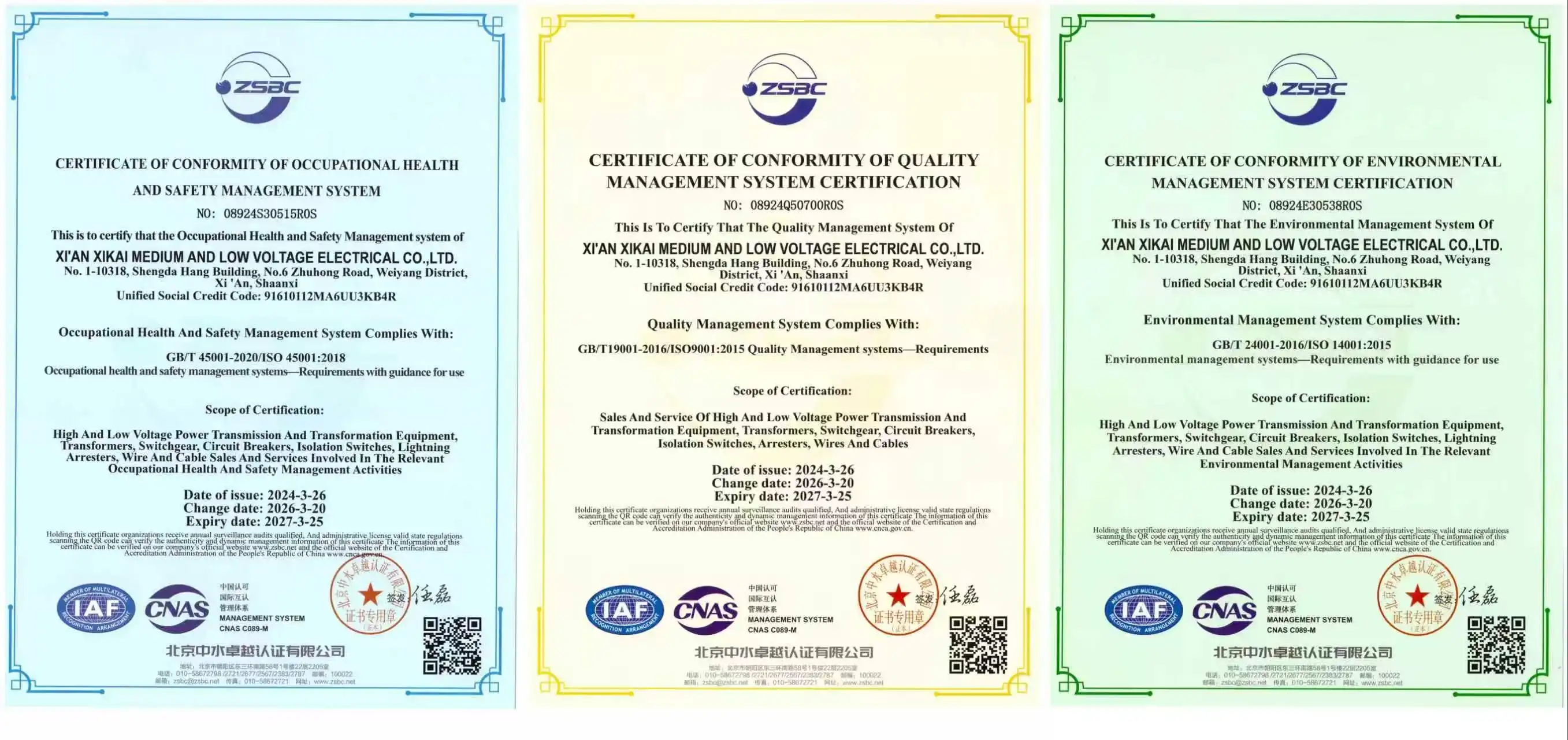
The Outdoor SF6 Circuit Breaker technology from Xi'an Xikai Medium & Low Voltage Electric Co., Ltd. has been used by utilities, industrial facilities, and EPC firms for over 50 years, and it has been proven to work in tough situations. The voltage range for our LW24 Dead-Tank line is from 40.5kV to 252kV. It has self-optimized blast pressure technology, a modular maintenance design, and CT20 Spring Drive Mechanisms that lower running costs. As one of the biggest companies in China that makes Outdoor SF6 Circuit Breakers, we keep our ISO 9001/14001/45001 and IEC 62271 certifications up to date. This way, we can make sure that our equipment meets international standards for substations, renewable energy projects, and key infrastructure installations.
Our engineering team can customize products for specific uses, such as providing earthquake qualifications, plateau rates up to 4,000 meters, and corrosion-resistant packages that can handle site problems that standard products can't handle. Competitive price through vertical integration, along with technical support from our experts at serina@xaxd-electric.com, amber@xaxd-electric.com, and luna@xaxd-electric.com, helps with projects from creating specifications to putting them into service.
References
1. International Electrotechnical Commission. (2021). High-voltage switchgear and controlgear – Part 100: Alternating current circuit-breakers (IEC 62271-100:2021).
2. Institute of Electrical and Electronics Engineers. (2018). IEEE Standard for AC High-Voltage Circuit Breakers Rated on a Symmetrical Current Basis (IEEE Std C37.04-2018).
3. Cigré Working Group A3.22. (2019). Technical Brochure 764: SF6 Alternative Technologies for High-Voltage Equipment.
4. Christophorou, L.G., Olthoff, J.K., & Green, D.S. (2017). Gases for Electrical Insulation and Arc Interruption: Possible Present and Future Alternatives to Pure SF6. National Institute of Standards and Technology Technical Note 1425.
5. Smeets, R.P.P., & van der Sluis, L. (2015). Switching in Electrical Transmission and Distribution Systems. John Wiley & Sons, Chichester, UK.
6. Hyrenbach, M., & Zache, S. (2020). Alternative Insulation Gas for Medium-Voltage Switchgear: Practical Experience and Future Developments. CIRED Workshop Proceedings, Paper 0315.
_1774411186884.png)