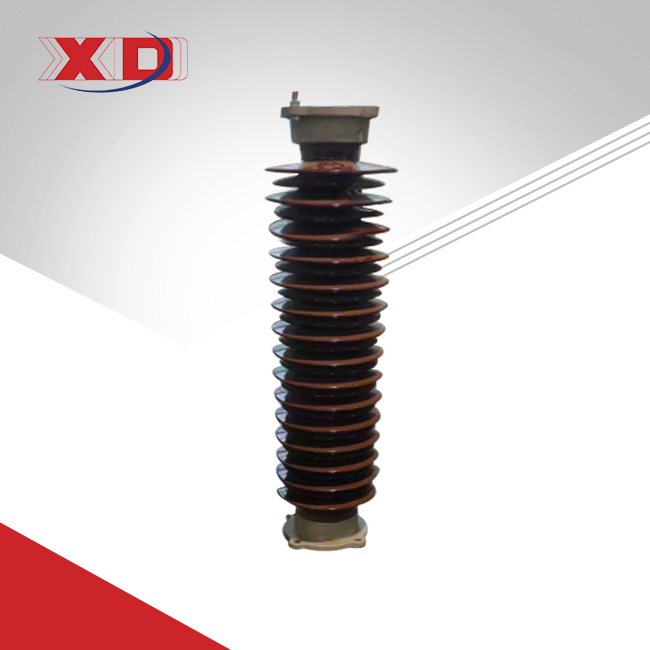
Y10W-102/266W Lightning Arrester Porcelain housed MOA for AC system
What Is Porcelain Type SF6 Circuit Breaker Working Principle Explained?
2026-06-12 15:54:29
It costs money to have a data center, factory, or power source that isn't working for even a second. With its SF6 gas technology and long-lasting porcelain protection, the Porcelain Type SF6 Circuit Breaker is a tried-and-true choice for medium to high voltage uses. This type of circuit breaker is very good at stopping problem currents and can handle stress from the environment, so it can be used both indoors and outdoors. When procurement managers and engineers know how these devices work, they can make decisions that protect machinery, lower upkeep costs, and keep operations running smoothly in harsh industrial and utility settings.
 |
 |
Understanding Porcelain Type SF6 Circuit Breakers
What Makes Porcelain Insulation Distinct?
A lot of high-voltage SF6 breakers are made with porcelain as their outer shell and main insulation material. In contrast to hybrid polymer options, porcelain is very strong mechanically and doesn't break down easily when exposed to UV light, pollution, or changes in temperature. This is important for outdoor substations where equipment is exposed to ice, rain, and pollution from factories. Even after decades of use, porcelain keeps its insulating qualities. This lowers the risk of flashovers and makes sure that performance stays the same.
SF6 Gas as Arc-Extinguishing Medium
SF6 outperforms air or oil for arc extinction. During a fault, SF6's high electronegativity absorbs free electrons, cooling and de-ionizing the plasma. Within milliseconds, insulating strength returns, stopping arcs and clearing currents of 50 kA or more. Xi'an Xikai's outdoor porcelain SF6 breakers operate from 40.5 kV to 550 kV at up to 4,000 A.
Key Technical Parameters You Should Know
Voltage rating indicates system power capacity; interrupting capacity defines maximum fault current cleared safely. The 40.5 kV SFM indoor SF6 breaker features modular contact system and SF6 chamber for substations, industrial plants, and commercial buildings. Compliance with IEC 62271 and IEEE C37.04 ensures global acceptance. Proper maintenance extends life beyond 20 years.
Advantages and Applications of Porcelain Type SF6 Circuit Breakers
Superior Electrical Insulation and Environmental Resilience
More than many polymer blends, porcelain insulators are better at stopping salt spray, chemical pollutants, and water from wearing them down and tracking. Porcelain Type SF6 Circuit Breakers are the best choice for coastal substations, petroleum plants, and places with a lot of industry activity because they are so strong. The hardness of the material also guards against mechanical damage and theft, which lowers the cost of repair.
The SF6 gas inside the locked box does two things: it insulates and stops the arc. Its insulating strength is about three times that of air at the same pressure, which lets designers make smaller breakers without lowering the safety limits. This small size saves room in busy substations and switching rooms inside buildings, which is a problem that a lot of hospitals and data centers have when they need to make changes.
Maintenance Benefits That Lower Downtime
Porcelain SF6 breakers require less routine upkeep than oil or air-blast systems. Monthly tasks include lubricating moving parts and checking valve settings. Annual inspections measure contact wear and test thermal resistance. Hydraulic mechanisms using disk springs (no nitrogen) and spring mechanisms rated for 3,000 mechanical operations reduce maintenance visits and costs.
Industrial and Utility Applications
These breakers protect transformers, bus bars, and feeders from overloads and faults. Factories rely on them for CNC machines and robotic lines; data centers need fast fault clearing to prevent costly downtime; hospitals require uninterrupted power for life-support equipment. Renewable energy projects use them to handle variable output from solar and wind sources.
Porcelain vs Alternative Circuit Breakers: Making an Informed Choice
Comparing Porcelain and Composite SF6 Breakers
Composite housings are lighter and less likely to break, which makes them a good choice for areas prone to earthquakes or projects that need to be sensitive to transportation. Porcelain Type SF6 Circuit Breakers, on the other hand, are better at long-term resistance to UV damage and surface contamination. If the surroundings is dirty, composite insulators might need to be cleaned more often to keep them from tracking. Because porcelain has been used for a long time in harsh areas, it is a better choice for outdoor installations where upkeep can't be easily accessed.
Cost factors are also different. Because they are made of more complicated materials and are harder to make, Porcelain Type SF6 Circuit Breakers usually cost more at first, but their longer service life and lower upkeep needs often make them more cost-effective over their entire life. Composite units might be cheaper up front, but they need to be closely watched in harsh settings.
Evaluating Other Breaker Technologies
Vacuum circuit breakers are small and don't need much upkeep. They can handle up to 40.5 kV in indoor settings. For higher voltages and extreme fault currents, they can't stop working like SF6 designs can. Transmission systems used to use a lot of air-blast breakers, but SF6 types have mostly replaced them because they are quieter, simpler, and easier to maintain. Oil circuit breakers can start fires and damage the environment, which makes them less desirable under today's safety rules.
Picking the best technology relies on the voltage needed, the amount of fault current, the surroundings, and the total cost. Porcelain Type SF6 Circuit Breakers are the most reliable way to protect outdoor substations above 72.5 kV from bad weather. Our SFM line may be useful for indoor 40.5 kV switchgear because it blends SF6 performance with a modular design that cuts installation time by 30% compared to older equipment.
Importance of Reputable Sourcing
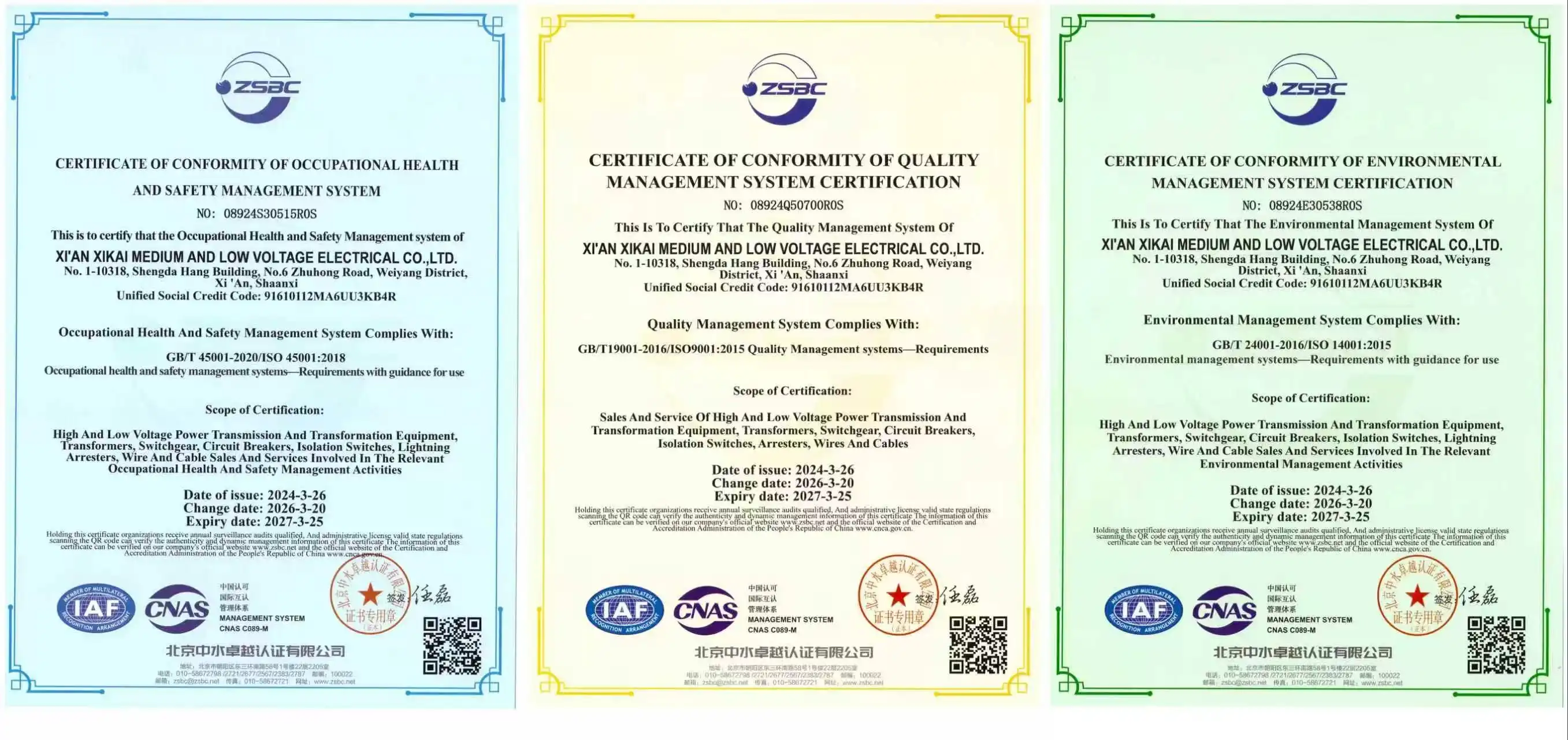
Working with well-known makers makes sure that you follow international rules and can get approved spare parts. Quality standards are set by companies like ABB, Siemens, and GE, but local suppliers like Xi'an Xikai can offer better customization, wait times, and expert support. In 30 countries, our goods are used by State Grid systems, train transportation, and the energy industry. They are backed by ISO 9001, 14001, and 45001 certifications.
Check third-party testing records for gas leakage, seismic stability, and arc-flash safety when looking at different providers. For more information on voltage levels, interrupting ability, and mechanical longevity, you can ask for detailed brochures. Check the guarantee terms and make sure there are local service teams available to keep downtime as low as possible during setup and upkeep.
Maintenance and Operational Best Practices
Routine Inspection Schedules
Patrol checks should happen once a week while the Porcelain Type SF6 Circuit Breaker is being set up and once a month once it is running continuously. Use the density gauge to check the SF6 gas pressure and make sure the numbers stay in the green zone. Look for cracks, chips, or discoloration in porcelain. These could be signs of internal arcing or stress from the surroundings. Over time, shaking and changes in temperature can make hardware loose, so make sure that the anchor nuts and wire connections are still tight.
As part of the monthly schedule, grease-approved grease should be used on drive shafts, pivot points, and connection pins. Check the system for signs of water buildup, which can damage parts and make it impossible to use. Make sure that the SF6 gas valves stay closed all the way to stop slow leaks. These preventative steps find small problems before they get worse and cost a lot to fix.
Preventive Maintenance and SF6 Handling Safety
Every year, maintenance checks the timing of the working mechanism, measures the contact distance, and tests the insulation resistance. Contact wear shouldn't go over what the maker says it should be, which for arc contacts is usually 10% of the original distance. Measurements of resistance show that the dielectric integrity of the porcelain and internal walls is maintained. To make sure that the arc ends properly during fault delays, operating times should stay within the numbers that have been released.
Safety rules must be followed when handling SF6 gas. The gas isn't dangerous, but it's heavier than air, which means it can be hard to breathe in small places. When opening breaker chambers, always make sure there is air flow in the area and use gas monitors. Instead of releasing SF6, reuse and recycle it to follow environmental rules and cut down on greenhouse gas emissions. To protect people and things, technicians should get approved training in how to handle SF6.
Troubleshooting Common Operational Issues
If the breaker doesn't charge itself, make sure that the auto switch on the motor control circuit shuts properly. Check for problems in the breakers, wires, and limit switches. Low SF6 pressure sets off interlocks that stop processes from ending, so check the gas density before going any further with the fixing. Contacts that aren't lined up right or that are worn down too much can fail to stop, which means that the problem needs to be looked into right away and possibly replaced.
Cracks in the porcelain that were found during a check need to be fixed right away. Surface cracks can get worse and turn into full fractures, which makes shielding and safety less reliable. Quickly replace broken porcelain insulators with OEM-approved parts. If the terminals get too hot or change color, it means that the connections are weak or there is too much current flowing through them. This needs to be fixed to keep the equipment from breaking and to avoid fire risks.
When mechanical processes go beyond what was planned, arc contacts wear down beyond what was expected, or insulation resistance drops below what is accepted, replacement is needed. Upgrading to newer models might give you better performance, less upkeep, or the ability to meet changing environmental standards.
Procurement Guidance for Porcelain Type SF6 Circuit Breakers
Evaluating Supplier Offerings and Lead Times
When looking for Porcelain Type SF6 Circuit Breakers, make sure you get full information about their rated voltage, rated current, rated short-circuit breaking current, control voltage, and motor power source. Check to see if it meets the standards for the area, such as IEC for foreign markets, IEEE for North America, and GB for China. Depending on how customized you want it to be and how many you order, lead times are usually between 8 and 16 weeks.
Different manufacturers have different minimum order amounts. Standard catalog items may have MOQs as low as one unit for test sales, but unique designs usually need pledges of five units or more to cover the cost of making the molds. Find out the exact shipping terms (FOB, CIF, or DDP) to know the total landed costs and who is responsible for the operations.
Pricing Benchmarks and Bulk Ordering Benefits
When compared to composite options, Porcelain Type SF6 Circuit Breakers at 40.5 kV usually have prices that are competitive. However, the total cost of the job will depend on how hard it is to install and the conditions of the site. Because of economies of scale in shipping and making, items that are shipped in bulk are cheaper. By negotiating multi-year supply deals, you can lock in good prices and make sure that the most important supplies are given to the times when demand is highest.
Usually, warranties last for 12 to 24 months after the product is put to use or 18 to 36 months after it was shipped, whichever comes first. Longer warranties and servicing agreements offer extra security, shifting risk to the provider and making sure that running costs are predictable. Check out the company's after-sales support, such as its ability to provide extra parts, expert training, and quick reaction times in case of an emergency.
Leading Manufacturers and Certification Essentials
Global suppliers like ABB, Siemens, Schneider Electric, Mitsubishi Electric, and GE have full product lines that have been tested and proven to work. Regional producers, such as Xi'an Xikai, offer reasonable prices, faster lead times, and a lot of ways to customize their products. Our LW25 series breakers have been patented several times and are known as a reliable brand in China's power industry.
Certifications prove that a product is safe and meets safety standards. For sales in Europe, look for the CE mark. In North America, look for the UL mark. And in China, look for the CCC mark. ISO 9001 makes sure that companies have quality management systems in place. ISO 14001 and 45001 show that companies care about the environment and workers' health. As per IEC 62271 guidelines, you should ask accredited labs for test results that include type tests, routine tests, and special tests.
It's easier to get projects done when you work with providers who offer detailed catalogs, CAD drawings, and application engineering help. Having access to training materials and operational help lowers the risk of mistakes during setup and installation. This protects your investment and makes sure everything runs smoothly from the start.
Conclusion
For protecting medium to high voltage electrical systems, Porcelain Type SF6 Circuit Breakers are a stable and effective technology. When SF6 gas arc extinction and porcelain insulation are used together, they work very well in harsh settings, need very little upkeep, and last for decades. Engineers and purchasing managers can choose equipment that meets practical, environmental, and financial goals by understanding how it works: contact separation, arc formation, SF6 cooling, and dielectric recovery. A careful look at the supplier's qualifications, technical details, and customer service after the sale is what guarantees a good project and long-term dependability.
FAQ
1. How does porcelain insulation enhance breaker performance?
Porcelain is very strong, doesn't fade in UV light, and can handle pollution. It also keeps its insulating qualities even after decades of use outside. This longevity lowers the risk of flashover and requires less upkeep than materials that break down quickly in the environment.
2. What is the difference between porcelain and composite SF6 breakers?
Porcelain is better at resisting UV light and surface contamination over time, which makes it perfect for tough settings. While composite housings are lighter and less likely to break, they need to be cleaned more often in places with a lot of pollution.
3. What maintenance practices extend service life?
Check the strength of the SF6 gas once a month, grease the moving parts every three months, and measure the contact travel and test the insulation resistance once a year. To keep insulation from failing, replace old arc contacts before going over the manufacturer's limits and fix any damage to the porcelain right away.
Partner With Xi'an Xikai for Your Porcelain Type SF6 Circuit Breaker Needs
The Porcelain Type SF6 Circuit Breakers that Xi'an Xikai Medium & Low Voltage Electric Co., Ltd. makes can handle voltages from 40.5 kV to 550 kV. They have ISO standards and have been used successfully in State Grid systems, rail transportation, and industry. Our research team makes solutions that are specific to your voltage needs, the surroundings, and your connectivity needs.
Get in touch with our experts at serina@xaxd-electric.com, amber@xaxd-electric.com, or luna@xaxd-electric.com to get full technical catalogs, low prices, and fast shipping.
References
1. International Electrotechnical Commission. "High-Voltage Switchgear and Controlgear—Part 100: Alternating Current Circuit-Breakers." IEC Standard 62271-100, 2021 Edition.
2. IEEE Power and Energy Society. "IEEE Standard for High-Voltage Circuit Breakers Rated on a Symmetrical Current Basis." IEEE Standard C37.04-2018.
3. Zhang, L., & Chen, H. "Arc Interruption Performance of SF6 Gas in High-Voltage Circuit Breakers: A Comprehensive Review." Electric Power Systems Research, Vol. 198, 2021.
4. Johnson, M. A. "Comparative Analysis of Insulating Materials for Outdoor High-Voltage Equipment." IEEE Transactions on Dielectrics and Electrical Insulation, Vol. 27, No. 4, 2020.
5. Smith, R. D., & Thompson, K. L. "Maintenance Strategies for SF6 Circuit Breakers in Utility Applications." Power Engineering Journal, Vol. 35, No. 2, 2021.
6. Kumar, S., & Patel, V. "Environmental and Economic Assessment of SF6 Circuit Breakers in Modern Power Systems." International Journal of Electrical Power & Energy Systems, Vol. 132, 2021.
_1783415937807.jpg)