How to Choose a Polymeric MOA Lightning Arrester for AC Systems
2026-05-29 16:05:23
Voltage ratings, environmental robustness, and surge protection capability must be considered while choosing an AC Polymeric Lightning Arrester. Metal-Oxide Lightning Arrester (MOA) technology with Polymeric housing combines Zinc-Oxide Varistors' nonlinear features with lightweight, weather-resistant enclosures for enhanced performance. Polymeric designs resist UV, pollution, and temperature extremes without mechanical breakdown, unlike porcelain alternatives. We know from servicing transmission operators, data centers, and manufacturing facilities that Arrester selection affects uptime and equipment lifespan.
 |
 |
Understanding Polymeric MOA Lightning Arresters
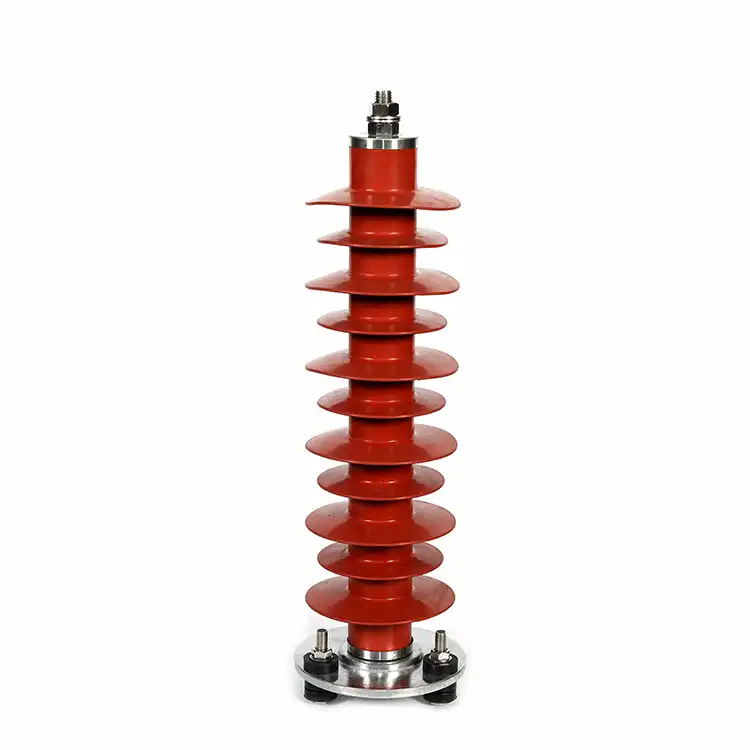
Polymeric Metal-Oxide Lightning Arresters improve AC surge protection. A Gapless protection device that responds promptly to overvoltage circumstances uses high-purity Zinc-Oxide Varistor Blocks in Silicone Rubber or EPDM casing.
Operating Principles and Construction
When normal system voltage runs through the Arrester, Zinc-Oxide elements' high resistance draws little leakage current. Lightning and switching surges lower the material's resistance in microseconds, allowing the device to safely transmit surplus energy to ground. This nonlinear property removes spark gaps in earlier Silicon Carbide devices, improving reaction times and protection levels.
Polymeric housing has several uses beyond mechanical support. Even in rainy or salty coastal settings, hydrophobic silicone compounds retain surface insulation. Water penetration might damage Zinc-Oxide blocks or cause internal flashovers. Internal sealing mechanisms prevent this.
Advantages Over Traditional Designs
Polymeric Lightning Arresters solve old equipment issues, therefore industrial operators and utilities are specifying them. Near transformers and switchgear, porcelain housings break under heat stress or mechanical impact, posing catastrophic failure hazards. A broken porcelain Arrester can propel shards into nearby equipment, triggering cascading outages that cost factories hundreds of thousands in productivity.
Weight reduction is crucial during installation. Polymeric 216kV Lightning Arresters weigh 60-70% less than porcelain ones, decreasing structural stress and simplifying logistics. Transmission EPC contractors enjoy lighter units because they save crane time and allow fewer crews to safely install.
Pollution performance distinguishes Polymeric from ceramic designs. Sheds and skirts formed into the Polymeric body maximize creepage distance—the route length over the housing surface. This design flexibility lets Arresters fulfill IEEE and IEC pollution class criteria without being too tall, useful when right-of-way limitations limit structure size.
Critical Criteria for Selecting a Polymeric MOA Lightning Arrester
Electrical characteristics, environmental stressors, and operational priorities must be analyzed to match Arrester specifications to system needs. Acquisition teams must combine technical performance with financial constraints and standards compliance.
Voltage Rating and System Coordination
Rated voltage (Ur) is the Arrester's maximum continuous operating voltage (MCOV) without deterioration. This number must match your system's nominal voltage and grounding. For fault-related overvoltages, a well-grounded 230kV system needs Arresters rated 192-216kV.
The YH10W-216/562W Lightning Arrester shows high-voltage AC voltage coordination. This device protects 230kV-class equipment insulation with a 216kV rated voltage and DC reference voltage over 314kV. Where lightning activity reaches 40 strikes per square kilometer yearly, the dual-unit structure (unit number: 2) increases energy absorption and redundancy.
Residual voltage determines surge stress on protected equipment. Lower residual voltages improve protective margins, especially for transformers and spinning machinery with low BIL ratings. Make that the Arrester's residual voltage for 10kA and 20kA discharge currents is below 80% of its BIL.
Environmental Resilience Factors
The operating temperature range impacts Arrester dependability and longevity. Above 85°C, Zinc-Oxide elements age faster, whereas Polymeric housings become brittle below -40°C. The YH10W-216/562W is appropriate for desert installations in the southwestern US and northern substations with hard winters since it runs reliably over this temperature spectrum.
Creepage distance influences pollution flashover. Our 216kV model's 31mm/kV surface insulation is sufficient for heavy industrial and coastal IEEE contamination levels III or IV. Urban data centers near chemical factories or hospitals benefit from this better pollution performance, protecting them from smog and wildfire smoke.
UV resistance reduces housing damage and moisture tracking. Carbon black or other stabilizers in good polymers absorb UV light without breaking chemical chains. Our 1000-hour accelerated weathering tests under ASTM G154 ensure 25+ years of UV stability in direct sunshine.
Certification and Compliance Requirements
Design, testing, and application of Arresters are governed by international standards. Discharge current withstand, accelerated aging procedures, and mechanical strength are performance criteria in IEC 60099-4 and IEEE C62.11. Utility firms and major industrial operators require both standards for global supply chain flexibility.
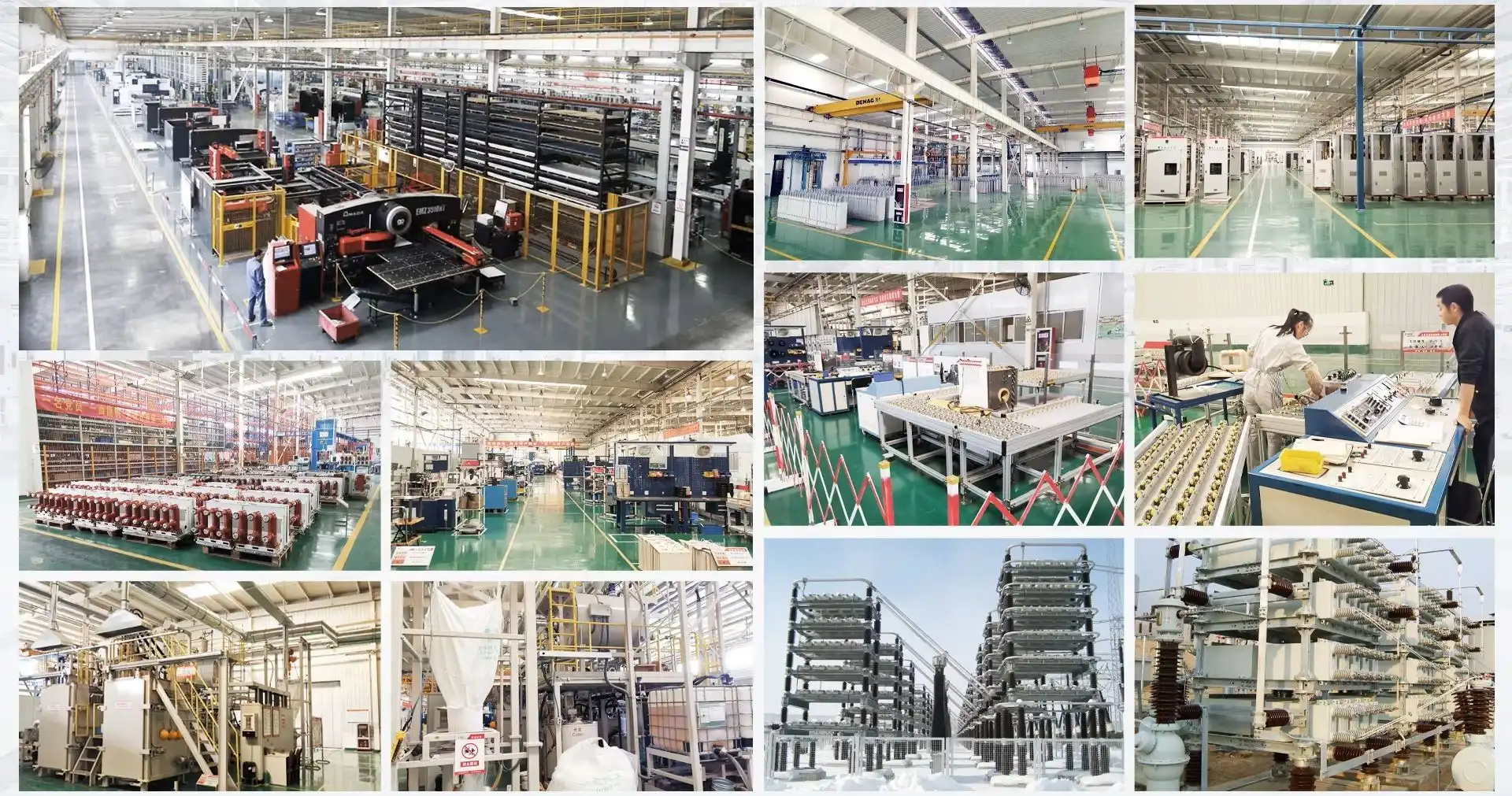
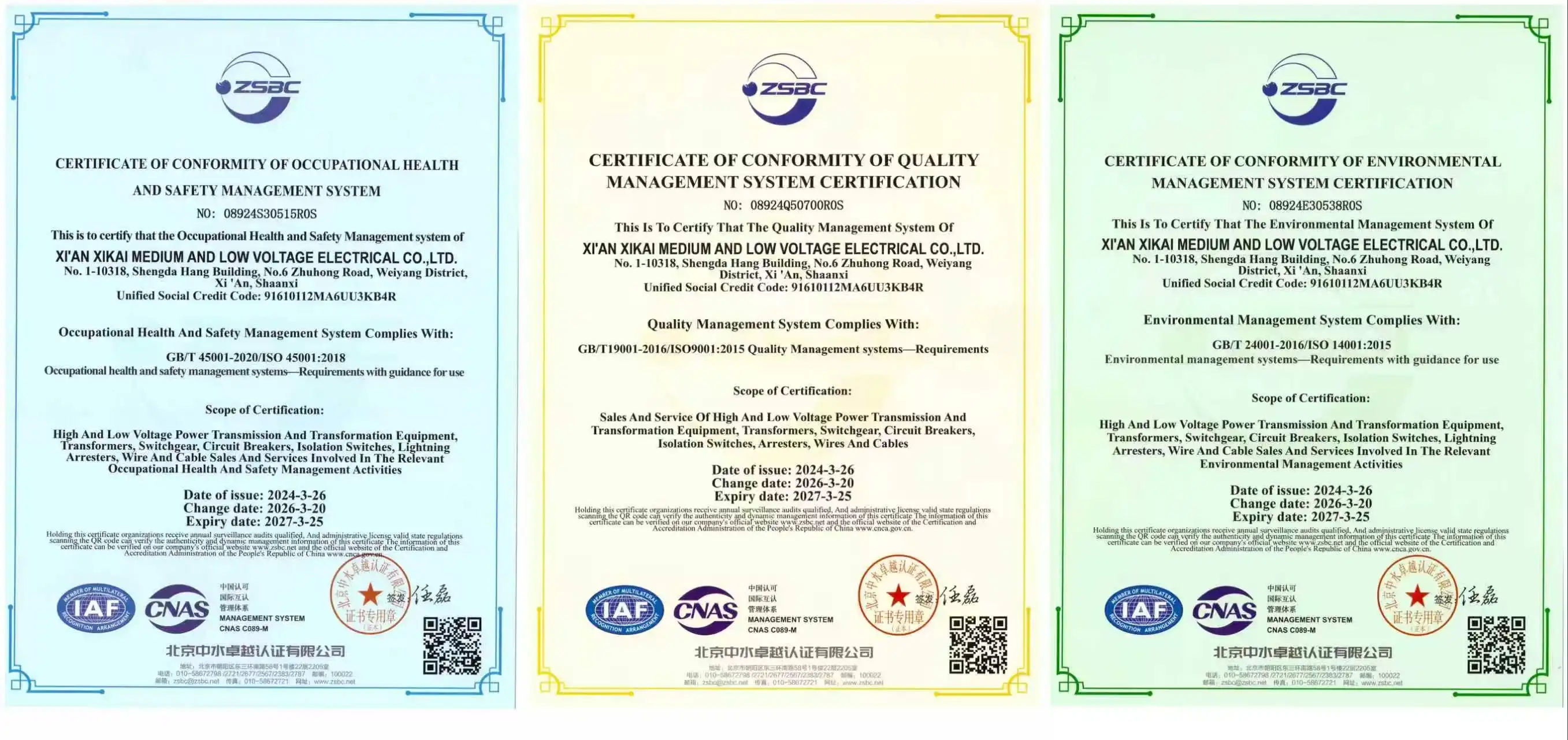
Quality certificates prove production dependability. We use ISO 9001 to track raw materials through production and testing, and ISO 14001 to comply with hazardous chemical limits in renewable energy projects. To satisfy insurance underwriters, hospital and data center procurement teams need ISO 45001 occupational health documents.
High-voltage impulse tests, leakage current measurements, and thermal stability assessments should be included in product testing documentation. Simulations of lightning strikes up to 650kV validate our triple-sealing method on Polymeric Lightning Arresters, proving hermetic integrity under severe stress. Testing rigor avoids field failures that interrupt operations and harm customer relationships.
Comparing Polymeric MOA Lightning Arresters with Other Types
Understanding Arrester technology performance variations helps procurement managers balance upfront investment against total cost of ownership across decades of equipment lifecycles.
Material and Construction Differences
For generations, porcelain arresters dominated the market because to their mechanical robustness and reliability. Ceramic materials are fragile and susceptible to transportation damage, earthquake action, and temperature stress. A transmission line operator reported 15% porcelain Arrester breakage during delivery to remote substation sites, requiring emergency reorders that delayed project completion.
Polymers completely eliminate fragmentation. Railway electrical systems subjected to train vibration need strong housing that absorbs mechanical shocks without breaking. Wind farms benefit because turbine-mounted Arresters experience cyclic loading from nacelle movement, which would wear stiff porcelain devices.
Weight goes beyond installation ease. Retrofitting older substations without structural reinforcing may be possible due to lighter Arresters reducing seismic stresses. By choosing Polymeric Lightning Arresters instead porcelain ones, a hospital modernizing its emergency power distribution saved $40,000 in steelwork.
Lifecycle Cost Analysis
After installation labor, maintenance, and replacement cycles, initial purchase price is just 20-30% of total ownership cost. At purchase, Polymeric Lightning Arresters cost 10-15% more than porcelain counterparts, but lower operational costs yield significant returns.
Maintenance periods vary widely by technology. To prevent flashovers, porcelain arresters need annual crack checks and quarterly cleaning in polluted conditions. Polymers with hydrophobic surfaces naturally shed impurities, prolonging inspections to three years under similar circumstances. A steel plant in an industrial corridor decreased inspection expenses by 65% after switching to Polymeric surge protection on its 138kV distribution network.
Failures drastically impact lifecycle economics. Unlike Polymeric devices, porcelain arresters can explode and harm nearby equipment worth millions of dollars. Pressure relief systems securely evacuate gases, confining fault energy and reducing collateral damage that prolongs outages in the sealed design.
Polymeric designs with suitable specifications last longer. When environmental circumstances are within design specifications, we document installations over 30 years. Even if they look OK, porcelain arresters in comparable settings need repair after 20–25 years owing to cement degradation between internal components.
Procurement Considerations and Market Overview
Finding high-quality Arresters entails negotiating complicated supply chains and ensuring technical compliance and manufacturer reputation. Partnerships with established suppliers outperform price-driven procurement tactics.
Supplier Evaluation Criteria
Product dependability is closely correlated with Polymeric MOA manufacturer experience. Sealing, polymer, and varistor manufacturing intellectual property from decades of research yields improved field performance. Over 20 patents address Polymeric Arrester design issues, based on thousands of installations in varied applications.
Production capacity and lead times affect huge projects. EPC contractors installing renewable energy substations must ensure Arrester deliveries match construction dates to minimize costly delays. Our Zinc-Oxide stockpile and molding capabilities allow us to deliver bulk requests in 6-8 weeks, even during peak demand periods when rivals take 16+ weeks.
Technical support distinguishes commodities vendors from partners. To coordinate Arresters for high-altitude installations, series compensation stations, and HVDC converter terminals, utility engineers need application engineering help. After obtaining system specifications, our staff calculates residual voltage, pollutant class, and seismic certification within 48 hours.
Customization and Configuration Options
Most applications work with standard catalog goods, but special system needs necessitate specialized solutions. Bus supports, transformer bushings, and wall-mounted systems with limited space might use custom mounting solutions. We've designed Polymeric Lightning Arresters with side-mounted brackets, increased lead lengths, and unique grounding to meet client needs.
Communication improves smart grid Arrester functionality. Monitor leakage current, surge counter data, and diagnostic parameters via Modbus RTU protocols with optional modules. Telemetry allows condition-based maintenance techniques to replace time-based inspection plans, maximizing labor deployment across geographically distant assets.
Flexible voltage class supports varied system setups. Our YH10W-216/562W supports 230kV systems, although parallel product families cover 3kV to 800kV transmission classes. This complete portfolio centralizes procurement across voltage levels, simplifying vendor administration and standardizing spare parts inventories.
Quality Assurance in the Supply Chain
Fake electrical equipment is a rising worry, especially when buying from unknown dealers. Poor Zinc-Oxide or sealing systems cause Arresters to fail prematurely, voiding warranties and posing safety risks. Certified supply chains from original manufacturers mitigate these concerns.
Every Arrester comes with serialized paperwork and electrical test results. Factory acceptance testing lets customers see high-voltage tests before shipment to ensure performance. Procurement managers responsible for critical infrastructure equipment reliability benefit from this openness.
Post-purchase help enhances product value. Technical inquiries during installation, warranty claims processing, and field failure investigation show manufacturer dedication to client success. Our 24/7 technical helpline and regional service centers minimize commissioning and troubleshooting downtime.
Installation Best Practices and Maintenance Tips
Arrester efficacy and service life are maximized by proper installation and maintenance, safeguarding power system infrastructure investment.
Installation Guidelines
Arrester performance and maintenance accessibility depend on site selection. Mounting sites should allow examination without de-energizing nearby equipment and give enough phase-to-phase and phase-to-ground clearances. System voltage and expected switching surge magnitudes determine equipment manufacturer minimum separation distances.
Protection is directly affected by grounding. As short and straight as possible, the ground lead should minimize inductance that raises residual voltage during fast-rising surges. Copper conductors scaled per IEEE 80 requirements and compression fittings instead of bolted lugs that loosen during temperature cycling are recommended.
Commissioning tests ensure installation and baseline functioning. Set trending analysis reference values by measuring leakage current under operational voltage. Since Zinc-Oxide element temperature affects current values, record ambient temperature throughout testing. These baseline measurements help investigate degeneration years later.
Maintenance Protocols and Monitoring
Visual checks should check housing, seal, and connection tightness. Tracking marks on polymers, moisture penetration near sealing interfaces, and metal hardware degradation are signs. Through contamination, hydrophobic coatings get darker and dirt sticks better.
Leakage current monitoring detects internal deterioration before protective capability declines. Zinc-Oxide aging or moisture contamination is shown by annual temperature monitoring. Recent rises above 25% from baseline levels demand more examination and replacement planning.
Thermographic scans show aberrant heating patterns indicating interior damage or weak ground connections. Peak load infrared imaging identifies issues undetectable to the naked eye, allowing preemptive action before breakdowns. Data centers and hospitals doing yearly thermal audits should incorporate Arresters in imaging techniques.
Performance trends and risk tolerance determine replacement date. Conservative utilities replace Arresters after 25 years regardless of condition, whereas cost-conscious operators keep service until testing finds issues. Semiconductor fabs and pharmaceutical companies use more aggressive replacement cycles to reduce failure risk.
Conclusion
Voltage ratings, environmental pressures, and long-term dependability must be considered while choosing a Polymeric Metal-Oxide Lightning Arrester for AC systems. Polymeric Lightning Arresters outperform porcelain ones in weight, pollutant performance, and mechanical durability. Critical equipment is protected by proper specification based on system voltage class, surge exposure thresholds, and operational environment. Partnering with skilled manufacturers who offer technical assistance, transparent quality documentation, and customization for individual application requirements is crucial to procurement success. Regular maintenance and performance monitoring extend Arrester life and provide surge protection for power system dependability.
FAQ
1. What is the typical service life of a polymeric MOA lightning arrester?
Quality Polymeric Lightning Arresters in AC systems last 25–30 years. Pollution, temperature extremes, and lightning exposure affect longevity. Industrial pollution or harsh coastal settings can shorten service life to 20 years, whereas benign inside installations can last 35 years. Monitor leakage current and high-voltage testing to determine service life and schedule replacement before protective capacity diminishes.
2. How do polymeric arresters perform in extreme weather conditions?
In harsh settings that increase porcelain Arrester breakdown, Polymeric Metal-Oxide Arrester designs thrive. Hydrophobic silicone casing prevents ceramic units from flashover in rain, fog, and snow. For polar and desert deployments, operating temperatures vary from -40°C to +85°C. Under constant sunlight, UV-stabilized chemicals prevent housing deterioration. Polymeric technology is appropriate for renewable energy projects, coastal substations, and industrial sites where environmental stressors restrict Arrester dependability.
3. What certifications should procurement teams verify when sourcing polymeric lightning arresters?
IEC 60099-4 and IEEE C62.11 standards for Metal-Oxide Surge Arresters must be satisfied. Process consistency and environmental responsibility are shown by ISO 9001 and ISO 14001 manufacturing quality certifications. Documented product testing shall validate high-voltage impulse capability, accelerated aging, and pollution performance. Ask for IEEE 693 earthquake certification certificates for seismic installations. Healthcare and mission-critical institutions may need operational-specific safety certifications.
Partner with Xi'an Xikai for Reliable Polymeric Lightning Arrester Solutions
Engineered surge protection solutions from Xi'an Xikai Medium & Low Voltage Electric Co., Ltd. are supported by decades of manufacturing excellence and technological understanding. We offer tailored AC system suggestions as a leading Polymeric Lightning Arrester supplier to utility companies, industrial sites, and EPC contractors in North America. The YH10W-216/562W and entire Arrester product line offer high protective performance, dependable sealing technology, and good aging across varied installations. Contact our experienced team at serina@xaxd-electric.com, amber@xaxd-electric.com, or luna@xaxd-electric.com to discuss your surge protection needs and receive detailed technical specifications, competitive quotations, and application engineering support for optimal equipment protection and operational continuity.
References
1. IEEE Standards Association. (2020). IEEE Std C62.11-2020: IEEE Standard for Metal-Oxide Surge Arresters for AC Power Circuits. Institute of Electrical and Electronics Engineers.
2. International Electrotechnical Commission. (2014). IEC 60099-4 Ed. 3.0: Surge arresters - Part 4: Metal-oxide surge arresters without gaps for a.c. systems. International Electrotechnical Commission.
3. Lat, M.V. (2012). Thermal Properties of Metal Oxide Surge Arresters. IEEE Transactions on Power Delivery, Volume 17, Issue 4.
4. Hinrichsen, V. (2018). Metal-Oxide Surge Arresters: Fundamentals. Siemens AG Technical Publication Series.
5. Christodoulou, C.A., Avgerinos, M.V., Ekonomou, L., Gonos, I.F., and Stathopulos, I.A. (2009). Measurement of the Resistive Leakage Current in Surge Arresters Under Artificial Rain Test and Impulse Voltage Subjection. IET Science, Measurement & Technology, Volume 3, Issue 3.
6. McDermid, W. (2013). Understanding Polymeric Housed Metal Oxide Surge Arrester Failure Modes and Symptoms. Conference Record of IEEE International Symposium on Electrical Insulation.
_1774319679257.png)