Why Vacuum Circuit Breakers Are Essential in Modern Electrical Systems
2026-06-01 16:01:19
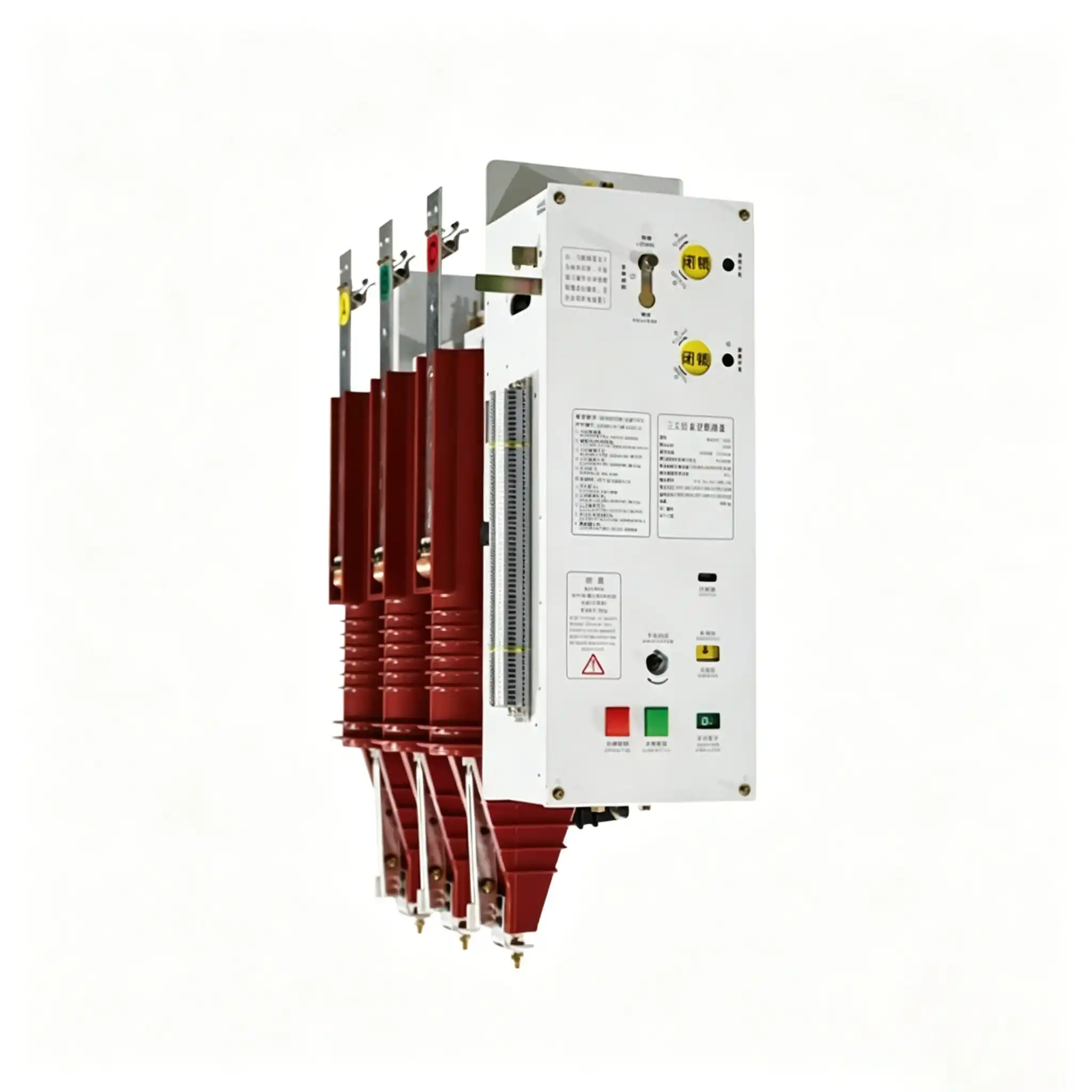
Modern electrical infrastructure demands protection devices that balance reliability, safety, and operational efficiency. Vacuum Circuit Breakers have emerged as the cornerstone technology for medium-voltage power distribution, offering superior arc extinction through sealed vacuum interrupters. Unlike legacy technologies reliant on oil immersion or SF6 gas, these devices eliminate environmental hazards while delivering faster fault response and extended service life. For facility operators managing critical loads, utility engineers maintaining grid stability, and EPC firms designing compliant systems, understanding why this technology dominates industrial switchgear becomes essential to securing operational continuity and long-term cost control.
Understanding Vacuum Circuit Breakers: Principles and Components
These switching devices work well due to arc extinction in vacuum conditions. An electric arc vaporizes contact material into ionized metal vapor when contacts separate during circuit disruption. The arc is extinguished in microseconds by this vapor dispersing rapidly without burning in the enclosed vacuum container. This contrasts with air or oil breakers that need complicated arc chutes or long quenching times.
Core Components Driving Reliability
System heart, the vacuum interrupter, houses fixed and moving contacts in a hermetically sealed ceramic or glass enclosure. Copper-chromium alloys are used in contact materials for heat conductivity and low welding under high-current interruption. Modern spring-loaded or electromagnetic working mechanisms offer mechanical force for quick contact separation, attaining breaking durations under 0.1 seconds.
Operating mechanics have changed. Modular spring-operated systems dominate industrial applications because to their 10,000-operation mechanical durability. These systems store energy in motor-charged springs and release it instantaneously upon trip signals to maintain opening speeds independent of control circuit voltage. Magnetic actuators use permanent magnets to eliminate mechanical wear points.
Voltage and Current Ratings Aligned to Standards
Matching breakers to system needs requires precise specification. Medium-voltage units have 630A to 4000A current capacity and 3.6kV to 40.5kV rated voltage. Device breaking capacity—the greatest fault current it can safely interrupt—determines high-energy industrial network compatibility. IEC 62271-100 and ANSI C37.04-certified units guarantee short-circuit performance at 25kA to 50kA.
Precision engineering is shown in the BGH Vacuum Circuit Breaker. It meets standard 50Hz industrial distribution needs at 12kV with current choices of 630A and 1250A. IEC 62271-100, ANSI C37.04, and GB/T 1984 standards assure global acceptance, while IP65 environmental classification ensures dust and moisture resistance from -40°C to +55°C. This toughness is essential for Arctic substations and equatorial mining.
Key Advantages of Vacuum Circuit Breakers Over Other Technologies
Comparing switchgear technology shows why vacuum-based solutions dominate new and retrofit projects. Environmental concerns alone make a strong argument.
Environmental and Safety Excellence
SF6 gas breakers work at higher voltages but utilize a greenhouse gas 23,500 times more strong than CO2. Global regulations require leak monitoring and gas recovery techniques, adding complexity and cost. Containment and dielectric testing are needed for oil circuit breakers to prevent fires and pollution. Vacuum technology solves these issues—the sealed chamber contains no fluids or gasses to dispose of or monitor.
Safety advantages go beyond environmental compliance. Arc-flash incidents are less severe without explosives or flammables. The vacuum bottle stays sealed throughout its service life, reducing inspection and testing risks for maintenance staff. In substations, noise levels are usually below 75dB, preserving worker hearing.
Maintenance Simplicity and Cost Efficiency
Operational cost comparisons favor vacuum technology. Traditional oil breakers require 1-2-year oil testing, filter maintenance, and hazardous waste disposal. Gas purity and leak detection programs are needed for SF6 units. The sealed interrupter requires no maintenance, and modular working mechanisms facilitate routine inspections.
Contact degradation rates under 1% after 10,000 switching cycles mean decades-long service intervals. This resilience is valued by coastal wind farm and desert mining operators. Salty air and abrasive dust don't degrade corrosion-resistant coatings. Lifecycle costs are 20% lower than other technologies due to consumable elimination and prolonged replacement intervals.
Here are the main reliability benefits attracting procurement:
- Rapid Arc Extinction: Contact separation in 0.1 seconds limits fault energy and protects downstream equipment from thermal damage.
- Extended Mechanical Life: M2-class spring mechanisms and vacuum bottles (10,000+ cycles) are suitable for capacitor banks and motor starters.
- Consistent Performance: Altitude up to 4,000 meters, humidity extremes, and polluted atmospheres do not effect performance.
- Compact Footprint: For urban retrofits and offshore platforms, space-saving substation designs save 40% more space than oil or air-magnetic units.
These Vacuum Circuit Breaker benefits help facility managers deal with system failures, rising maintenance costs, and stricter environmental restrictions. Businesses consider total cost of ownership across 30-year service horizons beyond original purchase price.
Practical Applications and Maintenance of Vacuum Circuit Breakers
Most medium-voltage distribution topologies have deployment possibilities. Understanding common applications helps procurement teams choose best specs.
Industrial and Commercial Power Distribution
These devices safeguard motor control centers, transformer secondaries, and process equipment feeds in factories. Production processes with cyclic loads benefit from frequent switching without contact deterioration. They are used in redundant power routes in data centers, where outage costs can surpass $8,000 per minute. Life-support systems in hospitals need circuit breakers in automated transfer switch assemblies.
Miners face tough circumstances. Blasting, ore processing dust, and subsurface temperature changes must be handled by equipment. IP65 units with seismic mounting provide protection when other equipment fails. These severe circumstances are addressed by the BGH model's -40°C to +55°C environmental tolerance.
Renewable Energy Integration
Traditional power lacks voltage fluctuation issues from wind and solar farms. Cloud transients and wind gusts cause harmonic distortion and quick output fluctuations in inverter-based resources. These dynamics need switchgear without nuisance tripping or contact welding. Smart grid-ready devices with optional IoT sensors monitor contact resistance and operation times in real time for predictive analytics in SCADA systems.
Advanced versions' three-station integration assembly disconnects, grounds, and interrupts circuits. This setup lowers panel size, facilitates maintenance lockout, and decreases arc-flash exposure during service. Solar systems benefit because technicians may securely isolate inverters for maintenance without disconnectors.
Proactive Maintenance Strategies
These devices require less maintenance than predecessors, yet skipping routine inspections leads to failure. Best practices include:
- Annual Visual Inspection: Check for moisture, terminal connection overheating, and mechanism lubrication.
- Biennial Operational Testing: Measure contact resistance (below 200 microohms), validate timing with high-speed recorders, test secondary control circuits.
- Quinquennial Major Inspection: Disassemble working mechanism, check spring tension, replace worn bearings, and verify vacuum integrity if interrupter contact erosion indicators touch limits.
Detailed maintenance logs allow trend analysis. Gradual contact resistance rises indicate difficulties before breakdowns. Sensor-equipped modern devices automatically notify when parameters exceed allowable ranges. Predictive maintenance optimizes labor deployment by replacing calendar-based timetables with condition-based interventions.
A petrochemical plant case study shows measurable advantages. The operator saved $80,000 in oil testing and disposal expenses, 35% fewer maintenance hours, and zero unexpected outages over five years by replacing outdated oil breakers with vacuum units in their 12kV distribution system. Equipment uptime rose from 97.2% to 99.8%, boosting productivity.
How to Choose the Right Vacuum Circuit Breaker for Your Needs?
Technical needs, certification requirements, and supplier capabilities must be balanced in specification decisions. Structured evaluations help procurement managers.
Technical Specification Matching
Start load analysis. Calculate maximum continuous current, installation short-circuit current, and switching frequency. With safety margins of 25% for continuous current and breaking capacity matching or exceeding anticipated fault current estimated from system impedance studies, ratings must exceed actual values. System nominal voltage determines voltage class; 13.8kV systems need 15kV breakers for insulating headroom.
Environmental circumstances necessitate physical protection. Indoor climate-controlled substations may accept IP4X ratings, while hostile conditions require IP65 or IP67 ingress protection. Above 1,000 meters, dielectric strength decreases or requires external insulation. Arctic and desert installations require heaters or thermal management.
Certification criteria vary by jurisdiction and project. North American projects must comply with ANSI/IEEE, European installations need CE labeling under Low Voltage Directive, and many emerging markets use IEC. The BGH series simplifies international project approvals with multi-standard certification (IEC 62271-100, ANSI C37.04, GB/T 1984).
Supplier Evaluation Criteria
Technical specifications are just half of procurement. Delivery, technical assistance, and long-term parts availability impact supplier reliability and project success.
Siemens, ABB, and Schneider Electric have vast Vacuum Circuit Breaker product ranges and installed bases, assuring component availability for decades. The engineering support teams help with application research, protection coordination, and commissioning. Standard configurations take 8-14 weeks, with accelerated alternatives costing more.
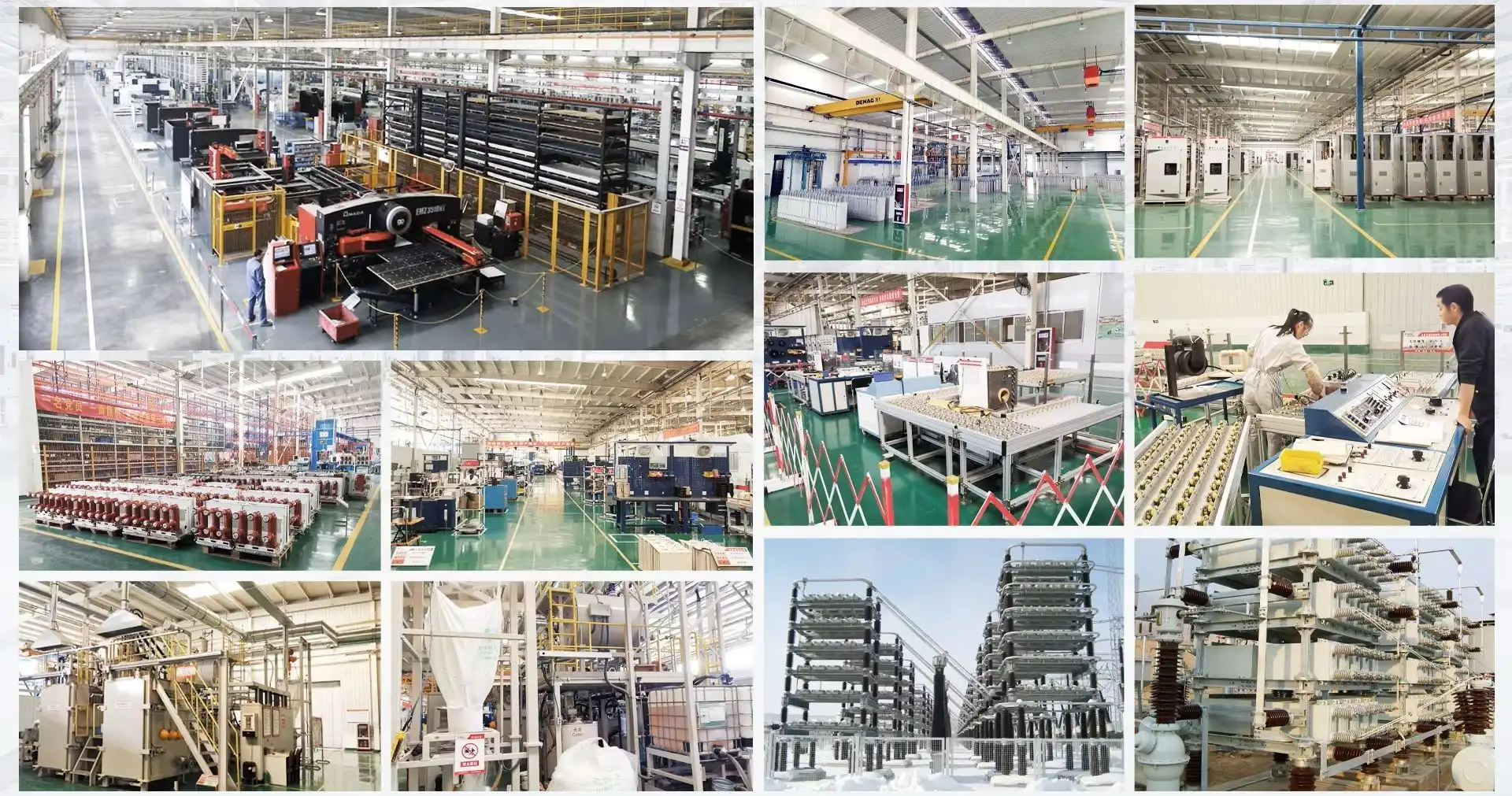
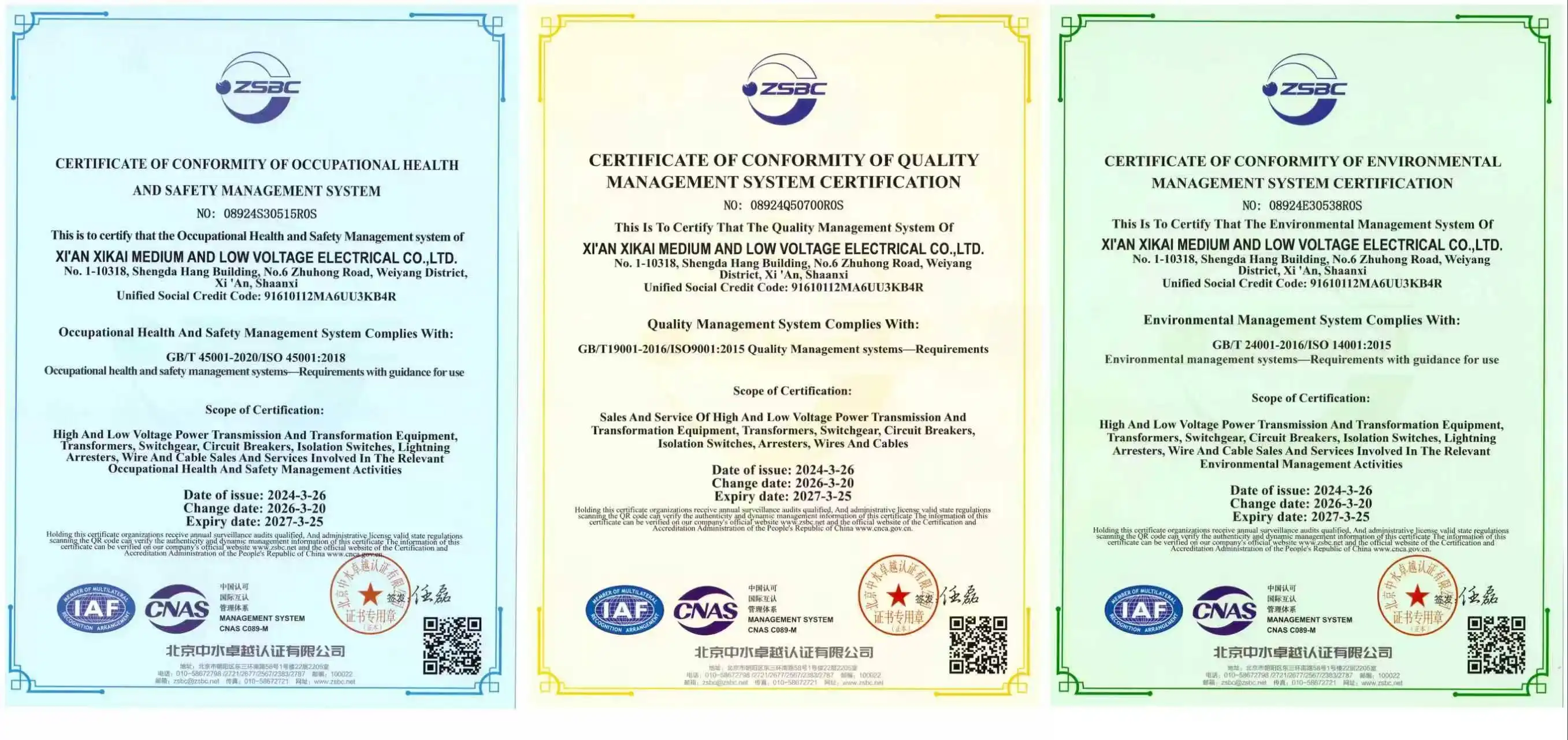
Manufacturing size, low price, and customization flexibility make Xi'an Xikai a tempting choice. Our 18+ years of experience in medium and low-voltage equipment have given us vacuum interrupter technical knowledge, including involvement in China's 863 Program. Continuous supply is ensured by production capacity across 7 key product categories, and CE, BIS, and ANSI pre-certification speeds project approvals.
Beyond unit pricing, consider these key supplier factors:
- After-Sales Support: Local service technicians, technical support, maintenance staff training.
- Supply Chain Resilience: Inventory placement, alternative component source, financial stability for long-term parts support.
- Customization Capability: Willing to adapt conventional designs for unusual mounting configurations, environmental protection, and integrated monitoring systems.
- Documentation Quality: Complete instruction manuals, panel integration CAD drawings, clear maintenance instructions.
Price should consider overall cost of ownership, not just purchase price. A cheaper equipment that needs regular maintenance or lacks replacement parts is more expensive than a reliable premium option. Ask for lifecycle cost studies of capital outlay, maintenance, and replacement scheduling.
Future Trends and Innovations in Vacuum Circuit Breakers
Technology keeps changing switchgear intelligence and performance expectations. By understanding patterns, procurement teams can future-proof infrastructure investments.
Smart Monitoring and Predictive Analytics
Sensors and communication connections turn passive protection devices into grid optimization data sources. Modern systems have temperature sensors, partial discharge detectors, current and voltage transformers, and contact wear monitors. Modbus, IEC 61850, or customized protocols feed building management systems or utility SCADA networks.
These data streams are analyzed by predictive maintenance algorithms to detect defects before breakdowns. Training on thousands of installations helps machine learning models predict contact erosion, mechanism wear, and insulation deterioration. Alerts improve spare parts inventories, schedule inspections, and avoid outages. Remote monitoring saves money on site visits for scattered installations like wind farms.
Material Science Advancements
Contact materials and container designs are refined by vacuum interrupter makers. Advanced copper-chromium alloys decrease contact erosion, increasing replacement intervals beyond 30 years in common applications. During arc extinction, longitudinal magnetic field contact topologies increase current distribution and breaking capability without increasing device size.
Researching novel vacuum envelope materials addresses durability. For earthquake zones and transit, ceramic bottles endure mechanical shock better than glass. Brazing procedures improve hermetic sealing dependability, avoiding vacuum loss problems that limited service life.
Market Growth Drivers
Global Vacuum Circuit Breaker utilization rises across sectors. Expanding renewable energy requires grid-edge protection for bidirectional power flow and fast voltage fluctuations. Substation retrofits in space-constrained urban areas require compact designs. Medium-voltage distribution complexity increases when electric heating and motor drives replace fossil fuel operations in industry.
SF6 technology is replaced faster by environmental laws. California's limitations affect North American utilities, whereas the EU's F-Gas Regulation phases out high-GWP gases. For voltage classes up to 40.5kV, vacuum technology is the favored SF6 option, with research increasing viability to higher voltages.
Our Xi'an Xikai development roadmap follows these tendencies. Current initiatives improve IoT integration, surge arrester combinations for lightning-prone areas, and plateau-rated equipment for high-altitude renewable systems. Our designs use cutting-edge materials and monitoring technology from research universities to be competitive in changing industries.
Conclusion
Vacuum Circuit Breaker technology dominates current electrical infrastructure due to dependability, safety, and lifespan economics. Rapid arc extinction in enclosed chambers reduces environmental risks and extends service life over competitors. Over decades, maintenance becomes occasional inspections rather than consumable replacements, lowering operational expenses. These smart monitoring devices may feed predictive analytics, turning protective equipment into grid optimization tools. This technology meets modern electrical system performance requirements for important hospital power systems, wind farm interconnections, and industrial operations.
FAQ
1. What maintenance intervals do vacuum circuit breakers require?
Oil and SF6 breakers require yearly inspections and fluid replacements, whereas vacuum units just need visual checks and operational testing every 2-3 years. The sealed vacuum interrupter requires minimal maintenance, however spring mechanisms need lubrication every 5,000 operations or 5 years. This reduced maintenance load reduces labor expenses, especially for remote locations like wind farms or mining operations where specialist access is expensive.
2. How do I select the appropriate vacuum circuit breaker for industrial applications?
Device ratings should match system requirements: rated voltage should exceed system voltage, continuous current rating should exceed maximum load by 25%, and breaking capacity should exceed estimated short-circuit current. IP codes and temperature range should match installation circumstances. Check compatibility with IEC 62271-100 worldwide, ANSI C37.04 in North America. Consider supplier support for long-term parts availability and commissioning technical help.
3. Do vacuum circuit breakers reduce operational costs compared to alternatives?
Lifecycle cost evaluations show 15-25% savings over SF6 or oil. No consumables (gas refills or oil replacements), minimal maintenance (sealed interrupters require no periodic servicing), and 30+ year replacement intervals save money. Energy efficiency increases by minimizing contact resistance and I²R losses in high-current applications. Without leak monitoring, gas recovery, or hazardous waste disposal, environmental compliance expenses evaporate.
Partner with Xi'an Xikai for Reliable Vacuum Circuit Breaker Solutions
Xi'an Xikai Medium & Low Voltage Electric Co., Ltd. manufactures vacuum circuit breakers in 7 categories and over 100 product types. The BGH series has IEC 62271-100 compliance, modular spring mechanisms, IP65 environmental protection, and 30+ years of service life. Each unit undergoes 23 inspection checkpoints, including 10,000-cycle endurance testing. Plateau-rated equipment works reliably to 4,000 meters for renewable energy installations in difficult settings. Technical consultations, bespoke configurations, and competitive pricing are available from our specialists at serina@xaxd-electric.com and amber@xaxd-electric.com and luna@xaxd-electric.com. From specification selection to commissioning, we help power distribution projects achieve maximum reliability and efficiency.
References
1. IEEE Standards Association, "IEEE Guide for AC Generator Protection," IEEE Std C37.102-2006, Institute of Electrical and Electronics Engineers, New York, 2006.
2. Slade, Paul G., "The Vacuum Interrupter: Theory, Design, and Application," CRC Press, Boca Raton, Florida, 2017.
3. International Electrotechnical Commission, "High-voltage switchgear and controlgear – Part 100: Alternating current circuit-breakers," IEC 62271-100:2021, Geneva, Switzerland, 2021.
4. Dufournet, Denis, "Vacuum Circuit Breaker Technology: Recent Developments and Future Trends," Proceedings of the International Conference on Electric Power Equipment – Switching Technology, Xi'an, China, 2019.
5. Ryan, Hugh M., "High Voltage Engineering and Testing," 3rd Edition, Institution of Engineering and Technology, London, United Kingdom, 2013.
6. Greenwood, Allan, "Vacuum Switchgear," Institution of Electrical Engineers Power Engineering Series, London, United Kingdom, 1994.