Vacuum Circuit Breakers Explained: The Technology Powering Reliable Power Grids
2026-05-29 16:05:21
Vacuum Circuit Breakers are essential for safeguarding power networks against unexpected electrical breakdowns in industrial facilities, utility grids, and commercial complexes. Advanced interruption devices like Vacuum Circuit Breakers employ a sealed vacuum chamber to kill electrical arcs during faults, isolating damaged circuits quickly and maintaining power quality. The greater dielectric strength of vacuum conditions allows these devices to accomplish reliable arc quenching within milliseconds, preserving sensitive equipment and eliminating costly downtime in mission-critical applications.
 |
 |
Understanding Vacuum Circuit Breakers: Technology and Components
What Makes Vacuum Interruption Technology Superior?
Every Vacuum Circuit Breaker has a vacuum interrupter, a sealed chamber where electrical contacts function in near-perfect vacuum. When electrical contacts split during a failure, an arc occurs. Ionized air molecules sustain this arc in atmospheric settings, but vacuum destroys this conductive medium. Electrons cannot sustain plasma flow without gas molecules, hence the arc extinguishes within microseconds. Vacuum interrupters restore full insulation strength in 5 milliseconds after contact separation due to this physical concept.
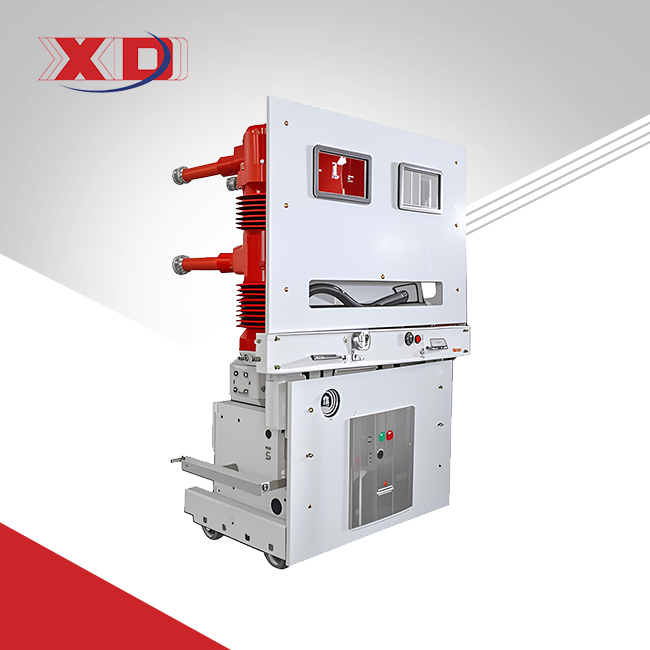
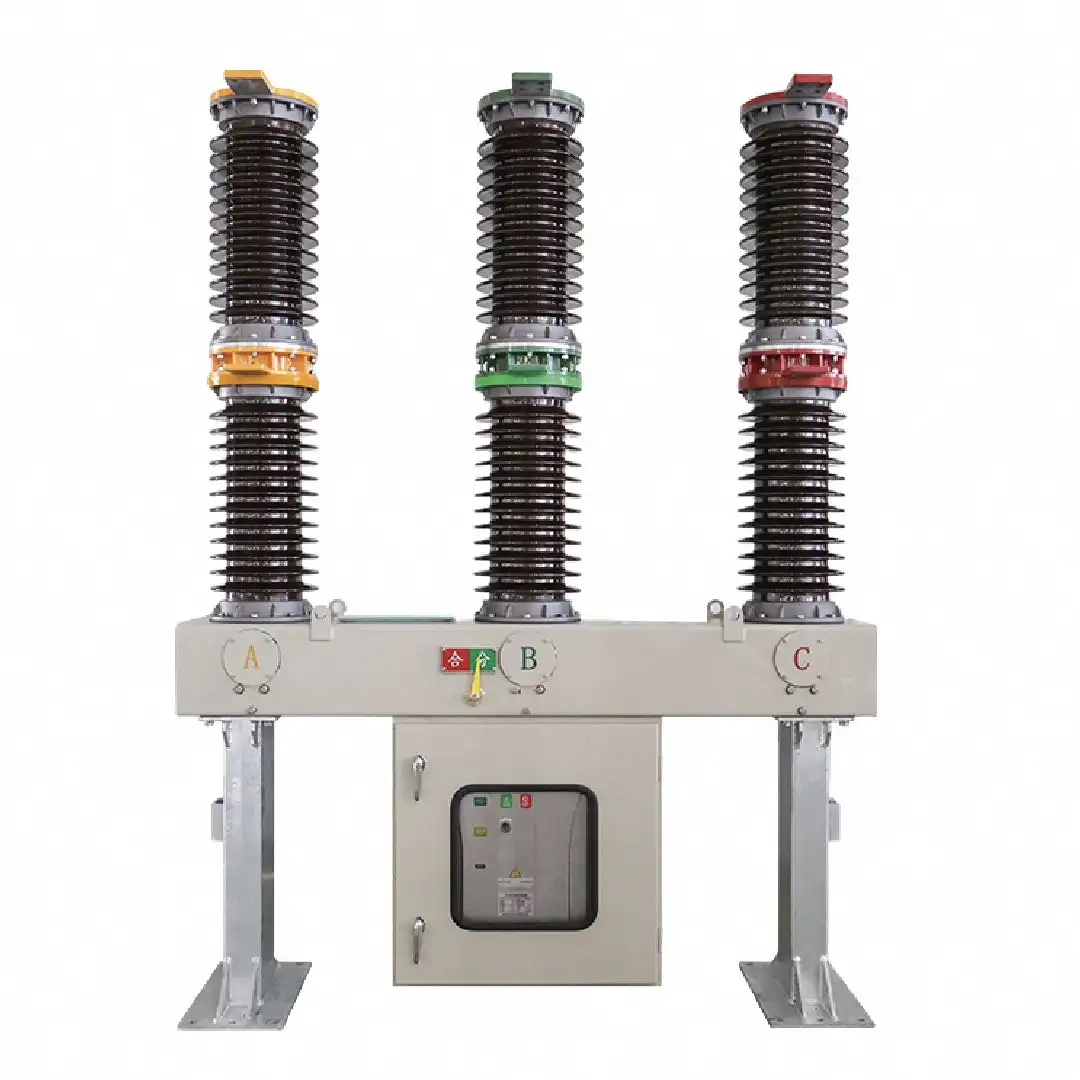
Operating mechanism is another important subsystem. Modern gadgets use modular spring-operated systems to store mechanical energy through motor charging or manual winding. At a trip signal, accumulated energy releases instantaneously, forcing contacts apart precisely. This design concept is shown in the ZW7-40.5 Outdoor Vacuum Circuit Breaker, whose downsized spring mechanism decreases footprint by 25% while performing 10,000+ mechanical operations.
Key Components Driving Performance
Construction of Vacuum Circuit Breakers has three main components. Copper-chromium connections in the vacuum bottle resist thermal stress during arc extinction. Crease distance and flashover protection are provided by porcelain or epoxy resin external insulating. The ZW7-40.5 model's large creepage distance porcelain sleeves resist contamination in polluted settings, ensuring insulation integrity in dusty industrial zones or coastal salt spray locations.
Mechanical durability from the strengthened bracket column construction allows operation in IEEE 693 seismic zones. This structural innovation helps utilities in earthquake-prone areas keep equipment running after ground motion events that might jeopardize older designs.
Medium-voltage applications generally have voltage ratings of 7.2kV to 40.5kV and current ratings of 630A to 3150A, depending on load. In transmission substations and industrial distribution networks, 40.5kV devices like the ZW7-40.5 provide dependable protection at higher voltages. With regular maintenance, the operating lifespan can exceed 30 years, providing long-term value through consistent performance and minimum component deterioration.
Comparing Vacuum Circuit Breakers with Other Circuit Protection Technologies
Performance Advantages Over Conventional Designs
Procurement teams must compare technology strengths while assessing circuit protection choices. Although inexpensive, air circuit breakers need frequent repair owing to contact deterioration from atmospheric arc exposure. SF6 gas circuit breakers are effective yet environmentally harmful since SF6 is a greenhouse gas 23,500 times stronger than carbon dioxide. US and European regulations prefer SF6-free alternatives.
Oil circuit breakers are fire dangers and need dielectric fluid testing, complicating operations. Vacuum technology removes these issues with sealed, maintenance-free interrupter chambers. The vacuum atmosphere avoids oxidation and contamination, assuring decades of performance. Lifecycle expenses are greatly reduced by mechanical endurance ratings of M2 class (10,000 operations) without contact replacement.
Environmental and Safety Considerations
Today, electrical infrastructure procurement is driven by its environmental impact. Gas-free vacuum interrupters ease disposal and eliminate spill dangers during shipping and installation. This safety benefit is important in hospitals and data centers where environmental controls require contamination-free equipment.
Another key issue is energy efficiency. Minimizing arc energy dissipation gives Vacuum Circuit Breakers 99.9% current-breaking efficiency. Lower energy loss reduces operational expenses, which is appealing for industrial operations with restricted energy budgets. The sealed construction keeps moisture and particles out, ensuring dependable performance in harsh industrial environments without environmental control systems.
Maintenance, Troubleshooting, and Ensuring Reliable Operation
Establishing Preventive Maintenance Protocols
Optimal Vacuum Circuit Breaker dependability requires systematic inspections that match operational intensity. Sealed for life, vacuum interrupters preserve dielectric integrity without refilling or testing. Mechanical parts and electrical connections are prioritized. Standard installations should be inspected every two years or after 2,000 operations for frequently switched applications like capacitor bank control.
Technicians evaluate torque settings on bolted connections during maintenance periods for terminal discolouration indicating heat damage. Keeping functioning mechanism components lubricated avoids friction breakdowns. The modular spring mechanism in devices like the ZW7-40.5 allows individual assemblies to be switched onsite within hours instead of entire unit removal, reducing maintenance downtime by 30% compared to integrated solutions.
Condition Monitoring and Predictive Strategies
Condition monitoring devices in advanced facilities track performance indicators in real time. Before contact wear fails, X-ray examination or partial discharge measurement indicates deterioration. Mechanical operation counts log switching cycles, alerting when endurance limitations are reached. Predictive maintenance solutions use this data to schedule interventions during planned outages, preventing production-disrupting downtime.
A California regional utility with seismic zones used predictive maintenance for its 40.5kV Vacuum Circuit Breaker fleet, including ZW7-40.5-like equipment with strengthened bracket structures. Vibration monitoring and thermal imaging helped the utility find three mechanically failing units before catastrophic disaster. Regular maintenance preserves infrastructure investments and improves grid stability, since proactive replacement averted 48 hours of cumulative outage time across major substations.
Procurement Guide: Streamlining Your Vacuum Circuit Breaker Purchase
Defining Technical Requirements
Specificating operational factors is key to successful procurement. A 40.5kV Vacuum Circuit Breaker provides insulating margins for 38kV nominal systems. Current rating takes into account continuous load + safety factor, usually 125% of maximum projected load current. The 1250A, 1600A, and 2000A options accommodate distribution feeders and industrial tie circuits.
A thorough fault current study is needed to specify breaking capacity. Engineers calculate short-circuit current at the installation place and choose breakers with interrupting ratings above maximum fault levels by safety margins. Standards compliance verification—IEC 62271-100 for international projects, IEEE C37.04 for North American applications—ensures infrastructure compatibility and regulatory acceptability.
Environmental factors influence product choice. Weatherproof enclosures with intrusion protection are needed for outside installations. Models like the ZW7-40.5 resist corrosion and have wide creepage distance insulation to withstand extreme conditions like desert heat and coastal damp.
Identifying Reliable Suppliers and Evaluating Total Cost
US procurement experts benefit from vendors with established support infrastructure. Delivery logistics, spare parts, and technical support affect long-term ownership expenses beyond purchase price. Suppliers maintaining regional distribution hubs may quickly replace components, reducing maintenance downtime.
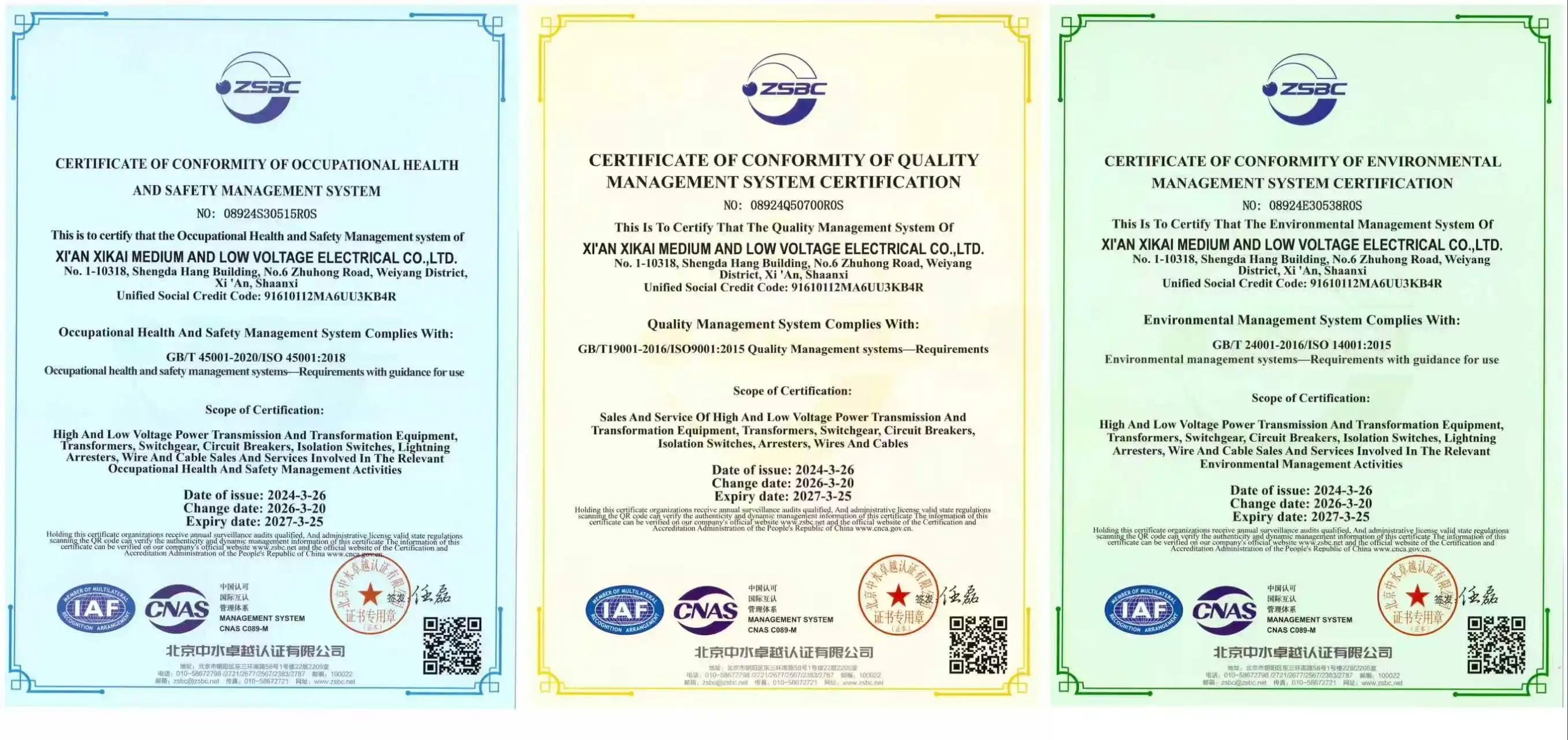
Optimization for specific applications is possible with custom engineering. Rocky Mountain utilities and Western renewable energy projects use high-altitude installations that need derating or insulation. Application engineering support helps configure goods to meet particular operating needs without costly field adjustments. Demanding type test results and ISO 9001, ISO 14001, and ISO 45001 certifications confirms production quality and decreases procurement risk.
Leading Manufacturers and Emerging Innovations
Global Brand Landscape
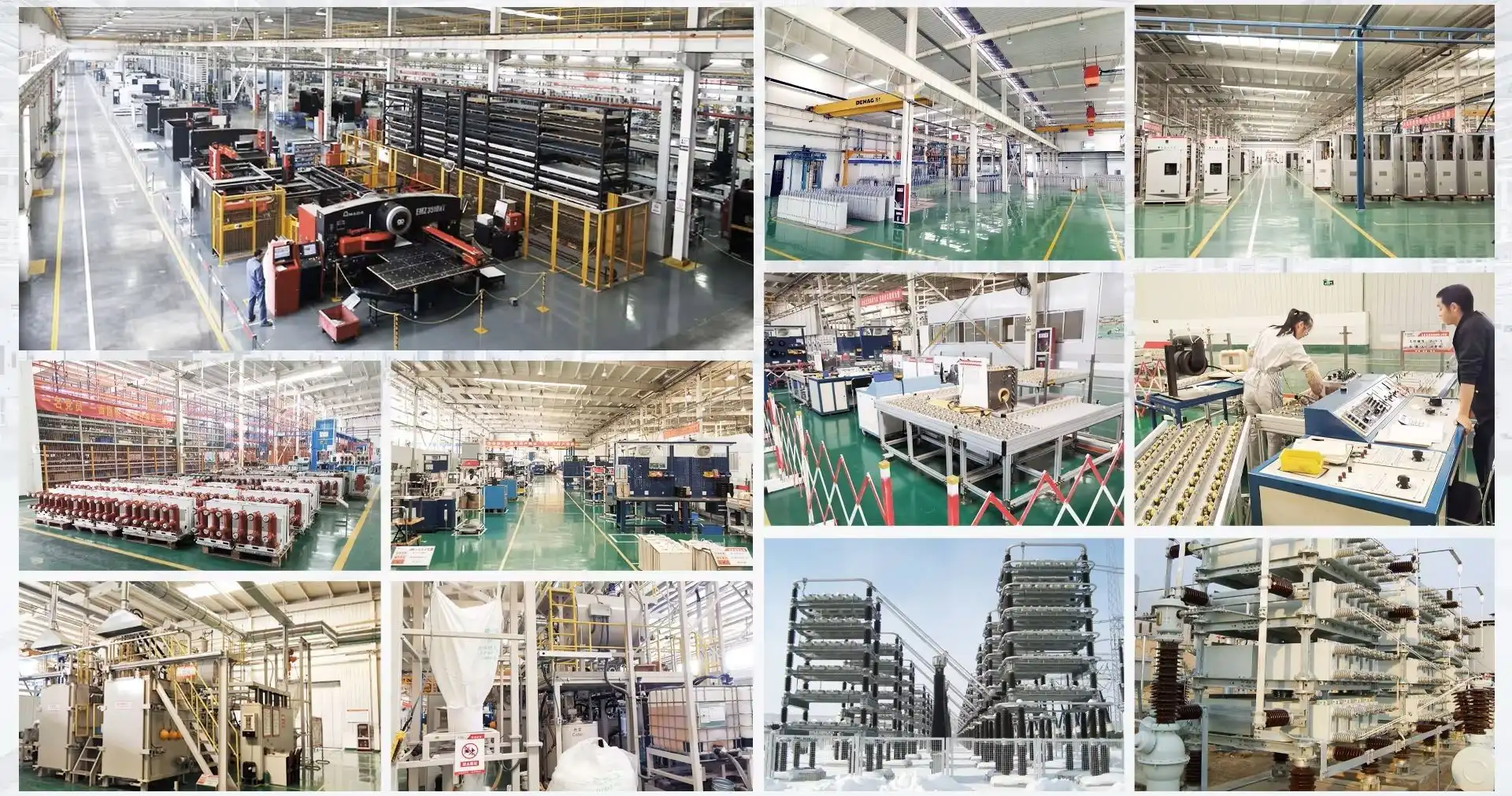
Advanced interruption technology, grid dependability, and tailored power distribution solutions are all ways Vacuum Circuit Breaker manufacturers compete. Xi'an Xikai is a significant provider of medium- and low-voltage electrical equipment for power grids, rail transportation, renewable energy, steel, and petrochemical sectors. The ZW7-40.5 outside Vacuum Circuit Breaker has modular spring-operated mechanisms, excellent seismic resistance, and anti-fouling for harsh outside situations. Xi'an Xikai strengthens its position in the worldwide power equipment market with patented technology, ISO-certified production, and expertise in high-altitude applications up to 4,000 meters.
Technological Trends Shaping Future Developments
Digital integration is the biggest Vacuum Circuit Breaker advancement. Sensor-equipped smart breakers continually monitor operating conditions and provide data to centralized asset management systems via IEC 61850 protocols. This connection helps utilities optimize inspection schedules based on device status rather than predetermined time intervals.
Environmental sustainability promotes material science advances. Alternative insulating materials are researched to reduce production carbon impact. Modular designs enable component reuse and recycling, complying with US and European circular economy regulations. As utilities rebuild old distribution networks in earthquake-prone areas, finite element analysis and dynamic testing improve seismic resistance, addressing infrastructure resilience needs.
Conclusion
For power grid stability and industrial infrastructure protection, Vacuum Circuit Breaker technology is reliable. These devices meet facility managers, utility engineers, and system integrators' operational needs with greater arc interruption performance, low maintenance, and environmental benefits over traditional systems. Modern designs like the ZW7-40.5 Outdoor Vacuum Circuit Breaker combine rugged construction with modular mechanisms to facilitate lifecycle maintenance. Technical specification guidelines and supplier assessment criteria inform strategic procurement decisions that minimise total cost of ownership and meet strict critical power distribution application performance standards.
FAQ
1. What is the primary function of a vacuum circuit breaker in high-voltage environments?
In medium-voltage power systems between 7.2kV and 40.5kV, Vacuum Circuit Breakers interrupt fault currents. The gadget quickly separates contacts in an enclosed vacuum chamber to kill electrical arcs and isolate damaged circuit segments during short circuits or overloads. This safeguards downstream equipment and preserves power quality for unaffected system portions.
2. What are the key advantages over SF6 or oil-filled circuit breakers?
SF6 greenhouse gas emissions and oil insulation fire concerns are eliminated via vacuum technology. The sealed interrupter reduces operating complexity by not requiring dielectric fluid maintenance or gas monitoring. Faster reclosing sequences and system stability are improved by arc extinction speed of 5 milliseconds dielectric recovery. Lifecycle costs are far cheaper than alternatives needing regular service due to mechanical endurance surpassing 10,000 operations without contact replacement.
3. How often should vacuum circuit breakers undergo maintenance in industrial settings?
Switching frequency and environment determine maintenance periods. Standards propose thorough inspections every two years or after 2,000 operations for frequently switched equipment. Electrical connection torque, mechanical component lubrication, and operational mechanism performance are inspected. Since it lasts 30+ years, the vacuum interrupter requires no maintenance.
Partner with Xi'an Xikai: Your Trusted Vacuum Circuit Breaker Supplier
Xi'an Xikai Medium & Low Voltage Electric Co., Ltd. offers reliable and efficient industrial Vacuum Circuit Breaker solutions for power distribution projects. We safeguard utilities, industrial facilities, and commercial complexes in tough situations with our ZW7-40.5 Outdoor Vacuum Circuit Breaker and broad product offering of 7 categories and over 100 variations. We offer custom engineering support for high-altitude installations, seismic zone specifications, and specialized environmental issues using patented technologies and ISO 9001, ISO 14001, and ISO 45001 certifications. Our 24/7 worldwide technical staff answers procurement and lifecycle support inquiries quickly. To discuss your project specs and obtain technical documentation, contact our professionals at serina@xaxd-electric.com, amber@xaxd-electric.com, and luna@xaxd-electric.com.
References
1. IEEE Standard C37.04-2018, "IEEE Standard for Ratings and Requirements for AC High-Voltage Circuit Breakers with Rated Maximum Voltage Above 1000 V," Institute of Electrical and Electronics Engineers, New York, 2018.
2. IEC 62271-100:2021, "High-voltage switchgear and controlgear – Part 100: Alternating-current circuit-breakers," International Electrotechnical Commission, Geneva, 2021.
3. Slade, Paul G., "The Vacuum Interrupter: Theory, Design, and Application," CRC Press, Boca Raton, Florida, 2017.
4. Greenwood, Allan, "Vacuum Switchgear: Electrical Engineering Principles and Practice," Institution of Engineering and Technology, London, 2016.
5. Garzon, Raul D., "High Voltage Circuit Breakers: Design and Applications," Marcel Dekker Publishing, New York, 2002.
6. CIGRE Working Group A3.27, "The Impact of the Application of Vacuum Switchgear at Transmission Voltages," Technical Brochure No. 680, International Council on Large Electric Systems, Paris, 2017.