
How to Choose the Right Cylindrical Capacitor for Your Needs?
2026-11-16 17:30:37
First, match the unit to the work to pick the correct cylindrical capacitor. Ensure that the application, voltage rating, frequency, kvar rating, capacitance tolerance and operating temperature are all correct. Then choose a self-healing capacitor-cylindrical design for stable capacitance, fault clearing and compact installation in AC power factor correction. Finally, before placing your purchase, examine the test results, paperwork and supplier’s batch consistency. This guide is written from the point of view of the manufacturer of low-voltage power equipment, therefore each step includes the questions we most frequently get from buyers of capacitor banks and switchgear panels.
Start With the Application and the Working Principle
Define What the Capacitor Must Do
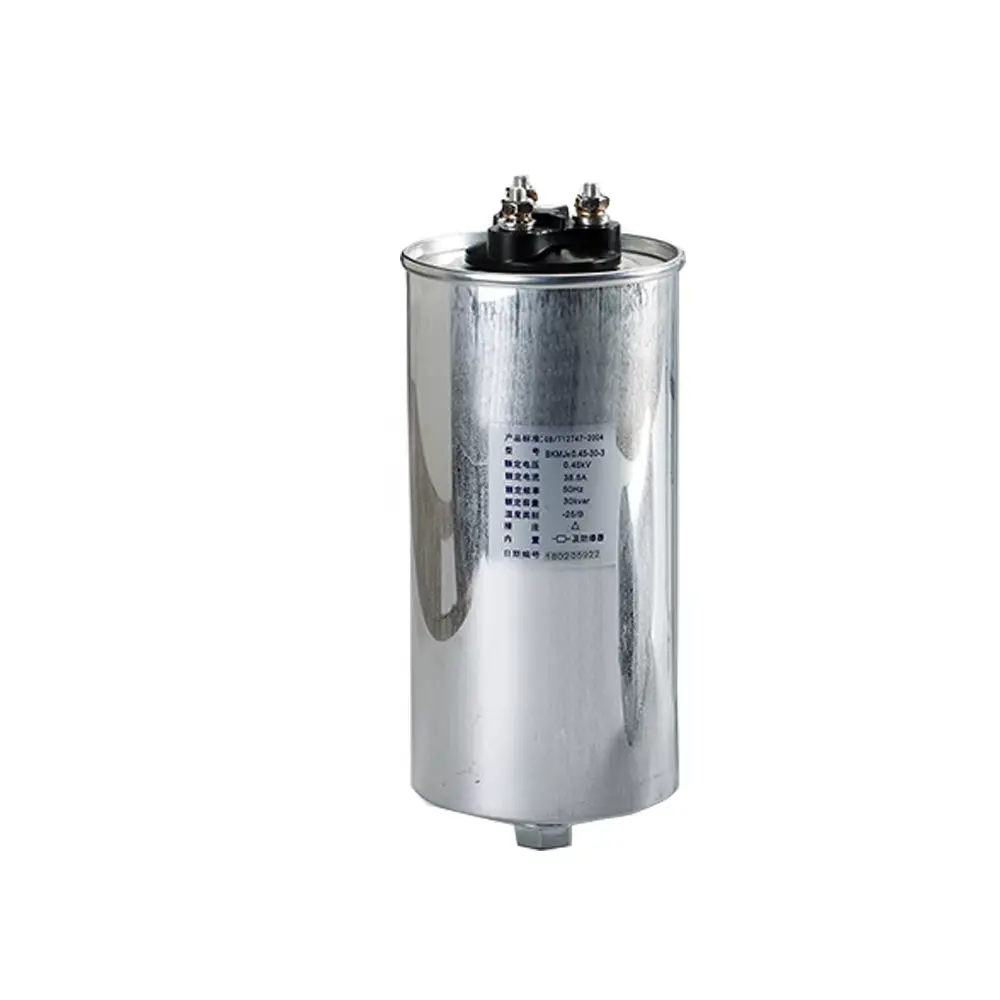
Find out whether the capacitor can correct the power factor, run a motor, filter harmonics or assist in power conversion. These are the numbers to write down : switching frequency , RMS current , environmental temperature , nominal voltage and capacitance ( kvar ) . Provide a range of voltage over the nominal voltage of the system so that the unit can adapt to variations in voltage. For a 400 V low voltage capacitor cabinet, such as the BKMJ0.46-30-3 (30 kvar), a standard model is frequently used. Be sure you know the standards your market needs, the cabinet space, the installation height, the duty cycle, and the duty cycle before you compare quotes. When buying a self-healing capacitor-cylindrical unit, skip this step and you’ll likely get a good part in the wrong panel.
How a Self-Healing Capacitor-Cylindrical Works
A self-healing capacitor-cylindrical unit rolls a metalized polypropylene sheet into a tiny section and covers it with a cover. It is a thin coating of metal that acts as an electrode. When a fault current occurs it turns the metal around a small dielectric fault to smoke. Now you can see what is damaged . The capacitor will still work with only a little loss of capacitance . The process does not restore the metal to its original shape, so repeated faults can gradually reduce the capacitance. Another safety feature is a pressure sensitive disconnector that will break the circuit if pressure builds up inside during an overload. When someone buys something, I tell them to think of self-healing as fault tolerance, not maintenance.
Why the Cylindrical Shape Matters
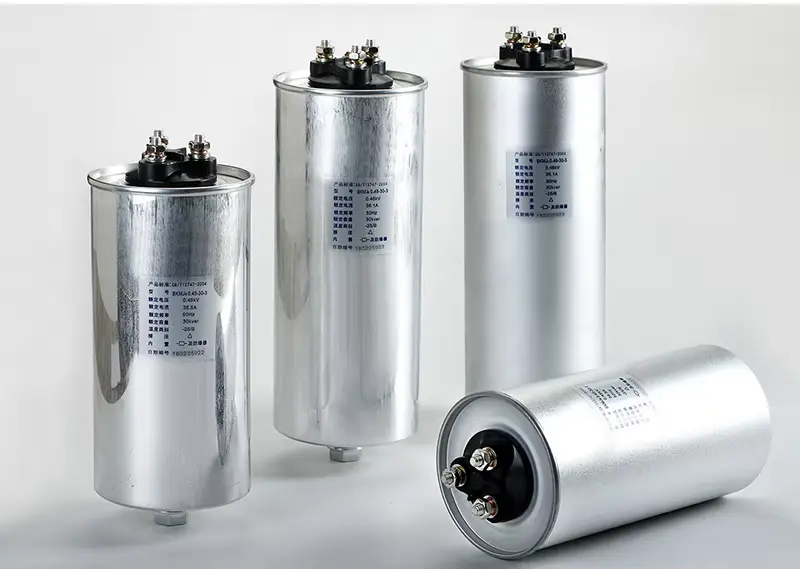
In this case, the round case works well for capacitor banks. Cylindrical units sit close to each other and mount vertically. They let air flow around each body, which helps keep cabinets from getting too hot. The shape also makes the pressure inside the wall spread out evenly. A self-healing capacitor-cylindrical unit is simple to swap out one at a time without having to redo the whole row because each unit has its own terminals and grounding bolt. Check the picture for more than just the kvar number. Look at the diameter and height as well. Panel builders waste time when they have to make a new bracket that doesn't fit the old one.
Compare Technologies and Set the Core Selection Criteria
Self-Healing Film vs. Other Capacitor Types
Don't just compare prices; look at how the technologies can be used. A film design that doesn't self-heal can get an internal short after just one breakdown. Self-healing film, on the other hand, lowers that risk. Aluminum electrolytic capacitors have a higher capacitance density, which works well in some DC circuits. However, they are polarized, so they are not usually used to fix the AC power factor. Box-type film capacitors work well too, but they take up different amounts of space on the panel. A self-healing capacitor-cylindrical unit with metallized polypropylene film is suitable for compensating 400 V AC reactive power well. Voltage, frequency, ripple current, lifetime, size, safety, and the total cost of the system should all be taken into account.
Capacitance Tolerance and Batch Consistency
Pay close attention to capacitance tolerance, especially when placing repeat orders. The steps in an automatic bank of capacitors may not match if one batch goes high and the next runs low. The processor may try to make up for it too much. Overcompensation can cause the current to rise, resonance to happen, and heat to build up. Tolerance on the datasheet and a capacitance test report for each shipment should be requested from any self-healing capacitor-cylindrical manufacturer. When the monthly lot comes in, use a capacitance meter to test a few units and write down the results. These records will show which provider keeps capacitance steady after a few months. That's just as important as the price per unit.
Voltage, Frequency, and Protection Features
With 400 V and 30 kvar, the BKMJ0.46-30-3 is a type that works with 50/60 Hz circuits. There are options for voltages up to 2000 V in this product series, so you can raise the rating when harmonics are present. The rated voltages range from 250 V to 525 V. Choose a number that leaves some room for error, as a capacitor that doesn't have enough headroom ages more quickly during switching events and other interruptions. The internal pressure-sensitive disconnector, external fuses, discharge resistors, and the grounding bolt should all be listed in every self-healing capacitor-cylindrical model's safety set. Think of these as a single protection design. Then, look at your panel layout and compare the type of terminal, the way it is mounted, and the creepage distance.
Judge Service Life, Failure Modes, and Application Fit
What Shortens Capacitor Life
The service life depends on the temperature, electricity, mechanics, and the way it was made. Too much voltage, harmonic current, frequent switches, high temperatures, lack of air flow, shaking, and repeated transients all make things age faster. Watch out for warning signs like rising dissipation factor, falling capacitance, noise, heat that doesn't make sense, fuses that keep blowing, or a disconnector that trips. A self-healing capacitor-cylindrical unit can fix some local dielectric faults, but it can't fix an overload that never goes away or a bad design for the system. IEEE Std 519 tells power systems how much harmonic distortion they can have. It's a good thing to look at when your plant has drives or other nonlinear loads.
Quality Tests Worth Requesting
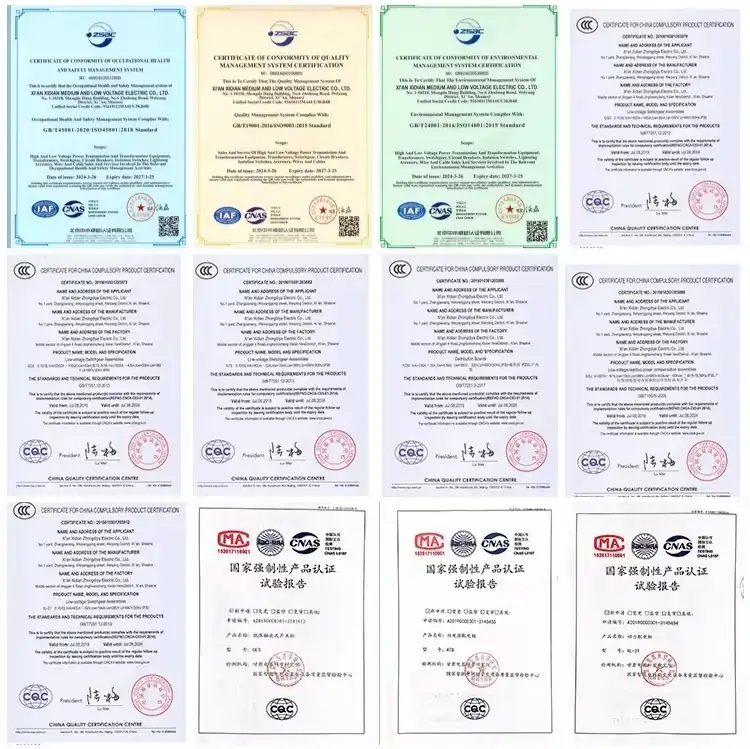
Instead of general claims, ask for test data. There are useful things like handle voltage tests (terminal to terminal and terminal to case), measuring dissipation factor (tan δ), checking insulation resistance, and getting clear information on self-healing tests. The element is shorted in a destruction test on sampled units to make sure that the pressure-sensitive disconnector opens the circuit. If it does, the unit fails open instead of breaking. Ask for rated-life numbers and temperature-life charts as well. The factors that led to each number in the test records for self-healing capacitor-cylindrical goods should be stated. Xi'an Xikai follows processes that are ISO 9001-certified, meets IEC and CCC standards, and shares test records with anyone who asks.
Matching Capacitors to Real Applications
The capacitor is put under different kinds of stress depending on the use. The unit switches on and off a lot in automatic power factor adjustment panels, so check the switching steps and inrush circumstances. The capacitor in fixed motor compensation is close to the motor and has to be able to handle vibrations and heat. A resin-filled case helps with mechanical damping. As voltage can rise above 400 V, capacitors should be paired with detuning reactors in plants that use variable frequency drives. Also, choose a higher voltage rating, like 480 V or 525 V. Industrial control screens like to be small, have easy-to-reach connections, and not get too hot. Before going into mass production, the self-healing capacitor-cylindrical design must pass a test that is representative of how it works.
Check the Supplier and Make the Final Purchase Decision
Review Documents and Manufacturer Capability
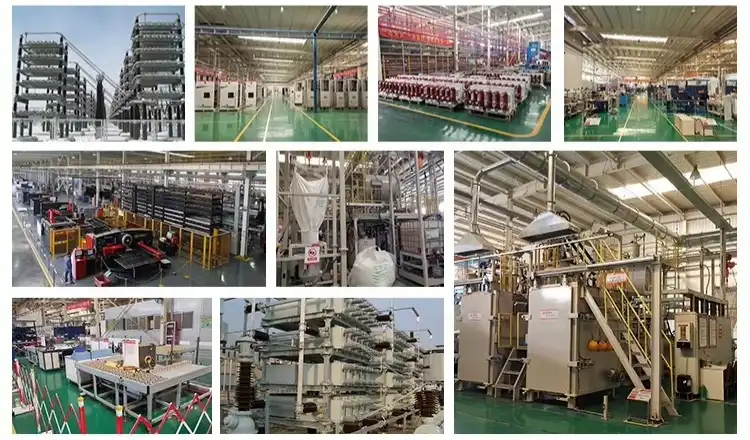
A document doesn't tell the whole story by itself. Check the tolerance, maximum voltage, frequency, allowed current, temperature category, dissipation factor, measurements, connections, and standards for capacitance. Make sure that each certificate is for the exact model and rating that you want to buy. When evaluating a manufacturer of self-healing capacitor-cylindrical, you should also consider its metallized-film technology, production capacity, test equipment, traceability, engineering support, and export experience. With seven main types of products, 34 series, and more than 100 variations, Xi'an Xikai is a major place where medium and low voltage electrical equipment is made. Our goods are used by State Grid systems, the steel and metals industry, petrochemicals, rail transportation, and clean energy.
Build a Comparison Table and Test Samples
Before you buy a lot of them, make a table with their price, service life, wait time, capacitance, tolerance, voltage, temperature range, current, measurements, terminals, safety features, certificates, and service life. If the capacitor is going to be used in OEM equipment or a way that hasn't been done before, you should order samples. Under your actual voltage, frequency, temperature, switching, and mounting conditions, test pieces of a self-healing capacitor-cylindrical model. Keep track of the noise, temperature rise, capacitance, current, and protection response. Then, buyers who buy from you again can use the same checklist for each inspection, which speeds up the process when orders come in every month.
Look Beyond Unit Price
A lot of people buy standard models like the BKMJ0.46-30-3, which is why quotes often look the same. What makes them different is the difference in capacitance between batches, on-time delivery, and how quickly engineers answer questions. Also, add up the total cost of ownership, which includes repairs, energy waste, downtime, replacement, and following the rules. Special capacitance, terminals, OEM labeling, or enclosures for dusty or humid sites are some of the custom options that can be used for projects where a catalog item doesn't work. Ask each provider how it plans to make and stock for the amount of goods you need each month so that supply doesn't stop your assembly line.
Why a Self-Healing Capacitor-Cylindrical Suits Industrial AC Applications
Key Specifications at a Glance
The 400V self-healing capacitor-cylindrical BKMJ0.46-30-3 gives 30 kvar at 400 V for 50/60 Hz systems. The series has values for voltages between 250 V and 525 V, and it can go up to 2000 V. The small body is 242 mm tall and comes with a grounding bolt. The case is filled with PU resin (soft resin) potting. The unit is small, easy to set up and wire, and doesn't need any upkeep. Inside, metallized polypropylene film does the self-healing, and an overload protector is added by a pressure-sensitive disconnector. This self-healing capacitor-cylindrical model is a good option for low-voltage capacitor cabinets because of these characteristics.
Where It Fits
Plants that make things use this model to keep CNC machines and assembly lines from getting power factor penalties. In places like substations and renewable energy sites where the output of the inverter changes, it is used to make up for the reactive power. It's used to update old systems in commercial buildings like shops and hospitals, and its small size and light weight make that easy to do. When it's in a harmonic environment, pair it with detuning reactors and check the voltage rating again. As with any self-healing capacitor-cylindrical buy, let the experts know how you'll be using it so they can make sure it fits.
Why Buyers Choose Xi'an Xikai
Xi'an Xikai makes medium and low voltage equipment using a number of technologies that have been patented. Our plateau-type equipment can be used at heights of up to 4,000 meters, and our specifications are in line with national and industry standards. Our facilities are ISO 14001-certified, and we can make capacitance or enclosures that work better in places with a lot of dust or moisture. Customers like that our solutions are reliable and tailored to their needs, and our experts review specifications directly with buying teams. For buyers who place an order every month, this direct contact helps make sure that test records, specs, and shipping plans are always the same from one lot to the next.
Conclusion
The purpose of the capacitor is the first thing that you should think about when picking one. The group is made up of voltage, kvar, frequency, temperature, and switching duty. Because the pressure-sensitive disconnector guards against overload, a self-healing capacitor-cylindrical design is suitable for correcting low-voltage AC power factor. Self-healing can't make up for lost metal area, so you still need to keep an eye on capacitance and temperature. Then, tolerance, batch consistency, harmonic exposure, and protection features tell similar models apart, and test reports, samples, and the ability of the supplier to make the choice confirm it. The BKMJ0.46-30-3 shows how these points can be put together to make a 400 V, 30 kvar unit with a small body, PU resin potting, and a grounding bolt. The most reliable result for repeat purchases comes from looking at the total cost of ownership instead of just the unit price.
FAQ
1. What is a self-healing capacitor-cylindrical unit?
The case is round and the capacitor is made of metallized polypropylene film. There is a small dielectric fault in the unit. The metal near the fault evaporates, and the unit keeps working with a small capacitance loss.
2. Does self-healing mean that the capacitor fixes itself completely?
Not at all. So capacitance can go down over time, since each event takes away a small piece of metal. During service, keep an eye on the temperature and capacitance.
3. Can the BKMJ0.46-30-3 work with both 50 Hz and 60 Hz systems?
Yes. It's a 400 V, 30 kvar model that can handle 50/60 Hz.
4. How do I get a quote? What do you need?
Please send the voltage, capacitance (kvar), frequency, application, ambient temperature, size, type of terminal, amount, documents, and shipping needs. For large orders, we suggest trying samples first.
5. How do I deal with changes in capacitance from batch to batch?
For each shipment, ask for a written tolerance and a test report. Then, use a capacitance meter to check samples of new lots that come in.
Choose the Right Cylindrical Capacitor With Xi'an Xikai
There is a 400V BKMJ0.46-30-3 from Xi'an Xikai that has self-healing technology, PU resin potting, and a grounding bolt. It was made using ISO 9001-certified methods. For repeat orders, are you looking for a self-healing capacitor-cylindrical producer? You can email serina@xaxd-electric.com, amber@xaxd-electric.com, or luna@xaxd-electric.com with your voltage, kvar, quantity, and delivery needs. For more information, go to xaxd-electric.com. Our engineers will look over your requirements and make a quote that is specific to your job.
References
1. IEC 60831-1: Shunt Power Capacitors of the Self-Healing Type for AC Systems Having a Rated Voltage up to and Including 1000 V, 2014
2. IEC 61921: Power Capacitors – Low-Voltage Power Factor Correction Banks, 2017
3. IEEE Std 18: IEEE Standard for Shunt Power Capacitors, 2012
4. IEEE Std 519: IEEE Recommended Practice and Requirements for Harmonic Control in Electric Power Systems, 2014
5. Electrical Installation Guide According to IEC International Standards (Schneider Electric), 2016
6. Technical Application Papers No. 8: Power Factor Correction and Harmonic Filtering in Electrical Plants (ABB), 2008
