
Metal-Clad Withdrawable Switchgear for Industrial Motor Control Systems
2026-11-16 17:30:43
Metal-clad withdrawable switchgear is medium-voltage equipment that switches, protects, and isolates large industrial motors. Each vacuum circuit breaker sits on a movable truck inside a grounded metal compartment, so crews can test or remove it without opening the live bus. For motor control systems, this design gives fast fault clearing, separated compartments, and safer maintenance. This guide for EPC contractors, project managers, procurement teams, and owner engineers who must agree on one specification. It covers how the equipment works, which standards apply, how to choose it, and how Xi'an Xikai supports project delivery.
What Is Metal-Clad Withdrawable Switchgear and How Does It Work?
Definition of Metal-Clad Withdrawable Switchgear
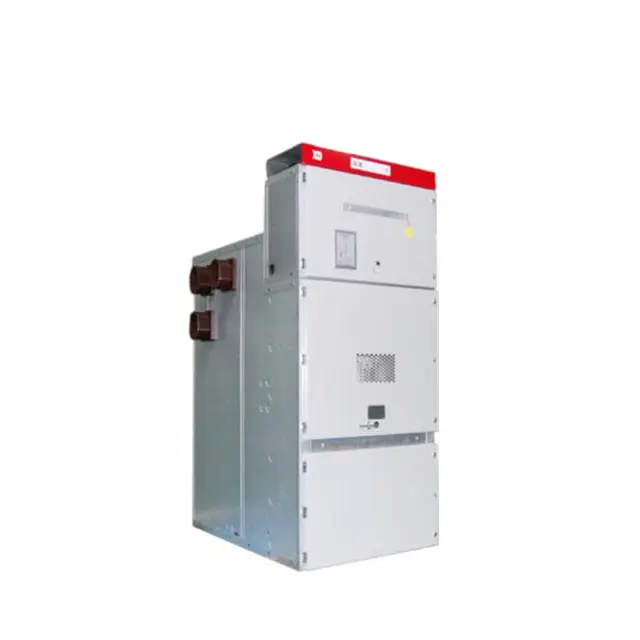
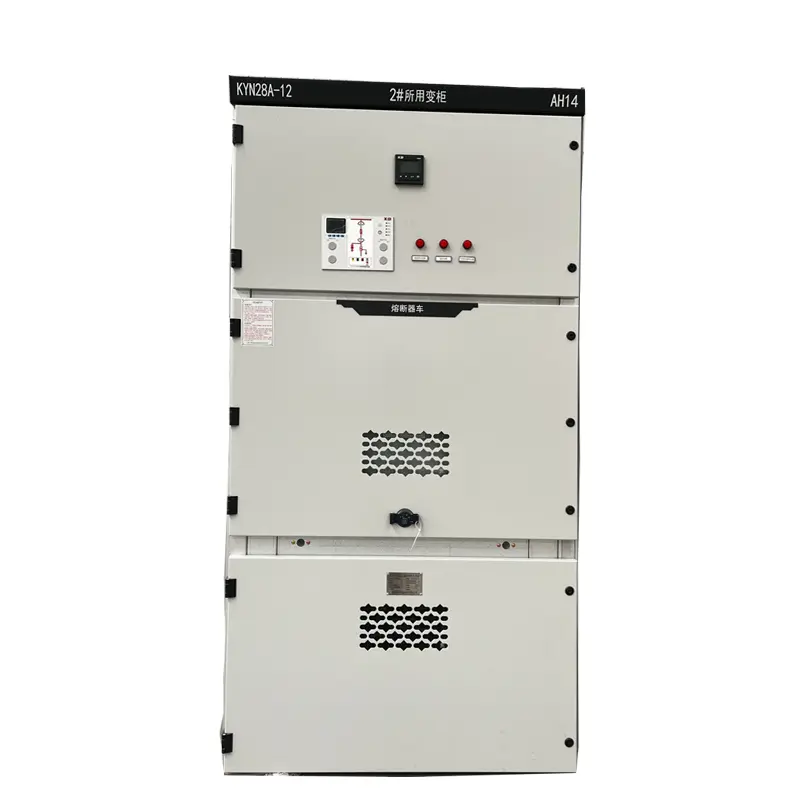
Medium-voltage equipment that has been put together in a factory is called metal-clad withdrawable switchgear. Ground boxes hold the main wires, and the vacuum circuit breaker is on a truck that can be moved. The truck can stay in a connected, test, or isolated state. The test position of the switch lets the user see how the controls work without having to connect the to the main circuit. Systems are rated in different ways based on the job and the norm. 11 kV, 12 kV, 24 kV, or 33 kV are the most common voltages. As a buyer, you should look at the ratings for withstand, insulation, breaking capacity, voltage, and current all at the same time. There are times when EPC jobs are late because they only pick by voltage, leaving gaps that show up later as change requests.
Construction and Main Components of Metal-Clad Withdrawable Switchgear
In a standard lineup, the cables, the breaker that can be taken out, the busbars, and the low-voltage control equipment are all in their own parts. When the truck moves out, shutters cover the contacts that stay in place. Because of this, you can't get to parts that are on. There are interlocks, an earthing switch, and a racking device that all work together for each step. Even if there is a short circuit, the busbars should not get too hot. They need to be able to handle a steady load. In cable compartments, there should be enough room for grounding and wiring ends. The screen is linked to the plant's PLC, DCS, or SCADA system by relays, current transformers, voltage transformers, and meters. Making the sections easy to see also helps the owner's engineer look over the plans quickly.
How Metal-Clad Withdrawable Switchgear Works in Motor Control
The power comes in and goes to the motor through the busbar, the circuit breaker, the cable compartment, and the motor cable. A motor needs a lot more power when it first starts up. Most of the time, a direct-on-line induction motor needs five to eight times as much current as it has at full load. In order for this to work, the safety settings must be able to tell the difference between a normal inrush and a real fault or a locked rotor. Current sources give power to the switch. It checks for too much current, a ground fault, an imbalance, and not enough voltage. It tells the vacuum breaker to trip when it finds a problem. This stops the power from coming from that source. The World Energy Council says that motor-driven systems use 43% to 46% of all the energy in the world. That share shows how important it is for companies to keep their power pumps safe.
Protection, Standards, and KYN28-12 Metal-Clad Withdrawable Switchgear Specifications
Protection Features and Safety Benefits
A lot of different types of safety kits are used to deal with things like overcurrent in the phase, sudden short-circuit, ground fault, thermal overload, locked rotor, long starting time, phase loss, imbalance, and voltage. Locks that are mechanical, electrical, or keyed can stop safe racking, wrong earthing, and getting into live sections. This is the reason why metal-clad withdrawable switchgear works well with motor feeds. For some projects, the inside also needs to have arc-resistant designs, as well as reinforced compartments and channels for relieving pressure. The owner should say that's what they need in the proposal and ask for test results to back that up. It says in IEEE C37.20.7 how to check up to 52 kV switchgear for arcing faults. If you want to, you can keep an eye on the temperature, the number of breaker activities, and the relay events. This gives service teams more time to get ready and cuts down on unnecessary downtime.
Standards, Certifications, and Technical Specifications
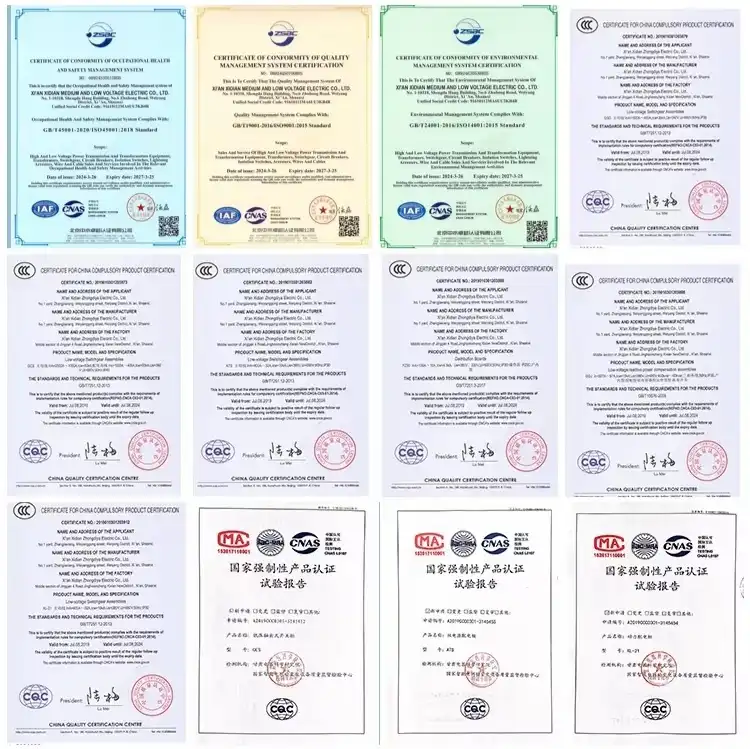
Every specification should list the name of the main standard. IEC 62271-200 covers AC metal-enclosed switchgear above 1 kV and up to 52 kV in North America, while IEEE C37.20.2 covers metal-clad switchgear. Some of the things that are talked about in these documents are dielectric performance, temperature rise, mechanical operation, short-time withstand, accessibility, and internal arc testing. To get a full list, you need to know the rated voltage, current, insulation level, breaking capacity, resist current, frequency, control voltage, CT and VT ratios, IP grade, and arc classification. Early on is the best time for project managers to ask for type-test and routine-test reports, since that's what technical reviewers and owner engineers do. People in the US should also know that the KYN28-12 is rated for 50 Hz. Make sure you know the frequency and area code needs before you place an order.
KYN28-12 Removable Metal-Clad Switchgear Key Specifications
When I do the technical evaluation with the EPC teams, these are the main things I talk about about the KYN28-12 metal-clad switchgear.
- Rating and frequency: This panel can handle 12 kV of power and 50 Hz of frequency. It works the way IEC 62271 says it should. Power-frequency withstand testing goes up to 42 kV, and the mechanical endurance test is done over 10,000 times. Before they place an order, buyers on 60 Hz networks should talk to our engineers about what frequency they need.
- Five safety interlocks: These stop wiring problems, mistakes in how the circuit breaker works, and people from getting into live areas. That way, workers are safe while motor feeds and coming panels are stacked, tested, and fixed. The project team can use these sources in their technical proposal. Owner engineers can check each interlock as part of the factory acceptance test.
- Compatibility and use: Breakers, isolation trucks, and transformers made by ABB VD4 and VS1 can be used with this switchgear. Here's how to use them. A lot of people use it to move power, start motors, and keep an eye on the grid. This shelter can handle temperatures between -25°C and +55°C, and it has an IP54 rating. That way, buyers can match the breaker's brand and rating to the project's launch date.
These settings help your team improve the accuracy of the compliance grid and speed up the review process.
Comparing and Selecting Metal-Clad Withdrawable Switchgear
Metal-Clad Withdrawable Switchgear vs. Alternative Solutions
Metal-clad withdrawable switchgear is a good compromise between safety, cost, and ease of use. It is faster to replace and fix broken parts when the breakers are removable than when they are fixed. However, the panel takes up more space and costs more to buy at first. Standard metal-enclosed equipment generally does a better job of separating main circuits and keeping them separate as long as the standard is followed. Gas-insulated switchgear (GIS) is more expensive and harder to get to than metal-clad equipment that is insulated with air. When there is a lot of dirt, pollution, or bad weather, GIS might work better. Because they don't let air in and can be pulled out, motor feeders work well in many mines, factories, and water facilities.
How to Select the Right Medium-Voltage Switchgear for Motors
First look at the whole motor system, then pick metal-clad withdrawable switchgear. Before you buy a motor, make sure you know its voltage, maximum power, full-load current, starting current, starting method, duty cycle, and plans for growth in the future. As soon as you know what the trouble current might be, you can set the numbers for the resistor, breaker, busbar, and insulation. Talk about grounding, how to coordinate protection, how well internal arcs work, communication protocols, how to route cables, and how much space there is for maintenance. What's around us is also important. Xi'an Xikai plateau-type tools can work at heights of up to 4,000 meters, which makes them useful for projects in mountain and mining areas. Don't just look at how much the equipment costs when you compare quotes. Other things you should check are the test reports, the quality of the parts, delivery, setup, spare parts, and customer service for the warranty.
Common Selection Mistakes and How to Avoid Them
Most problems are caused by missing instructions, not by broken tools. You might not think about the current, fault level, insulation, how the motor starts, or the surroundings if you only look at the recommended voltage. Normal feeder panels include VFDs, soft starters, transformers, and coordinating protection. If you think of them as a whole motor control package, you might forget about them. When changes are made to the design near the end of a project, the due date moves back. This is why it's best to set the single-line plan and motor timeline early on. Before you say yes, look over the test results, the gaps between the fittings, the space for bending cables, and how easy it is to do maintenance. And finally, don't just look at the price at first. Downtime risk, spare parts, the quality of commissioning, and how well the project is delivered can all change how much it really costs.
Procurement and Installation of Metal-Clad Withdrawable Switchgear
Procurement Guide: Quotation, Delivery, and Supplier Evaluation
When it comes to metal-clad withdrawable switchgear prices depend on how much voltage and current it can handle, how many panels it has, the name of the breaker, the switches, CTs, VTs, bus couplers, arc requirements, communication functions, testing, packing, and shipping scope. I think it would be fair for quotes if the base panel was kept separate from the extras, factory acceptance testing, paperwork, installation, and commissioning. Some of the most important parts of a good RFQ are the single-line diagram, motor schedule, fault level, standards, site data, cable-entry details, delivery location, Incoterms, and target date. Check to see if each supplier can make the product, if they have experience exporting, if they have references, if they offer engineering support, if they have spare parts, and if they will respond to you after the sale. Four to fifty people work on big projects, and it takes one to six months to make a choice. Words that are easy to read save weeks of work.
Installation, Operation, and Maintenance Requirements
Good work begins before the panels show up. Check the room measures, wires, cable ducts, ventilation, entry for lifting, and the foundations. Part of the factory acceptance test should be checking the wires, the insulation and dielectric, the interlock, the switch, and the time of the breakers. It should also include making sure the machine works physically. Carefully planning how to pack and lift panels keeps them from getting damaged while they are being moved and put up. The site acceptance test is done after the installation and wire end. When maintaining metal-clad withdrawable switchgear, it is important to look over the earthing, breaker mechanisms, coils, control wiring, alarms, and event records. There is a clear idea in the NETA maintenance testing specification about how often tests should be done. On important sites, condition monitoring and written lockout/tagout steps should be added. People who are trained to do so should be the only ones who build, test, or repair medium-voltage equipment.
Decision Process for Global B2B Buyers
There is less business and technical risk with a structured process. To begin, you need to identify the type of use: critical-process motor control, utility distribution, an OEM package, or distributor supply. Next, make a simple list of requirements that includes things like safety, contacts, tests, paperwork, reviews, and the area. You should only shortlist sellers who can show you valid certificates, proof of type tests, drawings, and relevant references. When people look at bids for metal-clad withdrawable switchgear, they should rate each one based on how safe it is, how much it costs, how long the wait time is, how good the service is, and how much it costs to own everything. Pick the option that has the least risk for the project as a whole. Not the option that costs the least. If there is a three-party review, the project manager, the procurement manager, and the owner engineer can all use the same scoring sheet.
Why Work With Xi'an Xikai
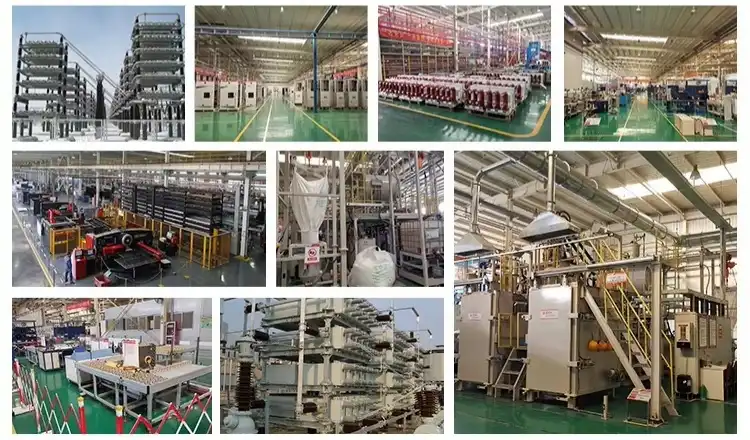
The medium and low voltage electrical equipment and systems that Xi'an Xikai Medium & Low Voltage Electric Co., Ltd. makes are used to move power around. Over 100 different kinds of high- and low-voltage switchgear, dry-type transformers, indoor and outdoor vacuum circuit breakers, instrument transformers, prefabricated substations, and power electronics are in our line of products. It is split into 34 series and 7 categories. Our gear is used in rail transportation, petrochemicals, state grid systems, power engineering, steel and metallurgy, environmentally friendly building, saving water and energy, and renewable energy. Our main products are based on a number of copyrighted technologies, and we tailor our solutions to each project based on its plans and the site's conditions. Getting metal-clad withdrawable switchgear, transformers, and breakers from the same place also makes it easier for your team to manage fewer connections.
Conclusion
With metal-clad withdrawable switchgear, the vacuum circuit breaker is on a moveable truck inside grounded sections. This way, test and fix motor feeders with less contact to live parts. This piece talked about how protection relays can tell the difference between genuine faults and start-up inrush. It also talked about why IEC 62271-200 or IEEE C37.20.2 must be in the standard and how ratings, fault current, and the surroundings affect choice. This version was put next to fixed, metal-enclosed, and gas-insulated ones. It also showed mistakes that people often make, like picking something based only on voltage. The KYN28-12 data shows that these needs can be met by a single product. It has 12 kV, 50 Hz, five interlocks, and works with ABB VD4 and VS1. RFQs that are clear, equipment that has been tested, and careful planning of the installation all help to cut down on the need to redesign and delay.
FAQ
1. Can metal-clad withdrawable switchgear work with VFDs or soft starters?
Yes, as long as that's how the system is set up. Through the switches, a safe feeder is sent to the drive or starting. The final answer is based on the standard, the grades that are needed, the control architecture, and the overall design of the system. Engineers can make sure that the safety works together if you send the supplier the motor schedule and starter type.
2. What does a quotation require?
If you want to get a quote, you usually need to know the single-line diagram, motor schedule, fault level, panel number, security functions, environmental data, and where the goods will be delivered. Full data lets engineers confirm rates the first time, and it makes it less likely that changes to the plan will cause delivery to be late.
3. How often should maintenance take place?
How metal-clad withdrawable switchgear is used, the past of faults, the conditions at the spot, and the manufacturer's instructions all affect how often it goes off. People who are trained should always test, rack, service, and make changes to medium-voltage equipment. It is best to keep track of each inspection on paper so that patterns can be seen over time.
4. How does it differ from standard metal-enclosed switchgear?
As long as the standard is followed, it usually helps keep the main lines separate and the compartments better organized.
Contact Xi'an Xikai for Metal-Clad Withdrawable Switchgear Quotations
Feel free to send Xi'an Xikai your single-line plan, motor schedule, fault level, and schedule date. They make metal-clad withdrawable switchgear and have gear for plateaus up to 4,000 meters high. They can also make options that are just right for your project. Our team will send you datasheets, drawings, and a delivery plan for the KYN28-12 when we get back to you. To find out more, visit xaxd-electric.com or email serina@xaxd-electric.com, amber@xaxd-electric.com, or luna@xaxd-electric.com.
References
1. IEC 62271-200: High-voltage switchgear and controlgear – AC metal-enclosed switchgear and controlgear for rated voltages above 1 kV and up to and including 52 kV, 2021
2. IEEE C37.20.2: IEEE Standard for Metal-Clad Switchgear, 2015
3. IEEE C37.20.7: IEEE Guide for Testing Metal-Enclosed Switchgear Rated Up to 52 kV for Internal Arcing Faults, 2017
4. NFPA 70E: Standard for Electrical Safety in the Workplace, 2024
5. NETA MTS: Standard for Maintenance Testing Specifications for Electrical Power Equipment and Systems, 2023
6. International Energy Agency: Energy-Efficiency Policy Opportunities for Electric Motor-Driven Systems, 2011
