-square BKMJ_1758505876091.webp)
50KVAR Self-healing Capacitor for PFC(Power factor correction)-square BKMJ
How to Eliminate Power Penalties and Lower Bills with 10kV Compensation Devices
2026-05-15 16:05:10
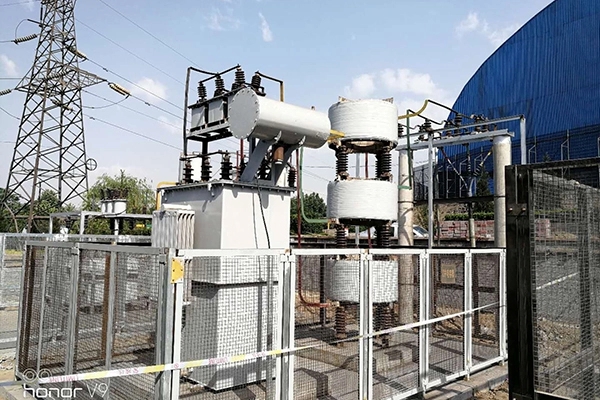
Each day, rising energy costs and utility fines make it harder for businesses to make money. These problems can be fixed by a 10kV High Voltage Reactive Power Compensation Device that balances reactive power on the fly, keeps the power factor above 0.95, and cuts transmission losses by up to 30%. By using automatic compensation technology like the TBB10 system, facilities can get rid of penalty charges and make medium-voltage distribution networks more stable at the same time. This tried-and-true method changes how factories, data centers, and utility companies handle power quality and costs.
Understanding Reactive Power Compensation in 10kV Systems
Reactive power is the energy that moves back and forth between sources and inductive loads without doing any work. Heavy machinery, transformers, and motors in factories produce a lot of inductive reactive power, which raises the apparent power demand, which is measured in kVA. Utilities charge extra when the power factor falls below agreed-upon levels, which are usually 0.90 or 0.95. This is because low power factor means they have to provide more current to keep the same amount of active power delivery.
The Working Principles Behind Compensation Technologies
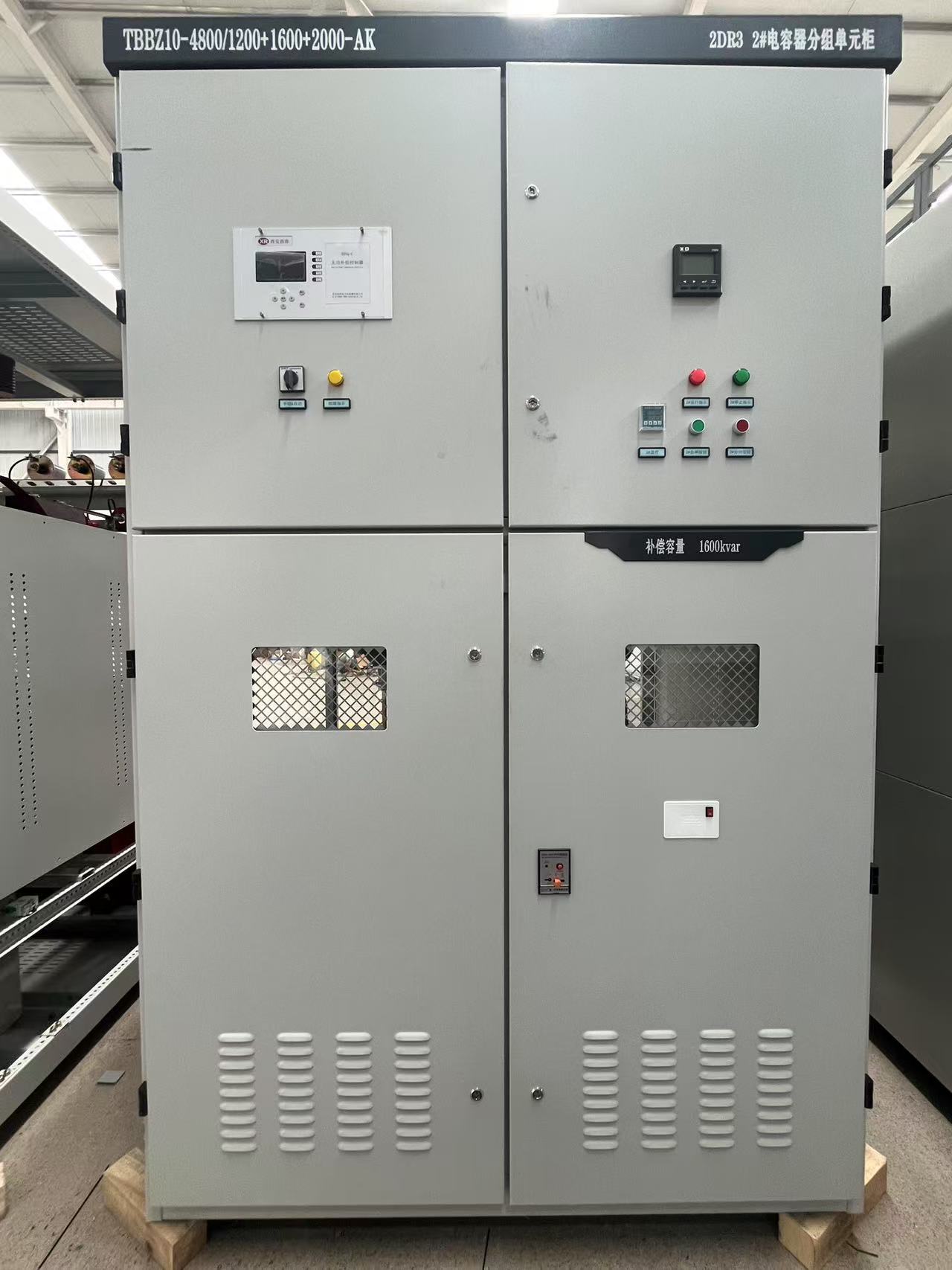
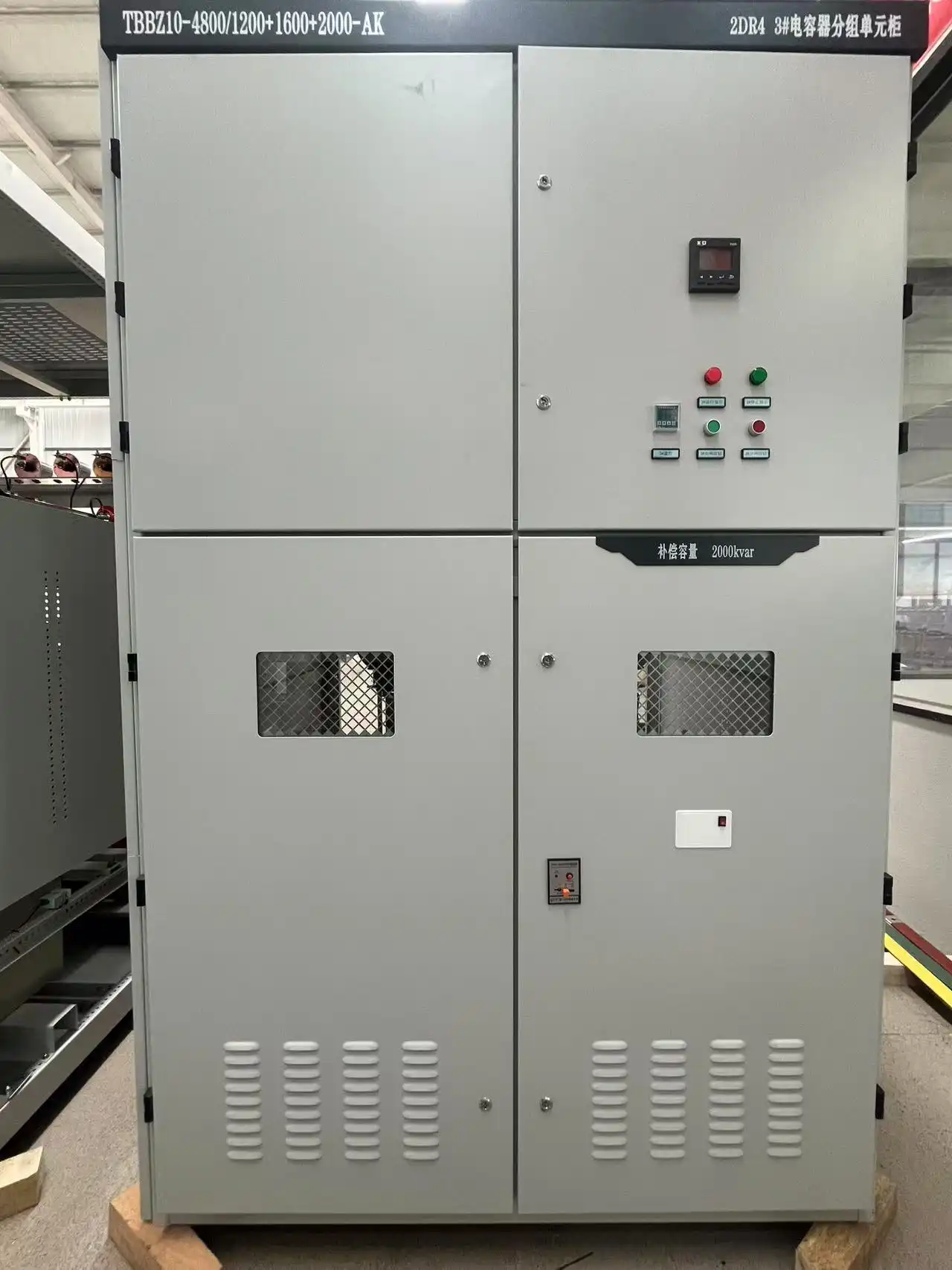
Devices that work with medium voltage add capacitive reactive power to the network to balance out inductive reactive power. Static VAR compensators offer constant adjustment, while capacitor banks offer fixed or switched capacitive compensation in discrete steps. Through advanced sensors, the TBB10 High Voltage Reactive Power Automatic Compensation Device constantly checks the voltage and current and figures out the best way to make up for it within milliseconds. The smart controller knows when the power factor is going down and quickly turns on capacitor banks to fix any reactive power imbalances before they cause voltage drops or utility fines. Modern systems rated for 6–10kV can handle loads ranging from 100 to 10,000 kVar. With automation, there are no longer any delays caused by manual switching that happen in older fixed compensation systems. The temperature-hardened parts work reliably from -25℃ to +45℃, meeting operational needs in tough industrial settings where seasonal changes affect how well equipment works.
Key Benefits Driving ROI in Industrial Applications
When reactive power compensation is added to 10kV networks, it has clear financial and operational benefits. Since transmission losses go down as power factor goes up, less energy loss directly leads to lower electricity bills. When you get rid of utility penalty charges, you can usually get your money back within 18 to 36 months, depending on the type of load and how the penalties are set up. Compensation devices not only save money right away, but they also make equipment last longer by keeping voltage levels stable and lowering the heat stress on transformers and switchgear. Changes in voltage speed up the breakdown of insulation, while steady voltage profiles protect the integrity of assets. Better power quality stops annoying trips and process interruptions in manufacturing tasks that use CNC machines or precise instruments. These improvements to reliability protect revenue streams that 10kV High Voltage Reactive Power Compensation Device could be lost during production downtime. This means that compensation devices are not just nice-to-haves; they are essential infrastructure investments.
Identifying and Solving Power Penalty Issues with 10kV Compensation Devices
Power penalties are caused by three main things: not correcting the power factor well enough, reactive overloads, and voltage fluctuations when switching loads. Industrial sites with changing loads, like arc furnaces, large pump stations, or production lines that stop and start, have changing reactive power needs that can't be met by fixed compensation. When the average power factor falls below utility thresholds, monthly penalties add up quickly. This is especially true in places with harsh penalty tariff structures.
How Automatic Compensation Strategies Mitigate Penalties
Automatic compensation systems work better than fixed installations because they can constantly adjust to changes in the load. Power factor deviations are tracked millisecond by millisecond by microprocessor-based controllers in the TBB10 device. When sudden changes in load cause reactive power deficits, the system immediately turns on more capacitor stages. When loads go down, on the other hand, capacitor banks are disconnected to stop leading power factor overcorrection, which can also be punished by penalties in some utility contracts. This flexible method keeps the power factor within small target ranges even when operational changes happen. When a factory has more than one production shift, automatic systems that can handle the big changes in load between busy and quiet times are especially helpful. The accuracy of the compensation stops both lagging and leading power factor penalties, which saves the most money compared to static solutions.
Practical Case Examples Demonstrating Measurable Improvements
After putting in a 5,000 kVar automatic compensation system, a steel fabrication plant in the Midwest cut its monthly utility fines from $14,200 to nothing. The power factor went up from 0.78 to 0.97, and line losses went down by 22%. This saved them $8,600 a month in energy costs. The monthly savings of $22,800 paid for the equipment in just 28 months, and the savings over ten years are expected to be over $2.1 million. Maintaining a device properly keeps it working well and stops expensive breakdowns. Every three months, capacitor capacitance values should be checked to make sure they are correct and that degradation does not go over 5% of rated capacity. Thermal imaging is done once a year to find hotspots in reactor windings and busbar connections before the insulation fails. The control system checks the accuracy of the sensors and the logic behind the switches to make sure that the compensation accuracy stays within the limits.
Choosing the Best 10kV Reactive Power Compensation Device for Your Facility
When choosing the right compensation technology, you need to think about the type of load, the available space, your budget, and your long-term operational needs. There are three main technologies that make up the 10kV market: synchronous condensers, capacitor banks with vacuum contactors, and STATCOM systems based on IGBT. Depending on the needs of the application, each has its own benefits.
Comparing Available Technologies and Their Applications
For loads with moderate variation rates, capacitor banks that have a 10kV High Voltage Reactive Power Compensation Device switch on and off automatically are the most cost-effective option. This type of system is shown by the TBB10, which operates at 50Hz and lets you change the capacity settings. The switching in vacuum contactors is reliable for more than 100,000 operations, and the modular design lets the system's capacity grow without any downtime. For places where load changes happen over minutes instead of milliseconds, like factories, shopping centers, and hospitals, this method works well.STATCOM solutions that use IGBT inverters offer stepless compensation with response times of less than 10ms. This makes them perfect for loads that change quickly, like electric arc furnaces or grid connections for renewable energy. These systems can easily fix both leading and lagging power factors, but they cost more to buy at first. While synchronous condensers can handle large amounts of current and help with grid inertia, they need a lot of space to be installed and need to be serviced regularly.
Critical Selection Criteria for Industrial Buyers
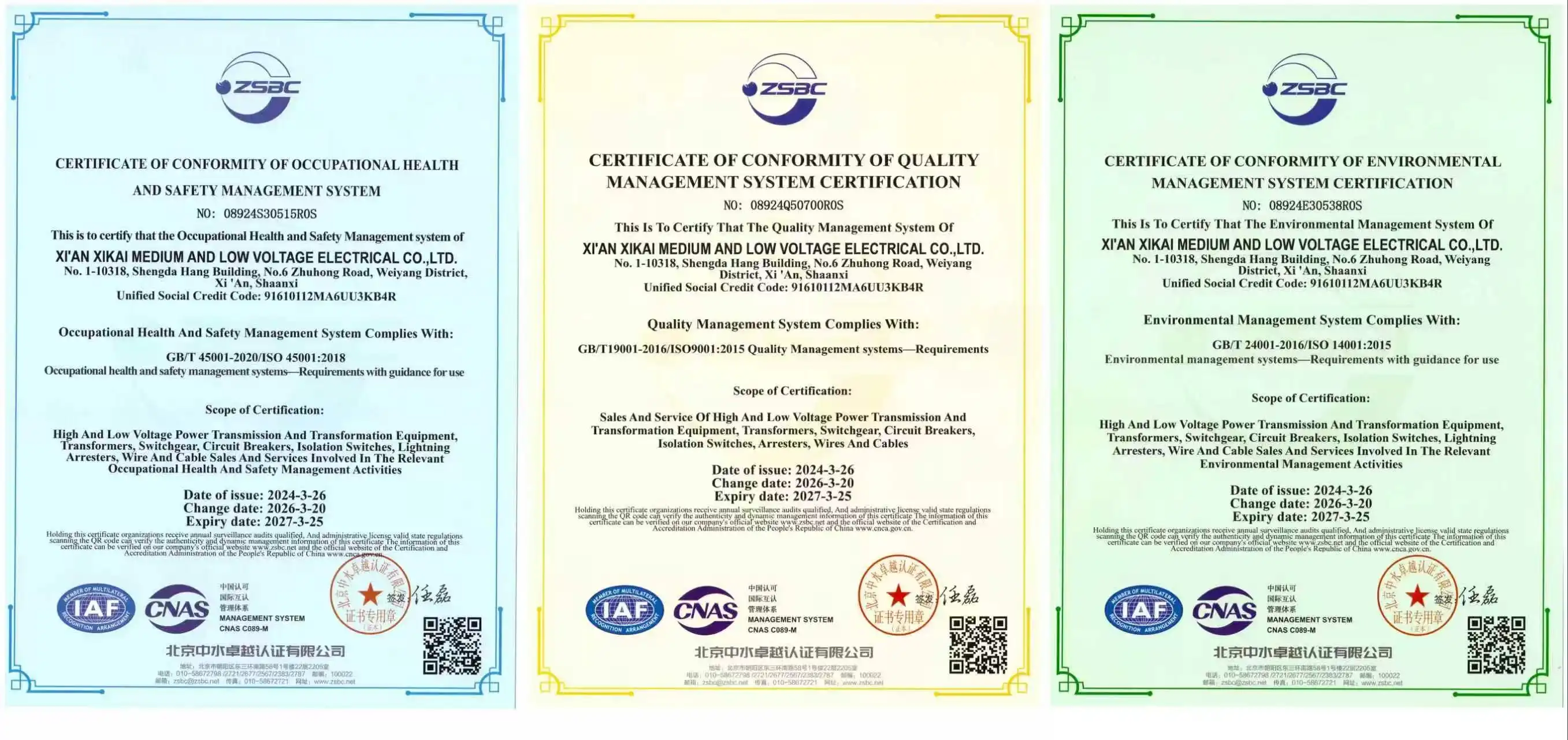
Load profile analysis figures out how much compensation capacity is needed. Find the highest reactive power demand by measuring the kVAR consumption during times of high production. Then, set the equipment's capacity with 20% extra space for growth in the future. If a facility does a lot of different things, it should figure out whether centralized compensation at the main substation or distributed compensation near the main loads is better for performance and cost. Reliability of suppliers has a huge effect on long-term success. Manufacturers with a long history, like Xi'an Xikai, use decades of engineering know-how and ISO 9001-certified production methods. To make sure they meet IEC 60871 and IEEE 18 standards, they put their TBB10 devices through strict tests of dielectric strength, partial discharge measurement, and temperature rise validation. When buying from authorized manufacturers, you can be sure that you are getting original parts, clear instructions, and quick customer service after the sale. These are all very important when equipment breaks down and production stops.
Procurement and Installation Insights for 10kV Compensation Devices
Effective procurement planning weighs the initial investment against the overall value over the product's lifetime, taking into account the cost, ease of installation, necessary commissioning, and ongoing maintenance needs. For budget approval and return on investment (ROI) projections, accurate cost forecasting is necessary for medium-voltage compensation systems.
Cost Factors and Budget Considerations for Buyers
The cost of a device goes up with its capacity and level of sophistication. Basic capacitor banks that are switched by hand start out cheaper, but it costs more to operate and make changes to them. Premiums for automatic systems like the TBB10 are not too high, but they provide better performance and eliminate the need for operational labor. The initial cost of STATCOM solutions is the highest, and they are only worth it when dynamic compensation is necessary. Installation costs vary a lot depending on the site and the infrastructure that is already there. Installing compensation into buildings that are already in use requires careful planning for power outages and temporary power arrangements. When compensation equipment is first installed in new construction projects, it costs less. Engineering firms should set aside money for studies on protective relay coordination, cable trenching, foundation work, and control wiring. Costs related to commissioning include testing how well it works, checking the power quality, and training operators. These are investments that help avoid costly problems during startup. Big industrial operators or EPC firms that are in charge of many projects can benefit from bulk purchasing. When you commit to buying a lot of something, you get better prices and build relationships with preferred suppliers that make future purchases easier. The warranty period is usually between three and five years, and it covers problems with the way the product was made and broken parts. Options for longer warranties offer extra protection for important installations where unplanned downtime could cause big financial problems.
Installation Best Practices and Technical Support Requirements
A professional installation starts with a full site survey that looks at the electrical infrastructure, the environment, and the needs for integration. Transient overvoltages can damage equipment if it is not properly grounded and protected from lightning. People are safe when there is an internal fault because of arc-resistant enclosures that meet NFPA 70 fire codes. The surge protection features of the TBB10 make it safer in areas with a lot of lightning. The effectiveness of compensation depends on how well the calibration is done. For the controller to get accurate readings, voltage and current transformers need to be precisely calibrated. The software configuration parameters should match the characteristics of the load, setting the right voltage thresholds, power factor goals, and switching hysteresis values. Integration with SCADA systems lets you monitor from afar and record historical data, which helps with planned maintenance and improving energy management.Continuous technical support from reliable suppliers makes sure that the equipment works as well as it can. Xi'an Xikai offers full support throughout the entire lifecycle of an item, from working on the initial specifications to putting it into use and providing ongoing support. Their engineering team offers troubleshooting advice 24 hours a day, seven days a week. This helps operators fix problems quickly and keep production running as smoothly as possible. Professional suppliers are set apart from transactional vendors by this support infrastructure, which protects buyers' investments over decades of service.
Maximizing Energy Savings and Long-Term Benefits with 10kV Compensation Devices
Figuring out the financial returns of an investment helps to 10kV High Voltage Reactive Power Compensation Device justify it and shows stakeholders its value. There are several ways that reactive power compensation saves money: it gets rid of penalty charges, cuts down on energy losses, lowers peak demand charges, and makes equipment last longer.
Data-Driven ROI and Operational Improvements
When the active power output stays the same, increasing the power factor from 0.80 to 0.95 lowers the line current by about 16%. Line losses are cut by about 30% by this change, since they change with the square of the current. Facilities that use 10 million kWh per year at $0.08/kWh save $240,000 a year just by cutting down on energy loss. Eliminating penalties often doubles the total savings, which shortens the time it takes to pay for itself. Keeping equipment in good shape has a lot of value that is often overlooked. Transformers with a better power factor run cooler, which makes the insulation last longer and delays the need for replacement. Stable voltage stops motor failures and makes contactors last longer. These improvements in reliability cut down on maintenance costs and increase operational continuity, which are benefits that build over decades of use.
Integration with Smart Grid and Advanced Energy Management Systems
Today's compensation devices work perfectly with energy management platforms and building automation systems. IoT connectivity on the TBB10 lets you check on power quality metrics, capacitor bank status, and system performance trends from afar. Web dashboards let facility managers see real-time data and get alerts when something isn't right that needs their attention. This visibility helps with making decisions based on data and planning maintenance ahead of time. Regulation compliance is getting harder to meet as efforts to protect the environment lead to stricter standards for power quality. Both the European and American markets put a lot of emphasis on saving energy and lowering emissions, and they offer incentives for technologies that show they can help the environment in a real way. For companies that want to get LEED certification credits and report on their sustainability, high-efficiency compensation devices help them stand out in the market among customers and investors who care about the environment.
Conclusion
Getting rid of power penalties and lowering electricity bills requires a well-planned use of 10kV High Voltage Reactive Power Compensation Device technology that is tailored to the needs of the operation. Automatic compensation devices like the TBB10 work better than fixed systems because they keep the power factor at its best under a wide range of load conditions while requiring less maintenance. Professional installation, careful choice of technology, and ongoing technical support all help to maximize return on investment (ROI) and guarantee years of reliable use. When businesses buy good compensation equipment from well-known brands, they protect their profits by getting rid of fines, using less energy, and making sure the machines work more reliably.
FAQ
1. What causes power factor penalties in industrial facilities?
When facilities use too much reactive power, utilities charge fees because grid operators have to provide more current for the same amount of active power delivery. Lagging power factor below contractual thresholds (usually 0.90–0.95) is caused by inductive loads like motors, transformers, and welding equipment. This leads to monthly penalty charges. These punishments get worse the worse and longer the power factor violation lasts.
2. How quickly do compensation devices pay for themselves?
It usually takes between 18 and 36 months to get your money back, but this depends on the baseline power factor, how the utility penalizes you, and how much energy costs. When a facility has serious power factor problems (below 0.80) and high penalty rates, investments are returned more quickly. Automatic systems like the TBB10 give a faster return on investment (ROI) than fixed compensation because they work better and need less maintenance.
3. Can compensation devices handle variable industrial loads?
When the load changes, automatic reactive power compensation devices work great because they can adjust capacitor banks on the fly as demand changes. Within 20ms, the TBB10 reacts to changes in load, keeping the power factor stable during production shifts, equipment start-up, and changes in the process. Because they are so flexible, automatic systems are necessary in modern factories with a wide range of work patterns.
Partner with Xi'an Xikai for Comprehensive Compensation Solutions
As a trusted 10kV High Voltage Reactive Power Compensation Device manufacturer for more than 25 years, Xi'an Xikai Medium & Low Voltage Electric Co., Ltd. has provided tried-and-true solutions to world leaders in industry. Intelligent reactive power management and strong construction make up our TBB10 system. It works reliably in extreme temperatures and has a capacity of up to 10,000 kVar. Manufacturing that is ISO 9001-certified guarantees high-quality standards. Each device goes through a lot of tests, such as dielectric strength validation and thermal cycling. Our modular designs let us add on to the system in the future without having to shut it down, and integrating IoT lets us monitor from afar and do preventative maintenance. Send an email to serina@xaxd-electric.com, amber@xaxd-electric.com, or luna@xaxd-electric.com to talk about your specific needs and find out how our custom compensation solutions can help you make more money.
References
1. Institute of Electrical and Electronics Engineers (IEEE), "IEEE Standard for Shunt Power Capacitors," IEEE Standard 18-2012, 2012.
2. International Electrotechnical Commission, "Shunt Capacitors for A.C. Power Systems Having a Rated Voltage Above 1000 V – Part 1: General," IEC 60871-1:2014, 2014.
3. Eaton Corporation, "Power Factor Correction: A Guide for the Plant Engineer," Eaton Technical Data Publication SA02607001E, 2021.
4. Dugan, Roger C., Mark F. McGranaghan, Surya Santoso, and H. Wayne Beaty, "Electrical Power Systems Quality," Third Edition, McGraw-Hill Education, 2012.
5. American National Standards Institute, "American National Standard for Shunt Power Capacitors," ANSI/IEEE Std 18-2002, Institute of Electrical and Electronics Engineers, 2002.
6. Dixon, Juan, Luis Moran, Jose Rodriguez, and Ricardo Domke, "Reactive Power Compensation Technologies: State-of-the-Art Review," Proceedings of the IEEE, Vol. 93, No. 12, December 2005.
_1774319679257.png)