
How to Maintain an Outdoor SF6 Circuit Breaker and Monitor Gas Pressure
2026-11-23 17:27:24
Before adding gas, check an outdoor SF6 circuit breaker on a risk-based schedule, read temperature-adjusted gas density instead of raw pressure, and fix any leaks. Write down both the density and the temperature of the area. When there are storms or faults, check the mechanism, seals, and control cabinet. Also, check the operating times and contact resistance. To deal with SF6, you should only use trained crews and approved recovery equipment. This guide was written for project managers and electrical engineers who install 35kV to 40.5kV gear in places that are hot, humid, or salty. I also use our LW8-40.5 model as a guide for real life.
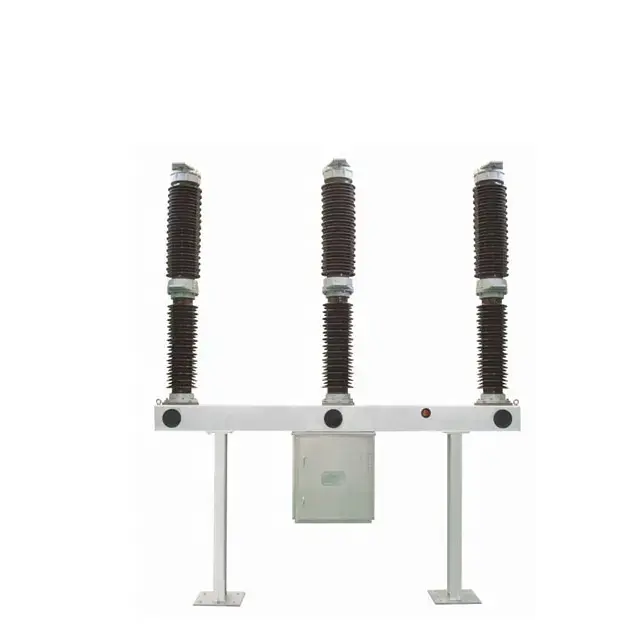
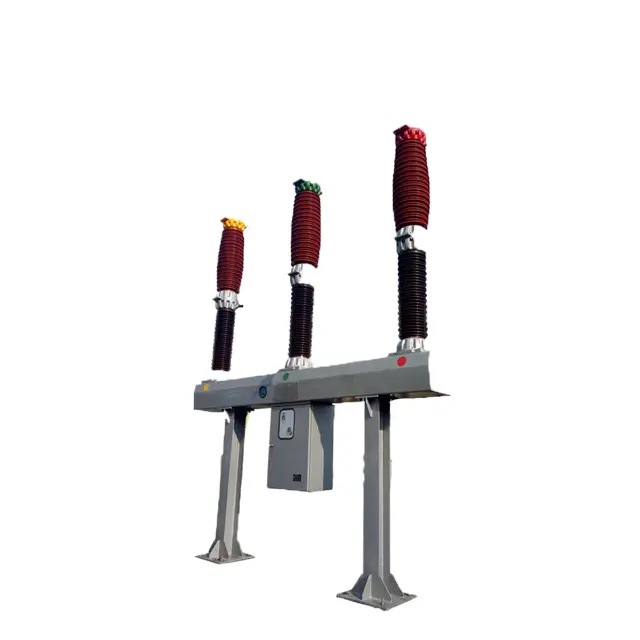
Why an Outdoor SF6 Circuit Breaker Needs Planned Care?
What Poor Maintenance Costs You?
The gas density, gas purity, and sound seals of an outdoor SF6 circuit breaker are what stop fault current there. When any of these move, the breaker may lose its ability to stop an arc and its lockout may make it impossible to use. Changes in temperature, humidity, dust, and salt spray from the sea can damage metal parts and wear out rubber seals. Usually, this leads to an unplanned outage, a more expensive repair, or more SF6 emissions. The U.S. Environmental Protection Agency says that SF6 would warm the Earth more than 20,000 times more than carbon dioxide would in 100 years, and it would stay in the air for about 3,200 years. Every leak you can avoid is good for the environment and your budget.
How the Breaker Works Inside?
Understand the components of an outdoor SF6 circuit breaker before working on it. The main ones are the control cabinet, the gas compartment, the operating mechanism, the fixed and moving contacts, the bushings, the terminals, and the density monitor. There is a fault, and the contacts separate. SF6 gas cools the arc and restores the dielectric strength. The chamber stays small because SF6 is about 2.5 to 3 times as dielectrically strong as air at room temperature and pressure. Since gas pressure changes with temperature, you need to read it along with a density value that takes temperature into account. During each inspection, make sure you have the nameplate, the manual, and the pressure-temperature chart on hand.
Maintenance-Friendly Features of the LW8-40.5
With a maximum voltage of 40.5kV, our LW8-40.5 outdoor SF6 circuit breaker is rated at 35kV. You can choose from 1600A, 2000A, 2500A, or 3150A for the rated current. It can break a 31.5kA arc at rated voltage 21 times without needing to be serviced or have SF6 replaced. The mechanical life is more than 3,000 operations, and the contacts are moved by a CT14 spring-operated mechanism. It is easier to check gasses with an MKZ-type SF6 density gage because it gives accurate readings that are not affected by temperature. You can add up to 12 current transformers per unit if you want to. The unit meets GB1984-89 and IEC 56.
Build a Risk-Based Outdoor SF6 Circuit Breaker Maintenance Schedule
Routine Visual Checks
Start with easy checks as you walk around. Keeping track of gas density, temperature, visible leaks, corrosion, grounding, cabinet status, and mechanism position is important. Check for rust on the flanges, cracked or dirty bushings, damp cabinets, and heaters that don't work. Because salt spray and humidity are the first things that damage cabinets and seals, they should be cleaned less often in coastal and industrial areas than in mild, clean areas. Voltage class, switching frequency, fault duty, climate, pollution, altitude, and site importance can all be used to set the frequency. Each technician should keep a simple log so that they can compare today's readings to those from the previous quarter and spot any slow changes on any outdoor SF6 circuit breaker right away.
Periodic Electrical and Mechanical Tests
The full condition of an outdoor SF6 circuit breaker cannot be determined by visual checks and gas readings alone. Contact resistance tests show whether the contacts are worn, dirty, or connected loosely. Moisture, tracking, and cracks can be found with insulation resistance tests and bushing inspections. Timing and motion analysis can show problems like slow operation, uneven poles, or rebound before they break. You should also check the functions of the remote control, the heaters, the interlocks, the trip and closing coils, the spring charging, and the trip and closing coils. If you have a spring mechanism like the CT14, write down the charging time and check it against the manufacturer's range. You can learn more from a trend than from a single number, so compare each result to data from the past.
Condition-Based Actions After Faults and Storms
The times on a calendar don't cover every event. If there was a fault, check the operation counter, gas density, and contact condition. Also, read the manufacturer's instructions to see if gas testing is necessary. Check the seals, drain points, cabinet gaskets, and cable entries after a big storm, flood, or salt buildup. Even though our LW8-40.5 can interrupt 31.5kA at rated voltage 21 times without any maintenance or SF6 replacement, you should still keep track of each one. You can plan mechanism maintenance on your outdoor SF6 circuit breaker by comparing the number of operations to the mechanical life, which is more than 3,000 operations.
Monitor SF6 Gas Pressure and Density Correctly
Pressure Versus Temperature-Compensated Density
Even when no gas is escaping, gas pressure goes up in the afternoon when it's hot and down at nite when it's cold. Density tells you how much gas is in the space, so it shows the real picture. Before you can judge a standard gage reading, you need to know the temperature outside and look at the manufacturer's pressure-temperature chart. Temperature is taken into account by a density monitor, which makes its alarm and lockout signals more reliable. The MKZ-type density gauge on our LW8-40.5 outdoor SF6 circuit breaker ensures that readings are correct and temperature-independent. This feature cuts down on false alarms in places where temperatures change a lot from day to day.
Verify Alarm and Lockout Settings
Compare the alarm and lockout thresholds for your outdoor SF6 circuit breaker to the manufacturer's data sheet, not to the values for another breaker. There is no one SF6 pressure value because the fill pressure and settings are different for each design and voltage class. Check the way the signal goes from the density monitor to the control cabinet and then to the station that is far away. Make sure that the alarm stage goes off first and that the lockout stage stops work to protect the interrupter. Use a calibrated reference gage to check the instrument every so often as the manufacturer suggests. Write down the date, technician, and result of each test.
Track Trends and Connect to SCADA
A set of readings is more helpful than one reading alone. In one record, write down the density, temperature, number of operations, and fault events. Then, plot the density over time while taking temperature into account. A slow, steady drop could mean there is a small leak, while a sudden jump could mean there is a problem with the sensor. Connect the density contacts to SCADA if your substation allows it. This way, operators will be notified when there is low density, rapid decline, or a problem with a sensor. Even though remote alerts make response times faster, any alarm should still be checked by a technician on site. On each outdoor SF6 circuit breaker, trend data also enables you to plan gas work during planned outages rather than emergencies.
Handle Leaks, Gas, and Compliance
Spot an SF6 Leak Early
A leak usually shows up as a slow drop in temperature-corrected density, multiple low-gas alarms, or readings that are different between poles that are similar. Valves, flanges, bushings, and seals are common places for leaks to happen. Most problems are caused by worn-out O-rings, loose fittings, vibration, corrosion, damage from shipping, and bad installation. A calibrated leak detector should be used by qualified people who follow the safety rules in the manual and on the job site. In your record, write down where each leak happened and how bad it was. A clear deviation from that rate on your outdoor SF6 circuit breaker merits a closer inspection. The LW8-40.5 has a stated annual leakage rate below 0.5%.
Respond Correctly to a Leak
Refill is not a repair. If we add gas without correcting the source, the next alarm will just go off later and release more SF6. In your permit-to-work procedure, you should: 1. Disconnect the breaker 2. Identify the source 3. Replace the faulty seal or fitting with a suitable one and refill using permitted tools After the repair, the outdoor SF6 circuit breaker should be checked for leak tightness, high gas density and appropriate operation before it is placed back into service. If there is a pressure shift after a cold nite and the temp corrected density is the same you likely don't have a leak so don't futz with moving the gas for no reason.
SF6 Handling and Environmental Rules
So that no gas escapes, only trained and authorized technicians should use approved equipment for recycling, filling, recovering, and filtering. Before using the gas again, especially after a fault interruption or internal work, check it for purity, moisture, and decomposition products. Arc by-products, like the white powder that can be found inside, are dangerous, so make sure you wear the right safety gear. IEC 62271-4 and IEEE C37.122.3 describe how to handle things, and IEC 60480 describes how to reuse things. Check state regulations, utility requirements, and project owner requirements when performing outdoor SF6 circuit breaker maintenance in the US. Ask your supplier for records of how they manage gas and how it can be tracked.
Avoid Mistakes and Plan the Workflow
Common Maintenance Mistakes
A few behaviours that make things more costly and dangerous. Some crews are overworking the gas because they are treating every pressure change as a leak. Some don’t repair the cause, but replenish. Just looking at something might overlook timing faults, worn connections or broken control circuits. Some designs don’t include in site pollution, humidity, salt, height or temperature. Finally, occasionally purchasers accept replacement parts and service providers without evaluating their compatibility to the model, their technical abilities and their ability to calibrate. An authorised service partner or the manufacturer can limit the risk of an outdoor SF6 circuit breaker being fixed wrong and causing several outages.
Choose a Breaker You Can Maintain
Upkeep begins when you buy something. Before you compare quotes, you should know what the project is for, how much current it needs, how well it can break short circuits, how well it insulates, the climate, the height, the level of pollution, and the layout. Check for temperature-adjustable density monitoring, gas valves that are easy to get to, safe sampling points, compatibility with SCADA, protection against corrosion, and long-lasting seals. Our LW8-40.5 outdoor SF6 circuit breaker is suitable for work at 35kV to 40.5kV and has an IP65-rated housing and anti-corrosion coatings. Then, look at SF6, vacuum, and oil technologies and compare them based on voltage range, cost, environmental impact, and need for maintenance. Ask each supplier about their IEC test reports, support for spare parts, help with commissioning, and warranty terms.
A Practical Maintenance Workflow
A risk based program will include visual examinations, contact resistance, insulation, timing and mechanism testing. Also done following faults, storms or salt exposure. Trained crews using certified equipment keep people safe and restrict the emission of a gas with a very high global warming potential. “Monitoring changes in population density and linking alarms with SCADA enables proactive action. Then the ground verifies each alarm. The ease of maintaining a breaker throughout its life relies on the monitoring for density, protection against corrosion, sealing, documentation, and availability of replacement parts.
Conclusion
In order to maintain an outdoor SF6 circuit breaker, it is necessary to read temperature-compensated density rather than raw pressure and to fix any leaks rather than just refilling the device. A risk based program will include visual examinations, contact resistance, insulation, timing and mechanism testing. Also done following faults, storms or salt exposure. Trained crews using certified equipment keep people safe and restrict the emission of a gas with a very high global warming potential. “Monitoring changes in population density and linking alarms with SCADA enables proactive action. Then the ground verifies each alarm. The ease of maintaining a breaker throughout its life relies on the monitoring for density, protection against corrosion, sealing, documentation and availability of replacement parts.
FAQ
1. What pressure should my SF6 breaker hold?
There is no one value that fits. The right range depends on the type of breaker, the temperature, the voltage class, and the data from the manufacturer. You can use the pressure-temperature chart or a density monitor that can adjust for temperature.
2. How do I tell temperature change from a real leak?
Write down the pressure and the temperature of the area, use the chart to convert it, and then compare it to readings you took earlier. A leak is present when the corrected density keeps going down. A rise and fall every day doesn't.
3. Can I just top up the gas?
Follow the manufacturer's instructions and don't add gas until you've found and fixed the problem. Adding on top of the problem only hides it.
4. How often should I inspect?
Intervals depend on the duty, the weather, the pollution, and the manufacturer's instructions. Sites near the coast or that are polluted need shorter intervals.
5. How does SF6 compare with vacuum?
Vacuum breakers work well for switching things on and off often at medium voltages up to 36kV. For capacitive switching and voltages above 36kV, SF6 designs are often chosen.
Contact Xi'an Xikai for Your Outdoor SF6 Circuit Breaker Project
Xi'an Xikai makes plateau-type gear for heights of up to 4,000 meters. Our LW8-40.5 has an MKZ density gage and a CT14 spring mechanism. As an outdoor SF6 circuit breaker manufacturer, serina@xaxd-electric.com, amber@xaxd-electric.com, and luna@xaxd-electric.com welcome your voltage, current, site climate, and quantity information. We'll get back to you with test documents and drawings. For more information, go to xaxd-electric.com.
References
1. IEC 62271-100: High-voltage switchgear and controlgear – Alternating-current circuit-breakers, 2021
2. IEC 62271-4: High-voltage switchgear and controlgear – Handling procedures for sulphur hexafluoride (SF6) and its mixtures, 2013
3. IEEE C37.122.3: Guide for Sulphur Hexafluoride (SF6) Gas Handling for High-Voltage (over 1000 Vac) Equipment, 2011
4. IEC 60480: Specifications for the re-use of sulphur hexafluoride (SF6) and its mixtures in electrical equipment, 2019
5. IEC 60376: Specification of technical grade sulphur hexafluoride (SF6) for use in electrical equipment, 2018
6. U.S. Environmental Protection Agency: Overview of Greenhouse Gases, 2024