
Self-healing Capacitor for Industrial Motor Control: What to Know
2026-10-08 17:40:56
If you manage power factor correction equipment or source components for low-voltage capacitor banks, you already know how much a single component failure can cost. A self-healing capacitor is a metallized polypropylene film device designed to recover automatically from localized dielectric breakdowns—without shutting down the system. In industrial motor control, where inductive loads create reactive power demand around the clock, this recovery ability directly reduces unplanned outages. This article walks through how these devices work, how they compare to conventional types, and what procurement teams should know before placing a bulk order.
Understanding Self-Healing Capacitors in Industrial Motor ControlHow the Self-Recovery Mechanism Works
A voltage spike puts stress on the insulating film, and current builds up at the weakest place. Within microseconds, the very thin metal electrode—usually a zinc-aluminum alloy deposited at 200–500 Angstroms—evaporates that spot. The arc goes away, an insulating boundary forms, and the capacitor keeps working. A potential short circuit is turned into a small loss of capacitance instead of a complete failure of the component by this process.
Why Motor Control Environments Demand This Feature
AC induction motors cause switching surges, harmonic distortion, and thermal cycling that quickly damage regular film capacitors. A self-healing capacitor can handle these situations because it sees small problems as doable events instead of fatal ones. Studies mentioned in IEC 60252-1 show that metalized film designs can work for 60,000 to 100,000 hours or more at full load, which is a lot longer than normal foil capacitors can do in the same duty cycles.
The BKMJ0.46-30-3 in Motor Control Duty
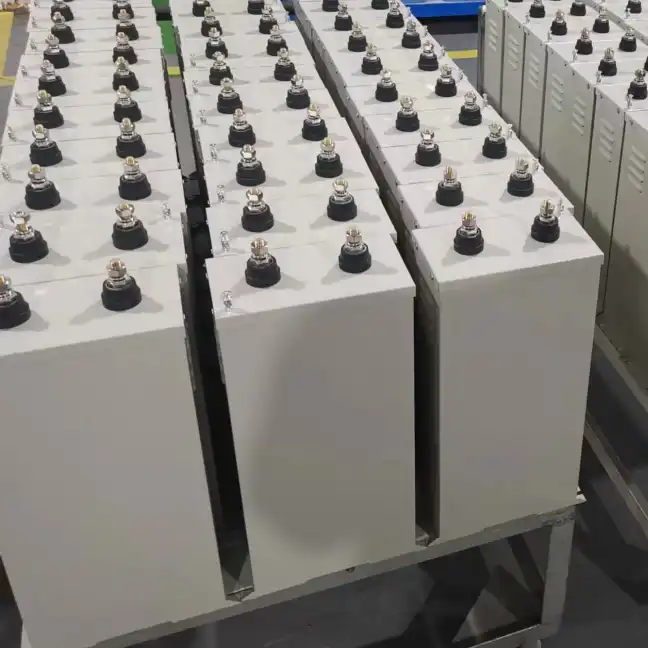
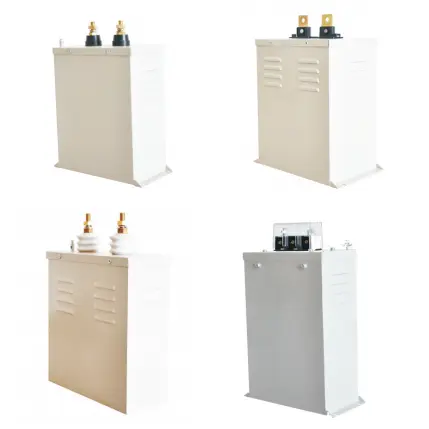
Xi'an Xikai's 400V cylinder BKMJ0.46-30-3 lets you get 30 kV at 400V and a rated voltage range of 250V to 525V (with designs that go up to 2,000V). During transients, its metalized polypropylene film layers vaporize localized defects, and a pressure-sensitive disconnector acts as a failsafe backup. The PU resin (soft resin) potting keeps dust and moisture out, so it can be used on plant floors or outside in shelters.
Comparing Self-Healing Capacitors with Traditional Capacitor Types
Film, Electrolytic, and Ceramic: A Direct Comparison
Electrolytic capacitors have a high capacitance in small spaces, but they break down quickly above 85°C and completely when the orientation changes. Ceramic capacitors are good for reducing high frequencies, but they have a low capacitance density and break when they are stressed mechanically. Standard film-foil capacitors are stable, but they're big, and a single problem with the insulator makes them useless forever. A metalized self-healing capacitor gives up a little capacitance density in exchange for much better fault tolerance. This is the right trade-off for motor control duty.
Key Electrical Parameters That Matter
Equivalent Series Resistance (ESR) has a direct effect on how much heat is made inside the capacitor. At 1 kHz, designs made of metalized polypropylene have a dissipation factor (tan ε) that is less than 0.002, which is a lot lower than electrolytic options. Most of the time, insulation resistance is higher than 3,000 M··¼F. As long as the BKMJ0.46-30-3 stays below 0.2 W/kvar, it reduces internal heat and increases component life. This is a clear benefit when hundreds of units are running constantly in a capacitor bank.
Where Each Type Belongs
In DC filtering steps where ripple current and polarity are managed, electrolytic types are still useful. When used for signal-level or RF tasks, ceramic types work well. A self-healing capacitor in cylindrical shape is the most common choice for compensating reactive power on 400V three-phase motor lines. This is because it balances voltage rating, surge tolerance, and physical size in a way that no other type does at a similar cost per kvar.
Designing Industrial Motor Control Circuits with Self-Healing Capacitors
Placement, Sizing, and Derating Principles
To get the right size, you need to know how much reactive power the motor load needs. When the voltage is 400V, a 30 kV machine uses about 43A per phase. In order to account for voltage rise caused by harmonics, engineers usually ask for a capacitor with a voltage value 10% higher than the standard grid voltage. Running the BKMJ0.46-30-3 on a 400V grid at its 460V rating (BKMJ0.46 name) adds that safety range, while the output changes based on the square of the voltage ratio.
Transient Voltage Suppression and Series Reactors
When the power goes out, inrush currents that can reach 100 times the rated value are absorbed by capacitor banks that are directly connected to the bus bars. By adding a series detuning reactor with a resistance of 5–7%, the inrush current is slowed down and harmonic frequencies, especially the 5th and 7th, are stopped from entering the capacitor. This practice keeps the self-healing mechanism from turning on too often, which would lower capacitance over time, and extends the service life.
Real-World Integration Case
In Southeast Asia, a CNC machine center switched out normal film-foil capacitors in its 400V APFC panel for self-healing cylindrical units. Over the course of a year, the plant cut reactive power penalties by 28% and got rid of three unexpected capacitor replacements that had to shut down the lines. The cylindrical shape's short 242mm height made it possible to replace it directly without having to change the structure of the panel.
Procurement Considerations for Self-Healing Capacitors in B2B Context
There's more to finding the right self-healing capacitor provider than just comparing prices per unit. Before committing to monthly orders, procurement teams need to look at how consistent the specifications are, how much capacitance changes from batch to batch, and how reliable the supply chain is.
Before signing a contract, these are the main things that every technical purchasing manager should make sure of:
IEC 60831-1 allows ±5% on nominal capacitance, which means that there is a tolerance for capacitance per batch. You should not only ask for type-test certificates but also test results for each batch. A stable power factor correction bank doesn't need to be rebalanced all the time, but one that does needs to be rebalanced every 200 to 2,000 units per order.
- Capacitance tolerance per batch: IEC 60831-1 allows ±5% on nominal capacitance. Ask for batch-level test reports, not just type-test certificates. Tight tolerance across 200–2,000 units per order is the difference between a stable power factor correction bank and one that requires constant rebalancing.
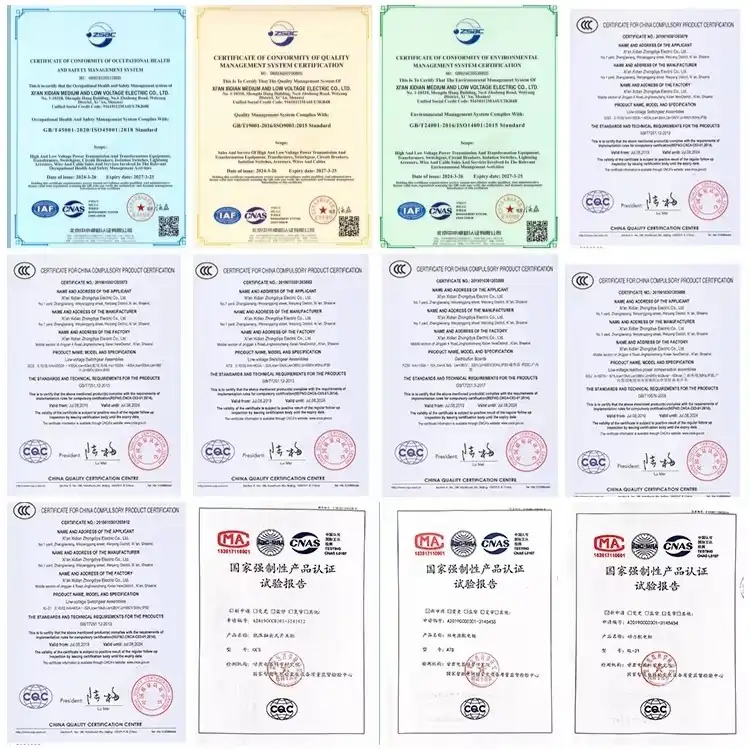
- Certification scope: Confirm that IEC, CCC, and ISO 9001 certificates cover the specific model number you are ordering, not a related product in the same family.
- MOQ and lead time alignment: Reliable self-healing capacitor manufacturers with adequate stock depth can fulfill repeat monthly orders within one week. Verify this with a trial order before locking in a supply agreement.
- Sample evaluation protocol: Request pre-shipment samples for incoming inspection. Measure capacitance, tan δ, and insulation resistance against the datasheet. Physical checks should include case expansion, terminal tightness, and PU resin integrity.
These checks keep procurement teams safe from the two most common issues that come up when buying a lot of standard capacitors: specification drift caused by price changes and inconsistent batch quality. A written quality agreement with the manufacturer that spells out acceptable tolerance bands and rejection criteria makes it easy to keep getting supplies.
Future Trends and Innovation in Self-Healing Capacitor Technology
Advanced Dielectric Materials
Manufacturers are moving away from standard polypropylene that is oriented in two directions and toward hybrid dielectric films that have nano-scale inorganic particles embedded in them. These materials make the dielectric strength 15% to 20% higher at the same film thickness. This lets more energy fit into the same space. This means that smaller capacitor banks with the same or higher kvar output can be used for motor control.
Nano-Coating and Gradient Metallization
Gradient metallization, in which the metal layer is thicker at the sides than in the middle, makes the self-healing margin higher and improves the flow of current. Heavy-edge metallization is now the standard way to make things for high-reliability uses. With UV-resistant PU resin potting, these designs can work in tropical and desert settings where temperature changes and UV light make regular capacitors age faster.
What B2B Buyers Should Watch
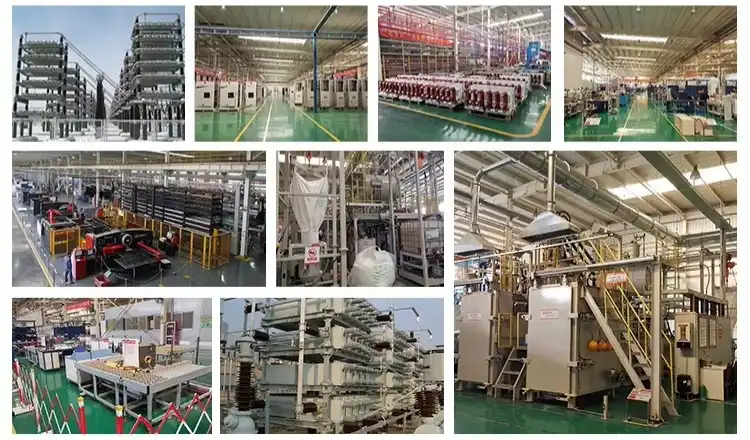
Companies that buy ISO 14001-certified production lines and automated precision winding equipment are in the best position to provide consistent quality on a large scale. Every batch made by Xi'an Xikai goes through 72 hours of load cycling, impulse voltage checks, and thermal shock trials. These quality controls directly address the batch consistency issues that most buying teams have when they need to buy a lot of standard-format units.
Conclusion
A self-healing capacitor is not an extravagance that only works in certain situations; it is the standard for any industrial motor control system that needs to keep running. Metalized polypropylene film designs are better than foil or electrolytic options because they have a recovery mechanism, a low ESR, and a long service life. When purchasing the BKMJ0.46-30-3 or an equivalent 400V/30 kvar cylindrical units on a monthly basis, the decision-making process comes down to consistent specifications, quality documentation that can be checked, and a supplier who can reliably deliver within a week.
FAQ
1.Does the self-healing process permanently reduce capacitance?
Yes, over time. Each clearing event evaporates a very small area of electrode, which slightly lowers the useful surface area. When capacitance drops more than 5% from the nameplate value, it usually means the end of its useful life. In a 400V motor control circuit that works normally, it takes years to hit this level.
2.Can this capacitor handle voltage above 400V?
The BKMJ0.46-30-3 can work with voltages between 250V and 525V, and higher voltage versions are available that go up to 2,000V. It is normal to run a 460V unit on a 400V line, and this gives you extra protection against voltage rise caused by harmonics.
3.How do I confirm a capacitor bank needs replacement?
Check the phase current against the quoted value, which for 400V units is about 1.44 kvar. Capacitance loss is shown by a reading that is much lower than the rated value. A pressure disconnector that has been tripped means there is no power. When the metal case starts to bulge, you know it's dead.
4.What maintenance does a self-healing capacitor require?
The condition of the case, the amount of dust around the ventilation paths, and the integrity of the discharge resistor are all checked every three months. Under normal working conditions, the design doesn't need any upkeep on the inside.
Contact Xi'an Xikai — Your Self-Healing Capacitor Supplier
The self-healing capacitor line from Xi'an Xikai Medium & Low Voltage Electric Co., Ltd. is backed by more than 15 patents and more than 20 years of manufacturing experience. There is a 10-year guarantee and ISO 9001-certified quality paperwork for the BKMJ0.46-30-3, and it ships in bulk within four weeks. Our team is ready to help you with your procurement process, whether you need standard 400V/30 kvar cylindrical units or configurations that are made just for high-humidity or dusty areas. You can email us at serina@xaxd-electric.com, amber@xaxd-electric.com, or luna@xaxd-electric.com, or go to xaxd-electric.com to get samples or a quote for a large order.
References
1. IEC 60831-1: Shunt Power Capacitors of the Self-Healing Type for A.C. Systems — Part 1: General — Performance, Testing and Rating, International Electrotechnical Commission, 2014.
2. IEC 60252-1: AC Motor Capacitors — Part 1: General — Performance, Testing and Rating, International Electrotechnical Commission, 2013.
3. IEC 61071: Capacitors for Power Electronics, International Electrotechnical Commission, 2007.
4. Baur, M. & Sarjeant, W.J.: "Metallized Film Capacitors: Reliability and Self-Healing Behavior", IEEE Transactions on Plasma Science, 1994.
5. Schneider Electric: Power Factor Correction and Harmonic Filtering in Electrical Plants, Technical Collection, Schneider Electric, 2009.
6. Blume, S.: Power System Harmonics, IEEE Press / Wiley-Interscience, 2007.
