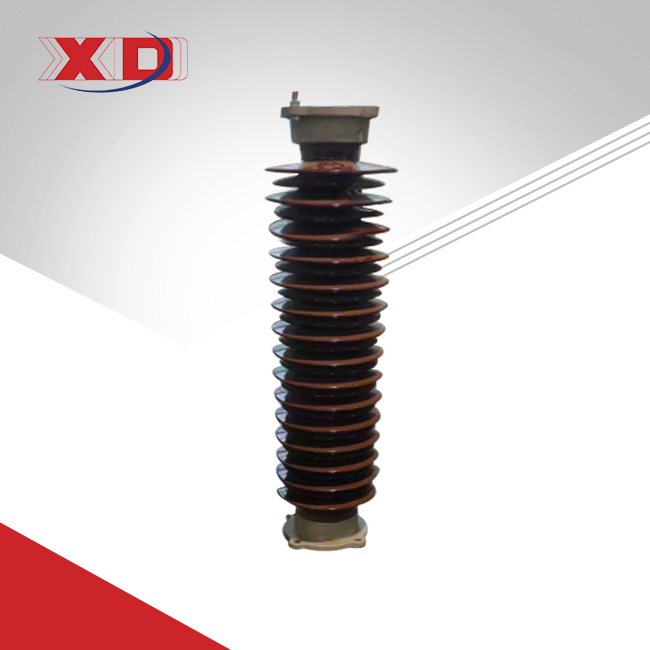
Y10W-102/266W Lightning Arrester Porcelain housed MOA for AC system
How to Use a Series Reactor for Optimal Performance?
2026-05-21 15:41:00
To get the best performance from a power system, reacting parts need to be strategically placed. The Iron Core Series Reactor is at the top of this task. When properly connected to capacitor banks and power distribution networks, these reactors reduce harmonic distortion, stop switching transients, and keep voltage profiles stable. This directly fixes operating problems that cost businesses thousands of dollars every year in lost time. The key is to understand how to control heat, match resistance to system factors correctly, and follow strict repair plans that protect against catastrophic resonance situations and make equipment last longer.
 |
 |
Introduction
Problems with power quality are one of the most important issues that manufacturing sites, energy companies, and infrastructure makers are having right now. Variable frequency drives, arc burners, and green energy transformers all produce harmonic noise that can damage equipment and make the grid less stable. Iron Core Series Reactors have become a tried-and-true way to lower these risks and improve the control of reactive power in both transmission and distribution systems. We have seen many examples of sites that have problems with voltage fluctuations, annoying trips, and capacitors failing before they should have because of bad harmonic control. These problems directly lead to lost production, high costs for replacing equipment, and fines from the government that hurt your bottom line.
The people who work in procurement and engineering need useful advice that connects technical requirements with how things work in the real world. This guide covers the whole process of setting up a reactor, from the original review of the system to improving long-term care. We focus on dry-type iron core reactors because they work well in harsh conditions and don't have the fire risks or environmental problems that come with oil-filled options. If you run a data center that needs reliable power, are in charge of utility infrastructure for millions of customers, or design electrical systems for complicated industrial installations, the tips in this article will help you get the most out of your investments and keep your business running.
Understanding the Iron Core Series Reactor
What Defines an Iron Core Series Reactor?
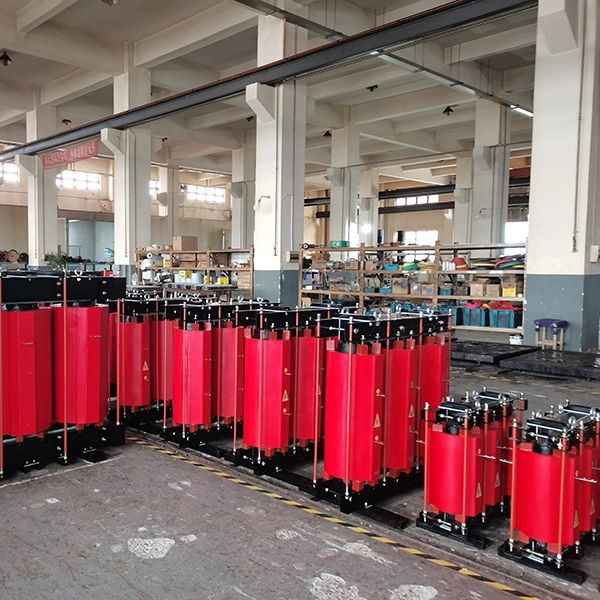
An Iron Core Series Reactor is a special kind of inductive part made up of high-permeability magnetic cores made from cold-rolled grain-oriented silicon steel laminations. Unlike air core options, the magnetic circuit efficiently compresses flux, which allows for small designs with little electromagnetic interference to equipment nearby. These reactors are connected in series with shunt capacitor banks. They do three very important things: they limit the inrush currents that happen when the capacitors are turned on, they block certain harmonic frequencies, and they stop the system resistance from resonating with capacitive loads. The shape of the magnetic core has a direct effect on how well it works. High-quality silicon steel laminations lower eddy current losses and keep the inductance steady even when the load changes. We use split air-gap designs that spread magnetic flux evenly, reducing core shaking and noise emissions. This is a very important for sites near busy areas or places that are sensitive to noise.
Technical Specifications That Matter
Buying choices depend on how well the specs of the reactor match the needs of the system. It can handle voltages ranging from 400V for low-voltage uses to 110kV for high-voltage uses. The choice of current capacity relies on the size of the capacitor bank and the expected harmonic loading. Standard values range from tens of amps to thousands of amps. The amount of current limitation and harmonic filtering is set by the impedance values, which are usually given as a percentage reactance. Dimensions and cooling ways affect how easy it is to install. For most indoor uses, natural air cooling (AN designation) is enough. For places with limited room, forced air cooling (AF designation) lets you put more power in a smaller area. Specifications for temperature rise below 95°C guarantee thermal stability even when operating continuously in temperatures as high as 40°C, which is a frequent need in industrial settings without climate control.
Optimizing Performance: How Iron Core Series Reactors Work in Power Systems
Identifying System Performance Bottlenecks
Before putting in place reactor solutions, we suggest that full power quality checks be done to measure the levels of harmonic distortion, capacitor switching transients, and voltage stability gaps. Harmonic spectrum analysis shows which frequencies are most common in your electrical surroundings. The 5th and 7th harmonics are most common in three-phase systems, while the 3rd harmonic can be a problem in places with a lot of single-phase switch-mode power sources. Voltage transients are caused by capacitor bank swapping events. These voltages travel through distribution systems and could make safety switches and control systems not work properly. Measuring the amounts of inrush current that happen during switching processes sets a standard that can be used to judge how well the reactor works. We have proof of situations where unsecured capacitor banks have inrush currents that are more than 50 times their rated values. This is a lot more than what most switching equipment can handle mechanically and thermally.
Maintenance Best Practices
During routine checks, several key signs of nuclear health are looked at. Visual examination detects physical damage, contamination buildup, and evidence of overheating, such as discolored epoxy surfaces. Insulation resistance testing performed annually using megohm meters verifies that moisture ingress has not degraded electrical isolation. Vibration analysis during operation can reveal loosened laminations or structural degradation requiring remediation. Electrical testing protocols include impedance verification that confirms reactor performance remains within specifications. Deviation beyond ±5% from nameplate values may indicate turn-to-turn insulation failure or core degradation. Acoustic emission monitoring detects partial discharge activity that precedes insulation breakdown. These predictive maintenance techniques enable condition-based intervention rather than reactive repairs after failures occur.
Comparing Iron Core Series Reactors with Other Reactor Types
Iron Core Versus Air Core Design Trade-offs
Air core reactors eliminate magnetic saturation concerns and exhibit perfectly Iron Core Series Reactor linear impedance characteristics across all current levels. This makes them advantageous for applications involving severe short-circuit duties or where absolute impedance stability is paramount. However, air core designs require significantly larger physical footprints to achieve equivalent inductance values, and their extensive external magnetic fields necessitate greater clearance distances from adjacent metallic structures. Iron Core Series Reactors deliver compact installations with contained magnetic fields, reducing installation costs and space requirements—particularly valuable in urban substations where real estate commands premium pricing.
The energy density advantage stems from the magnetic core's ability to concentrate flux, achieving desired inductance with fewer winding turns and reduced conductor volume. We consistently observe 40-60% space savings compared to equivalent air core alternatives. Cost considerations often favor iron core solutions for medium-voltage applications where the linearity advantages of air core designs provide diminishing returns. The CKSC series achieves core loss reductions of 30% compared to conventional iron core reactors, narrowing the efficiency gap with air core designs while maintaining cost competitiveness. Total cost of ownership calculations must account for installation expenses, footprint requirements, and operating losses over the equipment's multi-decade service life.
Decision Framework for Procurement Managers
Selecting appropriate reactor technology requires evaluating multiple factors beyond initial purchase price. Application environment drives fundamental technology choices—indoor installations favor dry-type solutions, while remote outdoor substations may justify oil-immersed designs where fire risk and environmental concerns carry less weight. Voltage class influences technology availability, with dry-type options dominating below 35kV and oil-immersed designs more prevalent at higher voltages.
Harmonic mitigation requirements determine impedance specifications and reactor ratings. Facilities with severe harmonic pollution from arc furnaces or large drive systems need robust filtering capacity, potentially requiring multiple reactor-capacitor stages tuned to different frequencies. Power factor correction goals establish capacitor bank sizing, which directly determines reactor current ratings and associated thermal management needs. Space constraints and acoustic limits imposed by site conditions may dictate technology selection. The ultra-low noise operation of segmented air-gap designs, maintaining acoustic emissions below 75 dB, enables installations in proximity to offices and residential areas where conventional reactors would violate noise ordinances. Compact footprints facilitate retrofits in existing substations where expansion space is unavailable.
Practical Applications and Case Studies of Iron Core Series Reactors
Industrial Manufacturing Environments
Manufacturing facilities face unique power quality challenges from the proliferation of variable frequency drives controlling motors, CNC machines, and robotic assembly equipment. These nonlinear loads generate substantial harmonic currents that distort voltage waveforms, causing nuisance tripping of sensitive process controls and premature failure of transformers and capacitors. We have implemented reactor-based filtering solutions at automotive assembly plants that reduced total harmonic distortion from 12% to below 5%—eliminating power factor penalty charges exceeding $15,000 monthly while extending capacitor lifespan by 250%. The surge current withstand capability of Iron Core Series Reactors proves essential in these environments. Motor starting transients and fault conditions create momentary current spikes that destroy inadequately rated equipment. The CKSC series handles surge currents up to 100 times rated capacity without damage, providing the resilience required in heavy industrial applications. Glass fiber reinforced epoxy construction resists mechanical stress from electromagnetic forces during these extreme events.
Customization Addressing Complex Requirements
Standard catalog products suffice for many applications, but challenging installations benefit from engineered solutions tailored to specific system parameters. Custom voltage ratings accommodate non-standard distribution voltages common in industrial facilities supplied by private generation or legacy infrastructure. Specialized cooling configurations enable operation in harsh environments—we have supplied high-temperature editions rated for 50°C ambient operation in desert climates and tropicalized versions with enhanced corrosion protection for coastal installations. Physical modifications address space constraints and mounting requirements. Compact variants reduce footprint for retrofits in congested substations, while seismic-rated designs meet structural Iron Core Series Reactor requirements for installations in earthquake-prone regions. The modular architecture of modern reactor designs facilitates customization without compromising manufacturing efficiency or delivery timelines—we typically fulfill custom specifications within standard lead times for common modifications.
Procuring the Right Iron Core Series Reactor: A Complete Buying Guide
Evaluating Supplier Qualifications
Supplier selection carries long-term implications beyond initial transaction costs. Manufacturers with extensive engineering resources provide crucial application support during specification development, helping procurement teams avoid costly misapplication. We recommend evaluating suppliers based on design capabilities, manufacturing quality systems, testing infrastructure, and field service networks that ensure responsive support throughout the equipment lifecycle. Patent portfolios indicate genuine innovation rather than commodity manufacturing. Suppliers holding patents in critical technologies like noise reduction, thermal management, and impedance optimization demonstrate commitment to advancing the industry rather than simply replicating existing designs.
Xi'an Xikai maintains over 30 patents covering Iron Core Series Reactor design innovations that deliver measurable performance advantages in demanding applications. Manufacturing certifications verify quality management systems. ISO 9001 certification provides baseline assurance, while industry-specific standards like IEC 60076 for power transformers and reactors establish technical compliance. We recommend reviewing test protocols employed during production—the 12-step inspection process we apply includes impulse testing, temperature rise verification, partial discharge measurement, and acoustic evaluation that exceeds minimum standard requirements.
Technical Support and After-Sales Service
Application engineering assistance proves invaluable during project development phases. Suppliers offering system analysis, harmonic studies, and specification development services help optimize equipment selection while avoiding costly errors. We provide these consultative services at no charge for qualified projects, viewing them as investments in customer success rather than billable engineering hours. Commissioning support ensures proper installation and startup. Factory-trained technicians verify mechanical installation, perform electrical testing, and validate system performance against design criteria.
This hands-on involvement during critical project phases prevents issues that could compromise performance or create safety hazards. Our 24/7 technical support commitment provides ongoing assistance throughout equipment operational life. Spare parts availability and repair capabilities extend equipment service life and minimize downtime during maintenance events. Manufacturers maintaining substantial spare parts inventories enable rapid restoration following failures, while repair services provide cost-effective alternatives to complete replacement. We stock critical components for all current product lines and maintain repair capabilities for legacy equipment, ensuring continuity for customers operating mixed-vintage installations.
Conclusion
Optimal Iron Core Series Reactors deployment demands careful attention to system analysis, equipment specification, supplier selection, and lifecycle management. The strategies outlined here provide procurement professionals and engineering teams with practical frameworks for maximizing power quality, equipment reliability, and return on investment. Iron core series reactors, particularly advanced dry-type designs featuring epoxy resin encapsulation and segmented air-gap construction, deliver proven performance across diverse applications from heavy industry to critical infrastructure. Success requires partnership with manufacturers offering genuine technical expertise, manufacturing excellence, and comprehensive support that extends throughout decades of equipment operation. The investment in quality equipment and proper implementation pays dividends through reduced downtime, extended equipment life, and stable electrical systems that support operational objectives.

FAQ
1. What advantages do iron core reactors offer compared to air core designs?
Air core reactors use about 40-60% more space than iron core reactors. Compact designs with enclosed electromagnetic fields are easy to install in tight spaces because the magnetic core focuses flux. When air core systems' linearity declines, medium-voltage applications need cost advantages. Better core materials and construction procedures reduce losses by 30% compared to iron core designs, attaining energy efficiency approaching air core performance in the CKSC series. The choice depends on use, space, cost, and electrical performance.
2. How often should series reactors undergo maintenance inspections?
Most traditional installations require yearly checkups. Visual examination, insulation resistance testing, and infrared thermal surveys detect issues before they influence performance. Because downtime is expensive, data centers and CPM companies profit from quarterly inspections. Impedance testing should be done every three to five years or more frequently for reactors subjected to high temperatures, pollution, or electrical stress. Predictive maintenance solutions like partial discharge monitoring and vibration analysis improve maintenance resource allocation and reliability.
3. What factors determine proper reactor sizing for capacitor banks?
To mitigate, choose reactor impedance by lowest harmonic frequency. To avoid resonance, a 5.67% reactor filters 5th-order currents and detunes below the 5th harmonic. High impedance boosts detuning margins but reduces fundamental-frequency reactive power. Harmonic loading, capacitor bank size, and system voltage effect current ratings. Application engineers may examine systems and recommend power quality, equipment protection, and cost-effective standards.
Partner with Xi'an Xikai for Superior Power Quality Solutions
Xi'an Xikai Medium & Low Voltage Electric Co., Ltd. stands ready to support your power system optimization initiatives with Iron Core Series Reactor industry-advanced reactor technology and comprehensive engineering services. Our CKSC dry-type series reactors deliver the performance, reliability, and customization capabilities required for demanding industrial, utility, and commercial applications. We serve as an Iron Core Series Reactor manufacturer committed to customer success through innovative design, rigorous manufacturing standards, and responsive technical support. Contact our team at serina@xaxd-electric.com, amber@xaxd-electric.com, or luna@xaxd-electric.com to discuss your specific requirements. We provide detailed application engineering, system analysis, competitive quotations, and customized solutions addressing your unique operational challenges. Our products meet operational requirements at altitudes up to 4,000 meters and comply fully with national and international standards.

References
1. International Electrotechnical Commission. IEC 60076-6: Power Transformers – Part 6: Reactors. Geneva: IEC Publications, 2017.
2. Institute of Electrical and Electronics Engineers. IEEE Std 1531-2020: IEEE Guide for Application and Specification of Harmonic Filters. New York: IEEE Standards Association, 2020.
3. Dugan, Roger C., Mark F. McGranaghan, Surya Santoso, and H. Wayne Beaty. Electrical Power Systems Quality, Third Edition. New York: McGraw-Hill Education, 2012.
4. Sankaran, C. Power Quality. Boca Raton: CRC Press, 2017.
5. National Electrical Manufacturers Association. NEMA PE 1.15-2013: Shunt Power Capacitors for Alternating-Current Systems. Rosslyn: NEMA Standards Publication, 2013.
6. Arrillaga, Jos, and Neville R. Watson. Power System Harmonics, Second Edition. Chichester: John Wiley & Sons, 2003.
_1774403963080.png)