Why Your PFC System Needs a Series Reactor?
2026-05-21 15:41:02
Power Factor Correction (PFC) systems keep your building's electrical system safe, but capacitor banks can fail early, experience switching spikes, and be damaged by harmonic resonance if they are not properly protected. These weaknesses are easily fixed by an Iron Core Series Reactor. Because it is placed between the power source and the capacitor bank, it stops inrush currents that regularly go over 100 times their maximum capacity when the system is turned on. It also stops voltage transients that damage sensitive equipment and detunes the system to stop catastrophic harmonic amplification. Facilities like factories, data centers, and hospitals depend on this part to keep their operations running smoothly and avoid expensive fines and downtime for equipment.
 |
 |
Understanding Series Reactors in PFC Systems
What Makes Iron Core Reactors Different
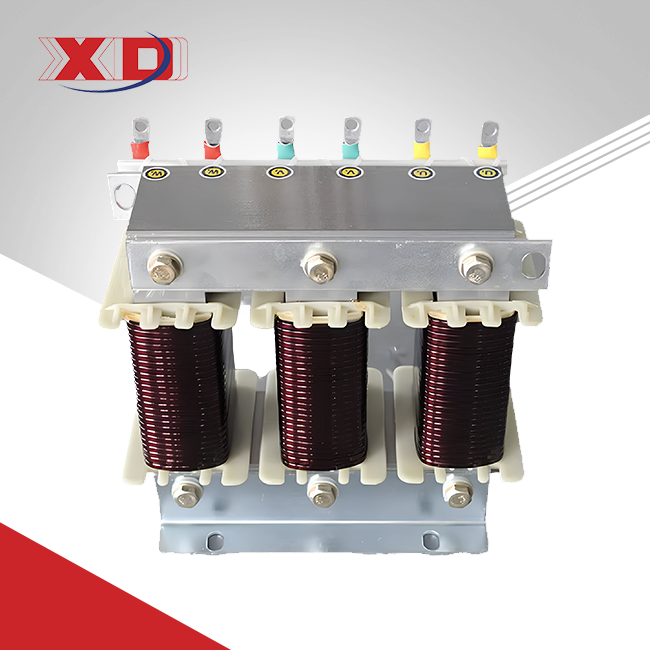
Series reactors are used as hurdles to keep reactive power adjustment networks safe. The Iron Core Series Reactor version uses cold-rolled grain-oriented silicon steel laminations with a high permeability to focus magnetic flux in a small area. Compared to air core options, this design is very different and needs much bigger dimensions to achieve the same inductance values. The magnetic core design lets you fine-tune the inductance properties, which are usually between 6% and 14% of the reactive power rate of the capacitor bank.
Technical Specifications That Matter
When procurement teams look at series reactors, they need to keep a few important things in mind. Power levels usually range from 50 kVAr to 5000 kVAr per unit, so they can be used in a range of building sizes. Values for inductance are given in millihenries or as a percentage of reactance to capacitor resistance. Ratings for voltage range from 400V for low-voltage uses to 35kV for medium-voltage uses. Temperature rise limits, usually less than 95°C above atmospheric, make sure that continuous-duty uses last a long time. Partially released amounts below 5 picocoulombs show better shielding quality that stops degradation from getting worse over time.
Why Iron Core Series Reactors Are Essential for Your PFC System
Protection Against Catastrophic Inrush Currents
When flipping, capacitor banks have almost no resistance, which causes current spikes that put stress on contactors, fuses, and other safety devices upstream. These transients happen dozens of times every day in factories that use CNC tools. The series reactor limits the flow of current, which makes the contactor last longer, from 50,000 cycles to over 200,000 cycles. To meet their clients' zero-downtime Iron Core Series Reactor uptime standards, data centers that protect UPS systems and server farms rely on this surge reduction.
Proven Industrial Applications
Extreme temperature changes, chemical contact, and mechanical shaking are all problems that electrical parts have to deal with in petrochemical plants. Coils covered in epoxy resin can stand up to humidity, dust, and acidic environments that would damage other types of insulation. When steel plants use electric arc furnaces, they create some of the toughest electrical conditions, with huge amounts of noise output and quick changes in load. Glass-fiber-reinforced construction is strong enough to handle the electrical forces that come from short-circuit hits that happen often. Renewable energy substations benefit from the reactor's ability to keep voltage stable even when solar inverters and wind turbines produce power in spurts.
How to Choose the Best Iron Core Series Reactor for Your Business
Evaluating Power Ratings and Inductance Requirements
The selection process starts with a thorough description of the capacitor bank. Figure out how much reactive power needs to be compensated for and then choose the right reactance percentage. In clean power settings, a 6% reactor limits inrush currents in a basic way. 7% reactance creates resonance near 189Hz, which is good for systems with a modest amount of harmonic content. Facilities with a lot of harmonic sources need 12–14% reactors that set up 134Hz resonance spots and block third harmonics that make neutral conductors get too hot.
Warranty Coverage and Long-Term Support
Standard guarantees cover flaws in the materials or the way they were made for 18 to 24 months. Options for extended security protect investments in apps that are very important to the business. Total cost of ownership is affected by the availability of technical support. Manufacturers who offer starting help, thermal image verification, and fixing advice lower operating risk. When spare parts are available, repairs can be done quickly after a component fails. Purchasing managers should check the security of the maker by visiting the site, getting quality approvals, and looking at the work done by other companies in the same industry.

Maintenance and Efficiency Optimization of Iron Core Series Reactors
Inspection Routines That Prevent Failures
Visual checks every three months find early danger signs. Check for coloring that means the item is too hot, cracks in the epoxy coating, or buildup of contamination that is blocking airflow. Infrared thermography can find fires that are caused by loose connections or insulation breakdown from one turn to the next. Electrical testing is done once a year using megohmmeters to measure insulation resistance. Values below 1000 megohms compared to the rated voltage show damage that needs to be looked into. Using accelerometers on the core surfaces for vibration research shows mechanical Iron Core Series Reactor looseness before a major failure happens.
Retrofit Optimization Strategies
Reactor upgrades can help older electricity infrastructure without having to update the whole system. Old oil-filled units have been replaced by modern dry-type units, which get rid of fire risks and worries about environmental compliance. High-temperature versions let you increase the capacity of existing capacitor banks beyond what was originally planned. When switchboard lines are already full, compact replacements make room for more equipment. Reducing utility penalties gives a quick return on investment; for example, changing the power factor from 0.85 to 0.97 gets rid of monthly fees that for medium-sized buildings often go over $5,000.
Purchasing and Procurement Guide for Iron Core Series Reactors
Sourcing Reliable Suppliers and Manufacturers
To find approved sellers, you need to do more than just compare prices. Check the certificates that the manufacturer has, Iron Core Series Reactor such as ISO 9001 for quality control and ISO 14001 for environmental standards. Ask third-party inspection agencies to send you audit records of the plant. Check the technical documents to see how deep the engineering goes. Test records, material certificates, and design calculations with lots of details show how complex the making is. Reference projects in your field show that you know how to use applications well. Xi'an Xikai is one of China's biggest factories for making medium and low-voltage electrical equipment. It has a lot of testing labs and automatic production lines that make sure the quality of all 34 product series is the same.
Understanding Market Pricing and Value Factors
The price of a reactor depends on its specs and how much it can be customized. Standard 480V, 7% reactance units in the 100–500 kVAr band usually cost between $800 and $3,500 each when bought in bulk. Due to the need for more protection and lower production numbers, medium-voltage equipment commands higher prices. Buying in bulk takes advantage of economies of scale; projects that need 10 or more units can get savings of 15 to 25 percent. Don't just look at the original buy price; also look at the total cost of ownership, which includes shipping, launching, and running costs over the product's lifetime.
After-Sales Support and Technical Assistance
Comprehensive help sets providers apart who are fighting on technical value. As part of pre-sales engineering help, harmonic analysis, system modeling, and plan development are done to make sure the best choice is made. Commissioning services make sure that the installation, electrical links, and connection to safety switches are all done correctly. Training programs teach building staff about how things work and what needs to be done for repair. Ongoing expert assistance takes care of questions about performance and needs for fixing throughout the life of the equipment.
Conclusion
Power Factor Correction systems are big expenses that need to be protected from electrical stresses that can cause them to break down early. Series reactors are very important for protecting against sudden currents, harmonic resonance, and voltage changes. They also improve power factor performance and lower energy costs. Using an Iron Core Series Reactor can further enhance system stability and ensure reliable harmonic suppression in demanding electrical environments. Selection factors that include electricity requirements, space limitations, and the manufacturer's skills make sure that the system works best with the ones that are already in place. Regular upkeep and smart retrofitting possibilities help devices last longer and work better. Working with well-known companies that offer full technical help and a history of success lowers the risk of buying things and makes sure that systems will work well for a long time.

FAQ
1. What percentage reactance should I specify for my capacitor bank?
The right reactance relies on the sound surroundings of your building. In normal situations with few harmonic sources, reactance levels of 6 to 7 percent are enough to reduce basic inrush and set up resonance near 189 Hz. To make a 134Hz resonance, which stops annoying third harmonics, facilities with variable frequency drives, switching power sources, or other major harmonic producers need 12–14% reactance. To make good specs, you should measure Total Harmonic Distortion (THD) and individual harmonic magnitudes as part of a power quality study.
2. How do iron core reactors compare to air core designs?
Iron Core Series Reactors have the same amount of inductance but are much smaller, usually 40–60% of the space of an air core. This small size makes fitting easier in electrical rooms with limited space. For most uses, iron core forms are more cost-effective than other options. Air core reactors always have perfect linear impedance characteristics and don't make any noise that can be heard. This makes them better for situations with high fault currents or installations in places that can't have noise, like recording studios or hospitals that need complete silence.
3. Can reactors be added to existing capacitor bank installations?
To add reactors to systems that are already running, careful engineering study is needed. Make sure there is enough room inside switchgear boxes, taking air gaps into account. Make sure that the current contactors and fuses can handle the switching properties being changed. To get the required resonant frequency, you need to figure out the total resistance, which includes wires and bus work. Plan the installation to happen during planned repair times to keep operations as smooth as possible. Many facilities are able to improve old systems, getting better harmonic protection and longer component life without having to update the whole system.
Partner With Xi'an Xikai for Superior Power Quality Solutions
Reactive power adjustment methods from Xi'an Xikai have been tried and tested over many years, backed by decades of engineering quality and manufacturing precision. Our CKSC Dry-type reactor line is made with vacuum-cast epoxy resin, which makes it very resistant to dust, dampness, and changing temperatures in harsh industrial settings. We know what your operations need in terms of stability because we've installed things across State Grid systems, steel and mining plants, and rail transportation infrastructure. Our engineering team works with purchase experts and system developers to create unique setups that take into account specific harmonic patterns, room limitations, and environmental factors. Core products use many unique technologies, such as split air-gap designs that keep noise levels below 75dB and advanced cooling systems that keep temperature spikes below 95°C. Xi'an Xikai has the knowledge Iron Core Series Reactor, and products to make sure your project succeeds, whether you're choosing parts for new buildings, updating old infrastructure, or fixing power quality problems that won't go away. Email our technical experts at serina@xaxd-electric.com, amber@xaxd-electric.com, or luna@xaxd-electric.com to talk about what you need for your application. As an Iron Core Series Reactor manufacturer serving global markets, we offer the quality guarantee, customization options, and quick help that complicated electrical projects need.

References
1. IEEE Standard 1531-2020: IEEE Guide for Application and Specification of Harmonic Filters, Institute of Electrical and Electronics Engineers, 2020.
2. Chapman, David. Power Quality Application Guide: Harmonics and Reactive Power Compensation, Copper Development Association, 2017.
3. Sankaran, C. Power Quality Considerations for Industrial Capacitor Applications, Electric Power Systems Research, Volume 84, Issue 1, 2012.
4. NEMA CP-82: Specifications for Dry-Type Filter and Shunt Reactors, National Electrical Manufacturers Association, 2019.
5. Wagner, V. and Balda, J. Effects of Harmonics on Equipment: Report of IEEE Task Force on the Effects of Harmonics on Equipment, IEEE Transactions on Power Delivery, Volume 8, 1993.
6. Dugan, Roger C., McGranaghan, Mark F., and Beaty, H. Wayne. Electrical Power Systems Quality, Third Edition, McGraw-Hill Education, 2012.
_1776665574080.png)