Impact of Harmonics in a Distribution Network After Capacitor Bank Placement
2026-04-14 16:15:51
When capacitor banks are added to distribution networks to raise the power factor and lower reactive power losses, they can interact with the system's impedances and create resonance conditions that make harmonic distortion worse. Electrical equipment is at great risk because of this phenomenon, which can lead to overheating, insulation breakdown, and failure before its time. Advanced Distribution Line Intelligent Capacitor Bank systems with harmonic filtering, detuned reactors, and adaptive control algorithms effectively lower these risks by dynamically adjusting reactive compensation while suppressing resonance. This keeps the grid stable and protects important infrastructure investments for businesses, utilities, and industrial facilities.
 |
 |
Understanding Harmonics and Their Impact on Distribution Networks
What Are Harmonics and How Do They Originate?
Non-sinusoidal electrical waveform deviations are harmonics. In factories, data centers, hospitals, and other non-linear loads such variable frequency drives, LED lighting systems, UPS, and arc furnaces, distortions are most common. Pulsed power goes via these devices. The distribution network receives harmonic frequencies, usually odd multiples of 60Hz. Harmonics create tech difficulties. THDv exceeding 5% in voltage may activate safety relays without reason, while current harmonics increase cable and transformer resistive losses. In certain facilities, harmonic currents overheated neutral conductors despite balanced three-phase loads. Many maintenance teams don't understand this odd issue until harmonic analysis exposes the cause.
Why Capacitor Banks Amplify Harmonic Problems
Capacitors banks may match the distribution system's source impedance using their inductive and capacitive properties. The impedance quickly falls or rises when the resonant frequency hits a significant harmonic frequency in the network, usually the 5th (300Hz) or 7th (420Hz) harmonic, increasing harmonic currents tenfold. This increases capacitor dielectric breakdown, fuse destruction, and transformer-like noise. A 1200 kVAr fixed capacitor bank at a chemical processing plant damaged three motor drives in six months by decreasing power factor from 0.72 to 0.96 and increasing 5th harmonic voltage distortion from 3.2% to 8.7%. These examples show how harmonic interactions affect reactive power compensation design.
Consequences for Industrial and Commercial Operations
Harmonic difficulties impact budgets and operations. Overheating equipment affects transformer and motor efficiency by 10–20%, increasing cooling costs and insulation age. Distorted voltage waveforms cause CNC and medical imaging equipment's sensitive electronic controllers to malfunction or lose data. Facility harmonic emissions exceeding IEEE 519 criteria may result in utility power quality penalties. These costs might add hundreds to monthly energy bills. Premature capacitor, contactor, and protective device failure raises maintenance costs. Continuous process firms cannot afford $50,000-per-hour unexpected downtime. These reasons make harmonic management a major issue for facility managers who want to optimize uptime and profit.
Technical Overview of Distribution Line Intelligent Capacitor Banks
Core Components and Operational Principles
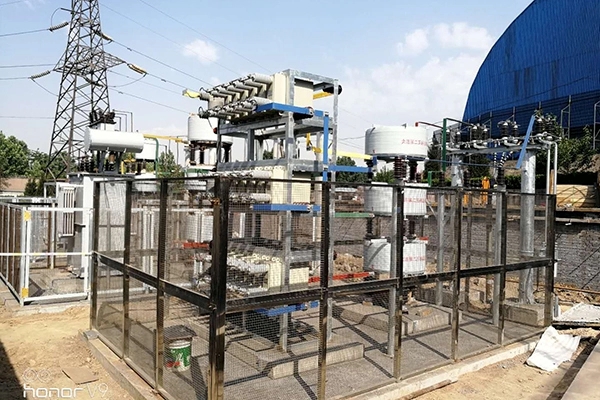
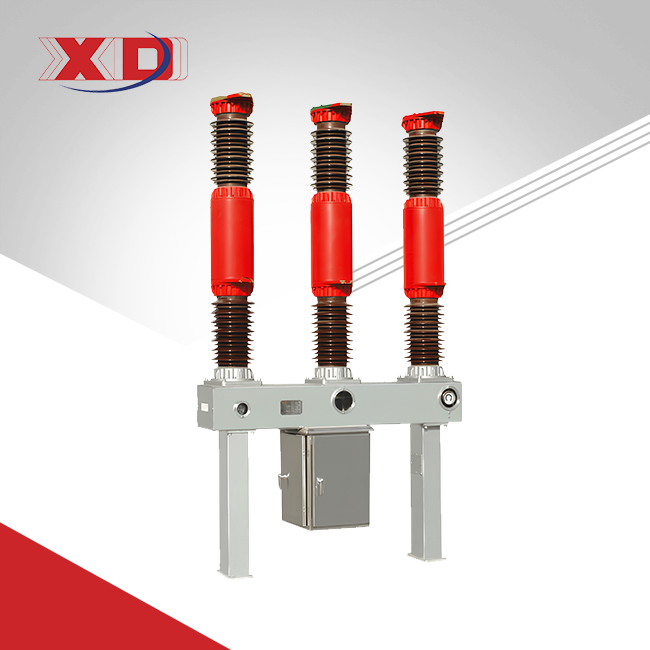
IP54-rated exterior enclosures house several subsystems in modern Distribution Line Intelligent Capacitor Bank systems. Auto-healing metallized film capacitors in reactive compensation modules can withstand overvoltage. These drop the resonant frequency below the lowest significant harmonic and prevent strengthening in series detuned reactors (6%, 7%, or 13% reactance). Thirristor switches or vacuum contactors turn capacitors on and off. Vacuum technology can sustain over 50,000 mechanical operations with little maintenance, and thyristor-based soft-switching accurately shuts contacts at voltage zero-crossing points to halt inrush current The microprocessor controller uses Fast Fourier Transform to extract reactive power from harmonic distortion. This guarantees switching decisions are based on actual power factor data, not skewed ones that might be wrong. SCADA systems may employ DNP3.0, Modbus TCP/IP, or IEC 61850 modules. Remote operators may monitor power factor, harmonic spectrum, capacitor temperature, and switching cycle counts. This makes passive compensation an active grid asset utilities and facility managers may use to improve load patterns.
How Intelligent Systems Differ from Conventional Banks
Fixed capacitor banks don't detect or control load, therefore they stay connected. Automatic capacitor banks use voltage or current-responsive electromechanical relays for easy switching. These relays switch incorrectly due to harmonic distortion because they can't discriminate reactive power from harmonic distortion. Our experience implies smarter systems adapt better. Smart controllers change switching delays and hysteresis bands to prevent "hunting" (rapid cycling near threshold limits). This greatly increases contactor life. When phase voltages surpass safe limits, automatic voltage imbalance detection turns off banks. Prevents capacitor overcharge. The technology may lock out steps during harmonic overload adjustments. Equipment protection and power factor enhancement are balanced. Predictive maintenance is intelligence. Monitoring capacitor capacitance drift, internal temperature rise, and switching operation counters provides condition-based maintenance scheduling. Alerts allow maintenance crews to fix problematic parameters before they worsen. This preventive approach decreases emergency calls and extends asset life beyond 20 years in well-maintained systems.
Addressing Common Technical Challenges
Harmonic resonance is engineers' largest specification worry. We plot system impedance from 2nd to 25th harmonic frequencies to find resonance spots during project design. Detuned reactor resonance frequency is 200–210 Hz below the 5th harmonic. The "notch" prevents harmonic currents from entering capacitors. Exterior systems need careful temperature management in extreme conditions. Stainless steel enclosures, high-efficiency ventilation, and optional heating elements keep capacitor and electronic component temperatures between -25°C and +50°C. Silicon rubber bushing insulation works effectively in coastal areas where salt fog makes porcelain insulators untrackable. Remote areas with poor network infrastructure may make communication unstable. Backup communication uses cellphones and fiber optics. Local data recording lasts 90 days. This facilitates forensic inquiry and eliminates data loss during communication difficulties.
Comparing Traditional Capacitor Banks and Intelligent Capacitor Banks
Operational Performance and Efficiency Metrics
Operating data indicates the performance difference between regular and Distribution Line Intelligent Capacitor Bank systems. Conventional banks have 3–5 times higher capacitor failure rates than smart systems with harmonic protection in locations with harmonic distortion exceeding 5%. Quality intelligent banks use self-healing capacitors to withstand localized dielectric failures without catastrophic failure. Older film-foil capacitors fail. Several things boost energy efficiency. Conventional capacitors have 0.5–1 watts per kVAr, but low-loss capacitors have less than 0.2. Modern cooling systems maintain appropriate temperatures without fans using natural convection and targeted ventilation. The outcome cuts equipment running costs by 15–30% over time. Savings are highest in warmer areas when traditional systems must be actively cooled. Metrics show power quality increase. Intelligent systems keep power factor above 0.95 regardless of load, whereas fixed banks overcorrect when demand is low and undercorrect when demand is high. The consistency minimizes utility penalty and boosts demand charges. Our institutions save $2,000–$8,000 a month in penalties and demand fees with intelligent compensation.
Cost Analysis and Return on Investment
Intelligent systems need 40–60% more startup capital than comparable automated institutions. Installing a 1200 kVAr sophisticated outdoor compensation system costs $45,000–$65,000. A small automated bank costs $28,000–$40,000. Harmonic mitigation costs higher due to complex control systems, better parts, and engineering. Investment gap closes quickly when total cost of ownership is calculated. Intelligent systems save maintenance costs by $3,000–5,000 yearly by preventing parts failure and emergency repairs. Energy savings are $4,000–$7,000 per year in industry. Reduced downtime is the biggest financial advantage. Stopping one unexpected outage in critical facilities is worth the expense. Payback takes 18–36 months, depending on facility traffic and electricity costs. Hard harmonic settings or uptime requirements improve returns. Without operational benefits, intelligent power quality technology paid for themselves in 14 months.
Real-World Implementation Success Stories
Arizona semiconductor factory power quality difficulties remained despite installing hundreds of variable frequency drivers to boost production lines. Production stopped when drives unexpectedly stopped due to resonance at the 5th harmonic in their 2400 kVAr fixed capacitor bank. An intelligent system with thyristor switching and 7%-tuned reactors replaced it. After demand penalties were abolished, system efficiency rose, harmonic voltage distortion went from 9.2% to 2.8%, drive difficulties vanished, and yearly energy costs lowered by $47,000. A Florida water treatment plant had capacitor failure every 6–9 months due to pump VFD and chlorination system harmonic distortion. They haven't failed in 42 months after adding an intelligent capacitor bank with real-time harmonic monitoring. Remote monitoring let operations staff establish the best reactive power pump run, saving 12%.
Best Practices for Managing Harmonics and Maintaining Intelligent Capacitor Banks
Implementing Effective Harmonic Monitoring Programs
Power quality management employs continuous harmonic monitoring. At common connection, permanent power quality meters calculate harmonic spectra and record voltage and current waveforms. Monitoring systems that save waveform data for 90 days are recommended. This shows past trends that reveal patterns not visible in present time. Setting baseline harmonic signatures throughout daily activities may reveal issues. Sudden harmonic order increases suggest equipment or process concerns for study. A 7th harmonic current spike may suggest a variable frequency drive issue, whereas a 3rd harmonic voltage rise may indicate a weak neutral connection. Diagnostic insights prevent small faults from becoming expensive failures. Distribution Line Intelligent Capacitor Bank controllers and harmonic monitors safeguard. When harmonic levels grow, the controller may lower compensation steps or disconnect banks until things settle. This synchronisation boosts reactive power support and safeguards expensive capacitors.
Preventive Maintenance Strategies That Extend Service Life
Hot regions on annual thermal imaging exams suggest weak connections, worn contacts, or capacitor concerns before they fail. The human eye cannot see temperature changes as little as 5°C, but infrared cameras can. Maintenance should track heat patterns and compare them year-to-year to see how things are worsening. Check capacitor capacitance and power factor every three years for health. Keep capacitance within ±5% of nameplate values and power factor above 99.5% for each capacitor. Non-range devices must be changed due to advanced dielectric degradation and failure risk. Capacitors maintain voltage for a long time, therefore test the bank empty and unattached. Updates to the controller firmware fix bugs found after implementation and include research-improved functionality. Our firmware is updated yearly to enhance harmonic filtering and support new communication protocols. Maintenance firmware upgrades provide PCs the latest technologies without purchasing new hardware. Vacuum contactor inspection involves evaluating contact resistance, mechanical smoothness, and vacuum loss. If contact resistance exceeds 100 microohms, the object is dirty or outdated and needs replacement. Use mechanical operation counts to plan maintenance. Even if electrical testing is OK, check connections with over 40,000 activities.
Troubleshooting Common Field Issues
Common complaint: nuisance tripping due to harmonic distortion beyond controller voltage tolerance limits. Logged harmonic data usually explains. A new load may have caused harmonics without system adjustment. Change controller sensitivity, improve harmonic filtering, or use active harmonic filters in severe cases. Without controller-SCADA connectivity, remote monitoring is impossible. Network connectivity issues, incompatible protocols, and incorrect firewall settings cause these issues. With two communication channels, activity may continue while network difficulties are rectified. Local control interfaces enable manual operation if communication fails. Harmonic current or voltage is too high when thermal monitoring or temperature sensors indicate capacitor overheating. Inquire promptly to assure the detuned reactor parameters are still adequate. After a facility adds loads or changes power distribution, reactive compensation systems may need to be adjusted for new harmonic profiles.
Procurement Guide: Selecting and Buying Distribution Line Intelligent Capacitor Banks
Critical Technical Specifications for Your Application
The voltage must match your distribution system. We provide outdoor line compensation for 6kV, 10kV, and 35kV systems. Most US industrial and utility distribution employs 10kV and 22kV. Too low voltage may damage insulation, and too high will cost more without improving performance. Consider load patterns and power factor correction objectives while calculating reactive power capacity. Most industrial facilities want the power factor to reach 0.95 or higher. The required kVAr capacity is the active power (kW) times the angle between the starting and target power factors. Our modular systems range from 300 kVAr to 10 MVAr per installation, so you may match them to your facility's needs without buying a big Distribution Line Intelligent Capacitor Bank. Environmental criteria must account installation site conditions. For salt spray protection, coastal areas need corrosion-resistant stainless steel enclosures and silicone rubber insulation. To survive 50°C+ temperatures, deserts need UV protection and extended temperature ratings. Our systems can operate at full speed from -40°C to +70°C for 20 years or more in tough conditions with the right environmental protection packages. Communication protocol compatibility must be specified. Modern grids use Modbus TCP/IP for industrial systems and DNP3.0 and IEC 61850 for utilities. Choose a smart controller that works with your SCADA system to prevent expensive gateways and protocol changes. IoT-enabled goods let protocols adapt to changing communication needs.
Evaluating Manufacturers and Building Supplier Relationships
Suppliers provide engineering help beyond product catalogs. For harmonic analysis, reputable manufacturers examine system impedance and propose reactor detuning. We do rigorous technical studies before selling you anything to guarantee our solutions are personalized to your harmonic environment, not generic bundles. International certifications with strict criteria may evaluate industrial quality. ISO 9001 quality management, ISO 14001 environmental management, and IEC 60831 and IEEE 18 product testing are required. We have third-party factory audits every year to verify compliance. Customers trust our products' consistency. Your field's reference installations may show how something works. Manufacturers' decades of experience with hospitals, data centers, utilities, and heavy industries provide them application expertise that newer suppliers lack. Xi'an Xikai has provided power quality solutions to over 40 countries for product development and customer service studies. Warranty terms suggest the manufacturer trusts the product to work. Important installations may get 60-month warranties, but most have 24-36-month warranties. The warranty should include labor, travel, and field service, not just parts. Know what the guarantee doesn't cover, including harmonic overload and environmental circumstances, to avoid litigation.
Installation Services and Long-Term Support Considerations
Professional commissioning ensures great system performance from the outset. Experienced technicians ground the equipment, adjusted the controller for placement, and staged testing under numerous loads. Full facility maintenance records are kept, and five-MVAr systems take two to three days to commission. Facility workers get basic tasks and problem-solving training. Operators learn controller interfaces, alarms, and emergency manual override during commissioning. QR-coded section-specific films include detailed operation and maintenance instructions. This helps field maintenance staff quickly verify steps. Quick problem resolution depends on post-sale technical support. Manufacturing companies with 24/7, multilingual technical hotlines provide essential facilities peace of mind. Spare parts affect emergency response and maintenance. Companies with several component depots may ship contactors and controllers the same day. System support after warranty is guaranteed by long-term part availability. We guarantee components for 15 years after manufacturing to protect your investment.
Conclusion
Harmonic distortion is a big problem in today's distribution networks, especially after installing a capacitor bank, when resonance conditions can make problems much worse. Understanding how harmonics are made technically, knowing how capacitor banks work with system impedances, and putting in place Distribution Line Intelligent Capacitor Bank systems with adjustable controls and harmonic filtering features are all important for keeping the electrical infrastructure safe and working well. Intelligent systems are better than traditional banks in many ways, including operational performance, maintenance costs, and equipment protection. These benefits make them a good choice for demanding industrial, utility, and commercial uses. For implementations to go smoothly, strict adherence to specifications, thorough evaluation of suppliers, and a dedication to ongoing maintenance and monitoring methods that increase asset value over longer service lives are all necessary.
FAQ
1. What causes harmonic resonance after installing capacitor banks?
At a certain frequency, resonance occurs when the distribution system's source impedance's inductive reactance matches the capacitor bank's capacitive reactance. This strengthens harmonic currents from nonlinear loads by creating a low-impedance channel at that frequency. Resonant frequency depends on capacitor bank rating and installation short-circuit capacity. The 5th and 7th harmonics peak between 250–420Hz. Detuned reactors reduce resonance below unsafe frequencies. Amplification is disabled while power factor correction is maintained.
2. How do intelligent capacitor banks prevent harmonic amplification?
Modern Distribution Line Intelligent Capacitor Banks utilize 6%, 7%, or 13% capacitor reactance series reactors. These reduce the system's resonance frequency below the lowest significant harmonic, 200Hz, and much below the 5th harmonic, 300Hz. The microprocessor controller determines fundamental frequency reactive power and filters harmonics using FFT analysis. This makes switching decisions based on power factor, not erroneous data. Harmonic overload avoidance reduces compensating steps when distortion exceeds safe limits. Reduces capacitor degradation and boosts reactive power.
3. What maintenance intervals apply to outdoor intelligent capacitor banks?
Check the enclosure for physical damage, loose connections, and proper sealing every three months. Annual thermal imaging and electrical testing uncover faulty connections before they fail. Capacitors are examined every three years and controller firmware is updated yearly to ensure health. Depending on duty cycle, vacuum contactors need inspection or replacement every 40,000–50,000 operations. Environmental factors drastically affect maintenance. For instance, coastal locations need more corrosion checks while desert plants need cooling system maintenance. Maintenance records of inspections, tests, and part replacements allow predictive maintenance to increase reliability.
Partner With Xi'an Xikai for Reliable Distribution Line Intelligent Capacitor Bank Solutions
Xi'an Xikai stands as a reliable Distribution Line Intelligent Capacitor Bank manufacturer with over 30 years of experience providing power quality solutions to a wide range of industries and tough environments. Our 10kV and 22kV outdoor line compensation systems are reliable and use advanced harmonic mitigation technology. They can be configured in a way that suits your needs, ranging from 300 kVAr to 10 MVAr. It is made of stainless steel, can communicate with the smart grid, and has many safety features to make sure it works reliably for decades in the harshest environments. Facility managers, utility engineers, and system integrators can email our technical team at serina@xaxd-electric.com, amber@xaxd-electric.com, or luna@xaxd-electric.com to get a full analysis of their needs and personalized suggestions. Visit xaxd-electric.com to see our full range of services and learn how our smart compensation solutions can help protect your infrastructure investments and make them more energy efficient.

References
1. IEEE Std 519-2022, "IEEE Standard for Harmonic Control in Electric Power Systems," Institute of Electrical and Electronics Engineers, New York, 2022.
2. Dugan, Roger C., Mark F. McGranaghan, Surya Santoso, and H. Wayne Beaty. "Electrical Power Systems Quality, Third Edition." McGraw-Hill Education, 2012.
3. Arrillaga, Jos, and Neville R. Watson. "Power System Harmonics, Second Edition." John Wiley & Sons, 2003.
4. Das, J.C. "Power System Harmonics and Passive Filter Designs." IEEE Press and John Wiley & Sons, 2015.
5. Sankaran, C. "Power Quality." CRC Press, 2002.
6. Wakileh, George J. "Power Systems Harmonics: Fundamentals, Analysis and Filter Design." Springer-Verlag Berlin Heidelberg, 2001.
_1774411186884.png)