Understanding Three-Phase Capacitors: Powering Efficiency & Stability
2026-04-14 16:15:50
When problems with power factors hurt profits and unstable voltages harm sensitive equipment, utilities and manufacturing facilities use a tried-and-true method. A 3 Phase Capacitor Bank is the main device for reactive power compensation. It provides real cost savings in energy while maintaining business stability. By providing reactive power locally instead of getting it from faraway generation sources, these systems fix lagging power factors that are caused by inductive loads like motors, transformers, and heavy machinery. The outcome changes electricity distribution systems by lowering I²R losses in wires, freeing up capacity in transformers, getting rid of utility penalty charges, and creating voltage profiles that stay stable even when demand changes.
 |
 |
What Is a Three-Phase Capacitor Bank and How Does It Work?
The Core Function of Reactive Power Compensation
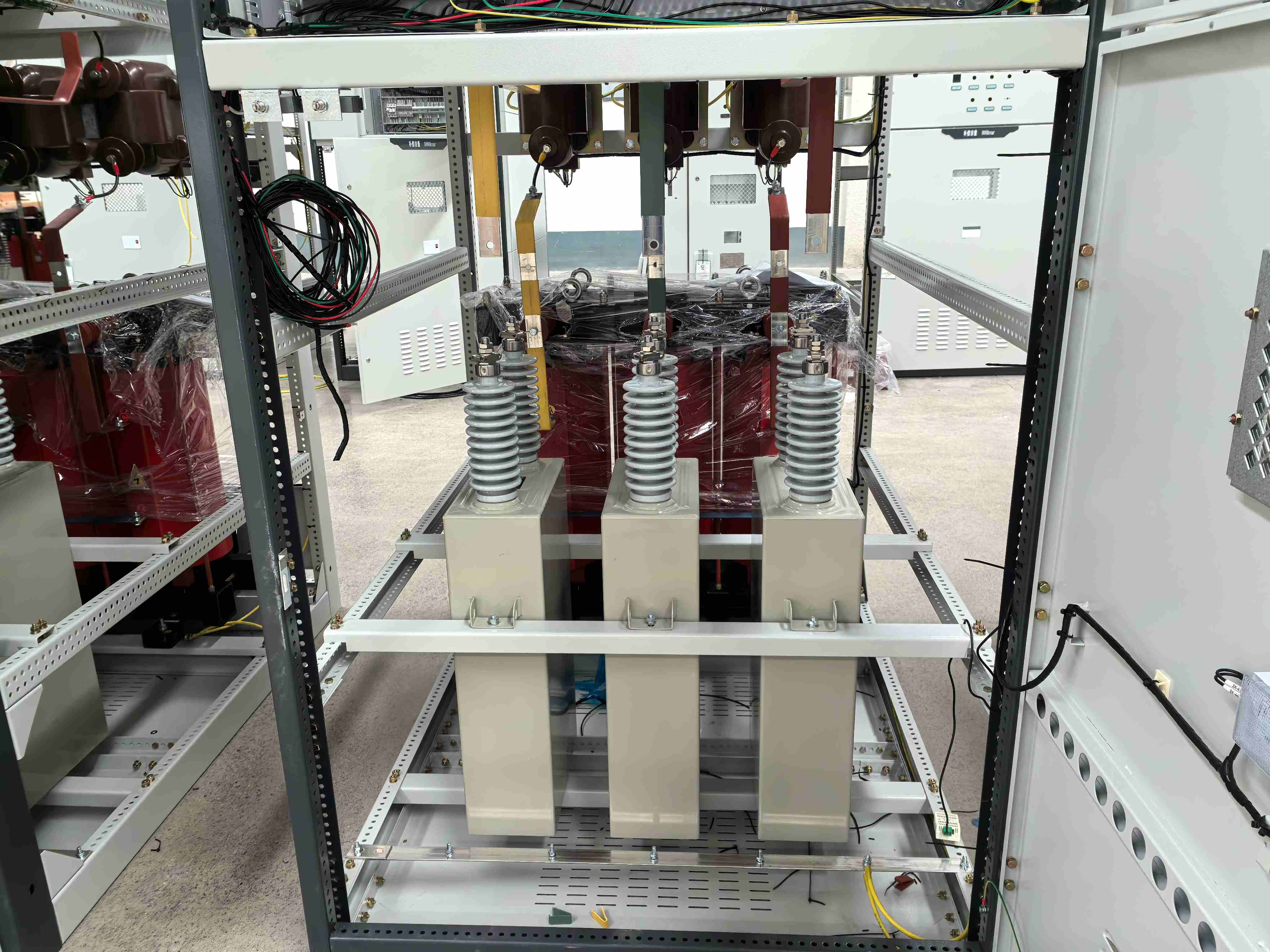
A 3 Phase Capacitor Bank is a specially designed group of separate capacitor units that are wired together in certain ways to solve power quality problems in business and industry settings. Three-phase designs can handle the balanced loads that come with factories, data centers, hospitals, and utility substations, while single-phase systems are only good for smaller domestic uses. The basic idea behind how it works is that capacitors store and release electrical energy in a way that cancels out the delayed current that magnetic equipment makes. When motors or transformers work, they make magnetic fields that need reactive power, which is measured in kilovolt-amperes reactive (kVAR). This reaction part raises the total perceived power (kVA) that utilities have to provide, even though it doesn't do any useful work. By putting in a 3 Phase Capacitor Bank near the inductive loads, facilities make reactive power on-site, which lowers the load on the infrastructure upstream.
Delta and Wye Configuration Differences
There are two main ways that capacitor units are physically arranged. Delta connections are commonly used in low-voltage automatic power factor adjustment panels in industrial settings because they can handle higher current levels and easily stop third-harmonic circulation. Wye designs make it easier to protect against neutral unbalance and lower the voltage stress on individual units. They are best for medium-voltage uses where insulation coordination is important. Which of these setups to use relies on the voltage class of the system, the characteristics of the load, and the need for safety.
Performance Comparison with Single-Phase Systems
When it comes to performance, three-phase capacitor banks are better than their single-phase versions. They fix the imbalance of the voltage across all three stages at the same time, which stops voltage imbalance that could damage sensitive electronics or trip safety relays. By keeping voltage in the best ranges for equipment, the balanced method lowers neutral current, lowers losses in distribution lines, and increases the life of the equipment. This balanced adjustment feature is especially useful in industrial settings, where most heavy equipment runs on three-phase power and needs stable voltage profiles to work consistently.
Key Design Principles and Types of Three-Phase Capacitor Banks
Sizing Calculations and Load Analysis
Proper sizing of capacitor banks requires evaluating current power factor, target levels, and load data to determine kVAR needs. Correct voltage rating selection is essential, as undersizing reduces efficiency, while oversizing or mismatched voltage increases risks and unnecessary costs.
Fixed Versus Automatic Switching Banks
Fixed capacitor banks provide constant correction for stable loads with simple design and low maintenance. Automatic banks adjust in real time using controllers, ensuring efficient compensation under varying loads, preventing overcorrection, and improving performance despite higher initial complexity and investment.
Environmental and Installation Considerations
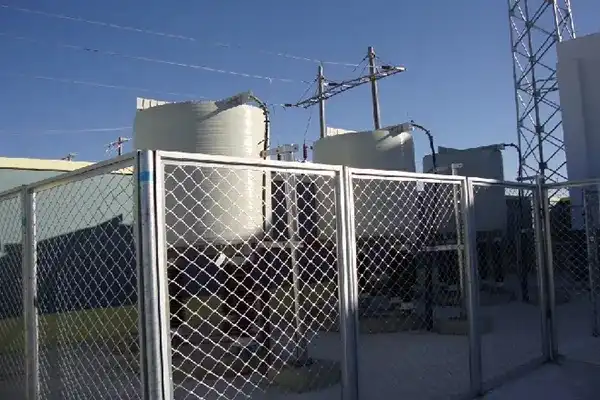
Environmental conditions influence capacitor bank performance, requiring derating or cooling in high temperatures and special design at high altitudes. Proper grounding, spacing, and coordinated protection devices ensure safe installation, reliable operation, and prevent faults from affecting the broader electrical system.
Xi'an Xikai's 10kV 3 Phase Filter Capacitor: Engineered for Demanding Applications
Advanced Design for Grid Stability
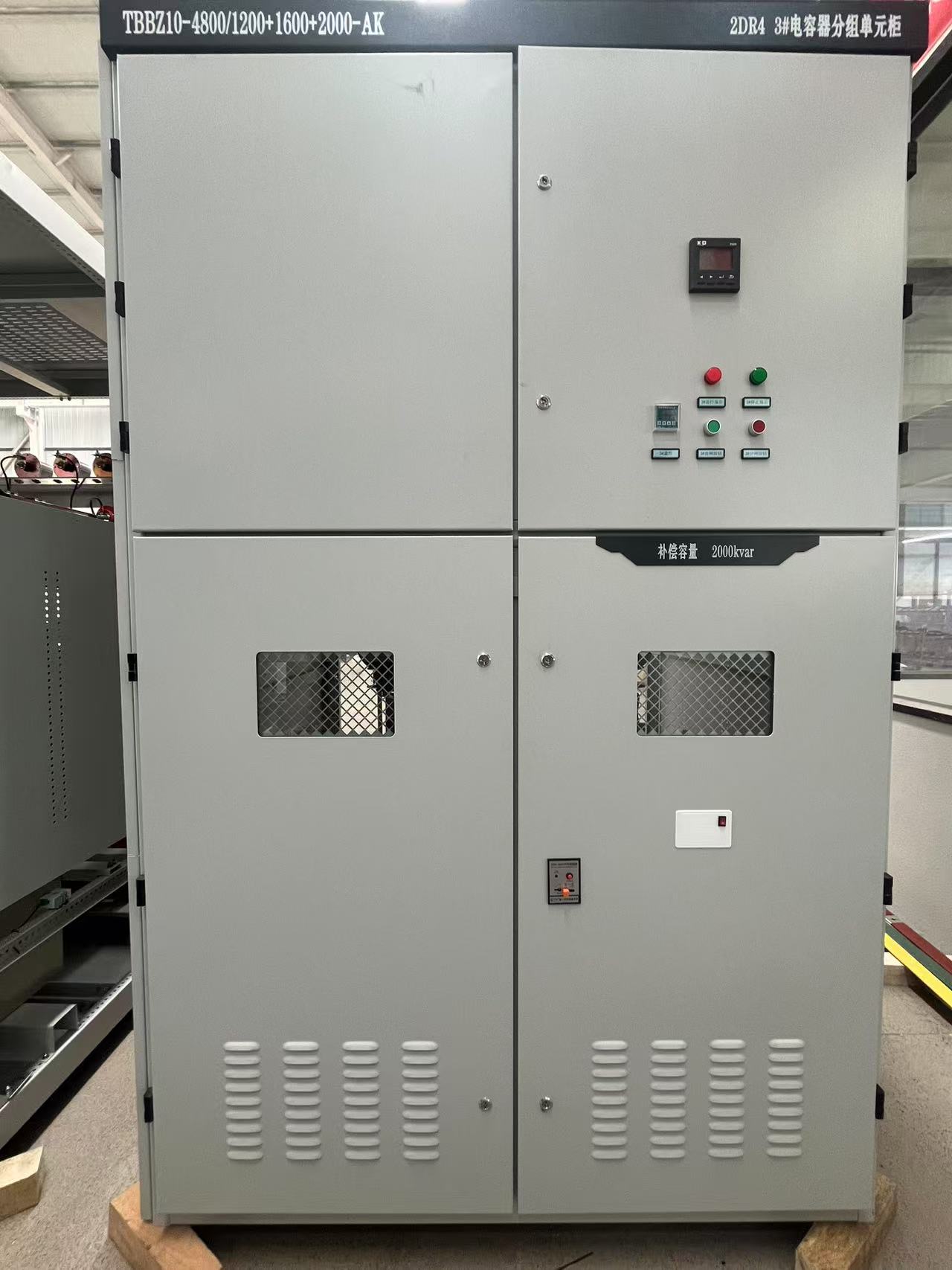
The 3 Phase Capacitor Bank is engineered to reduce harmonic distortion and improve power quality in medium-voltage systems. With 10kV rating and wide environmental tolerance, it ensures stable operation across harsh climates and demanding industrial and utility applications.
Robust Construction and Safety Features
This 3 Phase Capacitor Bank features weatherproof housing, self-healing dielectric technology, and explosion-proof protection. Low dissipation minimizes energy loss and heat buildup, while integrated safety mechanisms ensure reliable operation, preventing catastrophic failures and protecting both equipment and personnel.
Compliance and Quality Assurance
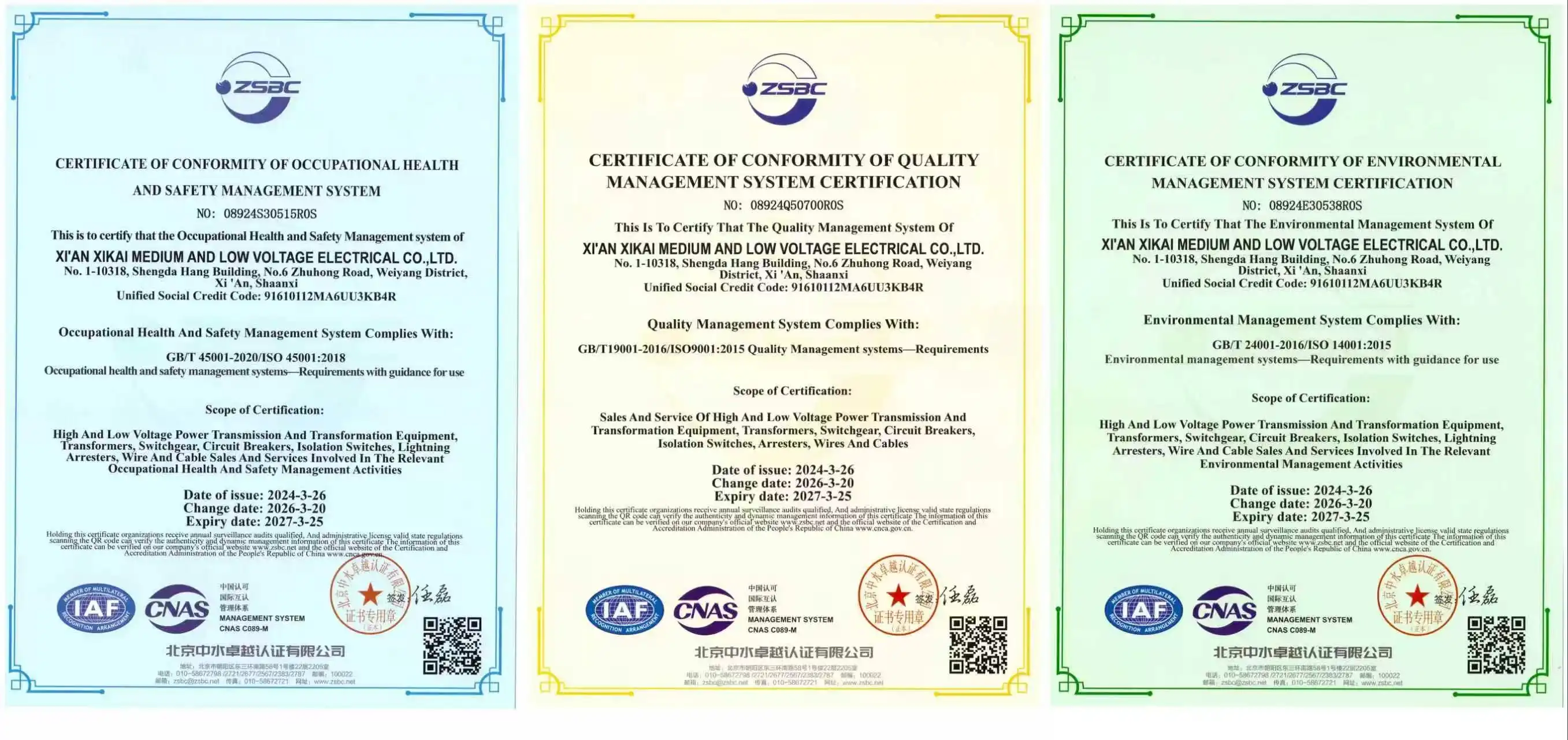
The 3 Phase Capacitor Bank meets IEC, IEEE, UL, CE, and GB/T standards, ensuring global compliance and safety. Rigorous testing, including dielectric and thermal evaluations, combined with ISO 9001 manufacturing, guarantees consistent quality, reliability, and long-term performance in critical infrastructure applications.
Maintenance, Troubleshooting, and Common Faults
Proactive Maintenance Protocols
Systematic preventive repair must be done according to written plans in order to get the most out of a capacitor bank's life. A lot of important checks should be done during yearly inspections. When you re-tighten junction connections, you stop the hot spots that happen when mechanical vibration and heat cycling make electrical joints loose over time. Even small increases in resistance at links cause localized heating, which speeds up the breakdown of insulation in nearby parts. Capacitance and dissipation factor data show that something is breaking down before it stops working. When capacitance values drop below 95% of their original rates, it means that the dielectric is breaking down and the unit needs to be replaced. In the same way, rising dissipation factors mean that internal costs are growing and failure is close at hand. By keeping track of these factors over time, condition-based maintenance can be used to repair parts during planned downtimes instead of when they break down without warning. When it comes to automatic banks with computer controllers, the ventilation system needs extra care. When cooling fans or air screens get clogged, temperatures rise, which speeds up the age process exponentially. During operation, infrared thermography finds hot spots that can't be seen with the naked eye.
Diagnosing Common Failure Modes
Systematic troubleshooting steps are used to figure out what's wrong with a capacitor bank. Unbalanced correction across phases is usually caused by failed individual units in the bank. To find the broken part, the current in each phase must be measured. A sudden drop in power factor could mean that more than one unit has failed or that the controller settings are wrong, allowing overcorrection to happen. Harmonic overload is a major cause of failure that is often overlooked. When the Total Harmonic Distortion (THD) of a system goes over 3–5%, harmonic frequencies cause too much current to flow through normal capacitor banks. This overload makes heat, which quickly breaks down dielectrics. The answer is to add detuned banks with series reactors that create high impedance at problematic harmonic frequencies while keeping the ability to fix the power factor at the fundamental frequency. Thermal stress from inadequate ventilation manifests as widespread capacitor failures across the bank. Facilities experiencing repeated failures despite replacing units should investigate cooling system performance and ambient temperature conditions rather than attributing problems to component quality alone.
Preventive Strategies Reducing Downtime Risk
When you use condition tracking tools, maintenance goes from being reactive to being proactive. Modern controllers that can watch both current and voltage keep an eye on power factor all the time, warning workers of trends of decline before crashes stop operations. When there are problems with the cooling system or unusual loading conditions, temperature sensors inside the capacitor cases let you know right away. By building ties with qualified providers, you can quickly get replacement parts. Specialized capacitor units can have lead times of weeks or months. This means that strategic spare parts inventory is necessary for important applications where long downtime could threaten service delivery or production plans.
Comparing Capacitor Bank Solutions for Industrial Use
Three-Phase Versus Single-Phase Applications
The type of load selects the best capacitor bank design. 3 Phase Capacitor Bank systems work well in factories with big motors, transformers, and three-phase loads that use a lot of electricity. The balanced correction keeps the voltage even across all stages, which stops the imbalance that sets off safety switches or hurts delicate control systems. Single-phase banks are good for single loads or household uses where three-phase infrastructure isn't available. But because they can't provide balanced adjustment, they're not good for managing the power quality in factories. When high power is used, the economic benefit of three-phase devices becomes clear. A 600 kVAR three-phase bank provides better reactive compensation than three separate 200 kVAR single-phase units. It does this with fewer losses, a smaller size, and easier coordination of security.
Fixed Banks Versus Automatic Switching Systems
The choice between set and automatic configurations is based on a cost-benefit study. Fixed banks have lower capital costs and are easier to build because they don't need controls, contactors, or other safety devices. Maintenance needs are still very low—yearly checks and regular tests are enough to keep things running smoothly. These traits are good for uses where the power factor stays the same during all stages of operation. Automatic banks are a good reason to put more money into variable-load facilities. The imaging area of a hospital uses MRI and CT machines at different times throughout the day. This causes changes in the load that set compensation can't handle well. Fixed banks would overcompensate when there aren't many loads, which could lead to leading power factors that put stress on equipment shielding. Automatic controls carefully stage capacitor units, keeping the best power factor no matter what demand is happening at any given time. In variable-load situations, the extra expense is usually paid for within 18 to 24 months by the energy savings and less stress on the equipment.
Supplier Selection and Brand Considerations
The people who work in procurement rate sellers in more ways than just price. Total cost of ownership is based on the quality of the product, its professional help, how reliably it is delivered, and the terms of the warranty. Manufacturers with a long history, such as ABB, Schneider Electric, Siemens, and Eaton, offer reliable products with a lot of application tech support, but they usually charge more. When local expert help and quick access to spare parts are more important than name recognition, regional manufacturers can be a good option. Xi'an Xikai markets itself as a company that makes goods that are widely certified and come with localized support benefits. Our tech team helps build systems and makes sure they are the right size and set up for each job. When compared to catalog sales that don't come with application-specific validation, this joint method lowers the risk of adoption.
Procurement Considerations and How to Select the Right Capacitor Bank
Evaluating Supplier Credentials
Verification of credentials is the first step in choosing a supplier. Product approvals to well-known foreign standards, like IEC, IEEE, and UL, show that safety and performance standards are being met. Certifications for manufacturing quality systems, like ISO 9001, show that methods are written down and followed consistently. References from similar applications give buyers faith that providers know what the industry needs and can provide solutions that work in the real world. Delivery dates have a big effect on project plans. Standard goods can usually be shipped within a few weeks, but custom designs need more time for planning, manufacturing, and testing. Setting realistic deadlines stops works from being done too quickly, which could hurt safety or performance.
Understanding Total Cost of Ownership
The purchase price is only one part of the total costs over the life of the product. The economic value is based on things like the cost of installation, the need for ongoing upkeep, the amount of energy saved, and the expected service life. A cheaper product that doesn't work as well or lasts as long might end up costing more in the long run than a more expensive product that works better for longer. The terms of the warranty show that the maker trusts the product to work well. Limited guarantees that don't cover key failure modes are less valuable than warranties that cover parts, labor, and damage that happens after the warranty period. Making it clear how to file an insurance claim and how long it will take to get an answer stops arguments when service is needed.
Customization Capabilities for Unique Applications
Standard stock items work well in many situations, but sometimes specific working conditions call for custom solutions. Engineering changes may need to be made because of high atmospheric temperatures, strange voltage combinations, or limited room. Customization lets manufacturers make solutions that fit specific needs instead of causing customers to make compromises with off-the-shelf goods. During the planning phase, our engineering team works with EPC firms and system integrators to make sure that the specs for the 3 Phase Capacitor Bank match the needs of the whole electrical system. With this partnership method, possible problems are found during planning, instead of being found out during launching.
Conclusion
In conclusion, three-phase capacitor banks are useful in business, utility, and industrial settings because they improve power factor, make voltage more stable, and lower energy costs. Knowing the basic rules of operation, design factors, and upkeep needs helps you make smart purchasing choices that improve the electrical systems in your building. Getting the right-sized and properly configured 3 Phase Capacitor Bank solutions from reputable providers is important for long-term practical success, whether you're using fixed compensation for stable loads or automatic systems that adjust to changing demand. Adding new technologies like harmonic filtering and self-healing dielectrics makes things even more reliable in electrical settings that are getting more complicated and where power quality has a direct effect on profits and operations staying up and running.
FAQ
1. How do I calculate the required capacitor bank size for my facility?
To find the right size, you need to find out what your facility's current power factor is and how much reactive power it takes to hit your goal power factor, which is usually 0.95. The method takes into account the current kW demand, the recorded power factor, and the power factor that is wanted. Power factor information is often found on monthly bills from many companies. Power quality monitors, on the other hand, measure numbers in real time. Talking to application engineers makes sure that the figures are correct and take into account changes in operations and load growth.
2. What causes premature capacitor bank failures?
Thermal stress and harmonic pressure are the two main reasons why things break. When containers don't have enough air flow, temperatures rise, which quickly breaks down insulating materials. Harmonic distortion above 3–5% THD makes capacitors run too much current, which heats them up and speeds up their age. Overvoltage, bad connections that create hot spots, and environmental pollution in systems that don't have enough security are some of the other causes. Taking these things into account through proper planning, installation, and upkeep greatly increases the service life.
3. Do capacitor banks require regular maintenance?
Terminal connections should be inspected and tightened once a year, the venting system should be checked, capacitance should be measured to see if it's breaking down, and temperature should be inspected to see if problems are starting to show up. Even though 3 Phase Capacitor Bank systems don't need to be serviced as often as rotating equipment, skipping simple upkeep makes them more likely to break down and shortens their life. If a building doesn't have its own electrician, it should hire a trained service provider to do regular checks.
Partner with Xi'an Xikai for Reliable Power Quality Solutions
Xi'an Xikai Medium & Low Voltage Electric Co., Ltd. is ready to be your reliable 3 Phase Capacitor Bank source. They offer complete solutions backed by decades of manufacturing experience and new ideas. Our range of products includes high- and low-voltage switches, transformers, circuit breakers, and power electronics. Capacitor banks are one of our main areas of expertise. We've put systems in place for State Grid infrastructure, industrial facilities, rail transportation, and green energy projects. Our ability to offer custom solutions that meet strict requirements has earned us praise. Our plateau-type equipment works safely at heights of up to 4,000 meters, and our unique technologies make sure that it meets international standards for performance. You can email our expert team at serina@xaxd-electric.com, amber@xaxd-electric.com, or luna@xaxd-electric.com to talk about your power quality problems and get specific proposals that are made to fit your needs.
References
1. Electric Power Research Institute, "Power Factor Correction and Harmonic Filtering in Industrial Power Systems," Technical Report Series on Power Quality, 2021.
2. Institute of Electrical and Electronics Engineers, "IEEE Standard 18-2012: Standard for Shunt Power Capacitors," IEEE Standards Association, 2012.
3. International Electrotechnical Commission, "IEC 60871-1: Shunt Capacitors for AC Power Systems Having a Rated Voltage Above 1000V - Part 1: General," IEC Publications, 2014.
4. National Electrical Manufacturers Association, "Application Guide for Capacitors and Reactors in Industrial Power Systems," NEMA Standards Publication, 2019.
5. Schneider Electric, "Power Factor Correction and Harmonic Filtering: A Technical Guide for Electrical Distribution," White Paper on Industrial Power Quality Solutions, 2020.
6. Siemens Industry, "Selection and Application of Power Capacitors in Three-Phase Systems," Engineering Reference Manual for Medium Voltage Equipment, 2018.