Indoor Disconnect Switch Maintenance and Troubleshooting Guide
2026-07-01 16:03:40
Taking good care of important isolation equipment is the first step in keeping power distribution systems stable. When separating circuits for maintenance, safeguarding workers during emergency shutdowns, and ensuring equipment life in industrial settings, an Indoor disconnect switch is your first line of defense. If you know how to maintain and fix these devices, they won't break down when you least expect them, which can save you a lot of money in downtime costs and keep your building safe.
 |
 |
Understanding Indoor Disconnect Switches and Their Maintenance Requirements
Indoor disconnect switches serve as mechanical separation devices that physically cut off electrical lines from power sources. Instead of stopping fault currents like circuit breakers do, these switches make air gaps that can be seen during repair. This keeps techs working on equipment further down the line completely safe.
Types and Core Functions
There are different combinations to meet the needs of different operations. Fusible models protect against overcurrent and can also be used to isolate power, which makes them perfect for protecting transformers in substations. Non-fusible types offer pure isolation without stopping capabilities, so fault protection is provided by upstream breakers. In most industrial settings, things are still operated by hand, but automatic versions allow for remote control in places where no one is present.Another type is automatic transfer switches, which swap between power sources when one goes out. Based on how complicated the mechanism is and how often it needs to be charged, each type needs its own set of care steps.
Critical Electrical Specifications
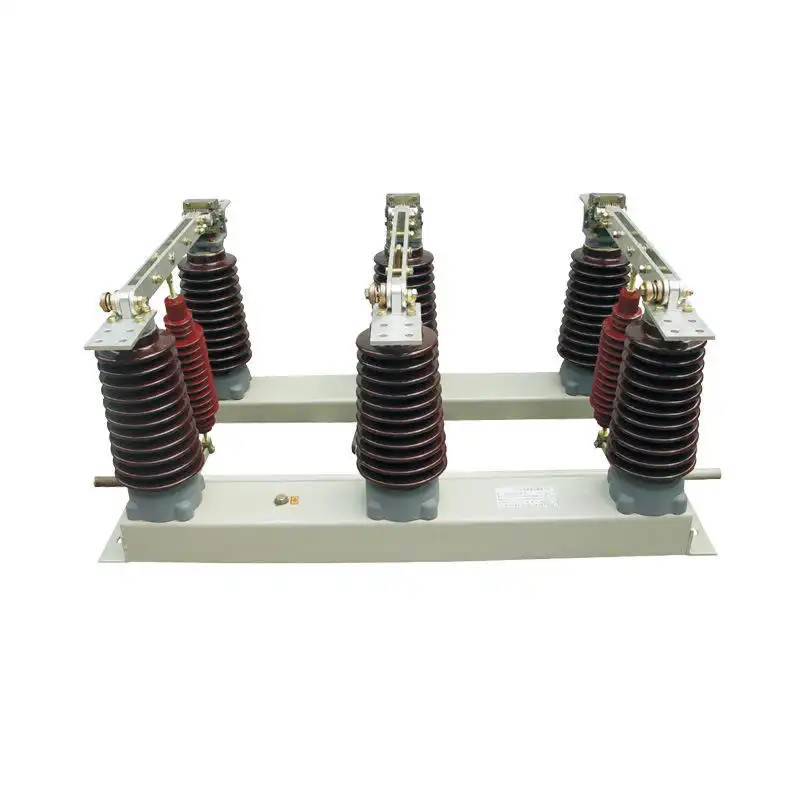
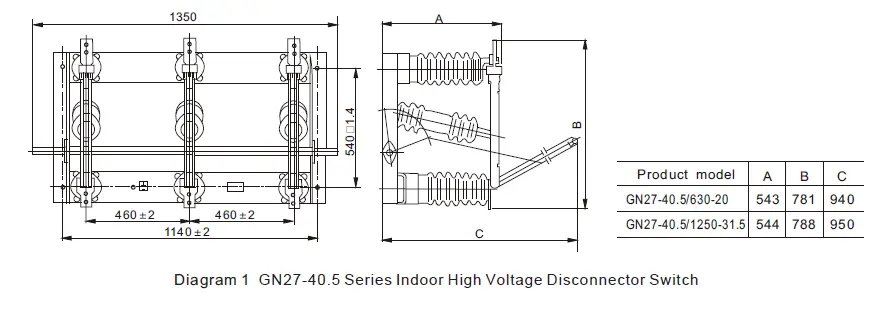
The voltage ratings for medium-voltage uses are usually between 600V and 40.5kV, and the current values are between 200A and 1250A. Our factory makes the GN27 series, which can handle 40.5kV and currents up to 1250A. It has a swing-contact design that keeps the parts from wearing out while they're in use. This advanced system keeps the contact resistance low, usually below 50 micro-ohms. This stops heat hotspots that speed up the breakdown of components.In high-voltage systems, arc flash safety is very important. Modern switches have mechanical interlocks that stop them from working when they're loaded, shielded casings that keep arc energy inside, and ground fault signs that let you know when the insulation is breaking down. These features are in line with NFPA 70E rules for electricity safety in U.S. settings.
Why Regular Maintenance Matters
Research from the Ponemon Institute shows that unplanned breakdowns in data centers cost $9000 per minute on average. When production lines stop suddenly, factories also lose money in the same way. Scheduled maintenance finds problems as they start to appear before they become too big to fix.Over time, contact oxidation raises resistance and produces heat that hurts insulators and makes spring systems less stiff. Pollutants in the environment, such as dust or chemical fumes, speed up this process. If these problems are found during regular checks, the service life is increased from 15 to 30 years, giving facility owners a much better return on their investment.Following the rules makes things even more important. In workplace settings, OSHA requires that electrical equipment have written repair schedules. Also, insurance companies often need proof of preventive care before they will pay for equipment damage claims.
Indoor Disconnect Switch Maintenance Best Practices
A planned approach to repair keeps you from missing anything and makes it easier to keep track of legal paperwork. The following list gives you a framework that you can use with different types of switches and in different running environments for the Indoor disconnect switch.
Visual Inspection Protocol
Insulator surfaces should be examined for tracking marks, tree-like patterns that indicate partial discharge activity before insulation failure, every three months. When garbage accumulates in coastal or industrial locations, the GN27 series porcelain insulators can withstand tough circumstances but must be cleaned with non-conductive solvents suitable for high-voltage equipment.Handle touch areas carefully. The major contacts' silver coating should be smooth and uniform, without pits or color shifts. The mechanical linkages connecting the working handles to the blade assembly must move freely and not stick. Loose hardware rattles, accelerating pivot point and adjustment pin wear.Exterior damage cannot reach interior elements due to enclosure integrity. Check door seals for tightness to prevent dust and dampness. Clear ventilation screens prevent harm to shielding materials from high temperatures.
Electrical Testing Procedures
Annual insulation resistance testing ensures proper dielectric between phases and ground. values over 1000 megohms on a 5kV megohmmeter indicate good insulation, while values below 500 need immediate attention. This test detects dampness and insulation wear before it breaks.Starting hotspots are found by measuring contact resistance using micro-ohmmeters. The GN27's closed contact resistance is below 50 micro-ohms, therefore measurements should match manufacturer claims. Values exceeding 20% indicate defective contact pressure and need adjustment or replacement.Power frequency withstand testing reveals the switch can take its maximum voltage plus a safety cushion. Standard tests use 42kV to 12kV equipment for one minute to prevent flashover. This damaging test is done during plant acceptance or major repairs, not routinely.
Mechanical Component Care
Operating parts should be lubricated by cycle count, not date. High-cycle configurations may require servicing every three months, whereas infrequent swaps might span years. To function with GN27 units, the CS6-2 mechanism requires greases that don't flow cold at high temperatures. Using automobile parts fails early.Springs that store energy for closing operations lose tension over decades. Standardized instruments assess working force to determine whether springs require replacement. Due to their low running force, swing-contact switches have less mechanical stress than rotating-blade versions. This prolongs spring.When the door is closed, alignment checks ensure the moving contacts fit properly. Uneven alignment promotes current buildup in tiny contact regions, causing localized burning. Shimming the insulators' mounting points is usually enough to get the blades in the appropriate location within restrictions. Manufacturers have varied methods.
Documentation and Trending
Maintenance records are useful for two reasons: they show that you are following the rules and they let you plan ahead for maintenance needs. By keeping track of test results over time, you can see how equipment is breaking down before it fails.Digital maintenance management systems do this job automatically and send notifications when readings are different from the starting values. Tracking the contact resistance over several checks lets you know which switches need extra attention during planned breaks. This method, which is based on data, makes the best use of repair funds by putting resources where they will improve reliability the most.
Troubleshooting Indoor Disconnect Switch Issues
Systematic analysis quickly fixes problems without having to replace parts that aren't needed. Technicians can find good answers by understanding the links between symptoms and causes for an Indoor disconnect switch.
Common Symptoms and Root Causes
Overheating is the most prevalent repair issue. Thermal imaging can detect hot connections before they create visible damage under strain. High temperatures result from rust contact resistance, low contact pressure, or unbalance. Environmental factors like poor airflow and excessive temperatures exacerbate these issues.Operational failure prevents the switch from closing or opening, even while control signals are valid. Mechanically locked linkages, jammed pivot bearings, or failed spring systems halt movement. Electrical interlocks that prevent unsafe operations can fail, preventing lawful switching.Unusual operating noises indicate technological issues. Grinding noises indicate a lack of lubrication or foreign particles in functioning parts. Buzzing noises from closed connections imply electromagnetic forces vibrate open linkages. Fixing these issues immediately prevents harm to other parts.
Diagnostic Approach
The diagnostic process begins with collecting operational data, including load distribution changes, environmental events, and maintenance history, supported by input from operations staff to determine symptom onset patterns. A visual inspection follows, checking for obvious defects such as cracked insulators, burnt contacts, or misaligned mechanical parts, and verifying all connections are properly tightened. Electrical testing, including resistance and leakage current measurements, identifies faulty phases and insulation breakdown. Finally, mechanical function tests without electrical load verify linkage operation and spring mechanisms before energization.
Real-World Case Study
A pharmaceutical factory had multiple overcurrent trips on a 13.8kV line that served HVAC systems in clean rooms. Investigation found that during thermal scans, the Indoor disconnect switch upstream showed increased contact temperature. Resistance tests showed 150 micro-ohms across one phase, which is three times the limit specified in the standard.Taking the switch apart showed that the moving contacts had lost silver covering due to years of load swapping, even though the switch was only supposed to work in off-load mode. The factory got around interlocks that stopped load switching so that production wouldn't stop during repair times. The problem was fixed for good by installing new contact parts and fixing the locking circuits.This example shows how practical mistakes make maintenance more difficult than the trouble they were meant to avoid. To properly stop the load, you need to work with the circuit breakers upstream to keep the disconnect switch from being put under stress it can't handle.
Comparing Indoor Disconnect Switch Options for Maintenance and Longevity
Buying things has a big effect on how much they cost to maintain and how reliable the system is in the long run. By comparing Indoor disconnect switches in a number of different ways, you can find the best one for your needs.
Key Selection Criteria
Durability depends on contact design, insulation material, and enclosure construction. Swing-contact mechanisms like the GN27 series distribute mechanical stress more evenly than knife-blade designs, reducing wear. Polymer insulators are lighter and more contamination-resistant, while porcelain offers higher thermal and chemical tolerance. Maintenance accessibility reduces downtime through modular designs and accessible test points. Safety is ensured via arc-resistant designs, mechanical interlocks, and visible blade positions. Overall cost-effectiveness considers purchase, installation, and lifecycle maintenance, where higher-quality switches often reduce total ownership costs.
Manufacturer Comparison Considerations
Schneider Electric offers a broad product range and strong North American service network, with solutions well integrated into building automation systems. Siemens provides high-precision, reliable switches suited for utility-grade and harsh environments. ABB focuses on condition monitoring with predictive maintenance enabled by built-in sensors. Eaton emphasizes compact designs for space-constrained retrofits. Xi'an Xikai, with over 50 years of manufacturing experience, offers the GN27 model featuring flexible mounting, pollution-resistant and high-altitude versions, IEC/IEEE compliance, and a modular design that reduces downtime.
Installation, Replacement, and Ongoing Support for Maximum Reliability
When execution is done right, it sets the stage for decades of steady service. Cutting corners during installation makes upkeep more difficult over the life of the equipment.
Installation Best Practices
Switching and switchgear systems are safe when following NEC Article 408. Maintaining switch spacing ensures safety and future repairability. Torque limitations prevent electrical connections from overheating or harming hardware.Grounding devices need particular caution when installing high-voltage equipment. Separate equipment grounding and system grounding wires prevent safety relaying current damage. Bonding all the metal boxes creates equipotential planes that protect individuals from ground fault step and touch potentials.Environment affects sculptural details. Indoor switches must be in climate-controlled spaces with regulated temperature and humidity. Space heaters prevent condensation in dark, temperature-changing spaces.
Replacement Parts and Upgrade Paths
Extra components reduce emergency repair downtime. Insulators, operating mechanisms, and contact kits should always be available for immediate replacement. Aftermarket parts may not work with your car, but OEM components are guaranteed to function and come with a warranty.Older switches must be replaced since spare parts are scarce. Updated projects might include safety and tracking tools. Retrofit packages may install new working mechanisms in existing switchgear frames, reducing replacement costs.Status tracking is available on older switches as technology advances. Old equipment becomes a smart asset for predictive maintenance using temperature monitors, partial discharge detectors, and mechanical operation counters.
Professional Service Advantages
Authorized service providers are knowledgeable about maintenance and have the proper diagnostic instruments. Their technicians get manufacturer training on particular switches, so they know the minor details that effect safety and performance. This understanding eliminates trial-and-error procedures, which waste time and damage tools.Preventive maintenance contracts provide frequent servicing at predictable costs. This simplifies budgeting for building managers. Contracts generally provide priority emergency response, reducing downtime when complications arise despite measures.Insurance policies and government regulations necessitate annual safety assessments by experienced specialists. Written service records demonstrate careful incident evaluations. This shields enterprises from electrical accident liability lawsuits.
Conclusion
Indoor disconnect switches should be regularly inspected, tested, and recorded to avoid expensive unexpected power blackouts and keep people safe. Facility managers can make sure that technology lasts as long as possible and works properly by knowing the different types of switches, their specs, and how to maintain them properly. Troubleshooting methods give you a way to quickly fix problems when they happen. Long-term value is best achieved by carefully choosing products that are durable, easy to keep, and have low lifetime costs. For reliable electrical distribution systems, the plan also includes professional construction and continued assistance from service providers with a lot of experience. Using these methods will help keep operations running smoothly in places like factories, data centers, hospitals, and electric structures where reliable power is important for both business success and public safety.
FAQ
1.Can indoor disconnect switches interrupt load current safely?
Standard break switches can't stop an arc, so they can only be used when there is no load on them. When you open these Indoor disconnect switches while they are loaded, dangerous sparks form that hurt equipment and put people in danger. Before you use the disconnect switch, you should always open the upstream circuit breaker. As a different group, load-break switches are made with arc chutes and better interrupting rates for use in load switching situations.
2.How does altitude affect switch performance and maintenance?
At levels above 1000 meters, the dielectric strength goes down because the air is thinner. This means that voltage requirements have to be lowered or clearances have to be raised. The GN27 series has versions that are especially designed for placements up to 4000 meters high. These versions have better insulation and bigger contact spacing. When voltage changes, standard switches that are placed above their maximum altitude have a higher chance of flashing over. At high altitude, insulation stress is higher, so maintenance times may need to be shortened.
3.What safety precautions are essential during maintenance?
Before you touch the switch contacts, turn off the power and use the right-rated test tools to make sure there is no voltage. Use automatic locks to keep doors from closing accidentally while you're working. Check for caused voltage from nearby live circuits that can power up equipment that you think is dead by using capacitive coupling. When working close to open wires, make sure to use insulated tools that are rated for the voltage class. When working switches, even when doing simple tasks like turning them on and off, you should wear the right personal safety equipment, such as arc-rated clothing. Most electricity accidents that happen during upkeep can be avoided by taking these steps.
Partner with Xi'an Xikai for Superior Indoor Disconnect Switch Solutions
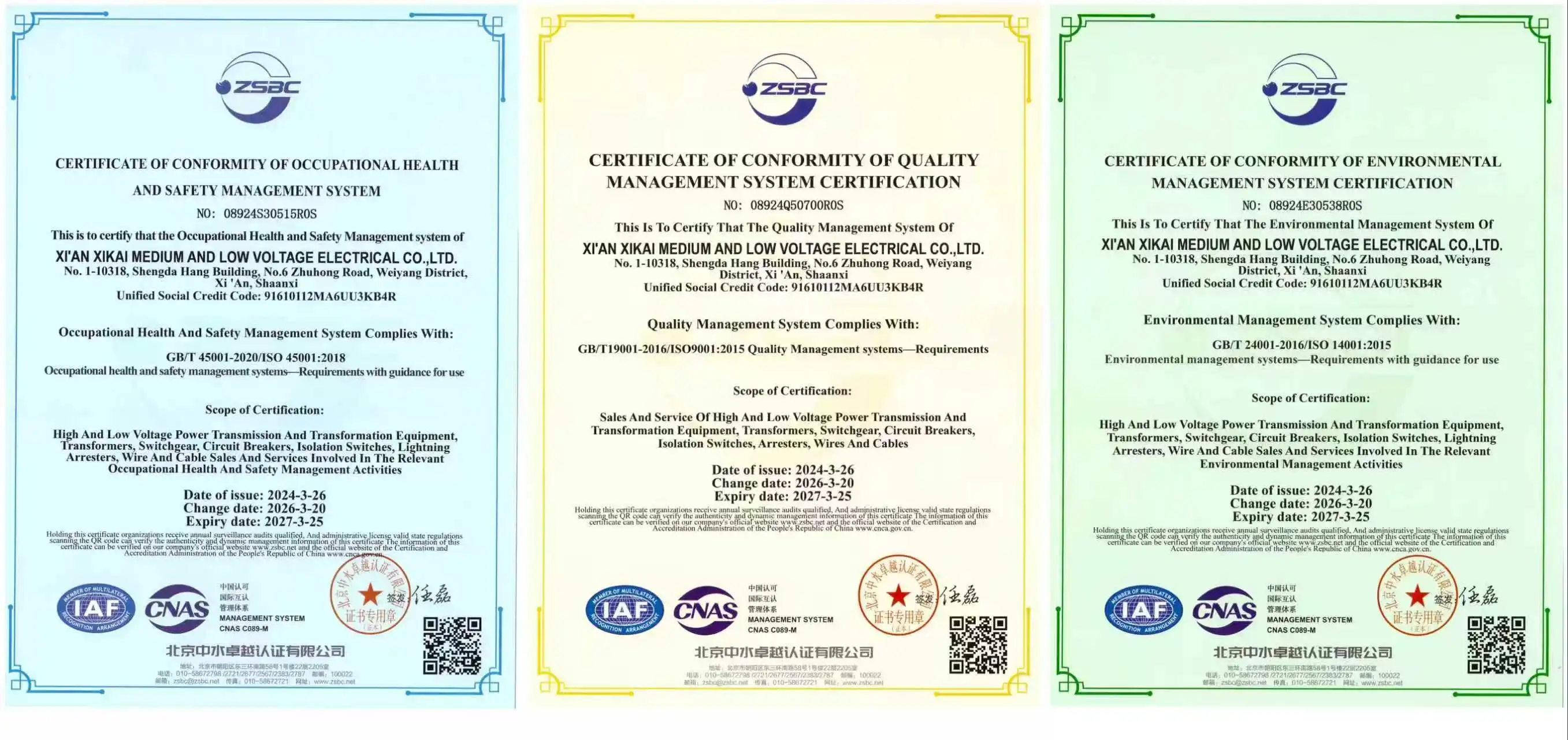
For power distribution to be reliable, the tools must be designed for harsh industrial settings and come with full support. Xi'an Xikai has been making high-quality products for 50 years and has helped utilities and industry companies in 30 countries. This dedication is shown by our GN27 Indoor disconnect switch line, which combines advanced swing-contact design with adaptable setups that meet a wide range of installation needs.Whether you're looking for a reliable provider for current projects, selecting equipment for new construction, or updating old infrastructure, our technical team can help you make the best product choice. Facility managers have to deal with the fact that every hour of downtime costs money, so they have to make sure their equipment is always reliable.Our manufacturing methods include strict quality control measures, such as electrical proof and mechanical endurance testing that lasts 10,000 cycles. Our ISO 9001 certification shows that we are dedicated to ensuring that every unit that leaves our building is of the same high quality. Get in touch with our team at serina@xaxd-electric.com, amber@xaxd-electric.com, or luna@xaxd-electric.com to talk about your needs.
References
1. Institute of Electrical and Electronics Engineers (IEEE), "IEEE Standard for High-Voltage Switchgear and Controlgear - Part 102: Alternating Current Disconnect Switches," IEEE C37.32-2021.
2. National Fire Protection Association, "NFPA 70E: Standard for Electrical Safety in the Workplace," 2024 Edition.
3. International Electrotechnical Commission, "High-Voltage Switchgear and Controlgear - Part 102: Alternating Current Disconnect Switches for Rated Voltages Above 1 kV," IEC 62271-102:2018.
4. Occupational Safety and Health Administration, "Electrical Protective Devices: Regulations and Compliance Guidelines," OSHA Technical Manual, Section III, Chapter 1.
5. Ponemon Institute, "Cost of Data Center Outages: Analysis of Business Impact and Cost Factors," Industry Research Report, 2023.
6. American National Standards Institute, "Temperature Limits and Material Requirements for Medium-Voltage Switchgear Components," ANSI C37.20.3-2020.