
Indoor Disconnect Switch: Types, Functions and Selection Criteria
2026-11-16 17:30:47
An indoor disconnect switch is a mechanical device that opens a circuit so people can work on equipment safely. When closed, it carries normal current. It does not interrupt fault current like a circuit breaker. Instead, it creates a visible isolating gap after the load is already off. Common types include fused and non-fused models, low-voltage safety switches, and 12 kV switchgear-class units such as our GN24. To select one, check voltage, current, short-circuit withstand, cabinet fit, operating mechanism, and standards. I wrote this guide for project managers and electrical engineers who match disconnects to cabinets and substations.
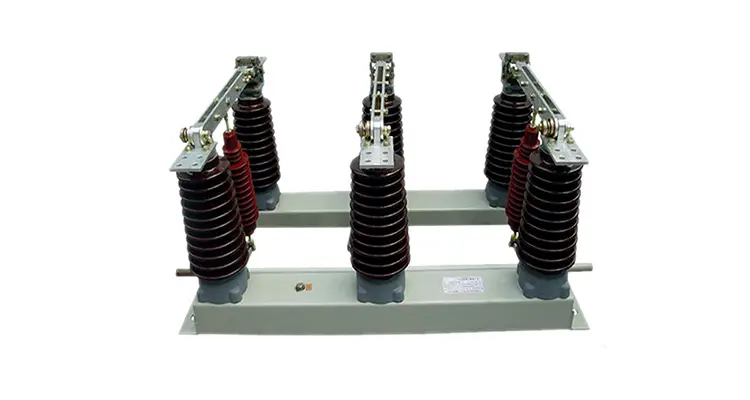
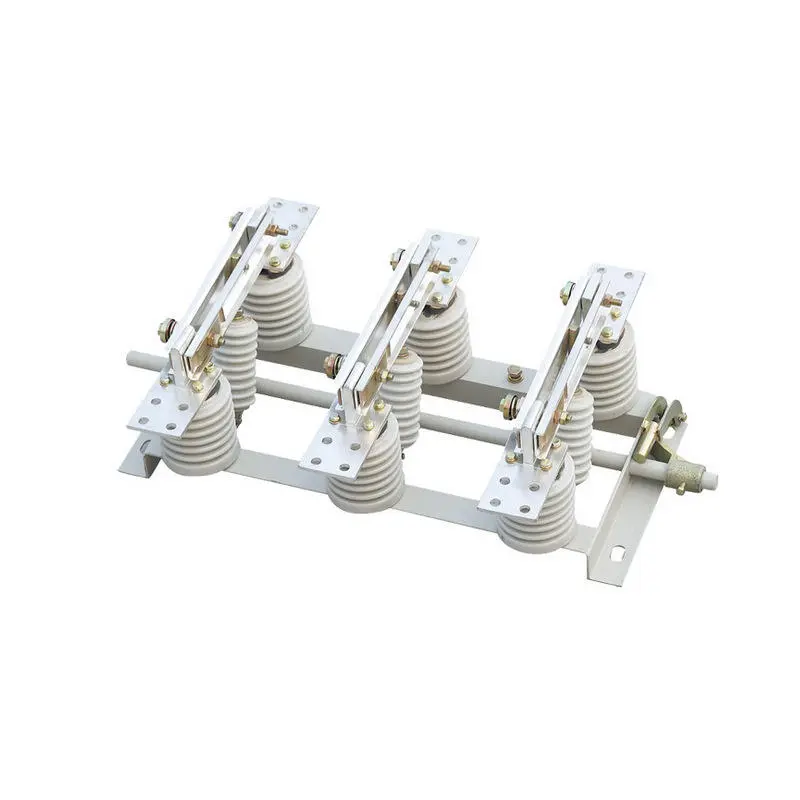
What Is an Indoor Disconnect Switch?
How an Indoor Disconnect Switch Isolates Equipment
Inside, there is an indoor disconnect switch that works like a safe break in the power line. When I open the blade or contacts, the power goes out to the equipment further down the line. The gap makes it easy to lock out. When it's open, IEC 62271-102 says that a disconnector separates two circuits. When it's closed, it moves electricity between the circuits. Most of them have line and load terminals, main contacts, an operating handle or mechanism, and extra contacts for position signals that can be added if needed. The upstream breaker has to be opened first because the contacts aren't designed to stop fault or load current. The switch and the person at the handle are safe with that order.
Disconnect Switch vs. Circuit Breaker
Because they are useful in different ways, many projects need both of them. The split I talk about most often is shown in this table.
| Item | Indoor disconnect switch | Circuit Breaker |
|---|---|---|
| Main Task | Maintenance Isolation | Interrupts load and fault current |
| Opens automatically on a fault | No | Yes, through a trip unit or relay |
| Typical Operation | Off-load | Under load |
Things are safe with disconnects and switches. That's why I treat them like friends instead of rivals. The disconnect makes the work area safe for the crews, and the breaker fixes problems in the HVAC, motor, transformer, and generator circuits. There are times when fused disconnects clear short circuits, but they don't trip like a breaker would.
Where the GN24 Fits
When there is no load, our GN24 High Voltage Disconnect Switch splits and moves live or dead bus circuits inside. It is a 12 kV disconnect switch. Rate current comes in four different ranges: 400 A, 630 A, 1000 A, and 1250 A. You can put it through the wall and it comes with an earthing switch. There are dividers that can be used between the switchgear areas. You can either use your hands to move it or choose a motorized version. The status of the blades is shown by mechanical indicators. In order to prepare for work, the circuit breaker turns off the electricity, the GN24 opens to create an isolating gap, and the earthing switch links the section to the ground. That order should be added to the interlock plan, in my opinion.
Types and Ratings of Indoor Disconnect Switches
Fused, Non-Fused, and Multi-Pole Designs
There are a few simple groups of indoor disconnect switches. Models that aren't fused can only split apart, so they need to be protected by something else. Fused models come with built-in fuse holders, so they can separate and clear short circuits with just one device. Different types have one, two, three, or four poles and can switch between single-phase, three-phase, or neutral power. See if the load is AC or DC. To keep DC circuits safe, they need contacts that can stop sparks and check the voltage. Alarms, interlocks, or building control systems can use auxiliary links to find out if the door is open or closed. Before I compare quotes, I look at the datasheet to see how many poles, what fuse class, and how to rate the contacts.
Voltage and Current Ratings That Matter
There are scores that let you know if a switch works with your system. Low-voltage safety switches are usually used for 120 V, 240 V, or 480 V lines. The full-load current, the motor starting current, and the short-circuit current rating (SCCR) tell us how big they are. They are not the same as low-voltage units. IEEE C37.30.1 states that AC air switches with a rating of more than 1000 V are safe. The GN24 is safe at 12 kV and can handle 400 A, 630 A, 1000 A, or 1250 A. Designers look at the datasheet to see the busbar current and trouble level to make sure that 12 kV is the same as the system voltage. Check the torque, the size of the wire, and the material of the connections. Pay special attention to the area where copper meets aluminum. Look at the nameplate data, electrical drawings, and manufacturer instructions for a model side by side before giving it the green light.
Enclosures, Dimensions, and Cabinet Fit
Size is often what makes or breaks a project with switchgear. People inside NEMA 250 Type 1 shelters for low-voltage units are safe from getting hurt by falling dirt and tools inside the structure. If you put an indoor break switch in a cabinet, the cabinet is the barrier. This means that the mounting holes, wall opening, phase spacing, and handle position must all be the same as what is shown in the picture. A small drawer doesn't have a lot of room for blade swing and clearance. I believe you should send the cabinet drawing and the sizes of the handle rooms right away. Also, ask for rules. Our engineers can look at your layout and compare the GN24 through-wall mounting and sizes to them before you place your order. This keeps you from having to change things at the last minute.
Indoor Disconnect Switch Applications, Installation, and Safety
Common Applications
Indoor disconnect switches are placed in places where teams need a safe place to stop working. They put HVAC units, heat pumps, pumps, fans, and compressors in different rooms. In factories, they are put in front of motors, generators, machine tools, and more. The AC side and the DC side of solar and battery storage systems need to be isolated from each other. The DC device needs to be able to handle polarity and stopped arcs. At 12 kV, the GN24 can be used in substations and metal-enclosed switchgear. It can move a bus part or unhook a feeder when it's not in use so that it can be serviced. Assembling rules such as IEEE C37.20.2 for metal-clad switchgear set the tone. This makes it possible for people to work in one part of the building while other parts stay open for business. This is helpful in places like factories, hospitals, and data centers.
Installation and Wiring Basics
The first thing that makes an installation good is where it is put. To make it easy for teams to get to each indoor disconnect switch, it should be placed in an area with enough room for work, air flow, and labels. NFPA 70 has rules about working spaces, and the lengths needed get bigger as the power goes up. Make sure you're following the rules by talking to the people who are in charge of your area. There is a conceptual wiring diagram that shows where the fuses are, as well as the grounding, neutral, line, and load terminals, as well as the auxiliary contacts. That being said, the project drawing must follow the steps in the product manual. The GN24's earthing switch connects the split part to ground, and the interlock stops the earthing switch from closing by accident when it's loaded. Once the links are tightened to the right level of torque, make sure the mechanical sign lines up with where the blade is.
Lockout, Testing, and Common Mistakes
There is a set way to do work safely. There is a process that workers must go through before they can work near live parts that can be seen, according to NFPA 70E. There should be no power when the locks are put on, and workers should check to see if there is power and ground as needed. Most of the time, people make mistakes like using the wrong ratings, fuse classes, low SCCR, loose connections, the wrong container, or an AC-only product in a DC circuit. They also don't seem to check the position sign. You can avoid many of these mistakes by writing down a plan and having someone else look it over again. The voltage tester, the indicator, and the lock can all be checked quickly. This lets you find a mistake in the wrong place before it happens.
How to Choose an Indoor Disconnect Switch
A Step-by-Step Selection Process
I do five things. To begin, write down the AC or DC type, voltage, phase, frequency, full-load current, and frequency. Take a look at the starting current and fault level next. When they first turn on, motors and compressors use more electricity. Third, choose the amount of poles, whether the building is joined, how the neutral is switched, and if there are any extra contacts. Fourth, make sure that the enclosure's type, how it's mounted, terminals, and size are all right for the spot or case. Fifth, make sure you get test scores and awards for the right type. The seller should be able to see each answer written on the RFQ. To pick an indoor disconnect switch, this order makes sure that first the electrical limits are met and then the mechanical fit is good. Thus, a neat size won't hide a bad score.
Three Checks for Switchgear Projects
Three things are usually important for people who make switchgear and EPC teams when they buy an indoor disconnect switch. As for sizes, look at the cabinet plan and make sure the mounting holes, phase spacing, and wall openings all match up. A micro-ohm meter can be used to measure the main-circuit resistance. Then, you can compare each unit to the limit given in the datasheet. If the covering is bad or the contact pressure is low, the number can be large. This can also make things hot. Mechanism: Ask for working force and control travel. A manual mechanism that is easy to use makes the job of the operator easier and keeps the locking sequence clear. You can use the GN24 by hand, or you can get one that is powered by a motor. You can then pick the best method for your task.
Project Selection Matrix
Not all lists are useful for every job because different loads put different amounts of stress on them. I use this matrix to keep track of the most important things I look for in an indoor disconnect switch for a project.
| Application | Key checks |
|---|---|
| HVAC and motors | Starting current, fuse class, lockable handle |
| Transformers and generators | Voltage, fault level, interlocking |
| Solar and storage | DC rating, polarity, arc interruption |
| Switchgear cabinets | Dimensions, mounting, contact resistance |
It's a good start, but make sure you compare each item to the information on the label, the drawings, and the directions from the manufacturer. You should ask the supplier about any blanks on the datasheet. If the project has a lot of different kinds of loads, run the grid once for each one.
Alternatives, Maintenance, and Procurement for Indoor Disconnect Switches
Indoor, Outdoor, and Safety Switch Options
Ratings that have been checked out are better than logos when it comes to comparing indoor disconnect switch options. Outdoor disconnects protect against weather, rust, and a wider range of temperatures than indoor disconnects do. An indoor unit in a dry, clean room doesn't need these protections. A heavy-duty safety switch might have blades that can be seen and a stronger way to lock it out. You can get datasheets from Square D, Siemens, Eaton, ABB, Schneider Electric, GE, and Leviton, among others. Line by line, you can use them to compare sizes, grades, and gets. These are the best people to go to if you need special sizes, extra contacts, private labels, bulk programs, or extra contacts. A factory partner can change the fastening parts of switchgear jobs to fit your cabinet, which might not be possible with shelf items.
Maintenance and Troubleshooting
If you check an indoor break switch often, it won't get too hot and cause unplanned downtime. To set the time between cycles, look at the key load, the switching frequency, and the directions from the maker. While the power is out, check the labels, move the handle, the wires, the insulators, the fuses, and see if there is rust, dust, or moisture. Clean the surfaces that touch, make sure the bolts are tight, and use the right contact grease where the instructions say to. To fix a broken unit, first turn it off and take a good look at it. Then check its continuity, contact resistance, switch state, and wires. This item should not be fixed if it has arcing damage, heat lines, broken insulation, mechanical failure, or heavy rust. It is better to get a new one. The GN24 data shows that the machine has been used 10,000 times. Write down how many times it has been used and then compare that number to 10,000.
Procurement Checklist for Project Buyers
A good RFQ for buying a domestic disconnect switch should include details about the voltage, current, operation type (AC or DC), number of poles, fuse needs, accessories, certifications, amount, delivery dates, and where the switch needs to be sent. Distributors take care of stock needs, and OEM and factory-direct suppliers handle bigger orders and sizes that aren't standard. Look into a supplier's ability to make things, their quality control systems, their ability to be tracked, their experience with exporting, their technical support, their lead time, their minimum order quantity, how they package their goods, and if they have any spare parts. Please make sure you have the exact model datasheet, drawings, test reports, certificates, and inspection records before you sign off on it. Don't just compare unit costs; also look at the total cost to land the goods. A company called Xi'an Xikai makes things that are used in rail transportation, steel and metallurgy, petrochemicals, and power engineering. So that we can make sure our plateau-type tools can handle it, please tell us how high the site is.

Conclusion
It is safe and easy for workers to turn off the power with an indoor disconnect switch. However, it is not the same as a circuit breaker because it doesn't trip on its own when something goes wrong. Each type is different based on the type of fuse used, the number of poles, the AC or DC grade, the extra contacts, and the way the enclosure or box is built. Its voltage, continuous current, and fault withstand ratings will tell you if a unit is right for the job. The size, mounting, contact resistance, and working effort of the part will tell you if it fits the cabinet. From 400 A to 1250 A, the GN24 shows the switchgear class. It has an earthing switch built in and can be mounted through the wall. Some other things that are important for safety are lockout procedures, regular inspections, and exact-model documents from the supplier.
FAQ
1. Can an indoor disconnect switch open under load?
Not the GN24. When there is no load, it moves live or dead bus circuits apart. This means the circuit breaker has to open first. A dangerous arc can form when something opens up under pressure.
2. What is the difference between an indoor disconnect switch and a circuit breaker?
A breaker trips on its own, cutting off the fault current. There is a disconnect that stops equipment from working while it is being fixed. The disconnect doesn't trip on its own. In substations, both tools are used in a certain order.
3. Does the GN24 include an earthing switch?
Yes. Plus, it comes with an earthing switch that won't close by accident when it's loaded thanks to an interlock. It can also be mounted through the wall, and you can use a motor or a hand to move it.
4. What should I send for a quotation?
Send the name of the software, the amount, the cabinet plans, the mechanism you want, the slope of the site, and any verification needs. Our team will check to make sure it fits and get back to you with a price.
Request a Quote for an Indoor Disconnect Switch from Xi'an Xikai
Send your cabinet drawings, rated current, and quantity to Xi'an Xikai, an indoor disconnect switch manufacturer with patented technologies and plateau-type equipment for altitudes up to 4,000 meters. Our team will match GN24 12 kV options to your project, discuss customization, and reply with a quotation. Email serina@xaxd-electric.com, amber@xaxd-electric.com, or luna@xaxd-electric.com, and visit xaxd-electric.com for details.
References
1. IEC 62271-102: High-voltage switchgear and controlgear – Part 102: Alternating current disconnectors and earthing switches, 2018
2. IEEE C37.30.1: IEEE Standard Requirements for AC High-Voltage Air Switches Rated Above 1000 V, 2011
3. NFPA 70: National Electrical Code, 2023
4. NFPA 70E: Standard for Electrical Safety in the Workplace, 2024
5. NEMA 250: Enclosures for Electrical Equipment (1000 Volts Maximum), 2020
6. IEEE C37.20.2: IEEE Standard for Metal-Clad Switchgear, 2015