
Why Metal-Clad Withdrawable Switchgear Matters for Electrical Safety
2026-11-16 17:30:50
Because a circuit breaker cannot handle all risks, metal-clad withdrawable switchgear is important for electrical safety. This equipment isolates the breaker, busbar, cable, and control sections into separate grounded metal chambers. It allows operators to isolate the breaker from the live circuit and its interlocks prevent harmful actions. These characteristics together prevent fault spreading, decrease contact with live parts, and allow more regulated maintenance. This resource is for engineers, project managers and purchasers comparing medium voltage choices. We will discuss design, standards, selection, installation and the KYN28-12 from Xi'an Xikai.
What Is Metal-Clad Withdrawable Switchgear and How Does It Work?
Core Construction
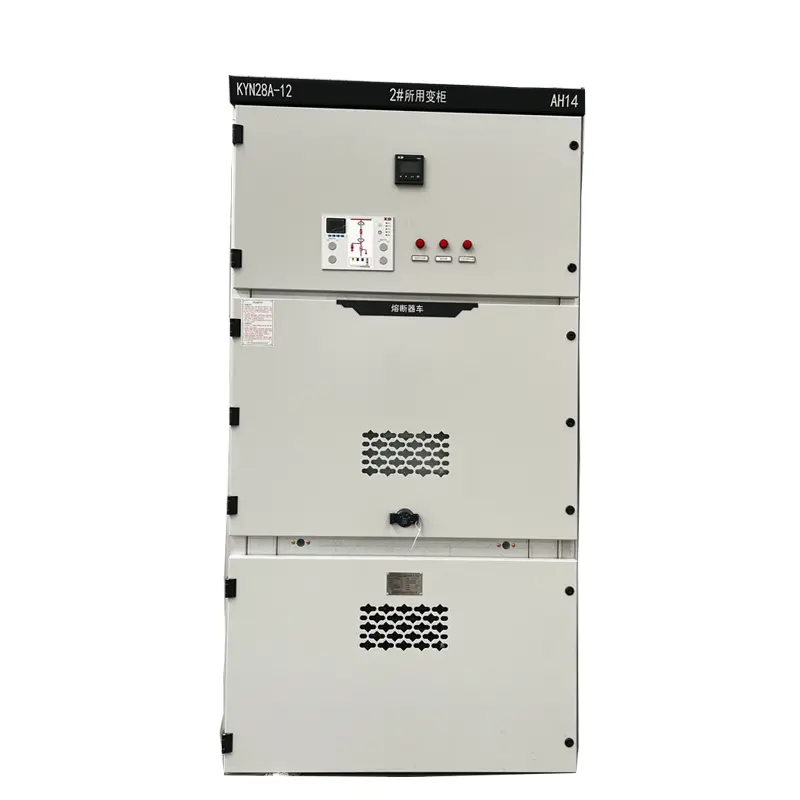
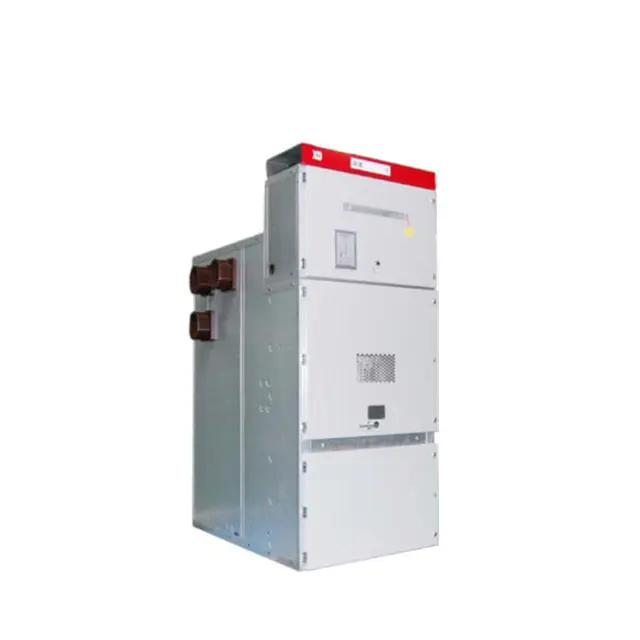
Metal-clad withdrawable switchgear is medium-voltage equipment composed of grounded metal compartments and a breaker truck that may be removed. A typical cell is composed of a busbar chamber, a breaker compartment, a cable termination area and a low voltage control section. The range also comprises instrument transformers, protection relays, shutters and earthing switches. The metal-clad architecture provides better segregation than standard metal-enclosed systems and flaws are less likely to propagate across compartments. Standards covering this equipment include IEEE C37.20.2 and IEC 62271-200 . . Look at the tested configuration not just the product name while considering offers .
Service, Test, and Disconnected Positions
In metal-clad withdrawable switchgear, the breaker truck travels in three main locations. In the service position, the breaker links the feeder to the bus bar. In the test position, primary contacts are isolated so that operators may safely examine breaker performance and control circuits. The breaker is totally free of the main connections for examination or removal in the disconnected state. When the vehicle is pulled out, live contacts are covered by safety shutters. The design provides for safety with vacuum breaks and protective relays, but personnel still need to follow authorized isolation, grounding and verification procedures before repair.
Where Teams Use It
Teams use metal-clad withdrawable switchgear in areas where power loss or electrical mishaps are costly such as industrial facilities, mines, power stations and renewable energy projects. These systems are often used at medium voltage levels like as 11 kV and 33 kV to supply motors, transformers and outgoing lines. EPC contractors normally finish the design of the switchgear early in the project since it influences the room layout and cable access. Involving project managers, purchasers and electrical engineers early on avoids late-stage redesigns that might delay commissioning.
How Metal-Clad Withdrawable Switchgear Improves Electrical Safety
Compartments, Grounded Barriers, and Shutters
In metal-clad withdrawable switchgear, the main safety barrier is the grounded metal partition, which separates the electrified busbars and cable terminations in distinct compartments. These barriers are intended to confine internal flaws inside their original compartment. Shutters offer supplementary protection by covering the permanent connections when the breaker truck is removed from the service position, thereby avoiding inadvertent contact with live parts. This enables one feeder to be serviced while the busbar is kept powered. But hardware is no replacement for protocol. Teams still have to check for de-energization and follow lockout/tagout procedures.
Interlocks That Block Unsafe Operations
Interlocks are essential in avoiding human mistake. Mechanical and electrical interlocks ensure that operators cannot rack a closed breaker, open live compartment doors or use an earthing switch on an active feeder. Xi'an Xikai's KYN28-12 has five safety interlocks to prevent circuit breaker mistakes and ground faults. These elements operate as gates in front of dangerous activities, reducing the possibility that hasty or tired acts would lead to mishaps. Interlocks are not a substitute for comprehensive safety training, and should never be ignored to save time.
Arc Faults and Pressure Relief
Internal arcs rapidly generate high heat and pressure. Arc-flash dangers are included in safety standards like as NFPA 70E and IEEE 1584 . Arc resistant metal clad withdrawable switchgear is tested in accordance with IEEE C37.20.7 or IEC 62271-200 Annex A. This design is meant to channel dangerous fault gasses away from workers. This protection is only functional when the device is mounted in the tested configuration with all doors closed. Buyers should always ask for the individual arc test report for their cubicle rating and inspect the exhaust route in the switchgear room.
Standards, Comparisons, and Selection Criteria for Metal-Clad Withdrawable Switchgear
Standards and Documents to Check
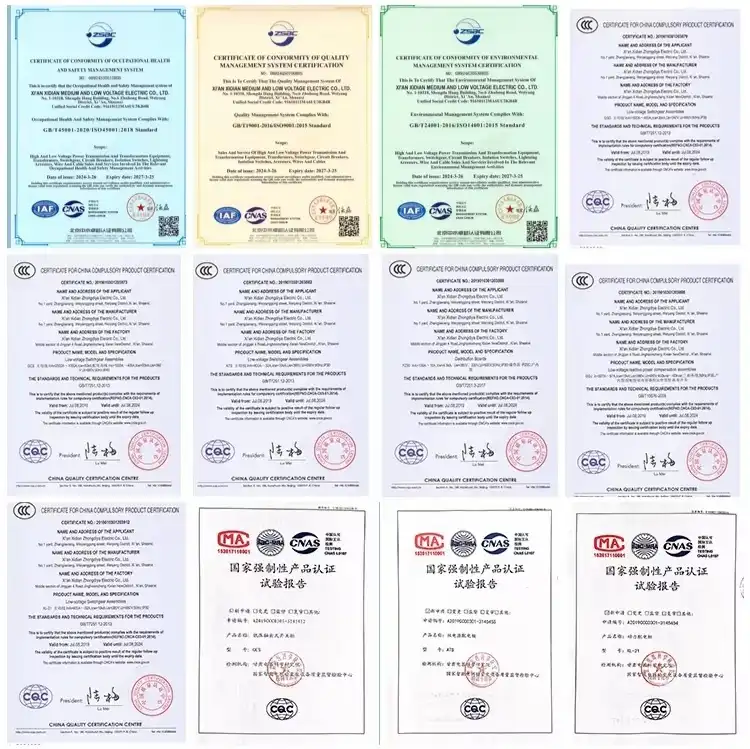
Depending on regional customs, metal-clad withdrawable switchgear must comply with IEC 62271-200 or IEEE C37.20.2. The specifications must be compatible with site requirements for voltage, current, insulation levels and environmental conditions such as altitude and seismic activity. The key documents are type test certificates, regular test reports, factory acceptance test (FAT) records and commissioning guides. These documentation give the owner and utility with proof of performance, not just words. No documentation should be a red flag and should be taken care of before ordering.
Metal-Clad Withdrawable Switchgear vs. Fixed, Metal-Enclosed, and GIS
Withdrawable designs enable personnel to remove the breaker for service, making testing and breaker changes easier than with permanent switchgear. Metal-clad withdrawable switchgear provides greater internal segregation than many metal-enclosed products, but potentially higher initial cost and bigger footprint. Gas insulated switchgear (GIS) is suited to confined places, whereas air insulated metal-clad cubicles give simpler physical access. The choice should be made on the basis of fault levels, service continuity and life cycle costs and not the cheapest purchase price.
How to Choose Metal-Clad Withdrawable Switchgear for a Project
Define first the electrical profile – system voltage, load current, fault level and busbar configuration. Ensure that the vacuum circuit breaker is acceptable for specified jobs such as transformer or motor starting. Evaluate safety features like internal arc ratings, location indication and remote control capability. It is a good practice to allow for future growth so that more cubicles may be added later. The single line diagram should be frozen at the earliest. Frequent changes in design contribute to delay in delivery and issues in site work."
KYN28-12 Removable Metal-Clad Switchgear from Xi'an Xikai
Key Ratings and Compatibility
KYN28-12 is 12kV 50Hz metal-clad withdrawable switch gear. It is compatible with ABB VD4 and VS1 breakers, isolation trucks and transformers, offering flexibility for planners for feeders and incomers. Five safety interlocks are included to prevent circuit breaker malfunctions and illegal entry to the compartment. The device is tested to resist a power-frequency voltage of 42kV. It is mostly built for 50 Hz networks, however given the required network data for local certification, it may be checked by the engineer whether it is suitable for 60 Hz networks.
Applications
Our metal-clad withdrawable switchgear is designed for power distribution, grid supervision and motor start ups. It controls the transformers and outgoing lines in substations and industrial units. For motor applications, the withdrawable breaker provides a safer way to test feeds that are switched on a regular basis. The low-voltage portion has safety and measuring devices which provide operators clear data about the circuit. Common installations include power stations, mines and huge industrial units. Xi'an Xikai equipment also assists petrochemical, railroad transportation and renewable energy projects.
Quality, Altitude, and Project Support
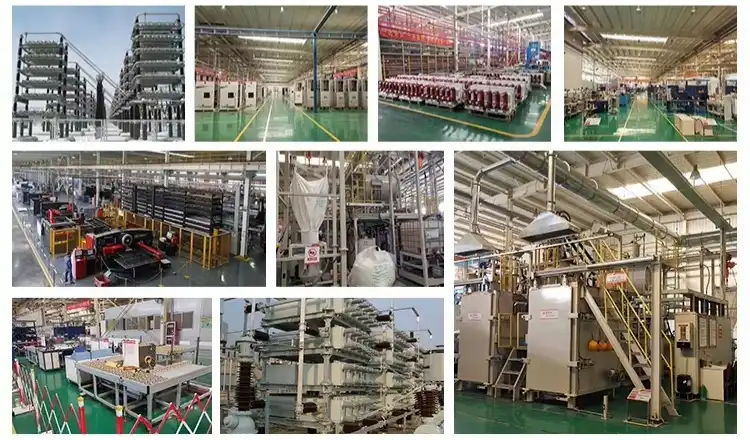
Xi'an Xikai Medium & Low Voltage Electric Co., Ltd. is a large production base for medium and low voltage equipment in China. We have 34 series of switchgear, dry-type transformers and vacuum circuit breakers in our inventory. We have plateau type equipment which can work at an altitude of 4,000 meters. It is manufactured in ISO 9001 certified plants. We are a single source provider of switchgear and transformers, helping EPC teams to close interface gaps. We urge that site conditions be shared early so that the equipment fits the technical bid standards.
Installation, Maintenance, and Supplier Evaluation for Metal-Clad Withdrawable Switchgear
Installation and Commissioning Checks
Safe operation starts with correct site installation. Before powering metal-clad withdrawable switchgear, examine support bases, clearances, ventilation, and grounding connections. Cubicles should be transported with care to minimize damage to doors and interior machinery, and any damage should be noted at once. Commissioning should consist of dielectric tests, interlock checks and verification of trip circuits and communication protocols. Operators must follow authorized switching sequences, wear adequate personal protective equipment and maintain safe approach distances.
Maintenance and Common Mistakes
Preventive maintenance should be concentrated on breaker mechanisms, insulation, earthing connections and contamination by dust or moisture. • NETA maintenance testing requirements from which test schedules may be derived. Common industrial blunders include buying based on rated voltage, disabling safety interlocks or accepting arc-resistance claims without a good test result. Buyers should also verify the availability of replacement parts, and that spare breakers are suitable, to prevent protracted outages due to worn mechanisms.
How to Evaluate a Metal-Clad Withdrawable Switchgear Supplier
You should look for a reputable provider with a proven track record of medium voltage expertise and documented evidence of testing. Ask for type-test certifications, FAT processes and references of comparable programs. The provider should be able to inspect your single-line design and change feeder arrangements to satisfy particular demands like high altitude. Performance of delivery, quality of export packing and amount of commissioning training given should also be taken into account in evaluation. Often these criteria are more important to project success than the original purchasing price.
Conclusion
Metal-clad withdrawable switchgear offers electrical safety with grounded compartments, shutters, withdrawable breakers, interlocks and arc-resistant construction all in one system. The paper demonstrated how the service, test and disconnected positions provide controlled maintenance. It also highlighted why IEC 62271-200, IEEE C37.20.2 and test reports must agree with the real configuration, and how this design compares with fixed, metal-enclosed and GIS solutions. The choice is dictated by voltage, fault level, site circumstances and growth plans, and an early frozen single-line schematic restricts late alterations. Installation tests, maintenance, and skilled personnel ensure the built-in protection remains effective. These ideas are used in the KYN28-12, rated 12 kV, 50 Hz, with five safety interlocks and ABB VD4 and VS1 breaker compatibility. Buyers are best served by considering safety evidence, service and lifespan cost combined.
FAQ
1. What makes metal-clad construction different from general metal-enclosed construction?
Metal-clad designs place the breaker, busbar, cable, and control parts in separate grounded compartments. This gives more segregation, so a fault in one area is less likely to spread.
2. Is the KYN28-12 suitable for a 60 Hz system?
The KYN28-12 is rated 12 kV and 50 Hz. For a 60 Hz network, send us your system data so our engineers can confirm suitability.
3. Which breakers work with the KYN28-12?
It is compatible with ABB VD4 and VS1 breakers, isolation trucks, and transformers.
4. Which documents should I request?
Ask for type-test certificates, routine-test reports, drawings, FAT records, manuals, and commissioning documents.
5. What should a quotation request include?
Include your single-line diagram, ratings, fault level, site altitude, and delivery schedule.
Plan a Safer Medium-Voltage Solution with Xi'an Xikai
Looking for a metal-clad withdrawable switchgear manufacturer who reviews your single-line diagram early? Send your ratings, site conditions, and delivery schedule to Xi'an Xikai at serina@xaxd-electric.com, amber@xaxd-electric.com, or luna@xaxd-electric.com. Our engineers support KYN28-12 projects and plateau-type equipment for altitudes up to 4,000 meters.
References
1. IEC 62271-200: High-voltage switchgear and controlgear – Part 200: AC metal-enclosed switchgear and controlgear for rated voltages above 1 kV and up to and including 52 kV (2021)
2. IEEE C37.20.2: IEEE Standard for Metal-Clad Switchgear (2015)
3. IEEE C37.20.7: IEEE Guide for Testing Metal-Enclosed Switchgear Rated Up to 52 kV for Internal Arcing Faults (2017)
4. NFPA 70E: Standard for Electrical Safety in the Workplace (2024)
5. IEEE 1584: IEEE Guide for Performing Arc-Flash Hazard Calculations (2018)
6. NETA MTS: Standard for Maintenance Testing Specifications for Electrical Power Equipment and Systems (2023)
