
What Is an Iron Core Reactor Used For?
2026-10-21 16:44:49
An iron core reactor is a passive electromagnetic device that controls current flow, limits fault currents, filters harmonics, and supports reactive power compensation in electrical systems. By using a laminated silicon steel core—often with precision air gaps—it maintains stable inductance across a wide current range without reaching magnetic saturation. You will find these devices in capacitor banks, harmonic filter cabinets, SVG systems, industrial substations, and renewable energy installations. Their ability to handle non-linear loads while operating silently and safely makes the iron core reactor one of the most dependable components in modern power distribution.
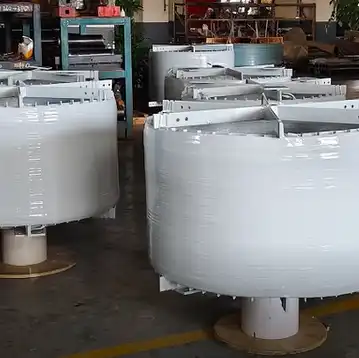
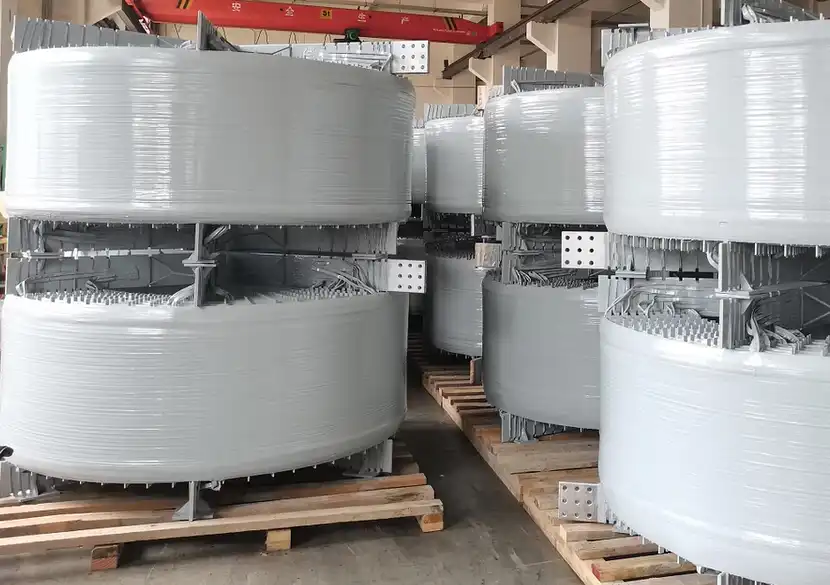
Understanding the Fundamentals of Iron Core Reactors
Engineers need to know how magnetic parts work before they can choose which ones to use in a power system. Faraday's law of electromagnetic induction says that when an alternating current flows through a coil wrapped around an iron core, it creates a magnetic flux that fights against changes in the current. This flux is concentrated by the iron core, which makes the body physically small while still having a high inductance.
How the Iron Core Creates Magnetic Linearity
The laminated silicon steel core has precise air holes cut into it to keep it from getting too hot during current jumps. This means that the value of the inductance stays the same—usually within ±3%—even when the current is 1.35 times the recommended value. If this design rule wasn't followed, harmonic overloads would push the core to saturation, which would collapse the inductance and put downstream equipment at risk of damaging transients.
Material Selection and Core Construction
The core stack is made up of high-quality CRGO silicon steel sheets that have been cold-rolled and have low hysteresis losses. The effective magnetic cross-section is highest when the stacking factor is above 95%. The physical dimensions stay the same. Laminations are covered with a Franklin insulation layer and manually clamped to lower vibrations caused by magnetostriction. This keeps noise levels below 60 dB in well-made units.
Iron Core vs. Air Core: Key Technical Differences
An air core reactor doesn't use any magnetic materials, so there is no risk of saturation. However, it takes a lot more conductor material to get the same inductance. The iron core reactor has a much higher inductance-to-volume ratio, which means it takes up 40% to 50% less cabinet space. This is a big deal when adding reactive compensation equipment to switchgear rooms or containerized substations that are already there.
Applications and Benefits of Iron Core Reactors
The iron core reactor is used in almost every part of modern electrical infrastructure. Its use is growing as harmonic pollution from variable-frequency drives and switching power sources gets worse.
Reactive Power Compensation and Capacitor Bank Protection
By connecting a power factor adjustment capacitor to a series iron core reactor, you can make a detuned filter circuit. When capacitors turn on, the reactor limits the inrush current. This protects the contactors and capacitor cells and stops background voltage harmonics from getting stronger. IEC 60076-6 says that the most common configuration in industrial plants is one with a detuning factor of 5.67% and a reactor tuned below the 5th harmonic.
Harmonic Filtering in Industrial Environments
5th, 7th, and 11th harmonic currents are put into the grid by variable-frequency drives, arc furnaces, and rectifier loads. In tuned filter branches, iron core series reactors give certain harmonic orders a low-impedance path that keeps them from going to the supply bus. Field data from steel mill sites shows that after filter banks with iron core reactors were put into service, total harmonic distortion (THD) dropped from more than 25% to less than 5%.
Renewable Energy and Traction Power Systems
Grid-connected wind converters and solar inverters make high-frequency switching noise that puts a lot of stress on the insulation of transformers. At the end of the inverter, an iron core reactor works as a dv/dt filter, making the current waveform smoother before it gets to the step-up transformer. The same technology is used in metro traction substations to limit short-circuit current and smooth out regenerative braking transients.
A big chunk of the world's desire for iron core reactors comes from just these three uses. When facilities put money into reactive compensation, their energy bills go down, equipment breaks down less often, and cable service lasts longer.
The CKSC Dry-Type Iron Core Reactor from Xi'an Xikai
The CKSC series from Xi'an Xikai is a useful solution for procurement engineers who need to choose reactors for capacitor cabinets and harmonic filter panels that meet performance and safety standards.
Technical Specifications at a Glance
The CKSC can handle rated voltages of 3 kV, 6 kV, 10 kV, 15 kV, 20 kV, and 35 kV, which is enough for most medium-voltage networks in China, South Asia, and the Middle East. The insulation is Class F (155 °C), and it can be installed either by vacuum casting epoxy resin or using air insulation, based on the setting. For an inductance error of less than ±3%, the core is made of high-quality silicon steel with precisely measured air gaps. The temperature range for this unit is -40 °C to +55 °C, and it is certified by both ISO 9001 and IEC 60076-6.
Why Dry-Type Design Matters for Fire-Sensitive Sites
The CKSC does not contain any explosive liquids like oil-immersed reactors do. Epoxy resin casting keeps windings safe from the humidity, dust, and corrosive air that can be found in chemical plants, subway stops, and ocean platforms. This building meets NFPA 70 fire codes and gets rid of the risk of oil spills that facility managers in sensitive areas can't stand.
Manufacturing Quality Control
These are the main quality checks that are done during production:
- Insulation resistance testing confirms values ≥1,000 MΩ before any unit ships.
- DC resistance measurement verifies winding continuity and identifies turn-to-turn faults before the reactor reaches the field.
- Industrial-frequency withstand voltage testing at 85% of rated test voltage confirms dielectric integrity across the full winding structure.
- Inter-laminar resistance testing per ASTM A717 prevents localized hot spots caused by shorted laminations.
- Air gap dimensional verification maintains inductance tolerance within ±3%, directly supporting the electrical precision that capacitor bank designers rely on.
Facilities that are ISO 9001-certified use automated winding machines and vacuum casting equipment to do these checks. Each step shows the factory discipline needed to make sure that sales of 20 to 200 units always work the same way.
Procurement Guidance: Selecting the Right Iron Core Reactor
It's not enough to just match the voltage and current rates when picking the right iron core reactor for a capacitor or filter cabinet.
Matching Inductance to Your Detuning Requirement
Which harmonic order the filter circuit blocks is set by the detuning factor. Grids with a lot of third harmonics from single-phase loads work best with a reactor that is tuned 7% below the third harmonic. For commercial areas that are driven by the fifth harmonic, a 5.67% reactor is typical. To keep the filter from going into resonance as the capacitors age, set the inductance tolerance to ±3% or less.
Evaluating Supplier Customization Capabilities
Standard catalog reactors can handle common voltage and frequency combinations. But for non-standard grids, like 50 Hz vs. 60 Hz or 11 kV vs. 10 kV, the winding turns and air gap sizes need to be changed by engineers. Check with an iron core reactor supplier to make sure they can make first samples within four to six weeks and take orders below 50 units without charging harsh minimum order amounts.
Transport and Installation Considerations
With heavy iron core reactor designs, there is a real chance that the core layer will move during shipping. Talk to suppliers about shock-indicator labels, internal bracing, and vacuum impregnation methods that join layers together to form a solid mass. It's important to use the right crates and moisture-barrier packing when shipping goods by boat to South Asia and the Middle East.
Maintenance and Long-Term Performance
An iron core reactor that is well taken care of can work for 20 years or more. The main way things fail is insulation breaking down because of partial discharge or thermal aging, so the maintenance plan should cover both of these.
Routine Inspection Items
In dirty places, check the cleanliness of the cooling ducts every six months. As a well-known rule in IEC insulation standards, blocked pipes raise the temperature of the winding, which speeds up insulation aging by about twice as fast for every 10 °C rise above the rated thermal class limit.
Monitoring for Early Warning Signs
Vibration monitors and partial discharge detectors can find problems that are starting to form months before they break. High partial discharge levels above 100 pC show that the insulation is breaking down and need to be replaced or the resin re-treated before an unexpected outage stops production.
Temperature Management in High-Harmonic Environments
Harmonic currents raise the operating temperature above what the fundamental current would cause. This is because they cause more eddy current losses in the core and winding. If the load THD is more than 20%, lower the reactor's heat capacity by about 10 to 15 percent, or choose a unit with a higher current rating from the start.


Conclusion
The iron core reactor does many things that keep power systems stable, safe, and efficient. For example, it controls the amount of inrush current that flows through capacitor banks, filters out harmonics in factories, and helps with reactive compensation in renewable energy grids. When picking the right unit, you need to think about the accuracy of the inductance, the insulation class, the thermal design, and how reliable the supplier is. The CKSC Dry-type Iron core reactor from Xi'an Xikai directly meets these needs, with rated voltages ranging from 3 kV to 35 kV, Class F epoxy insulation, and an inductance tolerance of ±3%. Xi'an Xikai has both a lot of engineering knowledge and a lot of production options, so it can help buying teams balance technical performance with budget and delivery dates.
FAQ
1.What is the standard inductance tolerance for a series iron core reactor used in a capacitor bank?
To keep the filter circuit from going into resonance, most capacitor bank designs need an inductance limit of within ±3%. For precision harmonic filter uses with strict THD goals, tolerances as low as ±1–2% are possible.
2.How does a dry-type iron core reactor differ from an oil-immersed version?
Dry-type units don't use mineral oil; instead, they use epoxy resin casting or air insulation. This gets rid of the risk of fire and the responsibility for oil spills. In places like chemical plants, metro networks, and indoor substations where explosive materials pose too many risks, they are the best choice.
3.Can the CKSC reactor operate at altitudes above 2,000 meters?
Yes, but it needs to be derated. At higher elevations, less dense air makes cooling less effective and insulating strength lower. If asked, Xi'an Xikai can change the thermal margins and creepage distances for high-altitude requirements.
4.What is the typical service life?
Under normal conditions, the design life is 20 years or more. Insulation that has been overheated or partially discharged for a long time is the main cause of failure before its time. Inspection of cooling ducts on a regular basis and testing for partial discharge on a regular basis greatly increase service life.
5.What customization options are available?
Xi'an Xikai can work with voltages, frequencies, terminal configurations, and cabinet mounting formats that aren't standard. After the order is confirmed, the first samples will be sent out within four to six weeks.
Partner with Xi'an Xikai for Your Iron Core Reactor Requirements
Xi'an Xikai offers technically tested iron core reactor solutions, such as the CKSC series. Their products are made in accordance with ISO 9001 standards and come with a ±3% inductance guaranty. They also offer batch sizes that are flexible, ranging from 20 to 200 units. We are a trusted iron core reactor maker with more than 15 years of experience working on power projects around the world. We are ready to help you with your next capacitor cabinet or harmonic filter panel design. Get in touch with our expert team:
Email addresses: serina@xaxd-electric.com, amber@xaxd-electric.com, luna@xaxd-electric.com; xaxd-electric.com;

References
1. International Electrotechnical Commission. IEC 60076-6: Power Transformers – Part 6: Reactors. IEC, 2007.
2. IEEE Standards Association. IEEE C57.16: Standard Requirements, Terminology, and Test Code for Dry-Type Air-Core Series-Connected Reactors. IEEE, 2011.
3. Arrillaga, J., & Watson, N. R. Power System Harmonics. 2nd ed. John Wiley & Sons, 2003.
4. Mohan, N., Undeland, T. M., & Robbins, W. P. Power Electronics: Converters, Applications, and Design. 3rd ed. John Wiley & Sons, 2002.
5. Dugan, R. C., McGranaghan, M. F., Santoso, S., & Beaty, H. W. Electrical Power Systems Quality. 3rd ed. McGraw-Hill, 2012.
6. National Fire Protection Association. NFPA 70: National Electrical Code. NFPA, 2023.