
Key Benefits of 22kV outdoor line compensation Systems
2026-10-27 17:16:21
If you manage a distribution network—whether in rural China, sub-Saharan Africa, or Southeast Asia—you already know how much voltage instability and reactive power shortfalls cost you. 22kV outdoor line compensation addresses these problems directly by placing reactive power correction at the point where it is needed most: along the feeder itself. Rather than relying solely on substation-level correction, pole-mounted or pad-mounted capacitor banks inject capacitive reactive power (kVAR) closer to load centers, lifting voltage profiles, cutting I²R losses, and protecting downstream equipment—all without requiring a substation upgrade.
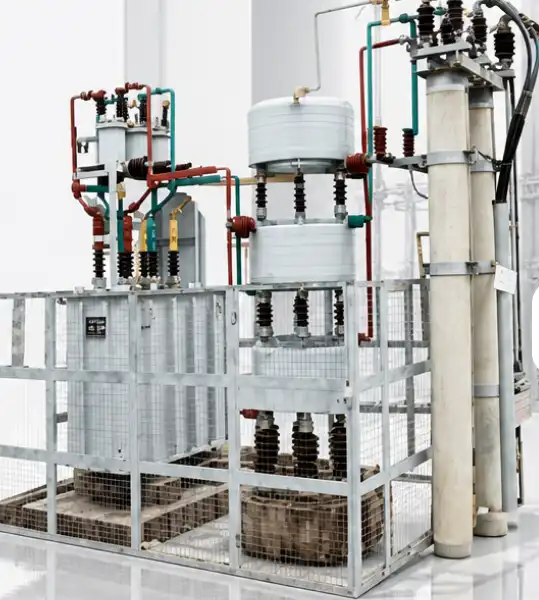
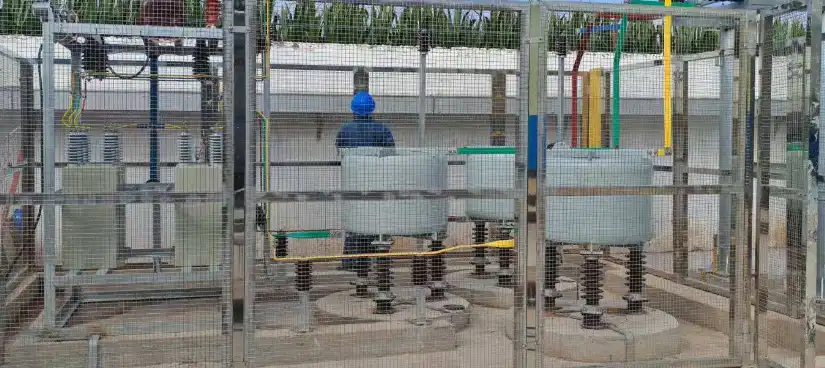
Understanding 22kV Outdoor Line Compensation Systems
What the Technology Actually Does
A 22kv outdoor line compensation unit is a device for managing medium-voltage reactive power that is put directly on distribution wires. By adding capacitive reactive power at the connection point, it balances out the delayed reactive power that inductive loads like motors, transformers, and irrigation pumps make. The outcome is a fixed power factor (usually ≥0.95) and a noticeable increase in the voltage at the far end of the generator.
Key Components That Make It Work
Every unit has a capacitor bank with a rating of 1 to 100 Mvar per bank, a vacuum or capacitor-duty switch designed for restrike-free capacitive switching, a series detuning reactor to stop harmonic resonance, a local automatic controller, and a cover that can't be damaged by the weather. To withstand lightning impulses that happen a lot in tropical and semi-arid areas, the basic insulation level (BIL) needs to be at least 125 kV.
How It Differs from a Conventional Substation Capacitor Bank
In the middle of the substation, banks fix unstable power. This fix is spread along the feeder by outdoor line adjustment. This lowers the conductor current over a much longer cable run. When feeders go beyond 20 km and re-conductorizing would be too expensive, this decentralized approach is the only one that makes sense. It also means that changes in the local load can be handled more quickly, without having to wait for a substation manager to move.
Core Benefits of 22kV Outdoor Line Compensation Systems
Putting 22kv outdoor line compensation on medium-voltage feeders gives measurable benefits in a number of areas. From an operational point of view, these systems have the following main benefits.
- Voltage stabilization on long radial feeders. Rural feeders that extend 20–40 km experience voltage sag well below the −10% regulatory limit at the load end. Installing switched capacitor banks at the two-thirds distance mark raises the voltage profile without new conductors. Field studies on African rural electrification projects have documented 5–12% voltage improvement at feeder ends after line compensation installation.
- Technical loss reduction of 15–30%. Correcting power factor locally reduces RMS current through conductors, which cuts I²R thermal losses. Xi'an Xikai's low-loss polypropylene film capacitors, combined with advanced thermal management, deliver operational savings in that range over a system lifetime exceeding 20 years.
- Extended equipment lifespan. Lower conductor current and stabilized voltage reduce thermal stress on transformers, cables, and switchgear. This directly delays capital replacement cycles—a significant budget benefit for county-level utilities operating on annual technical budgets of CNY 10 million to CNY 100 million.
- Renewable energy grid support. Solar and wind generation connected to 22kV feeders introduces intermittent voltage fluctuations. Fast-switching outdoor line compensation units stabilize voltage at the Point of Common Coupling (PCC) and help meet reactive power capability requirements in grid interconnection codes.
These benefits lead to lower running costs, fewer power outages, and a distribution network that can handle more load, such as power from green sources, without having to rebuild the whole system.
Comparing 22kV Outdoor Line Compensation Solutions with Alternatives
Passive vs. Active Compensation
Passive switched capacitor banks, whether they are set or switched automatically, are still the most cost-effective choice for feeds with loads that change slowly and predictably. Active systems, like Static Var Generators (SVG), can react in milliseconds and handle loads that change quickly, but they cost more to buy. A properly staged passive system with an automatic voltage or kVAR controller gives the best value for money for most country farming and light industry feeds.
Cost-Benefit Perspective for B2B Procurement
Depending on the load density, a typical 600 kVAR pole-mounted unit put on a 22kV rural feeder can cut technical losses by tens of MWh per year. Payback periods of three to five years are common in utility procurement evaluations. This is based on the cost of avoided line losses and deferred reconductoring. Before committing to a batch order, procurement teams should ask any 22kv outdoor line compensation provider for written loss-reduction estimates.
How Xi'an Xikai Compares in the Market
Established companies like ABB, Siemens, and Schneider Electric make line compensation products that are mostly made for European and North American grid standards. These products are expensive and take a long time to deliver, which can hurt projects in developing markets. With more than 30 years of experience making high-voltage equipment and 15 patents in reactive power technology, Xi'an Xikai makes units that have been tried to work in tropical humidity, dry heat, and at high altitudes up to 4,000 meters. Electricity companies in more than 40 countries trust our products, and they meet the standards for IEC 60871 and IEC 60071 approval.
Installation, Operation, and Maintenance Insights
Installation Roadmap
A planned outage window of four to eight hours per installation point is usually needed for the installation of a 22kv outdoor line compensation unit on a pole. The steps in the work order include turning off the power to the line and grounding it, putting the bracket and enclosure, ending the high-voltage wire, wiring the control for the potential transformer supply, and setting up the automatic controller. In rural areas where there isn't a nearby low-voltage source, rural feeders must have a dedicated PT for backup power supply. Xi'an Xikai's design clearly meets this need.
Operational Best Practices
Once the feeder is up and running, the local controller should be set to automatic mode using voltage or reactive power (kVAR) thresholds that are right for the load profile. When SCADA or remote interface units are available, DNP3.0 or IEC 60870-5-104 communication methods let you see what's happening in real time and switch between lines from afar. This is very important for utilities that are in charge of hundreds of line compensation points spread out over a large service area.
Preventative Maintenance Schedule
It is possible for vacuum switches used in capacitor switching to do 50,000 to 100,000 processes. Every three to five years, a maintenance check is enough to make sure the device keeps working safely. This check should include the state of the switch contacts, the dielectric fluid (leak test after thermal cycling from -40°C to +70°C), the sealing of the enclosure (IP54 or IP65), and readings of capacitance/tan ε. When it comes to their service life, units made of stainless steel (304/316 grade) and silicone rubber bushing insulation don't need to be painted or given any other surface treatment.
Procurement Considerations for 22kV Outdoor Line Compensation Systems
Verifying Supplier Qualifications
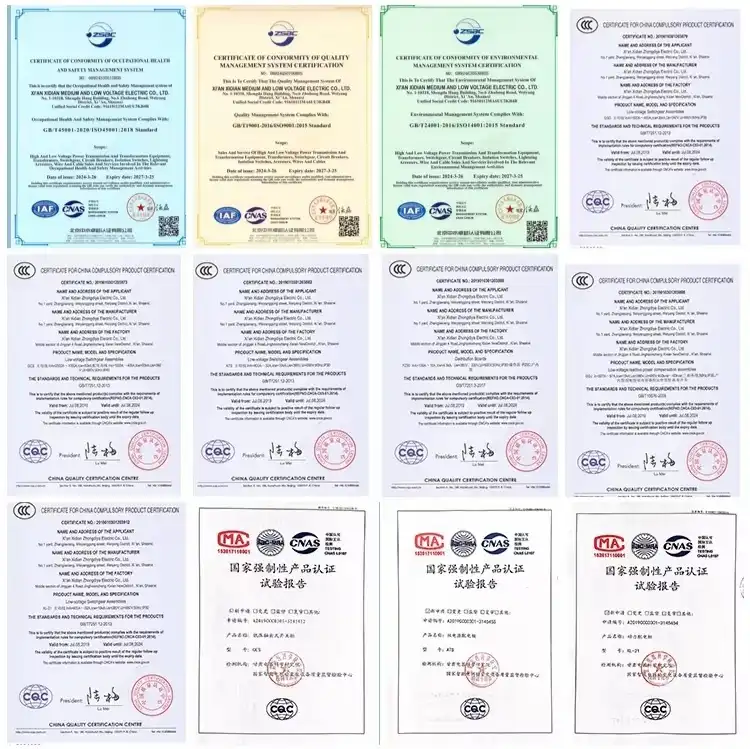
Before you send a buy order, make sure that the company that makes the 22kv outdoor line compensation has the latest IEC 60871 (shunt capacitors) and IEC 60071 (insulation coordination) certifications. Check the factory acceptance test reports to see if the dielectric can withstand 50 kV for one minute, 125 kV BIL lightning impulse, ±5% capacitance tolerance, and tan ε < 0.2 W/kvar dielectric loss angle. Ask for ASTM B117 salt mist test results that show the enclosure will stay strong for 20 years if it will be used near the coast or in areas with a lot of humidity.
Technical Parameters to Specify
When placing a bulk order for rural electrification or agricultural grid upgrades, you should be clear about the rated voltage (6 kV, 10 kV, or 35 kV system compatibility), the rated capacity per bank (usually 300–2,400 kVAR in switched steps), the neutral unbalance protection for finding internal capacitor element failure, and the type of communication interface. Modular designs let you add more capacity without replacing the whole system. This is helpful for companies that want to expand their networks in remote areas in stages.
Aligning Solutions to Budget and Scale
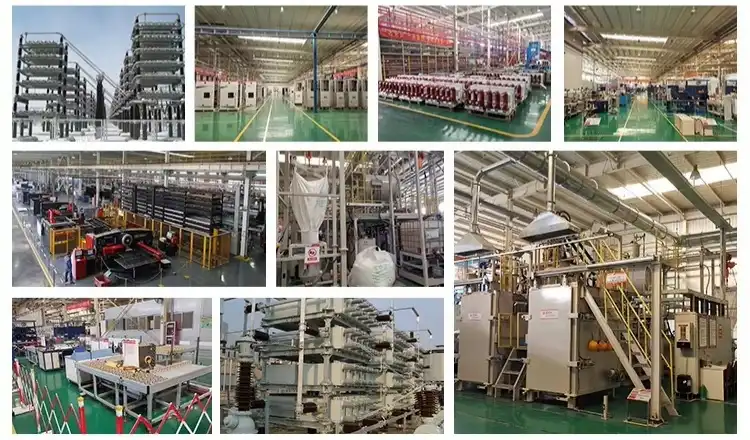
For county-level utilities, buying batches of 50 to 300 units every year is normal. Within standard wait times, Xi'an Xikai can make changes to the enclosure color, transmission protocol, controller logic, and PT setup based on the needs of the project. Requesting a factory visit or third-party inspection before the first delivery is a reasonable way to do your research, and reputable 22kv outdoor line compensation suppliers are happy to do it.
Conclusion
One of the most cost-effective ways to improve voltage quality, cut technical losses, and extend equipment life on long remote feeders is to use 22kv outdoor line compensation on 22kV distribution feeders. Reactive power adjustment is put on the feeder, not just at the substation, where the voltage trouble really is. This is how the technology works. The most important thing to look for in a provider is one that has recorded IEC approvals, performance data for both tropical and high-altitude environments, and the production capacity to meet yearly batch orders. Xi'an Xikai has been making products for more than 30 years, has 15 patents for reactive power, and is currently being used in more than 40 countries. This makes it a good choice for utilities that are planning their next purchase cycle.
FAQ
1.How long does a 22kV outdoor line compensation unit typically last?
Capacitor units are made to last between 15 and 20 years. The vacuum switch, which can handle 50,000 to 100,000 switching actions, is generally the limiting part. Usually, a routine checkup every three to five years is enough to make sure that the operation is still safe.
2.Can these units work without a SCADA connection?
Yes. The local controller uses voltage, time, reactive power (kVAR), or power factor thresholds to work in fully automatic mode. SCADA integration through DNP3.0 or IEC 60870-5-104 is possible and adds remote visibility, but it's not needed for the system to work on its own.
3.What happens in high-harmonic networks?
Normal capacitor banks can boost harmonics that are already there. The capacitor banks that Xi'an Xikai sells are detuned and have series reactors with 6%, 7%, or 13% reactance. These reactors move the resonance frequency away from the 5th and 7th harmonics that are common in industrial feeds. This stops harmonic amplification.
4.How do I determine the correct kVAR rating for my feeder?
There needs to be a load flow study of the feeder's load profile, current power factor, and recorded voltage drop data. Ratings can be anywhere from 300 kVAR to 2,400 kVAR, and they are usually set up in fixed-plus-variable switched steps to match daily load trends.
5.What protection features are required for outdoor 22kV installation?
Neutral unbalance protection (finds failed internal elements), line overcurrent and short-circuit protection through discharge fuses, and overvoltage protection are all required. These safety features come with all Xi'an Xikai units as standard.
Get a Quote from Xi'an Xikai — Your Trusted 22kV Outdoor Line Compensation Supplier
Xi'an Xikai makes 22kv outdoor line compensation systems that are IEC-certified and made to work in the hottest and wettest places in the world, from the savannas of Africa to the monsoons in Southeast Asia. Our engineering team can size, set up, and record a system that fits your feeder parameters and the time of year you buy in bulk. You can ask for a technical information, a factory acceptance test report, or a project quote by getting in touch with us personally.
Email addresses: serina@xaxd-electric.com, amber@xaxd-electric.com, luna@xaxd-electric.com; xaxd-electric.com;
References
1. IEC 60871-1: Shunt Capacitors for AC Power Systems Having a Rated Voltage Above 1 kV — Part 1: General, International Electrotechnical Commission, 2014.
2. IEC 60071-1: Insulation Co-ordination — Part 1: Definitions, Principles and Rules, International Electrotechnical Commission, 2019.
3. IEEE Std 1036: IEEE Guide for Application of Shunt Power Capacitors, Institute of Electrical and Electronics Engineers, 2010.
4. World Bank Group, Practical Guide to Rural Electrification and Distribution Network Planning in Sub-Saharan Africa, Energy Sector Management Assistance Program (ESMAP), 2020.
5. Bollen, M. H. J. & Hassan, F., Integration of Distributed Generation in the Power System, IEEE Press / Wiley, 2011.
6. Cigré Working Group C4.07, Power Quality Aspects of Solar Power, Cigré Technical Brochure 672, 2017.