
Static Var Generators: Pioneering the Future of Power Systems
2026-10-27 17:16:23
Modern power grids face mounting pressure from renewable energy integration, industrial load fluctuations, and increasingly strict grid codes. The SVG-static var generator has emerged as one of the most effective tools for reactive power compensation, offering rapid voltage support and precise power factor correction. At Xi'an Xikai, our XR-dSVG series reflects years of field-proven engineering across wind farms, photovoltaic stations, substations, and heavy industrial facilities—helping EPC contractors and project engineers meet grid connection requirements with confidence.
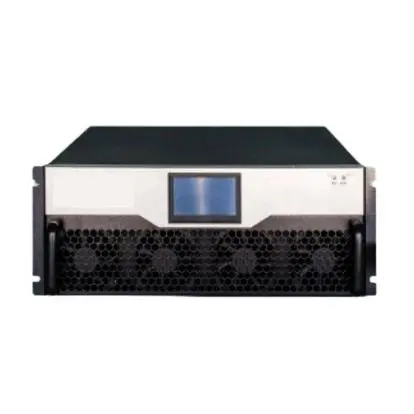
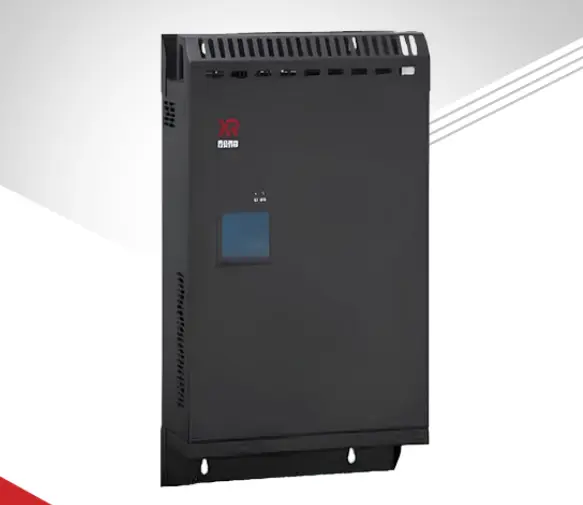
Understanding Static Var Generators and Their Role in Power Systems
Today, power lines have more loads that change all the time than ever before. Reactive power imbalances are caused by solar inverters, wind turbines, and big industrial motors. These imbalances can make the voltage less stable and lead to fines from grid operators. This is directly dealt with by a static var generator, which injects or absorbs reactive current in real time to keep voltage within acceptable ranges and power factor close to 1.
What Reactive Power Compensation Actually Does
Even though reactive power doesn't do any useful work, it takes up space on the grid and can cause voltage to drop or rise if it's not controlled. A correctly sized SVG-static var generator constantly checks the grid and makes adjustments within milliseconds. This stops voltage changes that could damage sensitive equipment or set off safety switches.
How SVGs Differ from Older Compensation Methods
Standard Static Var Compensators (SVCs) use thyristor-switched capacitors and reactors, which cause step changes instead of smooth compensation. IGBT-based voltage-source converters are used by an SVG-static var generator to make a reactive current output that changes all the time. This makes it easier to control, respond faster, and produce and absorb reactive power without using switching capacitor banks.
Why Grid Codes Are Raising the Bar
Grid operators in China's Three-North regions, Europe, and South America have made it harder for devices to connect to each other. In most utility procurement specs, you will now find requirements for low voltage ride-through (LVRT), reactive current injection during fault situations, and dynamic voltage support. The SVG-static var generator is designed to meet these changing needs, which is why it is often included in bids for new energy EPC projects.
SVG-Static Var Generator Explained: Technology and Best Practices
A cascade H-bridge design and full-control IGBT devices are used to build the XR-dSVG line from Xi'an Xikai. In many setups, this design lets the unit work with voltages ranging from 0.4 kV to 35 kV without needing a separate step-up generator. Take a look at this list of the most important technical requirements for project procurement:
- Rated Input Voltage: 400 V (±20%), accommodating real-world grid fluctuations without derating.
- Grid Frequency Compatibility: Operates on both 50 Hz and 60 Hz systems, supporting projects in China, Europe, the Middle East, Chile, and Brazil.
- Bi-Dynamic Compensation: Maintains power factor at 0.99, actively preventing both over-compensation and under-compensation conditions that could violate grid codes.
- Capacity Efficiency: Requires 20–30% less installed capacity compared with equivalent SVC systems, reducing capital expenditure and physical footprint.
- Rapid Response: Full compensation in under 15 ms; dynamic reactive current adjustments within 50 μs—performance levels that satisfy the most demanding grid connection requirements.
These requirements directly mean that EPC companies will have less project risk. When there is a drop in power at a wind farm, the SVG-static var generator responds before most safety systems even notice.
The best way to integrate the SVG unit is to do a full power quality audit during the design phase at the same time. The engineering team at Xi'an Xikai does a grid study before a project starts. They find the best connecting point, compensation capacity, and control mode settings (constant reactive power, constant bus voltage, or constant power factor) for each site.
Comparing SVG-Static Var Generator Solutions and Alternatives
When purchasing managers look at reactive power compensation equipment, they usually look at three main options: SVG, SVC, and passive capacitor banks. Each has its own set of performance characteristics, and the best one to use depends on the application's speed and accuracy needs.
SVG vs. SVC: The Performance Gap
An SVC can only react in separate compensation steps and can do so in about 20–50 ms. The SVG-static var generator can respond fully in less than 15 ms when the change is made continuously and steplessly. This difference is important for new power plants where voltage changes can happen within a single grid cycle. When SVG is used instead of SVC, field data from Chinese grid-connected wind projects regularly shows less voltage variation and fewer instances of grid separation.
SVG vs. Passive Capacitor Banks
Passive banks are cheap, but they can only react to events that happen quickly. They can't take in reacting power or absorb it. They often cause over-compensation during times of low load in places where loads change a lot, like arc furnaces or EV charging hubs. This problem is fixed by the SVG-static var generator, which changes the output dynamically in real time. This gets rid of the penalty-zone swings that passive systems cause.
Selecting the Right Vendor
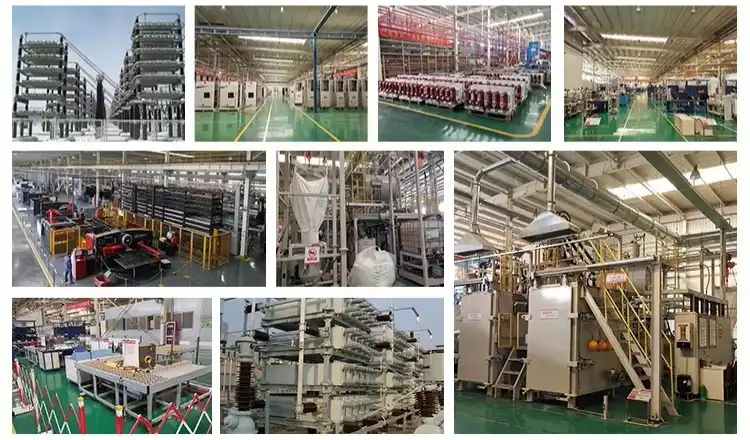
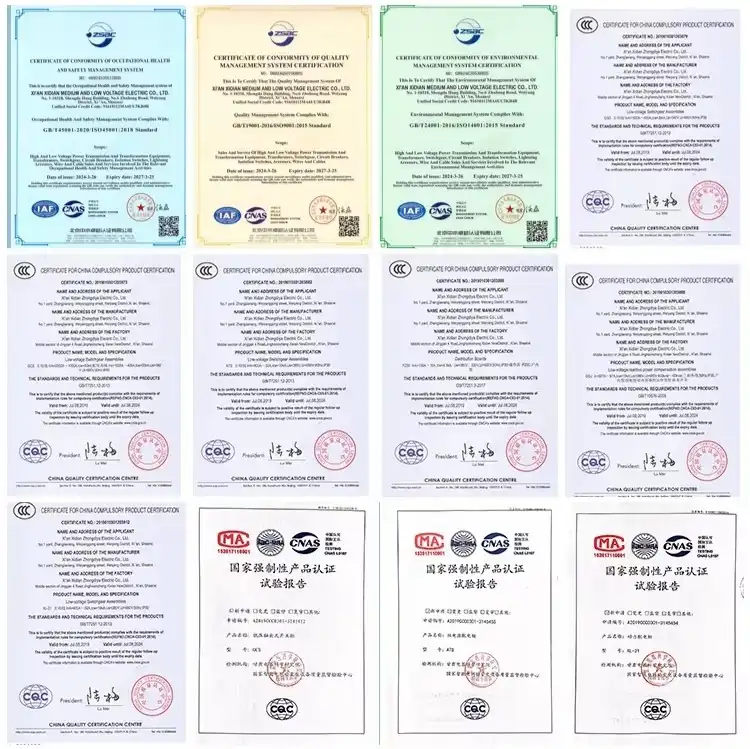
To choose a vendor for a high-value EPC project, you need to look at more than just technical specs. You also need to look at type test reports, the reliability of the IGBT module supply chain, after-sales engineering support, and references from similar projects. Xi'an Xikai is certified by ISO 9001 and ISO 14001, follows IEC 61000 and IEEE 1547, and has helped China's National 863 Program by getting more than 15 patents in power electronics. Before it is sent out, each unit goes through more than 12 plant acceptance tests.
Procurement Guide: Acquiring the Right SVG-Static Var Generator
When EPC project engineers and procurement managers need to buy reactive power adjustment equipment, they have to do more than just look at data sheets. A structured review method lowers the risk of a project and makes it easier to get approvals for grid connections.
Define the Compensation Requirement First
For starters, look at the target grid link point's load flow and harmonics. The study's results tell us what range of correction is needed in Mvar, how fast the reaction needs to be, and whether the unit needs to be able to do LVRT or harmonic suppression. The XR-dSVG series has one device that can do all of these things.
Verify Type Test Documentation
More and more, grid operators and design institutes need full type test reports before they will approve equipment specifications. Make sure the company that sells SVG-static var generators has valid IEC or GB/T test certificates that cover voltage withstand, short-circuit performance, temperature rise, and electromagnetic compatibility. Xi'an Xikai keeps a full set of paperwork for the design school to look over.
Assess Supply Chain Continuity for Key Components
The power systems business has been worried about the lack of IGBT modules. This is taken care of by Xi'an Xikai, which has supply deals with major device makers and keeps key component inventory to keep project delivery schedules safe. This is a useful guarantee for workers who have set goals for connecting to the grid.
Future Trends and Innovations in Static Var Generators
The next generation of SVG-static var generator technology will work better with energy storage systems, digital twin monitoring platforms, and control algorithms that use AI. For purchase planning, it's important to keep an eye on a few trends.
Grid-Forming Capability
New grid rules in parts of the Middle East and Europe are starting to require grid-forming inverter behavior, which means that the inverter must be able to set its own voltage and frequency references instead of just following the grid. To make this possible, more advanced SVG platforms are being built, which will make reactive power compensation an active asset for the grid instead of a passive device for fixing problems.
Predictive Maintenance and Remote Diagnostics
Xi'an Xikai's XR-dSVG already has patented technologies for both monitoring DC bus voltage for individual power cells and finding capacitors that are getting old. With these features, site workers can find parts that are wearing out before they break. This cuts down on unplanned downtime and makes tools last longer—up to 100,000 hours.
Expanding Application Scope
Along with traditional substations and wind farms, the SVG-static var generator is being used in projects to electrify train corridors, big data centers, and ports. Each of these uses brings its own adjustment problems that can be solved with the device's fast dynamic response and ability to work in multiple modes.
Conclusion
The SVG-static var generator used to be a one-of-a-kind tool, but now it's required for all new energy grid connection projects. It's hard to ignore the performance gap between new SVG technology and old compensation methods as grid codes get stricter and more green energy is used. In Xi'an Xikai's XR-dSVG series, a reactive power compensation platform is made with a proven IGBT topology, unique control functions, and thorough factory testing. This gives EPC contractors and project engineers the confidence to request this platform in both domestic and foreign markets.
FAQ
1.What is the typical response time of an SVG-static var generator?
The XR-dSVG achieves full reactive power compensation in under 15 ms, with dynamic current adjustments occurring within 50 μs. This speed satisfies LVRT and dynamic voltage support requirements in most current grid codes.
2.How does an SVG-static var generator differ from a traditional SVC?
An SVC uses thyristor-switched components and responds in discrete steps over 20–50 ms. An SVG-static var generator uses IGBT converters for continuous, stepless compensation in both inductive and capacitive directions, with faster response and better accuracy.
3.What voltage levels does the XR-dSVG support?
The XR-dSVG series covers 0.4 kV through 35 kV. The rated input is 400 V (±20%) for the low-voltage variant, with higher voltage configurations available through cascade H-bridge architecture.
4.Can the SVG-static var generator suppress harmonics?
Yes. Beyond fundamental reactive power compensation, the XR-dSVG also suppresses low-order harmonics and compensates for load current imbalance—functions that are increasingly required at industrial grid connection points.
5.What certifications does Xi'an Xikai's SVG carry?
Xi'an Xikai holds ISO 9001, ISO 14001, and relevant 3C certifications. The XR-dSVG complies with IEC 61000, IEEE 1547, and Chinese national standard GB/T series, with full type test reports available upon request.
Connect with Xi'an Xikai for Your SVG-Static Var Generator Project
You can trust Xi'an Xikai as a provider of SVG-static var generators, and they offer full engineering support, from the initial grid analysis to commissioning and long-term upkeep. We have type test paperwork for our XR-dSVG line that is ready for the design institute to look over. It meets IEC, IEEE, and GB/T standards. Let our team know about your project today:
References
1. IEEE Std 1547-2018, Standard for Interconnection and Interoperability of Distributed Energy Resources with Associated Electric Power Systems Interfaces, IEEE, 2018.
2. IEC 61000-3-2, Electromagnetic Compatibility – Limits for Harmonic Current Emissions, International Electrotechnical Commission, 2018.
3. Hingorani, N.G. & Gyugyi, L., Understanding FACTS: Concepts and Technology of Flexible AC Transmission Systems, IEEE Press, 2000.
4. Acha, E., Agelidis, V., Anaya-Lara, O. & Miller, T.J.E., Power Electronic Control in Electrical Systems, Newnes, 2002.
5. China National Standard GB/T 24337-2009: General Technical Requirements for Static Var Compensator (SVC) Connected to the Grid, Standardization Administration of China, 2009.
6. Song, Y.H. & Johns, A.T. (eds.), Flexible AC Transmission Systems (FACTS), IET Power and Energy Series, Institution of Engineering and Technology, 1999.