
LV Automatic Reactive Compensation Panel: Key Selection Criteria
2026-11-18 17:19:52
The key selection criteria for an LV automatic reactive compensation panel are load-based capacity, step configuration, switching technology, harmonic protection, communication interface, enclosure ratings, and supplier support. Poor power factor raises current, losses, and sometimes utility charges. I start with measured load data and the kVAr needed to reach the target power factor. Then I match the switching method to how fast the load changes, check harmonic levels, and confirm that the controller can talk to the building automation system. Last, I verify standards, ratings, and commissioning support. This guide walks through each point and shows where the Xi'an Xikai GGJ device fits.
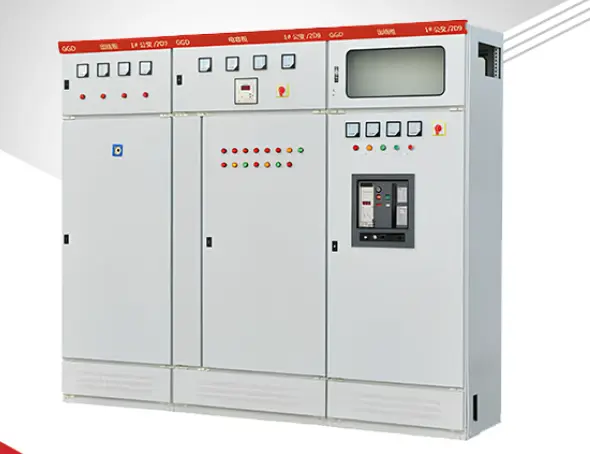
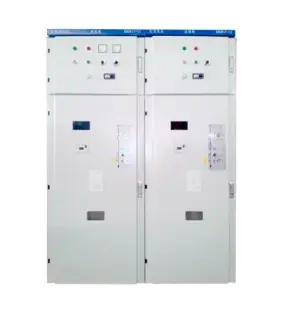
How an LV Automatic Reactive Compensation Panel Works
Measuring the Load and Switching Capacitor Steps
The load is constantly monitored by an LV automatic reactive compensation panel. The controller gets power from a voltage input and a current transformer. It then compares the measured power factor to your target. Capacitor steps are closed one by one by the processor when the power factor is low. It opens them when the load drops so that they don't have to put in too much work. To keep the same real power, this cuts down on reactive current. This means that transformers, cables, and switchgear carry less current. I²R losses and voltage drop are also lessened when the current is low. The GGJ device works the same way. According to its product data, IoT devices measure voltage and current, and the controller figures out how much compensation is needed before swapping capacitor banks.
Contactor, Thyristor, and Hybrid Switching
It is controlled by switching technology how quickly and how often an LV automatic reactive compensation panel can switch on and off. For steady loads like pumps, fans, and general building power, capacitor-duty contactors work well. Many designs come with pre-insertion resistors to lower the amount of inrush current. Thyristor modules change when the zero-crossing point is reached. They usually respond in 20 milliseconds or less, which makes them good for use in welding machines, cranes, and elevators. Both are used in hybrid systems, which have thyristors for fast swings and contactors for the base load. This decision also changes how long the capacitor lasts. When I use a contactor a lot, the contacts get worn down and the capacitors get stressed. That's why I want a switching delay that I can change and step rotation that spreads the load across all steps.
Automatic, Fixed, and Individual Compensation
People often ask me if a fixed bank is enough. An inductive load that stays at the same amount all the time is what makes a set bank work. Plus, it costs less to wire, but when the load drops, it makes up for it too much. For manual correction to work, someone has to do it and it takes a long time. Individual motor compensation turns off the current in the cable that goes to that motor, but it still needs to take care of a lot of small capacitors. It's easy to handle central compensation at the main distribution board, and it changes based on what the whole building needs. Most business projects that have a mix of loads, like elevators, HVAC, and lights, use a central LV automatic reactive compensation panel. This is sometimes paired with fixed compensation at one big motor.
Key Selection Criteria for an LV Automatic Reactive Compensation Panel
Sizing the Capacity and Step Configuration
Use the formula Qc = P × (tan φ₁ − tan φ₂) to start figuring out the size of your LV automatic reactive compensation panel. To get to 0.95, a 500 kW load with a power factor of 0.80 would need about 211 kVAr. Then look at the minimum load. A bank that is only big enough for high demand will have too much capacity at nite. Accuracy is controlled by step planning. Steps that are the same, like 1:1:1:1, are easy to understand. When you use progressive ratios like 1:2:4, you can handle things more precisely with fewer contactors. However, the smallest step may switch more often. Check your bill to see if the utility penalty threshold is between 0.85 and 0.95. Pick a goal that goes over the barrier without putting the machine into leading power factor. Don't just use nameplate values; use measured data as well.
Communication and Building Automation Compatibility
Communication is just as important as kVAr when adding an LV automatic reactive compensation panel to a building system. A lot of controls come with RS485 and Modbus RTU. Building management systems can read it either directly or through a gateway. For projects in the US that use BACnet a lot, a Modbus-to-BACnet gateway might be needed. Ask the seller for the register map, the different baud rates, and the list of values that can be read, like the power factor, the step state, and the alarms. Make sure you know the protocol before you place your order, as changing it on-site makes commissioning take longer. To use the GGJ device, send Xi'an Xikai your protocol needs and ask for written confirmation of the interface that is available.
Voltage Fit, Capacitors, and Protection Parts
Fit for voltage comes first. The GGJ device works with systems that are less than AC450 V. Many commercial buildings in the US use 480 V three-phase, which is higher than that limit, so you should check your system voltage right away. Capacitors in an LV automatic reactive compensation panel should be able to fix themselves, be linked to the rated voltage and temperature, and have overpressure safety. Find out the maximum power and temperature class by writing them down. Include coordinated fuses or MCCBs, as well as isolation, interlocks, and protection against overvoltage. The GGJ product data includes a list of zinc oxide arresters and integrated reactors. Heat shortens the life of capacitors, so check for air flow and temperature rise. Check the warning list on the controller as well. Overvoltage and undercompensation alarms will let you know about problems before they get worse.
Harmonics, Ratings, and Safety for an LV Automatic Reactive Compensation Panel
Standard Panel or Detuned Reactor Panel
Harmonic currents are put in by variable-frequency drives, UPS units, rectifiers, and LED drivers. Together with transformer inductance, capacitors make this current path less complicated, and they can also boost it. As a result, the capacitors get hot, trip for no reason, and last less long. If the nonlinear load is small, a normal bank might work. This is why you should measure first. If there is a lot of distortion, pick the LV automatic reactive compensation panel with a detuned reactor. It's common for reactors to be rated 7% when the 5th harmonic is strong and 14% when the 3rd harmonic is present. Harmonics are not taken out by reactors, and if there is a lot of distortion, an active harmonic filter may be needed. For US projects, you should look over IEEE 519-2022 again because it sets harmonic limits at the point of common coupling.
Ratings, Standards, and Test Records
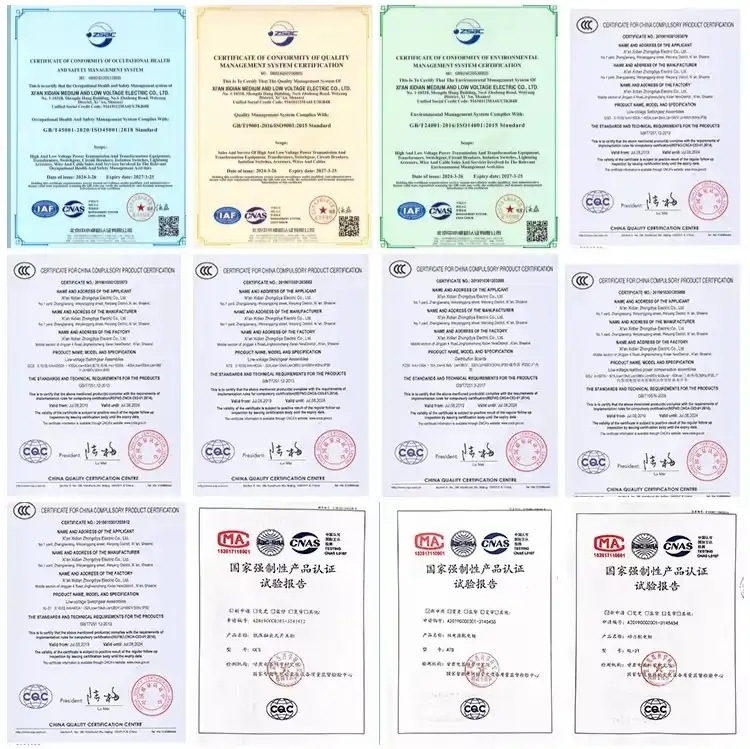
Check the operating and insulation voltage, frequency, rated current, short-circuit withstand, kVAr output, step count, IP rating, ambient temperature, and altitude of an LV automatic reactive compensation panel before giving it the green light. Standards give you a list of things to check off. IEC 61439-1 talks about low-voltage modules, IEC 61921 talks about low-voltage power factor adjustment banks, and IEEE 1036 talks about how to use shunt capacitors. The NFPA 70 National Electrical Code and local government rules apply to installations in the US. You should ask for drawings, records of regular tests, and a declaration of conformity. It says that our GGJ has ISO 9001, ISO 14001, ISO 45001, and CCC certifications. For US projects, check any extra local approval with our team before ordering.
Enclosure Layout and Safety Features
A good plan keeps repair calls to a minimum. Power and control wiring should be kept separate, and technicians should be able to get to them safely. Check for interlocks, discharge devices, warning signs, and parts that can't be touched. It has an IP65 grade, flame-resistant capacitors that meet NFPA 70 fire codes, and noise levels below 45 dB, making it a good choice for retrofit work in places like hospitals and shops. If the IP rating is high, airflow is limited, so find out how the design manages the temperature inside. The Xi'an Xikai plateau-type equipment can work at elevations of up to 4,000 meters, so if your spot is high, check to see if this applies to your setup.
Installation, Commissioning, and Performance Checks
Installing the Current Transformer and Wiring
The wiring of the current transformer is the source of the majority of field problems with an LV automatic reactive compensation panel. So the controller can see the whole current, put the CT in front of both the load and the capacitor bank. Connect the CT phase to the voltage reference, make sure the polarity is right, and type in the right ratio. If you pair the phases wrong, the controller might read a leading system and turn stages on and off. Keep the power cables away from the control cables, tighten the terminals to the right torque, and make sure the panel is properly grounded. Good wiring doesn't take long and stops switching back and forth, readings that aren't stable, and capacitors wearing out too quickly.
Commissioning Steps That Cut Site Time
For every LV automatic reactive compensation panel, a short list keeps site time low. Check the phase order, controller settings, step order, switching delay, discharge time, warning, protection functions, and protection functions. After testing each step by hand, put the machine into automatic mode and see how it works with low, medium, and high loads. Ask your supplier to set the parameters of the controller before shipping it to you and to give you a commissioning sheet. Each GGJ unit goes through a 72-hour load simulation and harmonic stress tests, which help find problems before they are sent out. Write down the final settings so that when the controller is replaced, your maintenance team can bring them back.
Verifying Results and Maintaining the System
Don't just assume results will happen; measure them. Before and after installation, write down the loads on the transformer, the highest current, the voltage, the harmonic distortion, the step switching numbers, and the average and minimum power factors. Look at the low-load, normal, and peak times side by side. A system that is the right size should lower reactive current, make it easier for transformers and cables to handle load, and lower voltage drop and distribution losses. Do a thermal scan, check the torque on the terminals, clean the venting parts, check the fuses, and measure the capacitance once a year. When the capacitance drops to 90% of its value, many repair plans let you know that a capacitor needs to be replaced. After each LV automatic reactive compensation panel check, write down the trend. This will help you plan replacements before they break.
Choosing the GGJ Device and a Supplier for Your LV Automatic Reactive Compensation Panel
GGJ Device Features at a Glance
This is what the GGJ Low Voltage Reactive Power Intelligent Compensation Device does at its core:
- Automatic compensation: IoT-enabled sensors read the voltage and current of the device, figure out what kind of compensation is needed, and then switch capacitor banks to balance the reactive power. This makes the power factor better without having to change anything by hand. It also lowers the losses in the distribution line and transformer, and it helps keep the voltage quality and supply continuity for equipment connected to systems below AC450 V.
- Protection: Zinc oxide arresters stop overvoltage, integrated reactors stop harmonics, and inrush current reduction stops switching stress. If a part fails, you don't have to replace the whole unit; instead, you can quickly upgrade or replace the part. This keeps downtime short. These parts help keep motors, HVAC systems, and the capacitors themselves safe.
- Cabinet fit and build: The tool works with MNS, GCK, and GGD cabinet systems, which is good for panel builders who work with different kinds of cabinets. It has an IP65 rating, flame-resistant capacitors that meet NFPA 70 fire codes, and noise levels below 45 dB, so it can be used for retrofitting in hospitals, malls, and other similar buildings.
These features take care of the common issues that come up in the field with an LV automatic reactive compensation panel, such as harmonics, service access, and stress on the capacitors.
Quality Assurance and Support Behind the GGJ Device
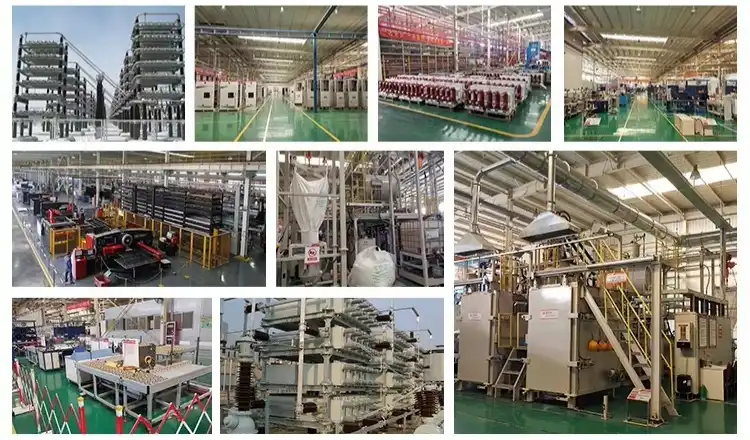
I refer buyers to the GGJ test record because factory testing is important for any LV automatic reactive compensation panel. Stress tests and load simulations that last 72 hours are done on each machine. Our paperwork lists ISO 9001, ISO 14001, ISO 45001, and CCC certification, as well as high-quality capacitors and cases that won't rust. Our R&D team has worked with power electronics for more than 15 years and has been a part of national projects. Support comes with technical help 24 hours a day, 7 days a week, and a 5-year warranty. Xi'an Xikai also makes more than 100 different kinds of medium and low-voltage equipment that is used in State Grid systems, steel and metallurgy, petrochemicals, rail transportation, and green energy. The company makes seven product categories and 34 types.
Evaluating a Supplier and Preparing Your RFQ
Fill out the same sheet with scores for each supplier of an LV automatic reactive compensation panel as you look at them. Check to see if the manufacturer lets you change the voltage, step layout, detuning percentage, case, cable entry, and communication interface. Request test records, technical documents, information on export packaging, and information on how the product meets the requirements of the final market. Check the warranty terms, availability of spare parts, support over the internet, and response time. Then, make an easy-to-understand RFQ that includes the single-line diagram, system voltage, transformer rating, load profile, harmonic measurements, target power factor, protocol, and delivery location. A full RFQ speeds up the quote process and cuts down on extra work. Ask about batch shipping and help for repeat orders if you want to buy 5 to 30 sets.
Conclusion
Measuring the load is the first step in choosing an LV automatic reactive compensation panel. This sets the capacity and step design. Switching technology should match the speed of the load. For example, contactors work best with steady loads, while thyristor or hybrid systems work best with fast swings. It is up to the harmonic measurements to choose between a standard bank and a detuned reactor panel. The project and the building automation system must also agree on the communication protocol, voltage range, ratings, and standards. Careful commissioning, correct CT wiring, and measurements taken before and after show that the result was achieved. The GGJ device is made for systems with less than 450 V of AC. It has automatic compensation, reactors, and overvoltage protection, and it can be used with MNS, GCK, and GGD cabinets. A panel that passes these tests will protect capacitors, cut down on losses, and help you avoid electric fines.
FAQ
1. What is an LV automatic reactive compensation panel?
It is a low-voltage unit that checks the power factor and controls whether the capacitor steps in or out to keep a certain value. There are parts that work together, like a controller, a current generator, capacitors, switching devices, and safety parts. It is used in buildings where motors, HVAC systems, and transformers make inductive loads. The LV automatic reactive compensation panel lowers reactive current, frees up capacity in the generator, and helps keep electric fees from happening.
2. Should I choose a standard or detuned reactor panel?
After measuring harmonics, make your choice. A normal bank works well for a low non-linear load. If loads like drives, UPS units, or LED drivers make up a big part of the load, a detuned reactor panel will keep capacitors safe from harmonic currents. Most people choose reactors with ratings of 7% or 14%. If there is a lot of distortion, you might need an active harmonic filter.
3. What should I send with a quotation request?
Send the system voltage, transformer grade, load profile, harmonic data, goal power factor, transmission protocol, standards, and delivery location along with the single-line illustration. List the number of sets and any protocols used for building automation, like BACnet or Modbus RTU. Xi'an Xikai can quickly come up with a matching design and a bill of materials if they have these data.
Request an LV Automatic Reactive Compensation Panel Quote from Xi'an Xikai
Are you looking for a manufacturer of LV automatic reactive compensation panel? Please send Xi'an Xikai your single-line diagram, system voltage, transformer rating, load profile, and information about how you want to communicate. We'll look at them and suggest a GGJ setup that comes with a 5-year guarantee. Xi'an Xikai also makes tools for plateaus that can be used at heights of up to 4,000 meters. You can visit xaxd-electric.com or email serina@xaxd-electric.com, amber@xaxd-electric.com, or luna@xaxd-electric.com.
References
1. IEC 61439-1 Low-voltage switchgear and controlgear assemblies – Part 1: General rules, 2020
2. IEC 61921 Power capacitors – Low-voltage power factor correction banks, 2017
3. IEEE Std 1036 IEEE Guide for Application of Shunt Power Capacitors, 2020
4. IEEE Std 519 IEEE Standard for Harmonic Control in Electric Power Systems, 2022
5. NFPA 70 National Electrical Code, 2023
6. U.S. Department of Energy, Improving Motor and Drive System Performance: A Sourcebook for Industry, 2014
