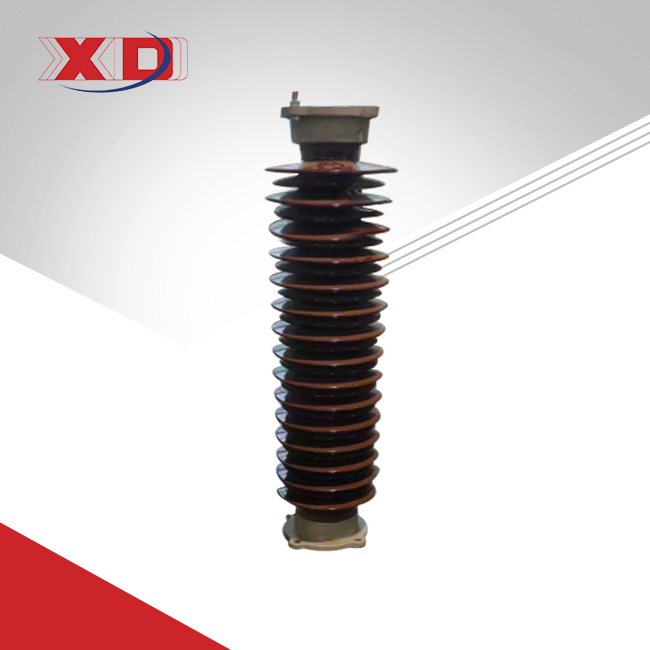
Y10W-102/266W Lightning Arrester Porcelain housed MOA for AC system
Outdoor SF6 Circuit Breaker Applications in Modern Power Systems
2026-08-19 10:16:02
Outdoor SF6 circuit breakers serve as essential protection devices in power transmission and distribution networks operating at medium to high voltage levels. These breakers utilize sulfur hexafluoride gas as both an arc-quenching medium and insulation material, enabling reliable circuit interruption during fault conditions while withstanding extreme environmental challenges including temperature fluctuations, humidity, salt spray, and seismic activity across diverse geographical installations.
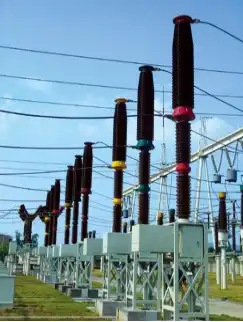

Introduction to Outdoor SF6 Circuit Breakers in Power Systems
Choosing switching equipment that works regularly in harsh outdoor situations is important for making sure that the power system is reliable. In substations, medium-voltage circuit breakers are constantly exposed to environmental stressors that can weaken their mechanical integrity and electrical performance over time.
Because of how they are made, SF6 gas-insulated breakers can handle these problems. The molecule of sulfur hexafluoride has a very high electrical strength—about 2.5 times higher than air at room temperature and pressure. This lets engineers make pole structures that are smaller without lowering the insulation performance. This trait is especially useful when there isn't a lot of room at substation sites or when fixing up old infrastructure.
Why SF6 Technology Dominates Outdoor Applications
SF6 technology is being used in outdoor switching equipment because it is useful in many ways. Traditional oil circuit breakers can catch fire and need a lot of upkeep to keep the oil from breaking down. For compressed air production, air-blast breakers need big enclosures and a lot of energy.
SF6 breakers get rid of these worries because they are sealed for life and don't need much maintenance over their useful life. The gas stays chemically stable, doesn't catch fire, and doesn't corrode, which keeps internal parts from oxidizing and breaking down. This stability means that power companies and industrial buildings will have to do less upkeep and pay less over the course of their lives.
Design Philosophy for Harsh Environments
When engineers design substation equipment for harsh climates, they have to balance a lot of different needs, such as electrical performance, mechanical durability, environmental protection, and ease of maintenance. Outdoor SF6 circuit breakers take these things into account by having strong enclosures that meet IP65 standards. This keeps dust and water from high-pressure jets from getting in.
Another important feature for sites in areas that are prone to earthquakes is their seismic resistance. Modern SF6 breakers can handle earthquakes up to level 9 without breaking down or losing their ability to do their job. This feature is very important for keeping the grid stable during natural disasters, when keeping the power on is most important.
Operating Principles and Technical Specifications of Outdoor SF6 Circuit Breakers
When procurement teams understand how interruptions work, they can compare different products and make sure that the technical capabilities match the needs of the application. When there is fault current going thru a closed breaker, the working mechanism separates the contacts when it gets a trip signal from the safety relays.
Arc Interruption Mechanism
As the moving contact moves away from the fixed contact, an electrical arc forms between them. This keeps the flow of electricity thru the ionized gas going. The breaker has to put out this arc for the circuit to be completely cut off. In order to do this, SF6 breakers use either puffer-type or self-blast thermal expansion methods.
In puffer designs, the starting stroke is when a piston squeezes SF6 gas into a high-pressure cylinder. The compressed gas then shoots out of a tube around the arc, quickly cooling the plasma column and grabbing any free electrons that are in it. SF6's high heat conductivity and electronegative qualities make it possible for arcs to end when the current zero crossing happens with very little arc voltage.
The LW8-40.5 model from Xi'an Xikai uses a compressed-gas arc interruption device to show how these ideas work. This design makes arc times very short and supports high electrical endurance, stopping 31.5kA at rated voltage 21 times in a row without needing any maintenance or SF6 replacement. This kind of performance takes away any worries about early component wear during fault clearing processes that are done over and over again.
Critical Technical Parameters
The breaker's voltage rating tells you the highest voltage that it can safely handle. With a base voltage of 35kV and a maximum voltage of 40.5kV, the LW8-40.5 can be used in medium-voltage power systems and industrial plant power systems. The breaker's current rate tells you how much continuous load it can handle. Ratings range from 1600A to 3150A, so they can handle a wide range of load needs, from small substations to big industrial facilities.
Breaking capacity, which is given in kiloamperes, shows the biggest fault current that the device can stop. When there is a severe fault, a higher breaking ability gives you more safety. Modern outdoor SF6 circuit breakers usually have interruption times of less than 50 milliseconds, which affects system safety by shortening the length of a fault.
Standards Compliance and Certification
International standards set base levels of efficiency and rules for tests. IEC 62271-100 lists the requirements for high-voltage alternating current circuit breakers. It covers things like temperature rise, mechanical endurance, and electrical endurance. GB1984-89 gives Chinese state standards that are similar.
To prove compliance, types must be put thru strict tests at approved labs. In these tests, breakers are put thru more than 10,000 mechanical processes, short-circuit current cutoff sequences, and checks of the dielectric strength using power frequency and impulse voltage. Products that have IEC and GB approvals have shown that they are compliant by passing these strict test methods.
Advantages and Maintenance Tips for Outdoor SF6 Circuit Breakers
When project managers look at switching equipment for substation installations, they need to think about more than just the price of the equipment itself. Lifecycle costs include the cost of maintenance labor, spare parts, downtime during service intervals, and the cost of replacing the machine in the end.
Operational Benefits in Real-World Conditions
A small footprint is a big plus for sites that don't have a lot of room. SF6 breakers take up a lot less space than similar air-insulated or oil-filled models. This lowers the cost of building the substation and makes it easier to plan the layout. This quality is especially useful for retrofits, where room is limited by existing foundations and buildings.
Grid access is directly affected by how reliable the machines are. The LW8-40.5 uses a CT14 spring-operated device that works consistently across more than 3,000 actions. This makes it useful for tasks that need to switch between things often, like controlling capacitor banks or moving loads. By adding up to 12 current transformers per unit as an option, billing and safety functions can be merged, making the system simpler overall.
- Environmental Resilience: Enclosures with an IP65 rating keep out water and dirt even during heavy rain or dust storms. Seismic resistance makes sure that operations can continue after an earthquake that could damage other parts of the infrastructure.
- Temperature Stability: The device can work in temperatures ranging from -30°C to +55°C, so it can be installed anywhere from warm seaside areas to high-altitude mountainous areas without losing performance or shortening the life of any parts.
- Simplified Installation: Pre-charging with SF6 gas in the factory means that no gas handling is needed on-site during startup. With retrofit-ready designs that use transition bases, old oil breakers can be replaced without having to make any changes to the civil engineering, which cuts down on project costs and time.
- Leakage Control: Keeping annual SF6 leakage rates below 0.5% in order to keep gas pressure high enough for arc extinguishing for 20 to 30 years, while also lowering greenhouse gas emissions and the costs of refueling the system.
These features directly address the problems that EPC contractors have found when they are in charge of outdoor substation projects in harsh conditions like high and low temperatures, high humidity, and salt spray that can damage equipment.
Maintenance Protocols for Lifecycle Cost Optimization
Thru preventive repair, equipment lasts longer and doesn't break down when it's least expected. Even tho outdoor SF6 circuit breakers don't need to be serviced as often as oil or air-blast designs, they still need to go thru a number of important checks to make sure they work well for a long time.
Monitoring the gas level is the most important part of upkeep. Regardless of the environment, the MKZ-type SF6 density gage gives accurate results while tracking pressure in real time and taking temperature into account. Density alarms let operators know when gas pressure drops below certain levels, which usually means the seal is breaking down and needs to be looked into.
For contact wear measurement, the distance moved during opening strokes is measured and compared to factory specs. Too much travel means that the contact is wearing down and needs to be replaced before the breaking capacity is lost. This measurement should be done once a year or after major fault currents have been cut off.
An check of the operating system makes sure that the moving parts are properly oiled, that the springs are pre-charged, and that there are no mechanical bindings. The spring system needs to be oiled on a regular basis using certain greases that can handle high power. Verification of the control circuit makes sure that the trip and close coils, secondary switches, and position signs work reliably.
Quantitative halogen detectors are used to check for leaks once a year. This finds seal degradation before gas loss affects the ability to interrupt. Leak rates higher than 1% per year need to be looked into and fixed. Contact rod bushings, gas filling valves, and flange links between tanks are all important places for seals.
Procurement Considerations for B2B Clients: Choosing the Right Outdoor SF6 Circuit Breaker
To choose the right switching equipment, you need to match the technical specs to the needs of the application while also looking at the supplier's skills, ongoing support, and the total cost of ownership. A structured evaluation method helps project managers balance performance, dependability, and budget constraints.
Technical Specification Alignment
First, set up electrical parameters that you got from studying the system. Short-circuit analysis figures out how much breaking power is needed by looking at the biggest fault current that can flow thru the breaker. Load flow studies figure out how much steady current is needed, taking into account expected growth over the next 20 to 30 years.
The environment at the installation site affects the ratings and choices of materials for the enclosure. Places near the coast that are exposed to salt spray need better rust protection than usual outdoor grades. For places above 2,000 meters, de-rating formulas or custom designs are needed to keep the full performance at lower atmospheric pressure. Xi'an Xikai makes plateau-type tools that can meet operating needs at heights of up to 4,000 meters without losing any performance.
Mechanical endurance class selection depends on switching frequency. Breakers that serve transmission lines and are only used 2,000 times a year need to be M1 class, while distribution breakers that cycle several times a day for load control need to be M2 class. The LW8-40.5 goes beyond what is needed by M2 and has a mechanical life of more than 3,000 operations.
Supplier Evaluation Criteria
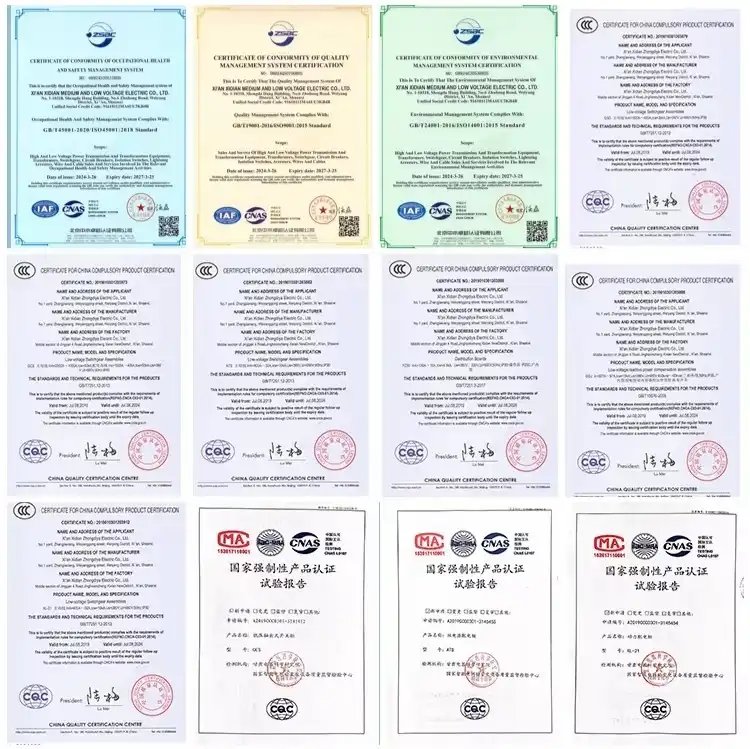
Long-term dependability is directly linked to the quality of the manufacturing process. ISO 9001 certification means that quality management systems have been set up and are in place to cover design controls, manufacturing processes, inspection protocols, and procedures for taking corrective action. The ISO 14001 environmental certification shows that a company is dedicated to reducing its impact on the environment by controlling the handling of SF6 and lowering emissions.
The ability to provide technical support affects the success of a project and its lifecycle costs. Manufacturers who offer full technical support help define the best designs, provide plan drawings for the equipment, and assist with testing activities. When problems happen, downtime is cut down by having ongoing technical support, such as help with troubleshooting, planning for extra parts, and field service available.
Performance claims are backed up by testing and approval paperwork. Ask accredited labs for type test reports that show they meet IEC 62271-100 and any other applicable national standards. Thru mechanical operation counts, contact resistance measurements, and dielectric withstand tests, routine test certificates for the particular serial numbers being bought make sure that output units meet design specifications.
Cost Structure Analysis
The purchase price is only one part of the total cost of owning an outdoor SF6 circuit breaker. A full economic analysis looks at the costs of installation, setup, upkeep labor and materials over the service life, downtime due to dependability issues, and disposal costs at the end of the life cycle.
Buying in bulk for projects with more than one unit often saves money thru volume discounts. By using the same type of breaker in all of your substations, you can cut down on the number of extra parts you need to store and make maintenance training easier. But too much standardization could lead to equipment that is too big in some places, which would waste money and make losses worse.
The quality of after-sales support has a big effect on lifecycle costs. Manufacturers that offer predictive maintenance programs can find parts that are wearing out before they break. This keeps expensive fixes and unexpected outages from happening. Having extra parts on hand cuts down on the time it takes to get new parts when parts need to be replaced.
Future Trends and Environmental Impact in Outdoor SF6 Circuit Breaker Applications
As governments around the world work to reduce greenhouse gas emissions, rules about how to use SF6 are getting stricter. Even tho only small amounts are used in electrical devices, SF6 has a global warming potential 23,500 times higher than carbon dioxide. This is cause for worry.
Emission Reduction Technologies
Modern outdoor SF6 circuit breaker designs minimize SF6 content by improving the geometry of the chamber while still being able to interrupt. When compared to older designs that needed gas to be added on a regular basis, sealed-for-life construction cuts leaks to almost nothing. The LW8-40.5 has a yearly leakage rate of less than 0.5%, which is a lot better than the standard of 1.0% in the business.
Modern tools for finding leaks let us know when a seal is breaking down early, before a lot of gas is lost. Laser imaging systems can see SF6 plumes that can't be seen with other methods. They can spot exact leak sites so that fixes can be made more effectively. During regular checks, sniffer probes that are sensitive to less than 1 part per million can find small leaks.
Gas recycle infrastructure makes it possible to collect and clean SF6 from old equipment instead of letting it escape into the air. Specialized service providers take out, clean, and return gas that meets the original purity standards so that it can be used in new equipment. This completes the recycling loop.
Alternative Gas Development
Researchers are developing environmentally safer alternatives to SF6, including CO₂-based gas mixtures, though none yet match SF6’s interruption performance. Vacuum interrupters eliminate insulating gas and work well indoors, but sealing can be challenging outdoors. Solid insulation using epoxy or silicone removes leakage concerns but increases size and recycling difficulties.
Digital Integration and Smart Grid Compatibility
IoT-enabled monitoring turns breakers into smart-grid assets by tracking contact position, mechanism condition, SF6 pressure, temperature, and electrical parameters. Centralized asset management supports condition-based and predictive maintenance. Integration with substation automation, SCADA, and IEC 61850 communication enables breakers to share data with protection systems, improving response, safety, and grid control.
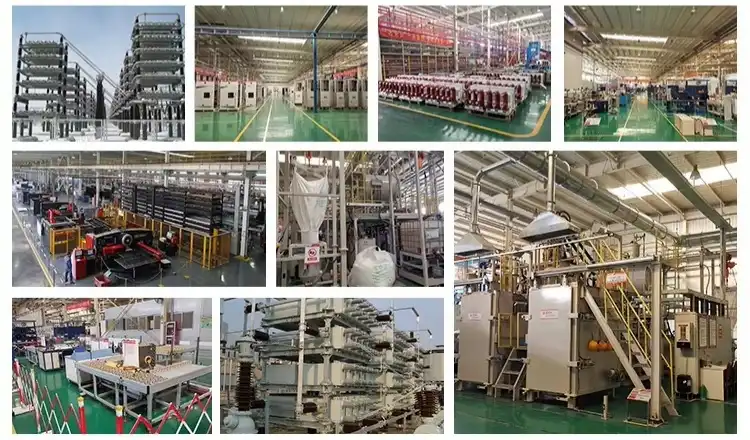
Conclusion
Outdoor SF6 circuit breakers are still an important part of modern power infrastructure because they protect reliably in a wide range of weather conditions and voltage levels. Because they are small, don't need much upkeep, and have worked well in harsh environments, they are the best choice for substations, industrial facilities, and green energy sites all over the world. As environmental laws change, makers keep working on technologies that cut down on emissions and look into other types of shielding media. By balancing technical specs, supplier capabilities, and lifecycle costs when making procurement decisions, companies can make sure that their power systems are reliable and cost-effective for many years to come.
FAQ
1.What distinguishes outdoor SF6 circuit breakers from indoor models?
Outdoor SF6 circuit breakers have weatherproof cases with an IP65 rating or higher that keep the inside parts safe from rain, dust, and changes in temperature. They use materials that are stable against UV light and better corrosion protection so that they can be exposed to sunshine and airborne pollutants for longer periods of time. Indoor models have lighter enclosures because these stressors are not present in controlled environments.
2.How frequently should SF6 leakage testing occur?
Most sites do leaking tests once a year as a matter of course. Testing may need to be done every six months for critical applications or equipment that works in harsh conditions. Always test after fault current stoppage, mechanical impact, or repair tasks that make sealed connections loose. Using quantitative detectors makes sure that readings stay below the annual leakage threshold of 1%.
3.Can existing oil circuit breakers be replaced with SF6 technology?
How well a retrofit works depends on the fitting size and the voltage of the control circuit. A lot of companies, including Xi'an Xikai, make transfer bases that let you replace them directly without having to change the foundations or support systems. Make sure that the voltage rating, current capacity, and breaking power of the replacement breakers are the same as or greater than those of the original equipment. To make a control circuit work with others, you need to pay attention to the working voltage and the way the extra contacts are set up.
Partner with Xi'an Xikai for Proven Outdoor SF6 Circuit Breaker Solutions
Xi'an Xikai Medium & Low Voltage Electric Co., Ltd. offers complete medium-voltage switching solutions that are backed by decades of manufacturing experience and new engineering ideas. Our maker of LW8-40.5 outdoor SF6 circuit breaker provides difficult substation projects in Africa, Southeast Asia, and China the dependability and climatic toughness they need. Our goods solve the main problems that EPC builders and electrical engineers have by having a mechanical life of more than 3,000 operations, meeting GB1984-89 and IEC 56 standards, and using advanced SF6 density monitoring to keep the gas pressure at the right level even when the temperature changes. Send an email to serina@xaxd-electric.com, amber@xaxd-electric.com, or luna@xaxd-electric.com to talk about your project needs and get personalized specifications.
References
1. Smeets, R.P.P., van der Linden, W.A., and Achterkamp, M. (2018). Switching in Electrical Transmission and Distribution Systems, John Wiley & Sons, Chichester.
2. International Electrotechnical Commission (2021). IEC 62271-100: High-voltage switchgear and controlgear – Part 100: Alternating-current circuit-breakers, Geneva.
3. Slade, P.G. (2017). The Vacuum Interrupter: Theory, Design, and Application, CRC Press, Boca Raton.
4. CIGRÉ Working Group A3.10 (2019). Final Report on Technical Implications of the Use of SF6 Alternative Gases, Technical Brochure 763, Paris.
5. Zhang, Y., Chen, W., and Liu, Z. (2020). Design and Application of High Voltage Outdoor Circuit Breakers for Extreme Climates, Electric Power Systems Research, Vol. 184, pp. 106-118.
6. Ryan, H.M. (2016). High Voltage Engineering and Testing, Institution of Engineering and Technology, London.