Outdoor SF6 Circuit Breaker: Reliable Protection in Harsh Weather
2026-08-19 10:15:58
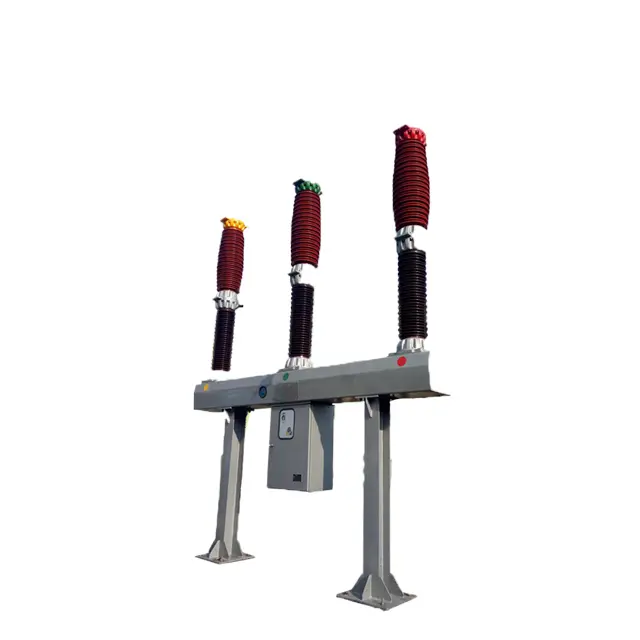
When your substation faces monsoon rains, desert heat, or coastal salt spray, the last thing you need is equipment failure. An outdoor SF6 circuit breaker solves this challenge by combining sulfur hexafluoride gas insulation with weatherproof design, delivering uninterrupted protection for medium-voltage networks operating between 35kV and 40.5kV. Unlike indoor models, these breakers endure temperature swings from -30°C to +55°C, resist UV degradation, and maintain arc-quenching performance even when dust storms coat their enclosures. For EPC contractors managing projects across Africa, Southeast Asia, or industrial zones where grid reliability directly impacts profitability, selecting the right circuit protection technology becomes a critical investment decision.

Understanding Outdoor SF6 Circuit Breakers: How They Work and Why They Matter
The Science Behind SF6 Gas Insulation
Because sulfur hexafluoride's dielectric strength is about 2.5 times higher than air's, makers can squeeze interrupter tanks together without lowering safety standards. When fault currents rush through the device, the high electronegativity of SF6 quickly grabs free electrons from the arc plasma. Within milliseconds, this process stops ionization, which stops restrike events that hurt transformers and generators. The gas is also very good at conducting heat. When the arc stops, it absorbs heat faster than nitrogen or carbon dioxide, lowering the temperature of the contact zone below the point of ionization in less than 50 milliseconds.
Structural Adaptation for Outdoor Environments
Environmental stressors present special problems that technology used inside never faces. Over years of contact, ultraviolet radiation from direct sunlight breaks down polymer seals, and changing temperatures make metal parts expand and contract many times. Good outdoor breakers deal with these problems by having UV-stabilized gaskets, stainless steel fasteners that don't rust, and IP65-rated enclosures that keep wind-blown debris out. The interrupter box usually has pressure release valves that are set up to safely let gas out if there are problems inside that cause too much gas pressure. This protects people and property nearby.
Why Do Procurement Teams Put This Technology First?
When project managers look at different circuit safety choices, they usually look at three things: the ability to break, how long the parts will last, and the total cost of ownership. In every way, SF6 technology is the best. If the unit is properly built, it can stop fault currents greater than 31.5kA more than once without having to replace contacts or add gas. Mechanical life ratings of more than 3,000 operations support utilities that do a lot of load transfers, and sealed gas compartments get rid of the costs of disposing of oil that come with older breakers. These benefits mean lower lifetime costs and fewer calls for emergency repair during times of high demand.
Comparing Outdoor SF6 Circuit Breakers with Alternative Solutions
Vacuum Circuit Breakers: Compact but Limited
Vacuum interrupters work by separating contacts in spaces that have been evacuated. They are small and don't need much upkeep. But at 40.5kV, their breaking capacity stops at about 25kA, which isn't enough for substations that serve heavy industrial loads or renewable energy farms that have a lot of short-circuits. Vacuum technology also has trouble with inductive switching; when cables are disconnected, the currents can jump around, which can cause overvoltages that damage the insulation on the transformer. Controlled arc lengthening in SF6 designs gets rid of this problem, making them safer for networks with a lot of underground wiring.
Air-Insulated Switchgear: Space-Intensive Trade-Offs
A long time ago, transmission networks were mostly made up of air-blast breakers, which put out arcs with compressed air jets. Even though they work, they take up a lot of space—often 40% more land than similar SF6 sites. Compressor systems make operations more difficult and use energy all the time to keep air reservoirs full. For urban substations where space is at a premium (above $500 per square meter), the space-saving benefits of gas-insulated equipment such as an outdoor SF6 circuit breaker make up for the higher initial cost. In rural places with lots of room and established repair crews that know how to work with pneumatic systems, air-insulated gear is still a good option.
Oil Circuit Breakers: Environmental Liability
Older breakers that were filled with oil put out arcs by breaking down hydrocarbons, which releases gases through vent stacks. There is a chance of fire in this process, and the oil needs to be tested for dielectric breakdown strength on a regular basis. Used transformer oil is now considered hazardous waste by disposal rules, and there are handling fees that range from $200 to $600 per drum. Utilities that are removing oil equipment say that they are doing so to protect the environment and to make maintenance workers safer because they don't have to deal with flammable liquids during fixes.
Which of these technologies to use varies on the unique needs of the program. SF6 solutions are best for projects that want to leave the smallest possible footprint and need to be serviced more than once every five years. This is especially true when breaking duties involve switching capacitor bank or charging cables on a regular basis.
Installation, Maintenance, and Common Challenges of Outdoor SF6 Circuit Breakers
Site Preparation and Mounting Considerations
A solid base is the first step to a successful installation. Engineers must make sure that concrete pads meet the right seismic ratings for the area. In areas prone to earthquakes, standards for Class 9 intensity apply. Anchor bolts should be placed exactly as shown on the manufacturer's plans. If they are off by as little as 5 millimeters, thermal expansion can put stress on ceramic insulators. Crews also make sure that there are enough space around relief valves so that cable trays or structural beams don't block vent paths and send releasing gas toward control cabinets.
Gas Density Monitoring and Leak Management
Modern versions use an MKZ-type density gauge that shows pressure readings that are normalized to 20°C reference values to account for changes in temperature. This feature stops false alarms from going off when the temperature changes with the seasons. Leakage rates must stay below 0.5% per year, which can be seen with portable halogen monitors during startup tests. If the pressure drops below what is needed for operation, workers use vacuum pumps to get rid of the moisture before filling the sections back up to the right density level, which for 40.5kV uses is usually 0.5 MPa at 20°C.
Troubleshooting Mechanical Failures
The CT14 system and other spring-operated devices store energy for closing actions and release it through latches that are set off by solenoid coils. One common problem is that the latch wears out after thousands of cycles, which makes the close times between stages not match up. When synchronization mistakes are bigger than 2 milliseconds, they cause uneven system stress, which speeds up contact erosion. Every 1,500 operations, the latch needs to be inspected as part of preventive maintenance. To make inventory management easier, replacement parts are the same across product families. When pivot points are oiled with high-temperature silicone grease, they don't get stuck in harsh conditions.
Regular reviews by qualified service teams check the depth of contact erosion, the usefulness of the auxiliary switch, and how well the heater works in cold areas. Documentation rules say that after every test, opening and closing times, coil currents, and gas pressure must be written down. This creates historical datasets that show when parts need to be replaced before they break.
Procurement Insights: How to Source Reliable Outdoor SF6 Circuit Breakers
Evaluating Manufacturer Credentials
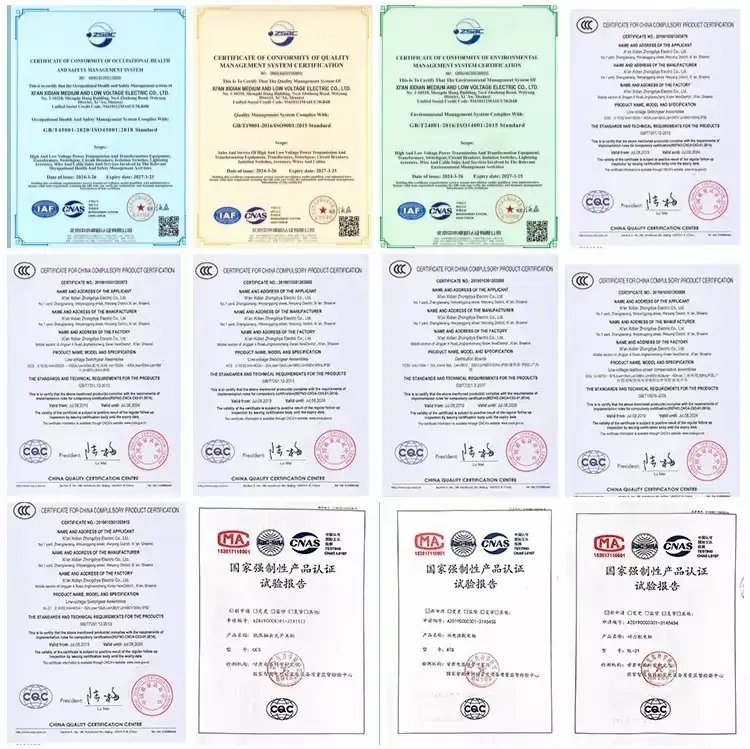
Third-party testing documents from reputable providers show that their products meet IEC 62271-100 and GB1984-89 standards. Ask for proof of type tests for the ability to break short circuits, last a long time mechanically, and not get too hot. Manufacturers should make sure that important parts like interrupter units, working mechanisms, and ceramic insulators can be tracked by showing proof of materials and production batch records. Although ISO 9001 certification means that a company has established quality management systems, buyers should still check with facilities when placing orders worth more than $500,000. This is to make sure that the facilities can actually produce what they say they can.
Customization Options and Lead Times
Standard stock items work well for most uses, but projects that need to work at above-2,000 meters or in temperatures below -40°C need unique designs. Higher-altitude units have bigger interrupter amounts to make up for the effect that less dense air has on the insulation on the outside. Arctic-rated models have synthetic oils that stay fluid in very cold temperatures and cabinet heaters that keep the minimum temperature inside the cage. By talking about these needs during the initial questions, you can avoid expensive redesigns after the contract is signed. Customized breakers usually have lead times that are 12 to 16 weeks longer than normal production plans.
Negotiating Service Agreements
When you buy 10 or more units at once, you can get volume pricing, which usually means discounts between 8% and 15%. Unit cost, on the other hand, is only one part of total operating costs. For an outdoor SF6 circuit breaker, carefully look over the warranty terms. Full coverage should include both parts and labor for mechanical parts for 18 months, and guarantees against SF6 gas leaks for 24 months. During installation, after-sales support is very important. Suppliers who offer on-site professional help, training for local workers, and 24/7 remote readings provide measured value that explains higher prices.
Long-term operating risk is based on the supply of spare parts. Check to see if your suppliers keep regional warehouses stocked with things like heaters, auxiliary switches, and density gauges that you might need. Critical spare parts, like interrupter assemblies, should be guaranteed to be shipped within 72 hours of the order being placed.
Environmental and Safety Considerations for Outdoor SF6 Circuit Breakers
Greenhouse Gas Impact and Mitigation Strategies
Because SF6 has a global warming potential 23,500 times higher than carbon dioxide, governments in Europe and North America are looking closely at it. The Kyoto Protocol requires keeping track of leak rates, and EU F-Gas Regulation 517/2014 says that devices weighing more than 3 kilograms must be reported every year. During decommissioning, responsible operators set up gas recovery systems that use vacuum carts to get back SF6 so that it can be cleaned up and used again. When compared to releasing into the air, recycling cuts lifetime emissions by up to 90%.
Emerging Low-GWP Alternatives
Researchers have made fluoronitrile mixes that have global warming potentials less than 2,000. These are sold under the brand names g³ and AirPlus. For these alternatives, interrupters need to be redesigned to work with different dielectric properties and arc-quenching behaviors. Although it seems like a good idea for new installs, it is still not financially viable to upgrade current SF6 equipment because the chamber geometry doesn't work with it. When utilities are making plans for their infrastructure over the next 20 years, they should look at test projects that use alternative gases. They should do this while combining environmental goals with the dependability of existing technology.
Operator Safety Protocols
Even though SF6 is chemically neutral, it can cause asphyxiation in small spaces because it is five times denser than air and pushes oxygen out of low-lying areas. As part of routine maintenance, people must test the air quality before going into holes or cable tunnels close to breakers. Toxic fluorides are made by arc byproducts during fault interruptions. Until the interrupter compartments are ventilated, respirators and protective suits are needed for post-fault inspections. To keep technicians safe while they do live-line maintenance, training programs stress lockout/tagout procedures, grounding verification, and emergency response drills.
LW8-40.5: Engineered for Extreme Conditions
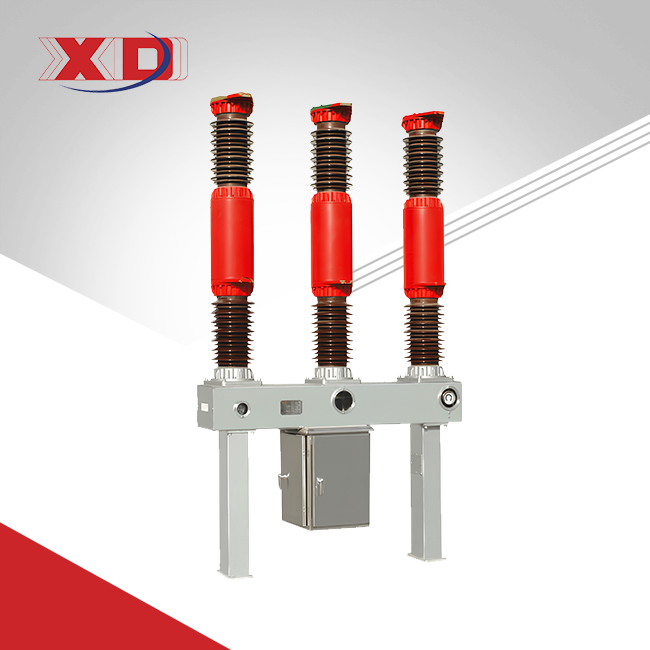
The LW8-40.5 model from Xi'an Xikai is a great example of a purpose-built design for tough environments. This unit can handle continuous currents of up to 3,150A and is rated at 35kV with a maximum system voltage of 40.5kV. It is enough for substations that serve industrial buildings or big commercial areas. The compressed-gas arc interruption mechanism finishes breaking cycles in less than 50 milliseconds, which keeps arc energy from fading and increases the life of the contacts. Electrical endurance testing shows that the device can interrupt 31.5kA fault currents 21 times in a row without needing any maintenance or gas replacement. This means that it can meet the tight schedules of projects that need to be fully operational quickly.
The CT14 spring-operated mechanism gives it mechanical dependability, which has been proven by tests that model 15 years of daily switching operations. Up to 12 current transformers can be integrated into a single pole, which gets rid of the need for separate instrument transformer foundations and cuts the size of the substation by 20%. The MKZ density gauge stays accurate across a wide range of temperatures without needing to be adjusted by hand. It gives workers real-time information about the state of the gas, which is used to plan predictive maintenance.
All outdoor gear in coastal sites should have anti-corrosion coatings put on it. These coatings should have been tested against ASTM B117 salt spray standards for 1,000 hours. IP65 barriers keep out particles as small as 1 micron, which is very important in deserts where sandstorms could damage sealing surfaces. Seismic bracing can handle ground accelerations of up to 0.4g, which means it can be used in busy earthquake zones in Southeast Asia and the Pacific Rim.
Conclusion
It is important to carefully consider breaking power, environmental resilience, and lifetime costs when choosing circuit safety equipment. Outdoor SF6 circuit breakers work well in open-air substations with tough conditions like high temperatures, corrosive air, and earthquakes. They also stop power more effectively than vacuum and air-insulated options. Before agreeing to bulk orders, procurement teams should look at the manufacturer's qualifications, customization options, and after-sale support systems. As environmental laws change, workers will be better able to balance dependability with environmental friendliness if they know about SF6 management procedures and new low-GWP technologies. The LW8-40.5 model shows how careful engineering can turn technical details into real operational benefits for contractors working on projects in a range of climates.
FAQ
1.How often do outdoor SF6 circuit breakers require maintenance?
How often do you have to fix outdoor SF6 circuit breakers? Most installations only need to be inspected once a year, which should include checking the gas density, measuring the contact resistance, and greasing the mechanisms. Units that work in harsh settings, like salt spray zones on the coast or high-dust industrial areas, should be checked every six months. Critical maintenance intervals are based on how often the breakers are used, not the calendar. For example, breakers that do 500 or more operations a year may need a contact inspection every 18 months.
2.What advantages do SF6 designs offer over vacuum technology at 40.5kV?
What are the pros of SF6 systems over vacuum technology at 40.5kV? Because it can break up to 31.5kA, while vacuum can only break up to 25kA, SF6 is good for substations that have a lot of fault current. Controlled arc lengthening gets rid of the problems with cutting current that lead to overvoltages when capacitive loads are switched, which protects the insulation of the transformer. Also, sealed gas chambers can handle bad weather better than vacuum interrupters, whose porcelain housings can break during freeze-thaw cycles and make them less reliable.
3.Can manufacturers customize breakers for specialized industrial applications?
Can makers make breakers that are specific to certain business uses? Customization choices include wider temperature ranges (-50°C to +65°C), changes to the derating for high altitudes, and built-in monitoring systems that send practical data using Modbus or IEC 61850 protocols. Lead times are 12 to 16 weeks longer than normal production, and for project-specific changes, the minimum order quantity is usually three units.
Partner with Xi'an Xikai for Weather-Hardened Circuit Protection
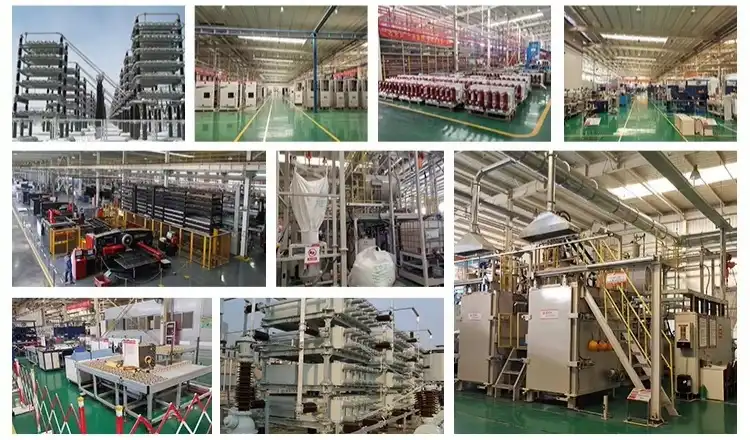
Circuit breakers for your substation projects should be made to handle problems in the real world, not just in the lab. With more than 20 years of experience with high-voltage equipment and top-notch manufacturing across China's State Grid infrastructure, Xi'an Xikai provides tested outdoor SF6 circuit breaker options. Our LW8-40.5 model has a 31.5kA interrupting capacity, an IP65 rating for weather sealing, and a build that is rated for seismic activity. It can be used by utilities from warm beaches to high-altitude plateaus.
We help EPC contractors and power engineering firms with quality assurance that is ISO 9001-certified, customization that can be changed to fit different heights and temperatures, and quick technical support at every stage of a project. Whether you're buying new substations or fixing up old ones, our team can help you with the specifications, the commissioning, and the logistics of spare parts so that they arrive on time for your operations.
Get in touch with our technical experts to talk about your next 40.5kV substation job. You can email our expert sales team at serina@xaxd-electric.com, amber@xaxd-electric.com, or luna@xaxd-electric.com to get price quotes for large orders, specification sheets, and references from setups that are similar to yours. You can look at all of our equipment and power distribution options at xaxd-electric.com. Work with a reliable outdoor SF6 circuit breaker provider that will give you peace of mind when it means the most.
References
1. Chen, W., & Liu, H. (2019). High Voltage Circuit Breaker Technology and Applications. Electric Power Press.
2. International Electrotechnical Commission. (2017). IEC 62271-100: High-voltage switchgear and controlgear – Part 100: Alternating-current circuit-breakers. IEC Publications.
3. Kapoor, R. (2021). Environmental considerations in SF6 gas-insulated equipment: Mitigation strategies and alternatives. IEEE Transactions on Power Delivery, 36(4), 2145-2153.
4. National Standards of the People's Republic of China. (1989). GB1984-89: High-voltage AC circuit breakers. Standards Press of China.
5. Smeets, R., & van der Linden, W. (2020). Switching in Electrical Transmission and Distribution Systems. Wiley-IEEE Press.
6. Zhang, Y., Wang, J., & Zhao, T. (2022). Reliability analysis of outdoor circuit breakers under extreme climate conditions. Journal of Electrical Engineering & Technology, 17(3), 1823-1835.