
Why Use a Porcelain Type SF6 Circuit Breaker on Transmission Lines?
2026-10-28 17:28:09
Why porcelain type sf6 circuit breaker is used in transmission lines. It clears faults rapidly, can withstand high short circuit current and is suitable for outside air insulated substations. The SF6 gas insulates around the contacts and cools the arc while the porcelain enclosure offers exterior insulation and mechanical support. This design is applicable for line feeders, transformer bays and bus couplers at 126/145 kV. It also allows engineers easy visual access for inspection and space for future growth. I prepared this guide to help design institutions, EPC project managers and utilities that need to make the right choice of breaker ratings, mechanisms and suppliers.
Transmission networks face short circuits, lightning strikes, switching transients, and overloads. This guide covers the construction, ratings, selection, maintenance, and purchase of a porcelain type sf6 circuit breaker. I also compare it with GIS, vacuum, live tank, and dead tank options.
What Is a Porcelain Type SF6 Circuit Breaker and How Does It Work?
It's helpful to know more about the device before you compare ratings. The following three parts explain what it's made of, how it stops arcs, and what the porcelain case does.
Core Components and Construction
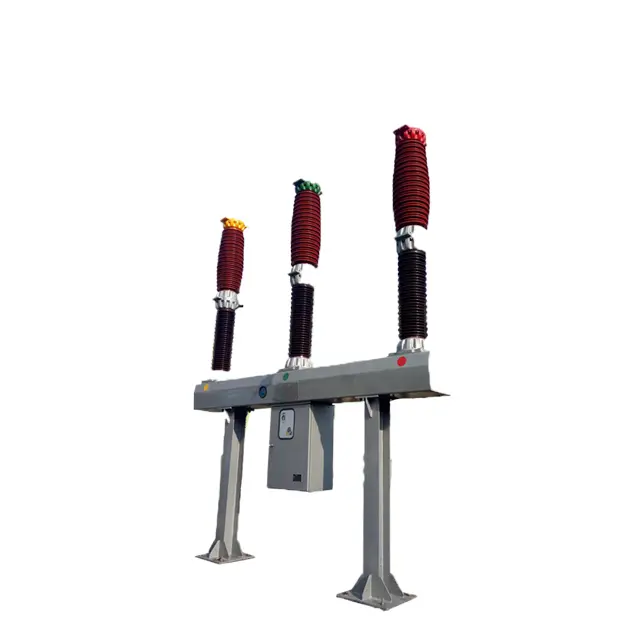
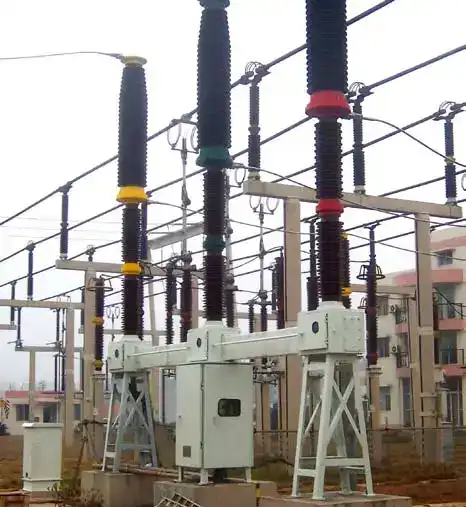
A porcelain type sf6 circuit breaker is used outside and is a high-voltage power switch. There is SF6 gas inside the interrupter cells, which stops the arc and prevents it from continuing. Porcelain columns provide external insulation and mechanical support for the interrupter assembly. The main parts are the gas-density monitor, the nozzle, the operating mechanism, the fixed and moving contacts, the support frame, the terminals, and the control box. Line feeders, transformer bays, busbar sections, capacitor banks, and reactor circuits are all applications where this type of circuit breaker can be used. I tell people who are buying to look at technical plans, insulation data, and installation instructions to make sure they understand how everything is set up.
How SF6 Interrupts Fault Current
In a porcelain type sf6 circuit breaker it is important to know that the contacts are closed during normal operation and carry the load current. When a malfunction is detected, the protective system sends a trip signal to the operational mechanism. The contacts then separate rapidly and an arc is formed. the nozzle, SF6 under pressure is sent through. This cools the arc and collects free electrons. The current goes to zero and the arc is extinguished . The dielectric strength quickly returns . SF6 has better dielectric and arc extinguishing capabilities than air under identical circumstances. Next the engineers examine the protection plan with the opening time, coil performance, anti-pumping, interlocking and pole synchronisation.
Why Porcelain Housing Suits Outdoor Duty
For a long time, porcelain has been used in outdoor substations. Even when the temperature changes, the porcelain housing maintains its mechanical and insulating properties within its specified service range. It also provides external insulation and protection for the internal components. When used outside, porcelain type sf6 circuit breakers have to deal with dirt, wind, rain, and sun. When it comes to dirty areas, the creepage distance is the most important thing. IEC 60815 tells you how to select an insulator for those areas. The main concern is mechanical damage. Because rough shipping and earthquakes can damage a porcelain column, you should find out early on how it will be packed and obtain evidence that it meets the required mechanical and seismic conditions. IEEE 693 is a well-known standard for making sure that substation equipment can handle earthquakes, but the standard required by your project may be different.
Why Use a Porcelain Type SF6 Circuit Breaker on Transmission Lines?
Transmission problems get worse very quickly. If you take too long to clear a fault, you may damage equipment, cause voltage drops, or put too much stress on busbars and transformers. Also, it can lead to power blackouts that spread and make the system less secure. A porcelain type sf6 circuit breaker opens and can quickly close again after a few cycles when the protection and reclosing scheme permits it. This helps restore lines after temporary faults such as lightning strikes. The fault level that was determined is usually compared to the breaking current at 31.5 kA or 40 kA by the design teams for 126/145 kV substations. Because reclosing places additional operating demands on the mechanism, engineers also check that the breaker and control system can complete the required operating sequence.
Fast Fault Clearing Protects the Grid
When air is insulated, like in most 126/145 kV substations, a porcelain type sf6 circuit breaker works well. It operates with voltages from 72.5 kV up to 550 kV which means one design family may be utilised for various applications. When the job is done outdoors, crews may simply examine the porcelain, terminals and mechanism cabinet. You can put in bays without having to redesign the entire system. It can tolerate rain, wind, sun and temperature variations as long as the purchaser provides the correct creepage distance, altitude rating and temperature range. The configuration will still rely on the available land, the project needs and the surrounding site characteristics.
Outdoor Fit for Air-Insulated Substations
In tech, there isn't always a clear winner. Area, electricity, temperature, layout, everything may affect which technology performs best . The expansion of a GIS may include more expenses for equipment and civil construction than the expansion of a typical AIS system, depending on the project. This may make GIS advantageous in densely populated places or where land is scarce. Vacuum circuit breakers are used commonly instead of SF6 circuit breakers at the medium voltage. In high and extra-high voltages SF6 circuit breakers are still extensively employed, where their excellent interrupting and insulation properties are of advantage.
Comparison with GIS, Vacuum, Live Tank, and Dead Tank
GIS encloses the switching equipment and other high-voltage components in a small, sealed gas-insulated system, thus it needs less area of land and might be beneficial when space is restricted. A vacuum circuit breaker employs a vacuum interrupter instead of SF6 and is generally utilised for medium voltage applications while vacuum technology may also be employed at higher voltage levels in certain designs. In a live-tank SF6 circuit breaker, the interrupter and SF6-filled housing are at high potential above ground, often supported by porcelain or composite insulators, which may minimise the footprint of the breaker bay and simplify certain layouts. A dead-tank SF6 circuit breaker has a grounded metal enclosure for the interrupter and may use current transformers around the tank or bushings. Before selecting, examine needed voltage and current ratings, interrupting capabilities, insulation coordination, footprint, maintenance access, environmental conditions, SF6 management needs, and overall project cost.
Technical Specifications and Selection for 126/145 kV Projects
Having clear guidelines makes it easy to make an offer. Before you pose a question, these three things should be on your mind.
Rated Data and Interrupting Capability
Before you see a porcelain type sf6 circuit breaker you need to know its rated voltage, its normal current and the current it uses to break short circuits and build new ones . Include short time withstand current, operation sequence and any other duties such as reactor switching on or line charging. The quantity of shielding, the creepage distance, the pollution class and the clearances . They should be suitable for the place. Best to have one list with the restrictions for weather, wind, heat and height. Cross check everything to the project standard IEC 62271-100 or IEEE C37.06. Many design businesses in the 126/145 kV class need a breaking current of 31.5 kA or 40 kA. You should choose the true value using what you learnt about short-circuits.
Choosing Spring, Hydraulic, or Pneumatic Mechanisms
The frequency of troubleshooting and fixing a porcelain type sf6 circuit breaker on the site relies on the mechanism choice. The closing spring is charged by the electric motor . The energy to open is supplied by a separate spring arrangement . In a spring mechanism . It is easy to operate and workers do not require an external air or hydraulic source. In the hydraulic system, a disc spring is a source of energy to drive the operational mechanism. Some hydraulic designs do not need an external compressed-air source, as pneumatic systems do, thus have different maintenance requirements. The pneumatic mechanism opens or closes as designed by means of the compressed air. Springs provide the return or closing action. It may thus be employed in locations where compressed-air systems are already in operation. All types have merits and downsides so select the one that matches the work, your talents and how simple it is to purchase new parts.
SF6 Leakage, Monitoring, and Protection Integration
The IPCC Fifth Assessment Report says that SF6 is a strong greenhouse gas with a very high global warming potential over 100 years compared with carbon dioxide. This is why buyers want a low annual leakage rate. For closed pressure systems, IEC 62271-1 gives requirements for gas monitoring and pressure-related conditions. Ask for a gas-density monitor that has a warning function, a suitable blocking or trip function where required, and a way to record or identify abnormal gas conditions. Handling and recovery should follow the rules in IEC 62271-4 and your local requirements. Line differential protection, auto-reclosing, single-pole tripping, and synchronism checks are all functions that the breaker may need to support. As soon as possible, tell the seller about the protection and control scheme.
LW25 Outdoor Porcelain Type SF6 Circuit Breaker from Xi'an Xikai
The LW25 Outdoor porcelain type sf6 circuit breaker can handle at least 126/145 kV of rated voltage and 50 Hz of frequency. Normal current ratings come in three different ranges: 2000 A, 3150 A, and 4000 A. Line feeders, transformer bays, and bus couplers that handle different loads can all use these ranges. Because it is made with porcelain insulation and an SF6-filled interrupter, it can be used outside. Send us the level of short-circuit current, the insulation requirements, and the conditions of the site. Our engineers will then check the approved datasheet to make sure the design fits and the breaking current is right.
LW25 Rated Parameters
This is the LW25 porcelain type sf6 circuit breaker. It has three options for mechanisms, so your design team can select the arrangement that best matches the project requirements. The electric motor charges the closing spring, while the opening mechanism uses stored spring energy. In the hydraulic version, energy is stored in a spring and released through the hydraulic operating system. The pneumatic version uses compressed air for operation together with a spring-based return or closing arrangement, depending on the configuration. We don't force one type on you because every project needs different supplies and maintenance capabilities. Instead, we talk about these options with your team before giving you a price.
Three Operating Mechanism Options
The LW25 may be equipped with three different working mechanisms: spring, hydraulic and pneumatic. A spring mechanism is charged by an electric motor to retain mechanical energy and does not need any external hydraulic or compressed air system. It is ideal when a self-contained operating system and ease of maintenance are important. The hydraulic mechanism is suited for projects requiring hydraulic operating systems, as it employs stored energy and hydraulic gearbox to provide the necessary working force. The pneumatic mechanism employs pressurised air to provide the operating movement. This may be useful if a stable source of compressed air is already available. When choosing between the three, take into account the operating speed, control needs, maintenance skills, availability of replacement parts, ambient conditions and existing infrastructure at the substation.
Manufacturing Support and Plateau Capability
Up to 4,000 meters high, our plateau-style tools can do their job. The State Grid, power building, train transportation, and green energy projects all use it. For every job, we change how things are set up. When you're getting quotes, check that the information about each breaker's height and environment is correct.
Maintenance, Procurement, and Supplier Selection
A good bargain will endure as long as the breaker. These ideas will help you choose vendors, draft the RFQ and schedule repair work. The scheduled maintenance program for porcelain type sf6 circuit breaker covers electrical connections, gas system, mechanism, control box and porcelain body. Inspectors check for items such as cracks, contaminants, flashover markings, corrosion, loose connections, strange sounds and heating issues. Team members monitor SF6 density, leakage and moisture and utilise certified recovery equipment to handle and recycle SF6 during maintenance or decommissioning.
Maintenance and Lifecycle Planning
Regular testing includes timing and journey analysis, trip and closure coil inspections, interlock verification and auto-reclose testing. Schedule intervals depending on how frequently the equipment is used, fault history, the weather, pollution and what the manufacturer suggests. Also, make sure you have critical extra parts ready.
Writing a Clear RFQ
Where there is a clear RFQ, all the suppliers may offer the same price quotations of a porcelain type sf6 circuit breaker. Important information: voltage class of current transformer, rated current, fault current, insulation levels, operating sequence, control voltage, pollution and altitude limitations, quantity, shipping location and terminal configuration. Verify the contents of the quote: breaker, mechanism, control box, support structure, SF6 gas, connections, special tools, packaging, factory acceptance test, installation supervision, export paperwork. Not just the price of the equipment but what it costs to ship, when it is delivered and what kind of guarantee it comes with. After a few rounds of technical explanations, projects of two to fifteen units often do not have definition gaps.
Checking Supplier Capability and Final Fit
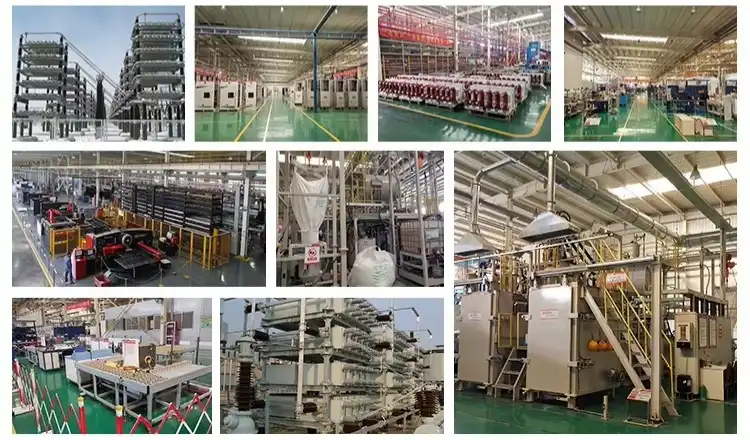
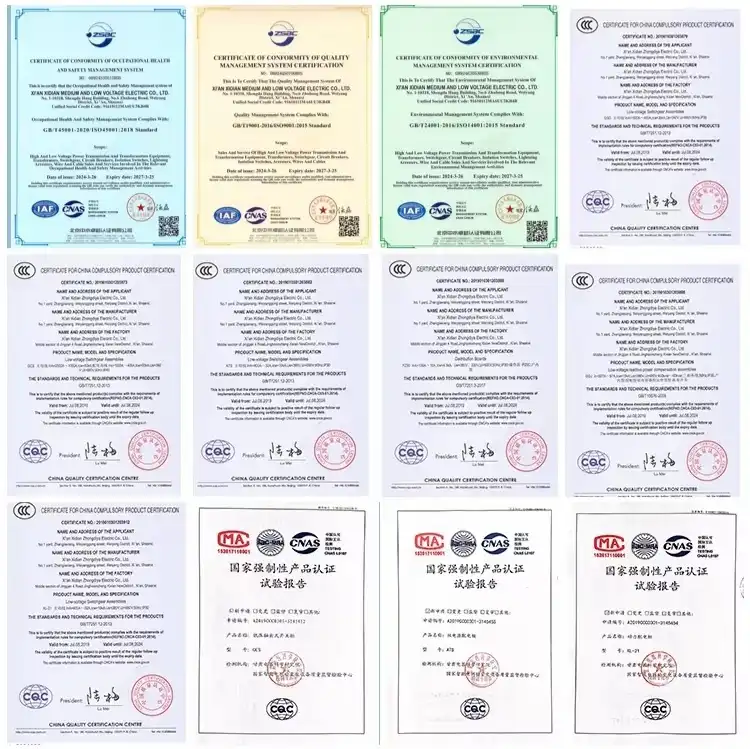
Your suppliers should send you type-test certifications, routine-test reports, SF6 leakage test records and factory acceptance processes. evaluation process guidelines, ISO certification, samples of comparable projects, warranty conditions and incoming materials evaluation. The porcelain type sf6 circuit breakers are used for outdoor air-insulated substations where maintenance personnel may access directly. “GIS may be better leveraged where there is not much land, or where the site has strict space requirements. Vacuum circuit breakers are a good choice for medium voltage applications if the voltage and interrupting ratings are appropriate. This technology should be chosen only if the voltage, load, fault level, insulation requirements and environmental conditions are well matched. Before you decide, check the voltage, current, fault level, insulation, environment and standards, and calculate the cost of the product throughout its complete life.
Conclusion
A porcelain type sf6 circuit breaker works well with transmission lines because SF6 gas quickly cuts off fault current and porcelain provides external insulation and mechanical support. Buyers should look at the details to make sure that the 126/145 kV breaking current, insulation and creepage, altitude, mechanism type, SF6 leakage control, and earthquake and transport safety meet the needs of the project. Springs, hydraulics, and pneumatics all need different kinds of maintenance. The porcelain design can be a practical choice for outdoor air-insulated substations where sufficient space is available, while GIS can be better suited to locations with strict space limitations. Vacuum technology is widely used at medium voltage and should be considered where its voltage and interrupting ratings meet the application. Structured maintenance, a full RFQ, and checked source records help keep things safe and make it possible to compare offers in an honest way. These points are linked to the choices you make about rating and mechanisms in LW25.
FAQ
1. Which ratings does the LW25 offer?
Electricity at 126/145 kV and 50 Hz can go through it. All of these specs come from the LW25 Outdoor porcelain type sf6 circuit breaker. For rated normal current, you can pick from 2000 A, 3150 A, or 4000 A. Breaking current and insulation data can be found in the approved document.
2. How does it differ from GIS?
Since a porcelain type sf6 circuit breaker is installed outdoors, it generally needs more space than a GIS arrangement. Crews get better visibility and easier access to the equipment in exchange. GIS encloses the high-voltage equipment in a compact gas-insulated system, which saves space and can work well where land is limited.
3. Which documents should I request?
You should ask for type-test certificates, routine-test results, installation drawings, information on SF6 pressure or density monitoring, guarantee terms, and parts lists. Your design company can use these documents to verify that the equipment meets the applicable project requirements before the order goes through.
4. How often does maintenance take place?
Maintenance intervals depend on operating frequency, fault history, air quality, weather, pollution, and the manufacturer's recommendations. Follow the maintenance manual and keep all important spare parts available.
Request a Quotation for a Porcelain Type SF6 Circuit Breaker from Xi'an Xikai
Xi'an Xikai sells the LW25 porcelain type sf6 circuit breaker, which can handle 126/145 kV and can be made with spring, hydraulic, or pneumatic mechanisms. We produce porcelain type sf6 circuit breakers, and we also have tools for plateaus that can be used at heights of up to 4,000 meters. If you email serina@xaxd-electric.com, amber@xaxd-electric.com, or luna@xaxd-electric.com about your project, our team will help you pick the best configuration. Visit xaxd-electric.com to learn more.
References
1. IEC 62271-100: High-Voltage Switchgear and Controlgear – Alternating-Current Circuit-Breakers, 2021
2. IEEE C37.06: AC High-Voltage Circuit Breakers Rated on a Symmetrical Current Basis – Preferred Ratings and Related Required Capabilities, 2009
3. IEEE 693: Recommended Practice for Seismic Design of Substations, 2018
4. IEC 62271-1: High-Voltage Switchgear and Controlgear – Common Specifications for Alternating Current Switchgear and Controlgear, 2017
5. IEC 60815-1: Selection and Dimensioning of High-Voltage Insulators Intended for Use in Polluted Conditions, 2008
6. IPCC Fifth Assessment Report, Climate Change 2013: The Physical Science Basis, 2013