
Polymer Housed Lightning Arrester vs Porcelain: Which Is Better?
2026-11-17 17:37:30
For most export projects, a polymer housed lightning arrester is the better choice. It weighs less, resists impact, and performs well on wet or polluted sites. A porcelain lightning arrester still suits rigid substation layouts and utilities that specify ceramic housings. Both types use zinc oxide blocks to limit overvoltage, so the housing mainly decides weight, behavior during a failure, and pollution performance. The right pick depends on voltage, altitude, creepage distance, and shipping conditions. In this article, I compare the two designs and show you how to match each lightning arrester to your project.
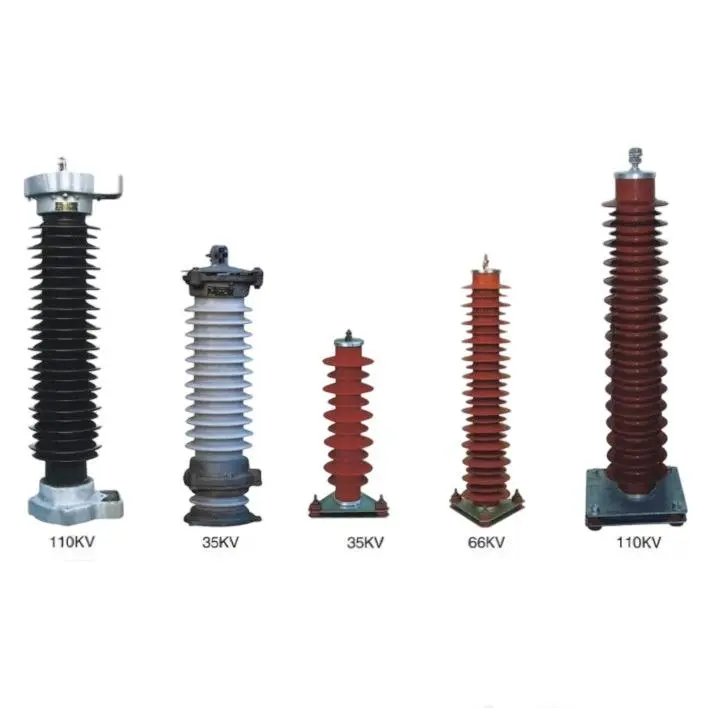
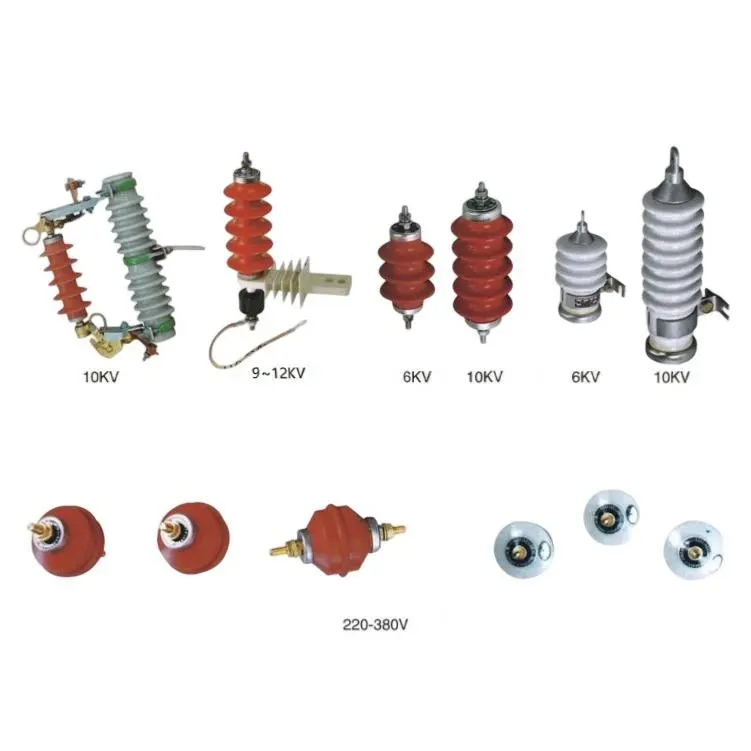
How a Lightning Arrester Works and Why the Housing Matters
Zinc Oxide Blocks Do the Protection Work
Inside every modern lightning arrester sits a column of zinc oxide metal oxide varistor (MOV) blocks. At normal system voltage, the blocks resist current flow and pass only a tiny leakage current. When lightning or a switching event raises the voltage, their resistance drops within microseconds. The arrester then carries the current to ground and holds the voltage across your transformer or switchgear at a safe level. After the transient ends, the blocks return to a high-resistance state. Polymer and porcelain designs both rely on this principle, so the housing does not change the basic protection logic. Electrical selection comes first, and housing choice comes second.
The Ratings to Check First
Check the electrical ratings before you compare housings. Maximum continuous operating voltage (MCOV) and rated voltage must match your system voltage and grounding method. Nominal discharge current, such as 5 kA, 10 kA, or 20 kA, sets the impulse class. Residual voltage shows how much voltage reaches your equipment during a discharge, and energy capability shows how much the blocks can absorb. IEC 60099-4 defines test requirements for gapless metal-oxide arresters on AC systems, and IEEE C62.11 covers the same product type for North American practice. A wrong rating shortens service life no matter which housing you choose.
What the Housing Actually Does
The housing protects the blocks from rain, dust, salt, and ultraviolet light. It also provides external insulation and creepage distance, which is the path a leakage current follows over the surface. IEC TS 60815-1 groups pollution into four classes, with specific creepage distance running from 16 mm/kV for light pollution to 31 mm/kV for very heavy pollution. The housing carries mechanical loads and guides the pressure-relief path if a block fails internally. It cannot fix an undersized MCOV or a poor ground connection, so treat it as one part of a complete specification.
Polymer Housed vs Porcelain Lightning Arrester: Construction and Performance
How a Polymer Housed Arrester Is Built
A polymer housed arrester wraps the MOV column in a fiberglass-reinforced structure covered by silicone rubber weather sheds. End fittings, seals, and a pressure-relief path complete the design. Silicone is hydrophobic, so water beads on the surface and shortens the leakage path during rain or fog. The unit weighs less than porcelain and tolerates knocks during handling, shipping, and pole mounting. These traits suit compact substations and sites with difficult access. Quality still varies between makers. Sealing, bonding, and UV resistance decide long-term results, so ask for type-test reports instead of choosing on weight alone.
How a Porcelain Lightning Arrester Is Built
A porcelain lightning arrester places the MOV column inside a rigid ceramic shell with internal supports, end fittings, seals, and a pressure-relief system. Porcelain keeps its shape, resists ultraviolet light, and has decades of field use in substations. Those strengths make it familiar to utilities with established specifications. The drawbacks are weight and brittleness. A knock in transport or a rough lift can crack the shell, and a crack lets moisture reach the blocks. If an internal fault occurs, ceramic fragments can scatter unless the pressure-relief design directs the energy safely. Plan packing, handling, and clearances carefully with this type.
Side-by-Side Performance Comparison
Electrical protection depends on the MOV design, not the housing. The two types differ in mechanics, pollution behavior, and failure mode. Polymer wins on weight, impact tolerance, and wet-surface performance. Porcelain wins on rigidity and proven UV stability. In a failure, a polymer housing tends to vent without shattering, while ceramic can break apart. Porcelain also depends more on cleaning in polluted areas, because its surface stays wettable. For cantilever load or seismic needs, check the rated values for each model, since both types vary. Base your comparison on test reports, standards compliance, and field history.
Matching Each Lightning Arrester to Your Application
Distribution Lines, Transformers, and Switchgear
Polymer housed units fit overhead distribution lines, pole-mounted transformers, and compact installations because they are light and easy to ship. In switchgear, space matters more. Our fully insulated composite housed metal oxide arrester brings the high-voltage cable out of the top, and the cable and arrester core are vulcanized into one piece. This design gives good sealing and insulation, lets you reduce phase-to-phase and phase-to-ground insulation distances, and shrinks the installation space inside the cabinet. Both housing types can protect transformers and substations when you coordinate them with insulation levels and grounding. Always match MCOV and rated voltage to the actual system.
Humidity, Pollution, and High Altitude
Export projects face harsh conditions. Humid sea freight and tropical rain put sealing under stress, so check the sealing method before you order. Our polymer lightning arrester uses a triple-sealing process, and its sealed design blocks moisture ingress, a common failure point in older models. For APAC projects, we offer a monsoon-resistant design with longer creepage distance. Size creepage to the IEC TS 60815-1 pollution class at your site. Standard service conditions in IEC 60099-4 assume altitude up to 1,000 meters, so higher sites need correction under IEC 60071-2. The cable outlet on our switchgear arrester raises creepage distance, which suits high-altitude and heavily polluted areas.
Installation, Grounding, and Monitoring
Correct installation protects the arrester's rated protection level. Mount it as close as practical to the transformer or cable termination, and keep line and ground leads short and straight. Long leads add voltage to the residual voltage your equipment sees. Use a low-impedance ground. During inspections, look for cracks, tracking, corrosion, loose terminals, and damaged seals. For condition-based maintenance, our JCQ-3 (YC)10/800D communication-type monitor counts discharges, measures leakage current from 0 to 10 mA, and sends data through RS485 with Modbus-RTU. Calibration tests hold its readings within ±5%. It complies with IEC 60099-4 and GB/T 11032 requirements for monitoring devices.
Xi'an Xikai Polymer Lightning Arrester: Features and Quality Control
Core Features
Our polymer lightning arrester protects high-voltage AC systems from lightning strikes and switching events. It combines polymer technology with a sealed design and safe pressure-relief capability. The lifespan exceeds 25 years, and near-zero leakage current helps reduce lifecycle cost. A two-unit design provides redundancy, and the polymer housing dissipates heat to help prevent thermal runaway. Premium models offer optional IoT sensors that monitor discharge events and degradation in real time, which supports predictive maintenance for utilities. These features address the moisture and aging problems that buyers often raise with older designs.
Manufacturing and Testing
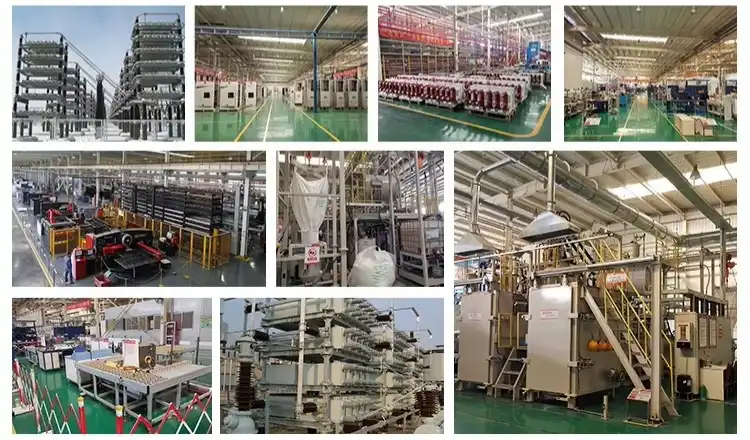
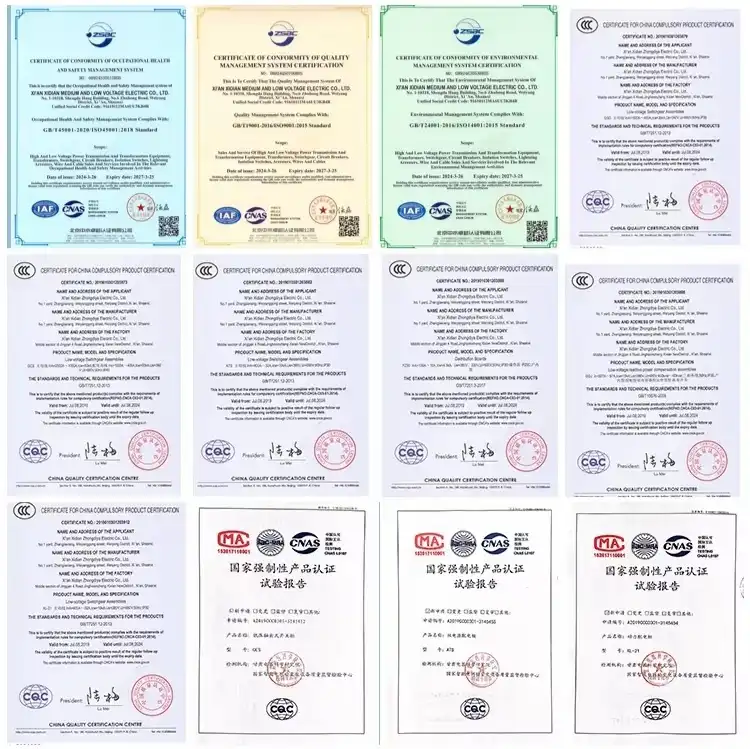
Each lightning arrester goes through raw material testing with traceable, high-purity zinc oxide, a triple-sealing process, and high-voltage testing that simulates lightning strikes up to 650 kV. Our ISO 9001, ISO 14001, and ISO 45001 certifications cover quality, environmental, and occupational safety management. We also hold over 20 patents in polymeric MOA technology. For traders who bundle products into complete packages, these records matter, because buyers abroad request traceable documents with every shipment. Tell us which standard your destination requires, and we will confirm the matching test documents.
Applications and Regional Options
Our arrester protects transformers and circuit breakers in transmission substations, keeps solar and wind farms running through storms, and withstands vibration and pollution in railway electrification. Regional versions are available: monsoon-resistant designs with longer creepage for APAC, wildfire-hardened materials and quick-shipment options for the Americas, and CE-certified variants for EMEA. As a system integrator, Xi'an Xikai also supplies switchgear, dry-type transformers, vacuum circuit breakers, and prefabricated substations, so you can pair arresters with other equipment in one order. Our plateau-type equipment meets operating requirements at altitudes up to 4,000 meters.
Procurement Guide for Lightning Arrester Buyers
Specifications to Confirm Before You Order
Traders who ship to several countries need a clear checklist for every lightning arrester. Start with nominal and maximum system voltage, frequency, grounding method, and expected temporary overvoltage. Select MCOV and rated voltage from those system conditions, not from nominal voltage alone. Confirm discharge current, energy capability, and line-discharge class. Then match the housing to the site: pollution class, salt, ultraviolet exposure, altitude, and mechanical load. Finally, ask for IEC 60099-4 or IEEE C62.11 type-test reports, dimensional drawings, and packing details. One specification sheet per destination country cuts model confusion and speeds approval with local utilities.
Mistakes That Raise Total Cost
Price drives most export decisions, but unit price tells only part of the story. Porcelain breakage in transit, extra freight for heavier units, installation time, and replacements all add cost. Another frequent error is choosing by nominal voltage without checking MCOV, grounding, and temporary overvoltage. Buyers also overlook energy rating, which can shorten block life where lightning is frequent. Long connection leads weaken protection even when the lightning arrester has the correct rating. Build a simple decision matrix that compares technical risk, logistics, safety, maintenance, and total cost. That method gives your team and your end client a clear reason for each choice.
Choosing a Supplier You Can Trust
A qualified supplier should show experience with your voltage class, test records, material traceability, and clear English documents. Xi'an Xikai offers custom solutions for unique grid layouts, with a 6–8 week lead time even for bulk orders and 24/7 support that includes on-site installation guidance and emergency troubleshooting. Our products serve State Grid systems, rail transportation, petrochemicals, steel and metallurgy, and renewable energy projects. Ask any lightning arrester supplier for type-test reports, warranty terms, and reference applications before you approve an order. Send us your specifications, and we will confirm the schedule and documents.
Conclusion
Neither housing is better in every case. Polymer housed and porcelain lightning arresters both rely on zinc oxide blocks, so MCOV, rated voltage, discharge current, and energy capability decide protection first. The housing then affects weight, impact tolerance, pollution performance, and failure behavior. Polymer suits lightweight shipping, humid or polluted sites, compact switchgear, and pole mounting. Porcelain suits rigid substations and utilities with ceramic specifications, but it needs careful handling. Creepage distance, altitude correction, sealing, grounding, and standards such as IEC 60099-4 should guide the final specification. Buyers who compare total cost, including freight, breakage, and maintenance, make safer decisions than those who compare unit price alone.
FAQ
1. Is a polymer housed lightning arrester better than porcelain?
Not in every case. Polymer is lighter, tolerates impact, and performs well on wet, polluted sites. Porcelain suits rigid layouts and utility specifications written around ceramic housings.
2. Which standard applies to a lightning arrester?
IEC 60099-4 applies to gapless metal-oxide arresters in IEC markets, and IEEE C62.11 applies in North America. Ask your supplier for type-test reports against the standard your project requires.
3. How do I choose the creepage distance?
Match the IEC TS 60815-1 pollution class at the site, from 16 mm/kV for light pollution to 31 mm/kV for very heavy pollution. Apply altitude correction above 1,000 meters.
4. What lead time does Xi'an Xikai offer?
Our lead time is 6–8 weeks, even for bulk orders. Send us your quantity, and we will confirm the schedule.
Request a Lightning Arrester Quote from Xi'an Xikai
Need a lightning arrester supplier for an export project? Xi'an Xikai offers polymer housed units with triple sealing, over 20 patents in polymeric MOA technology, and ISO 9001, ISO 14001, and ISO 45001 certification. Send your voltage, altitude, creepage needs, and quantity to serina@xaxd-electric.com, amber@xaxd-electric.com, or luna@xaxd-electric.com, and our team will reply with datasheets and drawings. More details are at xaxd-electric.com.
References
1. IEC 60099-4: Metal-Oxide Arresters Without Gaps for AC Systems, 2014
2. IEC 60099-5: Selection and Application Recommendations, 2018
3. IEEE Std C62.11: Metal-Oxide Arresters for AC Power Circuits (Above 1 kV), 2020
4. IEEE Std C62.22: Guide for the Application of Metal-Oxide Arresters for Alternating-Current Systems, 2009
5. IEC TS 60815-1: Selection and Dimensioning of High-Voltage Insulators Intended for Use in Polluted Conditions, Part 1, 2008
6. IEC 60071-2: Insulation Co-ordination, Part 2: Application Guidelines, 2018
