
What Does a Dry-type Air Core Shunt Reactor Compensate?
2026-11-17 17:37:29
A dry-type air core shunt reactor compensates excess capacitive reactive power in high-voltage networks. Long overhead lines, underground cables, and lightly loaded systems produce leading current that raises voltage. The reactor draws inductive current from the grid, cancels part of that leading current, and holds voltage inside safe limits. It does not make up for active power losses. We wrote this guide for utility engineers, design institutes, and EPC teams who need to size, specify, and buy one. Below, we explain how it works, where it fits, which checks matter, and how Xi'an Xikai supports project orders.
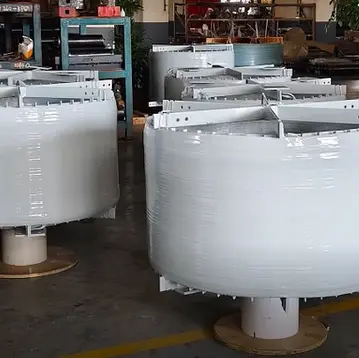
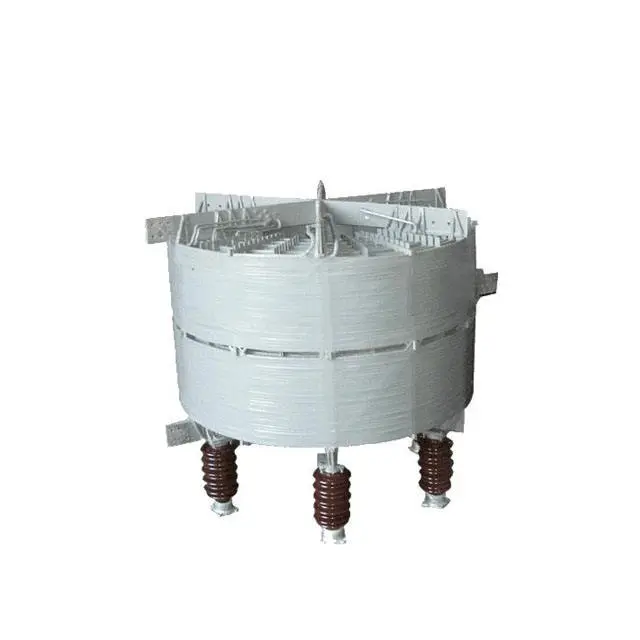
Understanding What a Dry-Type Air Core Shunt Reactor Compensates
Capacitive Reactive Power and Voltage Rise
Every energized cable and overhead line acts like a capacitor. The longer the line, the more charging current it draws. When load is light, nothing absorbs that leading current, so voltage at the receiving end can climb above the sending end. Engineers call this the Ferranti effect.
A dry-type air core shunt reactor connects in parallel with the system and absorbs the extra capacitive reactive power. In simple terms, it adds inductive current that opposes the leading current. The result is a lower voltage rise during line energization and low-load hours. The reactor compensates reactive power, not active power, so real power losses in the conductors stay the same.
Where Capacitive Excess Shows Up
The same problem appears in several places. Long high-voltage overhead lines carry charging current across many miles. Underground and submarine cables have much higher capacitance per mile than overhead conductors, so even short cable runs matter. Capacitor banks left in service after demand drops can also push a system into a leading condition.
Renewable-energy interconnections add another case, because output swings and light-load periods change reactive power flow through the day. Seasonal demand shifts do the same. In each case, a load-flow study shows how many MVAr the network must absorb. That study, not a catalog rating, should set the dry-type air core shunt reactor size.
Shunt Reactors Versus Capacitor Banks, Filters, and STATCOMs
These devices solve different problems, so we never treat them as swaps. Capacitor banks generate reactive power and support voltage under heavy load. A shunt reactor does the opposite and absorbs reactive power. Harmonic filters target specific distortion frequencies. A STATCOM responds quickly and can both supply and absorb reactive power, but it adds power electronics and a larger control scope.
A fixed dry-type air core shunt reactor suits stable, predictable operating conditions. Where voltage swings often, system studies may call for an adjustable design or a fast-responding device alongside it. Load-flow, harmonic, and switching studies should guide the final choice.
How a Dry-Type Air Core Shunt Reactor Works and Is Built?
The Working Principle in Plain Terms
When the winding is energized, current flows through it and builds a magnetic field. That field gives the reactor its inductance, and the inductance draws reactive current from the network. The size of the compensation follows a simple relation: reactive power in MVAr equals voltage squared divided by reactance. Because voltage is squared, a small voltage change shifts the MVAr output noticeably.
The inductive current offsets the leading current from cables and lines, which steadies voltage and reactive power flow. The BKGKL dry-type air core shunt reactor works this way. It adds inductive reactance to the system to counter capacitive current from long cables or overhead lines.
Why the Air Core Gives Linear Inductance?
A magnetic iron core can saturate when current rises. Once it saturates, inductance drops and harmonic current appears. An air core has no iron to saturate, so inductance stays constant across the current range, including during overvoltage. Constant inductance gives protection relays a predictable impedance and keeps the MVAr output stable.
Design engineers rank inductance linearity high when they specify a dry-type air core shunt reactor. The tradeoff is the magnetic field. With no core to contain the flux, the field extends into the space around the winding. We cover that in the site checks section below.
Construction and Main Components
The winding is the heart of the unit. The BKGKL design uses aluminum windings with an epoxy coating that resists corrosion and thermal stress. A dry-type air core shunt reactor also includes an insulation system, mechanical supports, support insulators, a cooling arrangement, and protective accessories.
Air cooling can be natural or forced, depending on losses and the site. Supports must carry short-circuit forces and, where needed, seismic loads. The design must meet the rated voltage, current, MVAr, insulation level, and temperature limits. Partial discharge, noise, and vibration depend on winding and insulation quality, so we treat those as controlled production steps.
Applications, Advantages, and Limits of Dry-Type Air Core Shunt Reactors
Where a Dry-Type Air Core Shunt Reactor Is Used?
The BKGKL unit connects in parallel on the low-voltage side of 500 kV, 200 kV, and 110 kV substations that serve long-distance transmission lines. More broadly, utilities use this equipment in transmission networks, long AC cable systems, urban cable networks, receiving-end substations, and grid interconnection points.
It also helps substations where renewable inverters feed intermittent power, since voltage control matters most during light-load periods and line energization. The dry-type air core shunt reactor must work with transformers, circuit breakers, arresters, protection relays, and control systems. Coordinating those parts early prevents switching and protection problems later.
Advantages and Limits
A dry-type air core shunt reactor removes oil from the picture. That means no oil leaks, no oil-fire risk, and no oil sampling or dissolved gas analysis. Maintenance stays mostly visual: surface coating checks, connection torque checks, and insulator cleaning. The air core also avoids magnetic saturation.
The limits are real, though. These units need more floor space and clearance than many buyers expect. They produce audible noise, and the external magnetic field can heat nearby metal. Pollution, moisture, and salt exposure affect the surface, so the coating and cleaning plan matter. Internal winding damage in an epoxy-encapsulated unit generally cannot be repaired, which makes quality control at the factory the best protection.
Comparison with Oil-Immersed and Magnetic-Core Designs
Oil-immersed reactors sit in a tank and may offer a smaller footprint or simpler cooling at very high outdoor ratings. They also carry oil, so the site needs containment, fire protection, and periodic oil testing. Dry-type air core shunt reactors remove those tasks and offer linear inductance, but they need more clearance around the winding.
We suggest comparing total cost of ownership rather than purchase price alone. Include installation, fire protection, losses, maintenance, spare parts, service life, and downtime risk. Fixed units suit steady conditions, while adjustable designs suit sites where reactive power changes often.
Specifications, Testing, and Site Checks Before You Buy
Electrical Data to Confirm
Before you request a quote for a dry-type air core shunt reactor, define the electrical basics. List the system voltage, reactor rated voltage, MVAr rating, rated current, frequency, phase arrangement, and connection type. Add the insulation level (BIL) and the short-time withstand current with its duration.
Design institutes and EPC teams usually weigh four items most: thermal and dynamic withstand capability, inductance linearity, BIL, and type test reports. State them in the tender documents so every bidder prices the same scope. Also name the protection and control items the reactor must coordinate with, such as breakers, disconnectors, arresters, relays, and temperature monitoring.
Standards and Type Tests for a Dry-Type Air Core Shunt Reactor
IEC 60076-6 covers reactors, and IEEE C57.21 covers shunt reactors rated over 500 kVA. For US substations, seismic design often follows IEEE 693. Confirm which documents your grid code or utility requires.
Routine tests include inductance measurement, loss measurement, winding resistance, and an inter-turn overvoltage test. Type and special tests include temperature rise, lightning impulse to verify BIL, sound level, and a wet test for outdoor units. Our production adds 100% impedance verification and partial discharge testing below 10 pC. Ask any supplier for type test reports that match your rating and design, and agree on the test scope before production starts.
Site Conditions, Safe Distance, and Outdoor Design
Because a dry-type air core shunt reactor has no core, a strong stray magnetic field surrounds it. Keep metal fences, concrete rebar, and control cables outside the manufacturer's magnetic clearance, or induced currents can heat them. Ask for magnetic field plots during design confirmation.
Outdoor sites add rain, pollution, UV, and salt. A UV-resistant surface coating, a passed wet test, and a cleaning schedule address these. Bird guards help prevent faults on open-frame units. Our options include desert-rated IP55 and seismic-resistant Zone 4 models. Xi'an Xikai's plateau-type equipment also meets operating requirements at altitudes up to 4,000 meters, which helps projects in high-altitude regions.
BKGKL Dry-Type Air Core Shunt Reactor from Xi'an Xikai
Product Overview
Xi'an Xikai Medium & Low Voltage Electric Co., Ltd. is one of China's larger manufacturing bases for medium and low-voltage electrical equipment. Our portfolio spans 7 categories, 34 series, and over 100 variants, from switchgear and dry-type transformers to prefabricated substations and power electronics.
The BKGKL dry-type air core shunt reactor is designed for voltage stability and reactive power compensation in 500 kV, 200 kV, and 110 kV substations. It helps reduce transmission losses on long-distance networks, and it suits both aging-infrastructure upgrades and renewable-energy integration. Our team has 25+ years of expertise, and Xi'an Xikai is recognized as a High-Tech Enterprise in China. Over 10,000 units have been deployed across 30+ countries.
Key Features of the BKGKL Reactor
Here are the core features that matter most to project teams.
- Heat and corrosion resistance: Aluminum windings with an epoxy coating resist corrosion and thermal stress, even in continuous operation. This matters at outdoor substations, where heat, humidity, and pollution act on the winding every day.
- Low maintenance: The dry-type design has no oil, so there are no oil leaks and less risk of insulation degradation. Routine work covers visual inspection, connection torque checks, and insulator cleaning, which keeps service effort and cost low.
- Custom configurations: Choose desert-rated IP55, seismic-resistant Zone 4, or IoT-enabled models with real-time monitoring. The design is pre-engineered for CE, UL/cUL, and GOST-R, and it uses SF6-free construction with recyclable materials.
These features address heat, upkeep, and site demands in one product line.
Quality Assurance, Quotation, and Delivery
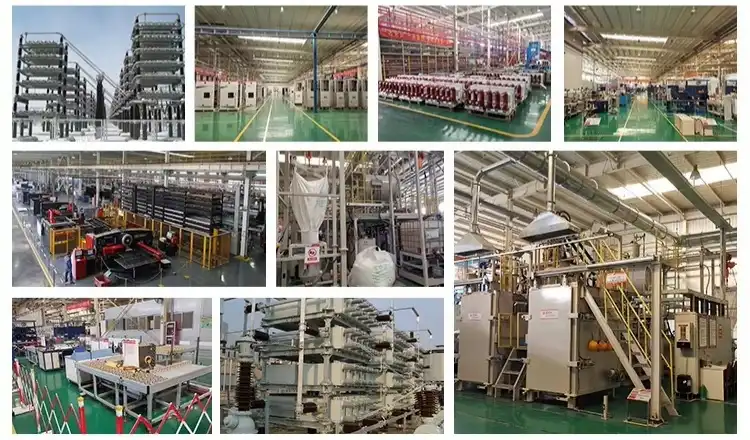
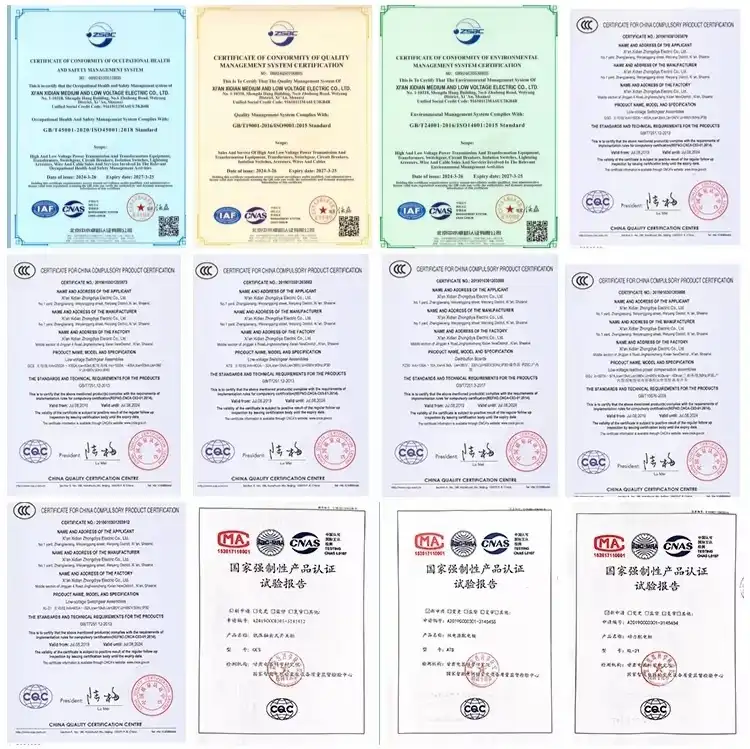
We source Tier-1 aluminum and epoxy resins and use automated winding machines for precision. Each dry-type air core shunt reactor goes through 100% impedance verification and partial discharge testing below 10 pC. Our certifications include ISO 9001, ISO 14001, and 3C.
For a quotation, send the single-line diagram, voltage, frequency, required MVAr, short-circuit level, site conditions, standards, quantity, and delivery location. Typical milestones are technical clarification, design, drawing approval, production, factory testing, shipment, and commissioning guidance. Lead time depends on customization, test scope, and logistics. Our support runs from technical design through 24/7 maintenance.
Conclusion
A dry-type air core shunt reactor compensates excess capacitive reactive power from long lines, cables, and lightly loaded systems, which limits voltage rise and the Ferranti effect. It does not offset active power losses and does not replace capacitor banks or STATCOMs, because each device solves a different problem. The air core keeps inductance linear since nothing can saturate, and the dry-type winding removes oil leaks and oil-fire risk. The tradeoffs are footprint, noise, and a stray magnetic field that needs clearance. Sound selection depends on load-flow studies, BIL, short-time withstand, type test reports, and site conditions such as rain, pollution, and altitude. Matching these factors to the project, rather than price alone, decides how well the installation performs.
FAQ
1. Does a dry-type air core shunt reactor improve power factor?
Only when the system runs leading, meaning it carries too much capacitive reactive power. Then the reactor adds inductive current and moves power factor toward unity. On a lagging system, it would make power factor worse.
2. Can a shunt reactor replace a capacitor bank or STATCOM?
No. A capacitor bank supplies reactive power, and a shunt reactor absorbs it. A STATCOM can do both and reacts quickly. A load-flow study decides which device, or which mix, fits your network.
3. What data do you need to size a reactor?
Send the single-line diagram, system voltage, frequency, required MVAr, short-circuit level, line or cable length, site conditions, applicable standards, quantity, and delivery location.
4. Can I install it indoors?
Yes, if the room meets ventilation and magnetic clearance requirements. The manufacturer supplies the exact distances.
Request a Customized Dry-Type Air Core Shunt Reactor Quote from Xi'an Xikai
Xi'an Xikai is a dry-type air core shunt reactor manufacturer that supports project design, factory testing, and export preparation. Send your single-line diagram, voltage, required MVAr, site conditions, and quantity to serina@xaxd-electric.com, amber@xaxd-electric.com, or luna@xaxd-electric.com. Our plateau-type equipment operates at altitudes up to 4,000 meters. Visit xaxd-electric.com to see our dry-type air core shunt reactor range.
References
1. IEC 60076-6 Power Transformers – Part 6: Reactors, 2007
2. IEEE C57.21 Standard Requirements, Terminology, and Test Code for Shunt Reactors Rated Over 500 kVA, 2008
3. IEEE 693 Recommended Practice for Seismic Design of Substations, 2018
4. Electric Power Systems, 5th Edition (Weedy, Cory, Jenkins, Ekanayake, Strbac), 2012
5. Power System Analysis and Design, 6th Edition (Glover, Overbye, Sarma), 2016
6. Power System Stability and Control (Kundur), 1994