
Polymeric Lightning Arrester for AC System: Leakage Current and Aging
2026-11-24 17:17:40
By sending lightning and switching overvoltages to ground, a polymeric lightning arrester for AC system protects transformers, lines, and substations. It depends on how much current is leaked and how old the protection is. A small capacitive current flows all the time, but a rising resistive current means that there is water, pollution, heat, or metal oxide blocks that are worn down. This guide was written for engineers, procurement managers, and traders who buy 11kV, 33kV, and high-voltage units. This part talks about how the device works, how to read leakage, how aging happens, and how to choose a unit. The YH10W-216/562W from Xi'an Xikai is the last one.
How a Polymeric Lightning Arrester for AC System Works?
Core Parts Inside the Housing
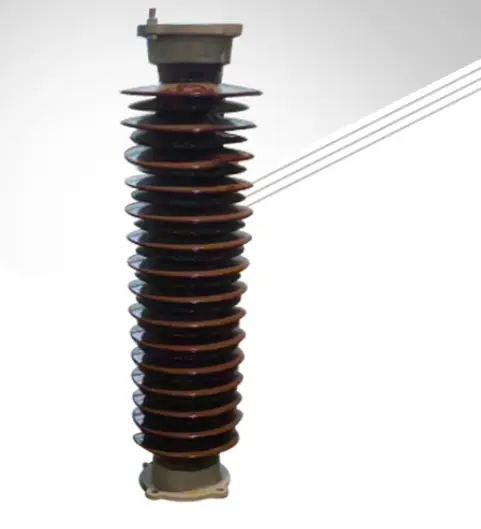
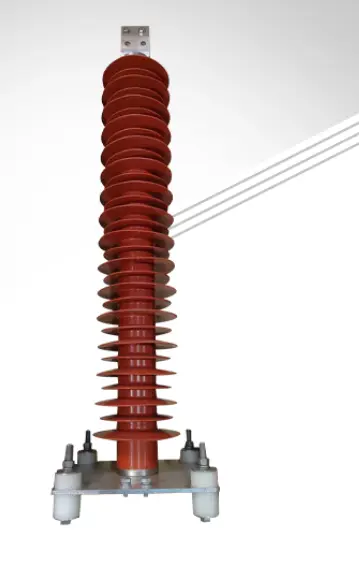
A stack of metal oxide varistor (MOV) blocks primarily made of zinc oxide performs the electrical work inside a polymeric lightning arrester for AC system. The stack is held in place by a fiberglass-reinforced rod, and it is surrounded by a silicone rubber or composite housing. Hooks made of metal hold the line and ground connections. Grading parts can even out voltage along longer stacks, and a disconnector is often added to many designs to keep a failed unit from affecting other units. The blocks store the energy, and the housing keeps them warm and out of the weather. When I review a product, I judge each part separately because they age in different ways.
Voltage Ratings You Should Read First
Every datasheet has four terms. Uc, which is also written as MCOV, is the highest voltage that the arrester can hold all the time. Ur, or the rated voltage, is the level at which the arrester stays stable for a certain amount of time during a temporary overvoltage. The size of the impulse is based on the nominal discharge current, and the voltage that stays across the arrester while it works is called the residual voltage. A lower residual voltage gives the protected equipment more room to be safe. Labels like "11kV" or "33kV" don't tell me anything about these numbers, so I need the full technical schedule before I can compare two quotes.
What Happens During a Lightning Strike
When the voltage is normal, the blocks become a big obstacle, and very little electricity flows through them. Five steps happen after a transient shows up. The voltage at the ends goes up first, above the knee point. Second, the resistance to blocks drops very quickly. Third, the arrester sends the current from the impulse to ground. Fourth, the residual voltage limits the amount of power that can reach the transformer or switchgear. Fifth, the voltage goes back to normal, and the blocks return to a state with a lot of resistance. There are microseconds to milliseconds left in the event. A polymeric lightning arrester for AC system requires regular inspection for leaks and aging because each event puts a little more stress on the blocks.
Leakage Current in a Polymeric Lightning Arrester for AC System
Capacitive and Resistive Components
Total leakage current is made up of two parts when the AC voltage is normal. There is a steady amount of capacitance in the block stack and housing, which is what makes the capacitive part. The part that is resistive moves through the zinc oxide grains and is only a small part of the whole. It tells me more than just the total current because the resistive part makes heat and follows the block condition. IEC 60099-5 says that resistive current can be used to check the health of arresters that are already in use. To avoid getting wrong readings, I compare each arrester to its own previous readings instead of using a single limit that applies to all of them.
Why Leakage Current Rises
There are six main reasons why a resistive current might be rising: operation above the correct MCOV, harmonics in the voltage waveform, moisture inside the unit, surface pollution, high temperature, or old MOV blocks. Readings can also be messed up by a bad ground connection. Traders who ship goods by sea care about moisture the most, since wet containers and weak seals can let water get to the blocks. When there is pollution on the housing, it adds external current that can look like internal leakage. That's why I clean the surface and test it again before I throw away a unit. This step stops replacements that aren't needed and keeps you from missing a real failure.
Practical Ways to Measure and Track
Four ways cover most needs in the field. From a safe distance, thermal imaging lets you see warm arresters. Portable testers check for both total and resistive current. Online monitors log readings all the time and send out alerts. IEC 60099-5 talks about third-harmonic analysis, which takes out a lot of the capacitive component from the reading. Imaging and visual checks are helpful, but they should never be used instead of electrical readings. On the first time I use the same method, I record a baseline and write down the weather. More about a polymeric lightning arrester for AC system can be learned from a trend line over several years than from a single pass or fail number.
Aging Causes, Warning Signs, and Replacement Decisions
Electrical and Thermal Aging
The MOV blocks are slowly changed by repeated lightning and switching impulses, short-term overvoltages, and years of constant voltage. Most of the time, this leads to higher leakage current, shifted residual voltage, and less energy capacity. Thermal runaway is the worst thing that can happen. Since block leakage goes up as temperature goes up, more leakage makes more heat, which makes more leakage. The unit may not work if the housing can't get rid of heat faster than the blocks make it. This process moves more slowly when the right MCOV is chosen and the system overvoltage stays within its rated limits. If something does go wrong, a pressure relief design lets the gas inside escape in a controlled way.
Environmental and Mechanical Aging
Outdoor housing has to deal with UV light, salt fog, industrial dust, humidity, ice, and changes in temperature every day. These things can lead to surface wear, cracking, surface tracking, and loss of hydrophobicity. Silicone rubber is helpful because it can keep surface contamination from getting wet. Vibration, loose fittings, poor grounding, a short creepage distance, and rough handling during transport are all installation mistakes that shorten life. Before looking at price, I check the method of sealing and the export packaging for a polymeric lightning arrester for AC system for coastal or tropical projects. This is because a damaged seal allows moisture in before the unit gets to the site.
When to Inspect and When to Replace
A good inspection starts with the nameplate and includes looking at the housing, tracking marks, discoloration, terminals, brackets, ground conductor, disconnector, discharge counter, and how the device has been used in the past. Then I compare the leakage current to the baseline for commissioning and to nearby arresters that are similar. I replace a unit when the housing is damaged, it has been proven to fail thermally, the diagnostic results are off, the disconnector has been used too many times, or there is a lot of mechanical or electrical stress. Age by itself does not mean replacement. The length of time between inspections should depend on how bad the site is, how much lightning is present, and how important the equipment is. The manufacturer's instructions are final. A few spares at key locations cut down on power outages.
How to Select a Polymeric Lightning Arrester for AC System?
Polymeric Versus Porcelain Housings
The difference is in the shell, since both types of housing can hold similar MOV blocks. Polymeric housings are lighter, less likely to break, and don't let sharp porcelain pieces fly out if the unit fails. Porcelain is still used in some older installations and utility specifications. IEC 60099-4 tests polymer-housed arresters for sealing and weathering, and IEC 62217 tests polymeric insulators in general. I don't just compare the name of the material when I'm in a coastal, polluted, humid, or high-altitude area; I also compare how hydrophobic it is, how far it creeps, and how good the housing is. Habits should not guide the choice, but the performance over the lifecycle.
Matching Voltage, Creepage, and Altitude
Start with the normal voltage, frequency, method of grounding, and expected short-term overvoltage. Next, choose the rated voltage and MCOV instead of the 11kV or 33kV label when you buy. Distribution feeders, transformers mounted on poles, and industrial networks are all common uses for 11kV. For 33kV, you can expect longer overhead lines, more substation duty, and more stress on the insulation. After that, match the creepage distance to the site. As per IEC TS 60815-1, the creepage distances for light, medium, heavy, and very heavy pollution are 16, 20, 25, and 31 mm/kV. I include the site elevation in every request for a polymeric lightning arrester for AC system because elevation also affects the insulation on the outside.
Checking Suppliers Before You Order
Price is important, but equal scope is more important. It is necessary for me to get electrical and environmental specifications from each supplier. These include IEC 60099-4 test reports, routine test records, accessories, warranty, minimum order quantity, lead time, export packaging, and Incoterms. In the US, projects usually use IEEE C62.11, but in many export markets, they use IEC 60099-4. I make sure that the project knows which standard it needs. Then I use the same method to compare quotes. It might look like a quote without test evidence is cheaper on paper, but it could end up costing more if the delivery fails or is rejected. For bundled orders, it can be easier to do the paperwork if the supplier also sells transformers and switchgear.
YH10W-216/562W Lightning Arrester Polymeric MOA for AC System
Technical Specifications
The YH10W-216/562W Lightning Arrester Polymeric MOA from Xi'an Xikai is for an AC system and has two units in the stack, rated voltage 216kV, DC reference voltage ≥314kV, creepage distance 31mm/kV. That amount of creepage is the same as the pollution level which IEC TS 60815-1 indicates is extremely problematic, thus I would check the datasheet for the voltage base. If you look at a datasheet, U1mA, I2ms, Ures and Uref mean various things. Usys = nominal system voltage Ucov = continuous operating voltage Ur = rated voltage U1mA = reference voltage at 1 mA DC Uref = power frequency reference voltage . Check your project datasheet to verify sure the numbers for discharge current and residual voltage are right.
Product Strengths
The main benefits of this polymeric lightning arrester for AC system are as follows.
- Protective performance: The zinc oxide blocks have nonlinear resistance. They act as an insulator at normal voltage, and their resistance drops during a transient so current flows to ground. This action limits the voltage that reaches transformers, circuit breakers, and other substation equipment.
- Sealing performance: A tight seal keeps moisture away from the blocks. Moisture is a common cause of rising leakage current, especially on units that travel by sea or stand in humid coastal air. Ask for the sealing test records with your datasheet pack.
- Aging performance: The blocks keep stable characteristics under continuous voltage, and the UV-resistant polymer housing resists cracking, corrosion, and pollution. This makes the unit suitable for coastal areas, industrial zones, and deserts where weather wears equipment faster.
- Pressure relief: If an internal fault occurs, the design relieves pressure in a controlled way. The polymer housing also avoids the sharp fragments that porcelain can produce, which protects nearby people and equipment.
These attributes solve the problems of leakage, wetness and wear and tear we mentioned previously. They make it easier for traders to access crucial information on any datasheet.
Applications and Support from Xi'an Xikai
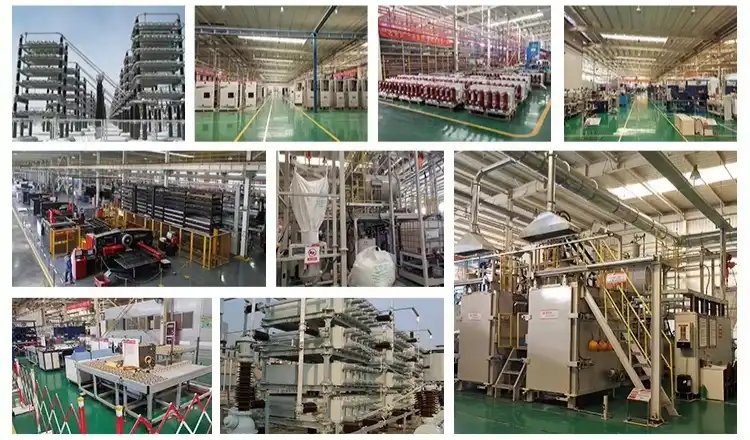
It works well in transmission substations to protect transformers and circuit breakers. It can also be used in renewable energy farms and railroad electrification networks. Xi'an Xikai makes medium and low voltage equipment in seven categories, 34 series, and more than 100 variants. This means that traders can get switchgear, dry-type transformers, and vacuum circuit breakers from the same company. Our plateau-type equipment can work at heights of up to 4,000 meters, and we can make solutions that fit the layout of any grid. Our goods are used by State Grid systems, steel and metallurgy, petrochemicals, rail transportation, and projects that use renewable energy.
Conclusion
Most of the service life of a polymeric lightning arrester for AC system can be explained by leakage current and aging. A rising resistive component means that there is moisture, pollution, heat, or worn MOV blocks. The clearest image emerges in trend measurements versus a commissioning baseline. Ageing may occur due to repetitive shocks, short term overvoltage, UV radiation, salt fog, inadequate seals and installation procedure errors. The worst that can happen is thermal runaway. Polymeric housings are lighter and safer to break than porcelain. The proper selection is based on MCOV, rated voltage, residual voltage, creepage distance and altitude instead of voltage label. "Suppliers should be compared on test reports & equal scope. YH10W-216/562W: rated voltage 216kV, 2 units, DC reference voltage 314kV (min), creepage 31 mm/kV. Here are the specifications customers should look at.
FAQ
1. Is some leakage current normal in a polymeric arrester?
Yes. When the voltage is normal, a small capacitive current always flows. When the resistive part goes up over time compared to the starting point during commissioning or when it clearly differs from other arresters at the same site, that's when you should be worried.
2. What causes a polymeric lightning arrester for AC system to age?
Repeated impulses, short-term overvoltage, heat, pollution, moisture, UV exposure, and bad installation are all things that can cause this. The worst outcome is thermal runaway, which happens when leakage goes up and heat builds up, which makes leakage go up again.
3. How do polymeric and porcelain arresters differ?
Both can use MOV blocks that are the same. Polymeric housings are lighter and don't break into brittle pieces, but porcelain is still commonly used in older installations and some utility specifications.
4. How do I choose between 11kV and 33kV units?
This is not enough to make a choice. In your own network, you can compare the MCOV, rated voltage, discharge current, residual voltage, energy capacity, creepage distance, mounting, and grounding.
5. Can Xi'an Xikai customize arrester options?
Xi'an Xikai offers solutions that are made just for you. Send us your voltage, height, pollution level, and quantity, and our team will look at your options.
Request a Polymeric Lightning Arrester for AC System Quotation from Xi'an Xikai
Send Xi'an Xikai the voltage, height, pollution level, quantity, and destination of your system, and we'll find the right polymeric lightning arrester for AC system for you. As a manufacturer of polymeric lightning arrester for AC system, we provide both standard equipment for up to 4,000 meters in elevation and custom solutions. For more information, email serina@xaxd-electric.com, amber@xaxd-electric.com, or luna@xaxd-electric.com, or go to xaxd-electric.com.
References
1. IEC 60099-4: Gapless Metal-Oxide Arresters for AC Systems, 2014
2. IEC 60099-5: Selection and Application Recommendations, 2018
3. IEC TS 60815-1: Selection and Dimensioning of High-Voltage Insulators Intended for Use in Polluted Conditions, 2008
4. IEC 62217: Polymeric HV Insulators for Indoor and Outdoor Use, 2012
5. IEEE C62.11: Standard for Metal-Oxide Arresters for AC Power Circuits (>1 kV), 2020
6. IEEE C62.22: Guide for the Application of Metal-Oxide Arresters for Alternating-Current Systems, 2009
