
Why Is a Removable Design Valuable in Armored Metal-Enclosed Switchgear?
2026-11-24 17:17:38
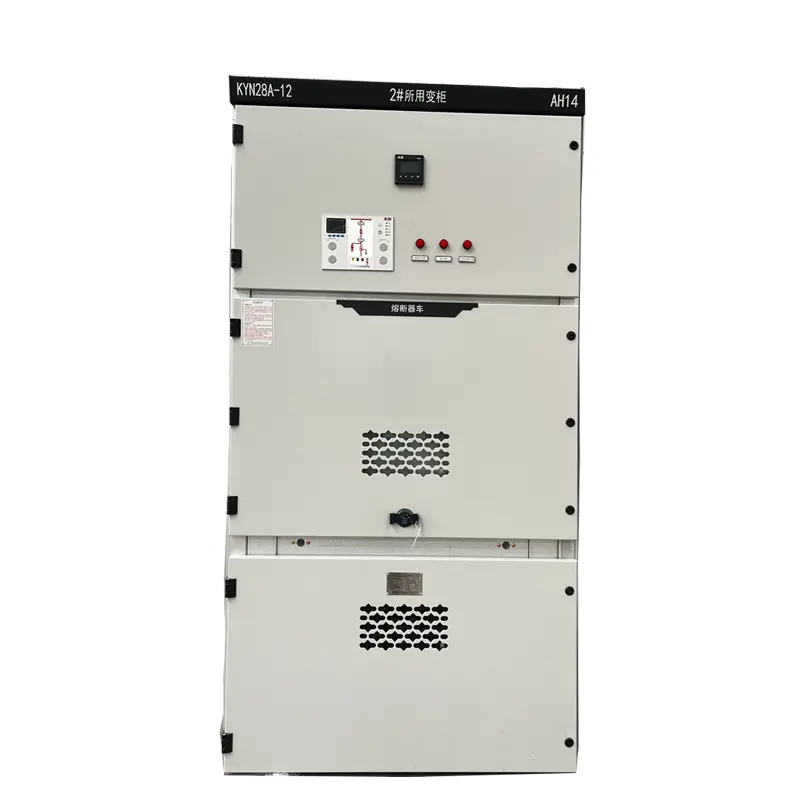
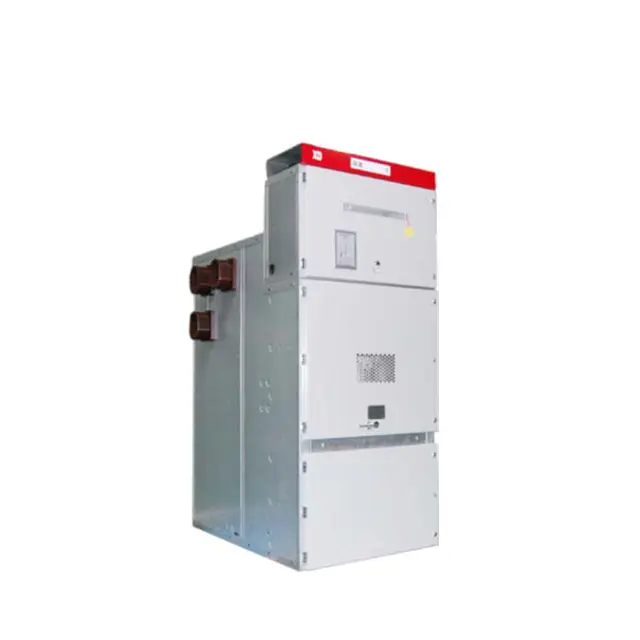
With armored metal-enclosed switchgear, a removable design is advantageous, enabling operators to disconnect a vacuum circuit breaker and move it out of its compartment without dismantling the panel. Defined service, test and disconnected locations, shutters and interlocks protect people throughout the relocation. A spare breaker of the same kind will reduce the downtime required to repair a problem or routine maintenance. For 40.5 kV projects, this implies better scheduling of maintenance, less inventory for spare parts and fewer power outages over the life of the equipment.
What Removable Design Means in Armored Metal-Enclosed Switchgear?
Withdrawable Breakers and Defined Positions
I am asked a lot whether “withdrawable” is the same thing as “removable”. Yes, they do in metal-enclosed switchgear. The vacuum circuit breaker is mounted on a tram that runs on tracks and goes from one point to another. IEC 62271-200 mentions the positions service, test, disconnected and removed. The main contacts are not contacting but the techs may inspect the control and secondary circuits with the switch in the test position. At the end of the day shutters cover the fixed contacts so that people do not touch the live portions. In a fixed configuration, the breaker is bolted in place and all inspections are done inside the panel.
Compartments That Contain a Fault
KYN is short for Metal-clad (K), detachable (Y) and indoor (N). In armoured metal-enclosed switchgear, the busbar, breaker, cable and low-voltage sections are isolated from each other by grounded metal walls. Compartments are classified as metallic (PM) or insulating (PI) according to IEC 62271-200. They prevent an internal arc from propagating too far, and they let workers to operate in one area while others remain energised, as provided as safety guidelines are followed on the project site. The manufacturer must test the device to get the rating for internal arc performance and I always suggest looking at the test report instead than relying on the label.
Why 40.5 kV Raises the Stakes?
For 40.5 kV the insulation clearances are larger and so the armored metal-enclosed switchgear has to be designed to make them disassemblable. A huge panel is difficult to transport and takes a long time to install. The KYN61-40.5 combines composite insulation (air plus solid) and epoxy resin contact boxes to keep safety clearances short. You may use it with ZN85-40.5 vacuum circuit breaker or SF6 circuit breaker. IEEE C37.20.2 covers metal covered switchgear up to 38 kV. This is crucial for individuals in the United States. So for 40.5 kV equipment, normally the standards are IEC 62271-200. It has to be agreed early on with the owner's engineer.
Operational Problems a Removable Design Solves
Downtime Pressure in Substations and Plants
Picture a steelworks or a switchgear substation. If a breaker trips in a fixed lineup, the technicians may be working within the panel for significant periods of time to pinpoint the issue. That implies output is stopped or income from generating falls. The crew may replace out the damaged unit with a matching spare (if there is one and it works) using removable, armoured, metal-enclosed switchgear. This is significant since limited availability, long lead times or incompatible interfaces may transform a short switch into a lengthy wait. The KYN61-40.5 is designed to allow parts to be changed without stopping the complete system.
The Racking Sequence Step by Step
The stages in detachable armour metal-enclosed switchgear are generally: The worker sets the breaker to “off,” verifies the circuit is isolated, and slides the handcart to the “disconnected” position. The personnel follow the grounding measures and remove the handcart, put in the new one. The new breaker is tested in the test position before to energisation. Thus the secondary circuits may operate without primary voltage. The interlocks prevent you from moving the rack while the breaker is closed. The KYN61-40.5 contains mechanical interlocks, electrical interlocks and logic interlocks, making it more difficult for individuals to make errors. I believe we should analyse the precise interlock strategy during design review since EPC purchasers typically question about five preventive rationale.
Safety During Racking and Maintenance
When you rack a breaker, you're at risk for an arc flash. NFPA 70E states you need to complete an arc flash risk assessment before you undertake any work like that. Moving the job to a fixed place helps, with a design removable from armoured metal-enclosed switchgear. Never substitute competent workers, permits, grounding, proving dead or lockout/tagout. KYN61-40.5 comes with arc-resistant structure and steel enclosure, it can resist corrosion and manage internal arc faults according to IEC 62271-200. Ask for the internal arc test report, the kind of accessibility and the duration of time tested, since performance relies on the exact setup that was tested.
Technical and Business Advantages of Removable Armored Metal-Enclosed Switchgear
Swap Rather Than Repair
Armoured metal-enclosed switchgear and a retractable breaker allow you to quickly swap out the switching unit, without having to repair it in the line or purchase a new panel. The repair may then be done on a bench where the technician has light and space and test equipment. Modular structure also enables owners to install new breakers, relays, operating mechanisms and other elements without re-designing the whole array. Maintenance is safer with defined positions and interlocks, if procedures and qualified workers are in place to support them. I’m suspicious of any percentage that’s claimed since how much they save depends on how well they mesh, how many spares are available, and how ready the crew is.”
Removable Versus Fixed and Full-Panel Replacement
Non-movable metal enclosures may be cheaper initially and perform well in basic low-criticality setups. Withdrawable armoured metal-clad switchgear is more costly to manufacture, but offers more flexibility in the way it may operate and be maintained. Gas-insulated switchgear occupies less space but is maintained differently. substantial fault damage, substantial obsolescence or system expansion still exist which need full panel replacement. Product labels are not the same in all markets. Verify the voltage, current, short-circuit withstand, internal arc classification, IP rating and mechanical durability of the construction.
Interchangeability and Spare Stock for EPC Projects
Standard modules assist EPC contractors with tracking their inventory, whether a project requires five panels or fifty. Interchangeable parts are described in IEC 62271-200 as parts that can be taken off and placed back on with the same ratings and compatible sizes. However, I would not expect two breakers with the same voltage and current ratings to perform the same in an armoured metal-enclosed switchgear system. All primary contacts, control plugs, interlocks and communication interfaces should be of equal size and form. Keep a database of suitable designs, relay files and test certificates so that when a replacement handcart arrives on site it is ready to stack. When the firm is transferred to the owner’s maintenance staff, this documentation is also useful.
Where the KYN61-40.5 Delivers the Most Value
KYN61-40.5 Core Specifications
Xi'an Xikai KYN61-40.5 Removable Metal-Clad Switchgear Main Specifications This indoor armored metal-enclosed switchgear is available for 40.5 kV and 630 A, 1250 A, 1600 A, 2000 A or 2500 A. Can operate at temperatures from -10oC to +40oC and altitudes up to 2000 m. The protection class is IP4X. Enter IEC 62271-200, GB/T 11022, DL/T 404-1997. IoT sensors that are compatible to IEC 61850 may check for temperature, current and voltage and can be configured for various kinds of busbars, breakers and communication protocols. This allows people to rapidly filter things by these ratings before checking out the designs.
Applications in Substations, Industry, and Renewables
KYN61-40.5 is used in utility grid, substations, steel plants, power plants and mining firms as well as in industrial plants, renewable energy projects. In utility and collector substations, feeders, transformer incomers and bus sections may be equipped with withdrawable breakers for continuous supply. Standard tools that can operate in dirty and difficult environments are required by the heavy industries and mines. Removable armoured metal-enclosed switchgear allows technicians to service a breaker and avoid long-term shutdown of the whole system. For example, flood-resilient designs in Southeast Asia or seismic certifications in earthquake-prone locations may be achieved by adjusting the project setup at the time of review.
Answering 2500 A, Altitude, and Certification Concerns
When people see 40.5 kV armoured metal encased switchgear they worry about three things mostly. First, the temperature rise at 2500 A. Both IEC 62271-1 and IEC 62271-200 need a temperature-rise type test at the rated current, so ensure you have the report at the proper current. Second, there is the question of altitude. IEC 62271-1 states that normal service conditions are applicable up to 1000 m and insulation correction is required above this. The standard KYN61-40.5 can resist the deep of 2000 m. Xi'an Xikai plateau-type equipment may work up to 4,000 m for higher locations so please inform us early on how high your site is. Third, local approvals: The product fulfils IEC 62271-200 and GB/T 11022 standards, and the approvals for each area depend on the project scope.
Testing, Maintenance, and Selection Criteria for Armored Metal-Enclosed Switchgear
Type-Test Evidence to Request
When design institutes and procurement teams examine the relevant papers, they may swiftly reduce the list of vendors. In comparing vendors of armoured metal-enclosed switchgear, request type-test results for dielectric strength, temperature increase, short-circuit withstand, mechanical endurance, internal arc classification, and enclosure protection. Include also frequent test data such as power-frequency withstand and partial discharge findings. Ensure the tested handcart and panel are exactly as you wish to set them up, including kind of breaker and rated current. IEC 62271-100 covers the circuit breaker for testers, IEC 62271-200 covers the full apparatus. This makes it simple to see what has been done. Also ask each provider for samples of projects that are comparable in terms of voltage class.
Maintenance and Spare-Parts Planning
Find out whether the breaker is on and where it's housed. Armored metal-enclosed switchgear includes the vacuum interrupter, working mechanism, contact wear, rollers, racking system, shutters, position indicators, secondary plugs, coils and control wire, which all need regular maintenance. Look for symptoms of overheating, check the interlock and that the main contact lines up appropriately. Intervals are set on the basis of number of failures, site conditions, switching frequency and manufacturer recommendations. Critical facilities should have spare breakers, long-lead items, drawings, manuals and test certificates on available. A service contract might shorten the time to repair an issue.
Common Buying Mistakes
3 Mistakes Teams Keep Making When Buying Armoured Metal-Enclosed Switchgear “Some people look at the first price, and they pay for it in downtime, testing, training and spare parts.” Some design teams neglect to provide for pulling out the breakers, lifting them, transferring them and storing them. The handcart can't get out of the room. Some do not undertake coordination and short circuit investigations therefore protective settings are not proved. In making the selection, the system voltage, continuous current, load profile, short-circuit level, installation environment and future expansion should all be taken into consideration. Then discuss switching technologies, control voltage, interlocks, and the requirement for communication. When evaluating a supplier you should look at evidence of type testing, engineering expertise, delivery, export experience, training, warranty and commissioning.
Conclusion
Because crews can swap out a vacuum circuit breaker without taking apart a panel, a removable design has earned its place in armored metal-enclosed switchgear. Defined positions, shutters, interlocks, and compartment walls make maintenance safer, and a spare part that works with the main part cuts down on downtime in power plants, substations, and renewable energy projects. Withdrawable equipment costs more at first, but it gives you more access and flexibility than fixed designs. However, you still need to replace the whole panel after major damage or growth. For the KYN61-40.5, the 40.5 kV rating, the 630 A to 2500 A range, and the 2000 m limit on height make it easy to choose. Reports from type tests, reviews of interlocks, checks for interchangeability, planning for spares, and strict safe work habits determine whether the design lives up to its promise in service.
FAQ
1. When does removable switchgear beat fixed equipment?
It works best in places like substations, steel plants, and renewable collector stations where power outages cost money or where maintenance workers can't easily get to the area. If you have a small budget at the start, fixed designs can still work for simple, low-criticality loads.
2. Can I replace a breaker without changing the panel?
As long as the replacement has the same ratings, sizes, primary contacts, control plugs, and interlock arrangement, then yes. The crew must also follow the rules for isolating and grounding.
3. What current ratings does the KYN61-40.5 offer?
The KYN61-40.5 works at 40.5 kV and 630, 1250, 1600, 2000, or 2500 A at heights of up to 2000 m. Higher sites need a review that looks at plateaus.
4. What should a quotation request include for removable armored metal-enclosed switchgear?
Share information about the system's voltage, rated current, short-circuit level, height, quantity, standards, protection scheme, delivery goal, spare parts needs, and the scope of testing and installation.
Request an Armored Metal-Enclosed Switchgear Recommendation from Xi'an Xikai
Xi'an Xikai makes armored metal-enclosed switchgear. Their plateau-type equipment can handle up to 4,000 m of cable and has a KYN61-40.5 range from 630 A to 2500 A. You can email serina@xaxd-electric.com, amber@xaxd-electric.com, or luna@xaxd-electric.com with your voltage, current, short-circuit level, altitude, quantity, and delivery target.

References
1. IEC 62271-200: High-Voltage Switchgear and Controlgear – AC Metal-Enclosed Switchgear and Controlgear for Rated Voltages Above 1 kV and Up to and Including 52 kV, 2021
2. IEC 62271-100: High-Voltage Switchgear and Controlgear – Alternating-Current Circuit-Breakers, 2021
3. IEC 62271-1: High-Voltage Switchgear and Controlgear – Common Specifications for Alternating Current Switchgear and Controlgear, 2017
4. IEEE C37.20.2: IEEE Standard for Metal-Clad Switchgear, 2015
5. IEEE C37.20.7: IEEE Guide for Testing Metal-Enclosed Switchgear Rated Up to 38 kV for Internal Arcing Faults, 2017
6. NFPA 70E: Standard for Electrical Safety in the Workplace, 2024