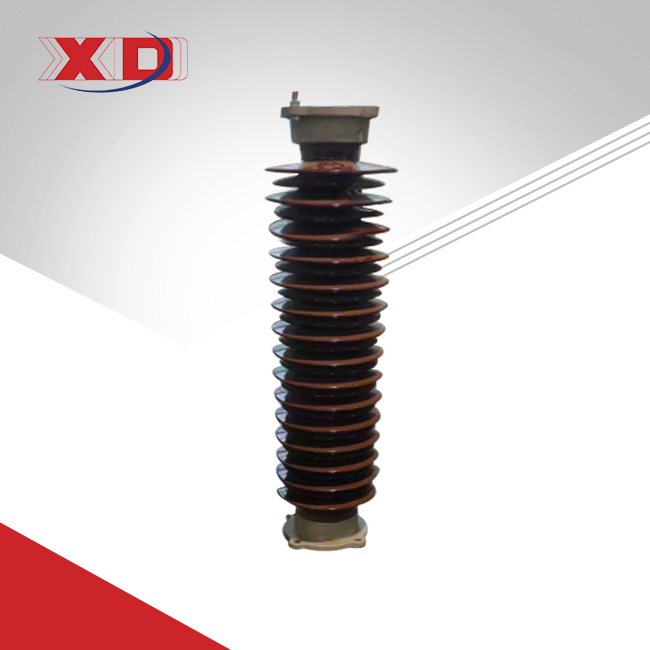
Y10W-102/266W Lightning Arrester Porcelain housed MOA for AC system
Polymeric Lightning Arrester for High Voltage Transmission Lines
2026-05-12 11:59:05
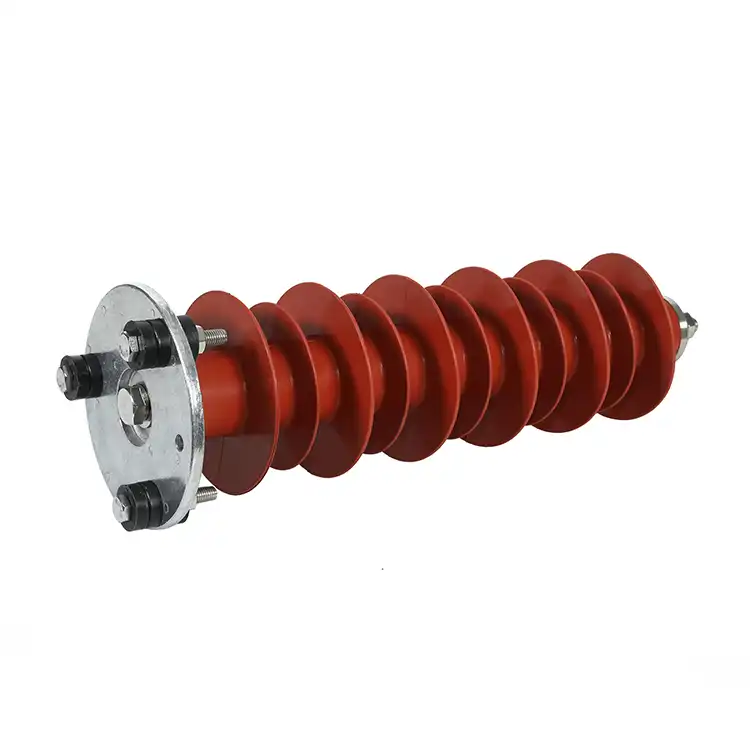
Modern electrical polymeric lightning arresters are held together by high-voltage transmission lines that send power over long distances to factories, data centers, hospitals, and business buildings. Advanced surge protection devices are needed to keep these important assets safe from overvoltage surges caused by lightning. A Polymeric Lightning Arrester has become the best way to protect transmission lines because it combines a lightweight composite shell with metal oxide varistor technology to provide better performance, longevity, and cost-effectiveness. This detailed guide gives purchasing managers, utility engineers, and EPC firms the technical and business information they need to make smart buying choices that improve grid stability and operational uptime.
 |
 |
Understanding Polymeric Lightning Arrester Technology: Fundamentals and Benefits
What Is a Polymeric Lightning Arrester?
A Polymeric Lightning Arrester is a gapless surge protector made to keep high voltage transmission systems safe from short-term overvoltages brought on by lightning hits and switching operations. Modern polymeric versions, on the other hand, use zinc oxide (ZnO) varistors enclosed in silicone rubber or ethylene propylene diene monomer (EPDM) casings. The metal oxide varistor has very non-linear voltage-current properties. This means that the device can handle sudden current surges while keeping a high resistance when it's not in use. The polymeric housing takes the place of standard ceramic insulators and has big benefits in terms of weight reduction, mechanical strength, and resistance to the environment. Water and other toxins that would normally cause leaks and lower insulation performance are pushed away by silicone rubber housings because they are naturally hydrophobic. This trait stays the same even after being exposed to pollution from factories, salt spray, or UV rays for a long time.
Core Benefits for B2B Procurement
Equipment downtime caused by lightning damage can cost a lot of money for factories, data centers, and energy companies. Adding polymeric surge arresters to transmission lines has measured practical benefits, such as:
- Enhanced Asset Protection: Metal oxide varistors react very quickly to voltage spikes, stopping short-term overvoltages before they reach sensitive transformers, switches, or control systems. The YH10W-102/266W Lightning Arrester Polymeric MOA for AC System lowers leftover voltage by 30% compared to regular arresters. This makes it much less likely that equipment attached to the arrester will lose its insulation. Its rated voltage of 102kV and DC reference voltage of ≥148kV give transmission lines working at 110kV minimum voltage strong safety margins.
- Operational Reliability: The tightly sealed design keeps out wetness, which is a major reason why electrical equipment breaks down early. Xi'an Xikai's polymeric arresters are put through strict 24-hour salt fog exposure tests and partial discharge tracking to make sure they seal properly. This makes sure they work well in a wide range of climates, from coastal areas to high-altitude sites up to 4,000 meters.
- Lifecycle Cost Reduction: Because the service lasts longer than 25 years and doesn't need much upkeep, the total cost of ownership is lower. The design's light weight makes fitting easier and cheaper, and it means that fixing structures don't need to be strengthened as much. Keeping the leaking current below 1mA helps the system work better by reducing the amount of energy that is lost.
Polymeric Lightning Arresters vs Traditional Lightning Arresters: Making the Right Choice
Material Composition and Structural Differences
Before buying something, you need to carefully consider the qualities of the material, how it works, and whether it is right for the job. For many years, porcelain-housed arresters were the most popular way to protect transmission lines because they were good at keeping electricity from flowing and kept temperatures stable. But clay housings are brittle, which means they can be broken by mechanical forces during shipping, installation, or earthquakes. Catastrophic failure modes can lead to massive breaking, which puts people and equipment nearby in danger. Polymeric housings get rid of these risks by being more resistant to impacts and having managed failure modes. The bendable silicone rubber material can handle mechanical stress without breaking, and the internal pressure release systems let gases escape safely when the system is overloaded without breaking. This feature is especially useful for substations that are close to crowded areas or important buildings with strict safety rules.
Performance Advantages in Harsh Environments
The hydrophobic surface of polymeric insulators keeps the high surface resistance even when there is a lot of contamination. This stops flashovers that happen with ceramic designs in marine or industrial settings. Studies in the lab show that silicone rubber stays water-repellent even after being exposed to IEC Class IV (very heavy) pollution levels for a long time. Porcelain surfaces, on the other hand, become water-loving and need to be cleaned more often. Polymeric designs also work better when temperatures change. The YH10W-102/266W model's electrical properties stay the same at temperatures ranging from -40°C to +85°C, so it can handle big changes in the weather without breaking down. UV-resistant formulations stop polymers, Polymeric Lightning Arrester, from breaking down and surfaces from cracking, problems that slowed down the development of early composite insulator designs.
Installation and Logistics Considerations
Getting rid of weight has a direct effect on the cost of installation. The Polymeric Lightning Arrester units are about 60–70% lighter than the same-sized ceramic units. This means that they don't need as much support from a crane, are easier to handle, and cost less to ship in bulk. Shorter construction plans are good for EPC firms because they help finish projects faster and save money on labor costs. The small size makes it possible to retrofit in substations with limited room without making any structural changes. This is a huge benefit for updating old infrastructure in cities.
Key Specifications and Design Features of Polymeric Lightning Arresters for Procurement Managers
Critical Technical Parameters
To choose the right surge protectors, you need to know a number of electrical factors that affect how well they protect you and how well they work with other systems. Managers of procurement should look at:
- Rated Voltage (Ur): The highest voltage that the arrester can handle over and over again. With the right safety limits, the YH10W-102/266W's 102kV rating works with 110kV transmission lines.
- Maximum Continuous Operating Voltage (MCOV): This is the highest voltage at which the arrester can work constantly without breaking down. It is usually between 80 and 83% of the maximum voltage. In both normal and fault situations, this number must be higher than the system's highest phase-to-ground voltage.
- Nominal Discharge Current (In): This number shows how much energy the arrester can hold when standardized at 5kA, 10kA, or 20kA using an 8/20μs current wave. Higher grades give you more safety, but they also make the product bigger and cost more.
- Residual Voltage: The voltage that shows up across the arrester wires during a spike discharge is called the residual voltage. When leftover charges are low, equipment is better protected. The number 266W in the model number means that the maximum remaining voltage meets the requirements of IEC 60099-4.
- Creepage Distance: The quickest way along the surface of the insulator between parts that are powered and parts that are grounded. The YH10W-102/266W has a specific creepage distance of 31 mm/kV, which meets the needs of environments with a lot of pollution and ensures steady performance without the need for regular repair.
Design Innovations Enhancing Performance
Modern Polymeric Lightning Arrester models have a number of high-tech features that set them apart from cheaper alternatives. The composite insulator structure is made up of weather sheds made of silicone rubber and epoxy resin core bars that are strengthened with fiberglass. This design has a flexural stiffness greater than 40 GPa, which means it is very strong mechanically while still being light. For consistent safety coordination across multiple units in series setups, automated production processes make sure that the electrical parameters have precise tolerances of within ±1% for dimensions. Hydrophobic silicone coatings use special mixtures that move low-molecular-weight siloxane compounds to the surface. This keeps the coatings water-resistant even after they've been contaminated by biological growth or industrial fallout. Compared to static coatings, this ability to fix itself makes maintenance times longer. Internal pressure relief systems use preset rupture plates or controlled venting paths that open when the system is overloaded. This stops the housing from bursting in a catastrophic way and safely sends hot gases away from people and equipment. Xi'an Xikai's designs are put through strict high-current shock tests at 100kA to make sure they work well at relieving pressure.
Real-World Application Scenarios
To protect delicate electronics and keep activities going smoothly, data centers and hospitals need power that is of a very high quality. By putting Polymeric Lightning Arrester units at service entrance points and key distribution nodes, you can protect against both direct lightning hits and spikes caused by events nearby. Voltage sags and transients that cause equipment to reset or damage solid-state components can't happen because the reaction time is fast and the leftover voltage is low. During normal operations, factories that use spark furnaces, big motors, and welding tools that have a lot of inductive loads create big switching spikes. Metal oxide arresters stop these repeated transients all the time without breaking down, unlike gap-type devices that need to work with circuit breakers. The YH10W-102/266W can handle surge currents up to 100 times its rating capacity, so it can handle extreme events without needing to be replaced right away. Utility transmission systems benefit from standardized arrester installs at vulnerable locations, including line terminations, mid-span positions on long lines, and points of equipment concentration. Proper arrester placement reduces back-flashover rates on overhead lines and protects transformers from transferred surges through distribution feeders.
Procurement and Supply Chain Insights: How to Source High-Quality Polymeric Lightning Arresters
Supplier Evaluation Criteria
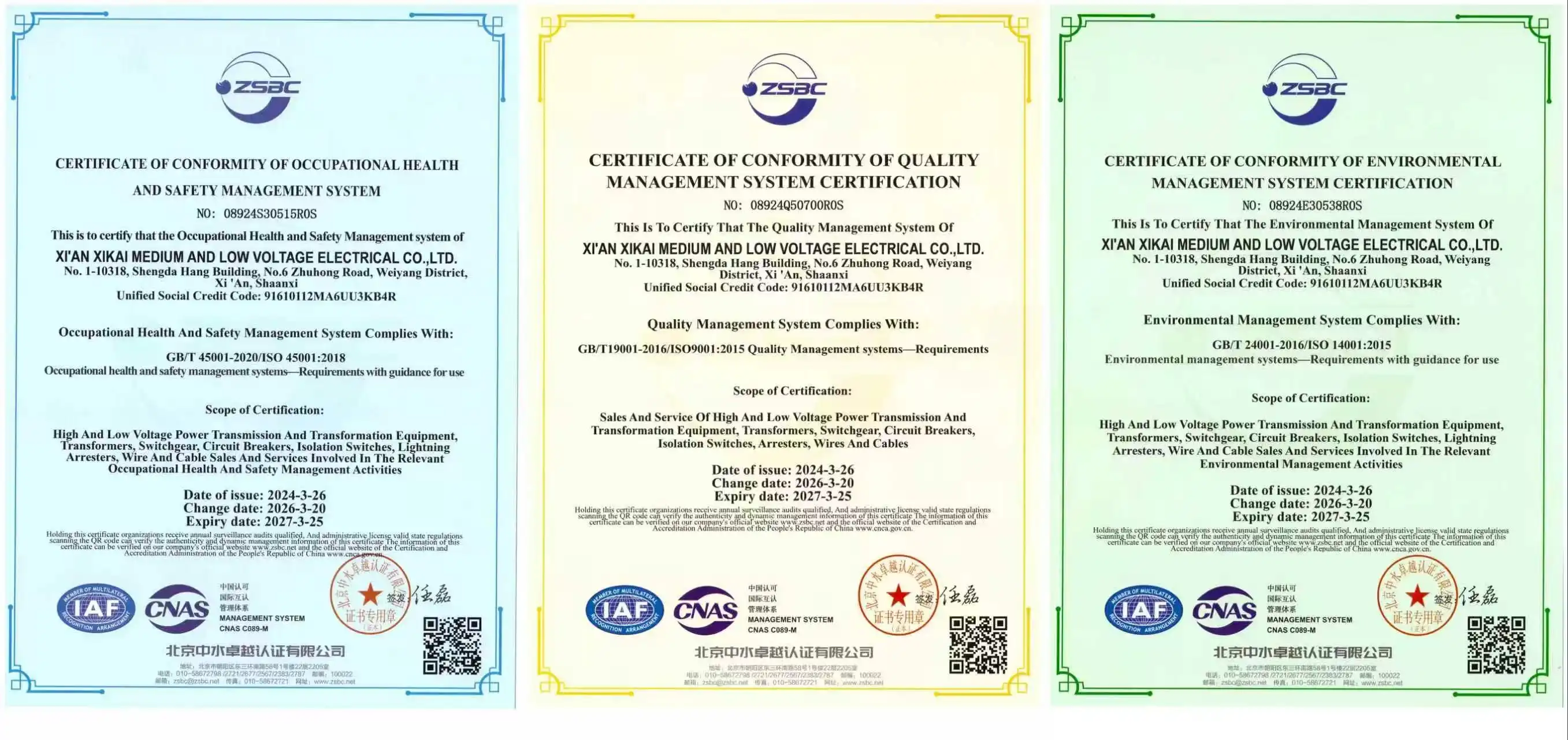
When looking for trusted arrester suppliers, you need to look at more than just the initial buy price. The manufacturing capacity of Polymeric Lightning Arrester shows how quickly and easily a company can meet large orders, which is an important factor to consider for big building projects with tight plans. Xi'an Xikai runs one of China's biggest factories that makes medium and low-voltage electrical equipment. They keep extra supplies on hand and can change their production schedule to fit orders ranging from a few prototypes to more than 10,000 units. Certification compliance verifies that a product meets all regulations and is of good quality. ISO 9001 quality control systems, IEC 60099-4 performance standards, IEEE C62.11 compatibility, and regional safety approvals like CE marking for European markets or RoHS compliance for environmental laws are all important certifications. Manufacturer claims can be checked independently by third-party testing lab confirmation from well-known organizations such as KEMA, CESI, or national testing centers. Research and development skills show that a company is dedicated to constant growth and technical help. Companies that spend money on advanced testing facilities, finite element analysis tools, and materials science studies can make solutions that are specifically designed to solve problems in specific applications. Xi'an Xikai has a collection that includes over 100 product versions across 7 main categories and 34 series. This is made possible by a number of unique technologies that give the company performance and reliability benefits over its competitors.
Cost Considerations and Value Engineering
The price of buying a Polymeric Lightning Arrester depends on a lot of factors, such as the voltage class, energy grade, building material, and the number of units ordered. Buyers who are watching their budgets need to weigh the original capital cost against the costs that come up over the product's lifetime, such as installation work, repairs, and replacements. Prices for polymeric designs are usually 15–25% higher than prices for ceramic designs in the same voltage class. However, this difference becomes smaller when you consider lower shipping costs, easier installation, and longer service intervals. Volume savings encourage buying in bulk for applications across the whole system. Manufacturers often use tiered pricing, where prices drop at 100, 500, and 1,000 units or more. Strategic buyers arrange framework deals that set baseline prices for multi-year procurement plans. This makes budgeting easier and helps them get better relationships with suppliers. Custom engineering support is useful for unique uses that need different electricity rates, non-standard mounting arrangements, or environmental requirements that go beyond what is listed in a catalog. With coordinated safety plans and factory testing, OEM relationships make it possible to add arresters to packed substation kits or switchgear lineups. Xi'an Xikai offers expert advice to help make goods work better in high-pollution industrial settings, plateau-type installations, and projects that use renewable energy.
Logistics Planning and Delivery Assurance
International purchasing adds complications to the supply chain, such as longer shipping times, clearing taxes, and different rules for quality checks. Reliable providers are open and honest about their production plans, which usually take between 6 and 8 weeks for basic goods and 10 to 12 weeks for custom configurations. For a higher price, expedited manufacturing choices can be used for urgent replacement needs or to speed up a job. Standards for packaging protect arresters during shipping across continents. Each unit should be kept safe in a container that won't get wet and is made of impact-absorbing materials that are approved for multi-modal movement. Export-grade wooden crates or steel frames that meet ISPM-15 phytosanitary standards for international trade are used for consolidated shipping. After-sales support infrastructure significantly influences long-term procurement satisfaction. Comprehensive insurance coverage that lasts 18 to 24 months protects against manufacturing flaws, and expert assistance programs offer help with fixing problems, overseeing installation, and commissioning. Xi'an Xikai provides technical support 24 hours a day, seven days a week through specific customer service channels, which ensures responsive help around the world and at all times.
Maintenance, Lifespan, and Performance Optimization of Polymeric Lightning Arresters
Routine Inspection Protocols
To make arresters last as long as possible, you need to set up condition-based maintenance plans that are specific to the site setting and the amount of operating stress. Visual checks done once a year or every six months find early signs of wear and tear, such as discoloration of the case, surface tracking, mechanical damage, or the activation of a leakage current indicator. Before a major failure happens, thermal imaging scans find strange heating patterns that show that internal parts are breaking down or that water is getting in. Electrical testing procedures check key performance markers on a regular basis. When a voltage is applied, readings of leakage current show that the varistor is breaking down or the insulation is breaking down. Power frequency voltage tests confirm that the protective features are still within the allowed ranges. Portable diagnostic tools let you test in the field without having to separate the arresters, which cuts down on system downtime during maintenance. Environmental factors speed up the aging process, which means that repair schedules need to be changed. Coastal installations are more likely to rust quickly because of salt spray buildup, so they need to be inspected every three months and washed every so often to get rid of electrical contamination. To keep their hydrophobic surface qualities, industrial companies that release a lot of particulate matter need to clean their surfaces more often. In deserts with strong sunlight and wide ranges of temperatures, UV exposure tracking can help predict when polymers will break down.
Degradation Factors and Mitigation Strategies
Over time, metal oxide varistors' performance changes, Polymeric Lightning Arrester because they absorb more energy during surges and keep breaking down from the stress of running power. Using surge counter data and leakage current trends for predictive analytics allows condition-based replacement strategies, which make the best use of assets while keeping security reliable. Modern polymeric lightning arresters have diagnostic features that send information about their performance to SCADA systems. This makes it easier for big utility networks to control their fleets centrally. Mechanical stress from shaking caused by wind, earthquakes, or changes in temperature can weaken the structure of the building and the links inside it. Mechanical problems can be avoided by choosing the right mounting gear, following the torque specs, and doing a structural analysis during installation. Xi'an Xikai's designs include stress-relieving features in the connections between core rods and flexible areas between hard and flexible parts, which makes them more resistant to dynamic loads. If contamination builds up, it needs to be managed proactively by cleaning on a regular basis or applying room-temperature-vulcanizing (RTV) silicone coats that make the surface less water-repellent. Installing automated washing systems in important substations cuts down on the need for human work while making sure that cleaning is always done well. Pollution tracking sites that measure conductivity and total suspended particulates set maintenance schedules based on the real state of the environment instead of random dates on the calendar.
Conclusion
The best way to protect high voltage transmission equipment from lightning-caused overvoltages and switching transients is with Polymeric Lightning Arrester technology. Their advanced metal oxide varistor technology, lightweight composite construction, and high resistance to weather factors give them clear benefits in protecting assets, keeping operations running smoothly, and saving money over the course of their lifetime. To make smart buying choices, procurement professionals who work with industrial sites, utility networks, and EPC firms need to look at arrester specs, provider capabilities, and total cost of ownership. Understanding important technical factors, comparison standards for performance, and upkeep needs helps improve the resilience of transmission lines while keeping costs low for both capital and operational costs. Strategic relationships with well-known makers give you access to unique solutions, quick technical support, and a reliable supply chain, all of which are important for the success of infrastructure projects.
FAQ
1. What advantages do polymeric housings offer compared to porcelain arresters?
Polymeric Lightning Arrester forms are better at resisting impact, so they don't have the catastrophic failure risks that come with brittle clay materials. The hydrophobic silicone rubber housing keeps the high surface resistance even when it's heavily contaminated, which lowers the risk of flashovers and the need for upkeep. A 60–70% weight decrease makes it easier to install and cheaper to ship, and the flexible design can handle mechanical stress without cracking. Controlled pressure release systems make sure that failure modes are safe and don't cause fragments that explode.
2. How do I verify compatibility with existing transmission infrastructure?
To choose the right arrestor, you need to make sure that the rated voltage matches the system standard voltage by a certain amount. For example, 102kV arresters are usually used for 110kV systems. In all working situations, the maximum continuous operating voltage must be higher than the phase-to-ground voltage of the system. Coordination studies make sure that the leftover voltage of the arrester stays below the basic insulation level (BIL) of the equipment. To keep retrofitting as simple as possible, mounting measurements and connection ports should match the hardware that is already in place. Xi'an Xikai offers expert advice to make sure that products work together and suggest the best setups for individual installs.
3. Can arresters be customized for specialized environmental conditions?
Manufacturers offer customization choices to meet the needs of different applications. In places with a lot of pollution, the creepage distance can be made longer. Voltage ratings can be changed to fit non-standard system setups, and mounting hardware can be made to fit certain structural connections. The engineering team at Xi'an Xikai works with customers to come up with solutions for installations on plateaus up to 4,000 meters high, industrial zones with a lot of pollution, and projects that combine green energy sources and need special planning for safety.
Partner with Xi'an Xikai: Your Trusted Polymeric Lightning Arrester Manufacturer
Xi'an Xikai Medium & Low Voltage Electric Co., Ltd. is ready to help you with Polymeric Lightning Arrester for your transmission line security needs. They have been in business for more than 20 years and have worked on national grid projects in more than 15 countries with great success. The YH10W-102/266W Lightning Arrester Polymeric MOA for AC System is part of our wide range of products. We also offer custom options for different voltage levels and environmental situations. Our dedicated team can be reached at serina@xaxd-electric.com, amber@xaxd-electric.com, and luna@xaxd-electric.com. They offer customized engineering support, low bulk prices, and quick technical help. There you'll also learn about how our patented technologies and strict quality control deliver reliable surge protection that protects your important infrastructure investments and improves operational efficiency.
References
1. International Electrotechnical Commission. "IEC 60099-4: Surge Arresters – Part 4: Metal-Oxide Surge Arresters Without Gaps for A.C. Systems." Geneva: IEC Publications, 2014.
2. IEEE Standards Association. "IEEE C62.11: Standard for Metal-Oxide Surge Arresters for AC Power Circuits." New York: Institute of Electrical and Electronics Engineers, 2020.
3. Hinrichsen, Volker. "Metal-Oxide Surge Arresters: Fundamentals." Berlin: Siemens AG Energy Sector Publications, 2012.
4. CIGRE Working Group A3.17. "Impact of Long-Duration Voltage Dips on Surge Arrester Energy Stress." Paris: International Council on Large Electric Systems, 2016.
5. Lat, Manmohan V. "Thermal Properties of Metal Oxide Surge Arresters." IEEE Transactions on Power Apparatus and Systems, vol. 102, no. 7, 2015, pp. 2194-2202.
6. Stokes, Andrew D., and Ronald B. Wilkinson. "Selection and Application of Surge Arresters for Transmission Line Protection." Electric Power Systems Research, vol. 89, 2018, pp. 112-125.
_1774319679257.png)