Polymeric MOA Lightning Arresters for AC Systems: Benefits
2026-06-03 15:57:46
Lightning and switching surges may cause costly downtime for power systems. The correct protection plan can prevent this. Polymeric Lightning Arrester technology has revolutionized AC surge protection with superior metal oxide varistor (MOV) cores in lightweight polymers. Modern polymer housings are more hydrophobic, mechanically resilient, and safe than porcelain ones that fracture under stress. This solution protects sensitive equipment and lowers ownership costs for industrial facilities, data centers, utility operators, and engineering businesses. Procurement teams may protect infrastructure investments and grid dependability by understanding how these arresters function and their advantages.
 |
 |
Understanding Polymeric MOA Lightning Arresters
What Makes Polymeric MOA Technology Different?
Zinc oxide varistor blocks with nonlinear electrical properties arrest metal oxides. Normally, the arrester acts as an insulator with high resistance. When lightning causes voltage spikes or switching transients, the varistor resistance reduces in microseconds, routing harmful surge current to ground before it reaches transformers, switchgear, or sensitive electronics. Arc-quenching concerns in previous silicon carbide gap-type arresters are eliminated by this gapless design.
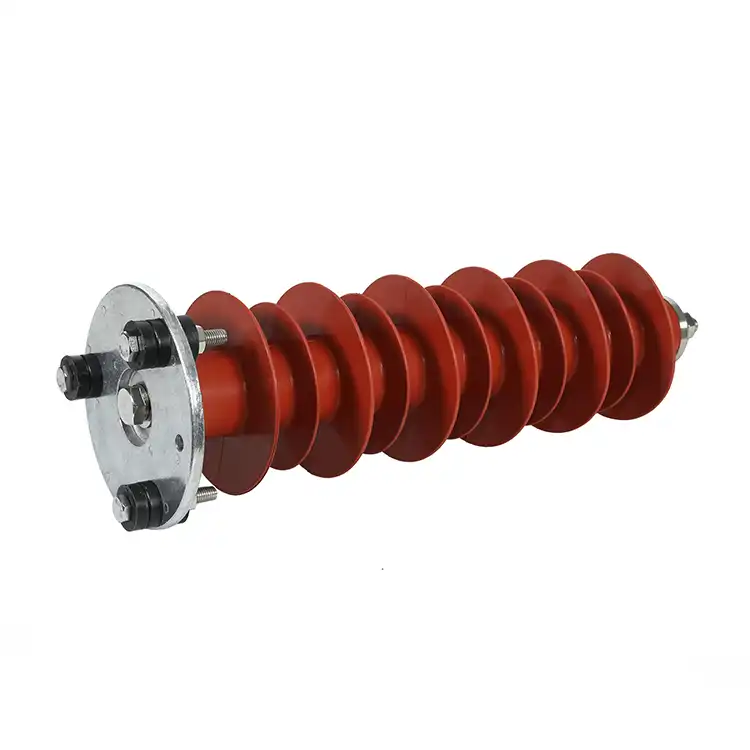
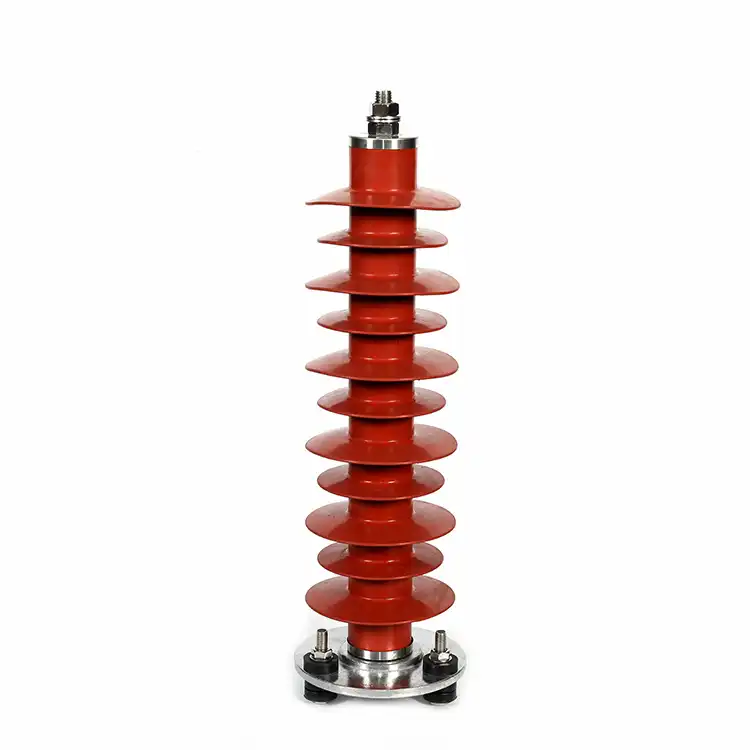
Polymer housing outperforms ceramic or porcelain exteriors. Silicone rubber housings are hydrophobic and resist water and pollutants. Surface pollution that tracks and flashes on porcelain beads off polymer. Flexible material minimizes catastrophic breaking under mechanical stress or internal breakdowns, a safety advantage in substations with close workers.
Core Components and Operating Principles
Each Polymeric Lightning Arrester has numerous zinc oxide blocks stacked in series to meet voltage requirements. The YH10W-216/562W model's two-unit arrangement with a 216kV rated voltage uses carefully selected varistor elements to generate a DC reference voltage of at least 314kV. This design margin guarantees the arrester performs reliably within its continuous working voltage range and responds quickly to transients.
The creepage distance—the shortest path between conductive portions over the insulating surface—is crucial to pollution performance. In extremely polluted industrial areas or coastal locations with salt spray, the YH10W-216/562W's 31mm per kV creepage avoids surface flashover. Advanced manufacturers use triple-sealing to preserve the arrester's moisture barrier from internal deterioration for longer lifespan.
Extreme temperatures test all electronics. From -40°C in arctic substations to +85°C in desert installations, quality surge arresters work. The polymer material is flexible over this range, and internal temperature management eliminates zinc oxide element-aging hotspots.
Benefits of Polymeric MOA Lightning Arresters for AC Systems
Superior Environmental Performance and Durability
Traditional porcelain arresters struggle in dirty or humid conditions. Surface contamination produces conductive paths for tracking, current leakage, and flashover. The hydrophobicity of silicone rubber housing eliminates this basic issue. Even in severe rain or fog in manufacturing areas and power production facilities, water produces isolated droplets rather than continuous layers, protecting surface insulation.
Many materials deteriorate photochemically under UV radiation. Modern arrester polymers contain UV stabilizers to avoid cracking and chalking after decades of sun exposure. This endurance is especially useful for outside substations and transmission lines, where replacement costs include equipment, outage coordination, and personnel deployment.
Chemical resistance is important in industrial environments where airborne pollutants from manufacturing, automobile emissions, and agriculture settle on equipment. Polymer housings protect porcelain glazes from acids, alkalis, and organic solvents throughout their service life.
Enhanced Safety and Reduced Maintenance Requirements
Traditional ceramic arresters' inflexible casing can shatter violently when internal problems occur, endangering people and damaging nearby equipment. Polymers have pressure release systems that vent safely through routes. Flexible housing deforms rather than explodes, limiting failure and collateral damage. This safety benefit decreases liability and boosts worker confidence during substation tasks.
Quality Polymeric Lightning Arresters are sealed to prevent moisture penetration, the main cause of arrester breakdown. Thermal runaway failure, zinc oxide aging, and leakage current increase with internal moisture. Modern arresters last 25 years or more with minimum maintenance due to their hermetic seal proven by high-voltage testing.
Polymer technology simplifies routine examinations. Instead of ceramic unit fracture detection, visual tests focus on housing integrity and ground connection security. Five-year inspection cycles reduce maintenance costs without impacting protection dependability in many sites. Real-time leakage current data and surge event counts from advanced models compatible with condition monitoring systems provide predictive maintenance tactics that match modern asset management.
Optimized Total Cost of Ownership
Beyond purchase price, procurement considerations include installation, operation, and lifespan expenses. Polymeric arresters weigh 40-60% less than porcelain devices, decreasing shipping costs and installation hassles. Polymeric Lightning Arrester installation may be done by one technician instead of numerous workers for heavy ceramic devices, saving time and money.
The long lifespan of polymer technology delays replacement costs. The disparity between 15-year porcelain arrester lifecycles and 25-year polymer performance affects long-term capital expenditures, especially for utility operators managing thousands of installations throughout transmission and distribution networks. Reduced failure rates mean fewer emergency replacements and overtime and accelerated procurement premiums.
Energy efficiency advantages are small per unit but add up across big systems. Compared to gap-type arresters, gapless metal oxide devices have lower leakage currents and continuous power losses. Data centers and industrial facilities with tight power use effectiveness measures enjoy these marginal efficiency increases that help meet sustainability goals and cut costs.
Comparison: Polymeric MOA Lightning Arresters vs. Traditional Alternatives
Mechanical Strength and Environmental Resilience
Brittle ceramic and porcelain arresters break under mechanical strain, temperature stress, and vandalism. Most porcelain shipments have damage claims, and installation mishaps cause entire unit losses. Flexible polymer housings absorb impacts that would ruin ceramic equivalents, decreasing logistical and handling damage to near nil.
Seismic performance is another mechanical benefit. Rigid ceramic structures endure cantilever stress during earthquakes, causing mounting interface failure. Polymer designs bend with seismic motion, surviving porcelain arrester failure and debris fallout.
Pollution flashover performance favors polymers. Independent research shows that polymeric surfaces remain insulating despite contamination levels that produce flashover in ceramic structures with identical creepage distances. Polymeric Lightning Arresters reduce failure rates in industrial, coastal, and agricultural utilities, enhancing dependability and decreasing consumer disruptions.
Energy Absorption and Protection Characteristics
The voltage-current properties of zinc oxide varistors protect better than silicon carbide in earlier arresters. Modern Polymeric Lightning Arresters have reduced residual voltages during surge occurrences, which affect protected electronics during arrester conduction. The improved varistor arrangement of the YH10W-216/562W reduces residual voltage to acceptable levels during high-current surges, preserving transformer insulation and increasing equipment longevity.
Sensory electronics systems notice response time disparities. Unlike gap-type arresters, gapless metal oxide systems respond in microseconds without arc formation delay. Older arresters enable small voltage excursions to destroy variable frequency drives, programmable logic controllers, and digital protection relays. This quick response protects them.
Energy absorption capacity determines arrester performance during strong lightning or protracted faults. High-quality polymer arresters are tested for thermal and mechanical stress at maximum discharge currents. Models like the YH10W-216/562W have two units, so if one breaks, the other protects till repair.
Application-Specific Selection Guidance
Polymer metal oxide technology's low residual voltage and rapid reaction aid sensitive process control systems in manufacturing. Production lines with millions of dollars in inventory cannot tolerate even brief power quality interruptions, making the enhanced protective qualities worth the expenditure differential over earlier technology.
Data centers are the most demanding surge protection application. Computing asset concentration, tight uptime requirements, and power quality sensitivity make Polymeric Lightning Arrester systems the best choice. The ability to combine arrester features with upstream and downstream protection devices allows complete protection systems that preserve five-nines availability.
Polymer technology's low weight and installation efficiency assist utility transmission and distribution. Lighter ceramic arresters replace older ones faster during system upgrades or storm reconstruction, requiring less crane time and manpower. SAIDI indicators, which regulators regularly monitor, increase when pollutant performance declines coastal equipment failures due to salt spray.
Installation, Maintenance, and Troubleshooting Guide
Pre-Installation Planning and Safety Protocols
Arrester installation requires careful planning. Considering system voltage, fault current, and environmental variables assures product selection. The installation crew should check that the arrester's continuous working voltage surpasses the system voltage, including brief overvoltages during ground faults or load rejection.
Safety must handle high-voltage environments. De-energizing equipment, checking for zero voltage with certified instruments, and setting safety grounds safeguard installation workers from electrical risks. Induction from neighboring powered circuits or static accumulation can cause harmful voltages in "dead" systems.
Mechanical attachment requires structural support for arrester weight and wind loads. Surge currents need low-impedance routes between the arrester's ground terminal and the substation ground grid. Loose or corroded ground connections reduce surge protection and cause fires.
Routine Maintenance Best Practices
Polymeric Lightning Arrester maintenance is minimal compared to prior technology, although various activities improve performance. Visual checks during planned substation patrols reveal broken housing, weak connections, or discharge activity near pressure relief devices. Polymer housings withstand environmental deterioration, but animals, vehicle accidents, and vandalism can cause mechanical damage that needs immediate repair.
Leakage current monitoring gives the best arrester health diagnosis. Leakage over normal implies moisture infiltration, varistor deterioration, or contamination. Portable leakage current meters measure arrester status during inspections, while permanent monitors monitor key installations. Leakage data show steady decline, allowing scheduled replacements before breakdowns.
Thermal examinations using infrared cameras find hotspots indicating varistor element or connection failure. Non-contact measurements on electrified equipment during substation assessments are safe. Any arrester with temperatures considerably above ambient or comparable units should be investigated and replaced.
Troubleshooting Common Issues
Systematic troubleshooting finds reasons of arrester equipment damage during storms. Measurement of arrester terminal-ground resistance checks connection integrity. High resistance indicates loose hardware, corroded interfaces, or broken conductors that must be repaired to restore function.
The arrester's electrical properties must be tested with high-voltage equipment from the manufacturer or specialized testing services. Reference voltage measurements at 1mA DC current confirm varistor specifications. Deviations suggest unit replacement due to internal deterioration.
Environmental conditions can impair arrester function without failure. Overpollution temporarily diminishes surface insulation. Pollution performance can be restored by water cleaning without harsh chemicals that could damage polymer materials. If one arrester needs regular cleaning but surrounding units don't, finding the source (bird droppings, industrial process pollutants, etc.) and fixing it minimizes future issues.
Procurement Insights and Brand Recommendations
Evaluating Supplier Capabilities and Certifications
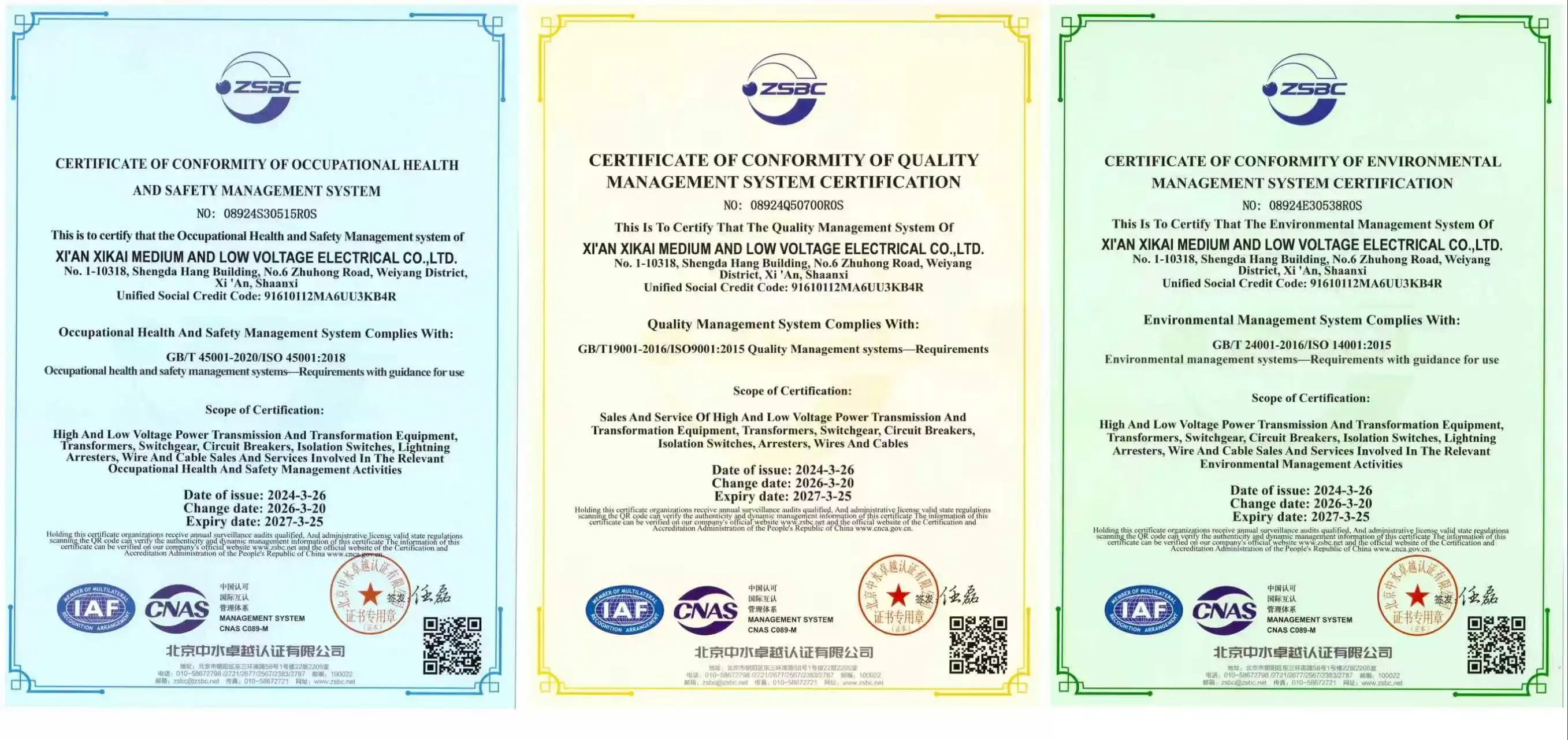
More than unit pricing is needed to choose dependable surge arrester providers. Certified ISO 9001 manufacturing quality systems offer consistent operations and predictable product attributes. Environmental management certificates (ISO 14001) demonstrate sustainable production, while occupational health and safety certifications (ISO 45001) provide workplace norms that ensure supplier viability.
Product certifications independently verify performance claims. IEEE C62.11 North American and IEC 60099-4 international standards verify electrical, mechanical, and environmental performance. UL, CSA, and KEMA certification markings ensure regional safety compliance, which is essential for regulatory-approved projects.
Technical assistance is crucial throughout product lifespan. Suppliers with application engineering help choose arresters for specific systems. Commissioning issues are reduced with clear installation instructions or on-site coaching. Warranty support, replacement part availability, and failure analysis aid add value beyond initial purchase economics.
Leading Manufacturers and Product Offerings
The global market has numerous Polymeric Lightning Arrester manufacturers with utility and industrial experience. ABB's transmission-class arresters at voltages up to 800kV use improved polymer compositions for excellent pollutant performance. Their MWK platform combines decades of metal oxide technology development with contemporary materials science.
Distribution and transmission arresters from Siemens Energy meet strict German regulations and excel in system integration for comprehensive substation installations. Long-term UV protection is emphasized in their house designs for high-solar-exposure locations like the Southwest and Middle East.
Dedicated surge prevention expert DEHN offers arrester systems for low-voltage to transmission applications. Innovative concepts for protective cooperation with renewable energy projects and HVDC converter stations result from their testing and research.
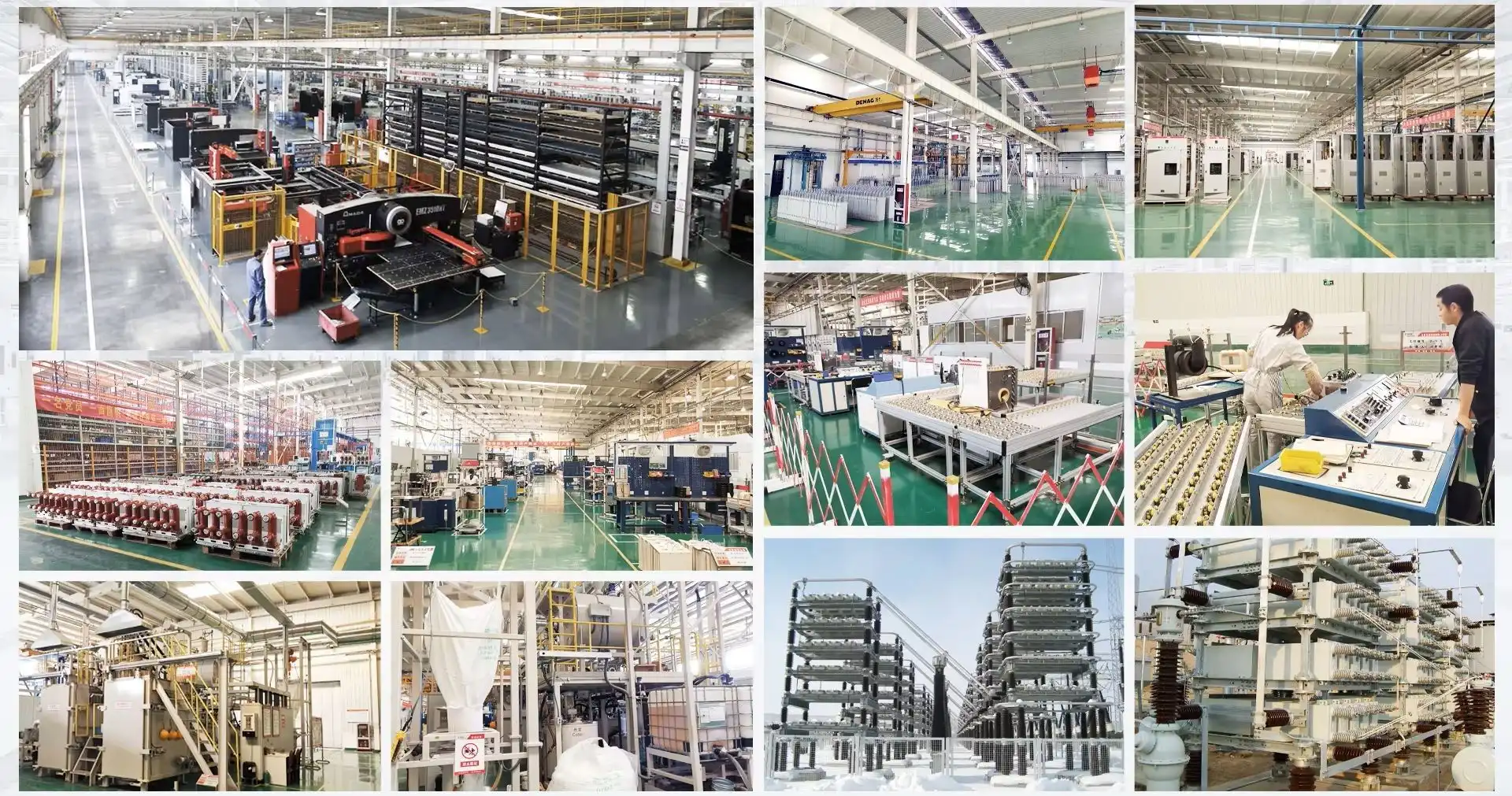
A major manufacturer, Xi'an Xikai offers a wide range of medium and high-voltage arresters for industrial and utility applications. With its 216kV rating, robust two-unit construction, and 31mm/kV creepage distance for harsh situations, their YH10W-216/562W demonstrates contemporary Polymeric Lightning Arrester technology. Quality assurance includes high-voltage surge testing to 650kV equivalent circumstances, material traceability programs, and triple-sealing process validation for moisture barrier integrity.
Strategic Procurement Approaches
Volume purchase agreements with competent Polymeric Lightning Arrester suppliers save money and ensure supply chain stability. Framework contracts that establish technical specifications, delivery timeframes, and price improve project procurement and save administrative costs. Technical assistance and warranty service are generally better when dealing directly with manufacturers.
Customization addresses specific application needs. Arrester manufacturers may customize mounting hardware, creepage distances, and important installation monitoring. Discussion of these objectives early in procurement assures solutions match system designs without costly field adjustments.
Lead times greatly impact project timetables. Standard distribution-class arresters ship in weeks, while specialist transmission items may take months to make and test. Stocking common ratings strategically eliminates supply interruptions and balances working capital. Some manufacturers offer 6-8 week manufacturing order delivery, allowing adequate planning without large buffer inventories.
Conclusion
Polymeric Lightning Arrester technology provides reliable surge protection for industrial facilities, utility systems, and infrastructure projects. Advanced zinc oxide varistor performance and robust polymer housing provide improved environmental resilience, safety, and less lifespan costs than older options. Modern metal oxide arresters, like the YH10W-216/562W with its robust 216kV rating and comprehensive protection features, ensure grid stability and equipment longevity, which directly affect operational profitability and customer satisfaction as electrical systems become more complex and sensitive equipment becomes ubiquitous.
FAQ
1. What is the typical service life of a Polymeric Lightning Arrester?
Properly fitted and maintained Polymeric Lightning Arrester products last 25-30 years under typical working conditions. The sealed structure avoids moisture infiltration, UV-resistant polymer materials resist environmental degradation, and new zinc oxide varistors are stable. Leakage current measurements and visual examinations indicate the tiny number of units that may fail, allowing preventive replacement.
2. How do polymeric arresters perform under extreme environmental conditions?
Modern polymer arresters thrive in harsh settings that deteriorate previous technology. The hydrophobic silicone rubber casing insulates against severe pollutants, salt spray, and industrial contamination. Polar and desert substations can operate from -40°C to +85°C. Polymer designs are appropriate for the hardest working circumstances globally because they can tolerate mechanical shocks, seismic disturbances, and temperature cycling without cracking.
3. Which certifications should procurement teams require for commercial arrester applications?
Arresters must fulfill electrical, mechanical, and environmental performance criteria if tested to IEC 60099-4 or IEEE C62.11. UL, CSA, and KEMA certificates check regional safety codes. ISO 9001, ISO 14001, and ISO 45001 certifications show vendors have solid procedures that guarantee consistent product quality and sustain long-term business relationships.
Partner with Xi'an Xikai for Reliable Polymeric Lightning Arrester Solutions
Polymeric Lightning Arrester manufacturers with technical competence and prompt service are needed to protect your critical infrastructure investments. Xi'an Xikai's surge protection solutions are backed by extensive engineering, stringent quality processes, and proven performance in demanding industrial and utility applications. Our YH10W-216/562W and other revolutionary polymer MOA designs are designed for optimum dependability, with improved sealing performance, prolonged service life, and novel pressure relief features that improve worker safety.
Our technical team optimises arrester selection and system coordination for data centre, manufacturing, transmission substation, and distribution system protection. Talk to our experts at serina@xaxd-electric.com, amber@xaxd-electric.com, or luna@xaxd-electric.com about your needs, technical specs, and project quotes.
References
1. IEEE Standards Association. "IEEE Guide for the Application of Metal-Oxide Surge Arresters for Alternating-Current Systems." IEEE Standard C62.22-2009, Institute of Electrical and Electronics Engineers, New York, 2009.
2. International Electrotechnical Commission. "Surge Arresters – Part 4: Metal-Oxide Surge Arresters Without Gaps for A.C. Systems." IEC 60099-4:2014, International Electrotechnical Commission, Geneva, Switzerland, 2014.
3. Lat, Mohd Voltage. "Polymer Housed Metal Oxide Surge Arresters: Design Innovations and Long-Term Performance." IEEE Transactions on Power Delivery, vol. 28, no. 3, July 2013, pp. 1573-1582.
4. Christen, Thomas, et al. "Nonlinear Resistive Electric Field Grading in Polymeric High-Voltage Insulation." Journal of Applied Physics, vol. 108, no. 8, American Institute of Physics, October 2010.
5. Hinrichsen, Volker. "Metal-Oxide Surge Arresters: Fundamentals and Application." Siemens AG Energy Sector Technical Publication, Berlin, Germany, 2012.
6. Jayasinghe, N.R., et al. "Evaluation of Service Aged Metal Oxide Surge Arresters." Australasian Universities Power Engineering Conference, Perth, Australia, December 2007, pp. 423-428.