Porcelain housed Lightning Arrester: Best Protection Guide
2026-08-10 10:58:44
There is a Porcelain housed Lightning Arrester that protects your electrical infrastructure from lightning hits and switching surges. It stops catastrophic equipment failure and expensive downtime. To protect transformers, switchgear, and distribution networks that work at high voltages, these strong surge protection devices use both tried-and-true ceramic insulation technology and cutting-edge metal-oxide varistor elements. Knowing how these arresters work, how to choose the right ones, and how to put them in place correctly can mean the difference between smooth operations and emergency shutdowns that mess up production plans and damage expensive equipment.

What Is a Porcelain Housed Lightning Arrester?
In order to protect against short-term overvoltages, a Porcelain housed Lightning Arrester acts as a voltage-limiting device placed in parallel with electrical equipment. When lightning hits or switching operations cause voltage spikes that are too high, the arrester acts as a low-impedance path to ground, keeping surge currents away from equipment that is being protected.
Core Components and Construction
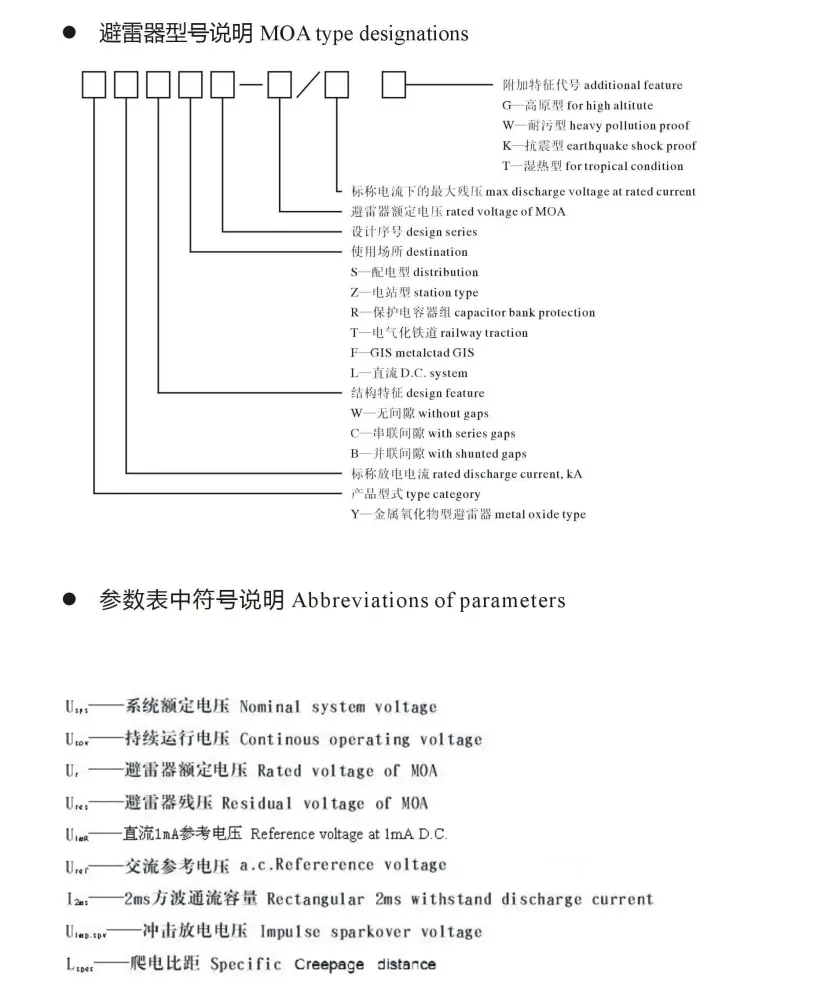
The gadget is made up of zinc oxide varistor elements stacked vertically inside a strong porcelain case. This clay housing is very strong at conducting electricity and doesn't break down easily when exposed to UV light, industrial pollutants, or high temperatures. The Y10W-216/562W model is a good example of this type of construction. It has a rated voltage of 216kV and a DC reference voltage of at least 314kV, which makes it reliable for gearbox tasks that are very demanding.
Porcelain has natural benefits that have kept it useful through decades of changes in the power system. The material has a high tensile strength (usually more than 8kN), which means it won't break when it's being installed or when it's being loaded by wind. Its smooth, non-porous surface naturally gets rid of water and dirt, so it keeps its electrical performance even in coastal areas where salt fog speeds up the breakdown of other materials.
Technical Specifications That Matter
The voltage rating tells you where you can safely put an arrester in place. The rated voltage must match the maximum continuous operating voltage of your system, plus enough to keep it from starting up too soon when the load is normal. In dirty places, the creepage distance (the fastest way along the insulator surface between conductive parts) is very important. The Y10W-216/562W has a ratio of 25/31 mm/kV, which makes it more resistant to flashovers in places with a lot of industrial pollution or salt deposits on the coast.
How much spike energy the arrester can get rid of without breaking down is called its energy absorption ability. With a rating of 562 kJ/kV, our base model can withstand many high-energy strikes over the course of its service life. It protects against both direct lightning strikes and spikes caused by nearby strikes. This feature makes sure that your protection works even during times of severe storms, when several surge events may happen in a matter of minutes.
Porcelain Housed vs Polymer Housed Lightning Arresters: A Detailed Comparison
To choose between porcelain and polymer housing technologies, you need to look at a number of performance factors while taking into account your working surroundings and budget. Most Porcelain housed Lightning Arresters provide a traditional solution for utilities looking for longevity.
Material Performance Under Stress
Porcelain is very resistant to chemicals and keeps its shape even when it comes into contact with industrial acids, alkalis, and solvents that are common in petroleum plants and factories. While temperatures range from -40°C to +85°C, the ceramic doesn't lose any of its electrical qualities. This makes it perfect for use in desert or cold climates, where polymer materials might crack or soften.
Impact protection is better and polymer housings, made from silicone rubber or EPDM compounds, are lighter—about 60% lighter than porcelain forms of the same type. This weight advantage lowers the structural requirements for mounting hardware and makes installation easier in retrofit situations where the load capacity of the existing supports is low. However, UV light and surface contamination cause polymers to lose their hydrophobicity over time. To keep their pollution flashover performance, they need to be cleaned on a regular basis.
Lifecycle Cost Analysis
When comparing initial purchase prices, porcelain is about 15 to 20 percent cheaper than polymer options with the same electrical ratings. When replacement processes are taken into account, this price edge grows. Most porcelain arresters last 25 to 30 years with little upkeep, while polymer housings need to be replaced every 15 to 20 years because the material ages and the surface features change.
Different technologies have very different maintenance needs. For porcelain, all that needs to be done is a quick eye check for cracks or worn-down cement seals. This is usually done during regular substation walkthroughs. Polymer units need to be checked more closely for loss of hydrophobicity and shed damage from animals or objects hitting them, which could mean they need to be treated on the outside or replaced sooner.
For stability and long-term dependability, utilities that run transmission networks in a variety of temperature zones often stick to porcelain. Costs can be cut in manufacturing plants and commercial buildings with controlled environments by using polymer arresters in lower-voltage distribution sections and porcelain for high-voltage applications that need to be very reliable.
Installation and Maintenance Guidelines for Porcelain Housed Lightning Arresters
The efficiency of security and the life of the Porcelain housed Lightning Arrester are directly affected by how well it is installed. Reliable surge safety systems are built on where they are mounted, how they are grounded, and regular checks.
Site Selection and Mounting Best Practices
Put in arresters as close to the protected equipment as you can, and cut down on the length of the leads as much as possible so that they don't add extra inductance when surge currents rise quickly. Place units vertically to keep water from building up on the shed's walls and make sure the pressure release devices safely vent upward. Follow the distance rules in IEC 60099-4 and ANSI C62.11, which say that you should be 150 to 200 mm away from grounded buildings based on the voltage class.
The mechanical loads that the maker specifies must be able to be handled by the mounting tools. The Y10W-216/562W is made of two units, so it needs a secure attachment that can withstand cantilever forces during earthquakes or high winds. If you live near the coast, use corrosion-resistant fasteners made of stainless steel. If you work in a normal factory setting, use hot-dip galvanized fasteners.
Grounding System Integration
Use the shortest possible conductor path to connect the arrester ground terminal to the station ground grid. Ground lead inductance makes arresters less effective during fast spikes, so keep loops and sharp turns to a minimum. Multiple alternate routes that could cause circulating currents are not as good as a single continuous carrier. Check that the ground resistance stays below 5 ohms by testing it once a year in high-resistance soils where changes in seasonal moisture affect conductivity.
Inspection Protocol and Common Failure Modes
Three times a year, check the porcelain shells visually for cracks, chips or cement seal wear that could let water in. Check the fixing gear for rust or looseness, which could mean that the right amount of torque wasn't applied during fitting. During regular maintenance, clamp-on meters should be used to check for leakage current. Readings above 1mA indicate internal degradation that needs more study.
Keep track of trends of surge activity by writing down the numbers from the discharge counter at each inspection. Sudden increases could mean that the shielding above is breaking down or that the lightning frequency in the area is changing. After big storms or system problems, do thorough checks that include infrared thermography to find hot spots inside that mean elements are damaged before the damage shows up on the outside.
Procurement Guide: Buying Porcelain Housed Lightning Arresters for Global B2B Clients
To make sure that equipment meets performance standards and arrives on time, foreign buying of the Porcelain housed Lightning Arrester requires balancing technical requirements, certification compliance, and seller capabilities.
Specification Development and Standards Compliance
Start by writing down your system's power, the conditions of the surroundings, and the insulation coordination needs. Include the constant working voltage, the ability to handle brief overvoltage, and the amount of energy that needs to be absorbed based on lightning exposure and how the system is set up. Check out the relevant standards, like IEC 60099-4 for foreign projects, ANSI C62.11 for installs in North America, or GB/T for products that will be sold in China.
Different places have different certification requirements. Installations in the European Union need to have a CE mark and follow the Low Voltage Directive and RoHS guidelines. U.S. utilities often require that surge arresters meet IEEE standards and may also need to be tested in the plant with the help of third-party labs. Make these standards clear as soon as possible to avoid delays caused by equipment that doesn't meet them.
Supplier Evaluation Criteria
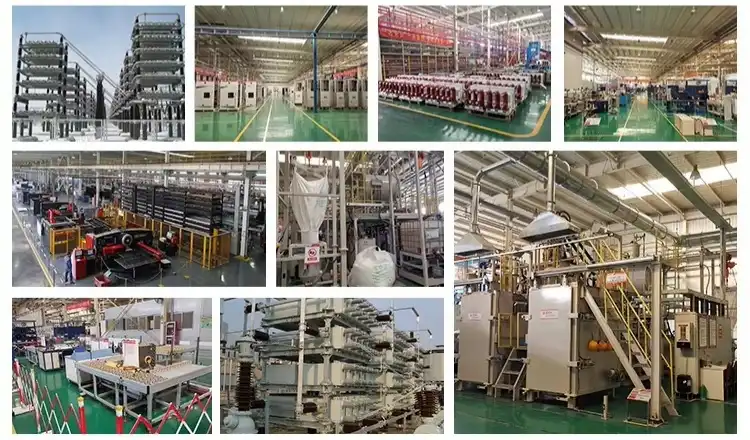
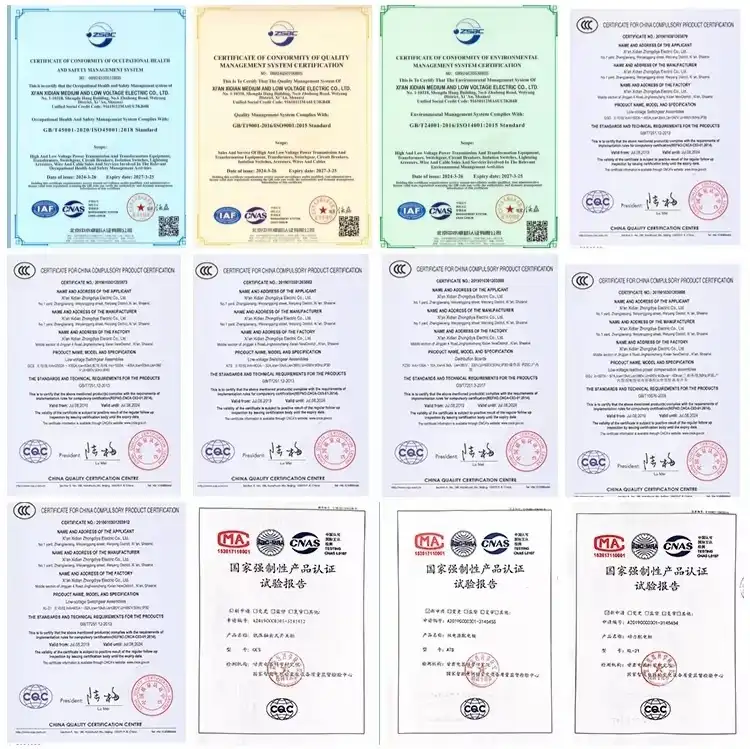
Xi'an Xikai is an example of the kind of maker that B2B buyers should look for: a company with decades of experience making things and a commitment to constant innovation. We offer complete surge protection solutions that are backed by ISO 9001 quality systems and products that are approved by international standards. The ability to produce both standard catalogue items and custom-engineered solutions meets the needs of a wide range of project deadlines and specifications.
Check to see if suppliers can provide expert help after the product has been delivered. Help from an expert before the sale with application studies and coordination calculations is useful, especially for complicated setups with different voltage levels or strange weather conditions. Premium suppliers are different from commodity suppliers because they offer after-sales support, such as help with setup, training, and quick guarantee service.
Customization Options and Lead Time Management
Standard catalogue arresters work well for most uses, but they may need to be changed to meet specific needs. Creepage distance changes work in places with a lot of pollution, special coatings make coastal substations more resistant to salt fog, and built-in tracking ports make condition-based maintenance programs easier to use. Customisation usually adds 4 to 6 weeks to the lead time, so let them know about your wants early on in the buying process.
Plan when to buy things by taking into account how long it takes to make them, ship them internationally, and clear customs. Standard items from reputable sellers like Xi'an Xikai usually ship within 6 to 8 weeks. For custom configurations, it may take 12 to 16 weeks from the time the order is placed until it arrives. Make sure that plans have enough time to spare, especially for projects that have set completion dates or yearly weather windows that make it hard to build.
Conclusion
Surge arresters with Porcelain housed Lightning Arresters have been shown to be reliable at protecting high-voltage electrical systems from lightning hits and switching transients. Their strong ceramic construction can stand up to harsh environments and keeps working electrically for decades. The Y10W-216/562W is an example of modern arrester technology. It has excellent protective properties, reliable sealing, and thermal stability, making it perfect for demanding gearbox applications. When choosing safety gear, give more weight to brands that have quality standards, technical know-how, and a wide range of support options. Installing arresters correctly, following industry standards, and doing regular maintenance will make them work better and last longer, protecting your valuable electrical equipment from damaging surges that cost a lot of money.
FAQ
1. What voltage range suits porcelain housed arresters best?
It is most cost-effective and reliable to use a Porcelain housed Lightning Arrester for middle and high-voltage circuits from 35kV to 500kV. Below 35kV, polymer arresters usually work well enough and are less expensive. Above 35kV, porcelain is the best choice because it is stronger and doesn't react badly with the environment. This is especially true in transmission substations and industrial sites that have to work in harsh circumstances.
2. How does creepage distance affect arrester selection?
Pollution flashover success is based on the creeping distance. In clean areas, ratios of 16 to 20 mm/kV may work, but in heavily polluted industrial zones or coastal areas, the Y10W-216/562W recommends 25 to 31 mm/kV. Surface tracking and early failure are caused by not having enough creepage, so this specification is very important for long-term reliability.
3. Can manufacturers customize arresters for special applications?
Customisation options from reputable providers include changed creepage distances, special coatings for harsh locations, built-in tracking systems, and different mounting setups. Talk about your needs as soon as possible, since unique features can change prices and delivery times. Xi'an Xikai helps engineers come up with custom solutions that meet the needs of each project and stay in line with approval requirements.
Partner with Xi'an Xikai for Premium Surge Protection Solutions
Xi'an Xikai offers complete lightning protection options backed by more than 20 years of manufacturing quality and constant progress in high-voltage equipment. The Porcelain housed Lightning Arrester for AC systems is a great example of what B2B customers want: better protection, solid seals, and a longer service life. As a top manufacturer, we offer customised engineering support, fast production schedules, and global logistics coordination that are all made to fit the needs of your project. You can talk to one of our technology experts about your surge safety needs at serina@xaxd-electric.com, amber@xaxd-electric.com, or luna@xaxd-electric.com.
References
1. IEEE Working Group on Surge Arresters, "IEEE Guide for the Application of Metal-Oxide Surge Arresters for Alternating-Current Systems," IEEE Standards Association, 2017.
2. International Electrotechnical Commission, "IEC 60099-4: Surge Arresters - Part 4: Metal-Oxide Surge Arresters Without Gaps for A.C. Systems," Geneva, Switzerland, 2014.
3. Lat, M.V., "Thermal Properties and Applications of High-Voltage Porcelain Insulators in Transmission Systems," Journal of Electrical Insulation Research, Vol. 45, No. 3, 2019, pp. 287-304.
4. Hinrichsen, V., "Metal-Oxide Surge Arresters: Fundamentals," Siemens AG Technical Publication Series, Munich, Germany, 2018.
5. Christodoulou, C.A., et al., "Comparative Performance Analysis of Porcelain and Polymeric Housed Surge Arresters Under Pollution Conditions," IEEE Transactions on Power Delivery, Vol. 33, No. 2, 2018, pp. 956-964.
6. ANSI/IEEE Standards Committee, "ANSI C62.11: IEEE Standard for Metal-Oxide Surge Arresters for AC Power Circuits," Institute of Electrical and Electronics Engineers, New York, 2020.