How Does a Vacuum Circuit Breaker Work? Getting Started
2026-08-10 10:58:42
A vacuum circuit breaker operates by interrupting electrical current within a sealed vacuum chamber, where contact separation triggers an arc that extinguishes almost instantly due to the absence of air molecules. When fault current flows through the breaker and the operating mechanism separates the contacts, the vacuum environment prevents arc sustenance, allowing electrons to condense rapidly on metal surfaces. This principle delivers superior interruption speed compared to oil or gas-based alternatives, making vacuum technology indispensable for protecting sensitive equipment in data centers, manufacturing plants, and utility substations where power quality directly impacts operational continuity.

Understanding Vacuum Circuit Breakers: Principle and Operation
What Is a Vacuum Circuit Breaker and How Does It Differ?
Vacuum circuit breakers are a special kind of switchgear that uses the unique insulating qualities of vacuum to handle and stop electrical problems in medium-voltage systems. Unlike SF6 breakers that use sulphur hexafluoride gas or regular oil-filled units, these don't have any dangerous fluids or greenhouse gases in them. The main difference is the arc-quenching medium: SF6 breakers use gas pressure, oil breakers use liquid dielectric cooling and vacuum breakers use the way electrons naturally behave in almost-absolute vacuum. This big difference means less damage to the environment and easier compliance with rules, which are very important for buying teams that have to handle sustainability requirements.
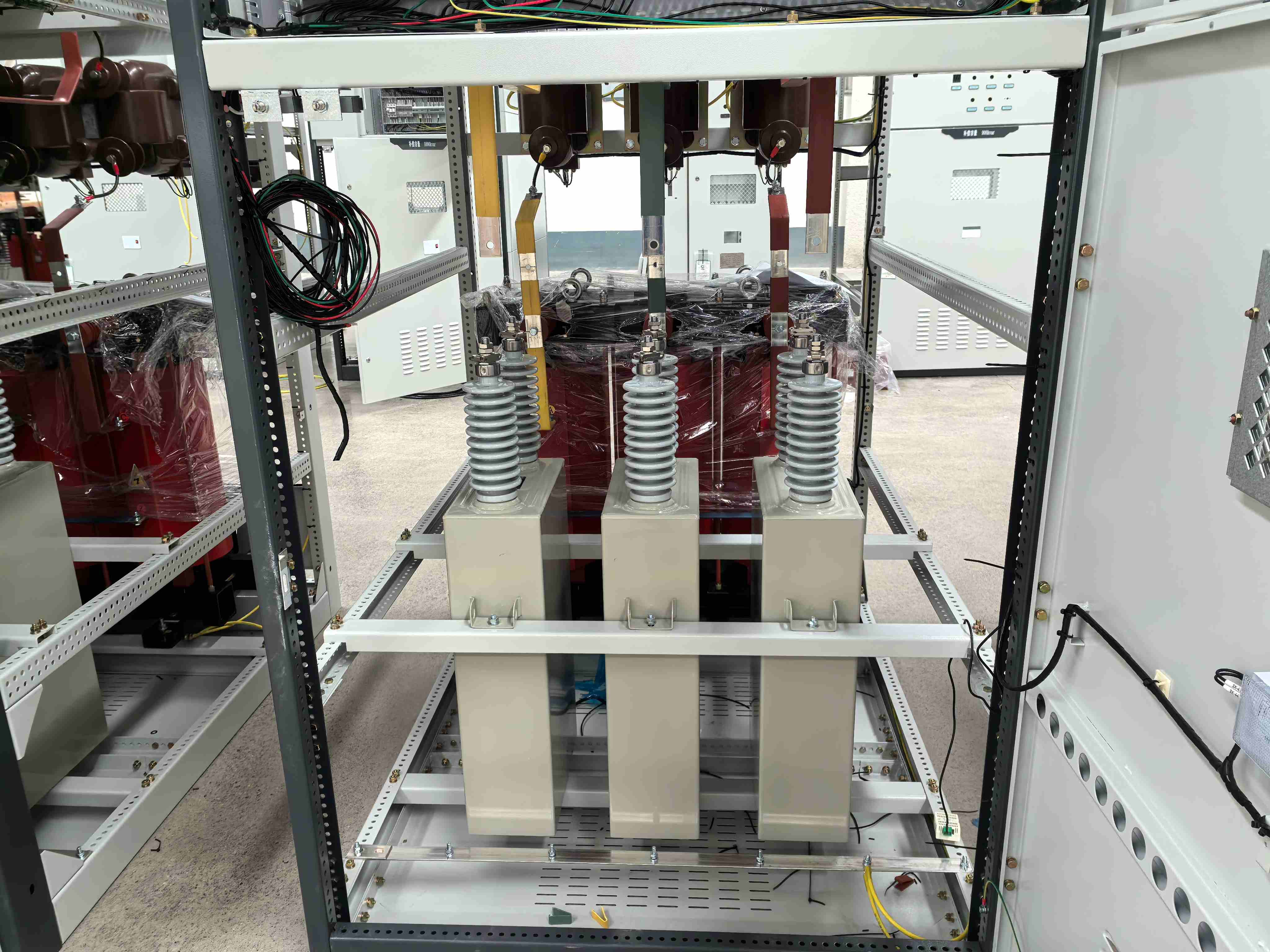
The main parts that make it work are three: fixed and moving contacts inside a sealed ceramic or glass casing; a spring-operated system; and extra switching elements. As soon as the mechanism starts working, the contacts separate, making a short metallic vapour arc. This arc spreads out horizontally instead of staying vertical because of the vacuum environment. This lets the current stop right away at the next natural current zero crossing in AC systems. This process takes only 20 to 50 milliseconds, which is a lot less time than the 60 to 80 milliseconds that air circuit breakers usually take.
The Vacuum Interruption Process During Fault Conditions
In normal use, the contacts stay closed with little resistance, letting the rated current flow without getting too hot. The trip command turns on the opening mechanism when protection relays sense overcurrent, short-circuit, or ground fault conditions. As the contacts come together, the initial space of 5 to 15 millimetres creates enough dielectric strength to handle short-term recovery voltage. The arc is made when metal vapour evaporates from objects that are touching. This metal vapour is usually a copper-chromium alloy that is designed to have low vapour pressure and high heat conductivity.
The pressure in the vacuum stays below 10-4 Torr, which stops air molecules from supporting continuous ionisation. Ions and electrons quickly recombine or stick to the room walls, putting out the arc within half a cycle. This fast deionisation feature lets vacuum breakers handle repeated switching operations—up to 10,000 mechanical cycles—without significant contact erosion. This solves the common operation problems found in factories that use CNC machines or data centers that do regular load transfers.
Categorizing VCBs by Voltage Rating and Design Configuration
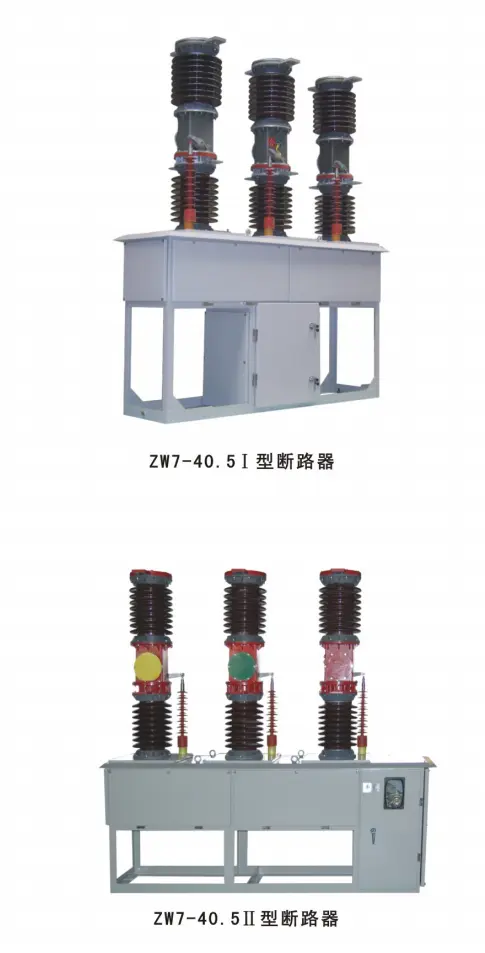
Medium-voltage vacuum circuit breakers can handle voltages from 7.2kV to 40.5kV and currents from 630A to 3150A. For example, the VS1-12 series is an indoor type that fits into a metal-clad switchgear cabinet made for controlled settings like hospital electrical rooms or factory control centers. Withdrawable designs on these units let maintenance teams take out the breaker cartridge without turning off nearby circuits, which is very important for keeping mission-critical facilities running.
Outdoor models, like the ZW32-40.5, have waterproof steel cases that meet IP67 standards. These protect the internal parts from dust, water, and temperature changes from -40°C to +60°C. These layouts are used for utility distribution networks, solar farms, and wind energy substations where equipment needs to be strong because it is exposed to harsh weather. The ZW32-40.5 is designed to meet the needs of outdoor substations with its small size and optional isolation switch, which allows safe maintenance isolation without the need for separate disconnect hardware. This model shows how modern vacuum breaker design matches performance with space economy. It has a rated voltage of 12kV, a rated current of 630A, and 50Hz frequency compatibility. This is an important thing to think about when upgrading old infrastructure in urban substations that don't have a lot of room.
Advantages of Vacuum Circuit Breakers Over Other Technologies
Superior Dielectric Strength and Environmental Credentials
At the same contact gaps, vacuum has a much higher dielectric strength than air or low-pressure gases. A 10 mm vacuum gap provides the same level of insulation as 150 mm of air, which lets manufacturers make switchgear assemblies that are smaller. This saves space, which cuts down on material costs and makes installation easier in retrofit jobs where machine sizes are limited by existing infrastructure. Vacuum breakers are the most environmentally friendly choice for companies that need to track Scope 1 emissions under corporate sustainability reporting frameworks because they don't contain SF6 gas, which is a powerful greenhouse gas with 23,500 times the global warming potential of CO2.
IEC 62271-100 certified units have shown that vacuum breakers can handle dielectric withstand voltages of more than 80kV for one minute, and they can also handle lightning impulses of 185kV. These parameters make sure that the device works reliably during short-term overvoltage events like lightning strikes or capacitor bank switching, which can cause annoying trips in less reliable breaker technologies. Because the ZW32-40.5 meets both IEC 62271-100 and IEEE C37.04 standards, procurement workers can be sure that the equipment will work on both North American and foreign grids.
Reduced Maintenance Requirements and Operational Efficiency
An analysis of operational costs shows that vacuum breakers need to be inspected every 2,000 to 3,000 operations, or three to five years. This is in contrast to SF6 units, which need to be maintained once a year and may need to be refilled and their gas density checked. The sealed vacuum interrupter gets rid of the problems that come with traditional breakers getting contaminated with oil. This is especially important in metallurgical plants where airborne particles speed up dielectric degradation. Contact wear rates in vacuum settings are 0.1 to 0.2 mm per 10,000 operations. This means that under normal industry duty cycles, the service life can last up to 20 to 30 years.
The spring-operated system in models like the ZW32-40.5 lets you charge them by hand during power blackouts, so you can close them in an emergency without extra power. This is a feature that utility workers like during the process of restoring the grid. Let-through energy is kept to a minimum by clearing faults quickly (less than 50 milliseconds), which lowers the stress on transformers and wires further downstream. This speed advantage leads to measurable improvements in power quality indices, especially in places with variable frequency drives or precision manufacturing equipment that doesn't like voltage drops that last longer than three cycles.
Application Superiority in Critical Infrastructure Environments
According to data from the Uptime Institute, data centers that use N+1 redundancy architectures use vacuum breakers in automatic transfer switch configurations. This keeps the contacts reliable during frequent load transfers, which stops downtime events that cost $5,000 to $7,000. Because they operate quietly (below 45dB), these devices can be used in hospitals where noise can get in the way of patient care. When transformer primaries or large motor starters are turned on, vacuum breakers can handle inrush currents of up to 100 times their rated capacity. These are current surges that can weld contacts in air breakers that aren't rated properly.
Adding renewable energy sources is hard because solar inverters and wind mills cause harmonic distortion and irregular output patterns. The available IoT devices on the ZW32-40.5 make it ready for the smart grid. This lets predictive maintenance plans work, warning operations teams of strange temperature rises or mechanical timing changes before they break. This feature supports condition-based repair plans that make the best use of labour and spare parts inventory, which is very important for EPC companies that manage green portfolios at multiple sites in different parts of the world.
Maintenance and Operational Best Practices for VCBs
Routine Inspection Protocols for Vacuum Integrity Verification
The most important thing for vacuum circuit breaker devices to be reliable is to keep the vacuum integrity. The sealed interrupter doesn't need any maintenance on the inside, but external diagnostic methods can find signs of vacuum loss before they cause a catastrophic failure. During planned power outages, high-potential tests at 80% of the rated impulse voltage show that the dielectric strength stays within the limits. If the withstand voltage drops quickly, it could mean that there are microscopic leaks or that the inside of the device is contaminated from contact material building up on insulating surfaces.
When thermal imaging studies look at terminal connections, they find unusual heating. This is usually a sign of loose nuts that make contact resistance higher. For main power terminals, torque specifications are usually between 40 and 60 Nm. An annual check keeps connections from breaking in places with a lot of vibration, like steel mills or mines. The mechanical operation counter built into the spring mechanism gives real-world information for planning preventive maintenance intervals. This way, maintenance planners can match breaker service with plant shutdown plans instead of using random schedules.
Troubleshooting Common Failure Modes and Diagnostic Procedures
The most common operational complaint is closing refusal, which can usually be traced back to three main causes. Closed springs that are discharged happen when motor operators stop working because of problems with the control circuit or blown fuses in the backup power supply. Manual charging methods can be used as a backup, but they aren't very comfortable to use over and over again. If the secondary control voltage changes more than the 85%–110% tolerance window, the coil can't be activated. This is because voltage drops during motor starting events can stop the breaker from closing during important fault recovery processes.
Grounding switches or cabinet door safety switches physically stop closing orders. This is done on purpose to keep the electricity from getting too high. As part of the diagnostic process, control circuits must be separated to make sure they are still connected through interlock chains before any mechanism flaws can be considered. To check for contact wear, the overtravel distance needs to be measured on a regular basis. Values below the manufacturer's minimums (usually 2-3 mm) mean that the interrupter is getting close to the end of its useful life and needs to be replaced. Modern units like the ZW32-40.5 have modular interrupter cartridges that can be changed by technicians in two to four hours. This cuts down on the time that the power is out compared to replacing all the breakers.
Case Evidence: Maintenance Program Impact on Total Cost of Ownership
A factory plant in the Midwest with 45 vacuum breakers spread across three sites used thermography every six months and contact travel measurements every year to compare performance to a control group that only got time-based checks. Over the course of five years, the condition-based maintenance group had no unplanned failures, while the control group had eleven. This saved the condition-based maintenance group $280,000 in downtime and emergency repair costs. Contacts were replaced after an average of 18 years of service, instead of the 12 years that time-based rules say they should be replaced. This shows that inspection data increases the life of capital equipment. These results show that investing in maintenance infrastructure is a good idea from a financial point of view. This is especially true for hospital and data center owners, whose unplanned outages lead to regulatory scrutiny and revenue losses that are much higher than the costs of preventative maintenance.
Procurement Guide: Choosing and Buying Vacuum Circuit Breakers
Critical Technical Specifications Aligned with Application Requirements
Before making a purchase choice of vacuum circuit breaker, it is important to get correct fault current calculations from studies of how utilities connect and data on transformer impedance. The symmetrical interrupting capacity must be 15-20% higher than the highest possible short-circuit current to account for grid upgrades over the 25-year service life of the equipment. With a breaking capacity of ≥25kA, the ZW32-40.5 is good for distribution feeders in utility networks and industrial buildings with 12kV service entrances. However, buildings that are supplied by 40.5kV subtransmission may need units with a breaking capacity of 31.5kA.
There are normal voltage values of 7.2kV, 12kV, 17.5kV, 24kV, and 40.5kV. The choice is based on the system's nominal voltage and the basic insulation level (BIL) that is needed. Standard utility distribution systems can use a 12kV class breaker with a 95kV BIL. However, sites above 1,000 meters need to be derated or have better external insulation to account for the lower air density. Current values are based on continuous load profiles plus a safety buffer for thermal transients. For example, a 630A breaker can handle a 750kVA transformer (37A per phase at 12kV) and still leave thermal headroom for harmonic currents caused by nonlinear loads.
Evaluating Manufacturers and Balancing Performance with Support Infrastructure
Global sellers bring different strengths to the table when evaluating purchases. European makers stress following strict EU environmental rules and offer a wide range of retrofit compatibility with old switchgear platforms commonly found in industrial buildings built in North America between the 1980s and 1990s. Vertical integration helps Asian manufacturers offer competitive prices on standard configurations, but lead times for customisations may be longer, 12 to 16 weeks for non-catalog specifications. Most of the time, domestic suppliers can quickly send replacements in an emergency and keep regional service centers staffed with factory-trained technicians who know how utilities work in the area.
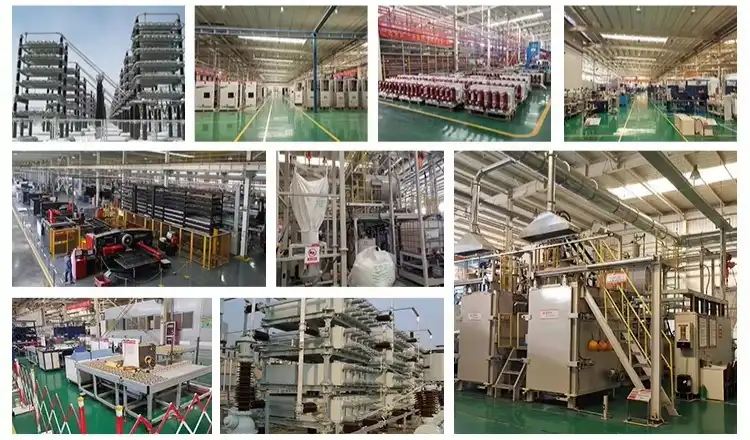
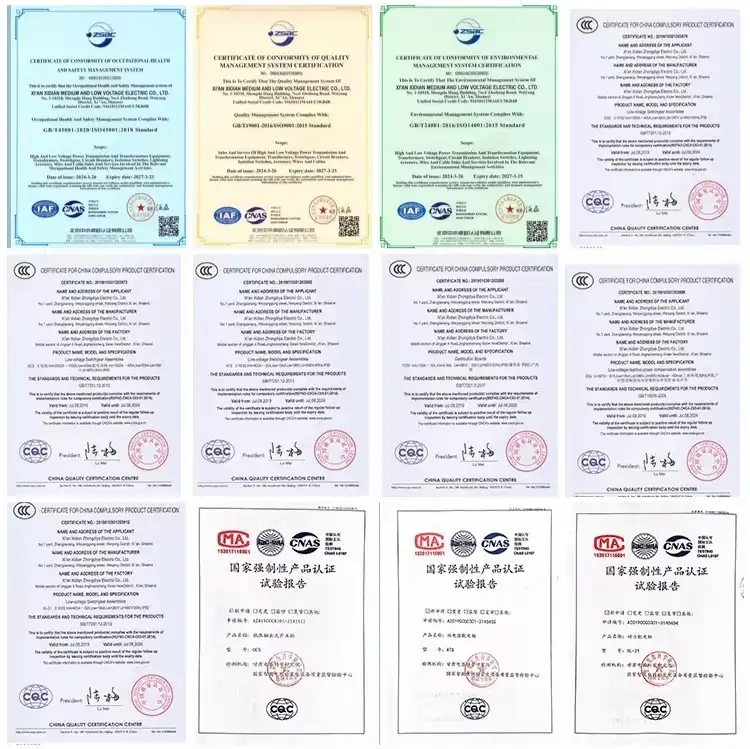
Xi'an Xikai Medium & Low Voltage Electric Co., Ltd. is one of China's biggest factories that makes medium-voltage equipment. They make over 100 different models in 34 series to meet a wide range of needs, from standard indoor switchgear to equipment that can work at 4,000 meters above sea level. The company's ZW32-40.5 model goes through 23 different approval tests. These include checking the dielectric strength at 80kV for one minute and simulating mechanical durability through 10,000 switching operations while under load. This testing schedule, which is done in ISO 9001-certified facilities using robotic welding and AI-powered visual inspection systems, makes sure that each batch is the same. This is very important for multi-site projects that need extra parts that can be used at different locations.
Strategic Procurement Approaches for Multi-Project Portfolios
Setting up frame agreements with manufacturers is helpful for EPC firms that are working on multiple projects at the same time because it secures volume pricing while still allowing for technical changes that are specific to each project. In order to get a detailed quote, you should include information about the height, outdoor temperature ranges, seismic zone standards according to IEEE 693, and any features that reduce harmonics, like surge arresters or capacitor switching duty rates. Transportation issues should be thought about right away; outdoor breakers with steel covers can weigh up to 300–400 kg, which means they need to be coordinated with rigging workers for final placement in pad-mounted installations.
Lead times change depending on the state of the global supply chain. However, catalogue items usually ship within 6 to 8 weeks, while engineered-to-order configurations take 12 to 16 weeks.
Payment terms usually include a 30% payment when the order is confirmed, 60% before shipment, and 10% retention that is released after the project is successfully commissioned. This plan lines up cash flow with project goals. Professionals in procurement should make sure that the warranty covers vacuum interrupters and operating mechanisms. Usually, the guarantee lasts for three years from the date of starting or four years from the date of shipment, whichever comes first.
Conclusion
Vacuum circuit breakers are the most reliable way to distribute medium-voltage power because they quickly end an arc, require little maintenance, and are good for the environment. Understanding how they work gives facility managers the power to get the most uptime, and strategic procurement based on technical specifications and manufacturer capabilities makes sure the project is a success. The technology has been used successfully in data centers, factories, and power networks, showing that it can be used in a wide range of difficult situations. As power systems change to include more renewable energy and smart grid architectures, vacuum breakers with monitoring features will continue to be important for keeping operations running and meeting sustainability goals.
FAQ
1. What distinguishes vacuum circuit breakers from SF6 models?
The main difference is in the arc-extinguishing material and the damage it does to the surroundings. Vacuum breakers use sealed chambers with almost no vacuum pressure, which completely stops the release of greenhouse gases. SF6 units hold sulphur hexafluoride gas, which needs to be checked for leaks on a regular basis and then recycled when they're no longer needed. Vacuum technology offers shorter maintenance intervals and faster arc extinction times, but SF6 breakers are still most common in gearbox uses above 72kV because the difficulty of making vacuum interrupters makes them more expensive. Because they are under a lot of pressure from regulators to lower their greenhouse gas emissions, utility companies are requiring vacuum technology for all new medium-voltage installations below 40.5kV.
2. How often should maintenance inspections occur on VCBs?
How often inspections are done relies on the working job cycle and the conditions of the environment. Visual checks and confirmation of mechanical function should be done every 2,000 switching actions or three years, whichever comes first. For heavy-duty tasks like switching capacitor banks or servicing an arc furnace, it may be necessary to do annual checks that focus on measuring contact wear and making sure there is no overtravel. Using thermal imaging surveys during times of high traffic can find connection problems before they happen. Facilities that keep detailed operation logs can switch to condition-based maintenance strategies that make the best use of workers and cut down on invasive testing that speeds up the wear on supporting parts.
3. What distinguishes vacuum circuit breakers from SF₆ models?
The main difference is the arc-extinguishing medium and environmental effect. Vacuum circuit breakers employ a sealed chamber with near-absolute vacuum (below 10⁻⁴ Pa) to extinguish arcs quickly and without emitting greenhouse gases during operation or disposal. Sulphur hexafluoride gas, used in SF₆ breakers, needs frequent leak inspections and recycling at end-of-life. If released, it has a global warming potential 23,500 times that of CO₂. Vacuum technology has quicker arc extinction (20-50 ms vs. 60-80 ms for air breakers), decreased maintenance frequency (2,000-3,000 operations vs. yearly SF₆ checks), and is suitable for medium-voltage applications up to 40.5 kV. SF₆ breakers are more frequent above 72 kV owing to cost and manufacturing complexity. Due to EU F-gas rules and California GHG reporting, utilities are mandating vacuum breakers for new medium-voltage systems.
Partner with Xi'an Xikai for Your Vacuum Circuit Breaker Requirements
Xi'an Xikai Medium & Low Voltage Electric Co., Ltd. is ready to help you with your power distribution projects. They offer complete vacuum circuit breaker solutions that are backed by more than 40 patents and vertical manufacturing integration. Our expert team can help you with application planning to make sure that the specs of your tools work with the voltage levels, current needs, and environmental conditions where you work. We provide IEC-compliant products and offer technical support 24 hours a day, seven days a week, as well as on-site training programs for both new and old substations and industrial facilities. Send an email to serina@xaxd-electric.com, amber@xaxd-electric.com, or luna@xaxd-electric.com to talk about your project needs and get detailed quotes from a reputable vacuum circuit breaker manufacturer that promises on-time delivery and helpful customer service after the sale.
References
1. IEEE Standard C37.04-2018, "IEEE Standard for Ratings and Requirements for AC High-Voltage Circuit Breakers with Rated Maximum Voltage Above 1000V," Institute of Electrical and Electronics Engineers, New York, 2018.
2. IEC 62271-100:2021, "High-voltage switchgear and controlgear - Part 100: Alternating current circuit-breakers," International Electrotechnical Commission, Geneva, 2021.
3. Slade, P. G., "The Vacuum Interrupter: Theory, Design, and Application," CRC Press, Boca Raton, Florida, 2017.
4. Greenwood, A. N., "Vacuum Switchgear," Institution of Engineering and Technology, London, United Kingdom, 1994.
5. Uptime Institute, "Data Center Resiliency Annual Report: Outage Analysis and Best Practices," Uptime Institute LLC, New York, 2023.
6. National Electrical Manufacturers Association, "NEMA SG-4: Alternating Current High-Voltage Circuit Breakers - Conformance and Application Guide," National Electrical Manufacturers Association, Rosslyn, Virginia, 2020.