How do self-healing capacitors improve circuit reliability?
2026-08-11 10:43:22
Self-healing Capacitors make circuits more reliable by fixing small insulating problems on their own, without having to stop the system. When localized breakdowns happen, the very thin metal electrode around the defect evaporates in microseconds, forming an insulating barrier that keeps the fault from spreading. This self-recovering system stops catastrophic failures, increases the operating lifespan to more than 100,000 hours, and gets rid of unexpected downtime that costs factories thousands of dollars every time it happens. Traditional capacitors stop working completely when the dielectric breaks down. But self-healing technology turns potential short circuits into very small capacitance losses, so critical power systems can keep working.

Understanding Self-Healing Capacitors: Principles and Technology
The Core Mechanism Behind Self-Recovery
A carefully designed metallization layer, about 200 to 500 Angstroms thick, is vacuum-deposited onto polypropylene or polyester dielectric films to help the process of self-healing. When voltage stress causes a micro-short through the insulator, an arc discharge happens, which produces a lot of heat in a small area. This heat energy quickly melts the metal around the fault, removing the problem and recovering the insulation's integrity. The whole thing happens in milliseconds and is invisible to the circuit that is connected. This basic design makes these parts different from foil-electrode capacitors, where the same mistakes cause them to fail permanently and hurt other equipment.
Metallization Profiles and Material Selection
Heavy-edge or gradient metallization patterns are used in advanced manufacturing methods to improve self-healing margins and improve current distribution. Choosing electrodes made of zinc, aluminum, or a zinc-aluminum combination changes both how well they work electrically and how well they heal. Polypropylene film (MKP) capacitors have better electrical qualities, with dissipation factors below 0.002 at 1kHz. Polyester versions (MKT), on the other hand, are cheaper and better for less demanding uses. The choice of material has a direct effect on the insulation resistance, which in quality units is usually more than 3000 MΩ·µF, and the dielectric strength when voltage stress is applied for a long time.
Safety Classifications and Protection Mechanisms
Based on how they fail, IEC 60252-1 sets up safety classes S0 through S3. S0 units don't have any specific safety features, but S1 types do have safety features that stop explosion failure. The highest safety standards are S2 and S3, which have split film construction or overpressure disconnectors that physically cut off circuits when critical fault conditions happen. These pressure-sensitive parts find gas buildup inside the capacitor from too many self-healing events and turn it off before thermal runaway happens. Manufacturing facilities that follow ISO 9001 and IEC 61071 standards make sure that these safety features are always used in all production batches.
Why Self-Healing Capacitors Enhance Circuit Reliability?
Preventing Catastrophic System Failures
When dielectric stress is put on traditional capacitors, damage builds up until they break completely. This can damage other equipment through short-circuit currents or fire risks. When these kinds of problems happen in factories, production stops right away, emergency contractors are called in, and safety problems could happen. With self-healing technology, this type of failure goes from being catastrophic to being graceful. Each clearing event only removes very small areas of electrodes. This lets the part keep working while monitoring capacitance drift for signs of gradual wear. This fail-safe feature is very useful in places like data centers and hospitals where bad power quality can directly threaten important operations and patient safety.
There are big effects on the economy. Industry research shows that unplanned downtime on lines that make cars costs $22,000 per minute. In a power factor adjustment bank, a single failed standard capacitor can set off overloads in transformers, motor burnouts, or voltage sags that affect whole production zones. These transient stresses are absorbed by Self-healing Capacitors without spreading problems throughout the electrical distribution infrastructure, whether they are caused by lightning spikes, switching transients, or harmonic distortion.
Extending Maintenance Intervals and Asset Lifespan
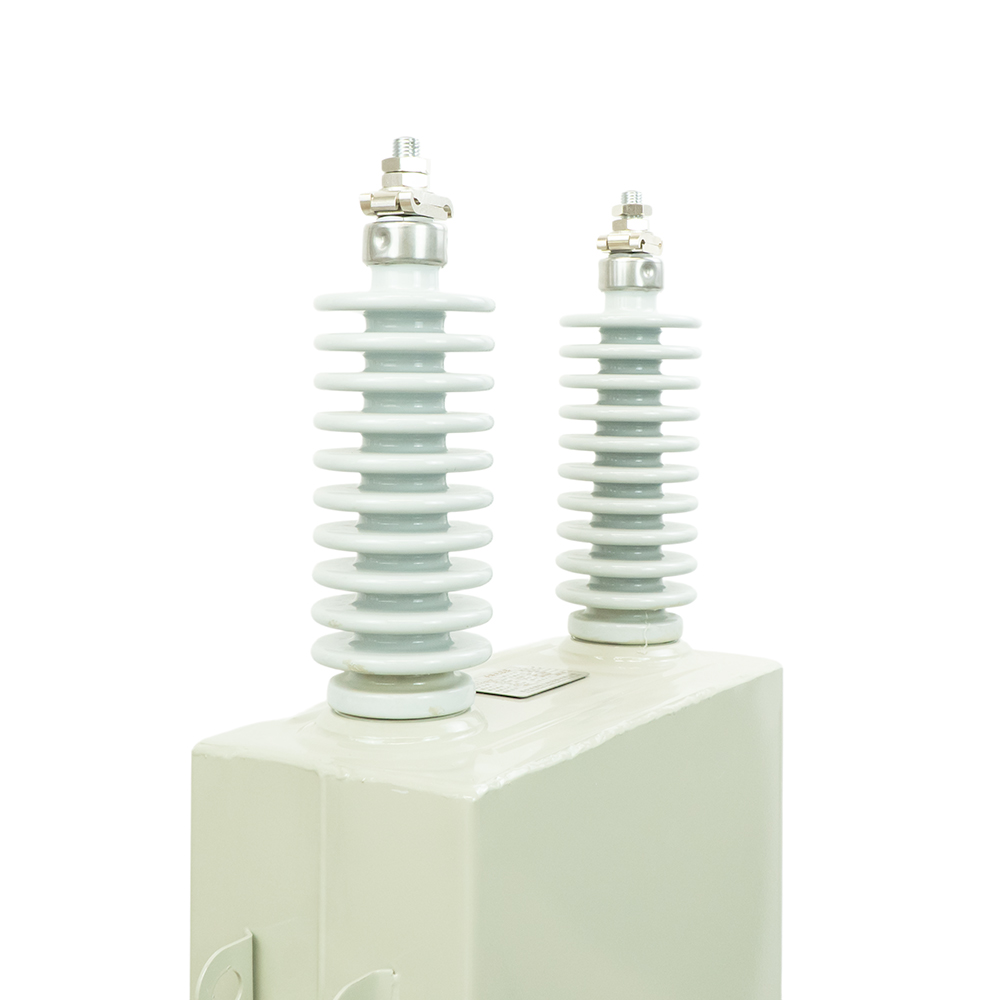
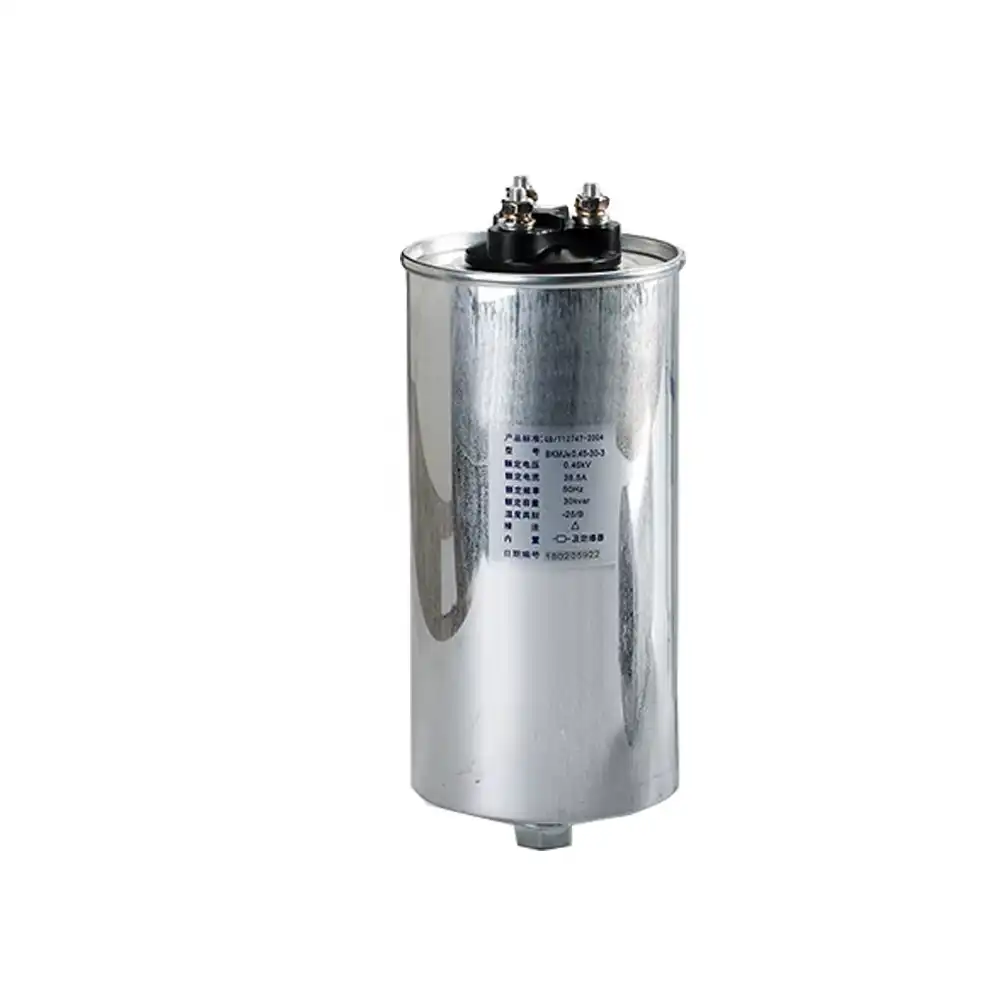
Another benefit of reliability is that it doesn't need any maintenance. Regular capacitor banks need to be checked every three months to find case bulging, terminal corrosion, or electrolyte leakage. Utility companies that are in charge of hundreds of distribution substations have to pay a lot of people to do these regular checks. Self-healing units don't need to be inspected very often because they can handle faults on their own, and they usually last more than 60,000 to 100,000 hours of operation under normal conditions. The 400V Self-healing Capacitor-cylindrical BKMJ0.46-30-3 is a good example of this sturdiness because it has PU resin potting that stops water from getting in and mechanical shaking, which are two things that often speed up degradation in industrial settings.
Managing temperature has a big effect on how long something lasts. When operating temperatures are 10°C higher than the rated temperature, the projected lifespan is cut by about half because the dielectric ages faster. Small models, like the BKMJ0.46-30-3, which is only 242 mm tall, make it easier to install in ventilated enclosures where heat can escape and keep the device running at its best temperature. This saves a lot of room and is especially helpful for retrofit projects where existing capacitor banks need to handle more reactive power adjustment without having to change the building itself.
Comparing Self-Healing Capacitors with Other Capacitor Types
Performance Against Film and Ceramic Alternatives
Ceramic capacitors are good for high-frequency filtering because they have a low equivalent series resistance and a high bulk efficiency. But they aren't very useful in industrial power systems because they break easily under mechanical stress and are easily affected by voltage coefficient effects. The capacitance of a ceramic part can change by 20–30% over its running voltage range. This makes the reactive power output hard to predict. Film capacitors without metallized electrodes have stable electrical properties, but they don't have any fault recovery methods, so when the dielectric stability is compromised, they stop working forever.
These holes are filled by Self-healing Capacitors (metallized film capacitors). They keep the capacitance stable within a range of ±5% across voltage and temperature ranges and can handle surge currents up to 100 times their rated capacity. This is important for handling sudden currents that happen when a motor starts up or a transformer turns on. The BKMJ series has a voltage rating range of 250V to 525V, with options going up to 2000V. This means that it can work with a variety of grid setups and protects sites against voltage fluctuation trends that may happen in the future as more green energy is added.
Cost-Performance Analysis for Industrial Buyers
Purchasing experts often compare the original cost of a part to the total cost of ownership. Self-healing Capacitors cost 15–25% more than regular foil types, but lifetime study shows that they save money overall. Less frequent replacements, no more emergency maintenance calls, and no more production losses from power quality events usually make up for the difference in cost within 18 to 24 months of continuous operation. EPC companies that are designing new electrical systems are making self-healing technology more and more common. They do this because they know that the prices of the parts don't add up to much when compared to the guarantees and warranties that come with the projects.
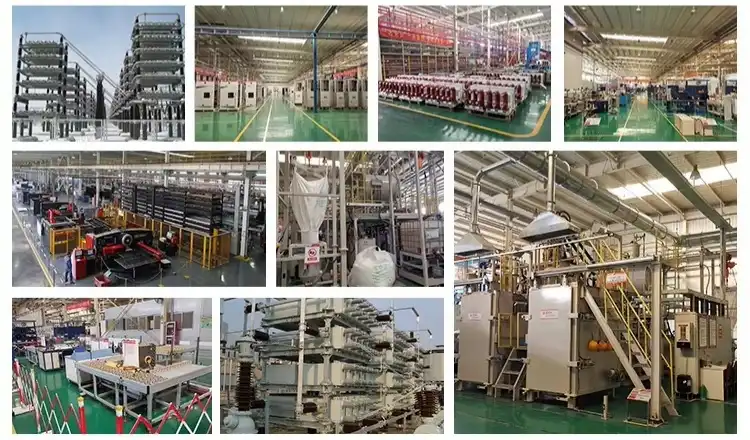
Buying things in bulk is another way to help the economy. Manufacturers like Xi'an Xikai Medium & Low Voltage Electric Co., Ltd. offer discounts for buying in bulk and can make custom configurations for big projects. A producer of a solar farm that puts in 500 units of 30kvar capacitors for reactive power compensation will save money on each unit and get technical help to make sure the system works well together. Standard setups have lead times of about four weeks, which lets projects stay on schedule without having to pay too much for supplies.
Selecting and Procuring Self-Healing Capacitors for Your Projects
Critical Specification Parameters
When choosing a voltage grade, you have to take grid changes and harmonic-induced voltage rise into account. Choosing a 440V capacitor for a 400V system protects against long-term overvoltage situations that would otherwise cause too many Self-healing Capacitor events. Electrode material is used up during each clearing cycle; premature metallization loss shows up as capacitance dropping below useful levels. Output ∝ V²actual/V²rated shows that slightly higher voltage ratings keep reactive power supply at goal levels while increasing service life.
Specifications for capacitance tolerance and dissipation factor have a direct effect on how much energy is used. The 400V Self-healing Capacitor-cylindrical BKMJ0.46-30-3 has dissipation factors below 0.2W/kvar, which means it has very little internal loss even when it is loaded continuously at 30kvar. This efficiency meets the requirements for LEED certification and is supported by utility incentive programs that reward correcting low-loss power factors. Temperature class values must meet the conditions of installation (-25°C to +55°C for normal industrial grades, wider ranges for specialized environments). Installations in tropical areas or enclosures that keep heat in may need higher temperature classifications or derating calculations.
Supplier Qualification and Compliance Verification
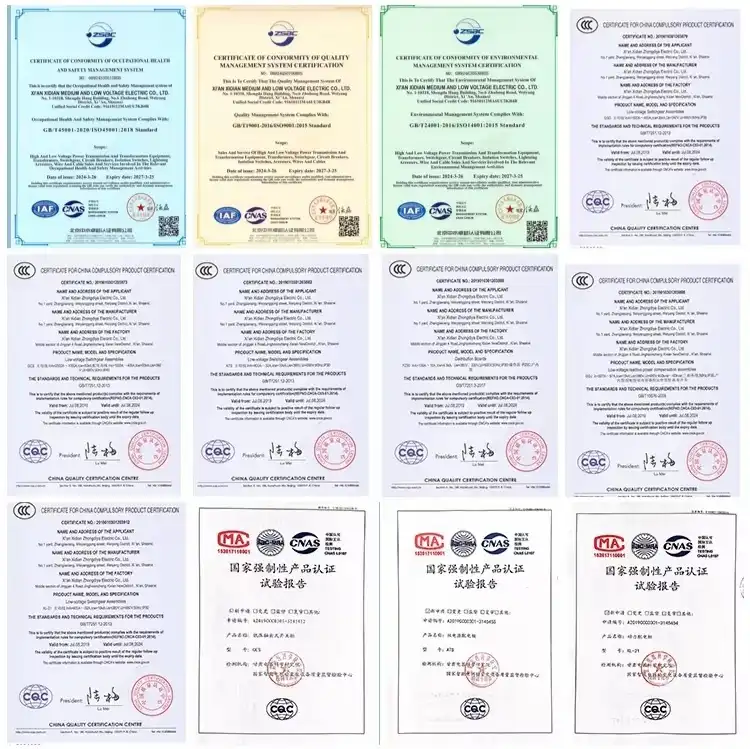
Working with certified manufacturers makes sure that the products are consistent and meet the standards. Some important approvals are IEC 60252-1 for AC motor capacitors, IEC 61071 for power electronics uses, and regional safety marks such as UL 810 or CCC. Manufacturing companies that have both ISO 9001 (quality management) and ISO 14001 (environmental management) licenses show that they have structured rules over their processes. Buyers should ask for type test reports that show the units' ability to withstand 72 hours of load cycling, impulse voltage, and thermal shock. These tests make sure the units can handle electrical and environmental stresses in the real world.
Things to think about in the supply chain include minimum order quantities, the dependability of wait times, and technical help after the sale. Xi'an Xikai offers engineering advice at all stages of a project, from creating the original specifications to helping with the completion. Having access to thorough datasheets, CAD models for mechanical integration, and sample units for testing prototypes speeds up the project schedule. Industrial-grade units usually come with a 10-year warranty, which shows that the manufacturer trusts the strength of the design and the quality of the materials.
Testing, Application Cases, and Maintaining Self-Healing Capacitors
Diagnostic Methods and Predictive Monitoring
Before turning on the Self-healing Capacitor, pre-deployment testing makes sure it is working properly. When measuring insulation resistance with megohm meters at 500V DC, results should be higher than the manufacturer's minimums, usually more than 1000 MΩ for brand-new units. Capacitance testing shows that rated values are within acceptable ranges, and dissipation factor testing finds excessive dielectric losses that could be a sign of a problem with the production process or damage during shipping. Using thermal imaging during the initial power-up process can find problems with connections or internal faults that are causing localized heating.
Capacitance drift is tracked over time by operational monitoring. Any drop in value greater than 5% from the standard rate means that the device is getting close to its end-of-life, because repeated self-healing events wear down the electrode material. In the real world, measuring current is useful for figuring things out. For example, rated current is about 1.44 × kVAR for 400V circuits, which means that a 30kvar unit should draw about 43A per phase. Large differences show that the capacitance has been lost or that the disconnector has been activated. No matter what the electrical measurements say, the case should be replaced right away if it bulges, which is a visual sign of internal pressure buildup.
Real-World Application Success Stories
Self-healing Capacitors rated for harmonic-rich environments were installed in a pharmaceutical manufacturing plant in the southeast of the United States to replace old power factor adjustment equipment. In the past, installations had to be replaced every other year because the interactions between the variable frequency drives caused voltage distortion. The plant went three years without any capacitor failures after switching to heavy-duty metallized film units with better self-healing capabilities. This cut servicing costs by $47,000 a year and raised the power factor from 0.82 to 0.96. As a result, utility demand charges went down, which saved the business an extra $12,000.
Standard capacitor setups at a local water treatment plant that worked near the coast were rusting faster than expected. Salty air got into enclosures, breaking down internal parts and causing them to fail too soon. Moisture-related decay was removed by the specification of IP54-rated Self-healing Capacitors with hermetic PU resin covering. The installation has been up and running for five years without any upkeep, even though parts used to need to be replaced every year. Substation managers who are in charge of integrating renewable energy report similar benefits, with Self-healing Capacitors stabilizing voltage against intermittent production changes from solar inverters without the frequent breakdowns seen with traditional reactive compensation gear.
Maintenance Best Practices for Maximum Longevity
Maintenance plans done every three months improve efficiency and find new problems before they get worse. Checking the tightness of the terminals stops resistive heating from happening because of loose connections, which can lead to areas that are too hot for the components to handle. Keeping the enclosure clean keeps the air working well; dust builds up and acts as thermal insulation, raising temperatures inside and speeding up aging. Testing the operation of discharge resistors keeps people safe while they do service work. These bleed resistors release stored energy when they are de-energized, which keeps people from getting electric shocks.
Monitoring the environment makes things last longer. The dielectric properties can be kept by keeping the room temperature within the rated ranges, making sure there are enough airflow gaps, and keeping the dielectric from getting wet directly. For installations in harsh climates, climate-controlled enclosures or derating calculations may be helpful. Harmonic distortion measurement finds problems with the power that need to be fixed with filters before they put too much stress on capacitors beyond their design limits. Self-healing Capacitor technology gives you the best return on your investment when you keep an eye on it and follow the manufacturer's instructions.
Conclusion
Through self-healing faults that stop catastrophic failures and increase operating lifespans, Self-healing Capacitors essentially change the reliability of circuits. Their metallized film construction and quick clearing features keep important equipment safe in industrial, utility, and business settings. To make the right choice, you need to carefully match the voltage ratings, capacitance values, and environmental ratings to the needs of the application. Working with well-known makers guarantees access to approved goods that meet international standards. Self-healing technology is the best choice for industrial electrical systems where dependability affects safety and profits because it doesn't need to be maintained and has higher uptime and lower lifecycle costs.
FAQ
1. Does capacitance gradually decrease during the self-healing process?
Yes, each clearing event evaporates tiny areas of electrodes, which slightly lowers the useful capacitance over the lifetime of the part. This wear and tear happens in expected ways, staying within 5% of estimated values for more than 60,000 hours of use. Monitoring capacitance drift lets you use condition-based replacement methods instead of just reacting to failures when they happen.
2. Can these capacitors recover from massive voltage surges like lightning strikes?
Self-healing Capacitors are good at dealing with moderate transients, but extreme energy events may be too much for them to handle. Lightning arresters and surge protectors are the first line of defense. Capacitors then handle any residual transients. Installations that use multiple layers of security are the most reliable against a wide range of electrical dangers.
3. What differentiates safety ratings S0 through S3?
S0 units don't have specific defenses against failure, while S1 designs stop failure modes that explode. The S2 and S3 categories have actual disconnection devices, like segmented films or pressure switches, that stop circuits before they reach a state of thermal runaway. Higher safety scores are good for situations where a broken part could put people in danger or start a fire, so the extra cost is worth it for better protection.
Partner with Xi'an Xikai for Proven Self-Healing Capacitor Solutions
The Self-healing Capacitor technology from Xi'an Xikai Medium & Low Voltage Electric Co., Ltd. is certified and designed to make circuits more reliable and improve operational efficiency. Our 400V cylindrical BKMJ0.46-30-3 series is small and doesn't need any upkeep. It comes with strict quality rules and full expert support. As a top producer of Self-healing Capacitors for the industrial, utility, and EPC sectors around the world, we offer custom solutions that are made to fit harsh weather conditions, such as dusty industrial areas and humid coastal sites. Our tech team can help you with your specifications, look over samples, and quickly fill large orders within four weeks. Send an email to serina@xaxd-electric.com, amber@xaxd-electric.com, or luna@xaxd-electric.com to talk about your power quality needs and get full datasheets.
References
1. Institute of Electrical and Electronics Engineers (IEEE), "Standards for Metallized Film Capacitors in Industrial Power Systems," IEEE Transactions on Industry Applications, 2021.
2. International Electrotechnical Commission, "IEC 60252-1: AC Motor Capacitors - Part 1: General Performance Requirements and Testing," 4th Edition, 2019.
3. Johnson, R.M. and Stevens, P.A., "Reliability Analysis of Self-Healing Capacitors in Renewable Energy Applications," Journal of Power Electronics and Industrial Systems, Vol. 18, No. 3, 2020.
4. National Electrical Manufacturers Association (NEMA), "Application Guide for Power Factor Correction Capacitors," NEMA CP1-2022, 2022.
5. Chen, W.K., "Dielectric Materials and Self-Healing Mechanisms in Metallized Film Capacitors," Materials Science and Engineering Reports, Vol. 142, 2020.
6. Electric Power Research Institute (EPRI), "Best Practices for Capacitor Bank Maintenance and Reliability Enhancement in Distribution Systems," Technical Report 3002015895, 2019.