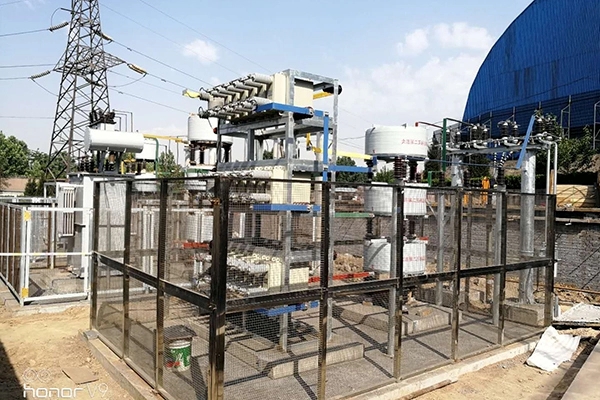
Potential Transformer: Definition, Principle & Applications
2026-06-22 17:40:10
A Potential transformer (PT) is a precise instrument transformer designed to lower high-voltage signals to normal low-voltage levels, usually 100V or 120V. This lets electrical networks be protected and accurately measure voltage. PTs are different from power transformers in that they protect measuring equipment from dangerous high-voltage lines to ensure accurate measurements and worker safety. This difference is very important when facility workers and grid managers need accurate data to keep an eye on the system without putting people or sensitive equipment at risk of voltages that can reach 10kV or higher in utility and industrial settings.
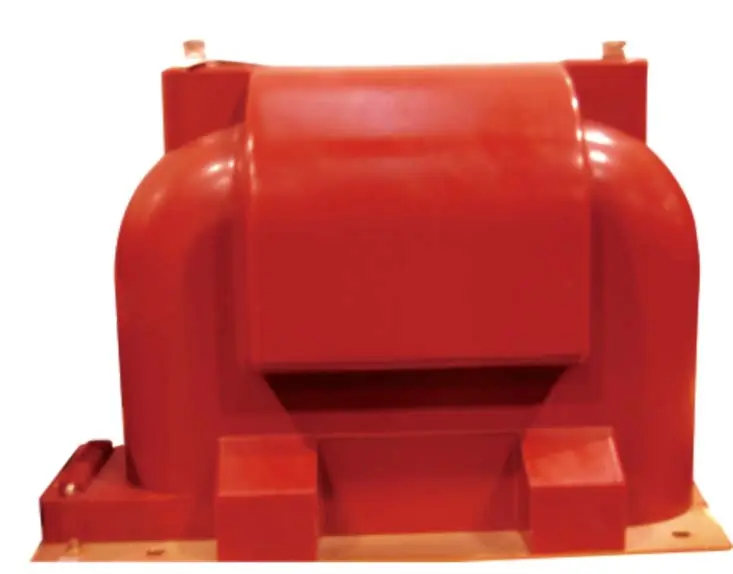
What Is a Potential Transformer? – Definition and Basic Principle
Understanding the Core Function of Voltage Measurement Devices
Potential transformers become the eyes of electrical systems by turning high-voltage signals into numbers that protective switches and meters can understand. People who work in a normal center or factory can't directly measure voltages higher than a few kilovolts without special tools. PTs get around this problem with electromagnetic induction. This is when main windings that are linked to high-voltage lines cause secondary windings that are wound around a common magnetic core to experience equal voltages. This turns ratio—often 10,000:100 for a 10kV system—keeps the proportions exactly the same while lowering the voltage to a level that normal instruments can handle.
How PTs Differ from Current Transformers and Power Transformers?
Current transformers (CTs) measure amperage by slowing down the flow of current, while voltage transformers (PTs) only measure voltage. Power transformers, on the other hand, move large amounts of energy between lines and can handle big changes in load. When voltmeters and relay coils are connected, they draw very little current—usually less than 50VA—so the PT works in a nearly open circuit. Because of this basic difference in how they are loaded, different design methods are needed for each type. Power transformers are made to be efficient under heavy loads, while precision transformers need high-accuracy windings and low magnetic losses to keep their measurement accuracy over decades of use.
Core Principles & Performance Parameters of Potential Transformers
Electromagnetic Induction and Voltage Scaling Mechanics
AC in the primary winding creates a changing magnetic field in a silicon steel core, inducing voltage in the secondary coil proportional to turns ratio (e.g., 25:1 for 10kV to 400V). High-grade laminations reduce eddy current and hysteresis losses, maintaining accuracy and efficiency at 50Hz or 60Hz for industrial grids.
Accuracy Classes and International Standards Compliance
Accuracy classes define maximum error under load. Class 0.5 keeps voltage error within ±0.5% and phase displacement under 20 arc-minutes for revenue metering. Class 1.0 or 3P suits protective relaying. Standards including IEC 61869-1/2, IEEE C57.13, and GB 20840.2-2014 ensure interoperability. Procurement teams must verify compliance to avoid costly rework.
Performance Parameters: Frequency Range and Insulation Levels
Modern Potential transformers work on both 50Hz and 60Hz networks. Insulation levels (e.g., 12/42/75kV for 10kV systems) indicate withstand capability against lightning strikes and switching surges. The 12kV rating is continuous maximum voltage; 42kV and 75kV represent power-frequency and impulse withstand. These ratings matter for storm-prone areas and renewable integration with voltage fluctuations.
Types and Applications of Potential Transformers in Industry
Electromagnetic Wound-Type Potential Transformers
Wound-type PTs use copper windings around laminated cores for accuracy and temperature stability. Epoxy resin casting prevents moisture ingress and keeps error below ±1.0% from -40°C to desert conditions. The epoxy matrix provides vibration strength and meets NFPA 70 fire rules. Steady output up to 1000VA and short-term output to 3000VA handle brief overloads. Ideal for applications where measurement accuracy directly protects revenue.
Capacitor Voltage Transformers for Extra-High Voltage Systems
Capacitor voltage transformers (CVTs) use capacitor dividers to lower voltages above 100kV, which is typical in transmission networks. The input voltage is split by a stack of capacitors, and an electromagnetic transformer in the middle steps down the signal even more. The cost of CVTs is lower than wound-type units at very high voltages, and they can connect to power line carrier transmission systems automatically. CVTs are more cost-effective for utility companies that run transmission lines, but wound-type PTs are still chosen in distribution networks and industrial sites where voltages stay below 40.5kV.
Real-World Applications Across Diverse Sectors
Manufacturing plants need stable voltage for CNC machines and VFDs—drops cause costly stops. PTs enable SCADA tracking and predictive maintenance. Utility substations use PTs for protective relays and differential protection to prevent false trips. Renewable integration requires better transient response. Hospitals and data centers need high accuracy for non-linear currents. Epoxy-cast PTs operate below 45dB for noise-sensitive environments. Proper installation extends PT life: outdoor units need weatherproof cages; indoor need climate control. Ground secondary wiring for personnel safety.
How to Choose and Procure the Right Potential Transformer?
Critical Selection Criteria for Industrial Procurement
Define system needs: rated primary voltage, secondary voltage, frequency, and estimated burden. A 10kV system typically needs 10kV primary and 100V/400V secondary. Class 0.5 for revenue metering; Class 3P for protective relaying. Altitude, temperature, and pollution affect insulation design. Coastal installations need corrosion protection; above 1,000 meters requires derating. Choose steady capacity (e.g., 1000VA) for future expansion. Short-term ratings matter for protective switch surge currents.
Evaluating Suppliers and Ensuring Standards Compliance
Global suppliers (Siemens, ABB, Schneider) offer broad portfolios and technical support. Regional makers like Xi'an Xikai provide cost-effective options with ISO 9001/14001 certifications and 8+ patents. Request third-party test reports for IEC, IEEE, or GB compliance. Factory acceptance tests (FAT) should include induced voltage withstand, partial discharge, and accuracy checks. Compare lifecycle costs—epoxy resin PTs eliminate oil maintenance over 20+ years, saving labor.
Sourcing Strategies: Direct Manufacturers vs. Distributors
Direct connections with manufacturers are good for big projects that need to be customized or buy in bulk. When designing utility substations, engineering companies that work with factory engineers can make sure that the PT standards are best for each grid situation. Manufacturers also offer training on how to use their products and thorough upkeep guides that dealers might not have on hand. Authorized wholesalers with local merchandise can often speed up smaller purchases or urgent replacements. However, buyers should make sure that products arrive with original maker guarantees and factory seals that haven't been broken to avoid getting fake goods.
Online B2B sites give you more ways to find Potential transformer suppliers, but they also require you to do more research. Before making large orders, check the suppliers' business licenses, ask for customer references, and do plant audits to avoid dealing with dishonest ones. Inspection holdbacks should be part of the payment terms, and they should only be released after successful on-site testing of the Potential transformers. This would match the supplier's goals with the performance of the equipment.
Maintenance, Testing & Troubleshooting of Potential Transformers
Essential Test Procedures for Ongoing Accuracy Assurance
Regular testing proves that Potential transformers keep their accuracy even after years of electrical and temperature stress. Ratio testing uses digital multimeters and precise voltage sources to compare the real primary-to-secondary voltage ratios to the numbers written on the product. Deviations greater than ±1% for Class 1.0 units mean that the windings are breaking down or the core is getting too full, which needs to be looked into. Polarity tests make sure that the terminals are marked correctly, which stops reverse connections that break safety switches when problems happen. Using megohm meters at 1000V DC to measure insulation resistance can find moisture or contamination before it breaks down. Readings below 1000 megohms require a more in-depth review.
Testing the load on an instrument to make sure it stays within its estimated limit is called burden testing. When the burden is too high, the voltage drops, which can lead to measurement mistakes. When the burden is too low, dangerous overvoltages can happen on some PT designs. Frequency response analysis isn't used very often in regular maintenance, but it finds core flaws by measuring impedance across a range of frequencies. This shows early failures that can't be seen with standard tests.
Interpreting Diagnostic Results and Common Issues
Most of the time, gradual precision loss means that the insulation in the windings is wearing out due to thermal stress or humidity. Epoxy-cast PTs, like our 10kV types, don't break down in this way because they have hermetic closing, but connection points can still be damaged if the way they were installed lets moisture in. Sudden changes in the ratios point to damage to the machinery from an earthquake or theft. Using ultrasonic monitors for partial discharge testing helps find insulation holes that could lead to catastrophic failures. This way, fixes can be made more precisely before power goes out.
One of the most common Potential transformer (PT) problems that come up during testing is a problem with the wiring. Incorrect power readings are caused by reversed phase connections, and shock dangers are created by missing grounds.
These mistakes are found before the power is turned on by checking for continuity and comparing the results to approved wiring plans. When terminals get too hot, it means that connections aren't tight enough, which raises contact resistance. This can be fixed by properly torqueing the connections during installation and doing annual thermographic scans to find hot spots before they break.
Preventive Strategies to Extend Transformer Lifespan
Using condition-based upkeep instead of overhauls at set times makes the best use of resources. IoT devices built into smart-grid-compatible PTs constantly check the temperature, voltage, and activity of partial discharges. They send this information to central platforms that use predictive analytics. Maintenance crews only get alerts when parameters are getting close to failure levels. This keeps them from having to do pointless checks and finds problems early.
Environmental controls inside switching boxes make PT last a lot longer. Using dehumidifiers to keep the relative humidity below 60% keeps insulation surfaces from getting wet. When it's cold, space heaters that cycle through different settings prevent temperature shock when equipment starts up. These small investments pay off by extending service gaps and lowering the number of failures, which maximizes the return on PT assets.
Conclusion
Potential transformers are an important part of the infrastructure that makes safe and accurate voltage measurements possible in business, utility, and industrial electrical systems. Purchasing teams and building engineers can choose devices that will last for decades if they understand how they work, how well they perform, and what applications they need to be used for. Wound-type electromagnetic PTs are more accurate and can withstand harsh environments thanks to new materials like epoxy resin coating. Capacitor voltage transformers, on the other hand, are cost-effective options for networks with very high voltages. To choose the right device, you have to weigh the costs, environmental concerns, and accuracy class against the device's load capacity, insulation level, and ability to work in different environments. Working with well-known companies that meet standards through certifications and testing procedures lowers the risks of buying things and guarantees that the system will work well in the long run.
FAQ
1. What differentiates a potential transformer from a standard voltage transformer?
Potential transformers focus on precise measurements and work with the least amount of load from linked instruments. Voltage transformers, which are often the same thing as power transformers, move electricity between lines with changing loads. Because they stay accurate within the narrow ranges set by accuracy classes, PTs can be used for both measuring and protecting. Power transformers can handle wider ranges of errors because their main job is to move energy efficiently, not to make sure measurements are correct.
2. How often should potential transformers undergo calibration?
How often you need to calibrate depends on the accuracy class and how important the application is. In order to follow utility rules, revenue meters usually need to be checked once a year, but safe relay PTs can go up to three-year rounds. Condition-based strategies that use constant tracking change maintenance intervals based on real performance trends instead of random schedules. This lowers the cost of maintenance without lowering the reliability.
3. Can potential transformers handle high-frequency applications?
Standard PTs made for 50Hz or 60Hz power rates are less accurate above a few hundred hertz because of core losses and wound capacitance. For high-frequency tasks like checking power electronics, you need special wide-bandwidth voltage sensors that work in a different way.
Partner with Xi'an Xikai for Precision Voltage Measurement Solutions
Choosing the right Potential transformer provider affects how reliable the system is and how much it costs to run. The Xi'an Xikai Medium & Low Voltage Electric Co., Ltd. makes high-quality 10kV outdoor/indoor voltage transformers that meet the standards set by IEC 61869, IEEE C57.13, and GB 20840.2-2014. They also provide excellent customer-focused tech support. Our designs are made of epoxy resin and can withstand temperatures ranging from -40°C to +55°C. They also have measurement mistakes of less than ±1.0% and can be connected to a smart grid through IoT sensors that are built in.
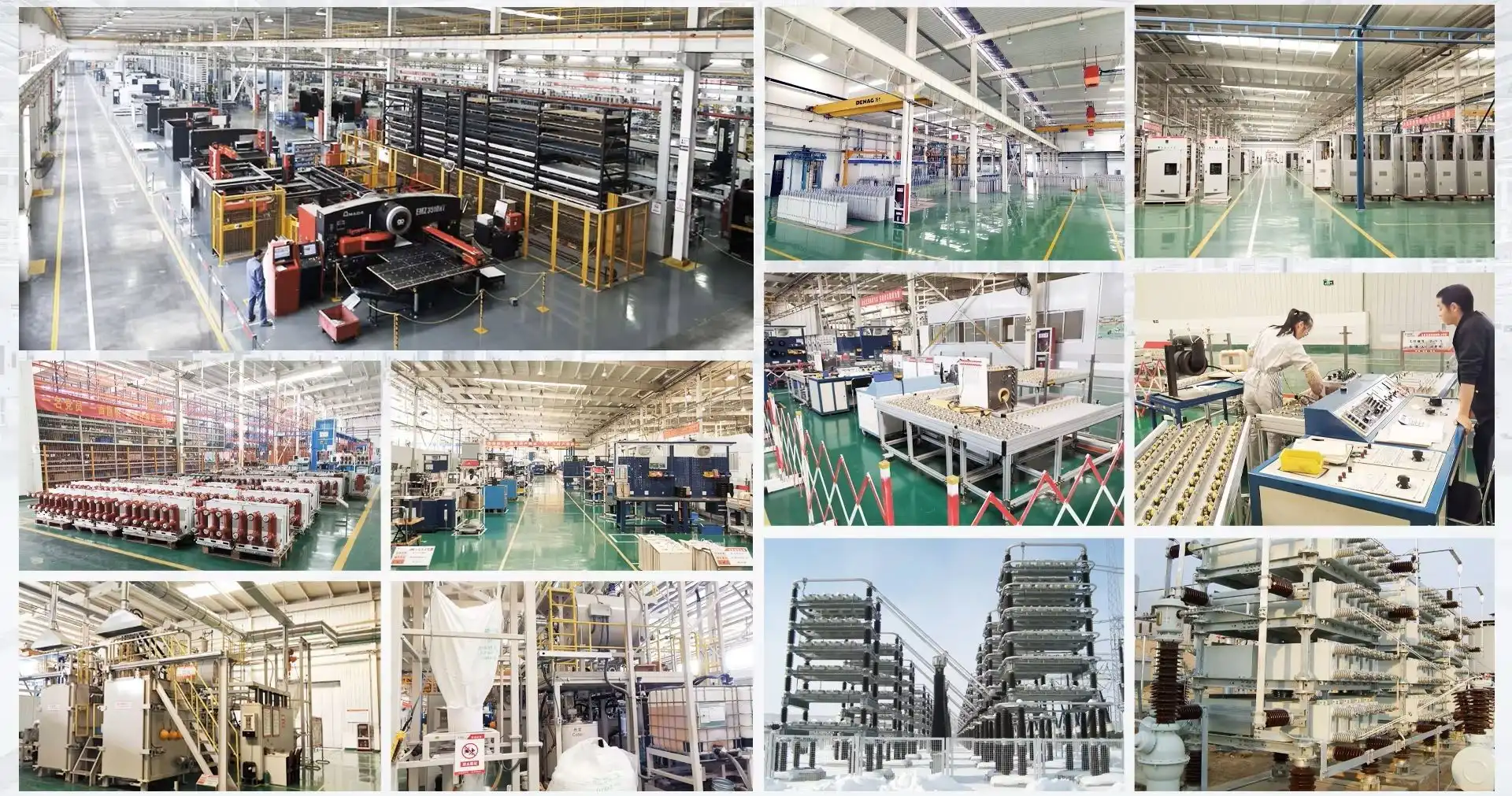
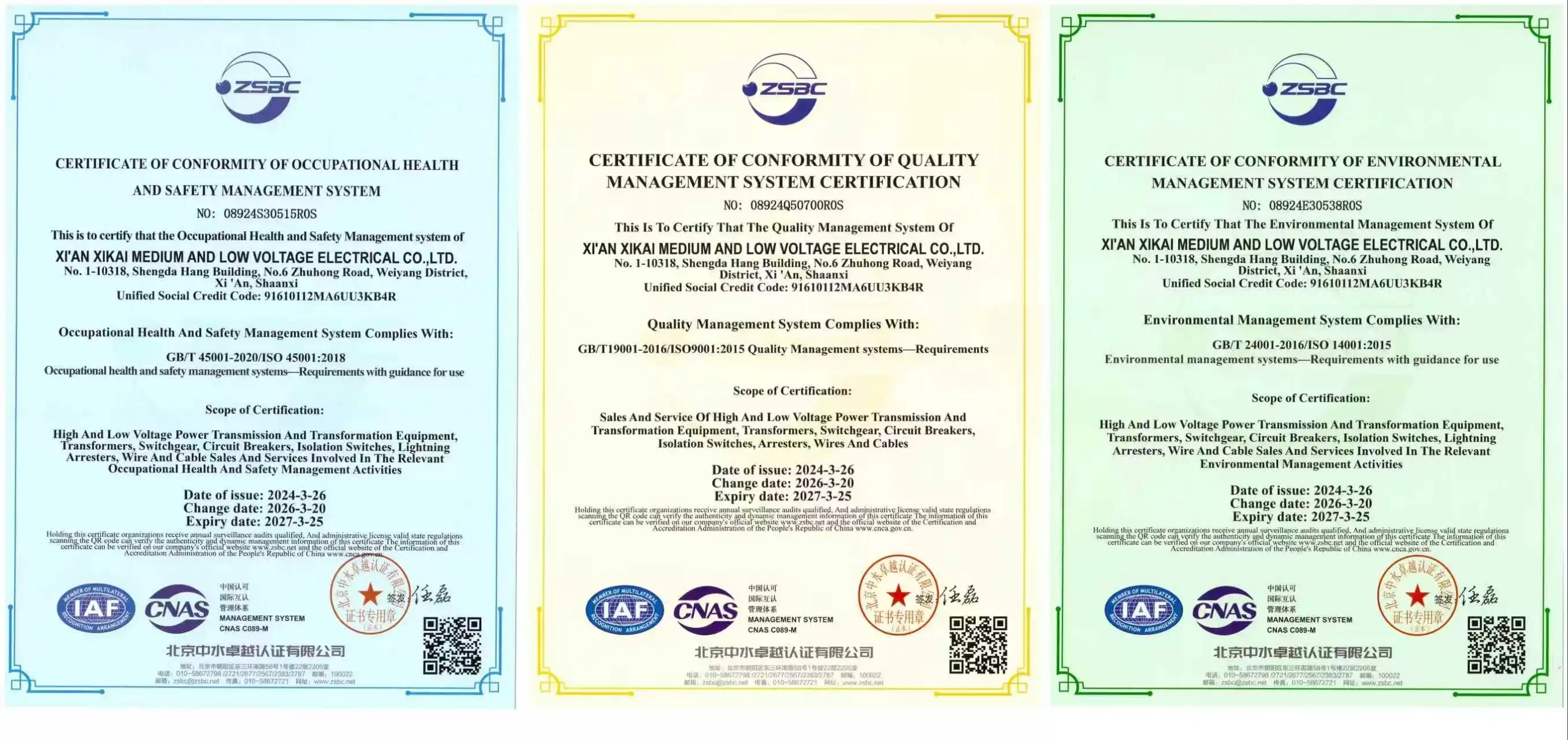
With ISO 9001 and ISO 14001 certifications, more than 8 patents, and expert help available 24/7 in 15 countries, we give procurement teams the confidence to choose equipment that will work well and cost as little as possible over its lifetime. Our goods are used by State Grid systems, petrochemical complexes, rail transportation networks, and green energy projects in China and around the world. Our engineering team works with EPC firms and facility managers to provide unique solutions, whether they are replacing old infrastructure or building new substations.
Contact our specialists today at serina@xaxd-electric.com, amber@xaxd-electric.com, or luna@xaxd-electric.com to discuss your voltage testing needs. As one of the biggest companies that makes Potential transformers, we're ready to help you with your next project. Our quality is tried and true, and we offer quick service that keeps important systems running safely and efficiently.
References
1. IEEE Standards Association. "IEEE Standard for Instrument Transformers." IEEE C57.13-2016, Institute of Electrical and Electronics Engineers, 2016.
2. International Electrotechnical Commission. "Instrument Transformers - Part 1: General Requirements." IEC 61869-1:2007+AMD1:2018, International Electrotechnical Commission, 2018.
3. National Electrical Manufacturers Association. "Requirements for Instrument Transformers." NEMA Standards Publication TR 1-2013, National Electrical Manufacturers Association, 2013.
4. Standardization Administration of China. "Instrument Transformers - Part 2: Additional Requirements for Voltage Transformers." GB 20840.2-2014, Standards Press of China, 2014.
5. Blackburn, J. Lewis and Thomas J. Domin. "Protective Relaying: Principles and Applications." Fourth Edition, CRC Press, 2014.
6. Das, J.C. "Power System Analysis: Short-Circuit Load Flow and Harmonics." Second Edition, CRC Press, 2011.
_1774404811357.png)