Self-Healing Filter Capacitors vs Electrolytic Capacitors: Which Is Better?
2026-04-13 16:38:53
For industrial power systems, picking between electrolytic capacitors and Self-Healing Filter Capacitors has a big effect on both long-term prices and operating reliability. Self-Healing Filter Capacitors use metallized polypropylene film (MKP) technology to fix dielectric breaks automatically. Compared to electrolytic capacitors, they last longer and need less upkeep. Electrolytic capacitors have a higher capacitance density and lower initial costs, but they don't last long and can't handle extreme temperatures. Because of this, Self-Healing Filter Capacitors are the better choice for critical applications that need consistent performance, less downtime, and higher safety in places like factories, data centers, and utility infrastructure.
 |
 |
Understanding Self-Healing Filter Capacitors and Electrolytic Capacitors
In order to choose the right capacitor technology, you need to know about the basic changes in design that have a direct effect on how well and how reliably your power systems work.
Construction and Core Technologies
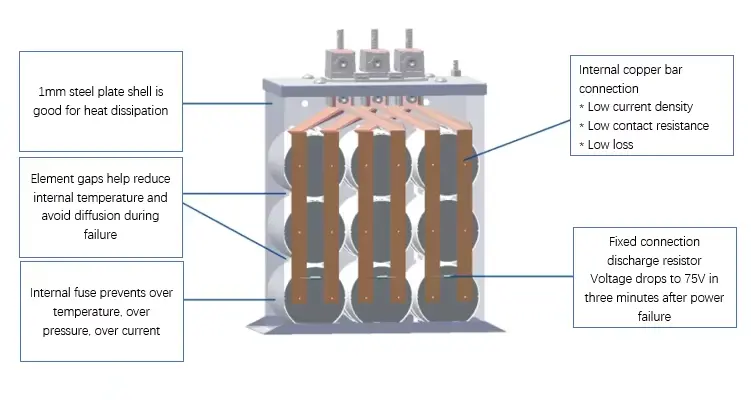
Self-healing filter capacitors use metallized polypropylene film that repairs dielectric breakdown by isolating faults, maintaining function with minimal capacitance loss. Electrolytic capacitors rely on thin oxide layers and liquid electrolytes, offering high capacitance but suffering gradual, irreversible degradation, especially under heat, reducing long-term reliability.
Operational Principles and Self-Healing Mechanisms
Self-healing capacitors automatically isolate faults through rapid arc clearing, preventing short circuits and ensuring continuous operation. Electrolytic capacitors lack this feature, often failing catastrophically under stress or incorrect polarity. Their design leads to sudden breakdown, while self-healing systems degrade gradually, allowing predictive maintenance and improved reliability.
Comparative Lifespan and Failure Modes
Self-healing capacitors can exceed 100,000 hours with predictable, gradual capacitance loss, supporting planned maintenance. Electrolytic capacitors typically last 2,000–10,000 hours, with lifespan reduced by heat. Their failures may cause short circuits or overheating, while self-healing types degrade safely without disrupting system operation.
Performance and Application Differences
Figuring out how a capacitor works helps match it to the needs of an application and the situations under which it works.
Key Electrical Performance Metrics
The most noticeable change is in the capacitance values. Electrolytic capacitors are great for uses that need a lot of capacitance. They can offer numbers from a few microfarads to several farads in small sizes. Because of this, they can store a lot of energy in low-voltage power sources and recording equipment.
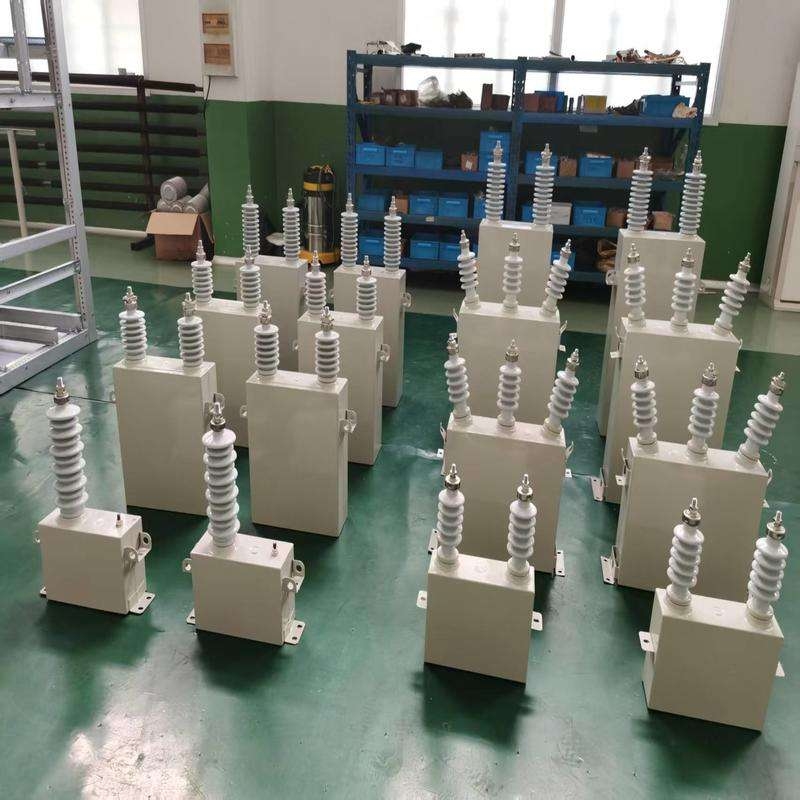
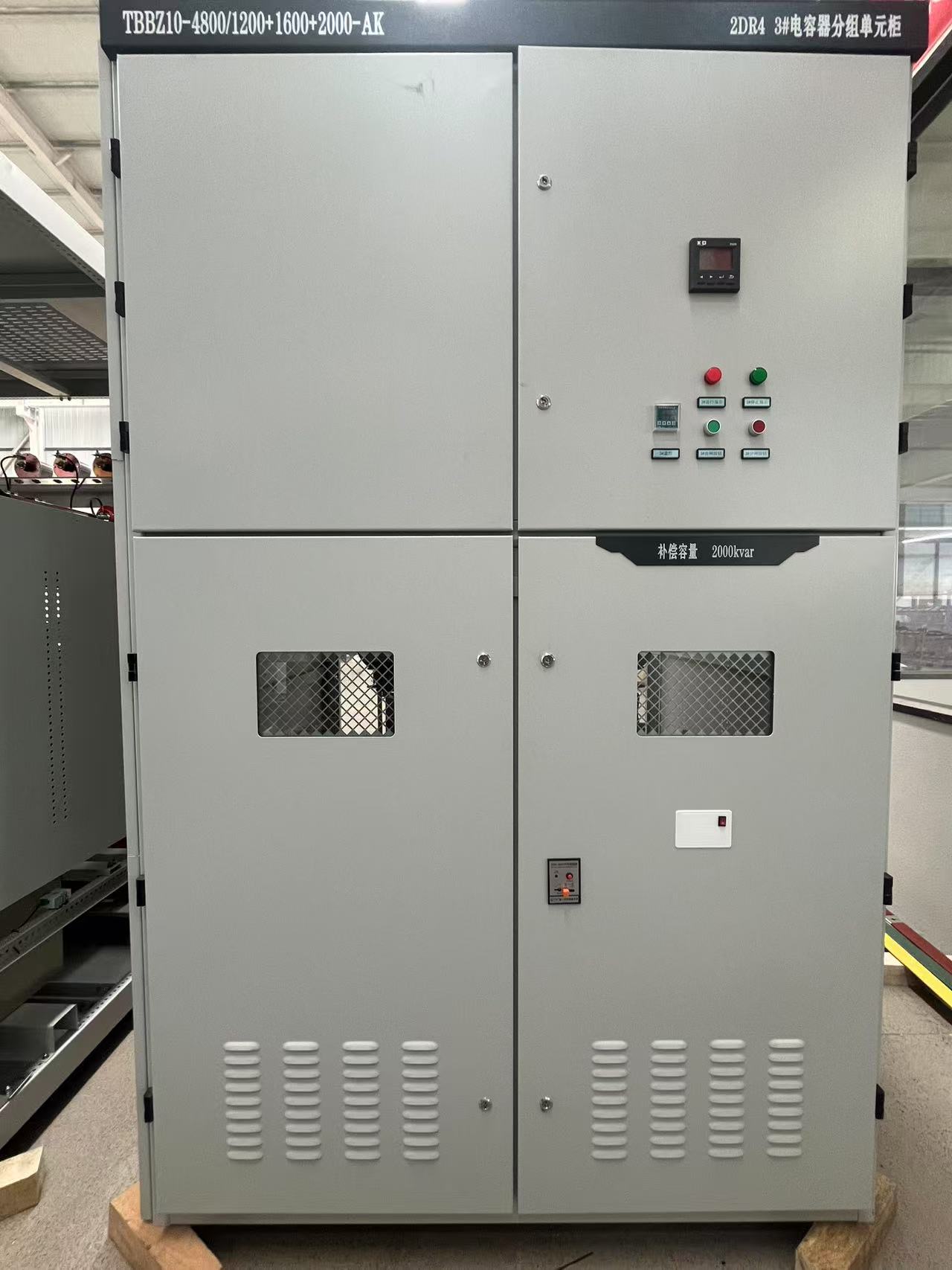
The range of Self-Healing Filter Capacitors is usually between a few nanofarads and a few hundred microfarads per unit. Xi'an Xikai makes units with ratings between 5 and 100 kV per part that can be used to fix power factors and screen out harmonics in three-phase industrial systems. The recommended voltages for these capacitors are 440V, 480V, 525V, and 690V, which are the same as the values used in most North American factories.
The ESR numbers have a direct effect on how well filters work and how the heat behaves. Self-Healing Filter Capacitors have ESR values below 5 milliohms, which means they heat up less when ripple currents are high. In variable frequency drive (VFD) uses, where switching frequencies create large harmonic currents, this property is very important. Electrolytic capacitors usually have a higher ESR, especially as they age and the liquid dries out. This makes them less useful for high-frequency filtering.
System design gaps are affected by voltage values and derating needs. Film capacitors can handle short-term overvoltages better than electrolytics. They have self-healing technology that protects them against voltage jumps up to 300 V/μs dV/dt. To get a good lifespan, electrolytic capacitors need to be derated conservatively, usually working at 60–80% of their rated voltage. Film capacitors, on the other hand, can work closer to their rated voltage without a big life cost.
EMI Suppression and Power Supply Filtering Capabilities
To stop electromagnetic interference (EMI), you need a low ESR and good high-frequency reaction. Self-Healing Filter Capacitors work better than other types of capacitors at blocking switching noise from power electronic converters. The low dissipation factor makes sure that there isn't much signal loss across the frequency range that matters for industrial power quality issues, which is usually from line frequency to a few hundred kilohertz.
A lot of electrical noise is made in factories that use robots, CNC machines, and automatic process controls. Harmonic distortion from six-pulse and twelve-pulse rectifier systems changes the voltage in a way that affects data networks and sensitive control systems. When Self-Healing Filter Capacitors and series reactors work together, they make good harmonic filters that lower total harmonic distortion (THD) to levels that meet IEEE 519 standards for grid coupling.
When DC power sources work at lower frequencies, electrolytic capacitors do a good job of bulk balancing. As the frequency goes up, their higher ESR makes them less useful for filtering pulse-width modulated (PWM) patterns that are common in modern inverter drives and green energy systems. Film capacitor technology is very helpful for data centers that need clean power for their computer equipment because it filters well over a wide frequency range.
Operating Voltage and Thermal Tolerance
Temperature tolerance has a direct effect on how flexible a system is and how reliable it is in terms of operation. Self-Healing Filter Capacitors can usually work in temperatures ranging from -40°C to +85°C without losing performance. The polypropylene insulator stays stable over this range of temperatures, with little change in capacitance and low losses even at high temps.
Electrolytic capacitors are very sensitive to changes in temperature. Standard aluminum electrolytics can withstand temperatures up to 85°C, but more expensive types can handle temperatures up to 105°C or 125°C. As the operating temperature rises, life span drops rapidly. This makes thermal management very important in sealed switchgear and variable frequency drives, where temperatures inside are much higher than the ambient temperature.
When voltage stress is added to temperature, it makes things very difficult for electrolytics. Ripple current causes internal heating that is related to ESR. This can lead to thermal runaway situations where rising temperature raises ESR, which in turn raises heating in a destructive loop. Self-healing capacitors keep their low ESR no matter what the temperature is, so this way of failing doesn't happen. When temperatures regularly rise above 35°C in the south, it's especially hard for factories to keep their equipment running smoothly over long periods of time. This is why film capacitor technology is so important.
Procurement Considerations for B2B Clients
Strategic procurement decisions extend beyond initial component pricing to encompass total lifecycle costs and supply chain reliability.
Cost Evaluation and Total Cost of Ownership
Initial purchase prices favor electrolytic capacitors for low-voltage, high-capacitance applications. Bulk pricing for common electrolytic capacitors remains competitive due to high-volume automated manufacturing. However, this apparent cost advantage diminishes when considering total cost of ownership over equipment lifecycle.
Replacement costs include both component pricing and labor expenses for technician time, system downtime, and production losses. Manufacturing facilities operating continuous processes face substantial revenue impacts from unplanned shutdowns. A capacitor failure that shuts down a plant that makes $50,000 an hour costs $400,000 in lost production value, which is much more than the cost savings from the component.
Frequency of maintenance intervals has a big effect on worker budgets. Every 12 to 24 months, facilities that use electrolytic capacitors in important tasks usually plan checks to find wear and tear before they fail. Self-Healing Filter Capacitors can usually work for five to ten years without any upkeep. This cuts down on ongoing costs by a large amount. When purchasing managers look at lifetime costs, they always find that self-healing technology leads to lower total costs, even though it costs more at first.
Operating costs are also affected by how energy efficient a business is. When compared to electrolytics, film capacitors waste less energy because they have lower loss factors. This is especially true in high-power situations. A 50 kvar capacitor bank that runs all the time with an extra 0.5% loss due to higher ESR loses about 250 watts of power all the time, which costs several hundred dollars a year in wasted energy.
Supply Chain and Manufacturer Reliability
Different capacitor technologies have different lead times and supply trends. Standard electrolytic capacitors can be shipped quickly from dealer stock and are good for repair and upkeep work. For power factor correction and harmonic filtering, custom-configured capacitor banks need technical advice and production lead times that are usually between 4 and 8 weeks.
Minimum order numbers (MOQ) limit the options for buying things. Standard store items usually only come in single units, while special kits might need a minimum order. Facilities that manage multiple sites with different equipment needs can save money on purchases by making deals with makers that offer flexible MOQ terms.
Customization options allow for the best system function. Manufacturers of Self-Healing Filter Capacitors can change the voltage levels, capacitance values, terminal configurations, and container designs to fit the needs of any application. The engineering teams at Xi'an Xikai do sizing calculations and system suggestions to make sure that the chosen parts work well with the current switchgear and safety systems.
When buying teams are looking for power capacitors, these are the most important things they should look for in a supplier:
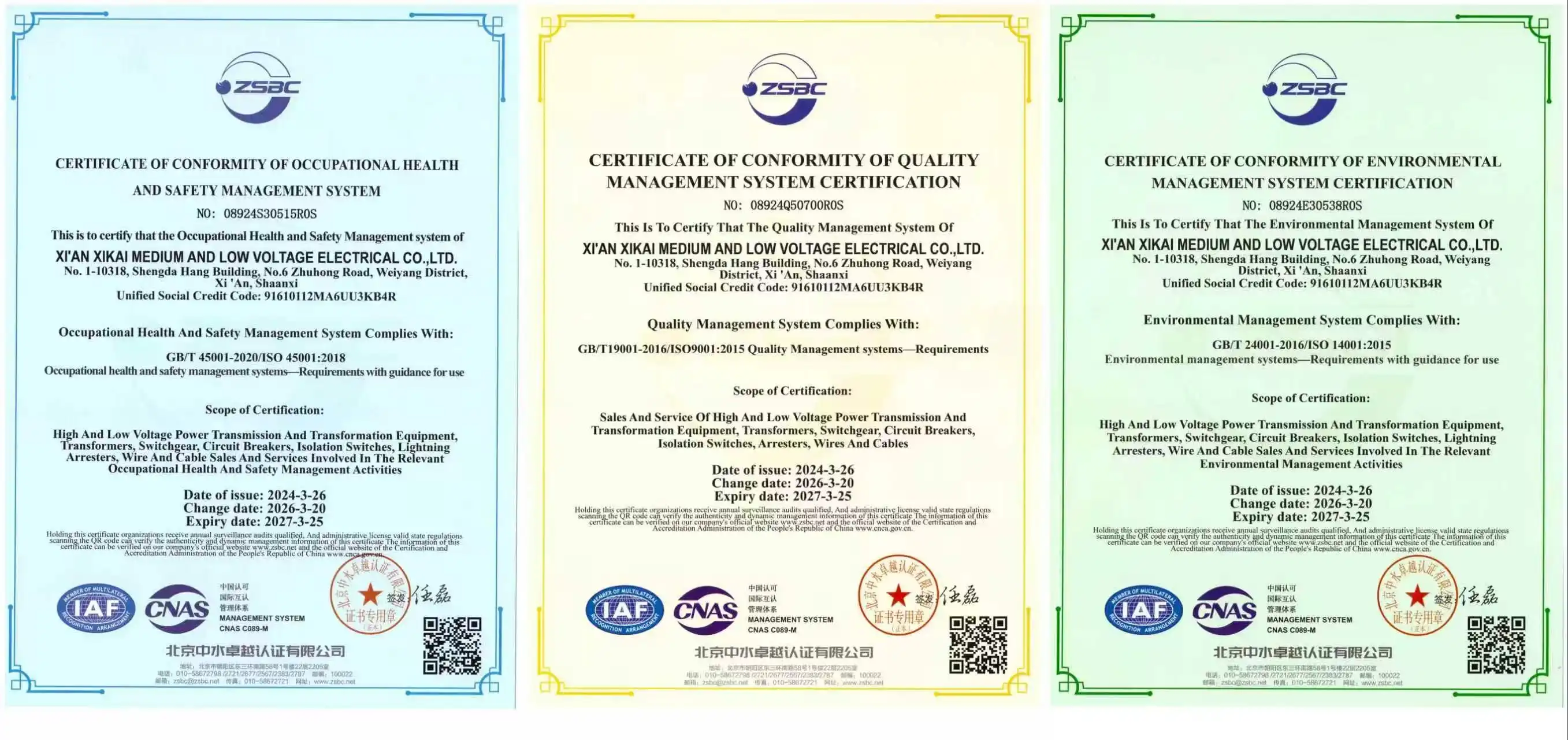
- Certification credentials such as ISO9001 for quality control, ISO14001 for environmental compliance, and product-specific certificates showing compliance with IEC 61071 and IEC 60831 standards
- Quality assurance processes that include testing for durability at 1.25 times the rated voltage, testing for temperature, humidity, and bias in harsh conditions, and testing for 100% voltage proof at 1.5 times the rated voltage
- Technical support capabilities that offer application building advice, system integration help, and fixing after installation
- Warranty terms show how confident the maker is in the product's dependability. They usually range from one to five years, based on how harsh the application is
- Geographic distribution network makes sure that deliveries are made on time and that local help is available at many facility sites
All of these things affect how reliable a provider is and how valuable a long-term relationship is. When a facility updates its equipment over a number of years, it's best to work with makers that can help with the planning, installation, commissioning, and ongoing operation of complex projects.
Practical Decision-Making: Which Capacitor Fits Your Needs?
Matching capacitor technology to an application's needs, you have to look at the environment, performance standards, and operational goals.
Application-Specific Selection Criteria
Self-healing filter capacitors suit power factor correction, DC links, and high-stress environments like drives and renewable systems, offering durability and long life. Electrolytic capacitors fit low-voltage, cost-sensitive applications where shorter lifespan and easier replacement are acceptable trade-offs.
Industry Use Case Comparisons
Industries like data centers, healthcare, and utilities prioritize reliability and power quality, favoring self-healing capacitors for stable, safe operation and gradual failure modes. These systems support critical infrastructure by preventing sudden breakdowns and enabling planned maintenance in demanding environments.
Future-Proofing Your Electrical Infrastructure
Future systems, including EV charging, renewable energy, and smart grids, require capacitors that handle harmonics, voltage fluctuations, and long lifespans. Self-healing technology enhances efficiency, stability, and communication reliability, making it a strong choice for modern, scalable electrical infrastructure.
Troubleshooting and Maintenance Insights
Proactive repair plans and finding problems early on keep operations running smoothly and extend the life of equipment.
Common Failure Indicators and Diagnostic Methods
The most accurate way to tell how a Self-Healing Filter Capacitors unit is doing is to measure its capacitance. With portable capacitance meters, testing can be done in the field without having to take parts out of service very often. Keeping track of baseline capacitance values during the initial placement creates points of reference for monitoring deterioration. If the measured capacitance drops more than 3–5% below the stated value, it means that the device is getting close to the end of its useful life and needs to be replaced.
Swelling, discoloration, and terminal rust indicate moisture or temperature stress. The epoxy resin coating prevents oil leaks but splits under mechanical or temperature changes. Regular inspections catch problems before they break. Electrolytic capacitor failure is mostly caused by rising ESR. ESR meters can detect failing electrolytics without shutting down the circuit. ESR values over specification limits indicate depleted electrolytes that must be replaced quickly to avoid thermal runaway or catastrophic failure. Thermal imaging during machine operation may reveal hot areas with significant losses from aged capacitors or bad connections. Before they inflict damage, infrared cameras detect thermal changes. This aids repair planning. Investigate parts that perform more than 20°C hotter than surrounding units promptly.
Maintenance Best Practices for Extended Service Life
Controlling the environment has a big effect on how long a capacitor lasts. Keeping the temperature of switchgear below 40°C by using proper air or cooling systems stops it from wearing out faster. Putting capacitor banks in climate-controlled electrical rooms instead of open buildings makes them last longer and is easier to maintain.
To avoid failure, good system design controls voltage stress. Installation of capacitors with the right voltage for switching overvoltages and lightning strikes guarantees safety gaps. Matching capacitor rates with upstream surge protectors decreases external voltage stress. Regular application-severity checks expedite problem solutions. Vision and electrical testing should be done every three months and yearly for critical applications that support ongoing activities. For less important use, experience and failure consequence analysis propose yearly or biannual inspections. Keep maintenance records, test reports, and replacement data to make educated decisions. Failure trends across several places may indicate systemic problems that need design or part replacement. Use historical data to predict lifetime costs based on your buildings' conditions to make purchase decisions.
Conclusion
Self-Healing Filter Capacitors are better than electrolytic alternatives for industrial power uses that need to be reliable, last a long time, and require little upkeep. The automated fault-clearing technology, increased heat tolerance, and longer working lifetime decrease lifecycle costs, offsetting higher beginning expenses. Electrolytic capacitors provide high capacitance density at low voltage for certain applications. Film capacitor technology decreases failure and fulfills power quality requirements, making it useful for industries, data centers, hospitals, and utility systems. Strategically picking parts based on comprehensive performance and total cost analyses ensures the optimal infrastructure investments for long-term operational success.
FAQ
1. What determines whether self-healing or electrolytic capacitors better suit my application?
Choices are based on voltage level, working temperature, and dependability needs. Self-Healing Filter Capacitors work best in high-temperature situations and for voltages above 100V. Investing in film capacitors is a good idea for critical systems where unplanned downtime costs a lot. Electrolytics can be used in low-voltage power sources that work below 50V in temperature-controlled areas at a cheap cost. Harmonic filtering and power factor adjustment are two uses that almost always benefit from self-healing technology because it handles ripple current better and lasts longer.
2. How do I calculate total cost of ownership when comparing capacitor technologies?
Costs of original parts, installation work, projected replacement intervals, downtime, and changes in energy economy should all be included. A film capacitor that costs $500 and lasts ten years costs $50 a year to run. An electrolytic that costs $100 but needs to be replaced every two years costs $50 a year plus $200 for work for each replacement cycle, for a total of $150 a year before downtime costs are added in. To make a good comparison, facilities should figure out how much hourly output is worth and how long downtime lasts for each failure when they figure out the total lifetime costs.
Partner with Xi'an Xikai for Reliable Power Quality Solutions
Xi'an Xikai Medium & Low Voltage Electric Co., Ltd. offers complete power distribution options backed by a wealth of technical knowledge and top-notch manufacturing skills. We make Self-Healing Filter Capacitors and metallized film capacitors with ratings from 5 to 100 kvar and voltages up to 690V. These can be used for power factor correction, noise filtering, and green energy. Our factory has ISO9001, ISO14001, and OHSAS18001 certifications, which make sure that the quality always meets foreign standards. With the help of technical advice, you can choose the best components for your needs, and application engineers can help you with size calculations and system integration. Email serina@xaxd-electric.com, amber@xaxd-electric.com, or luna@xaxd-electric.com to talk about your project needs.
References
1. IEEE Standard 18-2012, "IEEE Standard for Shunt Power Capacitors," Institute of Electrical and Electronics Engineers, 2012.
2. IEC 61071:2017, "Capacitors for power electronics," International Electrotechnical Commission, 2017.
3. McLaren, P.G. and Naidu, S.R., "Capacitor Performance in Power Electronics Applications," IEEE Transactions on Industry Applications, Vol. 53, No. 2, 2017.
4. Smith, J.R., "Power Quality and Harmonic Filtering in Industrial Systems," McGraw-Hill Professional, 2018.
5. Zhang, L. and Chen, W., "Advanced Film Capacitor Technologies for Grid Applications," Electric Power Systems Research, Vol. 162, 2018.
6. Williams, B.W., "Power Electronics: Devices, Drivers, Applications, and Passive Components," Third Edition, McGraw-Hill Education, 2017.