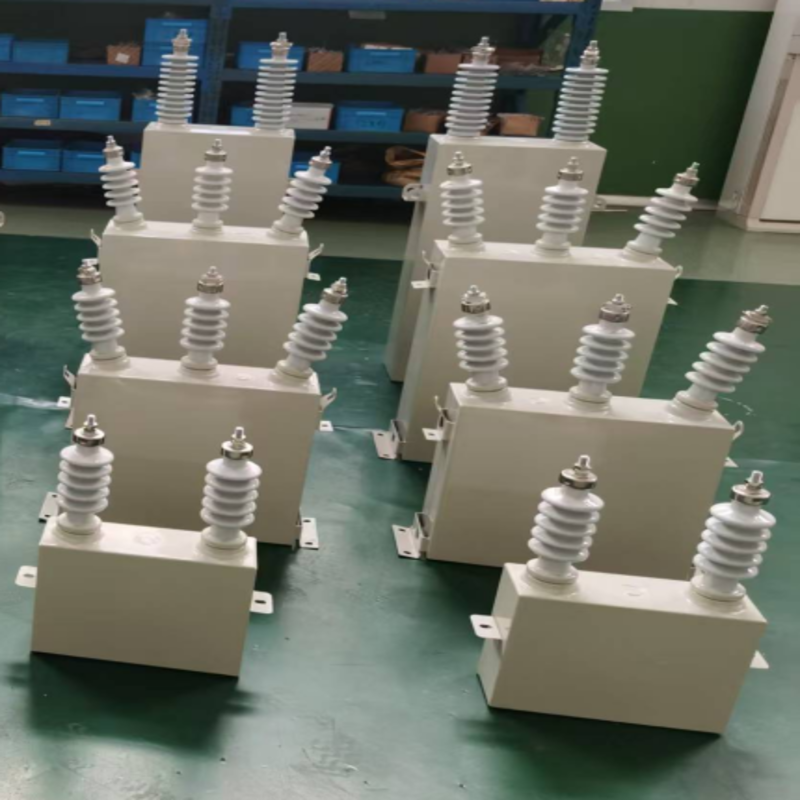
SVG Reactors for Wind and Solar Power Grid Integration
2026-04-13 16:38:55
As wind and solar power continue to revolutionize electricity generation, grid operators face new challenges in maintaining voltage and power quality. The SVG Reactor is used to manage reactive power and compensate for renewable energy sources' failures. The inductive section dynamically stabilizes voltage swings and filters harmonics from renewable inverters to safeguard sensitive equipment and boost operational uptime. It also ensures wind and solar electricity can be effortlessly incorporated into transmission and distribution networks.
 |
 |
Understanding SVG Reactors and Their Role in Renewable Energy Integration
What Are SVG Reactors and Why Do They Matter?
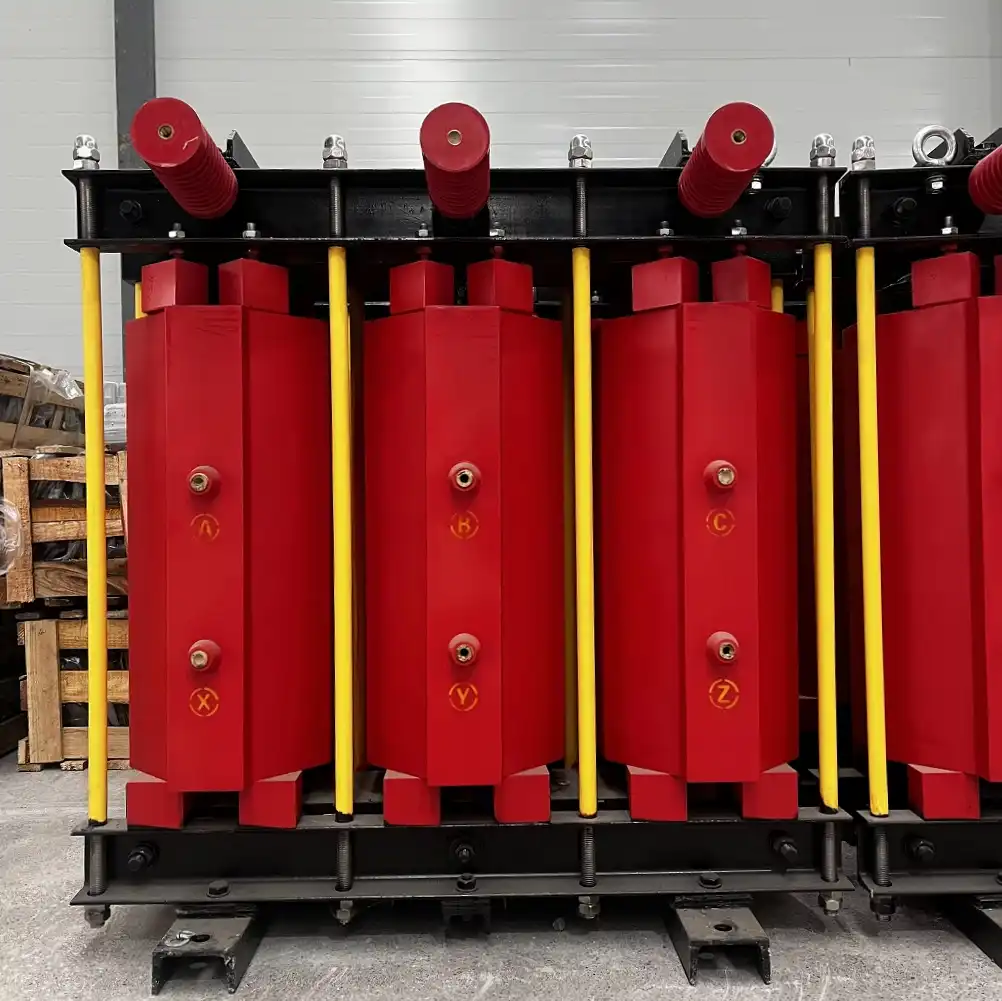
SVG Reactors are designed for Static Var Generator systems. These reactors can manage IGBT-based power electronic transformer high-frequency switching harmonics, unlike normal line reactors. These harmonics are commonly 2–10kHz. The reactor eliminates current waves and smooths reactive power flow from the transformer to the grid like a low-pass filter. When solar and wind turbines provide electricity to the grid, voltage fluctuations and harmonic distortions damage equipment and interrupt operations. CNC machines malfunctioning due to power sags generate unexpected downtime in industries. Data centers spend a lot when computers restart due to power outages. Hospitals risk patient safety when sensitive imaging equipment malfunctions.
How Reactive Power Management Solves Integration Challenges
Grid personnel must focus on a shifting objective since renewable energy sources supply electricity intermittently. Sunlight decreases rapidly when clouds cover. As weather fronts move, wind increases. Voltage instability extends to related systems due to rapid changes. These issues may be resolved using well-defined reactive power adjustment methods. The reactor minimizes fault currents during grid disruptions to protect equipment while maintaining Low Voltage Ride Through. At 1.8 times the maximum current, its magnetic linearity is steady. This keeps the SVG system operating when grid support is required.
The Technical Foundation of Grid Stability
The current-voltage phase relationship must be monitored to manage voltage. Inductive loads like motors and transformers reduce voltage by using reactive power. Capacitors increase voltage. Wind and solar inverters move between patterns depending on grid condition and control. Static var generator power circuits add or remove reactive power in milliseconds, quicker than mechanical switches. The SVG reactor controls response speed, current ripple, and harmonic efficiency. High-quality orientated silicon steel cores reduce eddy current losses, and the multi-gap design distributes magnetic flux to prevent overheating during steady operation.
Technical Insights: How SVG Reactors Work and Improve Grid Performance
Core Design Principles for Renewable Applications
Modern reactive power correction requires great magnetic homogeneity to avoid saturation during faults. Current may double in cycles when a neighboring transformer comes on or a capacitor bank changes. These situations overload typical reactors, causing them to lose inductance when they need to manage current. Advanced designs maintain over 95% linearity up to 2.0 times the maximum current due to core form and air gap positioning. Vacuum Pressure Impregnation links windings to core structure, eliminating vibration noise and improving heat flow. Class H insulation systems certified to 180°C provide thermal protection in hot or airless rooms.
Integration with Power Electronics and Control Systems
The reactor lies between the switching bridge and grid connection point and connects directly to the inverter output. The inductance number of Pulse Width Modulation determines its current ripple magnitude. Low inductance saves space and money but increases harmonic material. More inductance improves power quality but slows dynamic reactivity. Optimal specifications balance application requirements. Wind farms adapt swiftly to wind-induced output fluctuations. Solar systems prioritize harmonic filtering to achieve coupling criteria. Industrial locations must manage significant loads during engine starting transients. We collaborate with control system experts to match reactor parameters to inverter switching rates and modulation approaches. It must filter high-frequency harmonics without grid capacitance resonances when they strike a resistance. Coordination prevents electricity from rising too quickly and damaging equipment or setting off safety devices.
Real-World Performance in Wind Farm Applications
A Midwest 50 MW wind farm demonstrated how well-designed reactive power assistance can operate the farm. The building's power troubles during heavy winds prevented the turbines from running, costing money. Traditional capacitor banks couldn't handle fast-changing conditions. After installing SVG systems with enhanced SVG Reactor standards, voltage remained within ±2% of normal in all operating conditions. The number of turbines increased 3.2%, boosting annual revenue. Harmonic distortion ceased interfering with adjoining phone lines below 3% THDi. With just damage inspections, the equipment has ran continuously for five years.
Comparison of SVG The reactors with Other Grid Support Technologies
Traditional Reactors and Capacitor Banks
Utility companies have utilized mechanically-switched capacitors for years because they supply electricity easily and reliably. Step reaction limitations are a difficulty with varying energies. Switching transients stress equipment. Discrete steps cause voltage overshoots. greater frequent switch usage requires greater maintenance. Fixed reactors have constant resistance regardless of system circumstances. They're inflexible to output and load. Series reactors reduce fault current but complicate voltage management. Shunt reactors absorb reactive power but don't control electricity. Static Var Generators with reactors provide steady, stepless adjustment during operation. When circumstances change frequently, millisecond response times provide accurate voltage control. No mechanical switches imply no wear parts, reducing maintenance costs and improving reliability.
Cost and Scalability Considerations
Capital-budgeted purchasing teams are wary of SVG systems because they cost more upfront. Total cost of ownership provides a distinct picture. fewer maintenance, longer equipment life, and fewer downtime make the additional cost worth it within three to five years. Modular designs allow capacity increases without replacing anything. A substation may install 5 MVAR and increase units as green energy usage develops. Small footprints are ideal for changing existing structures in tight spaces. The SVG Reactor costs 15–20% of the SVG system, although it greatly affects its performance. Incorrect reactor sizes cause harmonic difficulties that need costly filters. Large units waste money on unused capacity. The correct size requires knowledge of real-world operating situations, not simply nameplate ratings.
Making Strategic Procurement Decisions
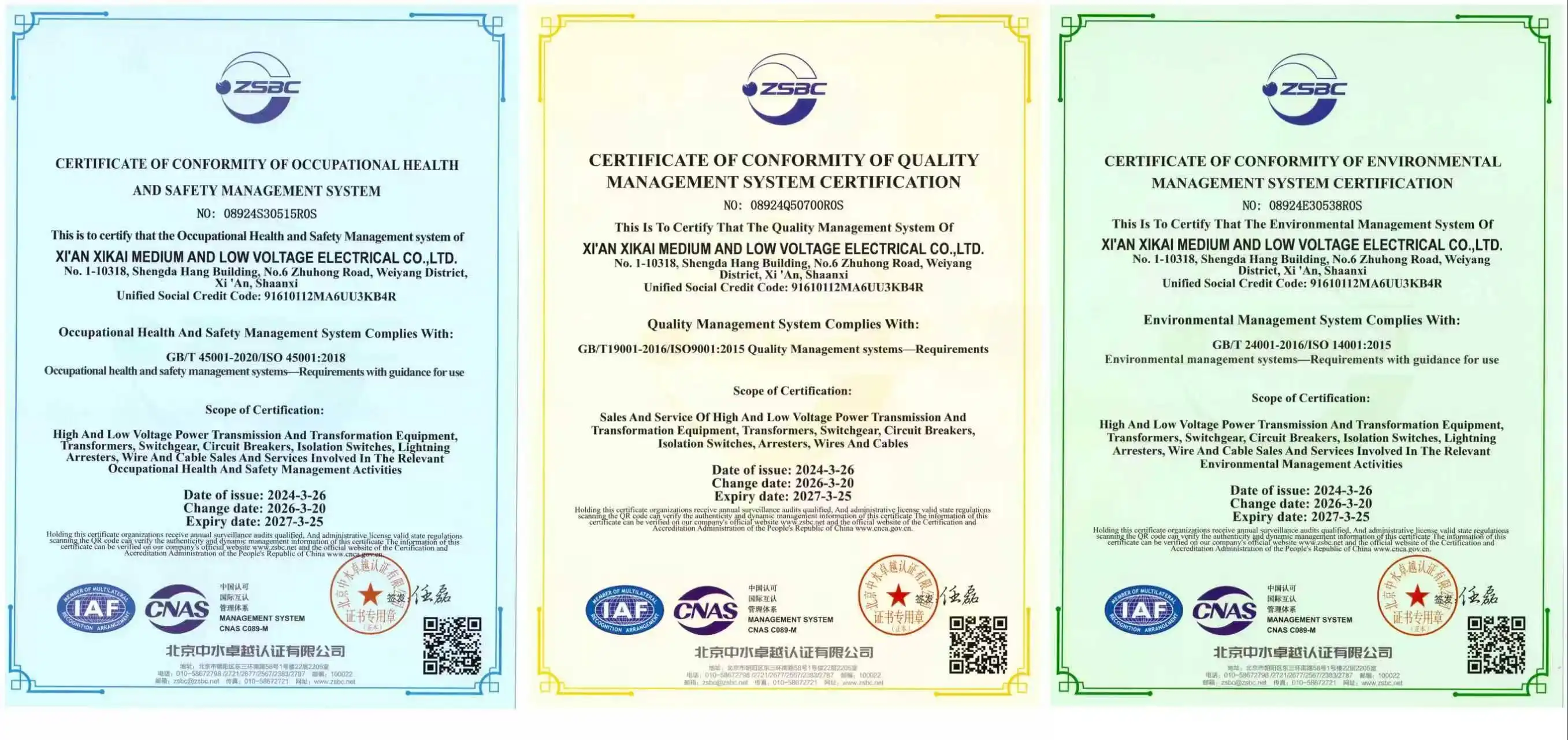
When evaluating technologies, procurement professionals should consider their whole worth, not simply their price. Check infrastructure compatibility: Voltage rates must match those in situ. Our reactors can withstand 0.4kV, 6kV, and 10kV loads for most utility and commercial locations. Height ratings up to 1000 meters operate most areas without adjustments. The temperature fluctuates from -10°C to +45°C for various places. Performance Benchmarks: Losses below 0.5% save operational costs and aid sustainability. Thermal imaging and partial discharge testing ensure each device satisfies criteria throughout manufacture. Qualifying for seismic activity up to strength 8 provides earthquake-prone places confidence. Supplier Reputation: Manufacturing expertise is crucial when selecting critical equipment. Grid systems have been Xi'an Xikai's focus for over 15 years and national research programs. ISO 9001 and ISO 14001 are our quality and environmental certifications. The CE, UL, CCC, and BIS designations indicate we follow global standards.
Procurement Guide: Choosing and Purchasing SVG Reactors for Enterprise Use
Defining Requirements for Your Renewable Energy Project
Successful procurement starts with understanding genuine working circumstances, not worst-case scenarios. Too many or too few tools cost money and reduce efficiency. Checking power quality during high renewable output will help you regulate voltage, harmonic levels, and dynamic response for your SVG Reactor project. Industrial facility operators should test power-sensitive technologies. Program logic processors can't tolerate brief sags like VFDs. Medical imaging equipment demands tougher restrictions than HVAC. Understanding these facts helps you choose the proper reactive power support size. Utility planners must consider several factors while building large renewable projects. Support capacity depends on grid strength at connection. Strong transmission networks demand less reactive power than weak grids with high source resistance. Current compensatory techniques may enable steady-state but not dynamic response.
Evaluation Criteria for Industrial and Commercial Facilities
Factory, data center, and business building priority include tool protection and operations. Voltage dips from renewable energy or grid issues are expensive to rectify. Harmonic distortion creates extra trips and accelerates transformer age. Ask providers many questions regarding how straight the magnets are when overloaded. Request temperature increase test data to determine hot spot temperatures over time. Check the insulation class levels for your location. Make sure peak current power exceeds worst-case fault levels. Noise matters when items are near humans. Hospitals and offices need quiet operation, generally below 45dB at one meter. Precision core clamping and double vacuum pressure impregnation in high-quality construction reduce magnetostriction-induced shaking.
Working with Authorized Distributors and System Integrators
System integrators and EPC organizations require reliable component suppliers that satisfy quality and project deadlines. Late deliveries ruin construction plans. Performance issues need costly repairs. To ship promptly, we offer popular setups and can make adjustments to match your requirements. Our engineering staff helps plan by providing technical information and integration guidance. We provide detailed electrical, thermal, and quality test findings. This paperwork satisfies commissioning requirements and provides baseline information for long-term monitoring.
Supporting Resources: Documentation, Support, and Community for SVG Reactor Users
Technical Documentation and Integration Guides
Good job requires careful preparation. Every SVG Reactor comes with complete mechanical installation, electrical connections, commissioning, and maintenance instructions. Dimensional drawings indicate mounting and space requirements. Connection photos demonstrate terminal layout and grounding. We address the most prevalent green energy integration issues in our application notes. Harmonic analysis predicts system behavior on various occasions. Thermal management ensures sealed installations have ample airflow. Protection coordination studies prevent brief problem-related false excursions.
Responsive Customer Support Throughout Project Lifecycle
Questions arise during a work. Our skilled support staff answers specifications, app, and troubleshooting problems within 24 hours. Local representatives who know grid codes and utility connection requirements are included. Large or complex systems may be commissioned on-site. Our field technicians ensure proper installation, test the system after restart, and train building personnel on system operation and maintenance. This hands-on support ensures systems operate properly from the outset.
Continuous Improvement Through User Feedback
Green energy evolves swiftly as technology and grid restrictions change. We collaborate with clients to identify new issues and demands. Feedback from used sites informs product development. This ensures that our solutions fulfill practical rather than theoretical demands.
Conclusion
Traditional equipment can't manage solar and wind electricity, making grid integration difficult. As renewable energy demand rises, the SVG Reactor manages dynamic reactive power to maintain voltage and power quality. Its magnetic linearity, minimal losses, and sturdy construction make it ideal for power substations and industrial locations. Carefully considered specifications based on real-world operating conditions assure top performance at minimal cost. A proven voltage control technique protects equipment, keeps processes functioning, and facilitates the changeover to clean energy as green energy demand develops.
Frequently Asked Questions
1. Why does magnetic linearity matter for renewable integration?
The grid voltage drops when solar or wind power quickly stops. In order to recover voltage, the SVG system has to add reactive power, which briefly causes the current to spike. If the SVG Reactor saturates during this period, its inductance falls, and the inverter current goes through the roof. This causes safe shutdowns just when the grid needs help the most. When units are properly built, they keep their inductance stable up to 1.8 times the maximum current. This makes sure that they keep working even when there are problems.
2. How do these things deal with the high-frequency heat that comes from moving inverters?
Power computer inverters change the voltage and current thousands of times every second. This makes high-frequency currents that cause eddy current and proximity effect losses in the wires and cores. To spread the magnetic flux equally, we use segmented core structure with many air gaps. Skin effect warmth is kept to a minimum with foil coil technology. Vacuum pressure impregnation is a great way to transfer heat from the coil to the core and back to the environment. These design features keep hot spots from happening, which would otherwise lower output or shorten the life of the equipment.
3. What kind of upkeep do these systems require over the course of their lives?
With dry-type building, you don't have to deal with oil or worry about the environment like you do with liquid-filled tools. Enclosures that are sealed keep dust and water out of the internal parts. Every year, checks are done to make sure that the electrical connections are still tight, that airflow paths are still clear, and that no strange noises or vibrations have started to happen. Using thermal imaging during operation can find problems that are starting to form before they break. Design life usually lasts longer than 20 years if it is installed correctly and used within its standards.
Partner with Xi'an Xikai for Reliable Grid Integration Solutions
Xi'an Xikai brings proven expertise as an SVG Reactor manufacturer serving utility companies, industrial operators, and system integrators across North America. Our engineering team collaborates with your project requirements, delivering customized solutions for voltage ranges from 0.4kV to 10kV. Every reactor undergoes rigorous factory testing including inductance verification, temperature rise measurement, and partial discharge analysis, ensuring reliable performance in your renewable energy application. We support your success from initial specification through commissioning and beyond with responsive technical assistance. Contact our team today at serina@xaxd-electric.com, amber@xaxd-electric.com, or luna@xaxd-electric.com to discuss how our reactive power compensation solutions can enhance your grid stability while reducing operational costs.
References
1. Kazmierkowski, M.P., Krishnan, R., & Blaabjerg, F. (2022). Control in Power Electronics: Selected Problems. Academic Press Advanced Series in Electrical Engineering.
2. Hingorani, N.G. & Gyugyi, L. (2021). Understanding FACTS: Concepts and Technology of Flexible AC Transmission Systems. IEEE Press Power Engineering Series.
3. Acha, E., Agelidis, V.G., Anaya-Lara, O., & Miller, T.J.E. (2020). Power Electronic Control in Electrical Systems for Renewable Energy Integration. Newnes Technical Reference Publications.
4. Miller, T.J.E. (2023). Reactive Power Control in Electric Systems: Fundamentals and Current Issues. John Wiley & Sons Professional Engineering Series.
5. Rashid, M.H. (2023). Power Electronics Handbook: Devices, Circuits, and Applications for Grid Modernization. Fourth Edition, Butterworth-Heinemann Technical Publishing.
6. IEEE Standard C57.16-2021. IEEE Standard for Requirements, Terminology, and Test Code for Dry-Type Air-Core Series-Connected Reactors. Institute of Electrical and Electronics Engineers Standards Association.