What to Consider When Selecting a 3-Phase Power Capacitor for Your Plant?
2026-04-09 15:47:27
When selecting a 3-phase power capacitor for your industrial facility, the decision extends far beyond simply matching voltage ratings. A 3 Phase Capacitor Bank serves as the cornerstone of effective power factor correction, directly impacting your operational costs, equipment lifespan, and grid compliance. The selection process demands careful evaluation of your facility's load characteristics, environmental conditions, harmonic content, voltage stability requirements, and long-term maintenance capabilities. Making an informed choice protects your investment while delivering measurable improvements in energy efficiency and system reliability across manufacturing plants, data centers, hospitals, and commercial complexes.
 |
 |
Understanding 3-Phase Capacitor Banks and Their Role in Modern Power Systems
Modern factories are under more and more pressure to use as little energy as possible while keeping their operations running smoothly. Power factor correction is at the heart of this problem; it's a technical need that has a direct effect on your bottom line. This need is met by a 3 Phase Capacitor Bank, which provides reactive power locally and makes your electrical distribution system less busy.
How Power Factor Correction Transforms Industrial Operations?
Power factor measures how efficiently a facility uses electricity. Inductive loads like motors, transformers, and welding equipment draw reactive power, which increases losses, raises utility demand charges, and can trigger penalties. Installing properly sized capacitor banks supplies leading reactive power to cancel lagging currents, cutting energy costs by 12–18% and freeing up system capacity for new equipment without costly transformer upgrades.
Types of Capacitor Banks and Their Optimal Applications
Fixed banks provide continuous reactive power for steady loads, ideal for cement mills or similar operations. Switched banks automatically adjust stages for variable loads, preventing over-correction in facilities like auto assembly plants. Detuned banks with series reactors mitigate harmonic resonance from VFDs and nonlinear loads, reducing distortions by up to 70% and protecting sensitive equipment. Load patterns and harmonic measurements guide the optimal selection.
Key Criteria for Selecting the Right 3-Phase Capacitor Bank
To choose the right reactive power compensation equipment, you need to carefully look at a number of technical factors. If you make mistakes in this phase, you could end up with poor performance, early failures, or expensive over-investment. The selection process should be based on engineering principles and take into account how things work in the real world.
Accurate Load Profiling and kVAR Calculation
Choosing the right 3 Phase Capacitor Bank starts with a full load profile using power quality meters to record voltage, current, kW, kVAR, and power factor every 15 minutes. Reactive power requirements are calculated to raise the power factor to 0.95–0.98, with a 10–15% safety margin for seasonal or future load changes. Switched banks are preferred in facilities with highly variable loads.
Voltage Rating and System Compatibility Considerations
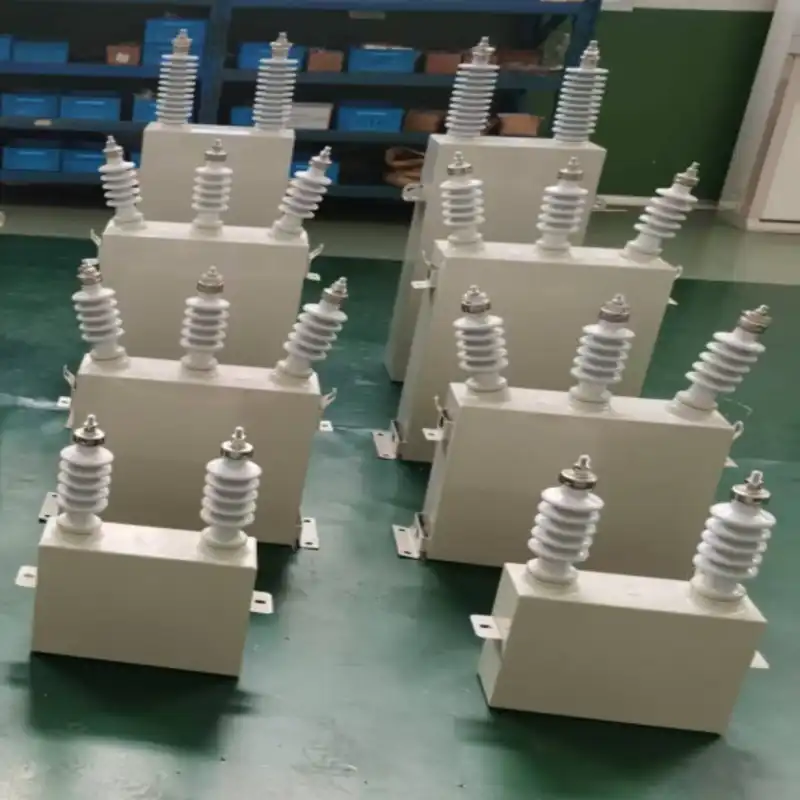
Capacitor banks must match system voltage and frequency to operate safely and reliably. Over-voltage can cause over-compensation, while frequency mismatches increase losses and reduce lifespan. Units like the 10kV 3 Phase Filter Capacitor are rated for 50/60Hz and indoor/outdoor use, providing flexibility and protection against equipment stress from voltage variations.
Environmental Conditions and Installation Requirements
Temperature, altitude, humidity, contamination, and seismic conditions all affect capacitor selection. Our 10kV units handle -40°C to +45°C, elevations up to 2,000 meters, and are IP54+ rated for dust and water. Seismic-rated designs ensure structural integrity in earthquake-prone areas, while specialized enclosures protect against corrosion and industrial pollutants.
Harmonic Analysis and Filtering Requirements
Nonlinear loads like VFDs, arc furnaces, and LED systems inject harmonic currents that can resonate with standard capacitors. Harmonic analysis determines whether detuned banks with series reactors are needed. Detuned designs shift the resonant frequency below the 5th harmonic, protecting sensitive equipment and maintaining stable voltage while still correcting the fundamental power factor.
Regulatory Compliance and Certification Verification
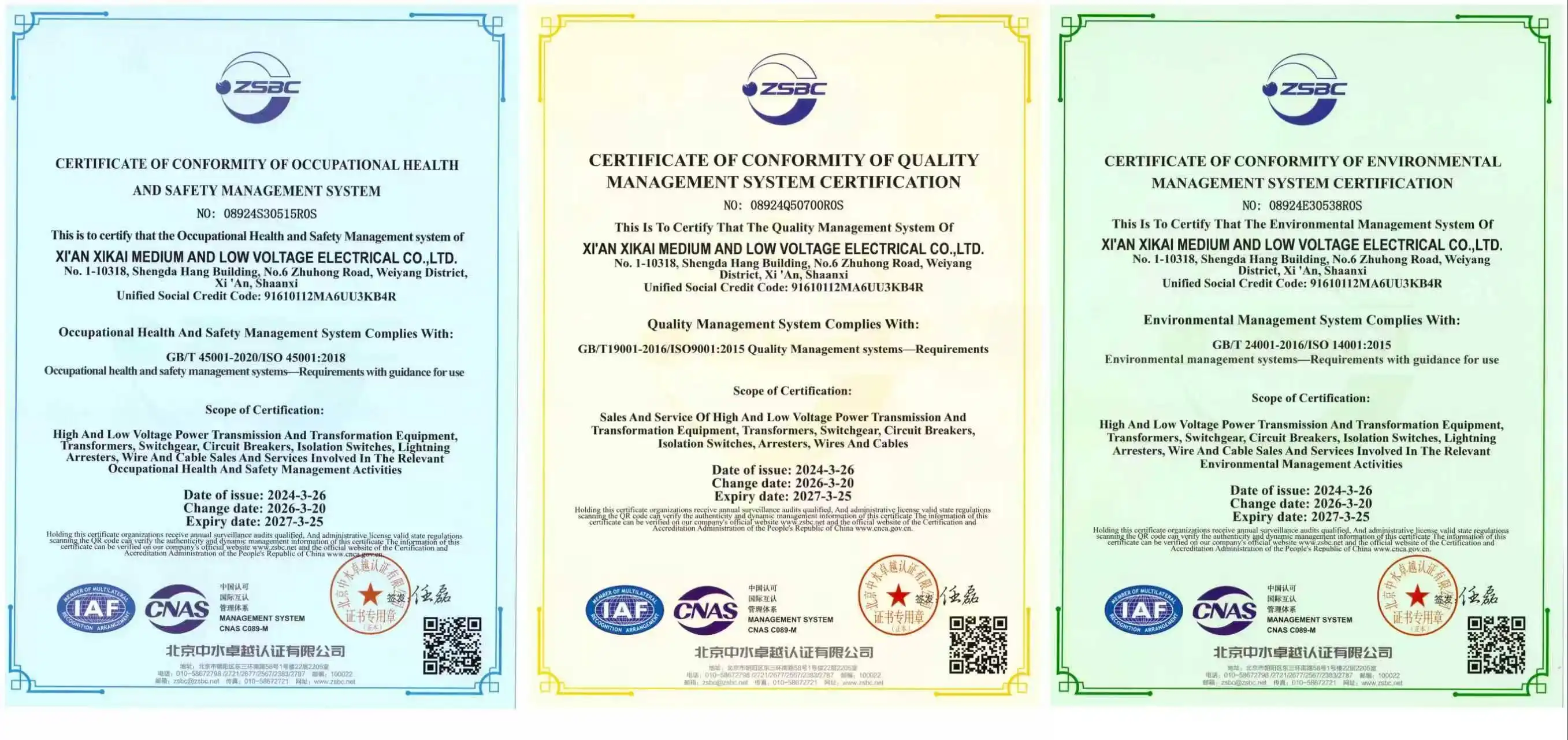
Capacitors must meet IEC 60871, IEEE 18, and UL 810 standards, with regional certifications like CE or GB/T for legal and safety compliance. Compliance with utility interconnection requirements ensures minimum power factor levels and avoids penalties. Validated certification and adherence to standards protect investment, prevent delays, and ensure reliable, long-term operation.
Installation and Maintenance Guidelines for Reliable Long-Term Operation
For capacitor banks to last as long as they're supposed to and work as well as they should, they need to be professionally installed and regularly serviced. We've seen that about 60% of premature 3 Phase Capacitor Bank failures are caused by mistakes in installation and lack of maintenance. This means that these operational aspects are just as important as the initial choice.
Pre-Installation Verification and Safety Protocols
The installation starts before the equipment arrives. Electrical drawings confirm equipment fits system configuration. To avoid costly revisions, make sure there is enough space for measurements, ventilation, and maintenance clearances before installation. The receiving inspection examines for shipping damage, matches nameplate data to purchase, and assures all products and documentation arrived undamaged. Handling capacitors roughly might cause internal damage that is not evident. Insulation resistance (megohm) should be tested before installation to standardize and identify transportation damage. Capacitors store power when unplugged, thus safety requirements allow it. Discharge resistors slowly waste energy, but you must use calibrated test equipment to guarantee no voltage before touching the terminals. After disconnecting, capacitor banks should be avoided for five minutes even with discharge resistors.
Electrical Connection and Grounding Best Practices
Good electrical connections affect a 3 Phase Capacitor Bank's reliability and lifespan. Low-resistance connection points reduce heating and voltage loss. To avoid hot spots and over-tightening (conductor and terminal hardware damage), use calibrated torque wrenches. Grounding activates safety relays. NEC Article 460 conductors must connect capacitor bank frames, enclosures, and neutral points to the building's grounding system. Poor grounding increases shocks, reduces surge protection, and makes repairs tougher. Protectors prevent capacitor bank faults, overcurrents, and overvoltages. Current-limiting fuses avoid bushing and internal element failures. Outdoor installations are protected from lightning and switching transients by surge arresters. In extreme faults, our 10KV 3 Phase Filter Capacitor releases internal pressure to avoid explosions and catastrophic failures.
Scheduled Maintenance and Diagnostic Testing
Early detection and preventive maintenance enhance capacitor bank life. Enclosures should be visually inspected every three months for damage, cooling fans, unusual sounds or scents, and indicator lights Cheap, simple testing find 40% of problems before they worsen. Total yearly inspections include electrical and physical testing. Thermographic studies show hot connections resist corrosion and loosening. If capacitance drops more than 5% from nameplate values, dielectric materials fail. Power factor (dissipation factor) testing monitors dielectric loss; results above 0.1% indicate system failure and warrant investigation.
To address heat cycling-induced terminal hardware loosening, torque the connection. The apparently small upkeep avoids hot spots that erode insulation faster and cause fires. Scheduled downtime retorquing reduces overwork. Keeping detailed maintenance records enables you monitor performance, discover recurrent problems that may signal system concerns, and prove your research for insurance and government purposes. Modern buildings use computerized maintenance management systems (CMMS) to schedule work and alert staff when measurements exceed limits.
Common Failure Modes and Troubleshooting Approaches
Knowing frequent capacitor bank failures speeds diagnosis and repair. Dielectric breakdown from high voltage, harmonic overloading, or thermal stress typically destroys capacitors. Our 10KV capacitor's self-healing dielectric technology vaporizes metallization around faults to fix tiny difficulties. It isolates damage while the gadget functions. This feature usually increases service life beyond 15 years. Fuse activities signify hazard. Statistics imply capacitor components failing randomly may cause isolated fuse actions. Multiple fuse operations signal system-level issues like overvoltage or harmonic resonance that need immediate attention. Automated power factor correction systems may have repeated under- or over-correction (capacitor stages not activating when needed). These symptoms usually suggest power factor controller, current transformer, or voltage sensing circuit difficulties. Systematic test equipment troubleshooting finds and fixes defects.
Comparing Solutions: How to Choose the Best 3-Phase Capacitor Bank Supplier?
When a 3 Phase Capacitor Bank project begins, buyers look at more than just the technical specs. They also look at the supplier's skills, their support infrastructure, and the total cost of ownership. How well you work with your suppliers has a big impact on the success of the project, the reliability of the equipment, and your long-term satisfaction.
Evaluating Manufacturer Credentials and Market Position
Global capacitor bank market comprises some well-known corporations with track records and many smaller businesses with competitive prices. After years of developing industrial power factor correction equipment, Siemens, ABB, Schneider Electric, and Eaton have a large installed base and application expertise. Manufacturer criteria go beyond brand. Certifications, quality control, and technical support are offered. ISO 9001 certification certifies quality management for planning, making, and testing. You may trust a source with an accredited test lab to examine equipment before shipping. When problems develop, suppliers' technical support infrastructures differ. Manufacturers with 24/7 phone, email, and online technical support and regional service centers resolve issues faster. During commissioning, flaws must be fixed promptly or unexpected failures threaten production.
Understanding Price Drivers and Total Cost of Ownership
Features, specs, and marketing determine capacitor bank prices. Knowing what affects costs helps procurement teams assess quotes fairly and avoid incompatible solutions. Price is strongly related to voltage rating. Medium-voltage (4.16kV, 10kV, 13.8kV) units cost more than low-voltage (400V, 480V, 690V) ones because they need additional insulation and safety. Our medium-voltage 10KV 3 Phase Filter Capacitor is ideal for large businesses and utility projects that need strong insulation coordination. The initial and long-term costs of capacitor technology are affected. Metallized polypropylene film capacitors cost more but last longer, have low losses, and can repair themselves. Less maintenance and replacements every 15–20 years vs 8–12 years for cheaper solutions pay off.
Another price factor is automatic power factor adjustment system control complexity. Basic controllers swap stages successively based on power factor. Modern systems examine harmonics, preserve historical data, use Modbus and Ethernet/IP, and stop searching with algorithms. Monitoring power quality in complex facilities should be increased. Total ownership costs include lifetime, installation, energy savings, and maintenance. A cheaper, inefficient 3 Phase Capacitor Bank that has to be replaced every eight years may cost more over twenty years than a more expensive, efficient unit that lasts 15 years. These comparisons are objective with structured economic analysis.
Xi'an Xikai's Distinctive Value Proposition
Xi'an Xikai Medium & Low Voltage Electric Co., Ltd. leads the capacitor bank industry with its technical expertise and customer-focused solutions. We produce seven product categories and 34 series. We provide electricity distribution solutions, not parts. There are several ways our products differ from rivals. Our products meet global performance standards employing patented technologies from national research programs like the 863 Program. The 10KV 3 Phase Filter Capacitor was intended for tough mining, industrial, utility, and business applications. Customization meets application needs catalog items can't. Our technical staff offers tailored solutions for harsh voltage, climate, and harmonic filtering needs. This adaptability upgrades historical buildings when space is limited or equipment must be compatible, necessitating creative engineering.
Our products have been successful in China and abroad in State Grid installations, steel and metallurgy, petrochemical, rail transportation, and renewable energy projects. This wide range of applications helps us build institutional knowledge that advances products and equips our technical personnel to address complicated application problems. Every manufacturing step needs quality control. We test products for dielectric strength, thermal cycling, and seismic simulations before delivery. Third-party laboratories check products for international standards and claims. Tier-based verification eliminates field failures and simplifies client workflows. Our manufacturing approach emphasises environmental preservation, supporting global carbon emission reduction goals and customer sustainability. Low dissipation factors (below 0.1%) allow our capacitors to correct power factor with minimum energy loss. Green manufacturing decreases a product's lifetime environmental effect. Customers may get help globally thanks to global support infrastructure. To reduce downtime, technical experts may provide application assistance, troubleshooting, and fast replacement part delivery via several channels. We value response time and solution effectiveness since production delays cost thousands per hour.
Delivery Logistics and Project Timeline Considerations
When procuring equipment, consider lead times on project timelines. Major sellers provide standard catalog goods in 4–8 weeks. However, customized installations may take 12–16 weeks. Knowing these dates will help you avoid costly project delays caused by schedule compression or power conditioning equipment rentals. Shipping large capacitor banks requires planning. Medium-voltage devices weigh hundreds of kg and need special unloading and positioning equipment. Making sure delivery vehicles can get there and rigging equipment and expert workers are accessible may minimize costly delays and damage. Customers choose suppliers that provide partial shipments, faster production, and emergency replacements. Equipment failures are prevalent in manufacturing, thus parts must be repaired quickly to restore output. Suppliers who provide standard setups or fast production may avoid these issues.
Conclusion
To choose the best 3 Phase Capacitor Bank for your industrial facility, you need to weigh the technical specs, operational needs, environmental factors, and supplier capabilities. Accurate load profiling and harmonic analysis are the first steps in a successful project. Next comes carefully specifying voltage ratings and environmental protection, and finally comes partnerships with manufacturers who offer tested products and quick support. Our 10KV 3 Phase Filter Capacitor shows the high level of engineering that goes into modern reactive power compensation equipment, including harmonic filtering, operation in extreme temperatures, resistance to earthquakes, and self-healing dielectric technology. Taking the time to carefully consider and choose the right capacitor bank will pay for itself many times over in lower energy costs, better power quality, and greater system reliability over the life of the bank.
FAQ
1. How do I accurately calculate the required kVAR for my facility?
To figure out how much reactive power you need, you must first find out your facility's current power factor and total active power demand (kW) under normal operating conditions. What size capacitor bank is needed to go from current power factor (PF₁) to target power factor (PF₂)? The formula kVAR = kW × (tan(arccos(PF₁)) - tan(arccos(PF₂)) tells you. We suggest aiming for a power factor between 0.95 and 0.97 instead of unity because a little too much correction can lead to leading power factors that some utilities punish. By monitoring power quality for 7–14 days, you can see how the load changes with different production schedules and during different seasons. This way, you can be sure that your calculations are based on real operating patterns and not just instantaneous measurements that might not show how things are usually.
2. What differentiates fixed capacitor banks from switched configurations?
Fixed capacitor banks are permanently connected to your electrical system and provide constant reactive power compensation, even if the load changes. These units work well in places where the power factor stays pretty constant and the loads are steady all the time. Automatic controls in switched capacitor banks turn on or off capacitor stages based on real-time power factor measurements. This changes the compensation to fit different load conditions. Facilities that have big changes in load between shifts or production campaigns can benefit from switched configurations that keep them from over-correcting when they don't need to. The advanced control in switched banks raises the initial cost, but they perform better in variable-load situations by keeping the best power factor under all operating conditions.
3. How often should capacitor banks undergo maintenance inspections?
How often maintenance is done depends on the operating environment and how important the equipment is. We suggest visual inspections every three months to check for damage to enclosures, make sure cooling systems work properly, and look for strange noises, smells, or problems with indicator lights. Every year, full inspections should include thermographic surveys to find hot connections, capacitance measurements to find dielectric degradation, and connection retorquing to account for effects of thermal cycling. Facilities that work in harsh environments, like those with high temperatures, a lot of pollution, or atmospheres that are corrosive, should be inspected more often every six months. When capacitor banks support important processes and failures cost a lot of money because they stop production, they need better monitoring through online diagnostics that give a constant health assessment instead of just regular inspections.
Partner With Xi'an Xikai for Superior 3 Phase Capacitor Bank Solutions
Xi'an Xikai stands ready to deliver engineered power factor correction solutions addressing your facility's unique operational challenges. As a leading 3 Phase Capacitor Bank manufacturer, we combine patented technologies, ISO 9001-certified manufacturing, and comprehensive support infrastructure ensuring project success from specification through decades of reliable operation. Our 10KV 3 Phase Filter Capacitor exemplifies our commitment to quality—advanced harmonic filtering, extreme environment resilience, self-healing dielectrics extending lifespan beyond 15 years, and compliance with IEC, IEEE, and UL standards. Whether upgrading existing systems or engineering new facilities, our technical team collaborates with you to optimize power quality, reduce energy costs, and enhance system reliability. Contact our specialists at serina@xaxd-electric.com, amber@xaxd-electric.com, or luna@xaxd-electric.com to discuss your application requirements and receive detailed technical proposals with competitive 3 Phase Capacitor Bank supplier pricing.
References
1. IEEE Standard 18-2012, "IEEE Standard for Shunt Power Capacitors," Institute of Electrical and Electronics Engineers, New York, 2012.
2. International Electrotechnical Commission, "IEC 60871-1:2014 Shunt Capacitors for A.C. Power Systems Having a Rated Voltage Above 1000 V – Part 1: General," Geneva, Switzerland, 2014.
3. Chapman, D., "Power Quality Application Guide: Harmonics and Reactive Power Compensation," Copper Development Association, Hertfordshire, United Kingdom, 2001.
4. Das, J.C., "Power System Harmonics and Passive Filter Designs," IEEE Press Series on Power Engineering, Wiley-IEEE Press, Hoboken, New Jersey, 2015.
5. Arrillaga, J., Watson, N.R., and Chen, S., "Power System Quality Assessment," John Wiley & Sons, Chichester, United Kingdom, 2000.
6. National Fire Protection Association, "NFPA 70: National Electrical Code, Article 460 – Capacitors," Quincy, Massachusetts, 2020 Edition.