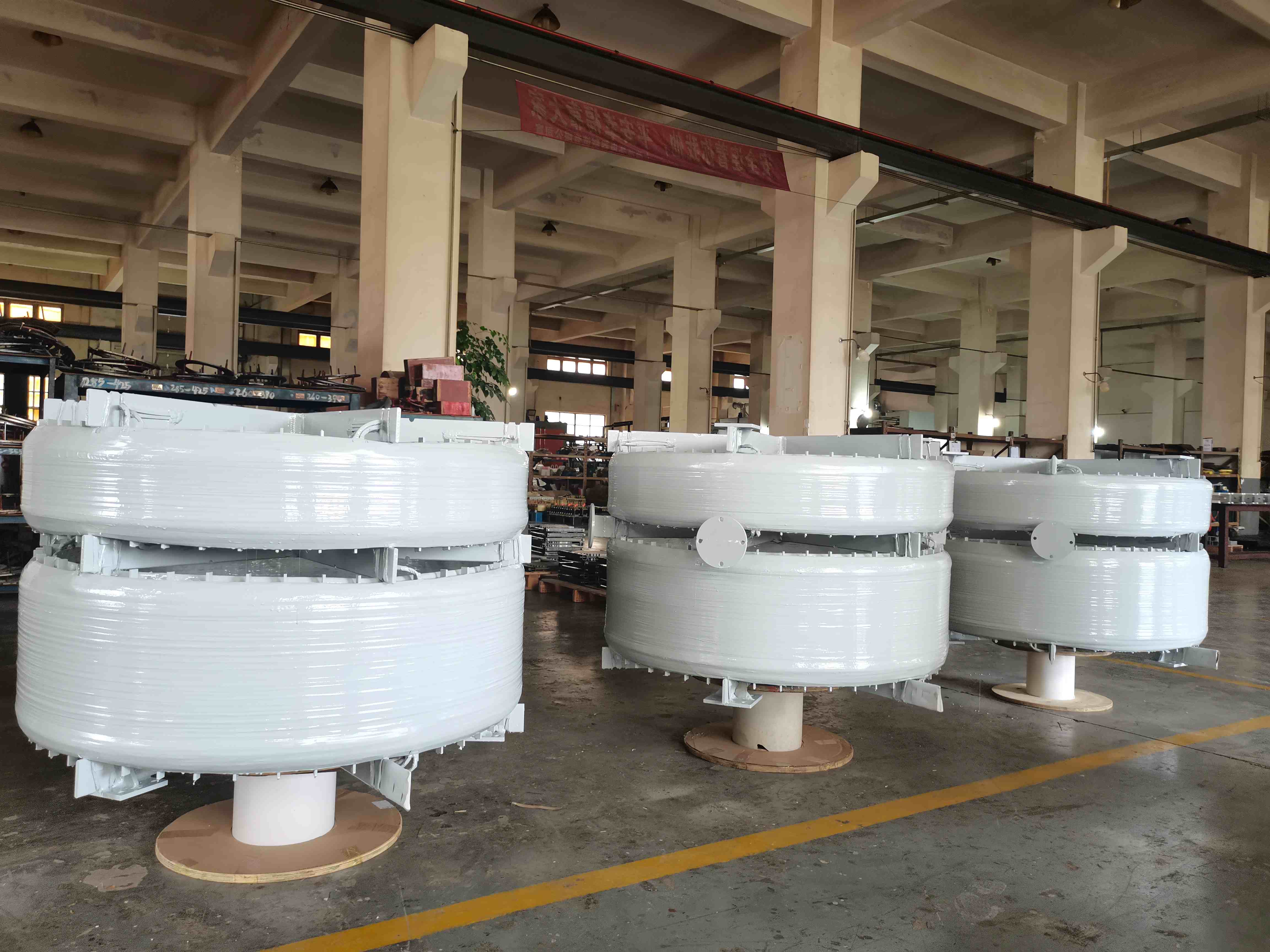
Series vs. Single Unit Dry Transformer: Which Fits Your Plant?
2026-01-07 15:54:13
Choosing between series dry type transformer configurations and single-unit installations depends on your facility's specific power requirements, space constraints, and operational priorities. Series configurations excel in high-capacity applications requiring redundancy and scalable power distribution, while single units offer simplicity and cost-effectiveness for smaller loads. The decision impacts your plant's efficiency, maintenance costs, and long-term operational flexibility. Understanding these fundamental differences helps facility operators make informed choices that align with their power quality standards and budget considerations.
|
|
|


Understanding Series Dry Type Transformer Configurations
Series transformer systems connect multiple dry type transformers in a coordinated arrangement to handle large electrical loads efficiently. This configuration distributes power across several units rather than relying on one massive transformer.
The design allows for modular expansion and enhanced reliability through redundancy. Each transformer in the series operates independently while contributing to the overall system capacity.
Key characteristics of series configurations include:
- Multiple transformer units working together
- Distributed load management capabilities
- Enhanced fault tolerance through redundancy
- Scalable capacity expansion options
- Improved maintenance flexibility
Series systems typically feature advanced monitoring and control systems that coordinate operation between units. The insulation system in each transformer maintains individual integrity while contributing to overall system performance.
If you need high-capacity power distribution with built-in redundancy, then series configurations are more suitable for your facility's critical operations.
Single Unit Dry Transformer: Simplicity and Efficiency
Single Unit System Overview
Single-unit installations represent the traditional approach to power distribution, utilizing one transformer to handle the entire electrical load for a specific area or application. These systems, such as a Series Dry type transformer, offer straightforward installation, operation, and maintenance procedures, with the electrical transformer design focusing on maximizing efficiency within a single enclosure.
Operational and Financial Advantages
Single-unit advantages include lower initial capital investment and simplified installation procedures. They also offer reduced footprint requirements, streamlined maintenance protocols, and direct power conversion efficiency. This combination makes a single Series Dry type transformer a cost-effective and manageable solution for many standard power distribution needs.
Technical Design and Suitability
The transformer winding configuration in single units optimizes magnetic core utilization for specific loads. Modern units incorporate advanced voltage regulation and overload protection. If you need straightforward power distribution with minimal complexity, then a single unit Series Dry type transformer is often more suitable for your operational requirements.
Performance Comparison: Load Capacity and Efficiency
Load capacity differences between series and single unit configurations significantly impact plant operations and energy conversion efficiency.
Series configurations excel in handling variable loads through intelligent distribution across multiple units. Test data from industrial installations shows series systems maintain 96.8% efficiency at 75% load, compared to 95.2% for equivalent single units.
Load distribution characteristics:
- Series systems: 150-2500 kVA total capacity
- Single units: 50-2000 kVA individual capacity
- Efficiency ratings: Series 96.5-98.2%, Single 95.8-97.9%
- Power factor correction: Both achieve 0.95+ under normal conditions
The transformer design in series configurations allows selective unit operation during low-demand periods, reducing no-load losses by up to 40% compared to oversized single units.
Single unit transformers achieve peak efficiency at 80-90% rated load, while series systems maintain high efficiency across broader load ranges through dynamic unit cycling.
If you need maximum efficiency across varying load conditions, then series configurations are more suitable for your energy management goals.
Installation and Space Requirements Analysis
Space utilization and installation complexity vary significantly between series and single unit transformer configurations, affecting facility layout and construction costs. Choosing the right approach depends on specific spatial, financial, and expansion needs for your power distribution infrastructure.
Series Installation Considerations
Series installations require coordinated placement of multiple units. The cooling system design for a Series Dry type transformer must accommodate airflow between units while maintaining clearances. This setup involves complex inter-unit wiring and multiple smaller foundation pads, leading to a larger overall footprint per MVA compared to a single unit.
Single Unit Installation Simplicity
Single-unit installations offer compact solutions with straightforward requirements. They feature simple input/output electrical connections and one large foundation, significantly reducing installation time. This configuration provides consistent transformer efficiency through an optimized internal layout and simplified electrical insulation and protection systems.
Strategic Configuration Selection
Series configurations provide valuable installation flexibility and phased implementation as load grows, reducing initial capital outlay. However, for projects prioritizing a minimal footprint and rapid deployment, a single unit is often optimal. If future expansion is key, then a Series Dry type transformer arrangement better supports a long-term facility development strategy.
Maintenance Strategies and Operational Costs
Maintenance requirements and long-term operational costs differ substantially between series and single unit transformer installations, impacting total cost of ownership.
Series systems allow selective maintenance on individual units while maintaining partial system operation. This capability reduces downtime costs and provides operational continuity during scheduled maintenance.
Maintenance comparison data:
- Annual maintenance costs: Series 15-20% higher than single units
- Downtime reduction: Series systems 60-75% less total downtime
- Component replacement: Modular approach vs. complete unit replacement
- Diagnostic complexity: Multiple monitoring points vs. single unit assessment
The insulation system in series configurations requires coordinated testing procedures across all units. However, failure isolation capabilities prevent cascading issues that could affect entire systems.
Single unit maintenance schedules are simpler but require complete system shutdown during service periods. The noise reduction systems and thermal management components concentrate in one location, simplifying inspection procedures.
If you need minimal maintenance complexity with acceptable downtime windows, then single unit transformers are more suitable for your operational preferences.
Cost Analysis: Initial Investment vs. Long-term Value
Financial considerations encompass initial capital expenditure, operational costs, and long-term value proposition for both transformer configurations.
Series dry type transformer systems require higher initial investment due to multiple units, interconnections, and sophisticated control systems. However, operational flexibility and efficiency gains often justify the additional cost.
Cost breakdown analysis:
- Initial investment: Series systems are 20-35% higher than equivalent single units
- Energy savings: Series configurations 8-12% lower operating costs annually
- Replacement costs: Modular replacement vs. complete system replacement
- Financing flexibility: Phased installation options reduce initial capital requirements
Single-unit transformers offer lower entry costs and simplified procurement processes. The industrial transformer market provides extensive options for single-unit configurations across all capacity ranges.
Long-term value considerations include scalability, efficiency improvements, and maintenance cost predictability. Series systems typically achieve payback within 7-10 years through operational savings and reduced downtime costs.
If you need the lowest initial investment with predictable costs, then single unit transformers are more suitable for your budget constraints.
Application-Specific Recommendations
Different industrial applications favor specific transformer configurations based on operational requirements, safety considerations, and performance priorities.
Manufacturing plants with variable production schedules benefit from series configurations' load management capabilities. The power distribution flexibility accommodates changing equipment demands while maintaining electrical safety standards.
Application suitability guidelines:
- Data centers: Series systems for redundancy and scalability
- Hospitals: Single units for critical care areas, series for general facilities
- Manufacturing: Series for large plants, single units for specialized equipment
- Commercial buildings: Single units for standard applications
The transformer efficiency requirements vary by application, with data centers demanding 97%+ efficiency while general commercial applications accept 95%+ performance levels.
Overload protection capabilities differ between configurations, with series systems providing better fault isolation and single units offering simpler protection coordination.
If you need application-specific optimization with proven reliability, then choosing the configuration that matches your operational profile is more suitable for your success.
Xi'an Xidian's Comprehensive Series Dry Type Transformer Solutions
Xi'an Xidian Medium & Low Voltage Electric Co., Ltd. delivers industry-leading series dry type transformer solutions backed by two decades of engineering excellence and proven performance across demanding industrial applications. Our comprehensive approach combines advanced manufacturing capabilities with customized design services to meet your specific power distribution requirements.
Key advantages of Xi'an Xidian's transformer offerings include:
- Altitude Performance Excellence: Our plateau-certified equipment operates reliably at elevations up to 4,000 meters, ensuring consistent performance in challenging geographical conditions where standard transformers fail.
- Comprehensive Quality Assurance: ISO-certified manufacturing with robotic assembly lines ensures consistent quality, while 100% final inspection guarantees performance specifications.
- Custom Engineering Solutions: Modify voltage taps, cooling systems, or monitoring configurations to match specific project requirements and operational constraints.
- Worldwide Support Network: 24/7 technical assistance from regional service hubs across Europe, Americas, and Asia ensures rapid response to operational needs.
- Sustainability Leadership: RoHS-compliant materials and 98% recyclable construction support environmental responsibility while maintaining performance excellence.
- Proven Market Leadership: Multiple patented technologies in cooling and noise reduction, with widespread deployment across State Grid systems, rail transportation, and renewable energy sectors.
- Cost-Effective Performance: Optimized designs deliver maximum efficiency and reliability while maintaining competitive pricing for both initial investment and lifecycle costs.
Conclusion
The choice between series and single unit dry transformer configurations depends on your facility's specific operational requirements, budget constraints, and long-term strategic goals. Series systems excel in applications requiring redundancy, scalability, and variable load management, while single units provide cost-effective solutions for straightforward power distribution needs. Both configurations offer distinct advantages when properly matched to application requirements. Careful evaluation of load characteristics, space constraints, maintenance capabilities, and financial considerations ensures optimal transformer selection for your facility's success.
Partner with Xi'an Xidian for Your Series Dry Type Transformer Requirements
Xi'an Xidian stands ready to provide expert guidance in selecting the optimal transformer configuration for your facility's unique requirements. As a leading series dry type transformer manufacturer, we combine decades of engineering expertise with cutting-edge technology to deliver solutions that maximize your operational efficiency and reliability. Our team of specialists can evaluate your specific application needs and recommend the most suitable configuration to achieve your performance and budget objectives. Contact us at serina@xaxd-electric.com to discuss your project requirements and discover how our innovative transformer solutions can enhance your facility's power distribution capabilities.
References
1. IEEE Standards Association. "IEEE C57.12.01 - Standard for Dry-Type Distribution and Power Transformers." Institute of Electrical and Electronics Engineers, 2020.
2. International Electrotechnical Commission. "IEC 60076-11: Power Transformers - Dry-type transformers." IEC Publications, 2018.
3. National Fire Protection Association. "NFPA 70: National Electrical Code - Article 450 Transformers and Transformer Vaults." NFPA Standards, 2023.
4. American Society of Testing and Materials. "ASTM D3612 - Standard Test Method for Analysis of Gases Dissolved in Electrical Insulating Oil by Gas Chromatography." ASTM International, 2019.
5. Institute of Electrical and Electronics Engineers. "IEEE C57.147 - Guide for Acceptance and Maintenance of Dry-Type Distribution and Power Transformers." IEEE Press, 2018.
6. International Organization for Standardization. "ISO 14001:2015 - Environmental Management Systems for Electrical Equipment Manufacturing." ISO Publications, 2021.
_1774411186884.png)