Understanding the Role of Oil Immersed Transformers in Modern Power Distribution Systems
2026-05-26 15:59:18
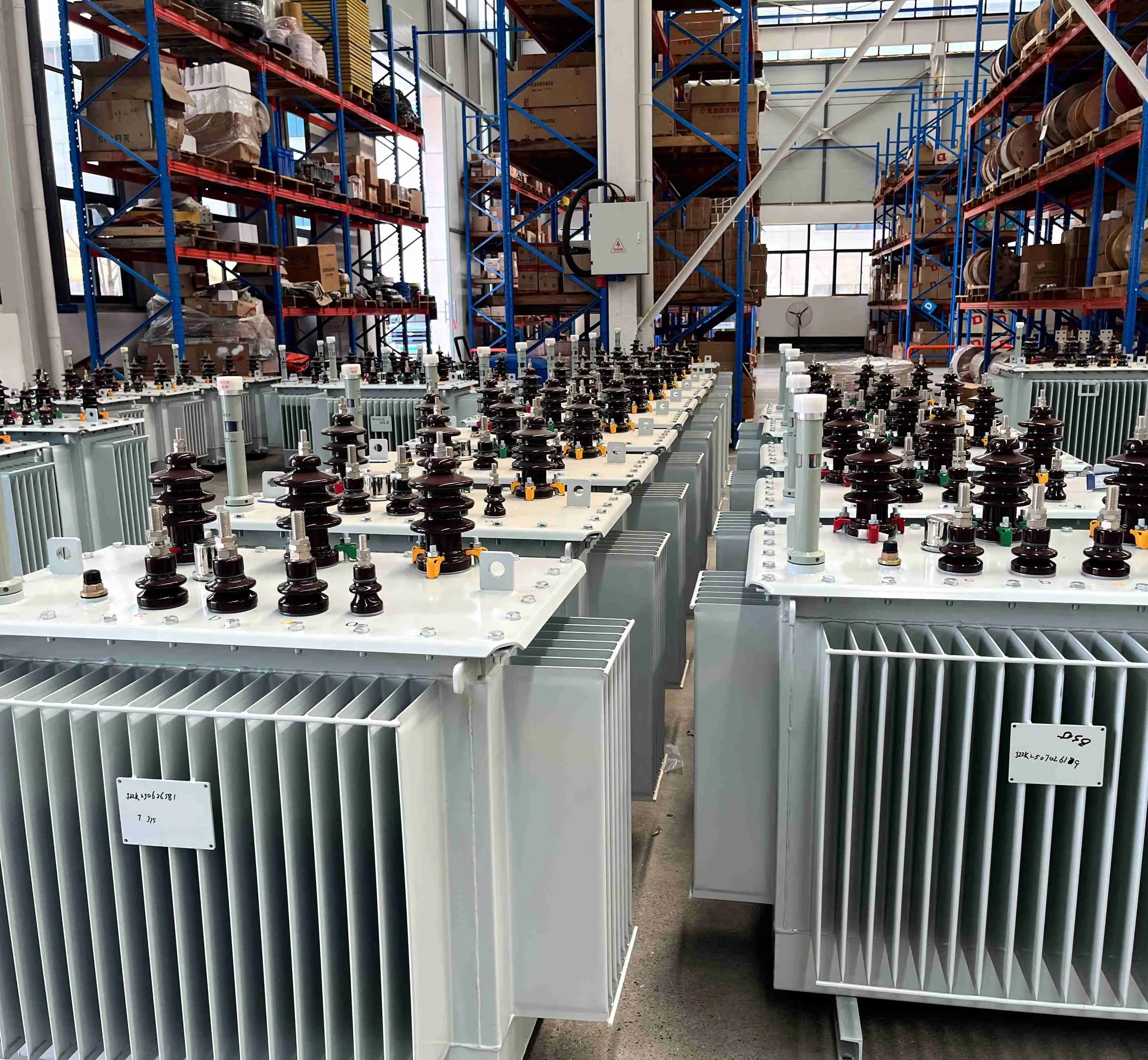
Oil-immersed Distribution Transformers enable constant voltage translation over industrial, commercial, and utility networks with mineral oil insulation and efficient thermal management. These devices use insulating oil as a cooling medium and dielectric barrier to solve heat dissipation and electrical isolation problems in 10kV to 110kV systems. Their experience with difficult load profiles makes them essential for facilities that need reliable power and continuity.
 |
 |
What Is an Oil-Immersed Distribution Transformer?
Core Operating Principles
Oil-immersed Distribution Transformers scale voltage levels up or down by electromagnetic induction to meet system needs. Insulating oil naturally flows in the enclosed tank, absorbing core losses and winding resistance heat. This thermal transfer system keeps winding temperatures 65K above ambient safe for operation. The oil resists high-voltage component failure and achieves dielectric strength values above 30kV during breakdown voltage testing. Grain-oriented silicon steel cores reduce hysteresis losses, while delta or wye copper or aluminum windings precisely translate voltage.
Essential Component Architecture
For decades of environmental exposure, the transformer tank stores all active components in corrosion-resistant steel. Bushings with porcelain or composite housings in certain voltage classes isolate electrical connections. Thermal expansion causes oil volume variations in the conservator tank, while silica gel moisture absorbers in breather devices prevent pressure accumulation. Radiators or corrugated tank walls improve ONAN cooling surface area for passive heat dissipation. Pressure relief valves prevent catastrophic internal failures, whereas Buchholz relays detect gas accumulation during faults. Tap changers modify voltage under load or no-load to stabilize output despite upstream changes.
Quality Standards and Testing Protocols
Transformers satisfy worldwide performance requirements by meeting IEC 60076 and IEEE C57 specifications. Routine testing verifies turns ratio within ±0.5% tolerance, ensuring proper voltage transformation. Insulation resistance measures moisture or contamination before service access. IEC 60422 dielectric oil examination measures breakdown voltage, acidity below 0.03mgKOH/g, and dissolved gas concentrations suggesting thermal or electrical stress. Outdoor systems exposed to air surges need impulse voltage testing to verify lightning impulse withstand. At rated voltage, partial discharge tests below 10pC show insulation integrity, preventing premature aging.
Comparing Oil-Immersed and Dry-Type Distribution Transformers
Thermal Performance and Efficiency Metrics
Mineral oil's improved heat transmission allows Oil-immersed Distribution Transformers to operate at higher power densities than dry-type units. Even after two hours of overloads up to 150% rated capacity, liquid cooling maintains winding temperatures. This thermal resistance yields efficiency ratings of 98.5% at full load and 30% lower no-load losses in enhanced S13 and S18 series systems. Under comparable load circumstances, dry-type transformers cooled exclusively by air convection heat up more, limiting continuous overload capacity and longevity in high-demand applications.
Maintenance Requirements and Safety Considerations
Monitoring oil quality and filtering moisture and oxidation byproducts are necessary for oil-filled transformers. Sealed tanks avoid air contact, prolonging oil service life to suit the 25-30 year transformer lifespan without replacement. Oil flammability requires installation distances from occupied structures and automated suppression devices in enclosed substations. Dry-type units are popular in hospitals and commercial buildings because they reduce oil-related maintenance and fire dangers. Their susceptibility to dust and humidity necessitates regulated surroundings, yet IP55-rated oil-immersed tanks can resist -40°C to 55°C ambient temperatures.
Total Cost of Ownership Analysis
For utility-scale applications above 500kVA, oil-immersed transformers have reduced per-kVA procurement costs. Higher efficiency reduces energy waste during decades of service, saving money. In facilities with 70% load factor, a 1000kVA oil-immersed transformer with 98.7% efficiency saves $8,000 yearly compared to a 97.5% efficient dry-type transformer. These cumulative savings balance maintenance cost differences. In situations requiring frequent movement or interior installations where fire standards prohibit oil-filled equipment, dry-type transformers are cheaper. Procurement managers should weigh lifespan costs against application restrictions rather than just purchase price.
Benefits and Challenges of Oil-Immersed Distribution Transformers
Technical Advantages Driving Industrial Adoption
These transformers can sustain intermittent load surges in manufacturing facilities and data centers without deterioration due to robust thermal control. The liquid dielectric media self-heals, enabling mild electrical stress events to pass without injury. Oil damping of magnetostriction vibrations keeps noise below 65dB, fulfilling strict residential installation acoustic standards. Due to effective cooling, compact units require less floor area than similar dry-type units. Amorphous metal core models meet utility grid decarbonization and EcoDesign targets with 99% efficiency.
Customization flexibility makes these Oil-immersed Distribution Transformers valuable beyond performance standards. We adapt winding layouts for unique voltage ratios, impedance values for fault current restrictions, and cooling systems from ONAN to ONAF for increased capacity. Our seismic-resistant versions protect essential infrastructure from Zone 4 earthquakes, while ATEX-certified models handle explosive atmospheres in petrochemical operations. Coastal installations benefit from corrosion-resistant tank coatings and salt-resistant stainless steel fittings. These adaptability capabilities make oil-immersed transformers adaptable in many operating scenarios.
Operational Challenges Requiring Proactive Management
Secondary containment structures and visual inspections are needed to avoid oil spills into soil and groundwater. Environmental rules raise compliance costs to oil disposal and spill response. In sensitive settings, fire suppression infrastructure costs more, but current high-flash-point oils over 140°C reduce ignition danger. Explosive failure types are infrequent when maintenance practices are followed, but clearance zones must safeguard workers and equipment. When monitoring systems are used, dissolved gas analysis reveals defects weeks before catastrophic breakdown, enabling predictive maintenance tactics that nearly eliminate downtime.
How to Choose the Right Oil-Immersed Distribution Transformer for Your Business?
Voltage and Capacity Specification Process
Start by recording current and predicted load profiles, including peak demand, power factor, and 15-year increase. Utility connection points or on-site generation equipment must match 10kV, 35kV, or 110kV input voltages. Serving industrial motor loads and commercial distribution panels, output voltage is usually 400V or 690V three-phase. Selection of capacity should provide normal operation at 60-80% rated load with margin for occasional peaks and minimal no-load losses during light-load periods. Oil-immersed Distribution Transformers must handle 125% intermittent loads from inverter systems and maintain grid synchronization during renewable generating variations with ±0.5% voltage control for solar and wind integration.
Supplier Evaluation Criteria
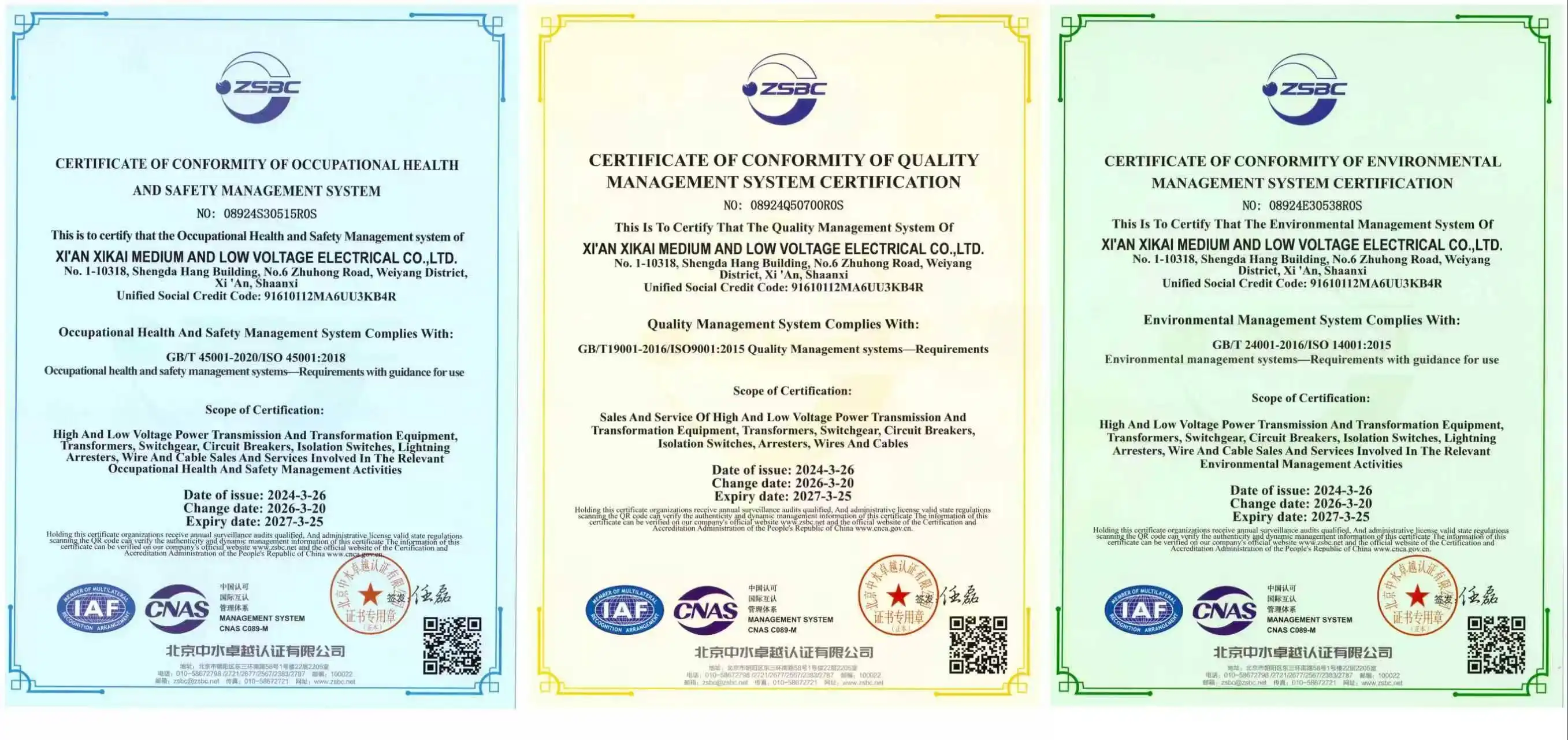
Partner selection influences long-term reliability beyond equipment specs. With 25 years of transformer production experience and many design patents, we solve operational problems. Leak concerns in hurriedly produced welded tanks are eliminated by 24-hour pressure testing in ISO 9001-certified production. IEC 60076, CE, UL, and GOST-R certifications facilitate international project deployments by confirming global conformity. Check supplier capability for bulk orders and lead time management, especially for big infrastructure projects with phased delivery coordinated with construction milestones.
Customization Capabilities Matching Application Needs
Compact designs optimize footprint without losing thermal performance for urban substation applications. Mining requires tough structure that can tolerate vibration, dust, and harsh temperatures. Special corrosion protection and earthquake anchoring are needed for offshore wind projects. Our engineering team works with EPC firms to customize cooling systems, enclosure ratings, and protective relay integration for site conditions. This consulting approach guarantees delivered equipment interacts easily with power distribution designs, eliminating costly field adjustments.
Installation, Testing, and Maintenance Best Practices
Site Preparation and Commissioning Procedures
Where noise transmission might disrupt sensitive activities, Oil-immersed Distribution Transformer foundation design must sustain equipment weight plus seismic loads with vibration isolation pads. Transformer clearance zones allow maintenance and fulfill NFPA 70E arc flash safety standards. Oil filling requires vacuum processing to remove moisture and air pockets that weaken dielectric strength. Before energization, measure winding resistance to discover manufacturing or shipping issues. Protective relay settings should match upstream and downstream devices for selective fault isolation. Documenting baseline parameters provides future condition assessment reference values.
Predictive Maintenance Technologies
Online monitoring systems discover abnormalities before they become failures by tracking key performance metrics. Overheating, arcing, or cellulose degradation are indicated by hydrogen, methane, and acetylene concentrations in dissolved gas analysis. Real-time thermal profiles from winding temperature sensors alert of hotspots. Partial discharge monitoring detects insulation deterioration that standard testing misses. Instead of emergency repairs, these predictive technologies allow regular outages for oil reclamation or bushing replacement, extending asset life. Facility managers use our 24/7 technical help to understand monitoring data and schedule maintenance.
Routine Inspection Schedules
Annual visual examinations check exterior components for oil leaks, corrosion, and mechanical damage. Abnormal heating patterns in thermographic studies indicate weak connections or internal problems. By sampling oil every two years for typical service units or annually for transformers with severe loads, oil quality is maintained by timely filtering or replacement. Bushing power factor testing finds insulation-compromising wetness. As equipment nears end-of-life, extensive service records track performance patterns to inform refurbishment or replacement decisions. Our 10-year guarantee and extensive spare parts inventory reduce component replacement downtime.
Conclusion
Modern power infrastructure relies on Oil-immersed Distribution Transformers for their superior thermal performance, efficiency, and dependability in industrial and utility applications. Facilities that emphasize operational continuity and long-term value use them because they can tolerate hostile conditions and regulate voltage tightly. Success demands knowledgeable selection based on load factors and true customisation and technical support from vendors. Thorough testing and predictive maintenance maximise return on investment, ensuring these important assets meet company goals for decades.
FAQ
1. How often should oil-immersed transformers undergo maintenance?
Annual visual inspections, thermographic surveys, oil sample for quality analysis, and five-year electrical testing are standard maintenance intervals. Transformers in hostile settings or with extensive loading cycles need yearly oil sampling to discover faults before they affect dependability. Online monitoring systems enable condition-based maintenance, which optimizes maintenance spending and prevents unexpected breakdowns by starting interventions based on equipment state rather than timetables.
2. What distinguishes oil-immersed from dry-type transformers in practical applications?
Utility substations and industrial plants use oil-immersed units for high-capacity outside installations that need optimal efficiency and overload tolerance. Dry transformers are suitable for hospitals and offices where fire safety standards prohibit oil-filled equipment. Liquid cooling reduces size, operating temperatures, and lifetime under equal load circumstances, while dry-type designs minimize oil-related maintenance and environmental problems.
3. Can transformers be customized for unique industrial requirements?
Manufacturing now allows substantial flexibility to solve operational problems. We tweak impedance values to limit fault currents, modify winding taps for non-standard voltage ratios, and construct explosion-proof or harsh climatic enclosures. Compact designs fit urban installations, and upgraded cooling systems handle overload operation. Collaborating throughout purchase ensures equipment meets application needs rather than pushing designs into standardized goods.
Partner with Xi'an Xikai for Your Power Distribution Needs
Choosing the appropriate Oil-immersed Distribution Transformer provider is crucial when operational dependability and energy efficiency affect your bottom line. Xi'an Xikai Medium & Low Voltage Electric Co., Ltd. combines deep manufacturing expertise with comprehensive system integration capabilities, delivering customized solutions matching your exact specifications. Our product line spans input voltages from 10kV through 110kV, with proven performance in mining operations, renewable energy projects, and utility grid applications across multiple continents. Reach out to our technical specialists at serina@xaxd-electric.com and amber@xaxd-electric.com and luna@xaxd-electric.com to discuss your project requirements. As a trusted manufacturer, we provide end-to-end support from initial specification through commissioning and lifecycle maintenance, backed by rigorous quality control and global certifications.
References
1. International Electrotechnical Commission. IEC 60076 Series: Power Transformers – General Requirements and Test Methods. Geneva: IEC Publications, 2018.
2. Institute of Electrical and Electronics Engineers. IEEE C57.12.00: Standard for General Requirements for Liquid-Immersed Distribution, Power, and Regulating Transformers. New York: IEEE Standards Association, 2020.
3. Kulkarni, S.V. and Khaparde, S.A. Transformer Engineering: Design, Technology, and Diagnostics. Boca Raton: CRC Press, 2013.
4. Heathcote, Martin J. The J & P Transformer Book: A Practical Technology of the Power Transformer. Oxford: Newnes Publishing, 2007.
5. Harlow, James H. Electric Power Transformer Engineering, Third Edition. Boca Raton: CRC Press, 2012.
6. Ryan, Hugh M. High Voltage Engineering and Testing: IET Power and Energy Series. London: Institution of Engineering and Technology, 2013.
_1774416563318.png)