Vacuum Circuit Breaker Applications in Substations
2026-04-23 16:07:42
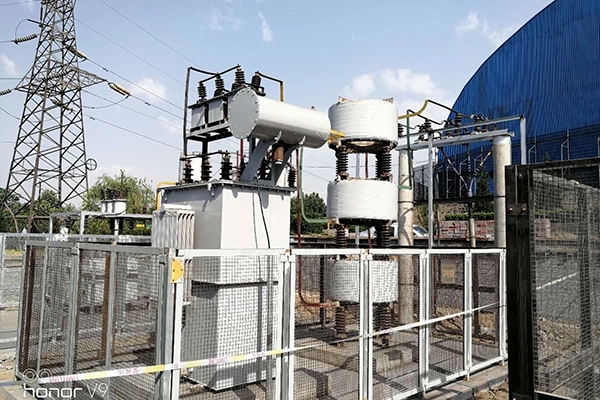
Vacuum Circuit Breakers are an important part of modern substation design. They use vacuum interrupter chambers to quickly stop electrical arcs and fault currents. These devices keep important infrastructure safe by quickly isolating broken parts, which stops failures from spreading through distribution networks. Vacuum Technology is better than older options like oil-based or SF6 because it has higher dielectric strength, requires less maintenance, and is safe for the environment. These are important factors when operational continuity and following the rules are important in large construction projects, utility operations, and industrial facilities.
 |
 |
Understanding Vacuum Circuit Breakers in Substations
Core Operating Principles of Vacuum Interrupters
One of the best things about Vacuum Circuit Breakers is that they can stop arcs. During a fault condition, when the contacts separate, the arc forms inside a sealed vacuum chamber with no ionizing medium. This vacuum environment stops arc sustenance, which lets the process of interrupting the current finish in 20 to 50 milliseconds. The contacts are made of copper-chromium alloys that don't wear down even after thousands of switching cycles. This keeps the contacts in good shape and prevents resistance buildup that could cause thermal problems.
Key Components Driving Reliability
Several important parts are built into modern vacuum interrupter assemblies. Response time and mechanical endurance are based on the type of operating mechanism used, such as a spring-loaded, permanent magnetic actuator, or motor-driven system. The insulation around the vacuum bottle needs to be able to handle impulse voltages that are higher than twice the rated voltage. This protects against the short-term overvoltages that can happen in substations that use renewable energy. Terminal connections, especially tulip contacts that have been plated with silver, make sure that there is low resistance in the current paths. These paths can handle continuous loads of 630A to 3150A and can withstand short-circuit forces of more than 40 kA.
Voltage and Current Rating Considerations
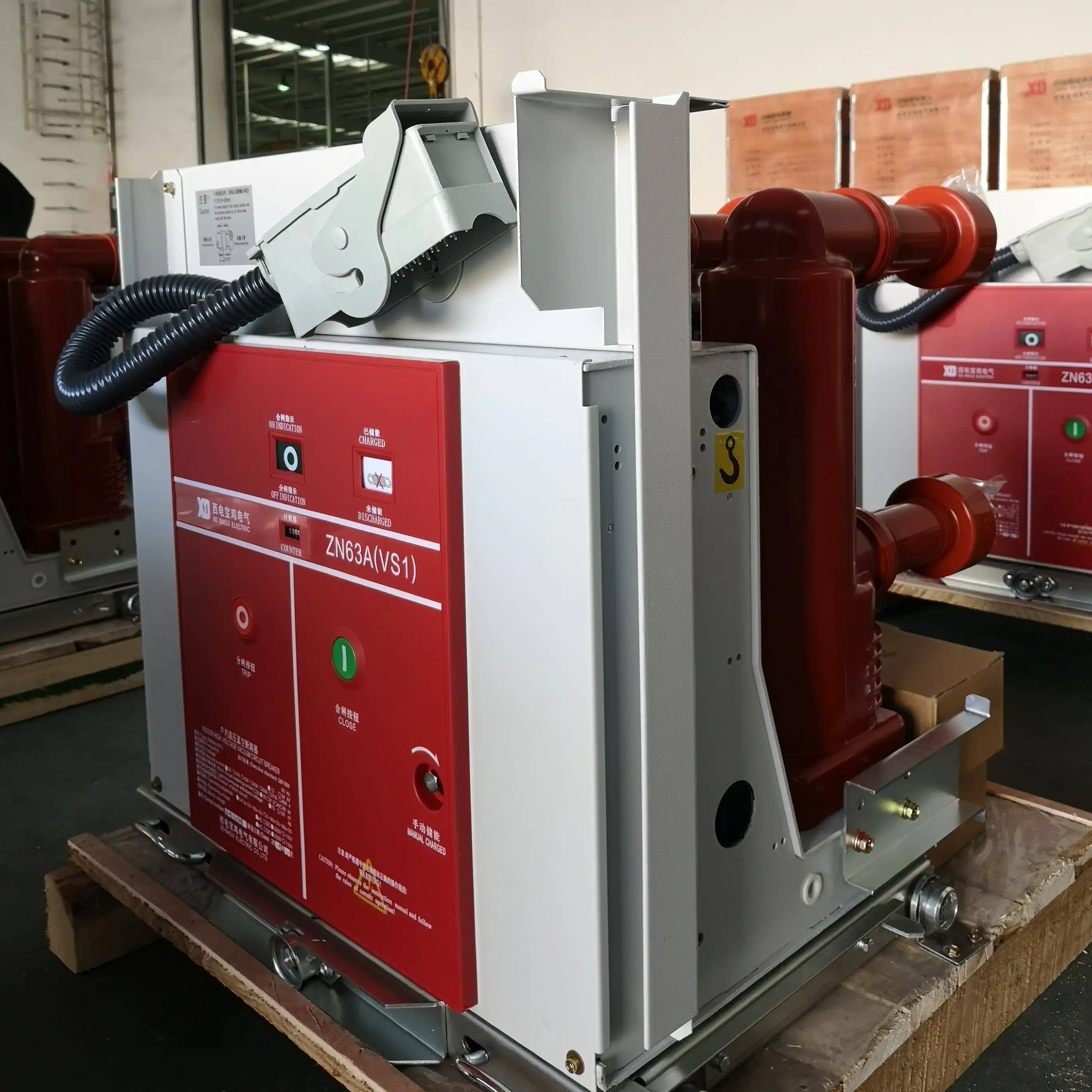
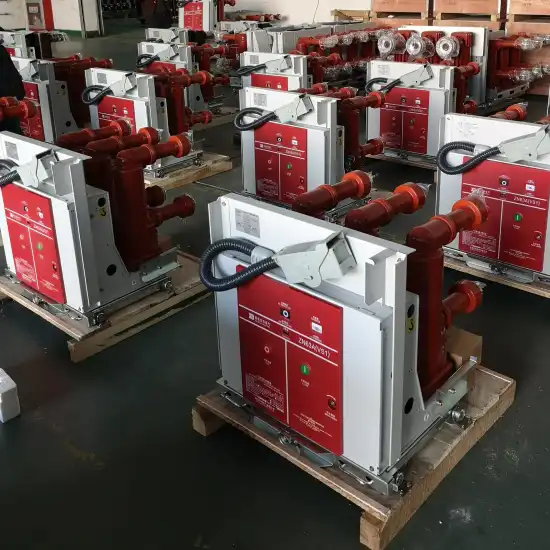
To choose the right ratings, you need to carefully look at how your system works. In industrial and utility substations, Vacuum Circuit Breakers are mostly used for medium voltage tasks (12 kV to 40.5 kV). Current ratings have to take into account both steady-state loads and surges that happen when the transformer turns on or the motor starts up. The Xi'an Xikai ZN63-VS1 Indoor Vacuum Circuit Breaker can handle rated currents of 630A to 3150A at 50 Hz frequency. It can handle a wide range of load profiles in places like factories, data centers, and business complexes that need reliable overcurrent protection.
Compact Design Advantages
In urban substations and retrofit situations where space is limited, Vacuum Technology is better. Because there are no oil tanks or pressurized SF6 compartments, the footprint is 30–40% smaller than with older designs. This small size makes it easier to install in existing switchgear enclosures like KYN28-12 and KYN61-40.5 configurations. This cuts down on civil works and speeds up project completion, which is very important for EPC firms that are working with tight budgets and construction schedules.
Key Applications of Vacuum Circuit Breakers in Substations
Industrial Facility Power Distribution
Industrial facilities require high power quality to support CNC machines, automated lines, and robotic systems. Even short voltage drops can interrupt production and cause material waste. Vacuum Circuit Breakers installed in main and feeder circuits improve selective coordination, isolating faults while keeping healthy sections operating. Their fast interruption of short-circuit currents protects PLCs and sensitive electronics. Data centers also rely on VCBs for redundant N+1 or 2N systems, where ZN63-VS1 reduces arc energy and prevents cascading failures while operating reliably in high humidity environments.
Utility Substation Integration
Utility substations depend on Vacuum Circuit Breakers for stable grid operation across large transmission and distribution networks. They handle switching tasks such as load transfer, capacitor switching, and line reconfiguration with minimal wear, reducing maintenance frequency and improving system flexibility during peak demand. Renewable energy integration introduces voltage fluctuations and harmonics, but electronic control units allow adaptive protection and SCADA-based remote monitoring of vacuum integrity and operations. This enables predictive maintenance and improves reliability across fluctuating solar and wind generation systems connected to modern power grids.
Case Study: Petrochemical Complex Reliability Enhancement
A big petrochemical plant on the Gulf Coast had to stop making things a lot of times because old oil circuit breakers that served process units kept tripping. The maintenance team had to deal with rising costs related to handling oil, following rules for disposal, and longer power outages for breaker repairs. After talking to system integrators, they added Vacuum Circuit Breakers with a 1250A and 25 kA interrupting capacity to critical feeders. The results were impressive: over the course of 18 months, unplanned downtime dropped by 67%, the amount of maintenance work needed dropped by 45%, and the facility earned ISO 50001 energy management certification, in part because the vacuum terminals were properly maintained and the system worked more efficiently.
Comparing Vacuum Circuit Breakers with Other Breaker Types for Substations
Operational Characteristics Against SF6 Technology
In the past, SF6 gas circuit breakers were the most popular choice for high-voltage applications because they were so good at stopping arcs. Environmental laws are making it harder to use SF6 because it is a powerful greenhouse gas—23,500 times more powerful than CO2—and it can cause climate change. These environmental issues are not a problem with Vacuum Technology, which also provides good interrupting performance in medium voltage ranges. Maintenance times are much longer because vacuum chambers stay sealed throughout their service life. This is in contrast to SF6 breakers, which need to be checked for gas density on a regular basis and may need to be refilled, which requires specialized equipment and trained staff.
Oil Circuit Breaker Comparison
Breakers that are submerged in oil used to be the norm, but they are very hard to maintain. Regular dielectric testing and filtering are needed because oil is breaking down, which increases costs and makes it harder to get rid of. Because flammable insulating oil can cause fires, more safety equipment is needed, such as oil containment pits, fire suppression systems, and areas where people are not allowed to go. Vacuum alternatives don't use flammable materials, which makes safety rules easier to follow and lowers insurance costs. The ZN63-VS1's design specifically takes environmental conditions into account; it can reliably work in temperatures ranging from -15°C to +40°C without the need for heaters or cooling systems that most oil breakers need.
Air Circuit Breaker Applications
Air circuit breakers work well for low voltages, but they have trouble stopping arcs at medium voltages, which is where Vacuum Technology really shines. Unlike air breakers, which need long arc chutes, the compact vacuum chamber design lets higher voltage ratings fit into smaller enclosures. Upgrading facilities from 480V to 13.8kV distribution systems can use Vacuum Technology to keep their footprints the same while getting voltage upgrades that make transmission more efficient and lower conductor losses across large campus layouts.
Supplier Landscape and Procurement Insights
When sourcing a reliable Vacuum Circuit Breaker, selecting an experienced manufacturer is critical. Xi'an Xikai stands out as a leading supplier, offering advanced, patented technologies and a broad product portfolio tailored to substation requirements. With proven performance across State Grid and industrial sectors, the company delivers customized, high-reliability solutions. Its capability to support harsh environments, including high-altitude applications, further strengthens procurement confidence for global power distribution projects.
Maintenance, Troubleshooting, and Performance Optimization of VCBs in Substations
Preventive Maintenance Protocols
Vacuum Circuit Breakers require regular preventive maintenance to ensure long service life and stable performance. Annual inspections should check mechanical components such as linkage wear, spring tension, and auxiliary switch operation. Contact resistance is measured with a micro-ohmmeter; values exceeding 120% of baseline indicate terminal degradation. The sealed vacuum bottle requires no internal maintenance, but external inspection for cracks or discoloration helps detect possible vacuum loss. Cleaning focuses on terminals and insulators, using alcohol-based solvents and conductive grease on contacts to reduce oxidation and friction.
Common Failure Modes and Diagnostic Approaches
The primary limiting factor in vacuum interrupters is contact wear caused by arc erosion during each interruption cycle. Manufacturers specify endurance limits such as 10,000 mechanical operations or 50–100 full-load interruptions depending on current rating. Operation counters support predictive replacement before failure occurs. Vacuum degradation is rare but detected through reduced dielectric strength during high-voltage testing. Annual vacuum integrity checks are performed at 80% impulse voltage. Factory testing includes dielectric and seismic simulations to ensure reliability and reduce field failure risk in demanding environments.
Predictive Maintenance Technologies
Advanced Vacuum Circuit Breakers use sensors to monitor temperature, vibration, and partial discharge activity for condition-based maintenance. These systems detect early-stage faults weeks or months before failure, allowing scheduled repairs instead of emergency outages. IoT-enabled breakers transmit operational data to cloud platforms where machine learning identifies abnormal patterns linked to failure modes. Thermal imaging during live inspections reveals hot spots caused by resistance or imbalance. These non-invasive methods are ideal for continuous-process industries such as refineries and steel plants, ensuring reliability without interrupting production.
Procurement Guide: Buying Vacuum Circuit Breakers for Substations
Technical Selection Criteria
The voltage rating is the most important specification. It matches the nominal voltage of your system with the right safety margins. For 12 kV medium voltage substations, 15 kV class breakers with a 25% margin against transient overvoltages are usually required. It is necessary for the interrupting capacity to be higher than the maximum available fault current at the installation point. This can be found by doing short-circuit studies that take into account both utility contribution and on-site generation sources. The current rating choice strikes a balance between the current load needs and plans for future growth. The ZN63-VS1 can handle a wide range of applications, from single motor feeders to main tie breakers that serve multiple distribution panels. Its range goes from 630A to 3150A. When you go above 1000 meters, the lower air density affects the insulation and heat transfer on the outside. Xi'an Xikai's plateau-rated equipment still meets all requirements at elevations up to 4000 meters, making it suitable for use in mountainous areas or high-altitude industrial sites.
Certification and Compliance Verification
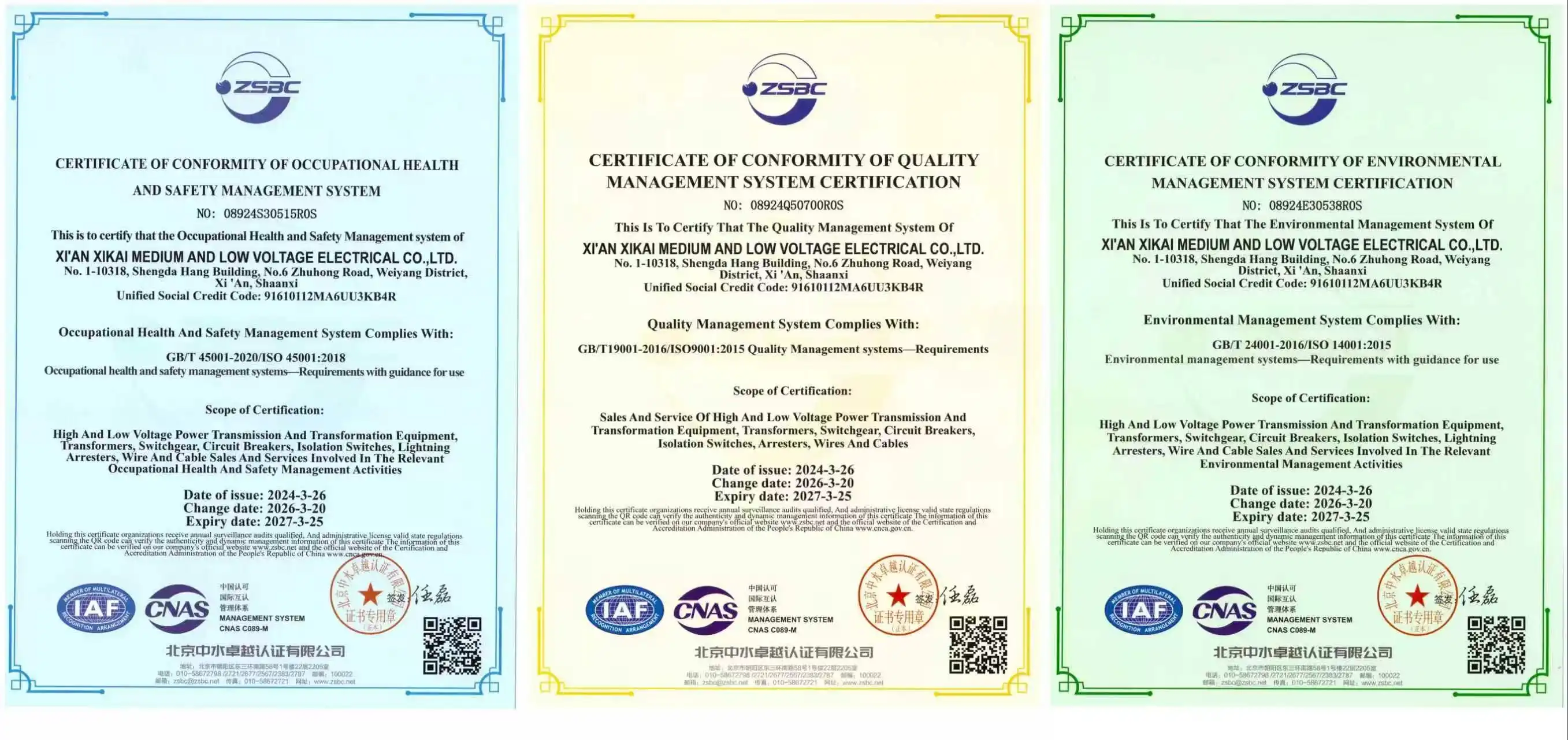
IEC 62271-100 sets international standards for the design, testing, and performance of Vacuum Circuit Breakers. In North America, applications are governed by IEEE C37 standards, which have slightly different testing protocols and ratings. Specifications for purchases should clearly list any relevant standards and ask for test reports from a third party to confirm compliance. Chinese companies like Xi'an Xikai keep certifications like the 3C (China Compulsory Certificate), ISO 9001 (quality management), ISO 14001 (environmental management), and ISO 45001 (occupational health standards). This shows that they make sure quality is built into every step of the manufacturing process. In places where earthquakes are common, seismic qualification becomes more important. Testing according to IEEE 693 or IEC 60068-3-3 makes sure that structures are strong and can work during and after earthquakes. The ZN63-VS1 is qualified to MSK-8 intensity, which means it can work in areas with moderate earthquake activity. This protects important infrastructure like hospitals, emergency services, and public utilities that need to keep running during disasters.
Service and Support Considerations
Long-term operational success depends a lot on how well the manufacturer can support the business. Repair times are directly affected by the availability of spare parts. Important parts like vacuum bottles, operating mechanisms, and control modules should be kept in stock at regional distribution centers so that they can be shipped within days instead of weeks. In competitive evaluations, suppliers are set apart by how quickly they respond to technical support requests and whether they have field service engineers who can help with commissioning and troubleshooting. Using training programs to teach maintenance workers specific information about breakers lowers operational risks. Facility teams can confidently manage equipment without having to rely too much on outside contractors when they take courses that cover routine maintenance, diagnostic testing, and emergency procedures. Xi'an Xikai offers technical documentation, training materials, and engineering support for custom applications that need different configurations or integration with certain switchgear platforms. These are services that add measurable value beyond just looking at the price of the equipment.
Conclusion
Vacuum Circuit Breakers have changed the way substations are protected and controlled. They work reliably and help keep industrial facilities, utility networks, and commercial complexes running. Their small sizes, benefits for the environment, and low maintenance needs are all important issues that facility managers and utility engineers need to address right away. The ZN63-VS1 Indoor Vacuum Circuit Breaker is an example of modern Vacuum Technology. It has strong interrupting power and features designed for harsh environments, such as the ability to handle up to 95% relative humidity, to withstand earthquakes, and to handle currents ranging from 630A to 3150A. Protecting important electrical infrastructure over the long term requires strategic procurement that takes into account technical needs, compliance checks, and supplier support abilities.
FAQ
1. What advantages do Vacuum Circuit Breakers offer over oil-filled units?
Vacuum Technology gets rid of the fire risks that come with flammable insulating oil and makes maintenance a lot easier. Oil breakers need to be tested for dielectric strength on a regular basis, filtered, and eventually thrown away in a way that follows environmental rules. As long as they are in use, vacuum chambers stay sealed and don't need any internal maintenance. Environmental compliance is easier to achieve without oil containment infrastructure, and operational costs go down because maintenance intervals are longer and costs for consumables go down.
2. How often should Vacuum Circuit Breakers undergo maintenance inspections?
Full inspections once a year cover most industrial and utility uses, checking for mechanical problems, measuring contact resistance, and testing dielectrics. Applications with a lot of cycles, like switching operations that happen a lot or harsh environmental conditions, may need to be looked at every six months. Condition-based scheduling lets you make the best use of resources while keeping reliability high by comparing the total number of operations to the manufacturer's recommended endurance ratings.
3. Are Vacuum Circuit Breakers suitable for high-altitude installations?
Up to 1000 meters above sea level, standard Vacuum Circuit Breakers work reliably. For installations above this height, the insulation and cooling on the outside need to be changed or derated to account for the lower air density. Xi'an Xikai makes plateau-rated equipment that keeps all of its specifications at 4000 meters. This equipment is used in hydroelectric facilities, mines, and infrastructure in mountainous areas where altitude has a big effect on the choice of equipment.
Partner with Xi'an Xikai for Premium Vacuum Circuit Breaker Solutions
Xi'an Xikai Medium & Low Voltage Electric Co., Ltd. has been making high-quality products for over 30 years, and they have worked on State Grid systems, petrochemical complexes, and renewable energy projects that require a lot of work. With ratings from 630A to 3150A, an interrupting capacity of up to 40 kA, and environmental resilience, our ZN63-VS1 Indoor Vacuum Circuit Breaker is a reliable choice for industrial and utility substations. As a well-known Vacuum Circuit Breaker supplier, we offer full support, including custom configurations, technical training, and quick response field service to make sure your infrastructure works at its best for as long as it lasts. Send an email to serina@xaxd-electric.com, amber@xaxd-electric.com, or luna@xaxd-electric.com to talk about your specific needs and get detailed specifications that meet your substation protection needs.
References
1. International Electrotechnical Commission. "High-voltage switchgear and controlgear – Part 100: Alternating current circuit-breakers." IEC 62271-100:2021, Geneva, Switzerland.
2. Institute of Electrical and Electronics Engineers. "IEEE Standard for Medium Voltage (1 kV to 35 kV) AC Power Circuit Breakers Used in Enclosures." IEEE C37.59-2018, New York, USA.
3. Slade, P. G. "The Vacuum Interrupter: Theory, Design, and Application." CRC Press, Boca Raton, Florida, 2017.
4. Dufournet, D. and Montillet, G. F. "Vacuum Circuit Breakers: An Overview of Technical and Economic Benefits in Medium Voltage Applications." CIGRE Session Papers, Paris, France, 2014.
5. Zhang, J., Wang, L., and Liu, X. "Performance Analysis of Vacuum Circuit Breakers in Distribution Substations Under High Humidity Conditions." Electric Power Systems Research, Vol. 178, 2020.
6. National Electrical Manufacturers Association. "Application Guide for AC High-Voltage Circuit Breakers Rated on a Symmetrical Current Basis." ANSI C37.010-2016, Rosslyn, Virginia.