Current Transformer Applications in Substations
2026-04-23 16:07:44
Current Transformers are an important part of modern power infrastructure because they make sure that measurements are accurate and that substations are safe. These precise instruments lower high currents to levels that can be controlled. This makes monitoring and managing power grids, factories, and business complexes safe. Whether you run a factory, oversee transmission networks, or plan electrical systems, knowing how these substation devices work has a direct effect on project profitability, operational uptime, and grid stability. To help you make smart choices, this guide walks you through the most important applications, selection criteria, and buying strategies.
 |
 |
Understanding Current Transformers in Substations
Instrument transformers known as Current Transformers are made to measure high electrical currents by lowering them to standard secondary values, which are usually 1A or 5A. This change makes it possible for metering devices, relays, and monitoring systems to work safely without coming into direct contact with dangerous primary currents. The basic idea is based on electromagnetic induction: when primary current flows through a conductor, it creates a magnetic field that makes the secondary winding carry proportional current.
Core Operating Principles and Technical Specifications
The accuracy and dependability of these tools depend on a number of technical factors. The transformation ratio, like 1000/5A, shows how the primary and secondary current are connected. IEC 60044 standards set the accuracy class for devices that are used for metering (Class 0.2, 0.5) or protection (Class 5P, 10P). The maximum load that the secondary circuit can handle without losing accuracy is called its "burden capacity." Insulation level makes sure that the device can handle voltage stress from 10kV to 35kV or higher in its working environment.
By knowing these specs, procurement teams can match the capabilities of transformers with the needs of substations. A data center that needs to bill accurately needs Class 0.2 metering accuracy, while a factory needs Class 5P protection accuracy to find problems quickly. Setting the right parameters up front avoids mistakes that cost a lot of money and guarantees long-term system compatibility.
Common Types and Their Substation Applications
Different types of transformers are used in substations depending on the installation limitations and operational needs:
1. Solid Core Transformers feature a closed magnetic core that cannot be opened after it has been made. Because these units are so accurate and stable, they are perfect for long-term installations in indoor switchgear and panel boards. Their small size makes them good for places with limited space, like commercial buildings and industrial control rooms.
2. Split Core Transformers have cores that are hinged and can be installed around existing conductors without having to disconnect the circuits. This design is very helpful for maintenance or retrofitting, which keeps operational substations running. Split core units are often used by utilities for short-term monitoring or system upgrades.
3. Oil-Filled Transformers put their windings in insulating oil, which makes them very good at cooling and withstanding high voltages. These strong units are used in substations outside, where they are exposed to bad weather and high voltage. Because they have been shown to be reliable, they are standard equipment in transmission networks that reach rural and remote areas.
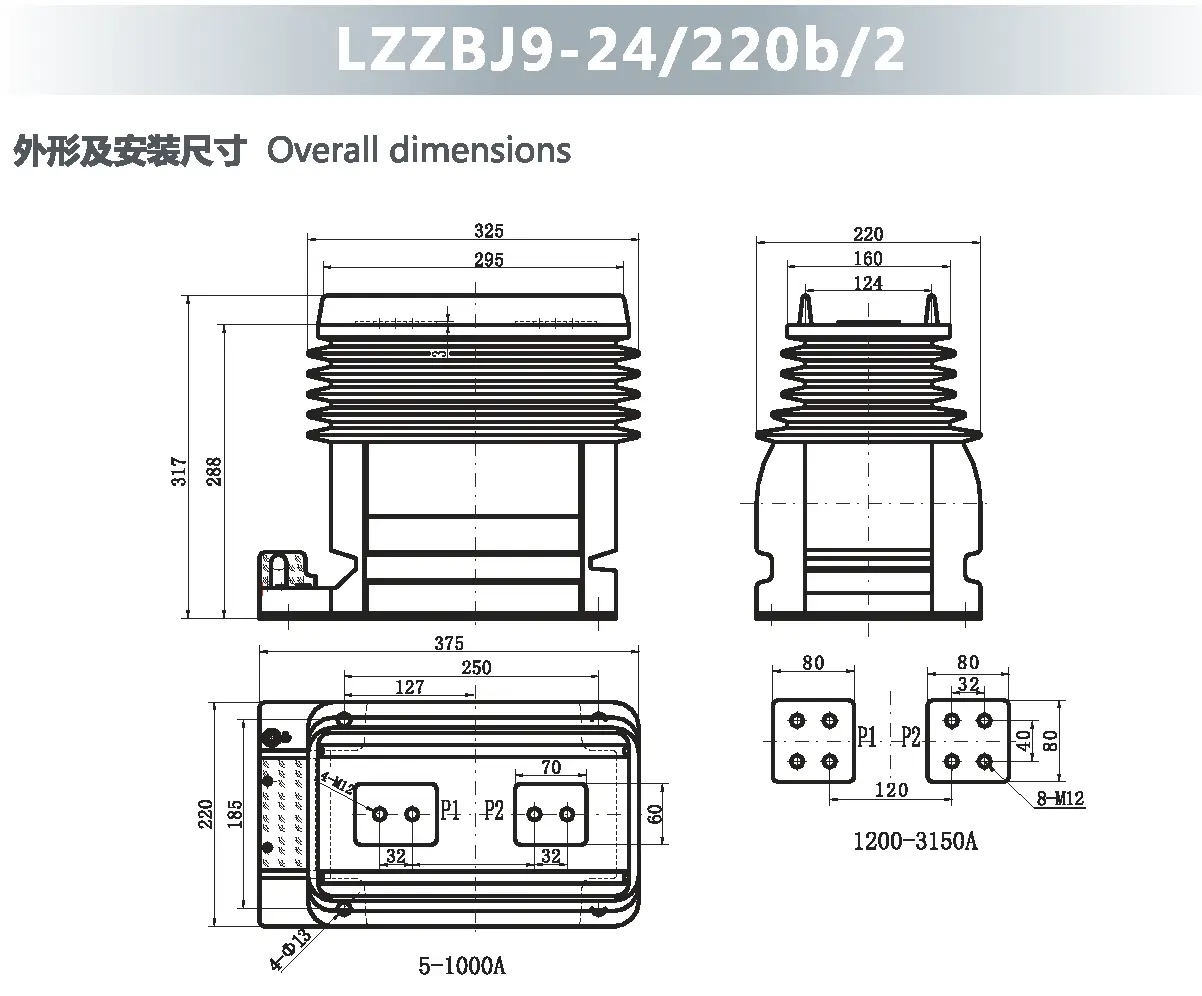
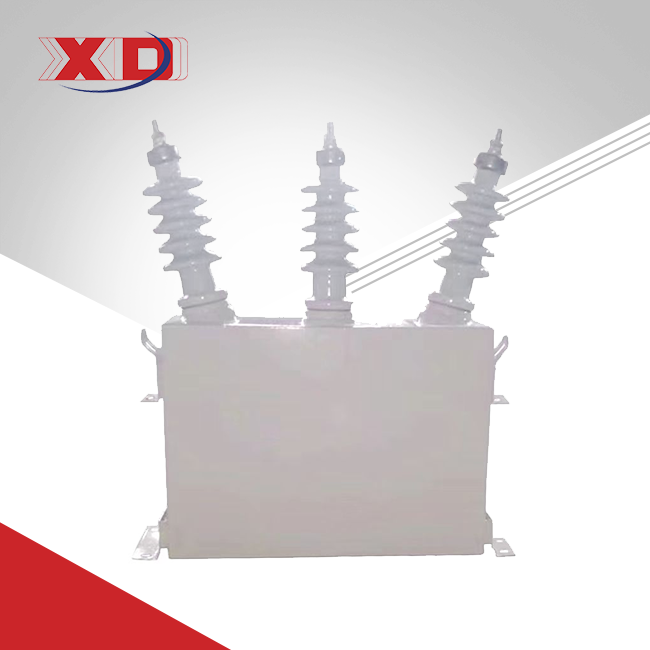
4. Dry-Type Transformers use epoxy resin casting for insulation instead of oil, which gets rid of the fire risks that come with oil. This technology is shown by our Current Transformer. Its fully enclosed, epoxy-sealed design protects against water, UV rays, and pollution, making it perfect for coastal areas or installations up to 4,000 meters above sea level. Automated precision winding makes sure that the ratio of turns is always the same, and vacuum casting gets rid of any air pockets for perfect insulation.
Current Transformers Versus Potential Transformers
People in procurement often confuse Current Transformers (CTs) and Potential Transformers (PTs), though they serve different roles. CTs are connected in series and step down current for measurement and protection, while PTs are connected in parallel and reduce voltage. In substations, both are used for metering power, but protection systems rely mainly on CT accuracy. Separating their functions ensures safety and precision, preventing errors that could affect system performance or operator safety in electrical installations.
Key Applications of Current Transformers in Substations
Current Transformers are very important to substations because they do three main things: monitoring, protection, and automation. For each application, there are specific performance requirements that affect decisions about what to buy.
Real-Time Current Measurement for Billing and Energy Management
Accurate current measurement is critical for billing and energy management in utilities and large facilities. Revenue-grade meters require high precision, typically 0.2 or 0.2S class accuracy. CT data supports load optimization, loss reduction, and cost control. In smart grids, real-time monitoring improves system efficiency and reduces waste. Even small measurement errors can lead to significant financial losses, so selecting high-accuracy CTs ensures regulatory compliance, fair billing, and improved operational transparency across power systems.
Integration into Relay and Protection Schemes
CTs are vital for protection systems that detect faults and trigger circuit breakers quickly. They send current signals to relays, which distinguish normal load variations from fault conditions. Protection schemes such as overcurrent, differential, and distance protection rely on accurate CT performance. These systems must handle extreme fault currents while maintaining stability. Proper CT selection ensures fast fault isolation, protecting equipment and minimizing downtime in industrial plants, utilities, and critical infrastructure environments.
Support for Control and Automation Systems
Modern substations use CT signals for automation through PLCs and digital relays. These systems manage switching, voltage regulation, and load balancing automatically. CT data also supports predictive maintenance by analyzing waveforms and harmonic distortion. This helps detect early equipment degradation and improves reliability. Integration with SCADA systems enables remote monitoring and control. Accurate CT output is essential for stable automation performance, ensuring efficient grid operation and reducing the risk of unexpected failures.
Selecting the Right Current Transformer for Substations
To pick the best devices, you need to look at technical factors, the environment, and the supplier's abilities. This section gives you a framework for making decisions with confidence regarding the selection of a Current Transformer.
Critical Technical Factors
CT selection depends on transformation ratio, electrical burden, and insulation level. The ratio must match system current and secondary device requirements to avoid saturation or low accuracy. Burden includes all connected equipment resistance and must not exceed rated capacity. Insulation must withstand system voltage and surge conditions. Proper selection ensures stable operation, accurate measurement, and safe performance under both normal and fault conditions in substations and industrial power systems.
Indoor Versus Outdoor Installations
Indoor CTs operate in controlled environments and are typically dry-type for safety and compact design. Outdoor CTs must withstand weather, pollution, and temperature variations, often using oil-filled or epoxy-sealed designs. Sealed epoxy types provide strong insulation and corrosion resistance, especially in coastal or high-altitude areas. Proper selection depends on environmental exposure and maintenance requirements. Durable outdoor CTs reduce lifecycle costs and ensure stable performance over long operational periods in harsh conditions.
Oil-Filled Versus Dry-Type Designs
Oil-filled CTs are suitable for high-voltage applications but require regular maintenance and environmental precautions. Dry-type CTs eliminate oil-related risks and offer easier maintenance with epoxy insulation technology. They are widely used in distribution systems and environmentally sensitive areas. Although oil-filled units may offer higher thermal capacity, dry-type designs provide safer, cleaner, and more sustainable operation. Selection depends on application voltage level, environmental constraints, and long-term maintenance strategy.
Split Core Versus Solid Core Configurations
Split core CTs allow installation without disconnecting circuits, making them suitable for retrofits and temporary monitoring. However, they may sacrifice some accuracy over time. Solid core CTs provide higher precision and long-term stability, making them ideal for permanent installations. Manufacturing processes ensure consistent ratio accuracy and durability. Solid core units undergo strict testing for reliability, including thermal and seismic validation, ensuring dependable performance in critical substation applications.
Evaluating Supplier Product Lines
Choosing a CT supplier requires reviewing technical datasheets, certifications, and support capabilities. Reliable manufacturers provide detailed specifications and compliance reports to international standards. Engineering support is important for correct system integration and burden calculations. Suppliers like Xi'an Xikai offer strong technical expertise across utilities, renewables, and industrial sectors. Warranty terms and customization speed also reflect supplier reliability, ensuring project flexibility and long-term operational support.
Testing, Calibration, and Safety Practices for Substation Current Transformers
To keep measurements accurate and make sure the machine works safely, it needs to be tested regularly and follow best practices in the industry regarding the Current Transformer.
Calibration Techniques and Testing Tools
Periodic calibration ensures Current Transformers remain accurate throughout their service life. Standard tools include precision current injection systems, burden measurement kits, and digital multimeters, with testing performed according to IEC 60044 standards by comparing secondary output against known primary inputs. Ratio, polarity, burden, and excitation tests verify performance, phasing accuracy, circuit impedance, and core magnetization condition. Regular annual testing or post-fault checks, supported by detailed documentation and portable instruments, helps detect early degradation while minimizing downtime through in-field validation without system shutdown.
Industry Best Practices and Safety Standards
Working with Current Transformers requires strict adherence to safety procedures. Secondary circuits must never be opened while primary current is flowing, as dangerous high voltages exceeding 10kV may occur; terminals should always be shorted first. Grounding is mandatory under NEC Article 250 to ensure fault current paths and operator safety. Proper installation torque, clearances, and airflow management are essential to prevent overheating, insulation tracking, and reduced accuracy. Common issues such as polarity errors, overload, and poor insulation coordination can be avoided through compliance with IEEE C37.110 and manufacturer guidelines.
Procurement Strategies for Current Transformers in Substations
Strategic procurement strikes a balance between price, quality, and delivery times, while also building relationships with suppliers that will meet long-term business needs for Current Transformer acquisition.
Bulk Purchasing and Custom Orders
Bulk purchasing enables economies of scale, reducing costs and ensuring uniform specifications across multiple projects. Utilities and industrial operators benefit from standardized equipment and predictable supply chains through long-term agreements. Custom configurations are essential when standard CTs cannot meet specific requirements such as unusual load profiles, tight installation spaces, or high-altitude insulation needs. Rapid customization capabilities allow delivery within days, supporting tight project schedules. However, customization must be justified through technical and economic analysis to ensure performance gains outweigh added costs.
Evaluating Pricing Structures and Supplier Reliability
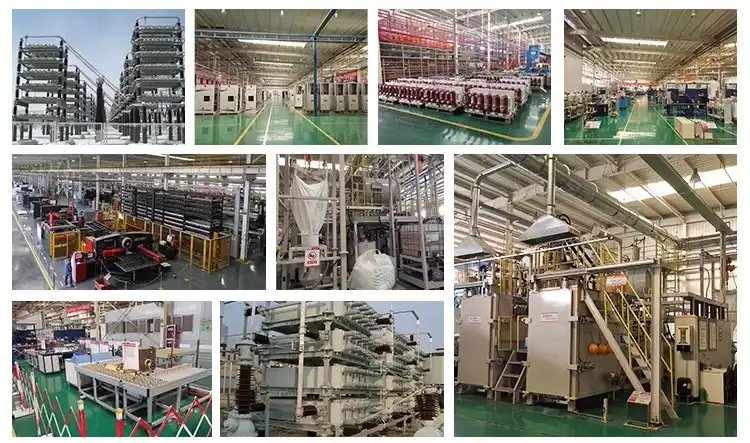
Transparent pricing should include equipment cost, testing, logistics, and packaging, along with clear warranty and support terms. Evaluating total cost of ownership provides a more accurate view of long-term value than initial price alone. Supplier reliability is confirmed through certifications, factory audits, and real project references demonstrating production capability. Advanced manufacturing such as automated winding, vacuum casting, and full testing facilities indicates strong quality control. Reliable suppliers reduce operational risks, ensure consistent performance, and provide long-term technical and logistical support.
Building Long-Term Distributor Partnerships
Strong relationships with distributors go beyond just buying things. Partners provide local inventory that cuts down on lead times, technical training for maintenance staff, and emergency support when power goes out. Collaborative planning makes sure that inventory levels are in sync with project schedules so that delays are avoided due to a lack of stock. Distributors who know the rules in your area can help you with the paperwork and certifications you need to meet the rules. Specification mistakes that slow down projects can be avoided thanks to their experience with applications. Value-added services like pre-commissioning testing, kitting with the necessary hardware, and on-site commissioning support make it easier to carry out the project.
Future-Proofing Investments
Modernizing the grid and adding renewable energy sources are two things that are driving the need for more advanced monitoring tools. Making sure that devices work with digital substations and IEC 61850 communication protocols gets the infrastructure ready for upgrades in the future. Our designs are ready for the smart grid and allow for real-time monitoring that cuts down on energy loss and makes it possible to use new technologies. Scalable architectures allow for growth without having to buy new equipment. Adding units instead of replacing whole installations is how modular designs let you increase capacity. This gives businesses the freedom to grow while protecting their investments.
Conclusion
To choose the right Current Transformers for substation uses, you have to weigh technical performance, suitability for the environment, and supplier capabilities. Knowing basic operating principles, accuracy classes, and installation issues helps you make sure that your specifications support your operational goals. Testing and safety procedures keep measurements accurate and keep people safe. Strategic approaches to buying things cut down on costs, make sure the supply chain is reliable, and get infrastructure ready for how technology changes. Working with skilled manufacturers is the best way to get the accuracy, safety, and cost-effectiveness that modern power infrastructure needs, whether you're in charge of utility grids, running factories, or designing electrical systems.
FAQ
1. What distinguishes current and potential transformers in substations?
By lowering high primary currents to safe secondary levels and connecting them in series with loads, Current Transformers measure electrical current. Potential transformers measure voltage by stepping down high voltages that are linked across circuits in parallel. Both allow safe metering and protection, but they measure things in different ways that can't be put together without losing accuracy.
2. How often should calibration occur for substation transformers?
Most applications only need to be calibrated once a year when they are running normally. If you need Class 0.2 accuracy for revenue metering or if your devices have a lot of fault currents, raise the frequency to every six months or three months. If there are system disturbances, such as short circuits or lightning strikes, that could affect accuracy, you should always test again. Condition-based maintenance is possible with well-documented testing trends. This makes calibration intervals more efficient while still making sure compliance.
3. What safety measures apply when working with live equipment?
When primary circuits are carrying current, you should never open secondary circuits. Instead, you should short the secondary terminals before disconnecting loads. As required by NEC Article 250, make sure there is proper grounding. Before doing maintenance, make sure that the de-energization is correct by using the right test equipment. Follow the steps for lockout/tagout. Keep the minimum approach distances for the voltage levels that are being used. When working near energized equipment, make sure you have on the right safety gear, such as arc-rated clothing.
Partner with Xi'an Xikai for Reliable Current Transformer Solutions
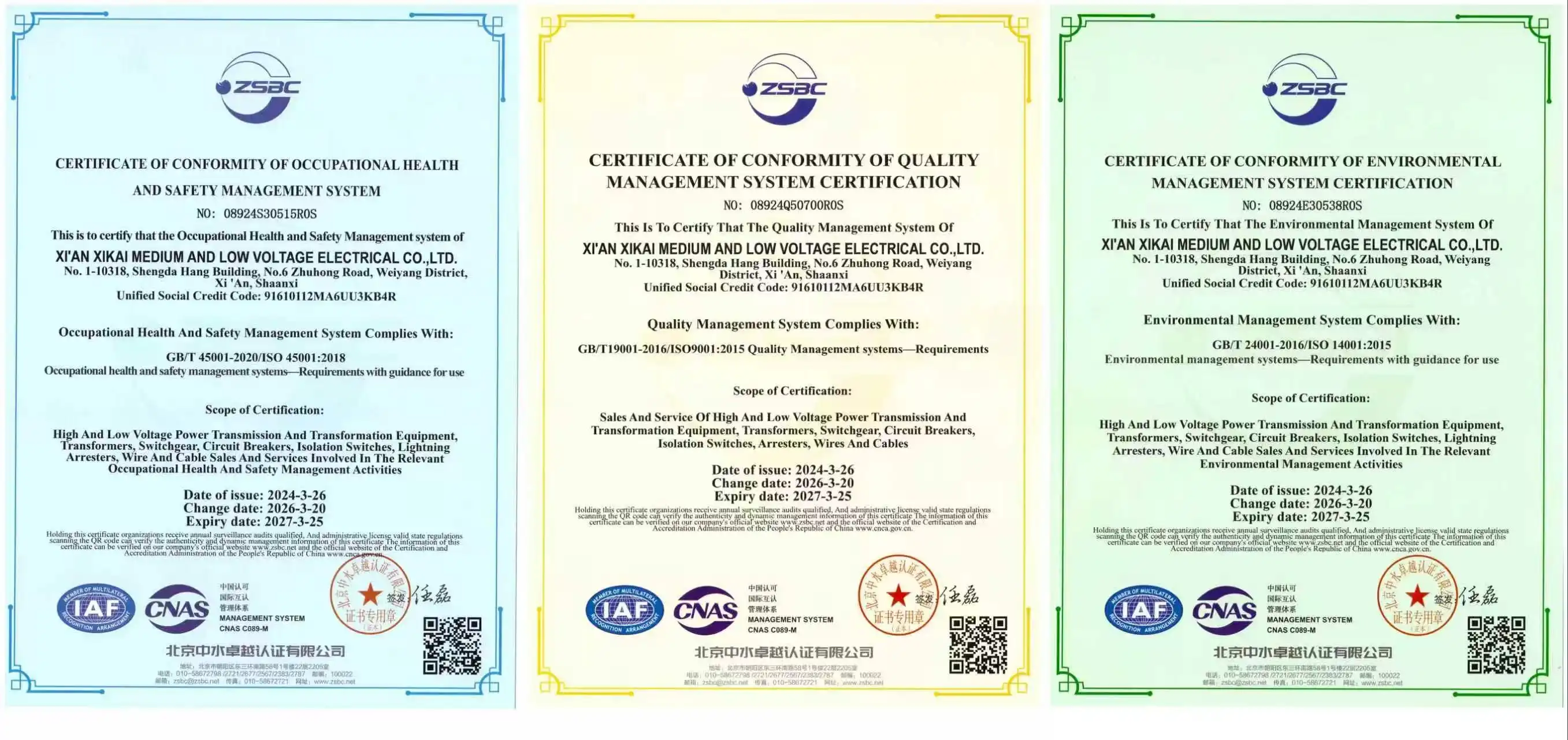
Choosing a Current Transformer manufacturer who cares about quality and customer satisfaction is the first step in improving substation performance. Xi'an Xikai Medium & Low Voltage Electric Co., Ltd. offers tried-and-true solutions backed by decades of engineering know-how and a wide range of products in 7 main categories. Our plateau-type equipment works reliably at heights of up to 4,000 meters, and our performance meets national and industry standards thanks to a number of patented technologies. Send an email to serina@xaxd-electric.com, amber@xaxd-electric.com, or luna@xaxd-electric.com to talk about custom solutions for rail networks, industrial plants, utility grids, and renewable energy projects. You can expect quick help, low prices, and quick processing of large orders that keep your projects on track.
References
1. Chen, W. (2019). Instrument Transformers: Principles and Applications in Power Systems. Beijing: China Electric Power Press.
2. IEEE Power System Relaying Committee. (2018). IEEE Guide for the Application of Current Transformers Used for Protective Relaying Purposes (IEEE Std C37.110-2018). New York: Institute of Electrical and Electronics Engineers.
3. International Electrotechnical Commission. (2021). Instrument Transformers – Part 1: Current Transformers (IEC 60044-1). Geneva: IEC Central Office.
4. Kumar, R., & Singh, A. (2020). Substation Automation and Protection Systems. New Delhi: PHI Learning Private Limited.
5. Martinez, J. (2022). Modern Substations: Design, Operation, and Maintenance. London: Springer International Publishing.
6. Thompson, M. (2017). Protective Relay Principles: Current Transformer Application Guide. Schweitzer Engineering Laboratories Technical Paper Series.
_1776665574080.png)
_1774321455861.png)