
Vacuum Circuit Breaker Breaking Capacity: What Matters Most?
2026-10-28 17:28:19
The most important factor in vacuum circuit breaker breaking capacity is matching the rated short-circuit breaking current to the highest fault current your system can deliver at the breaker location. Then check that the same vacuum circuit breaker also meets the required making current, short-time withstand current, voltage rating, and panel fit. A high breaking rating means little if the breaker cannot rack into your cabinet. In this guide, I explain how the interrupter works, how to verify ratings, and how our ZN63-VS1 Indoor Vacuum Circuit Breaker fits medium-voltage projects. I also share facts from IEC and IEEE standards.
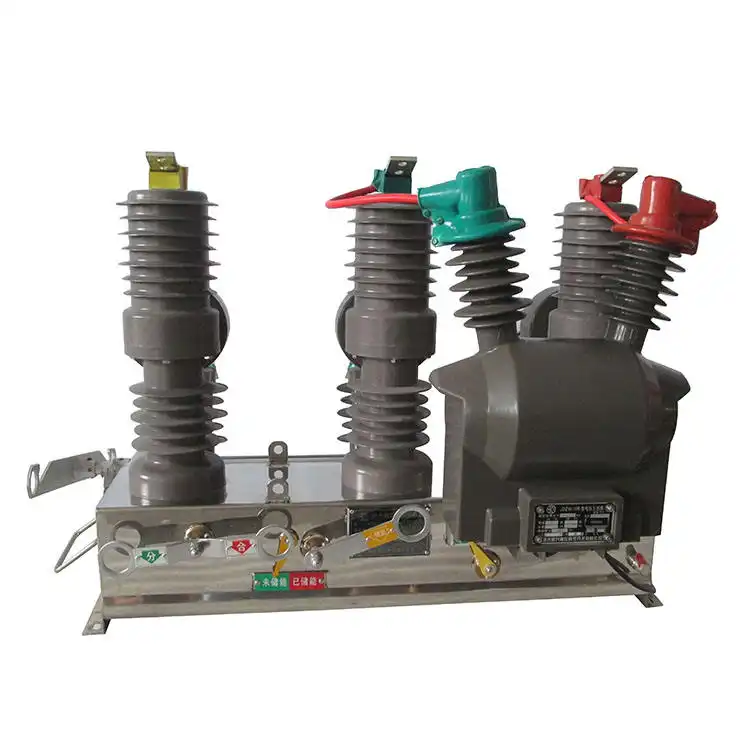
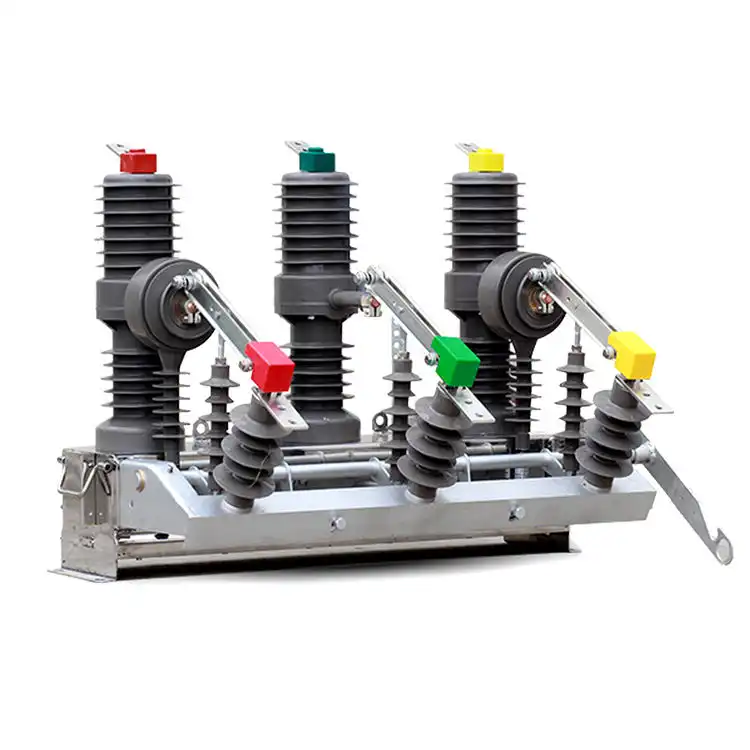
How Breaking Capacity Works in a Vacuum Circuit Breaker
What Breaking Capacity Measures
At a certain voltage and test settings, a vacuum circuit breaker can stop the largest short-circuit current possible. This is called its breaking capability. IEC 62271-100 calls it the rated short-circuit breaking current. The best values are 16, 20, 25, 31.5, 40, 50, and 63 kA. For 12 kV panels like the KYN28, 25 kA and 31.5 kA are most often picked. A lot of buyers mix up this number with the rated continuous current, which talks about fault duty and normal load heating. There is no way for a 1250 A breaker to have ratings for both 25 kA and 31.5 kA at the same time.
What Happens Inside the Interrupter During a Fault
Once a fault is found, a protection relay opens a sealed vacuum interrupter and moves the contacts farther apart. When they separate, a metal-vapor arc is made. Most of the gas in the chamber is gone, so the arc ends close to where the natural current stops. The open gap quickly regains its dielectric strength. How well this works depends on the vacuum quality, the shape of the contact, the speed of opening, and the distance traveled. A lot of interrupters use axial magnetic field contacts to spread the arc over the contact's surface while the current is high. That's why I trust a type-test report more than a brand name: it shows what the whole system did at the rated current.
Why Mechanism Condition Matters
The interrupter needs a healthy way to work, even if it is strong. Perhaps the trip coil is slow, the springs are weak, or the latches are worn. This could make the breaker take longer to open and not work as well as it should. When there are repeated fault interruptions, the contacts get worn down. This makes the contacts more resistant and changes the way they move. I tell my customers to write down the opening time, contact length, and contact resistance when the machine is first set up. That way, if there is any drift later, the repair team will know where to begin. The ZN63-VS1 vacuum circuit breaker has an interrupter that can be moved by either a spring or a magnet that stays in place. Breaking capacity ratings should be verified regularly to ensure they remain suitable for the application.
The Ratings That Define Vacuum Circuit Breaker Performance
Breaking, Making, and Withstand Currents Together
A vacuum circuit breaker rating set only has one line that shows the rated current that breaks a short circuit. By making current, you can cover the peak that flows when you close off a fault. To make it more consistent, the IEC puts that peak at 2.5 times the breaking current. This means that a 31.5 kA breaker can handle up to 80 kA at its peak, while a 25 kA unit can handle up to 63 kA at its peak. Short-time withstand current tells you how long a breaker that is closed can handle bad current. The IEC says that 1 s is the standard time and that you can go up to 3 s. If a quote only gives me one of these numbers, I ask for all of them before I suggest a unit.
How to Calculate the Fault Level You Need
Figure out where the breaker is and do a short-circuit test there first. It is called IEEE Std 551 and is called the Violet Book. It talks about how to find short-circuits in commercial and industrial power systems. It is important to include the power source, transformers, generators, big motors, and any other sources of distributed energy. When you think about how to grow, remember that adding a new transformer or feeder could make the fault level higher. To keep this from happening, don't pick a number that is just barely higher than the current one. Instead, add a technical range to it. If your project follows IEEE, keep in mind that IEEE C37.06 has tables that show rates by voltage class, such as 15 kV. These tables are different from IEC's tables. The result should match the breaking, making, short-time, and peak ratings all at the same time. You should also ask the provider for type-test reports that back up the vacuum circuit breaker number they gave you.
Breaking Capacity Versus Other Performance Factors
A breaker may be able to handle the load current but not the fault duty. It may also be hot at full load even though it has a high fault rating. Any way you look at it, the application fails. Electrical life, mechanical life, vacuum integrity, creepage, space, temperature, and altitude are all things that can affect how reliably something works. Motor feeders are good examples of circuits that are used a lot because they wear out contacts quickly when they are switched on and off. These circuits need endurance class. This number tells me if a vacuum circuit breaker is right for the job, like an entry ticket. The end choice is based on how long the parts last, how well they insulate, and the limits set by the surroundings. After the cabinet is built, reading all of these things at once will save time and work.
Matching a Vacuum Circuit Breaker to Its Application
Utility, Industrial, and Renewable Duty
In a utility center, each vacuum circuit breaker must be able to protect the feeder, generator, incomer, and bus zone. In factories, there are a lot of faults and a lot of motor switching. With their high inrush current and short-term recovery voltage, transformer and motor circuits can put a lot of stress on the breaker. Check to see if the breaker has been proven to handle that amount of power. Data centers and power plants that use renewable energy need to be able to quickly cut power and keep an eye on it because a power outage can stop everything. The ZN63-VS1 is used in manufacturing, energy projects, and green energy. There are models that are ready for the Internet of Things (IoT) that check the insulation and connections to help with planned maintenance. Check the grades of the new part against the old panel, main connections, control circuits, and interlocks before you look at prices or do anything else.
Vacuum Compared With SF6, Oil, Air, and MCCB
Vacuum technology is used in a lot of medium-voltage switches because the interrupter is small, sealed, and doesn't need much regular upkeep. Inside the interrupter, it doesn't have to deal with oil or SF6 gas. SF6 breakers are still used for some jobs and when the voltage is higher. Oil breakers cause more fires and damage to the environment. A medium-voltage vacuum circuit breaker is not the same as an air circuit breaker or an MCCB. This is because high-voltage systems don't use them as much. Our ZN63-VS1 puts out the arc in a vacuum chamber and doesn't give off any gas while it's working. This makes it perfect for an indoor switchroom with strict rules about the environment and where repair workers need to be able to easily get in and out.
Indoor Conditions That Affect Ratings
I check the switchroom first if the ZN63-VS1 is inside because the environment affects how well it works. The temperature should be between -15°C and +40°C, and the humidity should be up to 95% RH (2.2 kPa) on average each day and up to 90% RH (1.8 kPa) on average each month. The height shouldn't go over 1000 m, and the shocks shouldn't be stronger than MSK-8. The air shouldn't have a lot of dust, smoke, volatile or acidic gasses, or salt spray. Xi'an Xikai can also make tools for plateaus up to 4,000 m high, so let them know right away how high your spot is.
ZN63-VS1 Indoor Vacuum Circuit Breaker: Specifications and Fit
Rated Data and Breaking Capacity
First, I tell technical managers these things. You can get the ZN63-VS1 Indoor Vacuum circuit breaker with a rating of 630, 1250, 1600, 2000, 2500, or 3150 A. 50 Hz is the frequency. To make sure that this rate works with your machine, make sure that the frequency is 50 Hz. It can handle voltages in the middle of 9 kV and 24 kV, and it can break at 40 kA. Let us check the target against the type-test report before you place your order. This will tell you whether the cabinet needs 25 kA or 31.5 kA. When you build a lot of cabinets every month, you should keep up with maintenance that doesn't need to be done too often because of the vacuum arc suppression chamber.
Panel Fit and Interchangeability for OEM Builders
kA is important to OEM switchgear makers, but so is the ease of parts replacement and interchangeability. Products indicate the ZN63-VS1 is compact and can be integrated into existing electrical panels, such the KYN28A-24. This will make updates quicker and less troublesome. If it is a vacuum circuit breaker in handcart form, it may fit one cabinet type, but need some minor modifications to fit another cabinet type. For a number of units ordered check one sample to make that it has the proper number of interlocks, earthing connections, secondary plugs, control voltage and the ability to be taken out. If the design is standard and dimensions are published, then it is also straightforward to compare quotations from multiple providers when they are bidding on the same rating. Develop a sample stage for a new standard first. Check drawings to see if they are accurate before sending out the monthly amount.
Mechanism, Monitoring, and Quality Control
There are two methods that the breaker may open and shut the vacuum interrupter. The breaker can use a spring or a permanent magnet. When a fault occurs the contacts separate within milliseconds and the arc is extinguished within the cylinder. This minimizes the wear. IoT-ready versions enable scheduled maintenance by monitoring insulation health and contact wear. The manufacturing method is ISO 9001 for quality and each item is checked over 12 times before it is assembled. The test involves changing the temperature, simulating vibration and measuring how well the insulator functions. We hold the certifications 3C, ISO 14001 and ISO 45001. We also offer test reports from external laboratories and items that fulfill IEC standards. Your IT staff may utilize these records as evidence for each customer approval file.
Selecting, Testing, and Buying a Vacuum Circuit Breaker
A Practical Selection Checklist
I use three checks when a technical manager sends a new enquiry. Here is what each one covers:
- Electrical matching: Verify rated voltage, frequency, continuous current, breaking current, making current, short-time withstand current and operating sequence against the fault research. Make sure the continuous rating, like 1250 A or 2500 A, also fits the busbar and cabinet temperature increase, not only the connected load, so the heat remains within limits.
- Mechanical check: 1. Check cabinet dimensions. 2. Confirm fixed or withdrawable design. 3. Check main disconnects. 4. Verify racking dimensions and operation. 5. Check interlocks. 6. Confirm earthing connections. 7. Check the secondary plug. 8. Confirm the control voltage. 9. Verify the breaker can be removed and installed correctly. Before committing to monthly volume, run a sample in the actual production cabinet, as slight changes in contact arm spacing might cause a handcart to not rack properly into the cabinet.
- Documentation matching: Ask for data sheets, drawings, wiring diagrams, type test reports, routine test results, manuals, certifications and spare parts lists. Ask what kind of interrupter the study covers, native or foreign, since the report connects the rating to that specific design, not a brand name. Maintain these files with each batch record to expedite audits.
These three checks catch most rating and fit problems before the first purchase order.
Commissioning and Maintenance
A proper arrangement means that the predicted interrupting capability is secure from day one. See how the machine operates by hand and electricity. See the grounding, main and secondary connections, control voltage, trip and closure circuits, interlocks and how it is aligned. Start by writing down the operating duration, contact distance, contact resistance and insulation resistance. Check that the vacuum interrupter is operating correctly in accordance with the manufacturer's instructions. Find out how much the circuit is used, how frequently it breaks down, the environment, how vital it is. Figure out how often maintenance is required. Check the control power, spring charge, coils, switches, auxiliary contacts, wires and interlocks before attempting to shut a vacuum circuit breaker. Sometimes it is not the interrupter who is broken. You want to save all of the test papers since you may refer to them later when talking about warranties.
Procurement Mistakes and Quote Comparison
Three mistakes people often make: they pick based only on nominal voltage and continuous current; they mix up breaking capacity and short-time withstand current; and they don't look at the cabinet interface. The price of standard 12 kV vacuum circuit breakers is really being pushed down. It is helpful to have clear prices, but a cheap quote doesn't mean much if it doesn't come with type-test proof or a different rating. There should be a different table for each price. Voltage, constant current, breaking and making current, short-time withstand, endurance class, papers, interface drawings, shipping, guaranty, and extra parts should all be included in the prices. It is the flaw study and the rapid recovery voltage that engineers look at. Buyers think about regulations and the risk of delivery. Every month, OEMs check to see how well the product can be made.

Conclusion
It is most important for a vacuum circuit breaker to have breaking capacity that fits the current and future fault level at the placement point and is backed up by the rest of the rating set. Currents that break, make, and short-time withstand work together, and the goal is set by a short-circuit study. At current zero, the interrupter extinguishes the arc. Next, cut down the choices based on what the app needs to do, how it works, and how it stacks up against other technologies. Based on how well the panels fit, the condition of the mechanism, the paperwork, the records of when it was put into service, and a fair quote comparison, the rating is valid in service. To do this for the ZN63-VS1, we need to look at its 50 Hz current range, its indoor service limits, and the project's fault study setup.
FAQ
1. What separates breaking capacity from rated current?
Rated current covers normal load heating. Breaking capacity covers the largest fault current the breaker can interrupt. A 1250 A breaker can have a 25 kA or 31.5 kA fault rating, so check both numbers on every datasheet.
2. How do I pick a rating for an 11 kV or 12 kV system?
Run a short-circuit study at the breaker location, then choose a standard breaking current above the result with some margin. Confirm making current, short-time withstand current, and insulation level match, and let a qualified engineer approve the final selection.
3. Can a vacuum circuit breaker replace an oil or SF6 breaker?
Often it can, when ratings, dimensions, primary contacts, interlocks, control circuits, and protection settings match the existing panel. Send the panel model and drawings so the supplier can check compatibility before quoting. Qualified engineers should approve the final retrofit.
4. Which documents should I request from a supplier?
Ask for the datasheet, dimensional drawings, wiring diagrams, type-test reports, routine-test records, manuals, certificates, and spare-parts list. Confirm the report matches the exact rating and interrupter you plan to buy. Request them before you place the first order.
Request a Vacuum Circuit Breaker Breaking Capacity Review from Xi'an Xikai
Xi'an Xikai is a business that makes vacuum circuit breakers. They have more than 100 different kinds of products in 7 different groups. To do their job, they work with State Grid systems, steel, petrochemical, rail, and green projects. Your system voltage, target fault level, and cabinet model should be sent to serina@xaxd-electric.com, amber@xaxd-electric.com, or luna@xaxd-electric.com via email. Then, our engineers will look at your plans and weigh the different ZN63-VS1 options. Visit xaxd-electric.com to find out more.

References
1. IEC 62271-100: High-voltage switchgear and controlgear – Part 100: Alternating-current circuit-breakers, 2021
2. IEC 62271-1: High-voltage switchgear and controlgear – Part 1: Common specifications for alternating current switchgear and controlgear, 2017
3. IEEE Std C37.04: IEEE Standard for Ratings and Requirements for AC High-Voltage Circuit Breakers with Rated Maximum Voltage Above 1000 V, 2018
4. IEEE Std C37.06: AC High-Voltage Circuit Breakers Rated on a Symmetrical Current Basis – Preferred Ratings and Related Required Capabilities for Voltages Above 1000 V, 2009
5. IEEE Std 551 (Violet Book): IEEE Recommended Practice for Calculating AC Short-Circuit Currents in Industrial and Commercial Power Systems, 2006
6. The Vacuum Interrupter: Theory, Design, and Application, Second Edition, CRC Press, 2020