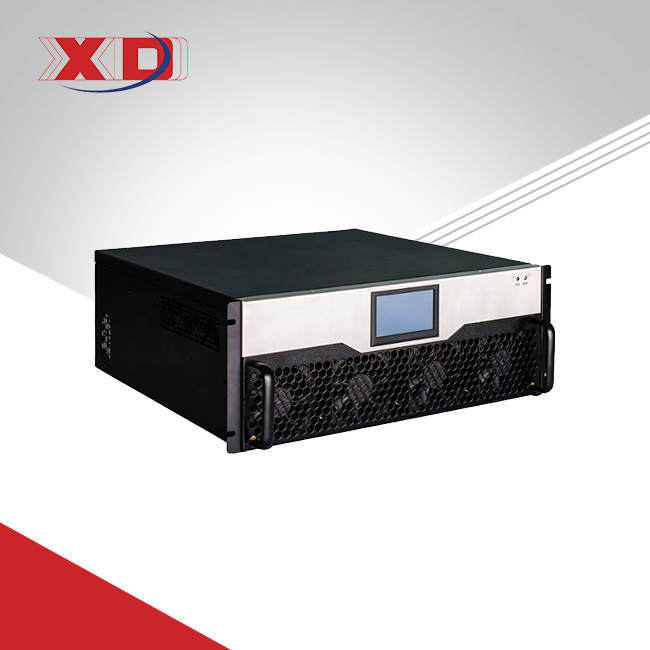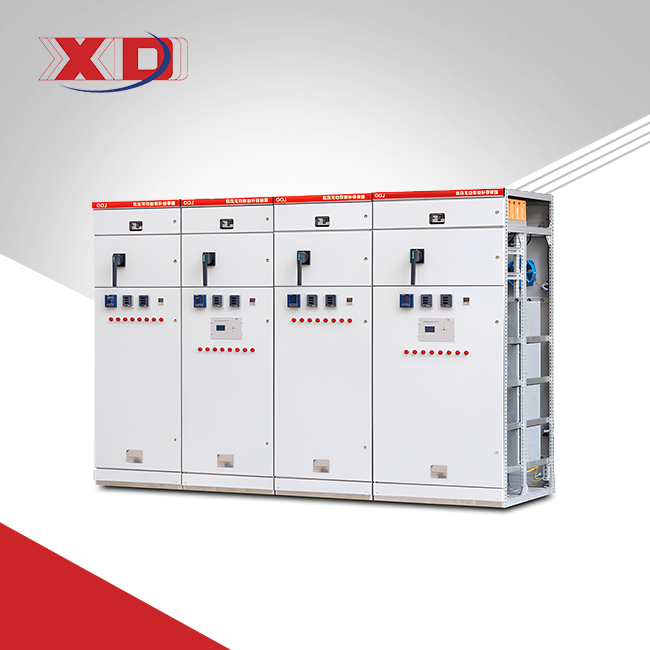
GGJ Low Voltage Reactive Power Intelligent Compensation Device
Vacuum Circuit Breaker (VCB): Definition & Core Features Guide
2026-06-24 10:05:36
By putting out electrical sparks inside a sealed vacuum room, a Vacuum Circuit Breaker (VCB) is a crucial safety device for medium-voltage electrical systems. This technology uses the better dielectric qualities of vacuums to achieve fast arc cooling, usually in 15 milliseconds, which protects circuits safely and reliably. In industrial, business, and utility settings, Vacuum Circuit Breakers are becoming more popular because they don't need much upkeep, are safe for the environment, and last over 20,000 mechanical cycles.
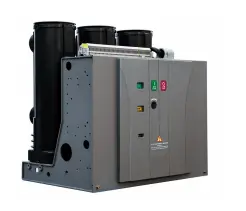
What Is a Vacuum Circuit Breaker?
Understanding the Working Principle
A Vacuum Circuit Breaker works by separating electrical contacts inside a vacuum box that can't be opened. When there is a problem and the breaker gets a trip signal, the contacts literally separate, making an electrical arc. In contrast to normal breakers that use oil or gas to stop sparks, the vacuum environment quickly moves ionized metal mist away from the contacts. This fast diffusion almost instantly returns the dielectric strength between the contacts, stopping the flow of current and saving equipment further down the line. This technique is very effective because it doesn't use any arc-sustaining material.
Core Components and Material Engineering
The building of these gadgets is based on three main parts. The vacuum interrupter is the most important part of the system. It is made up of high-quality copper-chromium contacts that are sealed inside a ceramic or glass shell that keeps the pressure below 10⁻⁴ Pascal. The working mechanism, which is usually a spring-loaded system, gives the mechanical force needed for the contacts to quickly open and close. The cover protects against outside entry and houses these parts, usually to IP4X standards. Picking the right materials is very important. Aerospace-grade copper metals keep contact erosion to a minimum, and APG (Automatic Pressure Gelation) solid insulation technology keeps inter-phase flashovers from happening in small setups.
Voltage Ratings and International Standards
High-voltage breakers are used in systems with voltages between 3.6kV and 40.5kV. In industrial distribution networks, 12kV and 24kV grades are most common. Following the rules in IEC 62271-100 makes sure that these devices meet strict needs for breaking strength, endurance tests, and temperature rise limits. In the same way, following IEEE C37.04 guidelines proves success in North American markets. When buying teams know these specs, they can better match the breaker's capabilities with the voltage levels, short-circuit grades, and weather conditions that are unique to their facilities.
Advantages and Applications of Vacuum Circuit Breakers
Environmental and Safety Benefits
When compared to SF6 breakers, Vacuum Circuit Breaker technology completely removes greenhouse gas emissions, which is a very important factor to consider as environmental laws around the world become stricter. Oil-filled breakers can catch fire and need to have their dielectric fluid tested on a regular basis. Air breakers, on the other hand, need bigger gaps and extinguish arcs more slowly. Vacuum Circuit Breakers don't need to be refilled or handled with gas on a regular basis, which greatly reduces their lifetime environmental effect. Because they are sealed, they don't let outside pollution get inside, which makes them perfect for places like cement plants, mines, and coastal sites that are dusty or have harsh chemicals.
Performance Metrics and Reliability
Under normal working conditions, vacuum interrupters don't need to be serviced for more than 10 years. This is very different from other types of breakers, which usually need to be serviced once a year. Breaking times are always less than 20 milliseconds, which keeps fault currents from hurting sensitive electronics and motors. During operation, noise levels stay below 45 decibels, so it can be installed in places that can't handle noise, like data centers or hospitals. The lower total cost of ownership comes from not having to replace shielding media, which is a big deal for procurement managers who are looking at long-term capital investments.
Industrial and Commercial Applications
These things are used to keep motor control centers that power CNC machines, robotic production lines, and process automation systems safe in factories. They are used by utility companies in distribution substations to separate faulty areas while keeping service going across the grid. Vacuum Circuit Breakers are needed to control the flow of electricity in both directions and lessen the voltage changes that come from intermittent output in renewable energy sites like solar farms and wind parks. They have a small size and are quiet when moving loads, which is good for commercial buildings like shopping malls, hospitals, and office towers.
Maintenance Best Practices
Setting up a condition-based repair program will help your tools last as long as possible. Maintenance teams should use tools supplied by the maker to check the contact travel distance once a year. If there isn't enough travel, it means that the system is wearing out or the spring is breaking down. Every five years, high-potential testing is used to check the vacuum stability and make sure the interrupter's closing is still good. Thermographic checks find hotspots at terminations before they get so bad that they break. According to OEM plans, lubricating mechanical links keeps them from binding and makes sure that they work at the same rate every time. These proactive steps are in line with asset management strategies that building managers who want to get the most downtime put first.
Vacuum Circuit Breaker Types and Comparative Analysis
Classification by Voltage Rating and Design
Indoor models for 12kV systems are most common in industrial settings, and they come in setups that work with metal-clad switchgear units. For example, the ZN39 Indoor Vacuum Circuit Breaker is in this group. It can handle temperatures between -40°C and +40°C and humidity levels up to 95%, so it can be used in a wide range of climates. Models with ratings of 24kV and 36kV are used in power distribution networks that need to handle higher voltages. Outdoor versions have waterproof housings and better insulation to handle lightning strikes, but they aren't used as much these days as small indoor substations become more common.
Handcart Versus Fixed-Mounted Options
Withdrawable (handcart) breakers are mounted on rolling devices inside KYN28 or similar modular switchgear cabinets. This lets repair work be done without turning off power to nearby circuits. This design makes it easy to change parts quickly when they break, which cuts down on working downtime. Installing fixed-mounted breakers permanently inside panels can save you money and make your cabinet depth smaller, which makes them good for setups with limited room. Choosing between configurations relies on how you want to maintain your facility. Facilities that value serviceability choose handcart designs, while facilities that want to minimize initial capital costs choose fixed installs.
Comparative Analysis: VCB vs. Alternative Technologies
1. Vacuum versus SF6 breakers: Both technologies do a great job of stopping, but SF6 breakers need to be checked for gas density on a regular basis and are bad for the environment because SF6 is 23,500 times more likely to cause climate change than CO2. These problems are completely taken care of by vacuum units.
2. Vacuum versus oil breakers: Oil-filled units need to be tested for electrical continuity on a regular basis, have oil filtered, and pose fire risks. Getting rid of them means dealing with dirty oil waste. With vacuum technology, these problems don't have to be dealt with.
3. Vacuum versus MCCBs (Molded Case Circuit Breakers): MCCBs are only good for low-voltage (below 1kV) uses and don't have the stopping power needed for medium-voltage distribution. Vacuum Circuit Breakers protect industrial feeds and utilities by handling fault currents between 20kA and 40kA.
4. Vacuum versus air breakers: Air-magnetic breakers need bigger physical spaces and take longer to clear faults. Their arc chutes wear out faster, so they need to be inspected more often.
Selection Criteria for Procurement Professionals
The breaking capacity has to be higher than the highest possible fault current at the placement point. This is usually found by studying short circuits. With enough safety gaps, voltage ratings should match the nominal voltage of the machine. Response time and extra power needs depend on the type of operating mechanism—spring-charged vs. motor-charged. Conditions in the environment, especially high or low elevation and temperature changes, affect how well insulation works and how much power it can carry. The image of the brand and the quality of the after-sales support are both very important, as standard spare parts availability lowers long-term operating risk.
Vacuum Circuit Breaker Procurement: Pricing, Suppliers & Brands
Cost Drivers and Value Analysis
Prices vary by breaking capacity, rated current (630A to 3150A), and automation features. Basic 12kV/630A fixed units are entry-level; 24kV/2000A handcart vacuum circuit breakers with smart controls are premium. Order volume significantly affects unit price—buying over 100 units saves money for EPC contractors. OEM agreements enable private labeling for system integrators.
Leading Manufacturers and Market Positioning
Global names like Siemens, ABB, Schneider Electric, GE, and Mitsubishi maintain large catalogs with SCADA integration. Regional makers like Xi'an Xikai offer competitive pricing and customization with IEC/CE certifications. Xi'an Xikai provides seismic reinforcement for earthquake-prone areas and IoT-ready smart tracking in ZN39-S series. They hold several patents and have contributed to national research projects.
Supplier Evaluation and Sourcing Strategies
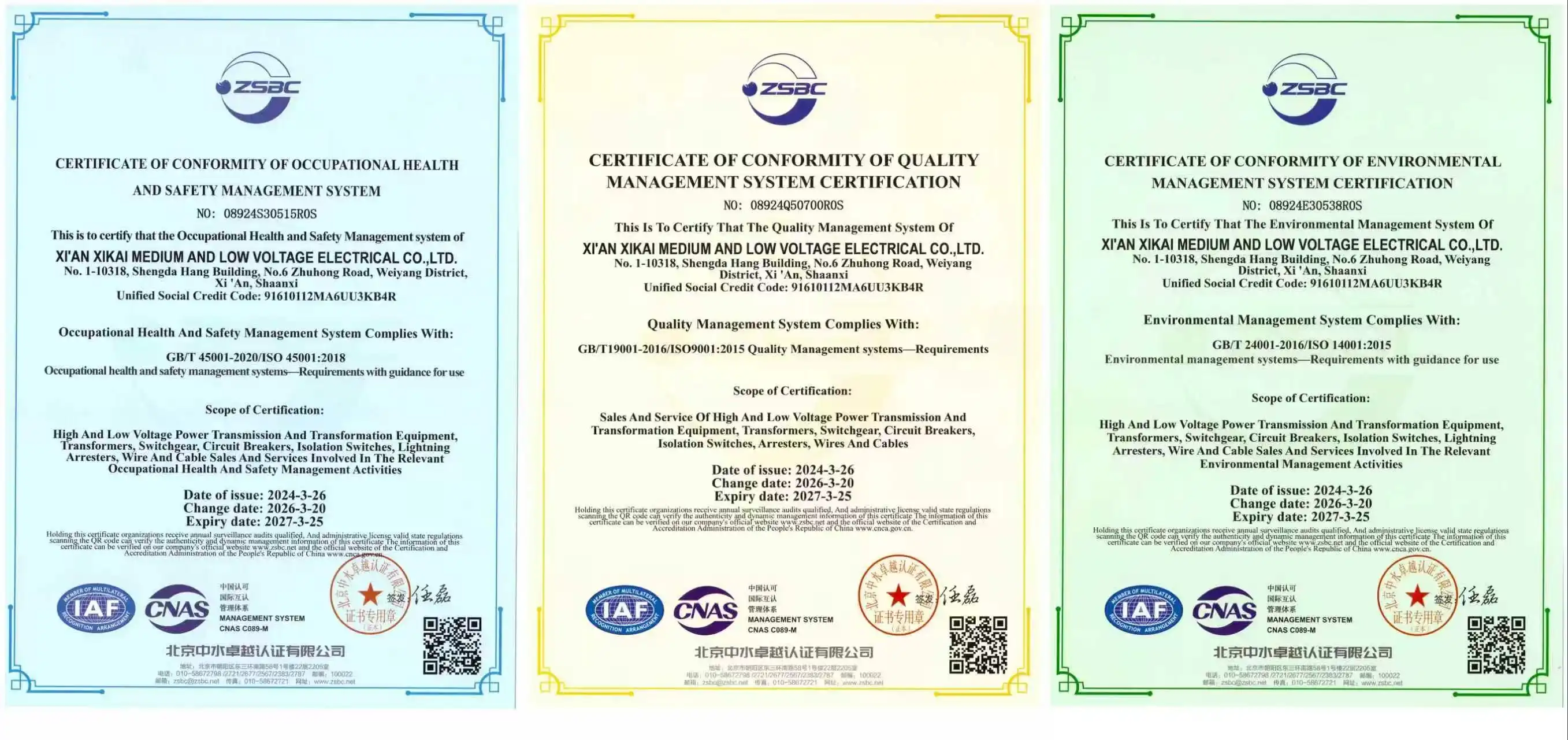
Procurement teams should verify ISO 9001 certification and request type test results confirming claimed specifications. Check warranty terms—typically 18 to 24 months—to prevent premature failure. Lead times range from 4 weeks for basic configurations to 12 weeks for custom specs. Just-in-time delivery avoids storage costs. After-sales support requires local service technicians and spare parts distribution. Request CAD models and coordination data during quoting.
Troubleshooting and Optimizing Vacuum Circuit Breaker Performance
Common Failure Modes and Diagnostic Approaches
Contact erosion shows up as higher contact resistance, which can be seen on infrared thermography as higher temperatures at connection points. Even though it doesn't happen very often, Vacuum Circuit Breaker integrity loss can cause arcing that can be seen in the interrupter window or found through voltage withstand tests. A stroke analyzer test that tracks speed and journey distance can show when a mechanism fails because of spring fatigue or a pivot point seizure. Misalignment of an auxiliary switch can mess up the control circuit, so it's important to test the continuity of secondary circuits on a regular basis.
Maintenance teams should keep a structured fixing plan that includes things that are mechanical, electrical, and vacuum-related. By keeping track of measures of contact wear at each check interval, replacement can be planned ahead of time, before they fail. When to do a refurbishment depends on comparing the number of breaking operations over time to the rated durability limits, which are usually 100 full-rated fault delays. Looking at trip event logs can help you tell the difference between annoying trips that are caused by wrong relay settings and real system problems that need fixing.
Strategies for Enhanced Operational Efficiency
By using live partial discharge tracking, insulation degradation can be found before it leads to a catastrophic failure. This is especially helpful in mission-critical settings like data centers or hospitals. When breaker actions are timed with capacitor bank energization, inrush currents are kept to a minimum and contact life is increased. Selectivity is improved by adjusting the trip curve settings to work with upstream and downstream protection devices. This makes sure that problems are isolated at the right level and don't cause more outages.
Emerging Trends and Future-Proof Technologies
Smart breakers with built-in sensors send real-time information about their state to centralized asset management platforms. This lets predictive maintenance algorithms plan repairs for times when the power is supposed to be out. Vacuum Circuit Breakers have programmable electrical trip units that allow them to work with microgrids and distributed energy supplies. They also need safety methods that work in both directions. Changing environmental standards, such as circular economy principles, push makers to make designs that stress how parts can be reused and recycled. When procurement teams look at long-term investments, they should give more weight to sellers who show they are committed to these technology trends.
Conclusion
To choose the right Vacuum Circuit Breaker technology, you have to weigh technical requirements, lifecycle costs, and strategic agreement with business goals. Because they don't need much upkeep, are safe for the environment, and are very reliable, these devices are essential to modern electricity infrastructure. When properly installed, VCBs provide measured value by lowering downtime and improving system resilience. This is true whether they are protecting sensitive industrial processes, keeping utility delivery networks stable, or allowing the integration of renewable energy. Procurement professionals can make choices that support long-term company goals with confidence when they know about voltage levels, breaking limits, and application-specific needs.
FAQ
1. What distinguishes vacuum circuit breakers from SF6 models?
The arc-extinguishing medium is what makes the difference. The electrical qualities of vacuums are used by Vacuum Circuit Breakers, while sulfur hexafluoride gas is used by SF6 breakers. SF6 units need to be watched for gas density and release greenhouse gases that are bad for the environment. Vacuum technology gets rid of the need to handle gases completely, provides the same or better stopping performance, and lowers the regulatory compliance costs, making it a better choice for organizations that care about the environment.
2. How often do vacuum circuit breakers require maintenance?
The time between routine inspections is usually between 12 and 36 months, but it depends on the task at hand and the conditions of the surroundings. Between these times, the vacuum interrupter doesn't need any upkeep. The main focus of inspections is on mechanical parts, such as checking the contact trip distance, greasing the pivot points, making sure the auxiliary switch is lined up correctly, and using thermographic scans. Unlike oil or SF6 breakers that need to have their fluids or gas refilled, vacuum units require much less upkeep work and costs.
3. Which industries benefit most from vacuum circuit breaker deployment?
Industries that use expensive production equipment, like those that put together cars, make semiconductors, or process drugs, get a lot of value from the fast problem resolution and dependability that these devices offer. Utility companies that run distribution substations depend on them to keep the grid safe. Healthcare facilities, data centers, and business buildings like how quiet they are and how small they are when installed. Renewable energy systems need to be able to handle power flows going both ways and a lot of switching activities without losing performance.
Partner with Xi'an Xikai for Reliable Vacuum Circuit Breaker Solutions
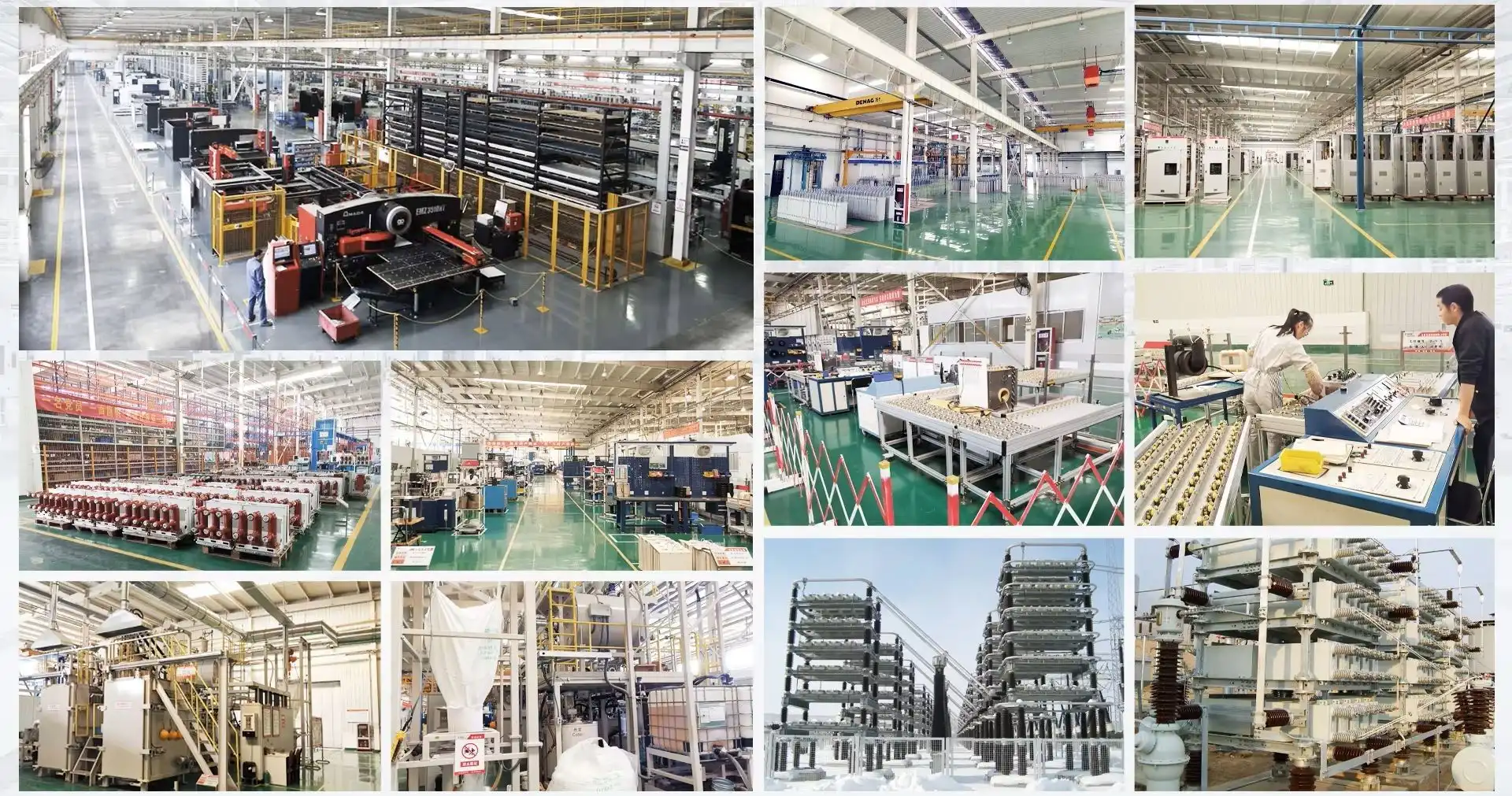
The Vacuum Circuit Breaker company Xi'an Xikai Medium & Low Voltage Electric Co., Ltd. has been making them for a long time and has worked with businesses, utilities, and industries in over 30 countries. Our ZN39 Indoor Vacuum Circuit Breaker has a maximum voltage of 12kV, can be used more than 20,000 times, and has a breaking time of less than 15 milliseconds. It is approved by IEC 62271-100. The seismic-reinforced design makes sure stability in tough settings, and the modular spring-operated system makes upkeep easier. Customization choices, such as smart tracking that works with the Internet of Things (IoT) and custom terminal setups, perfectly match the needs of a wide range of projects.
With just-in-time shipping within 8 weeks, bulk orders are flexible enough to handle large-scale operations. Our expert support team offers instructions in multiple languages, CAD integration files, and help 24 hours a day, seven days a week, for the entire lifecycle of your equipment. Get in touch with our experts at serina@xaxd-electric.com, amber@xaxd-electric.com, or luna@xaxd-electric.com to talk about your specific application needs and get full technical specifications that will help you make smart purchasing choices.
References
1. International Electrotechnical Commission. "High-voltage switchgear and controlgear - Part 100: Alternating-current circuit-breakers." IEC 62271-100 Standard, 2021.
2. IEEE Power and Energy Society. "IEEE Standard Rating Structure for AC High-Voltage Circuit Breakers." IEEE C37.04-2018, Institute of Electrical and Electronics Engineers, 2018.
3. Slade, Paul G. "The Vacuum Interrupter: Theory, Design, and Application." CRC Press, 2nd Edition, 2017.
4. National Electrical Manufacturers Association. "Medium-Voltage Switchgear - Design, Performance, and Applications." NEMA SG 5 Guidelines, 2019.
5. Garzon, Ruben D. "High Voltage Circuit Breakers: Design and Applications." Marcel Dekker Engineering Series, 2nd Edition, 2002.
6. Ryan, Hugh M. "High Voltage Engineering and Testing." Institution of Engineering and Technology Power and Energy Series, 3rd Edition, 2013.