What is a Lightning Arrester and How Does It Work?
2026-07-10 16:20:25
Lightning Arresters are safety devices that are put in place in power systems to send dangerous voltage spikes to the ground when lightning hits or when switches are being used. These devices keep transformers, circuit breakers, and other important parts from getting seriously damaged by stopping high voltage from reaching sensitive equipment. For facility managers, utility companies, and engineering firms that are in charge of making sure that power stays on in industrial and business settings, understanding how this protection system works is important.
Understanding the Core Function of Lightning Protection Devices
Transient overvoltages can move through the grid at speeds of more than 300 meters per microsecond when lightning hits near power lines or when electrical equipment turns on or off quickly. These surges, which can reach several hundred kilovolts, are dangerous to electricity systems right away. Without the right safety measures, these voltage spikes can quickly damage expensive machinery by puncturing insulation, melting wires, and damaging expensive machinery.Metal oxide Lightning Arresters are now the usual way to lower these risks in the business. In the past, arresters used spark gaps and silicon carbide elements. These days, they use zinc oxide varistors that react quickly to changes in voltage. These varistors have non-linear resistance properties, which means that they work as insulators when the voltage is normal and as low-resistance conductors when the voltage goes above safe limits. This quick action sends surge currents to ground before they spread through the system. This protects the stability of the equipment and stops power outages that cost factories thousands of dollars every minute they're not running.
How Lightning Arresters Detect and Divert Dangerous Voltage Surges
The main idea behind how it works is that resistance changes with power. The Lightning Arrester stays electrically separate from the system and only draws a small amount of leakage current (usually less than 1mA) when everything is normal. When there is a spike, the zinc oxide blocks inside the arrester can pick up on the high voltage in nanoseconds. Their resistance drops very low, making a low-impedance path to ground that keeps the surge current away from the equipment that is being protected.
Voltage Limiting Mechanism
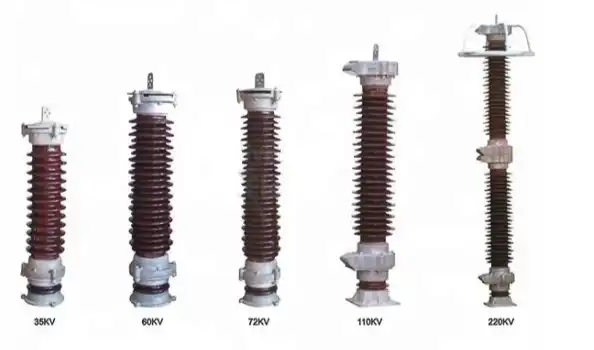
When the voltage drops below a certain level, the arrester stops it. This level is called the residue voltage. Modern designs lower this leftover voltage by 30% compared to older models. This means that when lightning strikes, related equipment is under less stress. This can be seen in the YH10W-102/266W Polymeric MOA, which has a rating of 102kV and a DC reference voltage of ≥148kV. Its polymer housing quickly loses heat and keeps working well in temperatures ranging from -40°C to +85°C. This makes it good for harsh ocean and desert settings where porcelain housings might break.
Surge Current Diversion Process
Once the varistor starts to conduct, it can handle surge currents that are more than 100 times its rated capacity, which is usually 10kA of average discharge current, without breaking. The energy that is taken in during this process is turned into heat, which is quickly lost by the polymer housing. As soon as the spike is over, the varistor's resistance goes back to its high-impedance state in microseconds, and the system works normally again without any further action from the user. Modern arresters are different from earlier gap-type devices that had to be replaced after each use because they could fix themselves automatically.
Protection Against Switching Surges
Aside from lightning, arresters also protect against switching overvoltages that happen when circuit breakers are used, capacitor banks are charged, and transformers inrush. Even though these transients aren't as bad as direct lightning hits, they happen more often and can damage shielding over time if they aren't stopped. Both fast-front lightning shocks and slower switching spikes can be handled well by metal oxide technology, which protects the whole power system.
Types of Lightning Arresters and Their Specific Applications
Choosing the right type of Lightning Arrester relies on the voltage in the system, the surroundings, and the needs of the application. Each design has its own benefits that make it better for certain operating situations.
Metal Oxide Varistor (MOV) Arresters
MOV arresters are the most common type of placement today because they don't have any gaps and can absorb more energy than other types. They offer constant security without the need for coordination breaks. This makes installation easier and lowers the cost of upkeep. The YH10W-102/266W is a good example of this type of device because it has a creepage distance of 31mm/kV, which means it will work reliably in dirty settings. Its hermetic sealing keeps wetness out, so it lasts longer than 25 years with little care. This is especially important for remote substations where repair access is limited.
Polymeric-Housed vs. Porcelain-Housed Designs
Polymer housings made from UV-resistant silicone rubber are much lighter than standard porcelain ones. This means that mounting parts don't have to carry as much weight, and the housings are easier to move around. They don't break easily during earthquakes and are better at keeping pollution away because their surfaces don't attract water. Even though porcelain housings are heavy, they are very stable over time in places with very high temperatures. Both types meet the requirements of IEC 60099-4 and IEEE C62.11, which means they can work with other kinds of equipment on the same international grid.
Application-Specific Selection Criteria
Arresters that handle high surge currents and get rid of power factor fees are useful for industrial plants with CNC machines and precision production lines. Polymeric arresters' small size makes them easier to place in switchgear setups that are already crowded. Utility substations that handle integrating green energy depend on devices that can keep voltage stable in the face of harmonics from inverter-based output. In places like data centers and hospitals, where even microsecond gaps can cause expensive downtime, arresters with the right leakage current properties are needed to keep the power quality stable.
Key Benefits and Real-World Use Cases Across Industries
Using good surge protection has measurable practical and financial benefits in a wide range of power system settings.
Protection of Critical Infrastructure
One of the most expensive parts of any power network is the transformer, which can cost millions of dollars to repair and take months to get. Installing Lightning Arresters at the terminals of a transformer stops incoming shocks before they damage the insulation on the windings. This greatly increases the life span of the transformer. Lightning-related power blackouts are 90% less common in substations with properly rated devices. This means that the stability of the system is higher and utility companies are less likely to be fined by the government.
Cost Reduction Through Downtime Prevention
When power goes out without warning, manufacturing plants lose more than $20,000 per hour on average. Protective switches can trip, production lines can stop, and programmable logic controllers can become damaged, which means they need to be restarted for hours. Putting money into strong surge defense pays off quickly because you won't have to pay for downtime. With leakage currents below 1mA, new arresters are very energy efficient. This means that security costs stay low compared to the losses they stop.
Use Cases Across Operational Environments
Installing renewable energy sources in different places and leaving them open to bad weather are two problems that make these projects special. At the bottoms of the towers and on the electrical panels inside the nacelles, wind farms put arresters to keep expensive power devices from getting damaged by lightning in open areas. Arresters are used at the inputs and outputs of inverters and combiner boxes in solar plants to protect against spikes caused by close strikes, even if there is no direct contact. Commercial complexes replace old electrical systems with new ones that meet NFPA 70 fire rules. This makes the building safer and can handle the extra power that comes from HVAC and data infrastructure.Data centers implement layered protection strategies where station-class arresters at service entrances coordinate with panel-level devices protecting server racks. This method makes sure that spikes pass through several steps before they reach sensitive IT equipment. Hospitals use similar designs because they know that even small changes in power can damage medical imaging systems and life-support equipment.
Installation and Maintenance Best Practices for Optimal Performance
The dependability and protective usefulness of a Lightning Arrester over its service life are directly affected by how it is installed and how often it is serviced.
Site Assessment and Grounding Requirements
For surge safety to work, grounding links must have low resistance, usually less than 5 ohms, so that currents can flow. Installers check the resistance of the soil and, if needed, improve grounding systems with deep-driven rods or chemical treatment. When placing an arrestor, the lead length between the device and the protected equipment should be kept as short as possible. This is because long conductors cause inductive voltage drops that lower protective margins. Following the grounding rules set out by IEEE 80 makes sure that systems meet safety standards for removing problem current.
System Integration and Coordination
Engineers make sure that the basic impulse insulation levels (BIL) of equipment and the safety levels of arresters are coordinated. They also make sure that there are enough gaps to avoid flashovers during surge events. When systems work together properly, arresters start working before equipment insulation breaks, giving a strong first line of defense. The YH10W-102/266W is compatible with international standards, which makes it easier to use in global projects where regional requirements are different.
Routine Inspection and Predictive Maintenance
Visual checks every three months find damage caused by animals, mischief, or exposure to the environment. Every year, the arrester is tested to make sure it stays within the manufacturer's specs and to measure the leaking current. Advanced facilities use monitors that can communicate, such as the JCQ-3(YC)10/800D, which sends real-time data on leaking current to control centers. When resistance current components rise above safe levels, these systems send out alerts. This allows condition-based maintenance, which replaces devices before they break instead of after expensive breakdowns.Automated testing methods include 100kV lightning impulse tests, salt fog exposure verification for 24 hours, and partial discharge tracking to make sure that each unit stays within ±1% of its performance limits. Test results that are written down can be used as proof that quality control systems and legal standards are being followed.
Comparing Lightning Arresters with Surge Protectors and Complementary Technologies
Knowing the differences in how different safety devices work helps buying teams choose the right solutions for each layer of the application.
Lightning Arresters vs. Surge Protective Devices
Lightning Arresters protect main distribution equipment from high-magnitude, short-duration surges at middle and high voltages, usually 1kV and above. Surge protective devices (SPDs) are put in at service panels and socket plugs to deal with lower-energy transients that affect loads that are used. Even though both use metal oxide varistor technology, arresters can handle much higher energy levels and often lose megajoules per event. Both technologies are used together in coordinated designs in full protection systems. Arresters provide first-stage protection, and SPDs provide additional defense for sensitive electronics.
Lightning Rods and Air Terminals
Lightning safety systems on the outside of buildings with air connections stop direct hits on buildings by sending currents through down conductors to grounding electrodes. These systems keep buildings safe, but they don't stop shocks from getting into electrical systems through power lines in the air. Effective designs combine surge suppression on the inside with security on the outside, making multiple shields against lightning damage paths.
Technology Comparison: MOV vs. SiC Arresters
Silicon carbide arresters, which are popular in older systems, need series gaps to stop the flow of power-frequency current. These gaps make cooperation harder and require more upkeep as contacts fade over time. Modern metal oxide designs don't have any gaps, so they offer constant safety with faster response times and better dependability. Some utilities still use SiC models because they are known and because it is cheaper to repair them, but all new building calls for gapless MOV technology because it works better and costs less over its lifetime.
Procurement Guide: Essential Criteria for Selecting the Right Lightning Arrester
To make sure the procurement goes well, strategic sourcing choices take into account technical needs, supplier skills, and the total cost of ownership.
Technical Specification Matching
System voltage rates and insulator coordination studies are the first steps in choosing a Lightning Arrester. The maximum continuous operating voltage (MCOV) of the gadget must be able to handle short-term overvoltages caused by load rejection or single-phase problems without conducting. The ability to discharge energy should be able to handle bigger surges than predicted, with enough safety margins, usually 20 to 40 percent above estimated values. The environmental requirements, such as the pollution class, seismic grade, and temperature range, must meet the conditions at the installation spot. Devices like the YH10W-102/266W have a 31mm/kV creepage distance that works in places with a lot of pollution, where surface contamination could otherwise make tracking fail.
Compliance Certifications and Standards
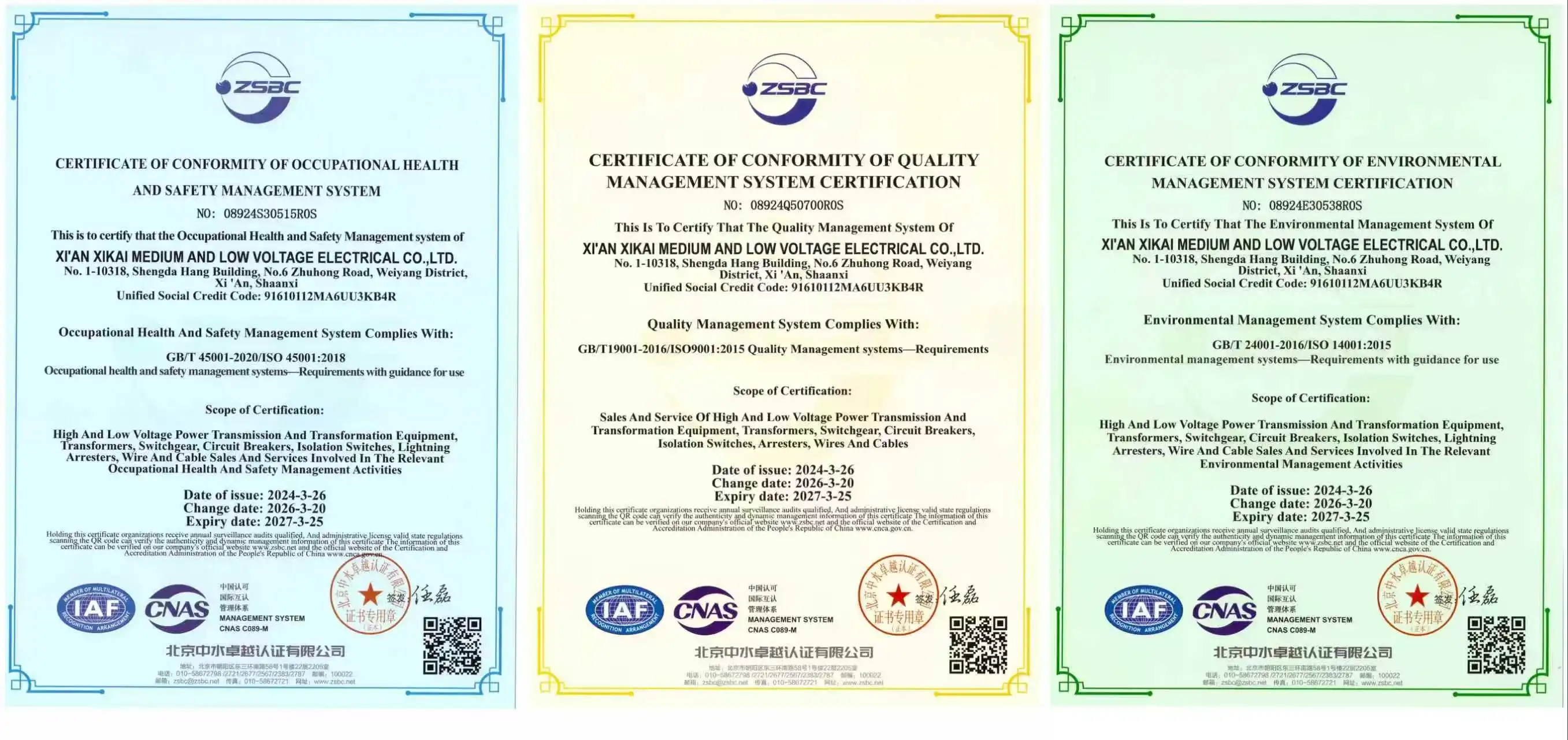
By choosing arresters that are approved to IEC 60099-4 and IEEE C62.11, you can be sure that the product will be consistent and that its performance will be checked by a third party. With ISO 9001 certification, you can be sure that a company has quality management systems and written process rules. CE marking shows that the product meets European safety standards, and RoHS approval shows that it doesn't contain any harmful materials for environmentally friendly production. Independent proof of published standards comes from validation by well-known testing labs like KEMA.
Supplier Evaluation Criteria
Manufacturers that have been in business for decades show that they are technically stable and know their stuff when it comes to their industry. Companies that work on national grid projects in more than one country have shown they can handle large-scale deployments. Customization options let you change the creepage lengths, voltage levels, and connection types to fit the needs of a particular project. Lead times of 6 to 8 weeks for bulk sales make it easy to plan projects, and technical help is available 24 hours a day, 7 days a week, so problems can be fixed quickly during installation and use.
After-Sales Support and Warranty Terms
A full guarantee that lasts for 25 years or more shows that the maker is confident in the product's durability and performance. With regional service offices and global help networks, troubleshooting and replacement needs can be met quickly. Training programs help maintenance teams learn the best ways to check and diagnose problems, so assets are used to their full potential throughout their lifetime.
Conclusion
Lightning Arresters are an important part of today's electrical infrastructure because they protect against voltage spikes that can damage technology and disrupt operations. Their ability to find, slow down, and redirect harmful transients protects transformers, circuit breakers, and sensitive electronics while keeping costs low by avoiding costly downtime. Metal oxide varistor technology, especially in polymeric-housed designs, provides better performance, longer service life, and low upkeep needs in harsh environmental circumstances. Pay close attention to voltage levels, energy handling skills, compliance certifications, and seller standards in order to do good buying. Facility managers, utilities, and system designers can get reliable surge protection that improves grid stability, lowers operational risks, and safeguards capital investments for decades by using the right installation methods and setting up predictive maintenance procedures.
FAQ
1.How often should lightning arresters be inspected?
Visual checks are done every three months to look for obvious damage or contamination. Electrical testing is done once a year to measure leakage current and make sure performance meets specs for your Lightning Arresters. Facilities with monitors that can communicate can use condition-based maintenance, which means that tests are only done when diagnostic data shows that something might be breaking down, instead of at set times.
2.Can lightning arresters prevent all equipment damage?
Arresters limit voltage to safe levels, which greatly reduces damage. However, very close impacts or systems that don't work together properly may still put stress on equipment shielding. To provide full protection, the right devices must be chosen, installed correctly, grounded properly, and work with other safety features in the electrical distribution network.
3.What factors influence lightning arrester pricing?
The price depends on the voltage level, the amount of energy it can handle, the material of the housing, and the approval standards. Polymer-housed units usually cost more than porcelain ones because they are lighter and better at controlling pollution. Buying in bulk lowers the price per unit, but if you need to make changes, the price may go up. According to lifecycle economics, it's better to spend more up front on high-quality gadgets that last longer and need less upkeep.
Partner with Xi'an Xikai for Superior Lightning Protection Solutions
Xi'an Xikai provides designed surge protection and has decades of experience sending power distribution equipment to national grid operators, factories, and building projects around the world. Our YH10W-102/266W Polymeric MOA shows how committed we are to quality by passing strict testing procedures such as 100kV shock verification and 24-hour outdoor stress screening. We work with factories that need to have little downtime, utility companies that have to manage complicated transportation networks, and EPC companies that need approved parts for turnkey projects. To make sure that the protection works as well as possible, our engineering team gives advice on voltage coordination, grounding design, and system integration that is specific to each application. Send an email to serina@xaxd-electric.com, amber@xaxd-electric.com, or luna@xaxd-electric.com to talk about your needs with a reliable Lightning Arrester manufacturer that is dedicated to practical quality and technical innovation.
References
1. IEEE Standards Association, "IEEE Standard for Metal-Oxide Surge Arresters for AC Power Circuits," IEEE Std C62.11-2020, Institute of Electrical and Electronics Engineers, 2020.
2. International Electrotechnical Commission, "Surge Arresters – Part 4: Metal-Oxide Surge Arresters without Gaps for AC Systems," IEC 60099-4:2014, International Electrotechnical Commission, 2014.
3. Hinrichsen, Volker, "Metal-Oxide Surge Arresters: Fundamentals," Siemens AG Energy Sector, Berlin, 2012.
4. Lat, Myo V., "Surge Protection Devices for Low-Voltage AC Power Circuits – The Fundamentals," Power Systems Engineering Research Center, Arizona State University, 2018.
5. McDermott, Thomas E., et al., "Lightning Protection of Distribution Systems," Electric Power Research Institute Technical Report, Palo Alto, California, 2017.
6. Podporkin, Georgy V., and Sivaev, Alexey D., "Lightning Protection of Overhead Transmission Lines," Peter the Great St. Petersburg Polytechnic University Press, St. Petersburg, 2019.